





If a tourist or traveler exploring the lands of Southern Italy finds themselves in Calabria, lost among the trails of the Stilaro, and stumbles upon that treasure trove of art that is the Cattolica di Stilo, they will find not only an admirable and much-admired monument—a unique gem in the history of architecture, recently restored to its former glory after a major series of renovations—but, in reality, much, much more.
Yes, they will be enchanted by the sight of its forms and the dazzling colors of the frescoes, but (and this is no small thing) they will also learn about the story of a scholar from Trentino and his extraordinary adventure in Calabria, and above all, the unsuspecting traveler discovers something unexpected—the lesser-known face of a magical and truly surprising land. The news of recent weeks, in fact, is the kind that warms the heart: the jewel of Calabrian Byzantine art finally reopened its doors on July 29.
During the renovation work, the monument was closed, causing some concern within the community, which thus demonstrated a deep attachment to its cultural heritage and historical identity. The closure was necessary, however, to allow for the completion of various restoration works which, as Director Elisa Nisticò will explain in more detail later in this article, focused, for example, on the surfaces, the masonry, and the architectural elements, along with the implementation of measures aimed at preserving historical materials and preventing deterioration. The work, which began in 2024, thus necessarily required an extension of the “completion” timeline. To fully appreciate the value of this monument, especially on the occasion of this long-awaited reopening, we must rewind the tape of time, going back to that distant year of 1889 that marked its true rediscovery—even though its existence was already known earlier, thanks to Vito Capialbi and Heinrich W. Schulz.
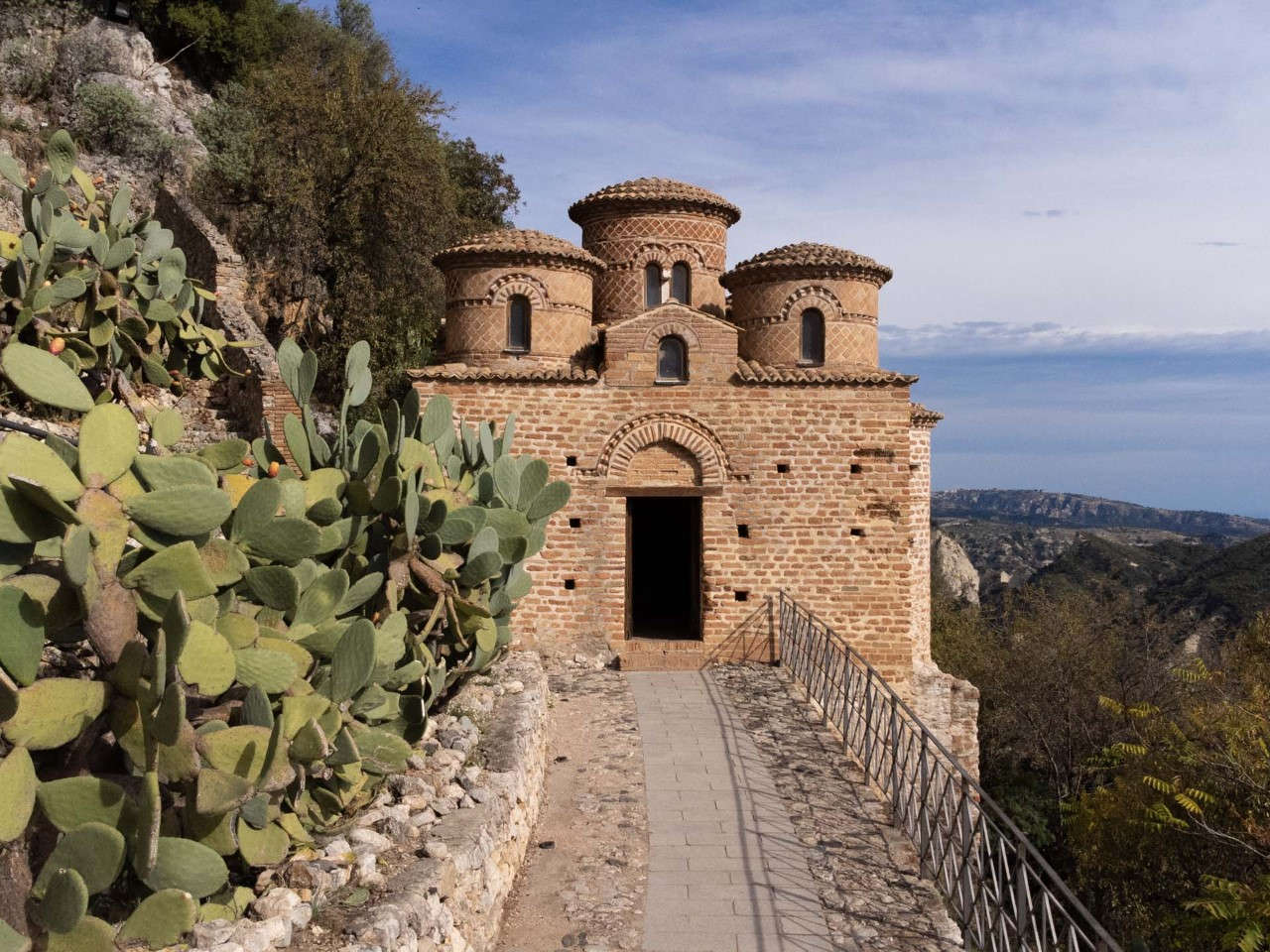
So imagine being catapulted back to the final years of the nineteenth century and getting to know firsthand a place in the South and a man from the North—the latter having arrived from Rovereto shrouded in an aura of charm. Appointed as Inspector of Excavations and, following the Nasi Law of 1902, as Superintendent (during a period, therefore, when the roles and structure of the Ministry were being reformulated), Paolo Orsi, after a significant stint in Sicily, finally arrived in Calabria.
Appointed in 1907 as director of the Syracuse Museum and later as Superintendent of Antiquities for Calabria—a position he held until 1924— Orsi dedicated more than two decades of his life to the systematic exploration of the Calabrian territory, completely transforming the perception of the region’s historiography and archaeology. You shouldn’t picture him as a typical armchair scholar in a suit and tie, like so many we see today: instead, imagine a reserved, austere man, wholly devoted to his work: the profession of archaeology, which—thanks in part to the methodology adopted by Orsi—would gain greater scientific rigor over time.
Cast into a parched and “archaic” land—as Calabria was in those terrible years preceding and following World War I—Paolo Orsi traversed the region far and wide on the back of a mule. He was tireless: after endless hours of excavation, Orsi spent his days and nights, by the dim light of a lamp, drawing maps, sketches, and notes in dozens of notebooks, at a time when electric light had not yet reached all of Calabria. It is thanks to the toil of his hands and his visionary insight that the Cattolica di Stilo was saved from oblivion.
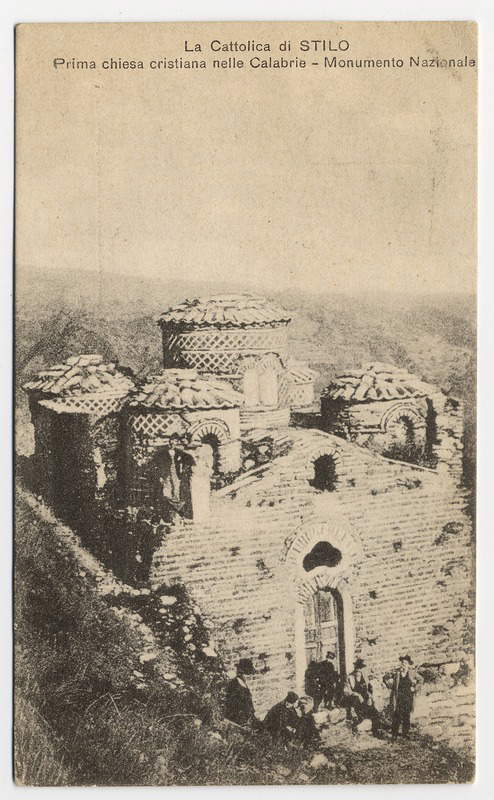
And it is above all thanks to this scholar from Trentino that it has been preserved over time in its original architectural form (although Orsi himself did alter the structure of the entrance portal). And all of this happened so that today, anyone who crosses its threshold—even if only to admire the recent restoration work—can understand its history and value, and may even be surprised to find before their eyes a completely unexpected yet ever-fascinating side of Calabria. Because this land is not merely “the other side” of Greece. For centuries, Calabria has served as a bridge between the Byzantine East and the Latin West: two civilizations that continue to gaze upon one another in a special way here, in this small church perched at the foot of Mount Consolino, where a historical, cultural, and spiritual “thread” binds in a single journey of rock-cut faith and medieval architecture, the Cattolica to at least two other exceptional sites of Italo-Greek monasticism: San Giovanni Theristis (in Bivongi) andthe hermitage of Monte Stella (in Pazzano).
“La Cattolica arose in the holy land of Basilianism […]. Everything about La Cattolica exudes Byzantine character: its structure, the layout of its floor plan and elevation, the polychrome pattern of the exterior walls, the grove of domes, and its view toward the Ionian Sea, from which, as early as the 8th century B.C., so much light of civilization had come” (as Paolo Orsi put it). In fact, if we wish to trace the history of the Cattolica, it is essential to immerse ourselves in the phenomenon of Italo-Greek monasticism, improperly termed “Basilian” in reference to the rule of St. Basil the Great—and to delve into its history to transport ourselves to the exact moment when the Byzantine Empire came to “stumble upon” the asceticism of these monks. Between the 6th and 10th centuries, Calabria became theByzantine Empire’s outlying bulwark in southern Italy and, at the same time, a refuge for monks fleeing both the Arab-Muslim invasions of Sicily and Syria and the iconoclastic persecutions in Constantinople. The Stilaro Valley became a place of welcome, a region dotted with laure, rock hermitages, and small monastic communities.
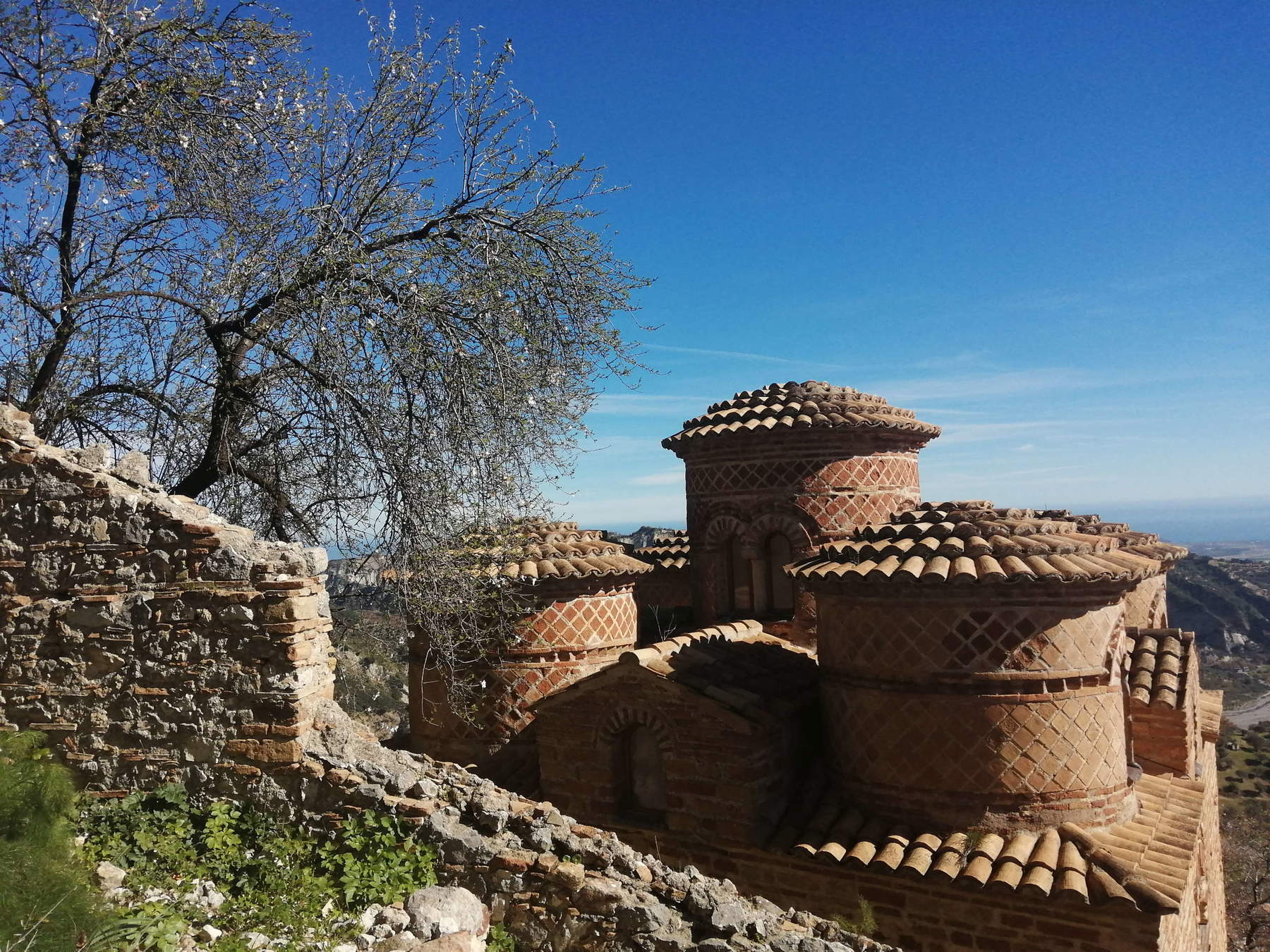
The Cattolica emerged from this spiritual soil. The term “Catholicon” itself, in the Byzantine tradition, designated the main church of a monastic complex or the center of worship for a hermitic district: not merely a church, but a liturgical hub reserved for monastic communities. Its structure, too, as Orsi noted, reflects the strategic importance it has held over time. In fact, the Cattolica di Stilo is shaped like a cube measuring just seven meters on each side. Above the building are five small domes; the central one represents Christ, while the four on the sides represent the four evangelists. The walls are not made of marble but feature a refined pattern of terracotta bricks that changes color with the sunlight.
The interior, with a Greek cross plan, is divided into nine square spaces. In the center, four reused columns (from ancient Roman buildings) support the main dome. One of these columns is mounted upside down: this is likely a symbol representing the victory of Christianity over paganism. The walls and columns feature extraordinary engravings and decorations, such as those written in Arabic (Kufic script) that contain Islamic religious formulas. Recent studies suggest that these were carved by Arab-Sicilian artisans or by passing merchants, thus confirming that medieval Calabria was a meeting point of Byzantine, Latin, and Islamic cultures.
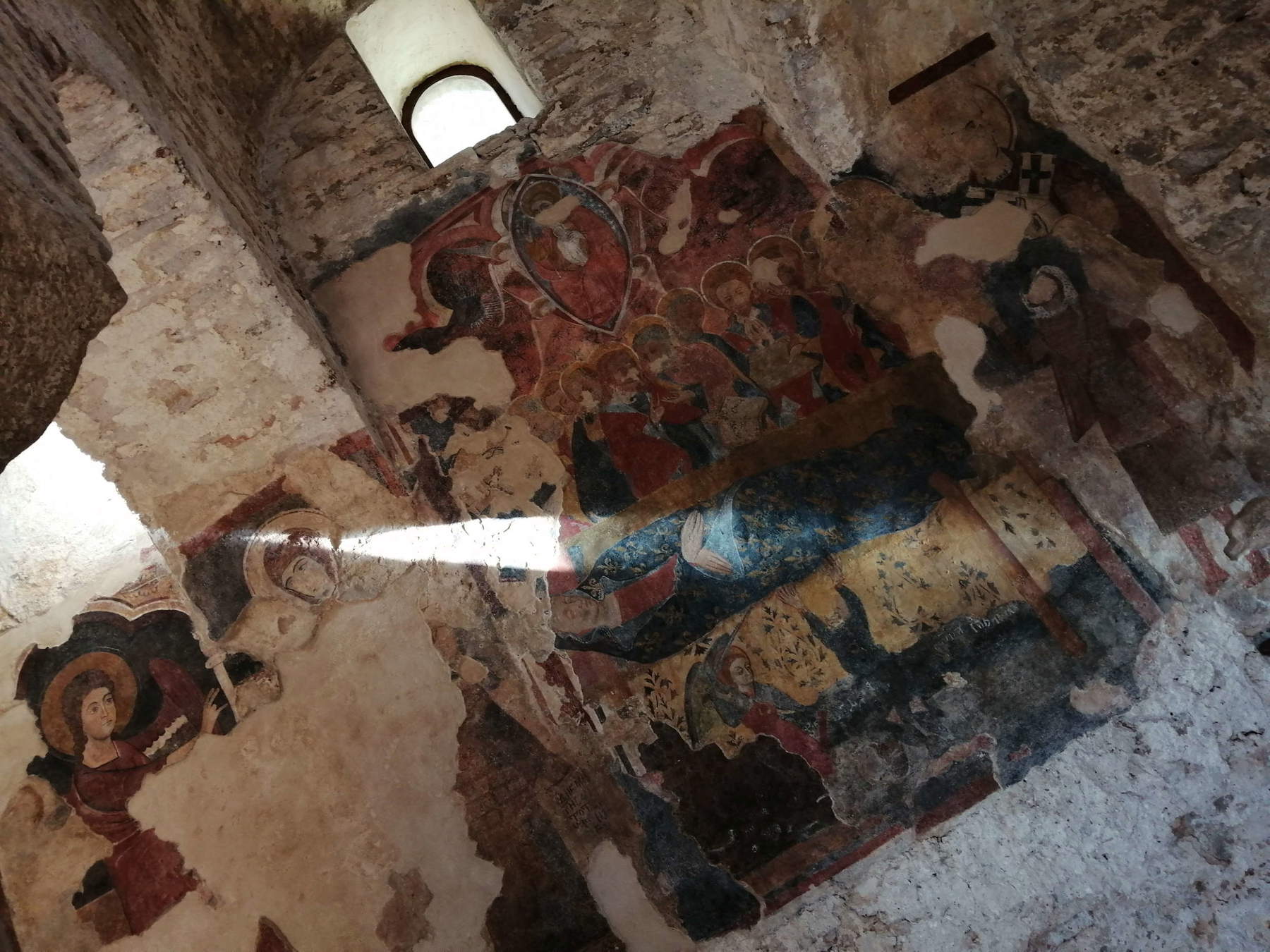
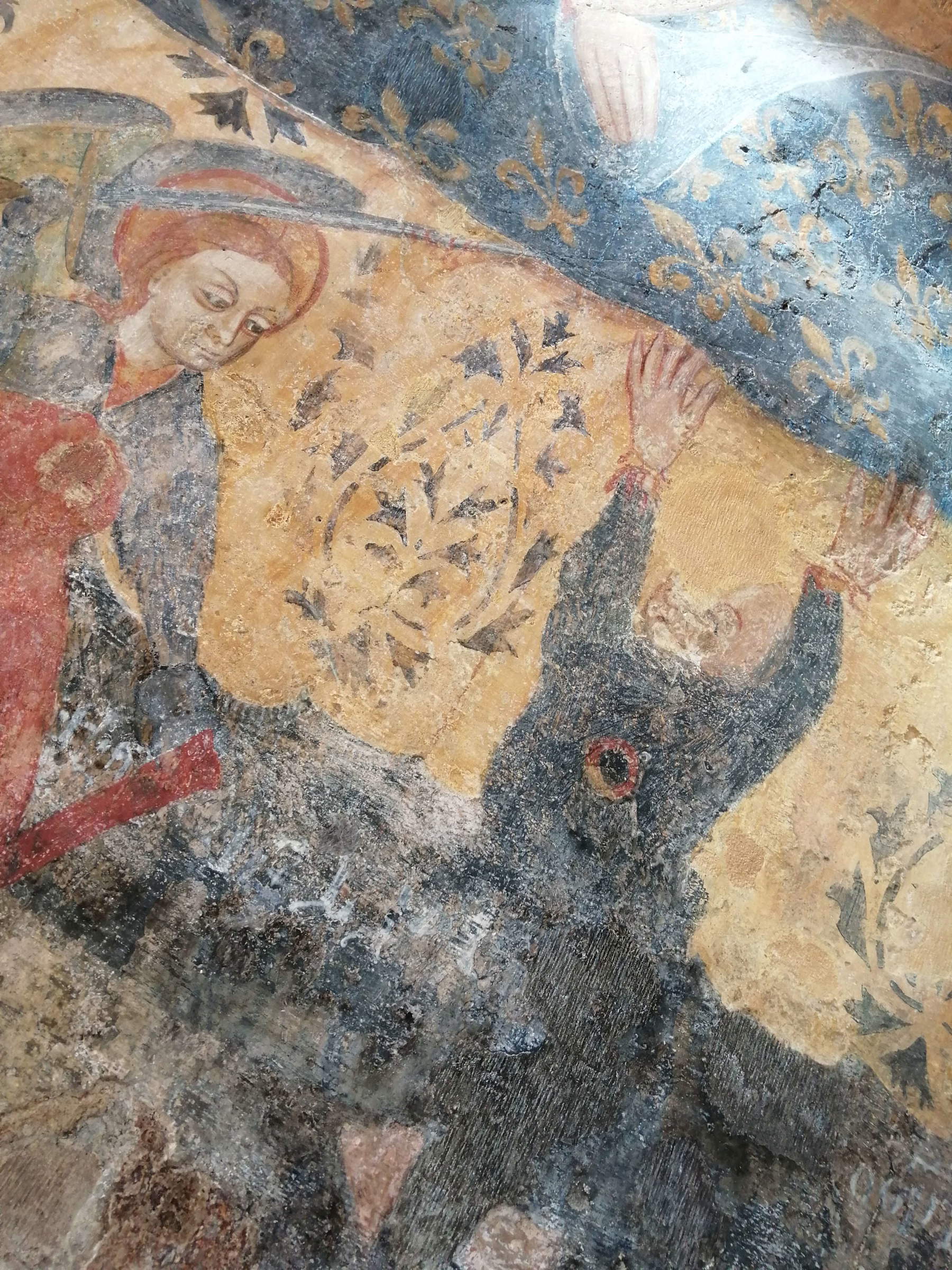
There are also Greek inscriptions and records that served both to identify the saints in the frescoes and to document historical events in the community, such as the death of an abbot, earthquakes, or the passage of soldiers. The frescoed walls are undoubtedly the most valuable feature and tell the artistic history of the region between the 10th and 15th centuries through several overlapping layers of paint: in fact, the style evolves from the 10th–11th centuries, with the original Byzantine style featuring figures of saints and hermits, to the 12th–13th centuries, with refined frescoes depicting Christ Pantocrator and the Fathers of the Greek Church, and finally to those of the 13th–15th centuries, where influences from Western and late-Gothic art emerge, such as the famous scene of the Dormitio Virginis. Right here, in the fresco of the Dormitio, there is a peculiar and apocryphal detail showing two severed hands attached to the Virgin’s bed: they represent the story of Jephonias, a man who tried to overturn the Virgin’s funeral bier and was punished by an angel, only to be healed after repenting.
Ultimately, and also in light of what we have briefly outlined regarding the Catholic University, it is clear just how limited the prevailing view of Calabria and its artistic and architectural output was. Before Paolo Orsi’s arrival, it was considered primarily a land of “Homeric myths” (which do indeed exist) or an appendage of Magna Graecia, where only the ruins were sought. Orsi overturned this perspective—just as we mentioned—by traveling through the region with the limited resources at his disposal and mapping it extensively, not only in the major coastal centers but also in the inland areas, the rugged valleys (such as the Stilaro Valley), and the mountainous regions of Pollino and Sila.
He did not, therefore, limit himself to investigating the Greek or Roman periods. Orsi was a pioneer in the rediscovery of Calabrian prehistory and the Byzantine Early Middle Ages—periods that had been almost entirely overlooked until then. And he was certainly not “merely” an excavation archaeologist, but a staunch defender of cultural heritage, always opposed to the smuggling of works of art. During extremely difficult years, he fought against the thefts committed by illegal excavators and championed several laws for state protection. His work in Calabria culminated in the founding of the National Archaeological Museum of Reggio Calabria (MArRC).
Returning to the present, the Cattolica has been the focus of a comprehensive conservation and enhancement project that led to the site’s prolonged closure to the public. We spoke with Director Elisa Nisticò, who explained the reasons behind and the results of the project. “On July 29,” she tells us, “the Cattolica di Stilo reopened to the public after a period of closure dedicated to restoration, maintenance, accessibility improvements, and the upgrading of security systems. The reopening restores to the community and visitors one of the most iconic monuments of medieval Calabria, an extraordinary testament to Byzantine culture in southern Italy. With its five domes, central plan, and commanding position overlooking the village of Stilo, the Cattolica is a unique place where architecture, history, and landscape blend harmoniously.”
The work, explains Nisticò, “focused on the preservation of the monument and the overall improvement of the visitor experience, even though the work is not yet complete. So far, new information points have been installed, designed to guide visitors in understanding the building’s history, its architectural features, its painted decorations, and its relationship with the surrounding area. Particular attention has been paid to physical, sensory, and cognitive accessibility through clearer, more readable, and more inclusive signage, capable of making the monument’s story understandable to an ever-wider audience. The work also addressed surfaces, masonry, and architectural elements, with interventions aimed at preserving historical materials and preventing deterioration. New facilities were introduced to improve visitor reception and site management, along with a more efficient video surveillance system, designed to ensure greater protection of the site and enhanced safety for visitors and staff.”
All the work, the director concludes, “was carried out with respect for the site’s monumental and landscape character, seeking to integrate new technologies and services without altering the historical identity of the Cattolica. The reopening therefore represents not only a return to normal operations but also the beginning of a new phase, based on the balance between preservation, accessibility, safety, and enhancement. Starting July 29, the Cattolica di Stilo will once again be a fully vibrant place, open to the community, scholars, and visitors, and ready once more to recount one of the most fascinating chapters in Calabrian history.”
So, even considering the director’s statements and our editorial team’s on-site visit, one is left to wonder whether, at the end of their journey, any explorer of lands and mysteries passing through our region—the magical Calabria of the Cattolica di Stilo—will truly be able to return home satisfied. Will they be surprised to hear the story we’ve just told? The story of an archaeologist who comes from afar, of a small church lost among the valleys, of the beauty of certain frescoes, of the care that is still taken to preserve it… And who knows—perhaps he’ll wonder how many other stories, similar to this one, still remain, should he ever find himself walking these fascinating paths again.
For those who wish to get to know and appreciate this land, all it takes, therefore, is to set out on a journey to discover it—without the malicious intent of plundering its treasures and its endless stories.
“Archaeological Calabria is not a land to be stripped bare to enrich private collections, but a history book that must be read on site and made accessible to everyone.” (Paolo Orsi, from his excavation notebooks)


The author of this article: Anna de Fazio Siciliano
Anna De Fazio Siciliano è una scrittrice, storica e critica d’arte, docente e redattrice specializzata nella comunicazione e nella divulgazione dell’arte. Nel corso della sua attività didattica ha insegnato Storia dell’arte antica e contemporanea, Estetica e Mercato dell’arte presso istituzioni accademiche. I suoi interessi comprendono la ricerca storico-artistica, la critica d’arte, la progettazione curatoriale e lo studio dei linguaggi dell’arte moderna e contemporanea. Durante il periodo di formazione presso la Galleria Borghese di Roma ha approfondito la diffusione del gusto egizio nell’arte italiana, a partire dalla decorazione della Sala Egizia del museo. A questo ambito di ricerca ha dedicato il volume Il gusto egizio, pubblicato da Pellegrini Editore. È autrice di saggi dedicati all’arte contemporanea e ai suoi protagonisti. La sua produzione comprende inoltre articoli, recensioni, interviste e testi critici per cataloghi e progetti espositivi. Recentemente il Direttore di Palazzo Madama di Torino, il Professore Giovanni Carlo Federico Villa ha presentato al Salone Internazionale del Libro di Torino il suo volume dedicato alla tutela del patrimonio, Diario di bordo Scoppa, Frammenti di un patrimonio perduto, edito da Gangemi International e impreziosito in quarta di copertina da un commento di Salvatore Settis. Ha collaborato sia con contributi online che su cartaceo con riviste specializzate quali «Exibart», «Art e Dossier», «Finestre sull’Arte», affrontando temi legati all’arte antica, moderna e contemporanea, alla tutela del patrimonio culturale e alla presenza femminile nella storia dell’arte. Nel 2015 ha fondato Artpressagency, realtà attiva nei settori dell’ufficio stampa, della comunicazione culturale, della critica d’arte e dell’editing. Attraverso questa attività ha collaborato con musei, fondazioni, archivi, istituzioni culturali, curatori e organizzazioni impegnate nella produzione e nella promozione di mostre ed eventi artistici. È stata inoltre membro del Comitato tecnico-scientifico degli Archives Legales Amedeo Modigliani, del FATA Museum e del GAL delle Terre Locridee dedicando la propria attività alla ricerca, alla comunicazione e alla valorizzazione della figura di Amedeo Modigliani e del patrimonio storico-artistico italiano.Warning: the translation into English of the original Italian article was created using automatic tools. We undertake to review all articles, but we do not guarantee the total absence of inaccuracies in the translation due to the program. You can find the original by clicking on the ITA button. If you find any mistake,please contact us.

























 IT
IT FR
FR DE
DE ES
ES CN
CN


