


by Francesca Anita Gigli 22/10/2026


Categories: Travel / Disclaimer
Alexander Calder, one of the greatest artists of the 20th century, spent part of his life in the Loire Valley, in the Touraine region, which had a profound influence on his artistic exploration. His sculptures reflect the challenge of creating forms capable of escaping the control of their creator.


“If only I could be the dust on the road and the feet of the poor could trample me.” I’ve often thought about these lines by Fernando Pessoa lately, but especially while walking across the floor of Alexander Calder’s studio in Saché, a small town in Touraine, in the Indre Valley, where dust rose just beneath my shoes and lingered in the air, bathed in the warm light streaming through the large windows—light that made visible even what, just a moment before, seemed to have no substance, seemed not to exist.

You almost had to drag your feet to notice it. It was a light, extremely fine dust, gathered in all those tiny irregularities of the floor, which rose in the faintest of puffs and lingered there for a few seconds, at ankle height, before dispersing into that September light—so dense it became unpleasant—which streamed through the windows with its typical summer persistence.
The studio was enormous. Almost empty. Alberto Caeiro, the heteronym to whom Pessoa had entrusted those verses, longed to become dust, river water, matter exposed to the world’s relentless work—and in that desire one senses, even today, an irremediable weariness toward our habit of continually distancing ourselves from the world in order to observe it and ascribe a broader meaning to it. To be dust means renouncing even the possibility of choosing where to go, accepting that it may be the step of a foot or the breath of the wind that decides every movement, with no memory of the previous position and, above all, without any need to reach another. A renunciation of the will.


And Alexander Calder, who had studied mechanical engineering, instead devoted much of his career to exercising that will by bending wires, cutting sheet metal, and studying the distribution of weights and the strength of structures with obsessive precision, until he built sculptures in which the suspended elements could move according to air currents, continually altering their distances from one another and assuming configurations that the artist had made possible without ever truly being able to determine them. An immense effort to achieve something that could exist without him.
Who knows if Calder ever read Pessoa; there is no evidence to confirm this, and besides, Caeiro would probably have viewed with some suspicion all that equipment needed to achieve what a leaf manages to do without ever having studied engineering. The poet wishes to renounce the pretense of having to understand everything, to surrender his body to the laws of nature without having to understand them; Calder, on the other hand, studied those laws, calculated their effects, and patiently constructed the conditions under which a form might escape the fixity of traditional sculpture. And when the work was finished, when every element had found its place and the structure’s balance had been verified, something remained that no measurement could have fully accounted for: the wind.
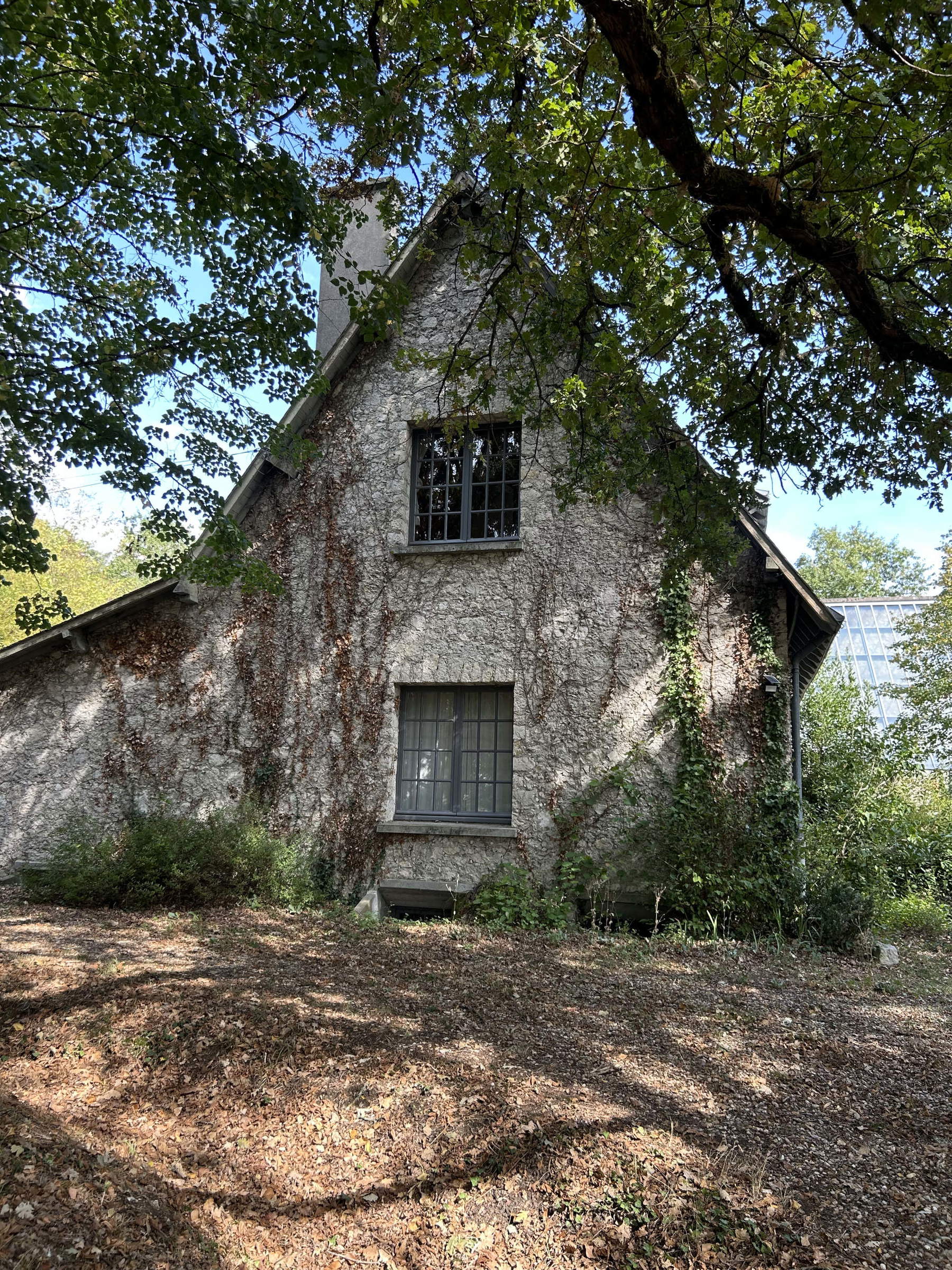
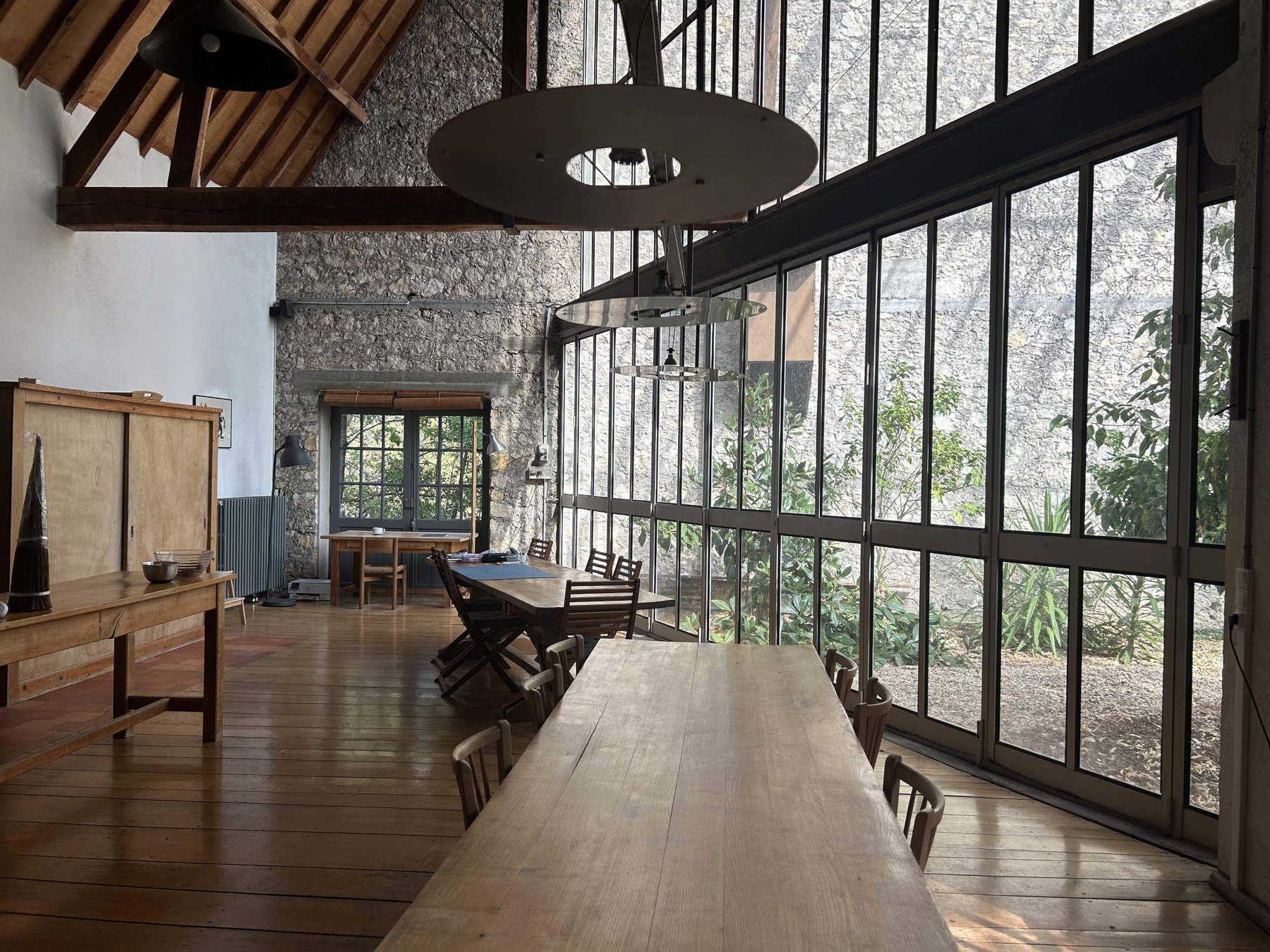
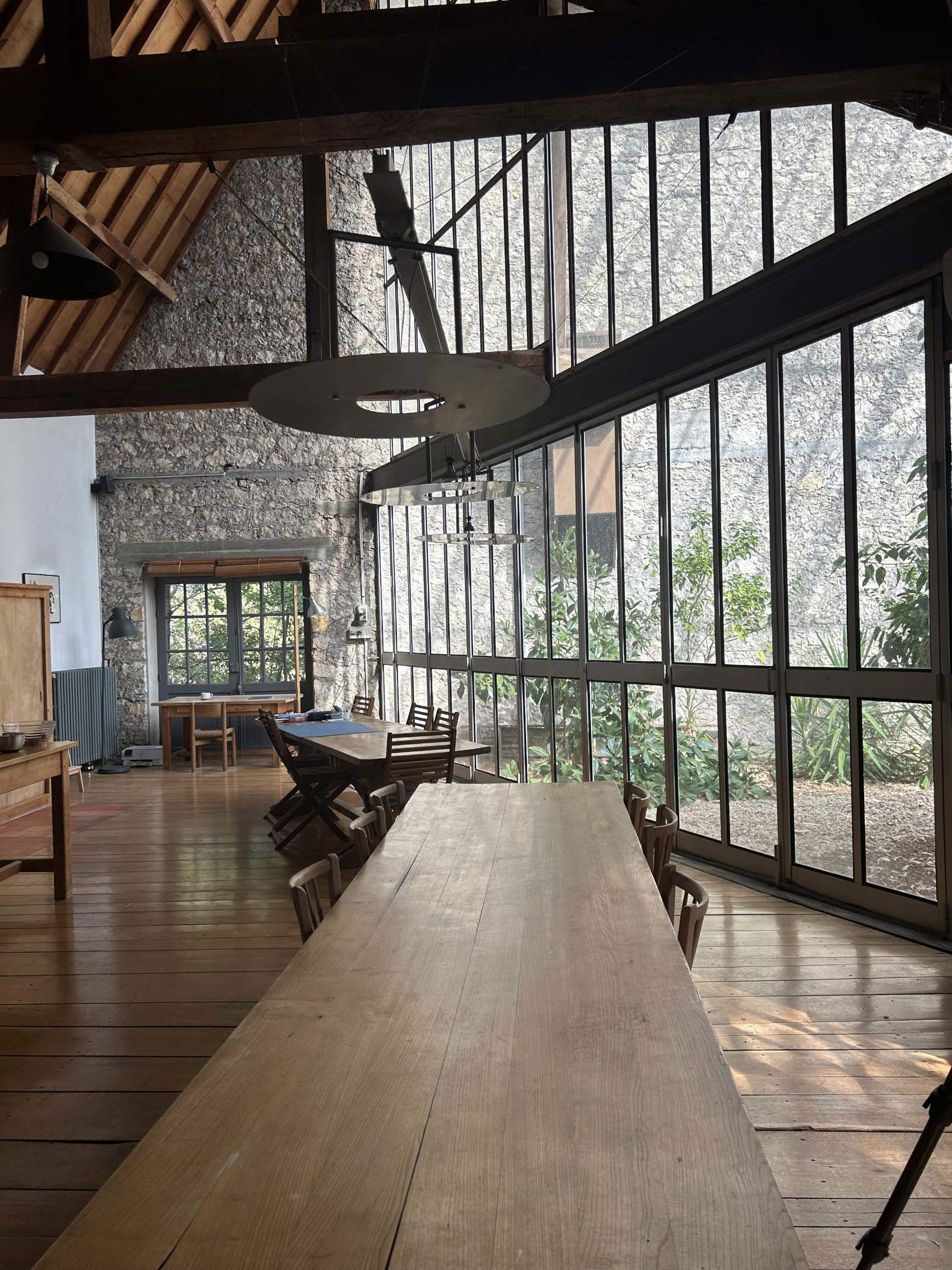
In the Saché studio, built in 1963 on Carroi Hill, Calder wanted enormous windows and a space high enough to allow him to work on the monumental sculptures that by then occupied a considerable part of his practice. He personally oversaw the building’s design, paying particular attention to its orientation and natural lighting, since the scale of his works required that he be able to observe them from a distance, assess their proportions, and study their behavior before they were produced in specialized workshops. And the light had also been carefully planned.
Yet, more than sixty years later, that same light reveals above all the absence of the large structures for which the building was originally constructed. What remains are the high walls, the windows, and the floor upon which dust continues to settle. But today, not far away, a young woman is painting while sitting on the ground.
Her name is Mimi Park, and she is a guest at the Atelier Calder through an artist-in-residence program launched in 1989 to preserve the studio’s original function. After the sculptor’s death in 1976, the family preferred that other artists continue to work in those spaces, rather than transform them into one of those places where tools are arranged according to meticulous inventories and every mark left on the table acquires—simply by having outlived its owner—a senselessly religious dignity. Mimi Park is busy working with the color blue, occupying a tiny portion of that vast floor, while the sun slowly moves across the surfaces. The dust, disturbed by our curious footsteps, rises again. And settles back down.
Right next to it stands his house, which Calder had built between 1966 and 1969. The new building was erected on the same plot of land, and once again the sculptor oversaw the project, envisioning a minimalist, slightly elongated home in which every room had a specific function. The interiors retain something of this spirit: the tables are long, constructed without any particular concessions to ornamentation, and some lamps assembled by Calder himself seem to belong to the same family of objects as his sculptures, even though here they serve the more modest purpose of lighting a room. Today the house appears bare, inhabited by a succession of artists, but the photographs taken by Pedro E. Guerrero during the years when Calder and his wife Louisa spent their days there convey a completely different atmosphere—a space crammed with objects and artworks, with the walls lined with the couple’s art collections and the ceiling from which mobiles of various sizes hung. There were rugs made by Louisa based on her husband’s designs, ceramics, baskets, and kitchen utensils crowding the available spaces. In the photographs, it is hard to find a bare wall, but the house that survives today is quieter: the removal of the objects has allowed the building’s structure to emerge, revealing the proportions of the rooms and the continuity between the living room and the greenhouse—intended for Louisa—which Calder had positioned perpendicular to the house, almost as if to extend it into the woods.
Calder lived in this house for only the last six years of his life. He moved there with Louisa in 1970 and died in 1976, in New York. Yet, although the walls are a bit more bare, the winter garden remains in place, as does the woods surrounding it, and the house remains alive.
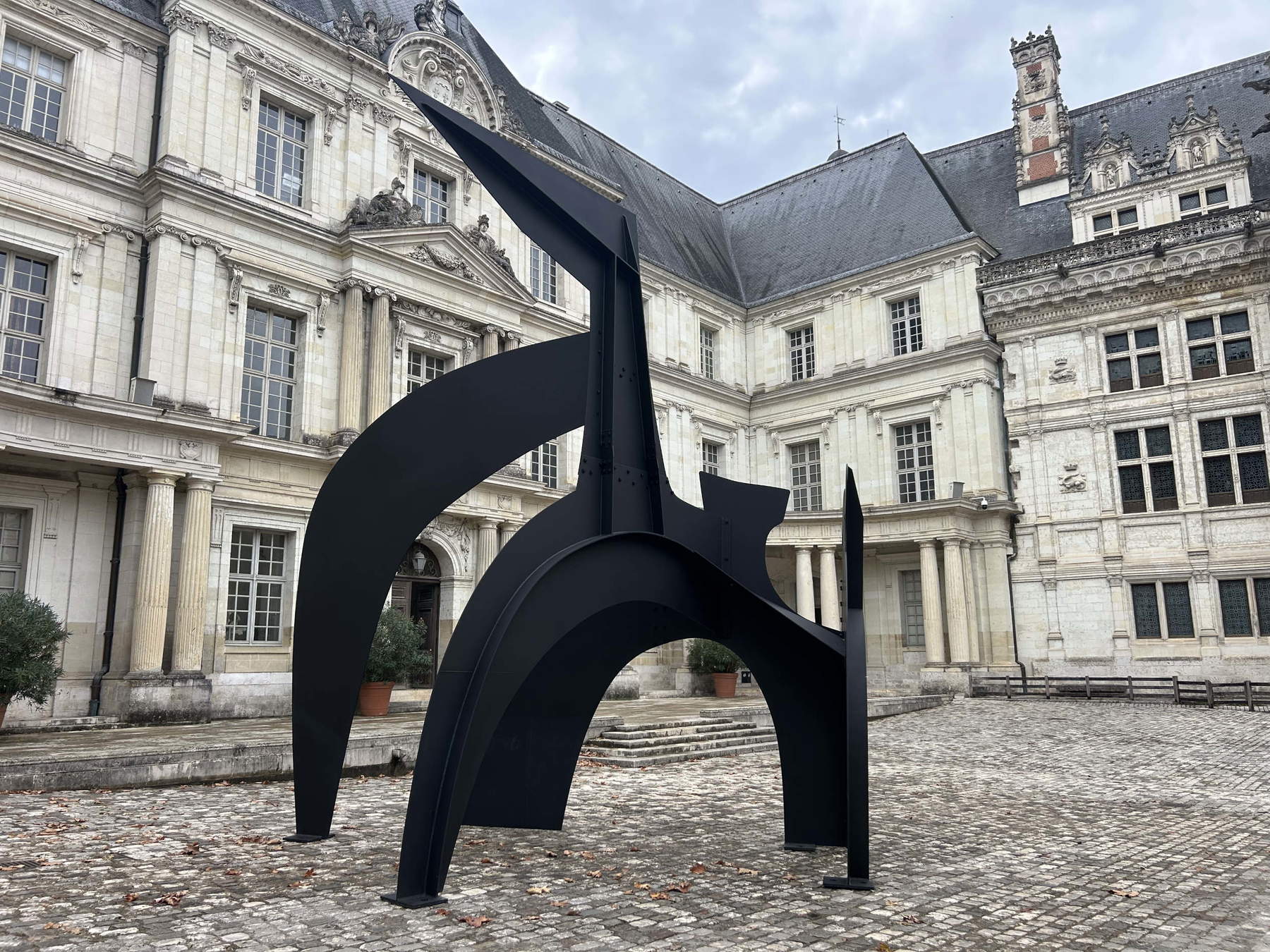
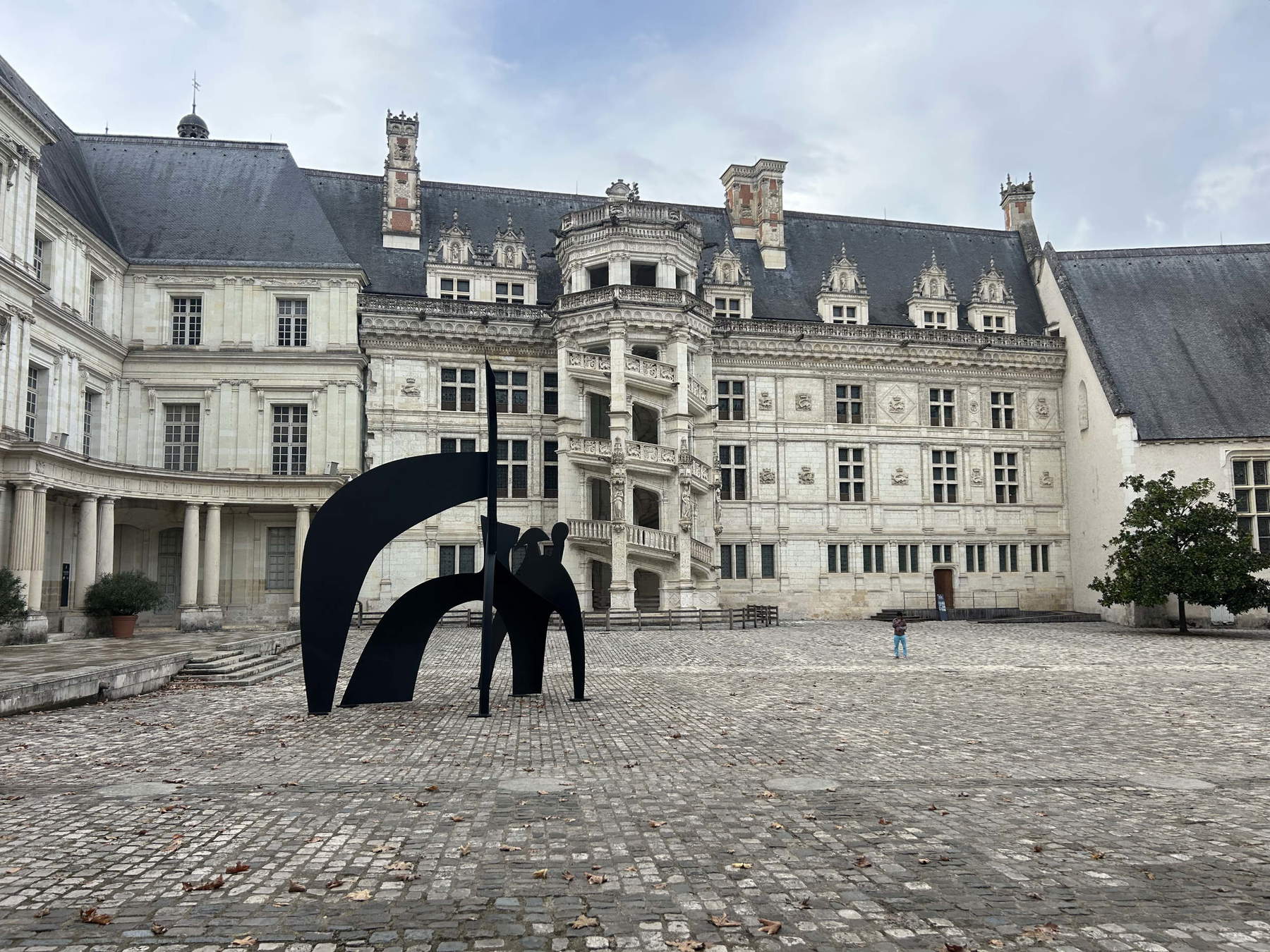
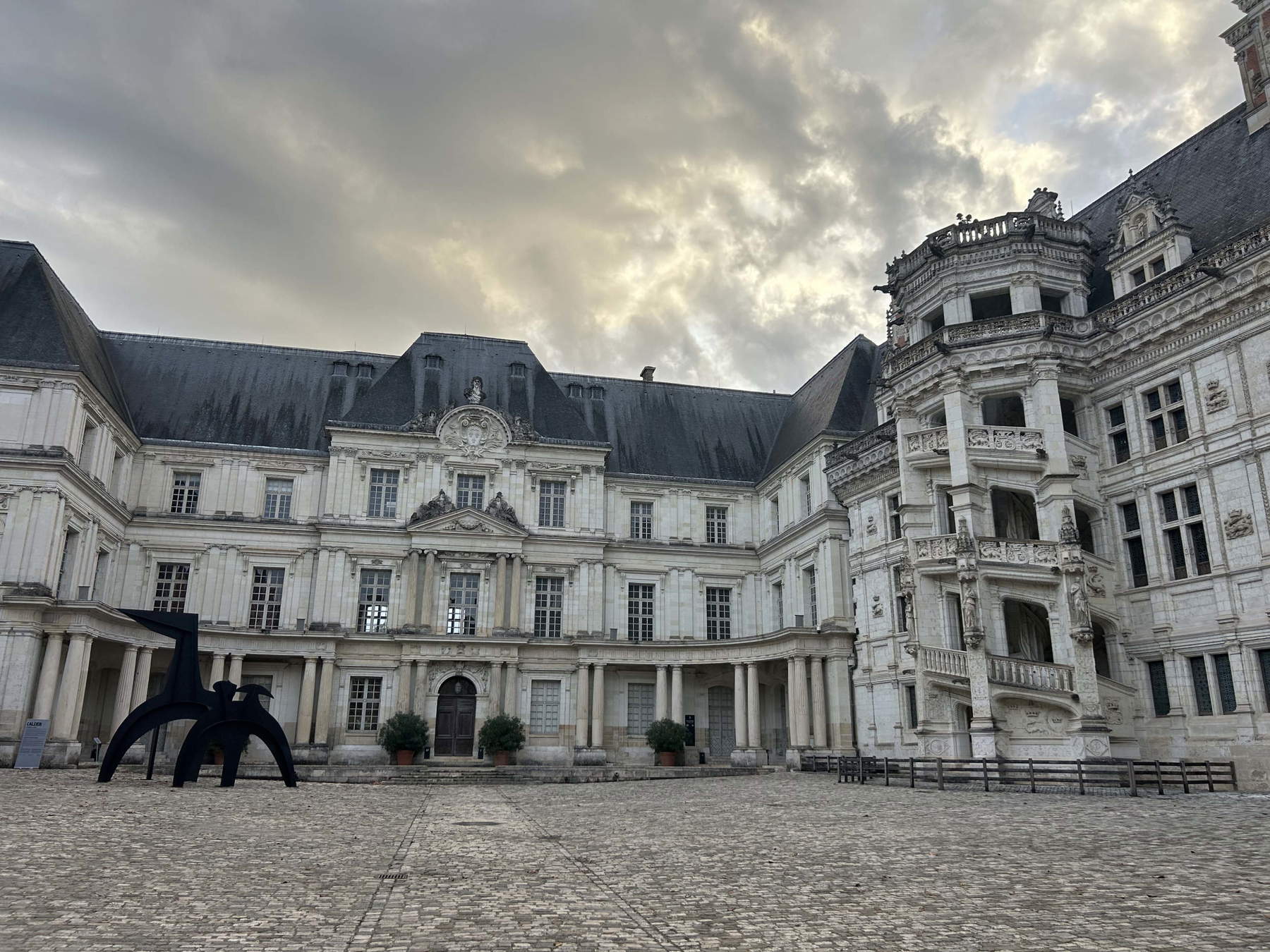
In 2026, fifty years after Calder’s death and a century after his first arrival in France, some of his works have returned to the region the sculptor had chosen to live and work in. The Centre Pompidou and the Centre-Val de Loire Region have organized, as part of the fourth edition of the AR(t]CHIPEL festival, a widespread exhibition spanning fifteen venues—including castles, museums, and art centers—bringing his sculptures to buildings for which they were not originally conceived. One of these is *Black Flag*, created in 1974 and placed, for the occasion, in the courtyard of the Royal Castle of Blois—and it’s hard to imagine a better spot.
The Royal Castle of Blois has been home to seven kings and ten queens of France and preserves, gathered around the same courtyard, four eras of French architecture, from the Middle Ages to the 17th century. It stands on a hill overlooking the Loire River and owes its current appearance to the numerous renovations commissioned by the monarchs who lived there, each intent on leaving a mark of their authority on the building. Louis XII had a wing built there out of brick and stone, still influenced by Gothic forms; Francis I commissioned a Renaissance residence dominated by the famous monumental staircase overlooking the courtyard, while in the 17th century, Gaston d’Orléans entrusted François Mansart with a new, unfinished project in which the classical style introduced a severity unknown to the previous facades.
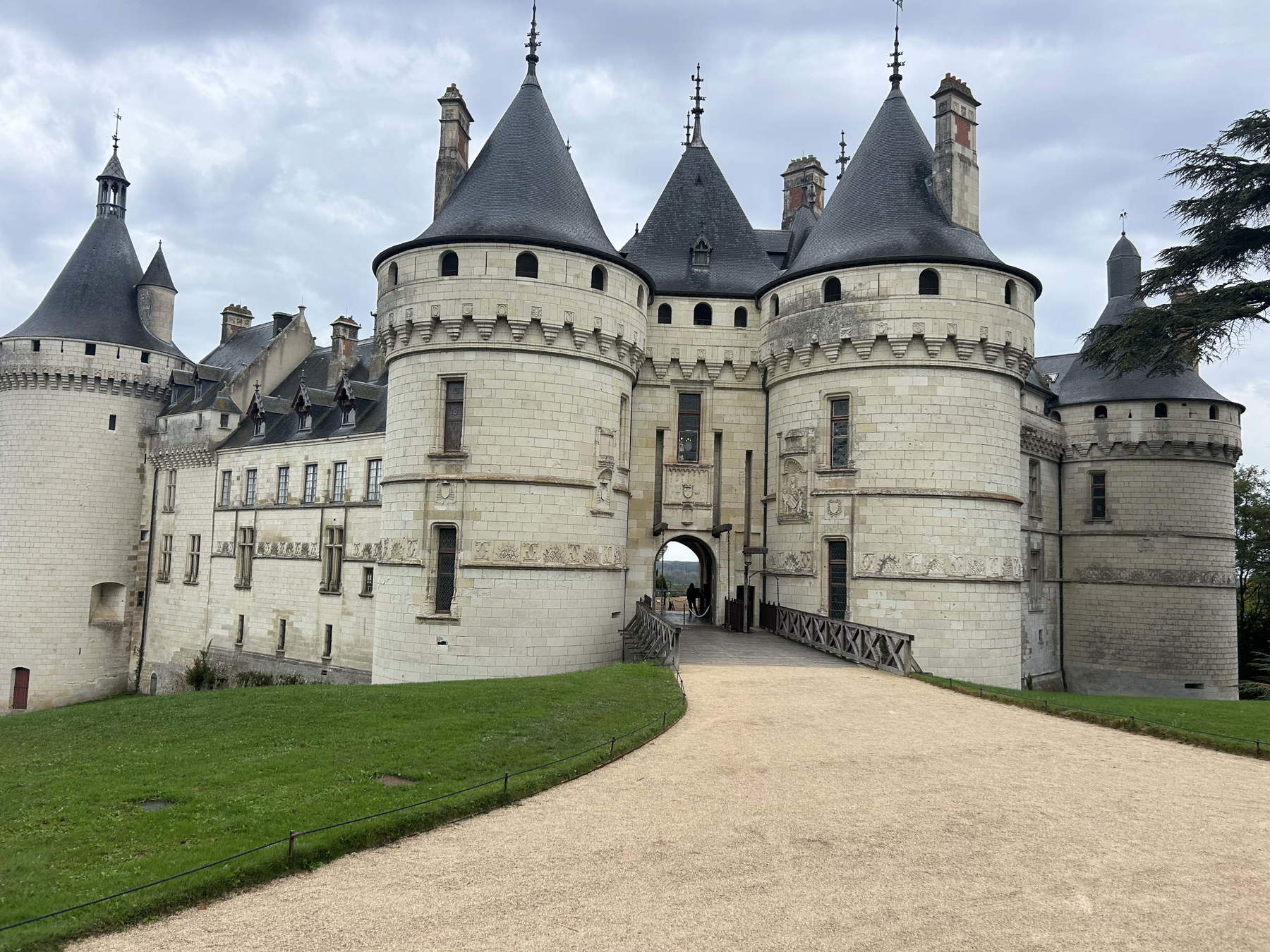
The castle’s history, however, is also the story of the men who died there. On December 23, 1588, Henry III had Henry of Guise—leader of the Catholic League and his political adversary—assassinated; Guise was lured into the royal apartments and killed by the king’s guards. The following day, his brother, Cardinal Louis de Guise, was also killed, and a few days later, on January 5, 1589, Catherine de’ Medici died in the same castle. The rooms you walk through today during the tour were the scene of a political struggle in which violence became a direct tool for exercising power, and the events of those days continued to weigh on the French monarchy long after the court’s stay in Blois had ended. And it is precisely in that courtyard that *Black Flag* stands today.
The sculpture, created by Calder in 1974, stands over seven meters tall and consists of large sheets of black-painted steel, cut into irregular shapes and joined together with bolts. The work belongs to the “stabiles”—those fixed structures that the sculptor developed alongside his famous “mobiles.” When viewed from the front, these surfaces retain a delicacy reminiscent of paper cutouts, but a shift to the side reveals how their scale and the arrangement of the supports convey the solidity of metal. The black seems to absorb part of the courtyard’s light, and the very presence of the sculpture tends to drastically alter the character of the surrounding architecture. The facades, with their decorations, carved moldings, and monumental openings, take on an unexpected solemnity next to those austere metallic surfaces, and the courtyard—which normally lends itself to an almost chronological reading of architectural styles—suddenly appears gathered around a presence foreign to its own history.
And there is something funereal about *Black Flag*, a quality, perhaps, that the title itself helps to accentuate and that takes on a particular intensity in Blois. However, the work, however monumental, does not truly possess a definitive appearance: during the visit, some visitors amused themselves by recognizing a horse, others a flag, and those figures emerged for a few moments from the overlapping sheets of metal, only to dissolve when the viewing angle changed. The openings between the metal surfaces revealed different portions of the facades—a window, a section of carved stone, part of the staircase of Francis I. Thus, the architecture enters into the composition of the sculpture and is excluded from it just a few steps further on. Black Flag remains motionless because it is the viewer who must move. Calder had spent decades studying the possibilities of movement, constructing structures in which the balance of weights allowed the forms to sway with the air currents, but in the stabiles, this movement belongs solely to the viewer’s experience—to the variations produced by shifts in position and distance. In Blois, this characteristic takes on a very special intensity, because every shift simultaneously alters the perception of both the sculpture and the architecture surrounding it. Thus, the artwork and the castle end up mutually enhancing each other’s significance.
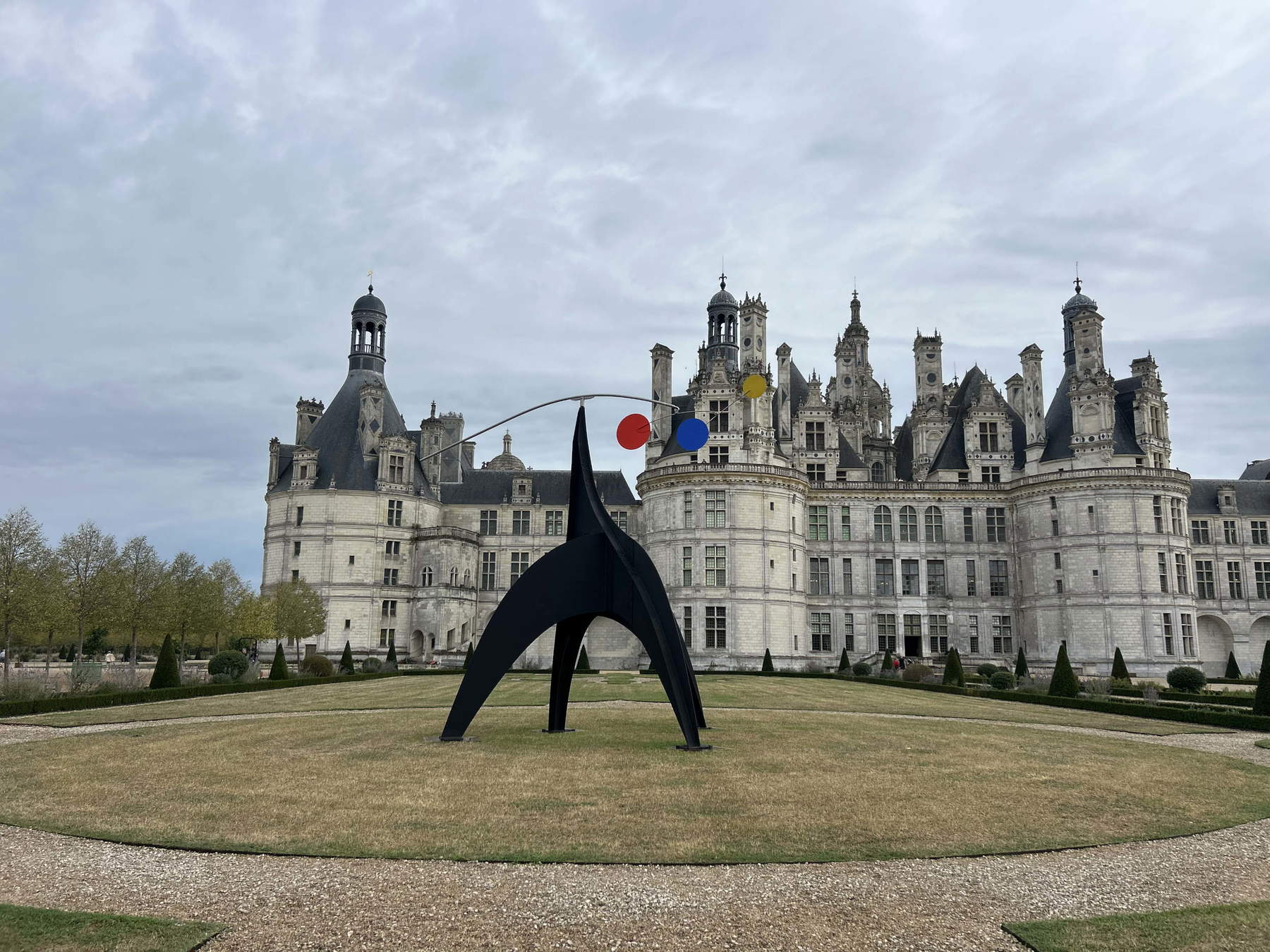
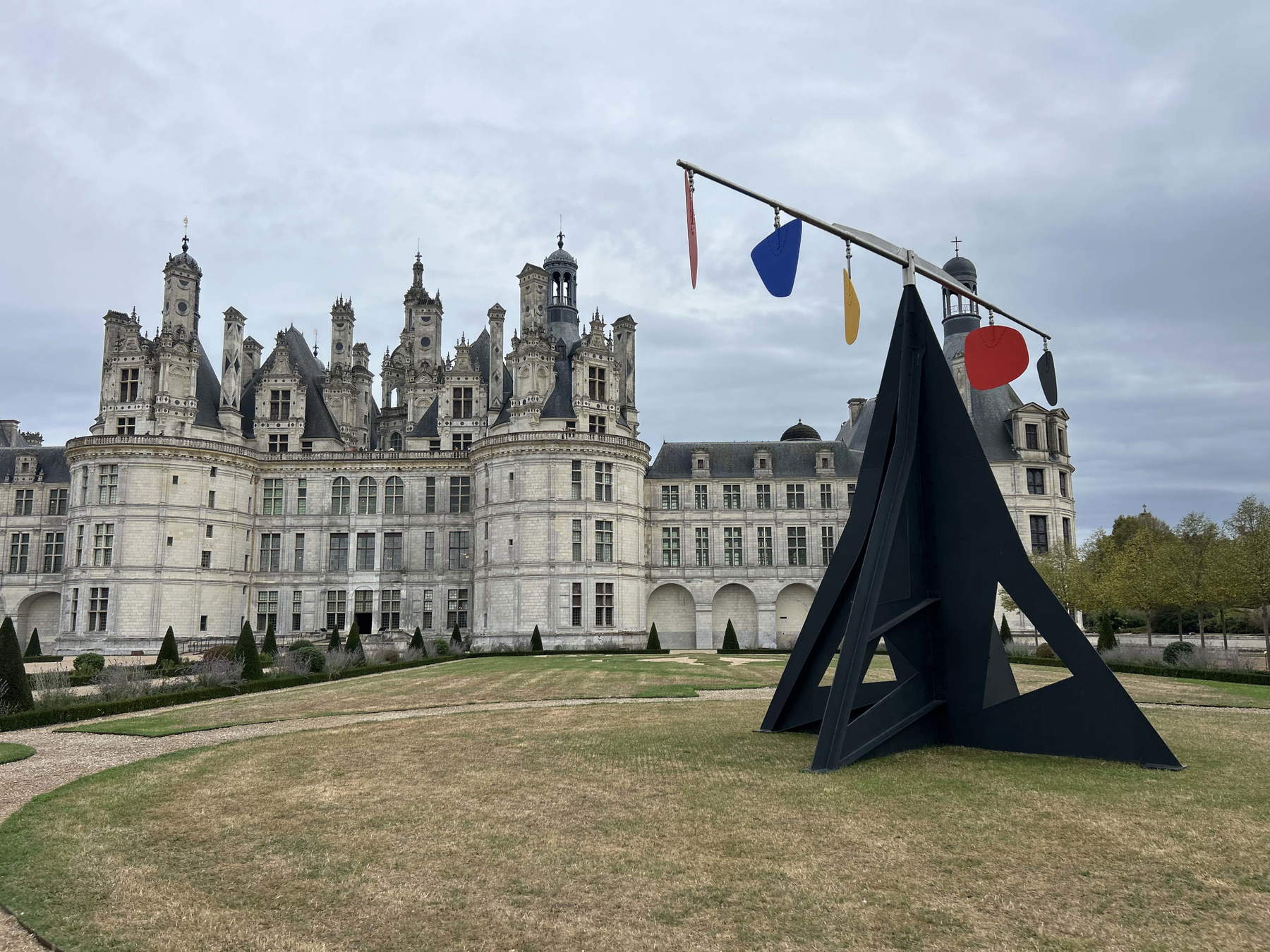
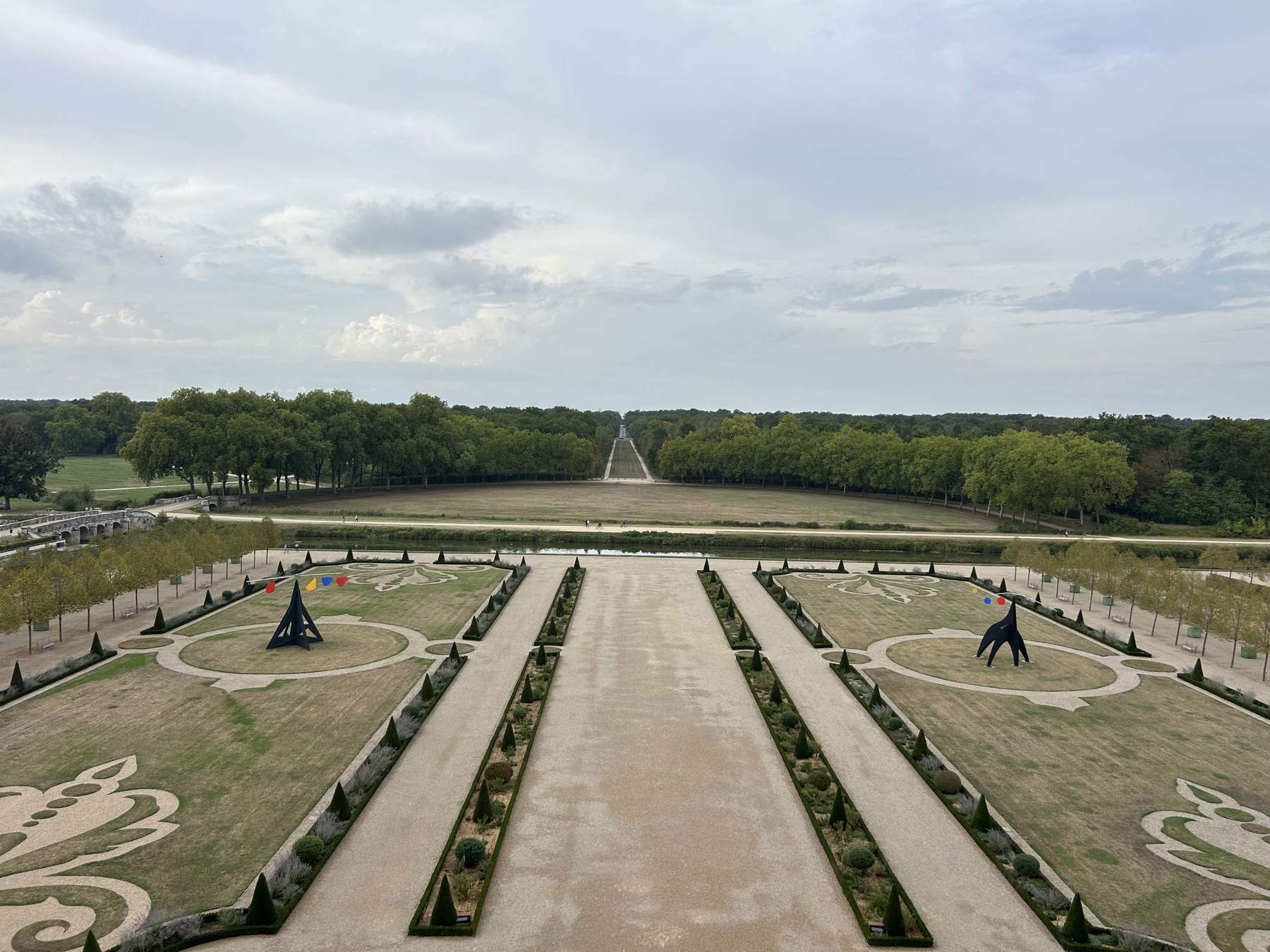
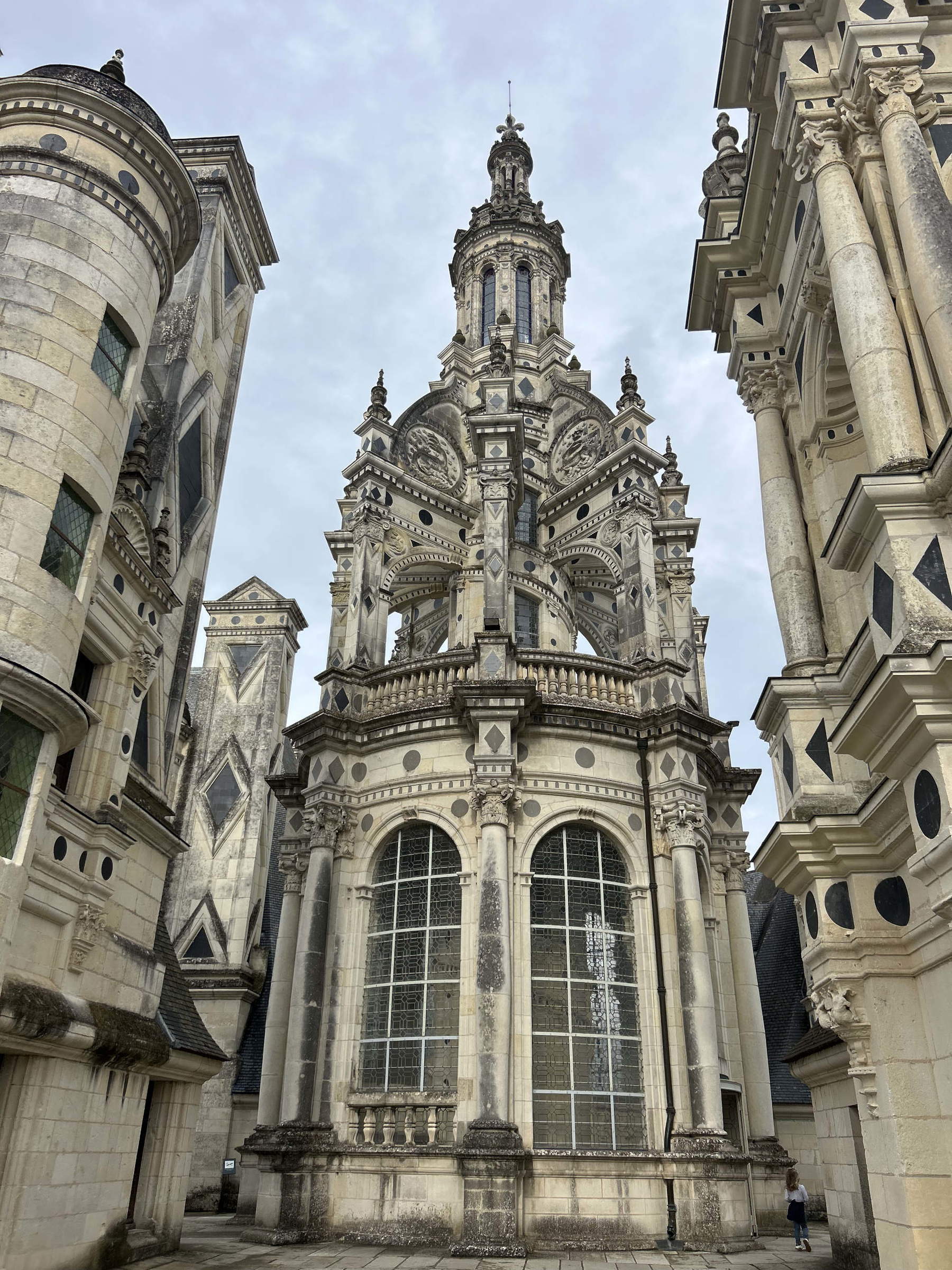
At Chambord, on the other hand, the wind once again becomes essential: in the gardens of Francis I’s castle, two monumental sculptures conceived by Calder during his years in Saché have been installed. *Théâtre de Nice*, from 1970, and *Horizontal*, from 1974, both belong to that particular family of works in which the artist combined a stationary structure with a moving part, entrusting a meticulously calculated balance with the task of sustaining movements that no one—not even their creator—could have predicted in their exact sequence. The two works face each other on either side of the central avenue, in front of a building whose architecture seems to have taken the Renaissance desire to organize space to its extreme. Construction of Chambord began in 1519 at the behest of Francis I, and it still retains today something of the boundless ambition that drove its construction. The castle has hundreds of rooms, an almost equally impressive number of fireplaces, and a roof on which turrets, dormers, and chimneys cluster together to form a sort of city suspended above the rooms.
At its feet lie the French-style gardens, reconstructed in the 21st century based on an 18th-century design, with geometric flowerbeds and paths that impose a discipline on the vegetation far removed from the spontaneous growth of the surrounding forest. It is precisely against this backdrop of order that two structures have been placed—blending somewhat into the majesty of their surroundings—in which part of the work is intended to break away from the stability of the composition. However, in the face of Chambord’s immensity, even Calder’s monumental sculptures seem to shrink, as if the eight meters of *Théâtre de Nice* and the ten-meter height of *Horizontal* were entirely negligible dimensions for a castle that had made disproportion one of its architectural ambitions. The large black structures, upon which balancing beams and colored surfaces rise, take on the appearance of fragile objects from a distance—like toys abandoned at the foot of a building too large to notice their presence. Only upon approaching do the proportions become comprehensible again, and the metal sheets regain their weight, while the red, yellow, and blue discs of *Théâtre de Nice* and the five suspended blades of *Horizontal* continue to occupy minuscule portions of that boundless space.
The castle, meanwhile, seems to swallow everything up. The functioning of these sculptures depends on a distribution of weights that Calder had learned to control with a precision that is hard to grasp given the apparent simplicity of the forms: the rods support elements of varying mass, arranged at distances calculated from their centers of balance, and their movement is possible precisely because no part of the structure can be considered independently of the others. Lightness is a constructed effect, but so is slowness, which in large mobiles can become almost exasperating. The movement of the suspended surfaces responds to air pressure, the inertia of the materials, and the length of the rods, and proceeds at a pace inherent to the very structure of the work. There is no sequence that must repeat itself identically, nor is there a definitive position in which the composition can be said to be finally complete.
For Calder, this possibility was the result of research that had begun many years earlier, when his first abstract sculptures still contained electric motors, gears, and mechanical systems capable of imposing a predetermined movement on the forms. In 1930, during a visit to Piet Mondrian’s studio in Paris, he was struck by the colored rectangles arranged on the walls and suggested to the painter that he make them sway. That encounter would foster his interest in abstraction; in the years that followed, Calder would gradually abandon motorized devices in favor of constructing structures moved by air.
It was a significant shift. Movement could finally occur without the artist having to operate anything. Yet, in the Chambord sculptures, the material retains a weight that no oscillation can erase. The large black supports remain firmly anchored to the ground; the joints must withstand the forces exerted by the suspended elements; and the scale of the works requires industrial fabrication—a far cry from his early experiments with just a few metal wires. The Biémont workshops in Tours, with which Calder collaborated on the production of his monumental works, made it possible to translate his models into steel structures designed to occupy entire squares. It is also through these workshops that his connection to Touraine takes on a dimension less well known than his house in Saché and its surrounding landscapes. The sculptor’s work extended beyond the studio, among the machines used to cut sheet metal and the workers tasked with assembling them.
But to understand just how far Calder had come, however, we must go back to the time when his sculptures could be built almost entirely by hand, using just a few meters of wire and a pair of pliers. At the Musée des Beaux-Arts in Tours, amid the paintings and sculptures of the permanent collections, a small temporary exhibition takes us back to the beginning of Calder’s career in Paris. There are eight works, mostly from the late 1920s, when the sculptor had moved to Paris and begun to mingle with artists, dancers, and leading figures of Montparnasse’s cultural scene.
Among them is Joséphine Baker, whom Calder portrayed on several occasions. And in*Joséphine Baker IV*, created around 1928, the dancer’s body is rendered through a succession of metallic curves that suggest her movement and posture, allowing the empty spaces to complete the figure. The wire cuts through the air, bends, loops back, ripples, and defines a volume without filling it; and although the work is physically small—almost insubstantial when compared to the large metal sheets of Blois—it possesses an extremely powerful physical presence.
The transition from these small constructions to the sculptures of his mature period seems less distant than their dimensions might suggest: the metal wire had already allowed the artist to draw in space and to incorporate into the work what lay between one line and another.
The exhibition occupies a limited section of the museum and has an intimate feel, especially after the monumental scale of the works encountered in the Loire Valley castles. Here, in fact, the scale changes abruptly; the visitor must get closer, follow the wire with their eyes, and reconstruct the forms where Calder has left only a few lines of metal. And sometimes a single curve is enough. At the Centre de Création Contemporaine Olivier Debré in Tours, however, Calder seems to take on yet another character.
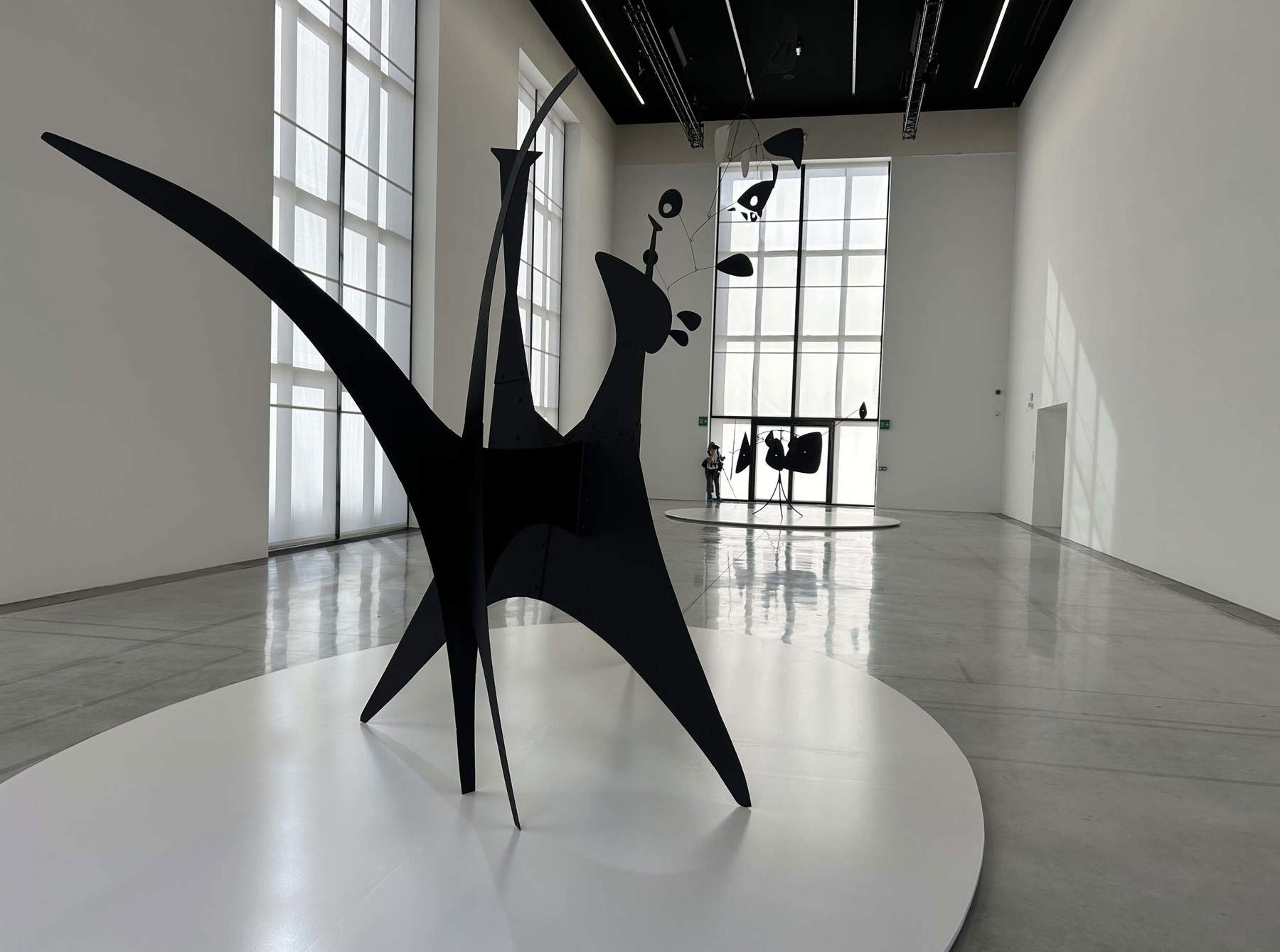
On display in the museum’s main hall are three sculptures created between 1940 and 1950: *Black Beast*, *4+3 ou Les Boucliers*, and *Le 31 janvier*. These date from a period when the artist had already moved beyond the need to depict recognizable bodies and was beginning to construct forms whose existence depended entirely on the relationships between their parts. And so, after observing the monumentality of the castles, after the Renaissance facades that seem to vie for space with the large metal structures, encountering Calder in a setting almost entirely devoid of ornamentation creates a unique impression. The works are displayed without a king of France looming behind them.
Among these, *Black Beast* possesses a rigor that seems to contradict the critical acclaim of an artist usually associated with lightness, the cheerfulness of colors, and a certain playfulness. The black forms extend into space through irregular contours, taking on a vaguely animal-like presence that the title suggests without specifying exactly which creature one is supposed to recognize. The structure offers glimpses of the gaps between its parts, and it is precisely these openings that make it difficult to determine where the sculpture ends and the surrounding space begins. It is an animal without a definitive form.
Here, the color black takes on a different quality than the one encountered in the courtyard of Blois. Without the castle’s light-colored stone, without the history of the monarchs who once inhabited those rooms, what remains is the form in its material reality, with the surfaces and supports that define its presence.
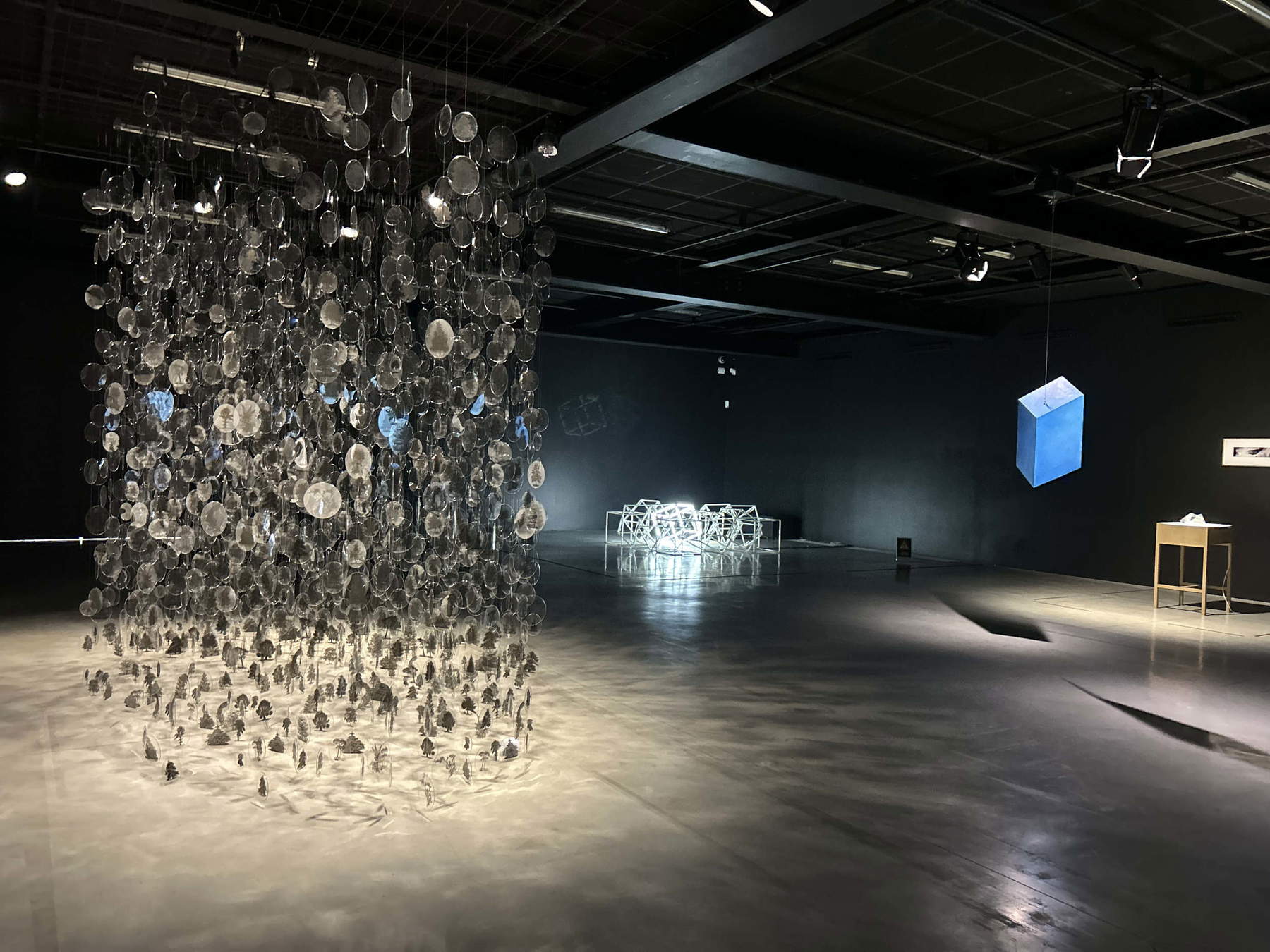
But the CCC OD also preserves a second part of the story—perhaps the one that allows us to better understand what became of Calder’s legacy after his death. The Galerie Noire hosts *L’idée des corps célestes*, a group exhibition bringing together works by artists who have participated in the residency program at the Saché studio. These works were conceived at different times—some even far from Touraine—yet they share a common interest in how matter responds to phenomena that elude immediate perception. Gravity, of course, but also balance, the duration of a movement, and the position of a body in space. Among the artists are Attila Csörgő, Jeppe Hein, Žilvinas Kempinas, Jaume Plensa, Valerie Snobeck, Francisco Tropa, and Hema Upadhyay—artists who have pursued very different lines of inquiry, sometimes employing mathematical methods and mechanical devices, and at other times relying on the properties of materials. The connection to Calder thus appears less genealogical than one might imagine: the artists who passed through the Saché studio seem to have avoided any form of mere imitation—that almost parrot-like repetition of forms and solutions that often accompanies the legacy of the great masters. Their explorations retain a distinct autonomy, while continuing to grapple with some of the problems that had obsessed Calder throughout his life. Weight, for example, remains a persistently relevant issue. So does the time required for something to move. Sometimes, for instance, all it takes are two magnetic tapes.
Žilvinas Kempinas, a Lithuanian artist who has made movement one of his obsessions, uses two of them in *Flux*, letting them float in the air until they form figures that expand, contract, and dissolve in perpetual motion, with a freedom that seems to belong far more to a living organism than to that thin, dark material, intended to preserve recordings. Magnetic film is a curious material: for decades it served to preserve something that had already happened, yet Kempinas restores it, instead, to a state of perpetual instability, where each configuration exists only for as long as it takes to be replaced by the next. The tapes rise, curve, and always seem on the verge of tangling. Then they change direction. And there is something hypnotic about this movement: the air, normally invisible, becomes perceptible through their oscillations, just as it did in the Saché studio with the dust stirred up from the floor, and the air currents can be recognized only by observing what they manage to displace.
Hema Upadhyay, an Indian artist who passed away in 2015, had also worked at Saché, where in 2010 she focused on the trees in the forest surrounding Calder’s house and studio, reproducing their forms through a multitude of transparent medallions, engraved with plant motifs and suspended in space. Their presence is almost imperceptible, at least until light passes through the surfaces and the engravings begin to cast shadows, projecting onto the floor the silhouettes of the vegetation observed outside. The forest thus enters the work through a patient process of observation and transcription, and what outside possesses a trunk, roots, and a considerable physical presence is rendered through surfaces so thin that they seem on the verge of disappearing.
These are all works that require time, but also a certain willingness to observe phenomena that, in everyday life, we tend to notice only when something stops functioning as expected. Calder’s legacy, as seen through these works, thus appears less reassuring than the usual image of his colorful sculptures. What remains of his exploration is also the awareness that a form, however carefully constructed, continues to depend on conditions over which the artist can exercise only partial control.
Calder knew this well, having spent years studying the weights and strengths of materials before entrusting some of his sculptures to air currents. Meanwhile, in the large nave of the CCC OD, his black works retain an uncompromising quality that seems to have little to do with the idea of art conceived to entertain. Yet they belong to the same man who built little wire acrobats, who played at the circus, who made lamps for his own home, and, in Saché’s studio, arranged large sheets of steel according to balances of equilibrium that would allow them to occupy space without losing the lightness of the design. Perhaps the most difficult thing, when faced with Calder, is to accept that all this work could result in such a small movement.
Warning: the translation into English of the original Italian article was created using automatic tools. We undertake to review all articles, but we do not guarantee the total absence of inaccuracies in the translation due to the program. You can find the original by clicking on the ITA button. If you find any mistake,please contact us.