



by Redazione 12/11/2026


Categories: Travel / Disclaimer
From the Gallerie dell’Accademia to the Peggy Guggenheim Collection, via the Doge’s Palace and Ca’ Pesaro: a tour exploring Venice’s major art institutions, with some tips on how to get around and find parking.


Venice reveals itself slowly, amid the marble facades of the palaces reflected in the canals, the golden glints of Byzantine mosaics, and the monumental canvases of the Venetian masters. Visiting its museums means journeying through centuries of art history, following a path that weaves together architecture, painting, and the urban landscape. To fully appreciate its richness, it’s helpful to plan your itinerary and choose your stops carefully.


Arriving in Venice by Car and Arranging Parking
The city’s unique urban layout requires an initial logistical decision. The historic center is entirely pedestrian-only, and vehicle access ends at Piazzale Roma and the Tronchetto, both reachable from the mainland via the Ponte della Libertà. To leave your car in Venice, you must therefore find a parking spot before heading to the main cultural destinations.
Piazzale Roma is a practical option for those who want to start their visit right away, while Tronchetto offers parking facilities connected to the city terminal via the People Mover. Another option is the parking lots in Mestre, from which you can reach the Venice Santa Lucia train station by train. San Giuliano and Fusina also offer parking options on the mainland, with water connections to the lagoon. The choice depends on the length of your stay, the number of travelers, and the location of the museums you plan to visit.




To compare rates and check availability at different facilities, Parclick lets you find and book a parking spot in Venice in advance. Comparing prices can help you save money, especially for stays lasting several days. Once you’ve parked your car, the trip takes on a different rhythm, marked by the passing of the vaporetti and the sound of footsteps on the ancient stone pavements.
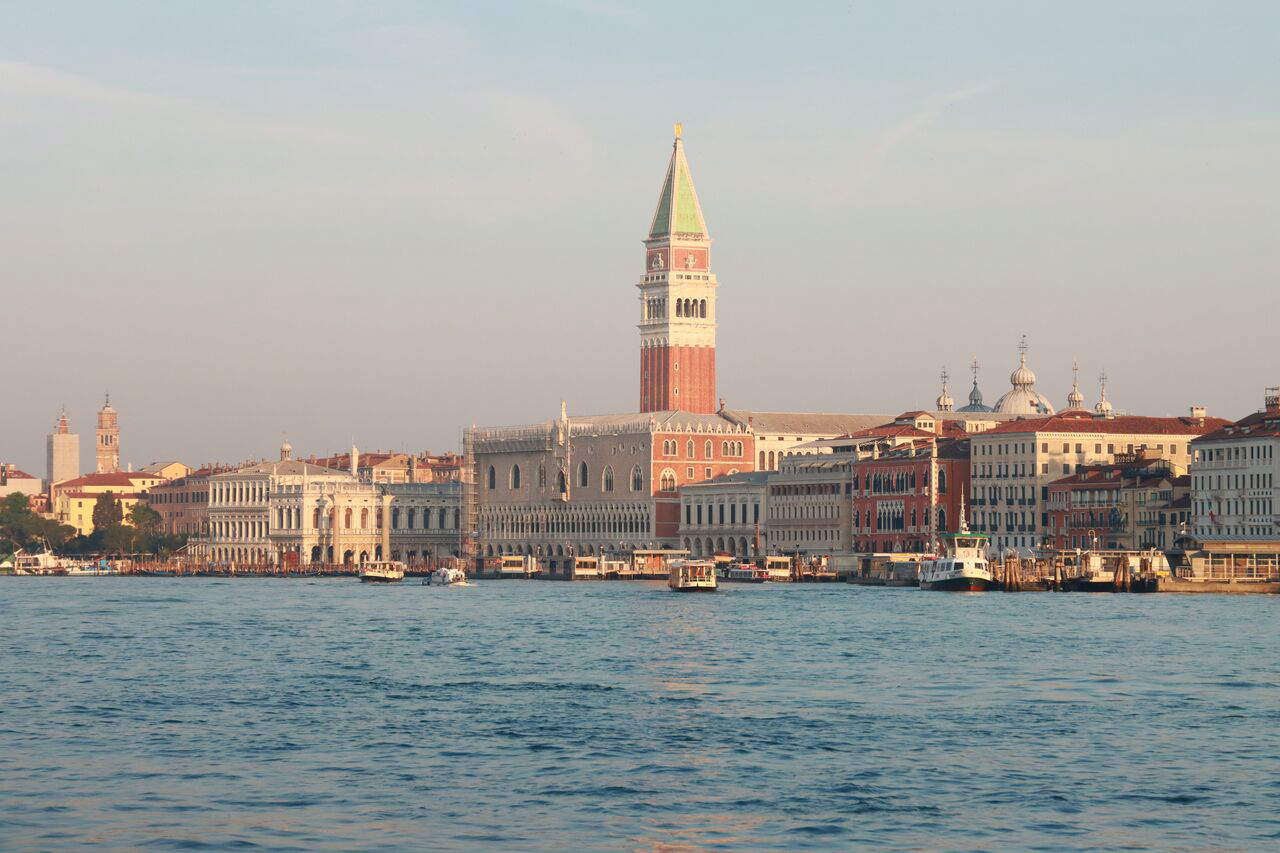
From the Gallerie dell’Accademia to the Doge’s Palace: Venice’s Cultural Heritage
An itinerary dedicated to great Venetian painting must include a stop at the Gallerie dell’Accademia. Overlooking the Grand Canal in the Dorsoduro district, the complex houses works essential to understanding the evolution of Venetian art from the 14th to the 18th century.
In its galleries, you’ll encounter works by Giovanni Bellini, Giorgione, Titian, Tintoretto, and Veronese. The luminous compositions, painted architecture, and rich colors of the canvases chronicle an artistic era in which Venice became one of the leading centers of European figurative art.
The tour can continue toward St. Mark’s Square, where the Doge’s Palace bears witness to the ancient political and cultural power of the Serenissima. The Venetian Gothic façade, punctuated by arches and marble tracery, leads into monumental rooms decorated by the Republic’s greatest artists. Of particular interest is the Hall of the Great Council, dominated by the vast *Paradiso* by Tintoretto and his workshop. Here, painting takes on spectacular dimensions and becomes an expression of Venetian institutional magnificence.
Modern and Contemporary Art Amid Historic Palaces and Major Exhibitions
Venice also preserves a vibrant modern and contemporary identity that engages in a constant dialogue with the legacies of its past. On the Grand Canal, the Peggy Guggenheim Collection is housed in Palazzo Venier dei Leoni, an unfinished 18th-century residence transformed into one of the most significant venues for 20th-century European and American art. Works by Picasso, Pollock, Kandinsky, and other leading figures of the avant-garde bear witness to the radical transformations in artistic expression.
Not far away, Punta della Dogana occupies the historic customs house with its distinctive triangular layout, at the point where the Grand Canal meets the Giudecca Canal. The restored spaces host contemporary exhibitions, creating a striking interplay between installations, historic architecture, and the lagoon landscape.
Also worth a visit is Ca’ Pesaro, a sumptuous Baroque palace that houses the International Gallery of Modern Art, with collections offering further insights into the transformations of art between the 19th and 20th centuries.
Rounding out this panorama are the Biennale exhibitions, spread across the Giardini, the Arsenale, and other venues throughout the city. Checking the schedule in advance allows you to plan an itinerary tailored to your interests.
Venice requires time, curiosity, and a willingness to let yourself be surprised by its rich artistic heritage. Planning your stay, tickets, and transportation in advance allows you to devote more attention to the artworks and the sites. Amid Istrian stone, water, and shifting light, every visit becomes an encounter with art history and the unique beauty of the lagoon.
 |
| Venice: A Guide to Museums and Art Galleries—How to Plan Your Visit |
Warning: the translation into English of the original Italian article was created using automatic tools. We undertake to review all articles, but we do not guarantee the total absence of inaccuracies in the translation due to the program. You can find the original by clicking on the ITA button. If you find any mistake,please contact us.