




by Redazione 24/11/2026



Categories: Ancient art / Disclaimer
Major discovery in Spain: an inscription on the panels and a 16th-century inventory have made it possible to link a small Flemish triptych depicting the Crucifixion—a work by followers of Rogier van der Weyden—to the Catholic Monarchs, Isabella and Ferdinand. After more than five centuries in the same family, it will go up for auction at Abalarte in Madrid this December, with an estimate of 1.5 mi


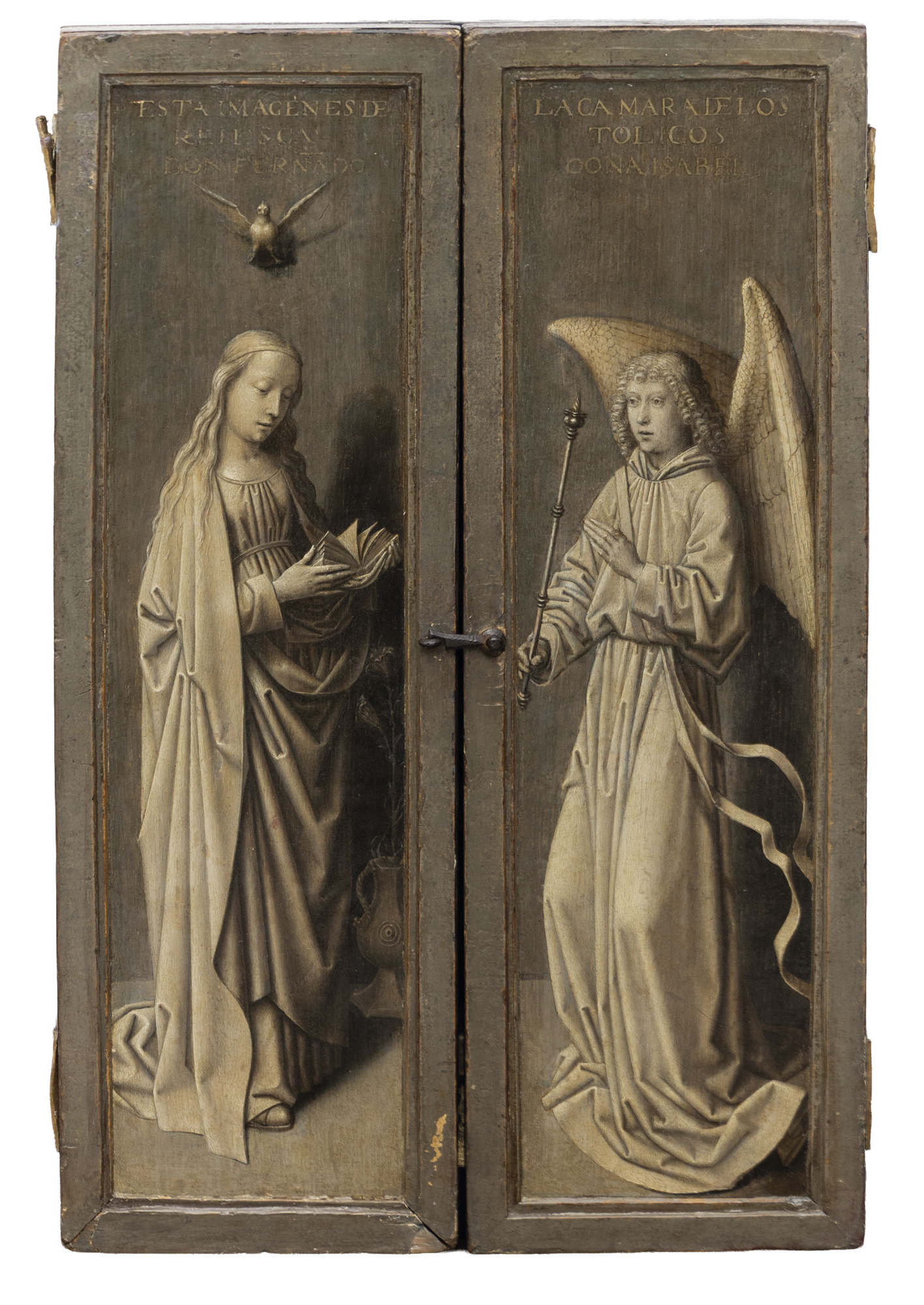
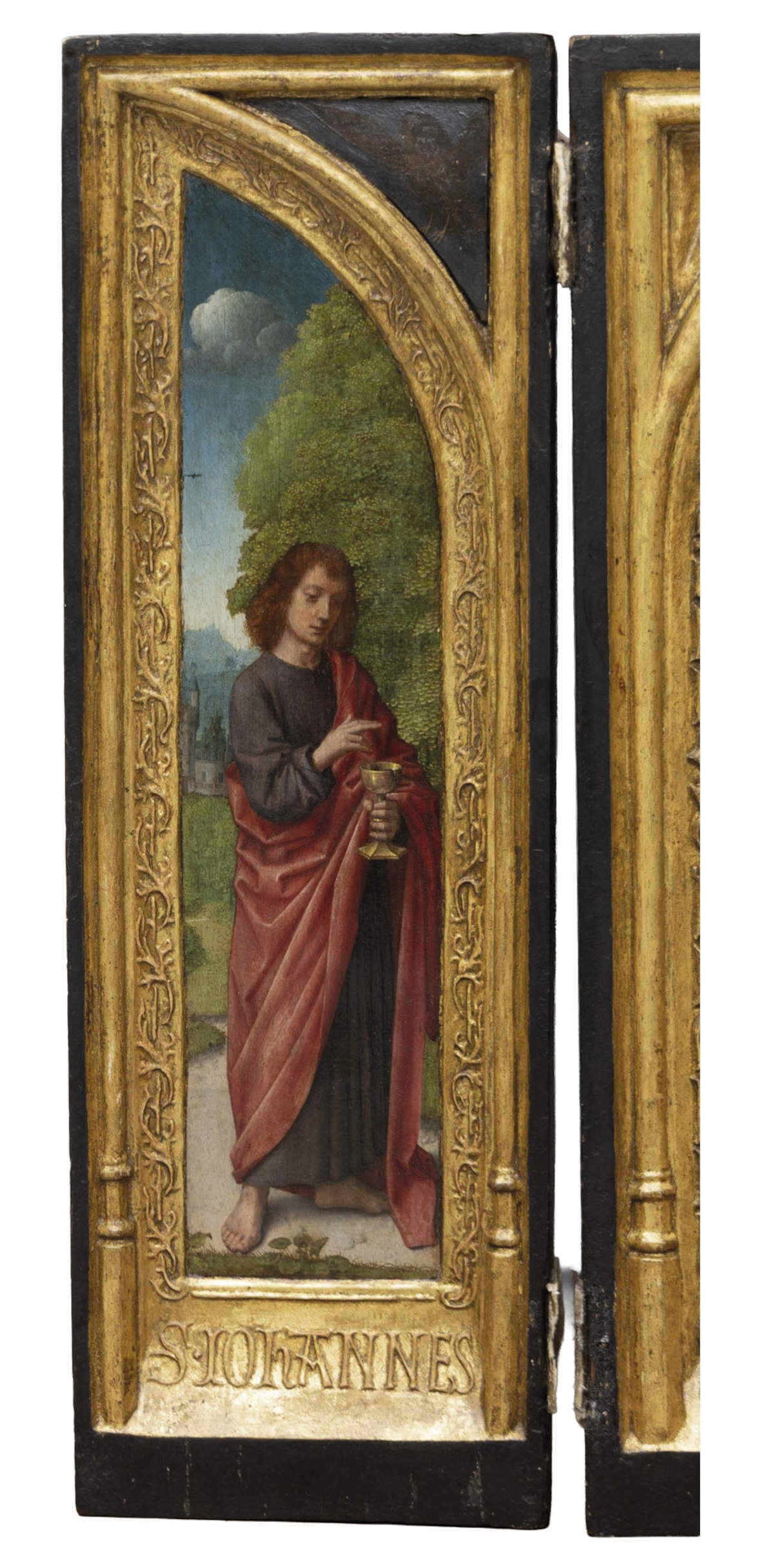
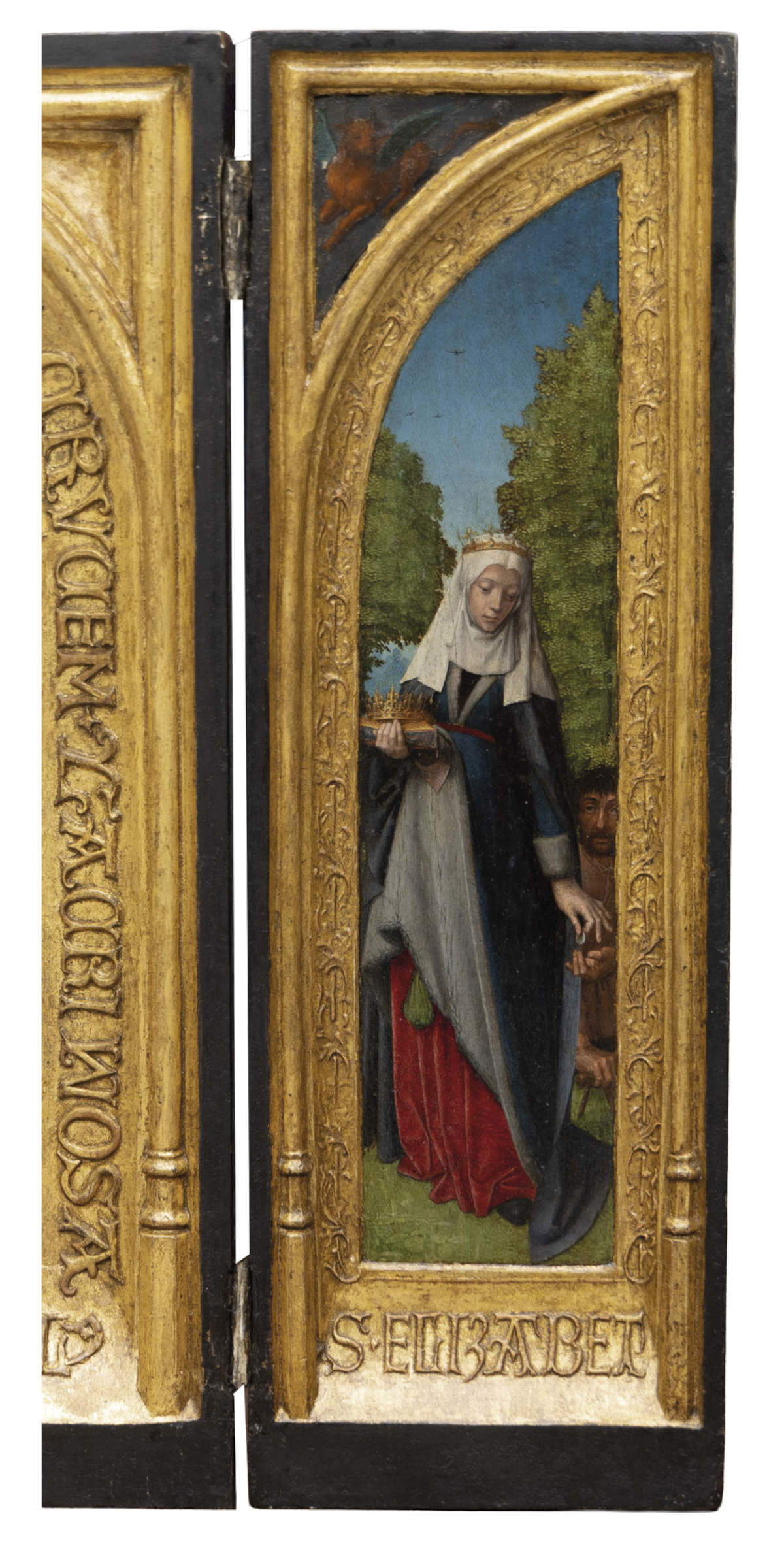
A major discovery by the Spanish auction house Abalarte, which has unearthed a triptych that once belonged to the Catholic Monarchs of Spain, Isabella I of Castile and Ferdinand II of Aragon. The work has been attributed to followers of Rogier van der Weyden; it was likely painted around 1500 and will go up for auction in December with a starting bid of 1.5 million euros. When the triptych is closed, the central panel depicts a Crucifixion , while the two side panels feature St. John the Evangelist and St. Isabella of Hungary, the saint after whom the queen was named; when open, however, only an Annunciation is visible, painted in grisaille—in shades of gray—like a painted sculpture. On the panels, above the figures, runs an inscription in capital letters: “ESTA IMAGEN ES DE / LA CAMARA DE LOS / REIES CA / TOLICOS / DON FERNANDO / DOÑA ISABEL,” meaning “This image is from the chamber of the Catholic Monarchs, Don Ferdinand and Doña Isabella.” According to the auction house, this triptych, painted in oil on wood, has remained in the same family’s possession from the queen’s death in 1504 to the present day.


It is a small object, intended for private devotion. When closed, it measures 39.7 by 26 centimeters; when open, 39.7 by 52.5. It will be lot 1162, the highlight of Abalarte’s final auction of the year. The historical reconstruction proposed by the auction house is based not only on the inscription but also on an archival document. Among the queen’s possessions was, in fact, an inventory of the “Retablos e cosas de devoçion”—the altarpieces and devotional objects belonging to Isabella that were taken to Granada. This was published by art historian Francisco Javier Sánchez Cantón in the volume *Libros, tapices y cuadros que coleccionó Isabel la Católica* ( 1950). On page 70 of folio 178, there is a “retablo de tres pieças,” literally a “three-part altarpiece.” In the center is a crucifix with the Virgin Mary clinging to the cross; in one of the panels is Saint John the Evangelist, in the other Saint Isabella, and the dimensions when closed are one-third by one-third. According to Abalarte, the correspondence in both iconography and dimensions indicates that this is indeed the work in question.


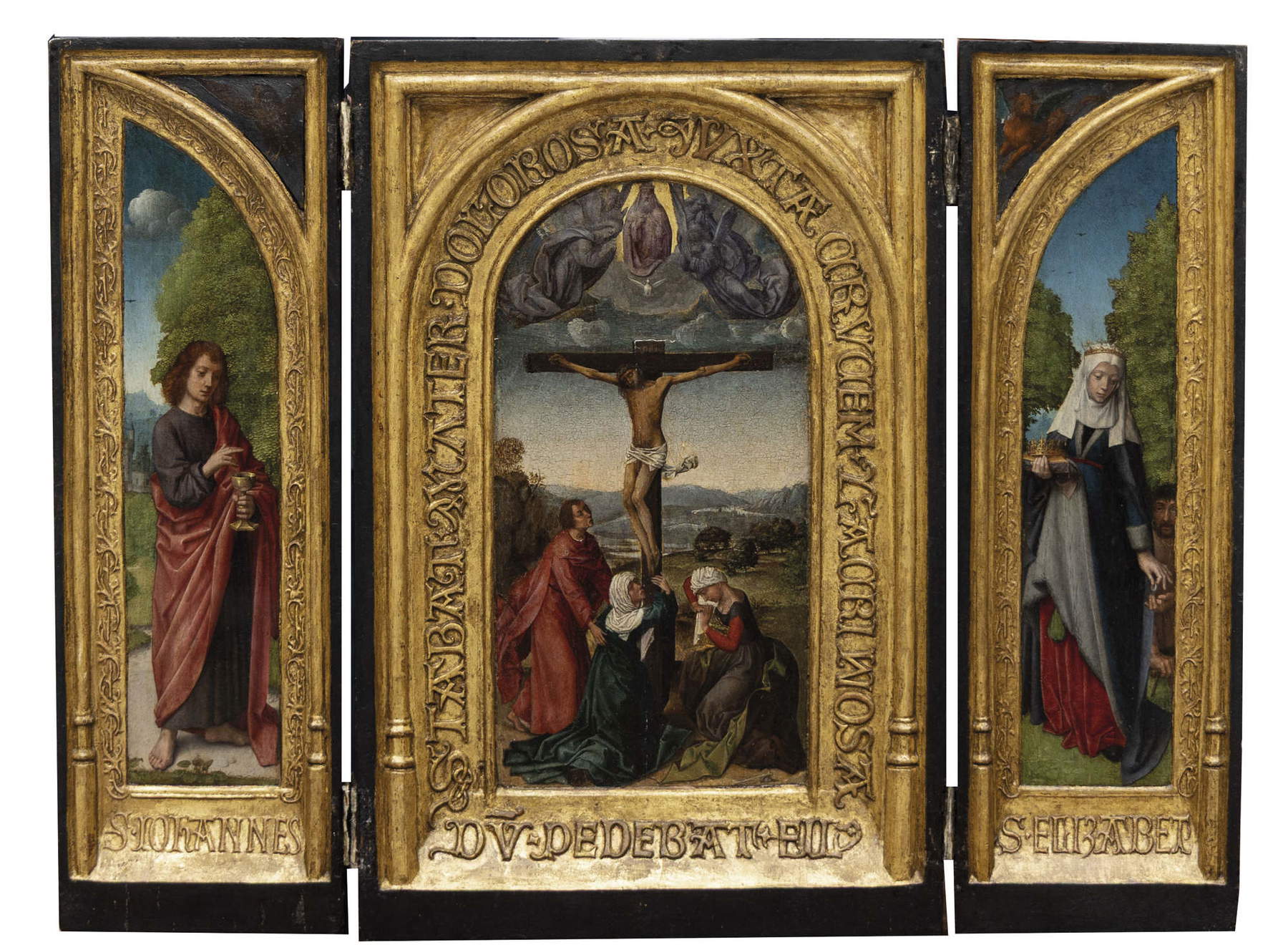
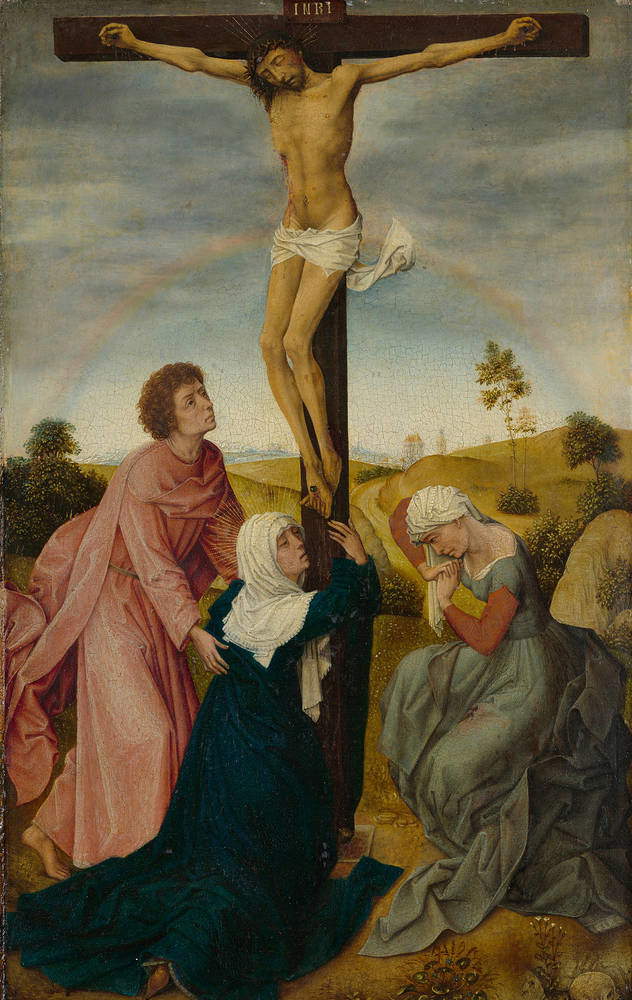
Sánchez Cantón had also added an observation: the central panel was perhaps similar to Weyden’s work in the Dresden museum, and the comparison holds up: the Crucifixion panel of the triptych does indeed echo the composition of the Dresden work, which art historian Max J. Friedländer attributed to Van der Weyden’s workshop, executed in the years very close to the master’s own, and which Abalarte dates between 1450 and 1500. That panel, in turn, drew on Rogier’s original models, recognizable in the Vienna Crucifixion Triptych, dated 1443–1445, and in the Magdalene from the Deposition in the Prado Museum. According to the auction house, those models continued to circulate throughout the fifteenth century and into the early sixteenth century, appearing in numerous versions by the master’s workshop and his followers.


The study accompanying the work, signed in July 2025 by conservators Carmen Levenfeld Laredo and Ana Monereo Megías, analyzed the style, iconography, materials, and preparatory drawings through physical and chemical examinations. The conclusion is that the triptych is not the work of a single painter. The highest-quality parts are the grisaille panels, which the study deems very close in execution to the work of Rogier van der Weyden himself. The two saints on the inner panels are also of excellent craftsmanship, as evidenced by the folds of Saint Isabella’s fur tunic and those of Saint John’s cloak. The drawings beneath the paint all appear to have been executed freehand with a brush, with brushwork and gestural quality of the highest order, especially in the grisaille panels. The central Crucifixion is the most difficult to assess, as its state of preservation does not allow for an appreciation of its original quality.
The central panel also has a unique history: at some point, it was adapted to fit a different frame, with the addition of a lunette depicting God the Father, the Holy Spirit, and several angels. According to the catalog entry, this was a common practice at the time, as demonstrated by the Pietà with Donor from Van der Weyden’s workshop, now in the Prado. As for the date, if the work is indeed the one listed in the inventory, the latest possible date is the queen’s death in 1504: the triptych must therefore be dated to the late 15th century or the very early 16th century.
Then there is the story of the family that preserved it. Upon the death of Isabella—born in Madrigal de las Altas Torres in 1451 and died in Medina del Campo in 1504—the triptych was reportedly handed over to Juan López de Lazárraga (c. 1440–1536). He held the position of Contador Mayor—that is, secretary to King Ferdinand and executor of the queen’s will. From him, the work passed to his descendants in the Lazárraga, Plaza, and Artazcoz families, all the way to the current owners.
Abalarte describes the discovery as an exceptional artistic and historical find, of particular importance to collectors because it is directly linked to the patronage of the Catholic Monarchs. The market will determine how much weight the inscription on the panels and the documented provenance will carry.
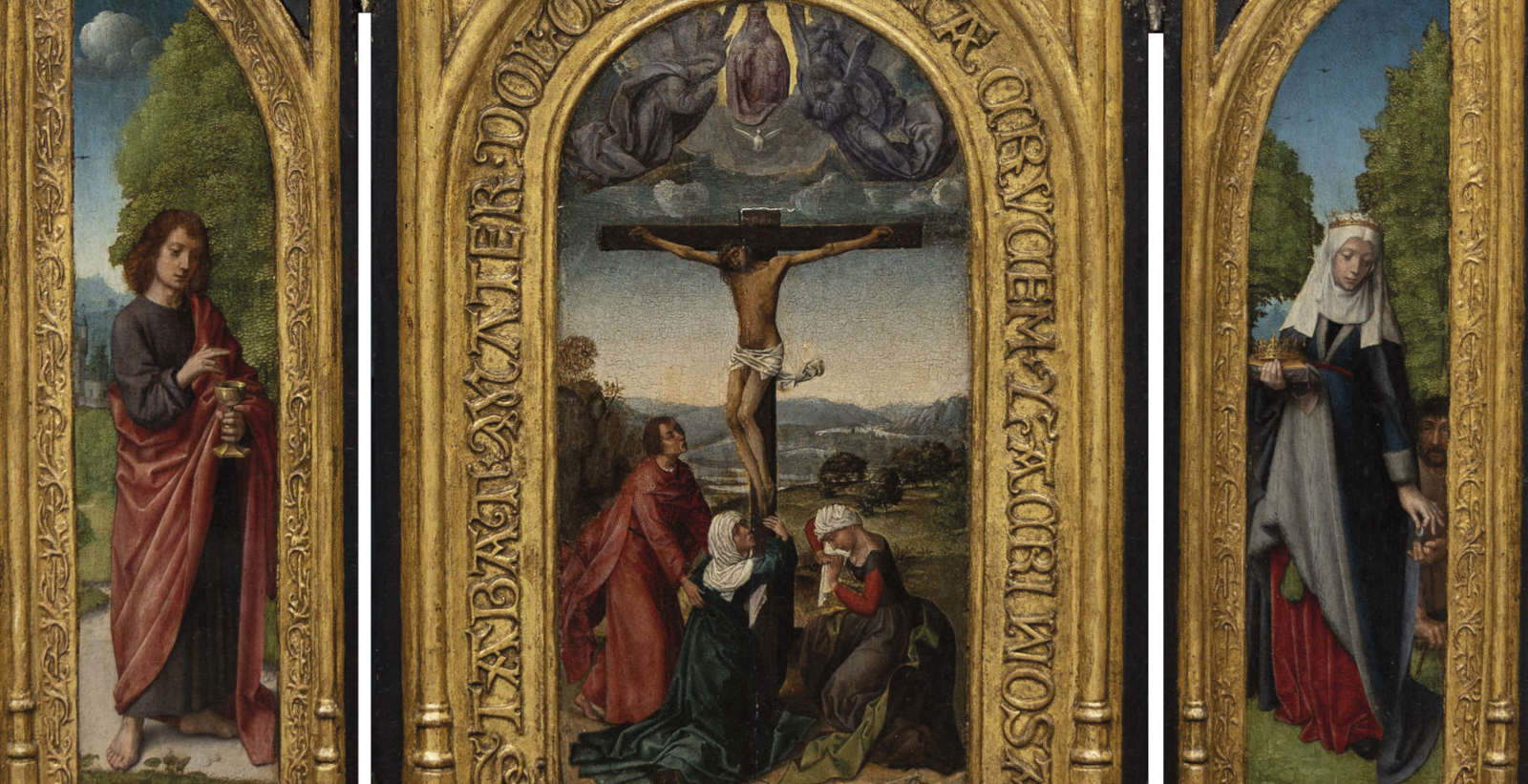 |
| A precious triptych that once belonged to the Catholic Monarchs, Isabella and Ferdinand, has resurfaced in Spain |
Warning: the translation into English of the original Italian article was created using automatic tools. We undertake to review all articles, but we do not guarantee the total absence of inaccuracies in the translation due to the program. You can find the original by clicking on the ITA button. If you find any mistake,please contact us.