





Correggio’s *Madonna of Saint Sebastian* (Antonio Allegri; Correggio, 1489–1534) was the focus of a comprehensive conservation and research project at the Gemäldegalerie in Dresden, where the painting is housed. The project focused on one of the most important paintings in the German museum’s collection and aimed not only to stabilize the work’s fragile structure but also to study the causes of its deterioration and the painting technique used by Correggio. The project took place within the Zwinger—one of the museum’s exhibition spaces—from July 1, 2022, to December 31, 2025, in a specially set up temporary restoration laboratory open to the public, and the results will soon be unveiled to the public during an exhibition opening on September 19.
The decision to restore the *Madonna of Saint Sebastian* stems from the particularly fragile condition in which the painting has survived to the present day. The work, created by Correggio for the Confraternity of Saint Sebastian in Modena around 1524, is in fact painted on wood and exhibits a characteristic warping of the surface that is immediately recognizable. The problem is linked to the painting’s wooden structure: the vertical planks that form the support have warped, causing tension especially at the joints. The result has been the gradual lifting of the layers of paint and the loss of portions of the paint film precisely along the joints between the planks. Historical sources also indicate that the painting had already sustained damage while it was still in the possession of the Modena confraternity. Over the centuries, the situation has worsened further, necessitating repeated repair and consolidation efforts. The interventions carried out at various times sought to stabilize the support and the paint layers, but they did not always yield positive results. On the contrary, some interventions carried out over the course of the work’s long conservation history have contributed to further compromising its legibility.
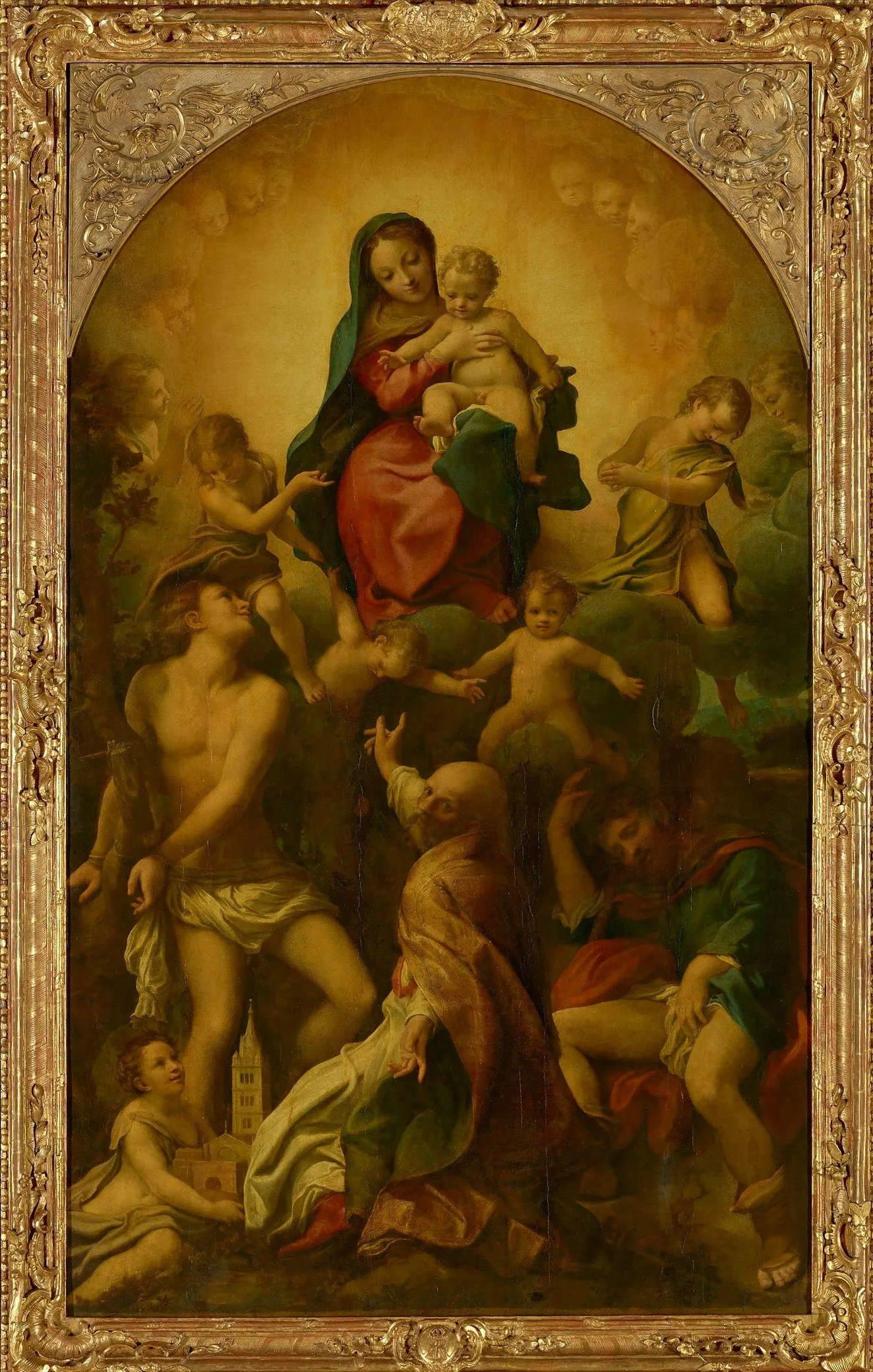
In fact, the problem is not limited to the wood: over the centuries, the painted surface has undergone numerous interventions, including the application of backing systems to the reverse of the panel, the securing of raised areas of paint, puttying, retouching, repainting, and repeated applications of varnish. These layers have significantly altered the appearance of the work, making it difficult to discern the original quality of Correggio’s painting. The Dresden project thus arose from the need to simultaneously address both the structural problems of the painting and those related to its surface.
Preliminary research played a fundamental role in defining the conservation project. Before restoration began, various technical investigations were carried out, including X-rays, ultraviolet fluorescence analysis, and infrared reflectography. These examinations provided information on the work’s technical structure, the composition and characteristics of the paint layers, and the state of preservation of both the surface and the wooden support. The results of the investigations, together with other available information on the painting’s history, formed the basis for determining the restoration approach.
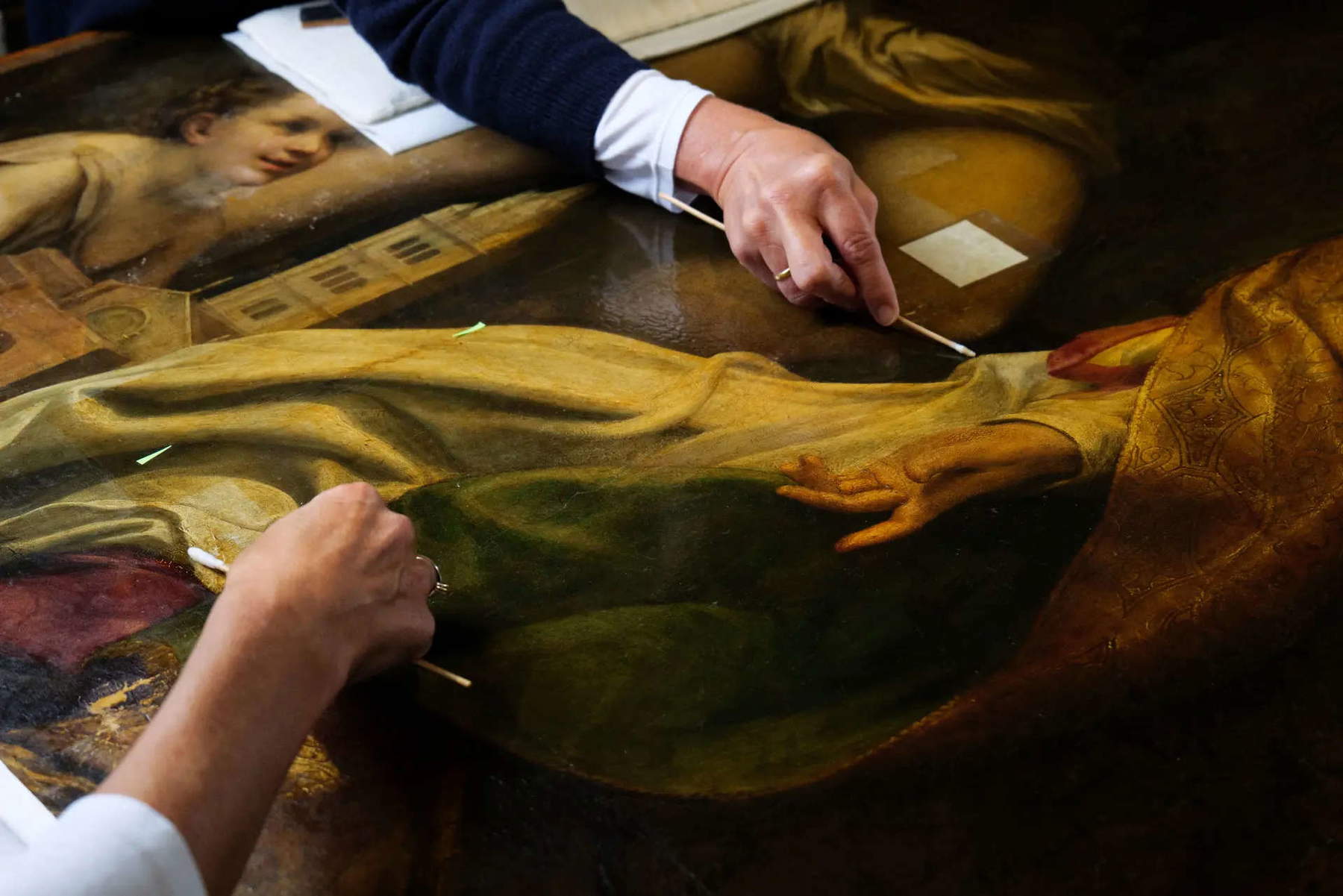
One of the most delicate phases involved the front surface of the panel. The painting featured heavily yellowed layers of varnish applied unevenly, as well as aged putty, retouches, and repainting that had undergone color changes over time. The presence of these materials prevented the full appreciation of the work’s aesthetic effect and, above all, limited the ability to perceive the chromatic richness of the original painting. Before proceeding with removal, solubility tests were conducted on small, selected areas of the surface to determine the most suitable method for removing the overlying layers without damaging the original ones. Once the appropriate methodology was identified, the conservators proceeded gradually to reduce the varnishes and overpaintings, working in subtle stages and constantly monitoring the surface’s response.
The guiding principle of the intervention was to distinguish with the utmost precision between what belongs to Correggio’s original painting and what was added in later periods. This is not, in fact, a simple cleaning operation, but a process in which each layer must be identified, studied, and evaluated before it is eventually removed.
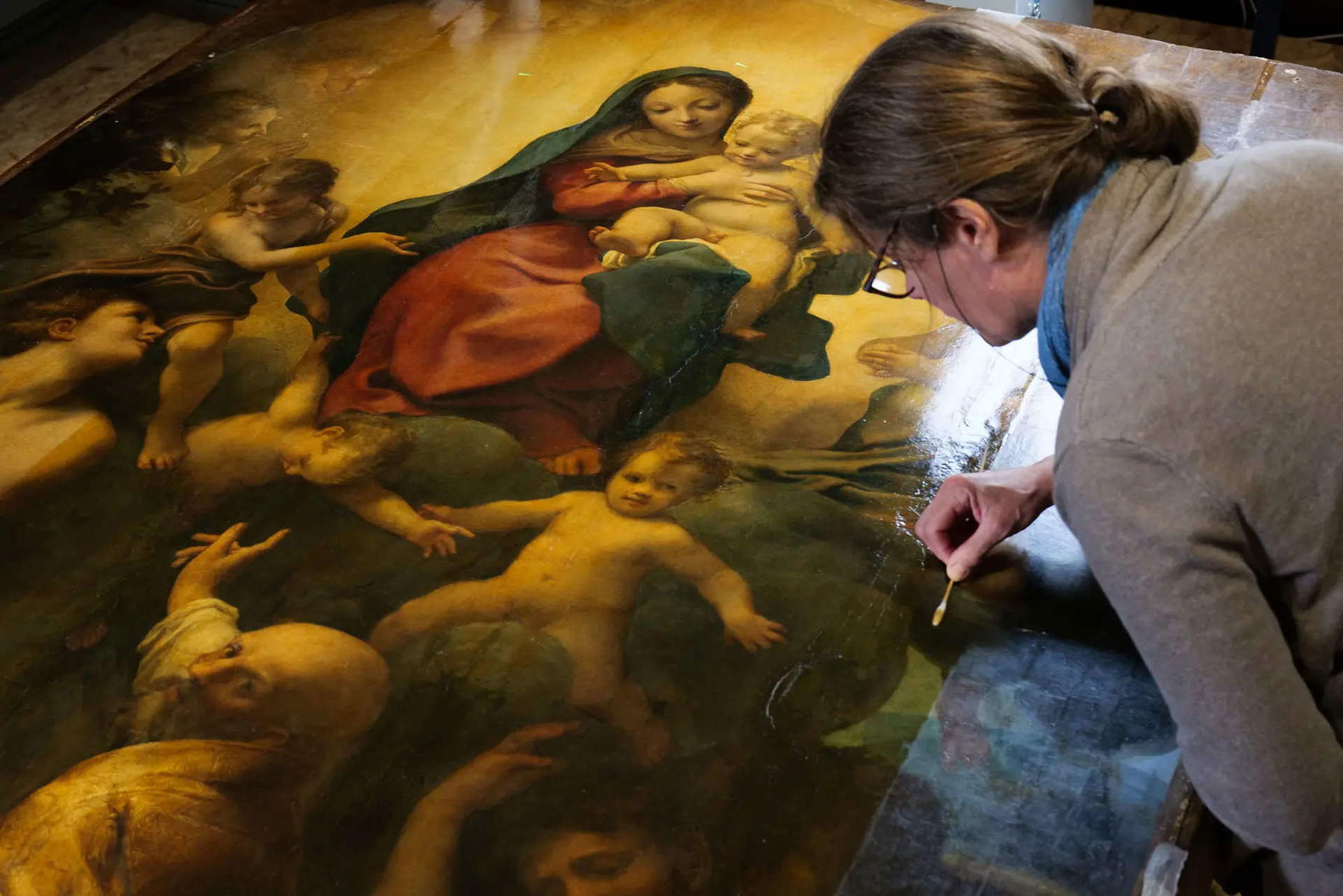
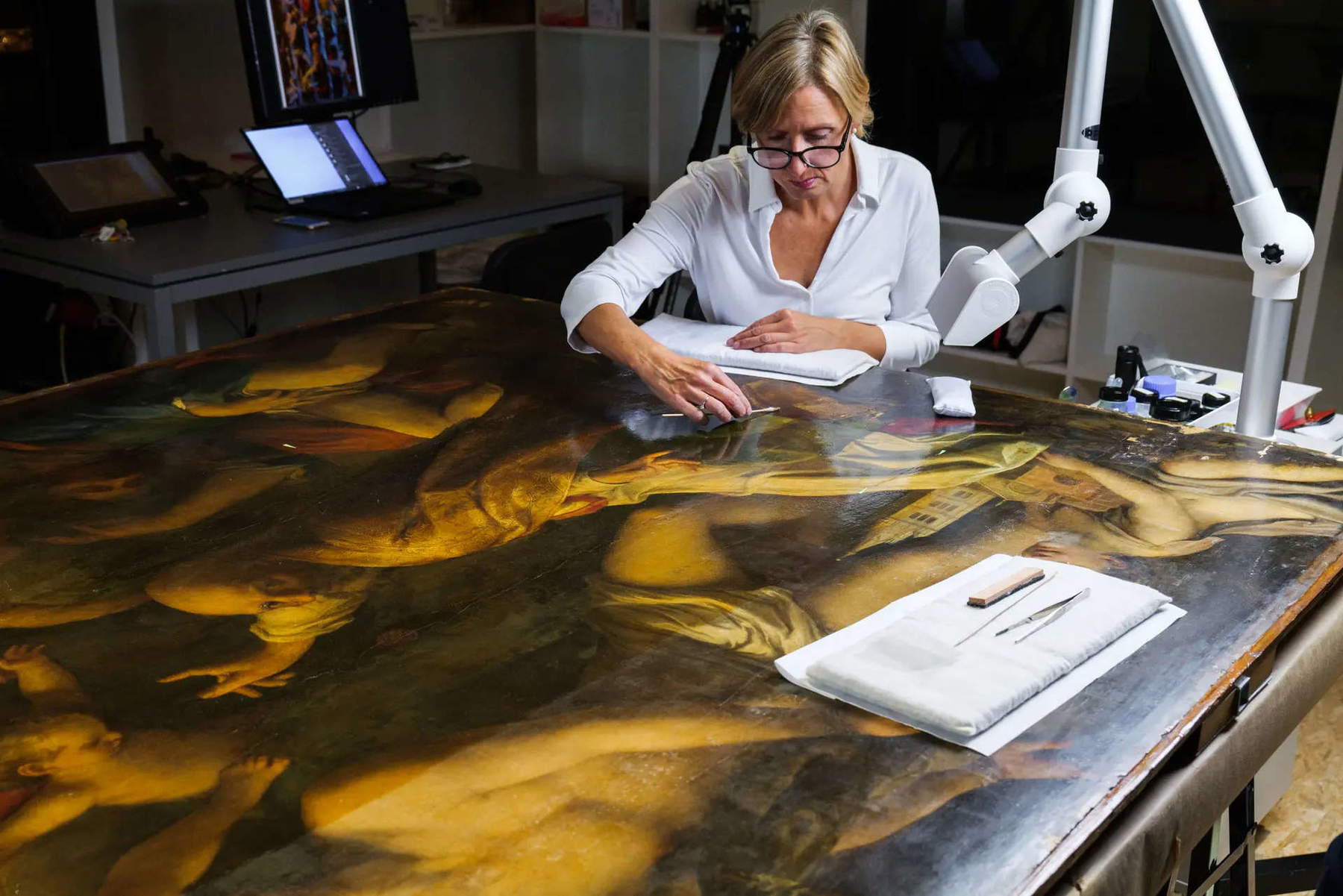
The approach taken was therefore particularly cautious: a paint layer is removed only when it can be identified with sufficient certainty as a later overpainting. The goal is not to erase the work’s history, but to restore as much of its original legibility as possible while ensuring the long-term preservation of Correggio’s authentic material.
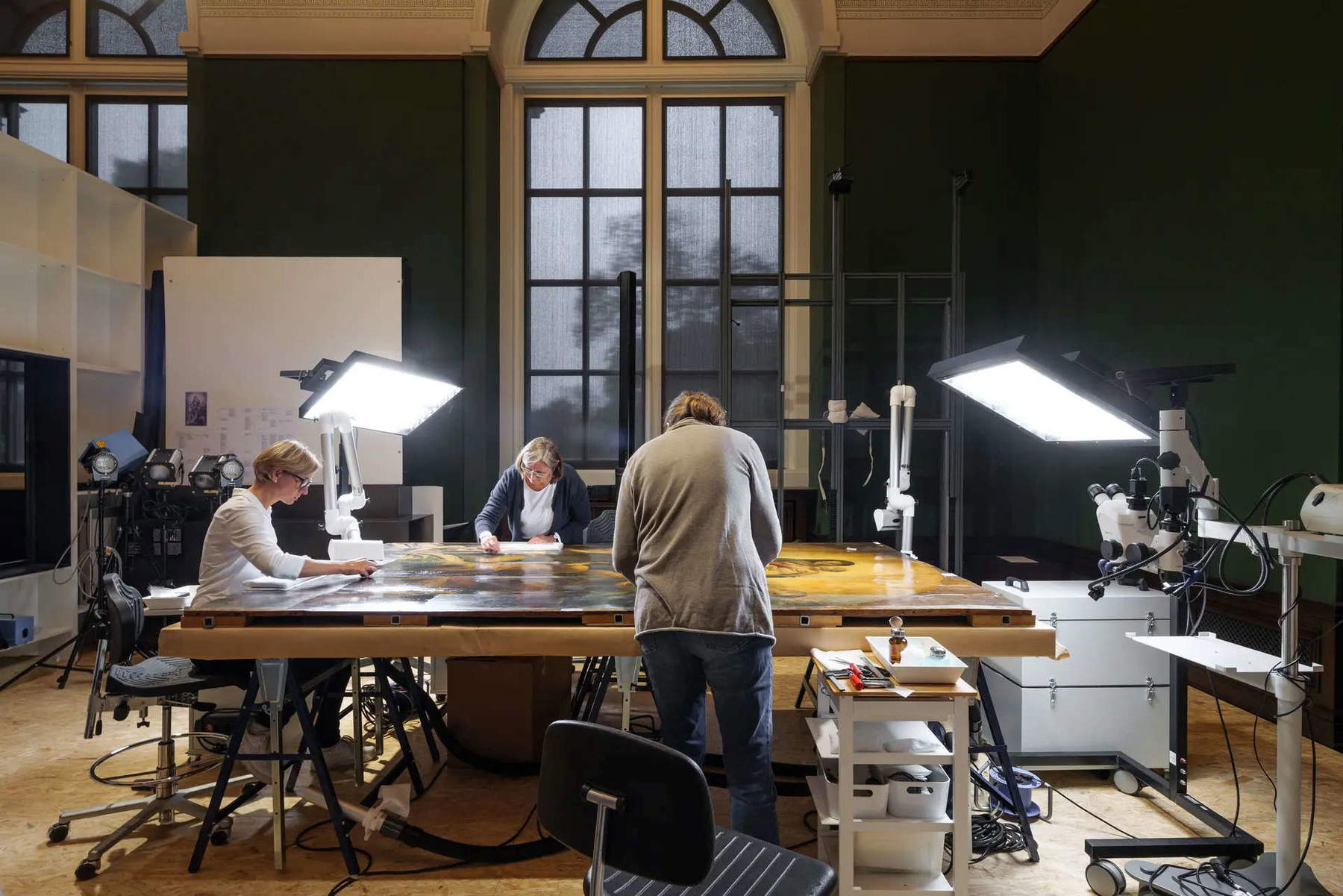
The delicacy of the intervention is also determined by the very nature of the Madonna of Saint Sebastian. The panel measures 265 by 161 centimeters, a size that allows the three conservators involved in the project to work on the painting simultaneously in the laboratory. The work, however, did not proceed according to a rigid sequence. The conservators organized their activities flexibly, adapting to the needs of the research and the requirements that emerged during the various stages of conservation. The temporary workshop set up in the Zwinger also made it possible to turn the restoration intoan opportunity for shared learning. The fragility of the painting made it impossible to move the work out of the gallery. For this reason, the restoration site was set up directly within the exhibition spaces, creating a sort of temporary conservation studio visible to visitors. In this way, the public was able to observe the restorers’ work firsthand and follow the gradual transformation of the painting’s surface. The conservators worked primarily from Tuesday through Friday during the museum’s opening hours. The workshop was open to the public throughout visiting hours, from 10 a.m. to 5 p.m., and was closed on Mondays. The opportunity to witness the work in progress gave the project a dimension beyond the strictly scientific and conservation-oriented aspects, making visible operations that normally take place out of the public eye.
One of the project’s main objectives was to restore the rich color palette of Correggio’s painting. According to the analyses and observations conducted during the work, the variety and quality of the original colors appear to have been largely preserved beneath the later layers. The gradual removal of yellowed varnishes, overpainting, and other materials added over time thus allows the original colors and details of the composition to reemerge. It is precisely this restoration of the work’s visual quality that inspired the title “rebirth” for the project (“Correggio’s rebirth”). The Italian term was chosen to describe the possibility that the Madonna of Saint Sebastian might once again be perceived in the richness of its colors and details, after centuries of alterations and interventions. However, “rebirth” should not be understood as an artificial return to an ideal state of the work, but rather as the result of a scientific and conservation-based process grounded in knowledge of the original material and, where possible, the removal of additions that have compromised its interpretation.
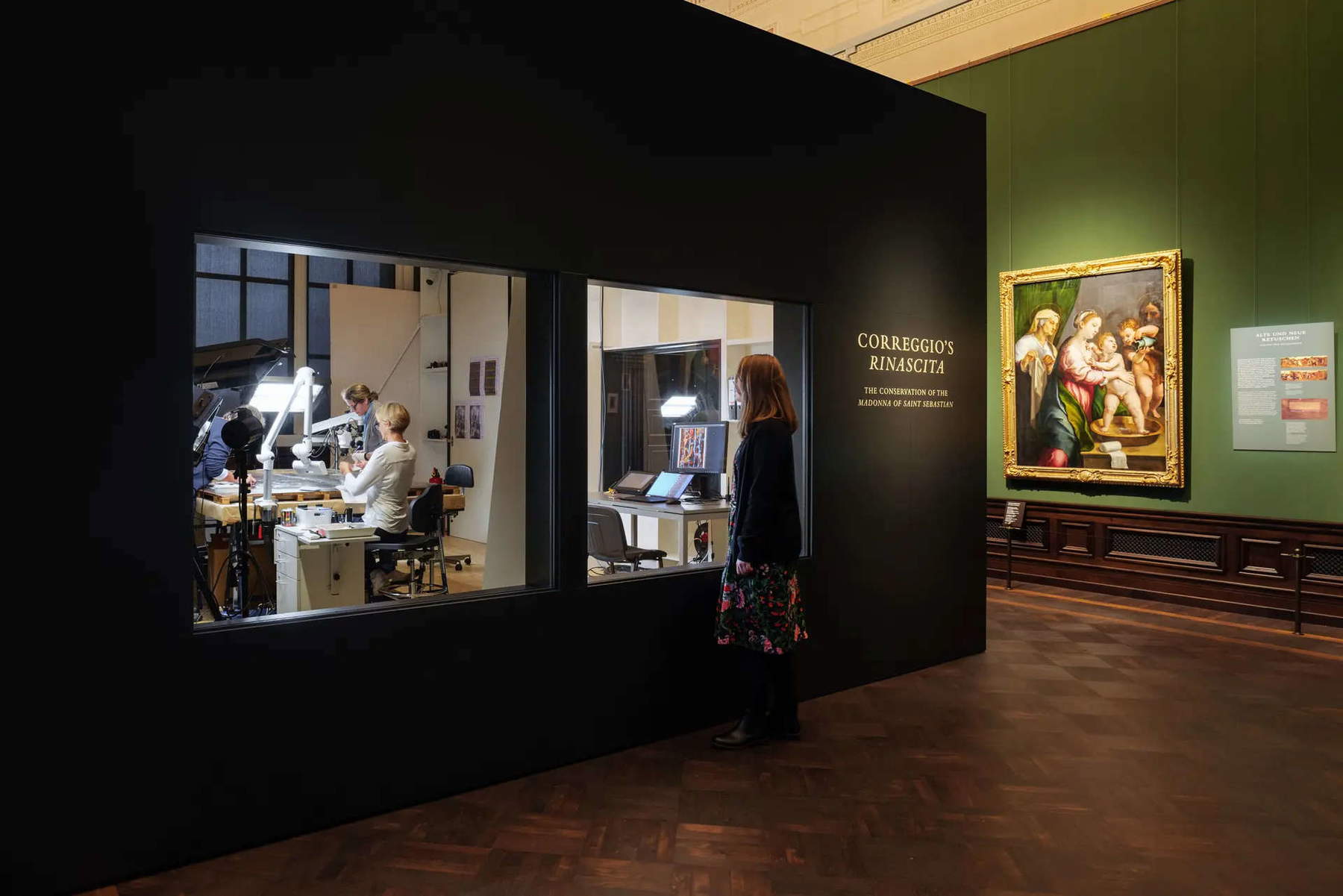
Once the original painting has been stabilized, the project also calls for the professional filling of existing gaps and the application of a new varnish. In this way, the restoration aims to ensure adequate protection of the surface and improved legibility of the image, while keeping the original parts recognizable and the additions distinguishable.
The Madonna of Saint Sebastian also holds an important place in the collection of Correggio’s works housed in Dresden, and the collection at the Gemäldegalerie in Dresden serves as a particularly significant reference point for the study of his oeuvre. In fact, the museum owns four altarpieces by Correggio, forming what is considered the world’s most important collection of the artist’s altarpieces. Along with the Madonna of Saint Sebastian, the collection includes *The Night*, dating from around 1528–1530, the Madonna of St. Francis, painted in 1514–1515, and the Madonna of St. George, generally considered the artist’s last altarpiece and dated to around 1529–1530.
|
| Correggio's "Madonna of Saint Sebastian" Is Being Restored in Dresden |

Warning: the translation into English of the original Italian article was created using automatic tools. We undertake to review all articles, but we do not guarantee the total absence of inaccuracies in the translation due to the program. You can find the original by clicking on the ITA button. If you find any mistake,please contact us.






















 IT
IT FR
FR DE
DE ES
ES CN
CN


