





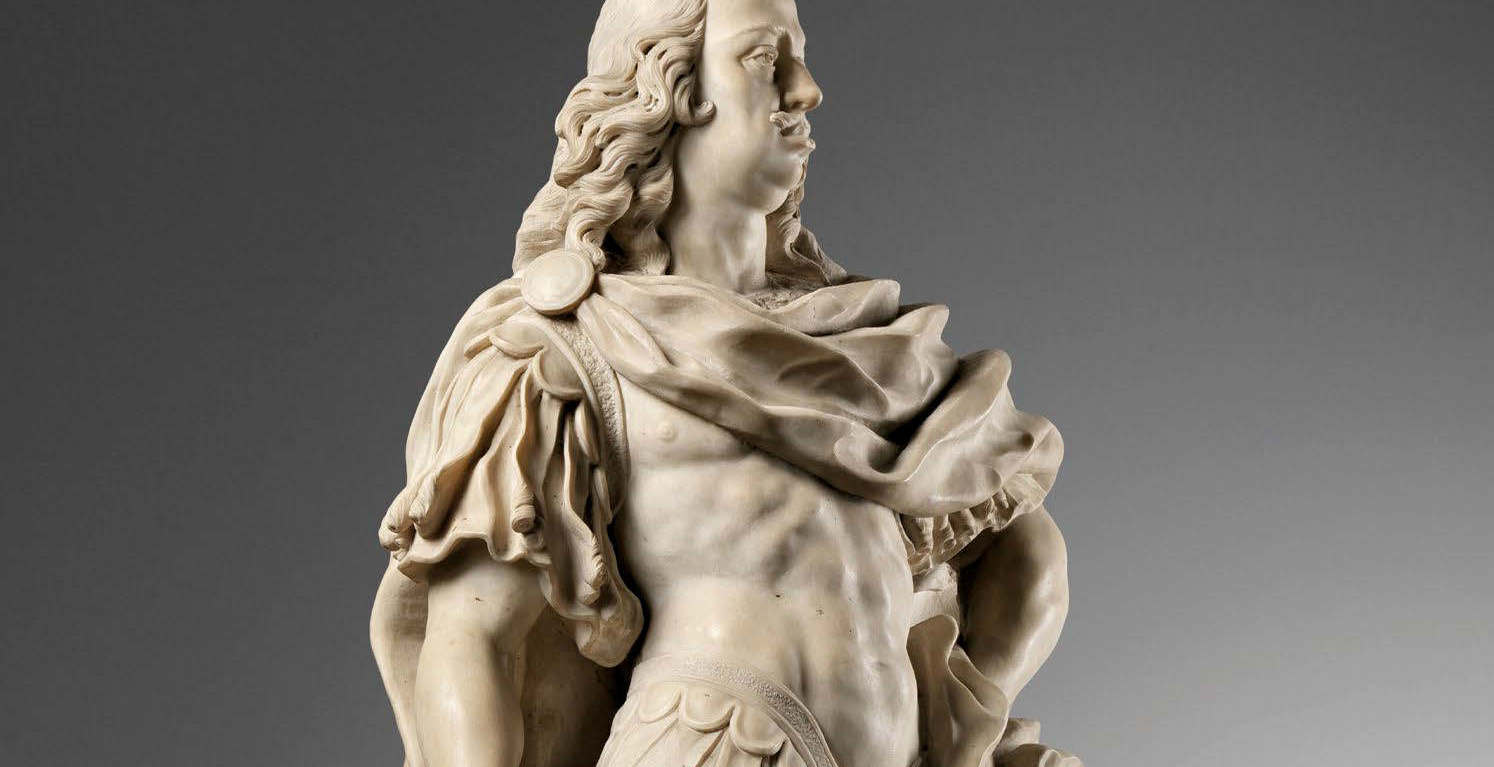
There was a visual contrast of great scenic and narrative impact that greeted anyone who, in the final years of the 17th century, crossed the threshold of the main hall of Villa Rondinelli-Vitelli in Fiesole: Awaiting visitors inside the hilltop residence in Fiesole was not the usual gallery of family busts, nor a traditional series of genealogical portraits painted on canvas, but rather an imposing marble colossus over two meters tall, designed to dominate the domestic space with the solemn regality and imperious bearing of a general from ancient Rome. Depicted in a flamboyant, heroic pose of command—with his athletic, muscular torso boldly on display, his richly adorned armor, wearing ancient Roman footwear and holding the staff of command firmly in his right hand, was not a Caesar from ancient history or a hero of classical myth, but rather Grand Duke Cosimo III de’ Medici, sculpted in this form by Lorenzo Merlini ( Florence, 1666 – Rome, c. 1745), in an imposing statue that the Walter Padovani Gallery is now bringing to the market’s attention, having exhibited it at the 2026 edition of the Florence International Antiques Biennale .
What makes this work an artistic testament of great narrative depth, however, is not merely the dramatic grandeur of its monumental dimensions or the choice of an ancient-style costume: the true element of surprise and interest lies in the coexistence, within the same block of marble, of the idealized transfiguration of the body and the almost ruthless physiognomic realism of the face. Above the athletic, powerful, and dynamic forms of a Roman commander, the Florentine sculptor Lorenzo Merlini carves, with sharp and rigorous precision, the real and stern features of the Medici sovereign, preserving his most characteristic and human facial traits—such as the mustache, the receding hairline, or the heavy line of the chin—not to mention the prominent nose. Yet this fidelity to reality never descends into a flat, literal depiction of the face: Merlini ennobles the Grand Duke’s face through a soft and vibrant modeling that restores a youthful freshness to the complexion, a diffused luminosity, and a sculptural-pictorial quality of rare sensitivity.
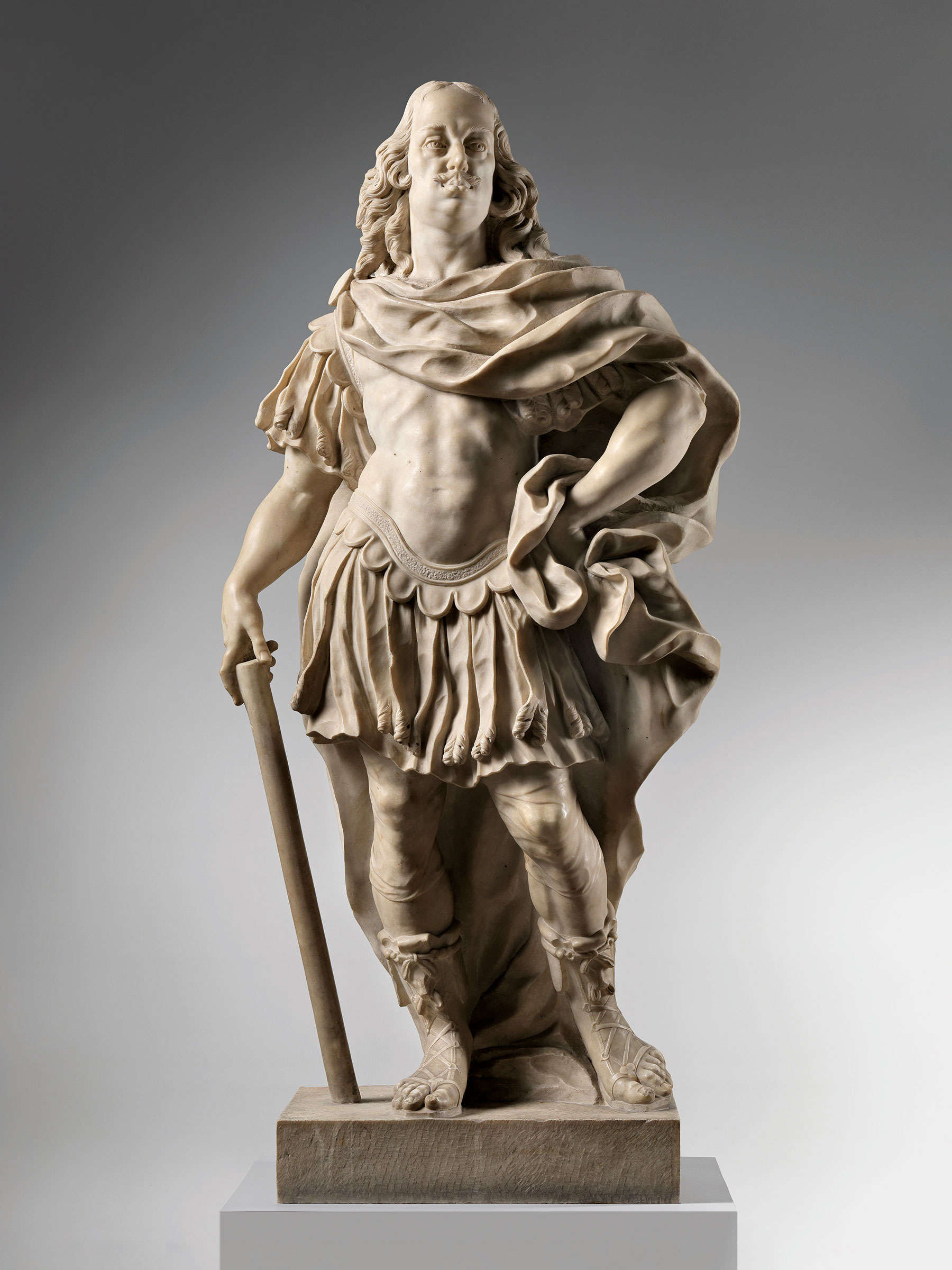
Why would one place a commemorative monument of such dimensions, financial investment, and formal ambition within a private residence outside the city? The story behind the monumental Portrait of Cosimo III de’ Medici, sculpted in 1694 and erected in 1695 in the main hall of Villa Rondinelli-Vitelli in Fiesole, reflects a commissioning dynamic that was entirely unique in the art-collecting world of the time. The work was, in fact, commissioned by Marquis Clemente Vitelli and conceived specifically to decorate and ennoble the rooms of his family’s residence. It was not, therefore, a public statue intended to tower over the squares of the grand ducal capital or in the monumental gardens of the crown, nor was it a representative work designed for the official halls of Palazzo Pitti, but rather a monumental portrait erected in a private and secluded setting, far removed from the institutional centers of Medici power.
It is precisely this domestic and private setting that makes the sculpture unique within the landscape of late Baroque Tuscan sculpture in terms of its type, purpose, and celebratory intent. As ancient sources confirm, Marquis Vitelli’s initiative allows us to interpret the sculpture as both a political and sentimental tribute to his sovereign. The nobleman’s choice to express his loyalty, devotion, and closeness to the Grand Duke through a colossal full-length statue, dressed in the classical style and depicted in a proud, commanding pose, reveals the depth of the intimate bond that united the patron with the work’s dedicatee.
In the artistic context of late-17th-century Tuscany, state portraiture and commemorative sculpture remained for a long time anchored to rigid, solemn, and traditional formal canons, and showed widespread resistance to the bold, dynamic, and Baroque innovations that were simultaneously enlivening the Roman art scene. With *Cosimo III of Villa Vitelli*, Lorenzo Merlini thus created a bold departure from the canonical Florentine state portrait. While not entirely severing ties with the more noble and restrained 16th-century tradition, the sculptor was able to infuse the figure with an entirely new plastic dynamism: the barely perceptible twist of the hip, the broad, fluid, and dramatic rhythm of the cloak, and the vigor of the chest lend the statue a vibrant movement that already seems to foreshadow the figurative exuberance of the 18th century.
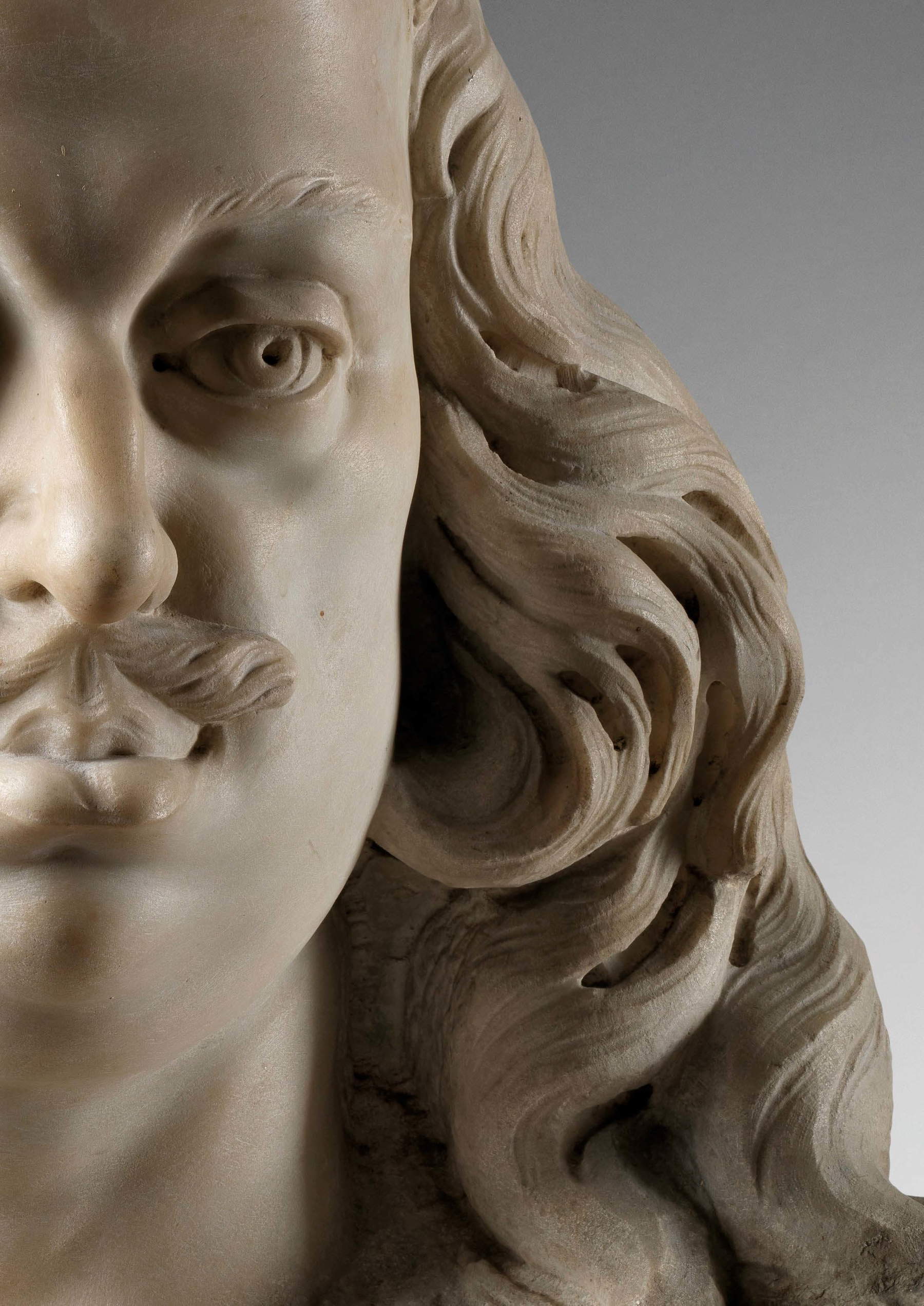
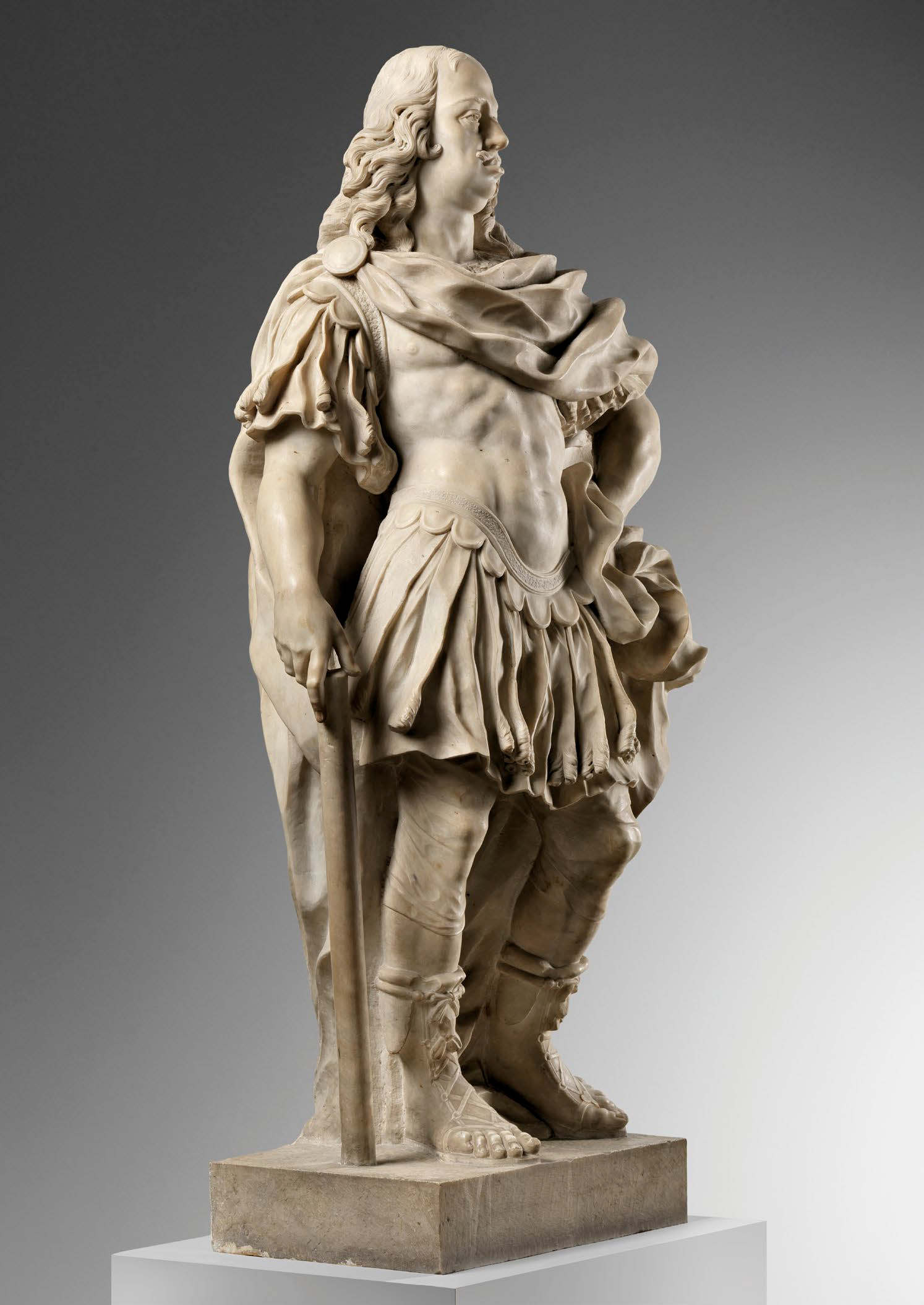
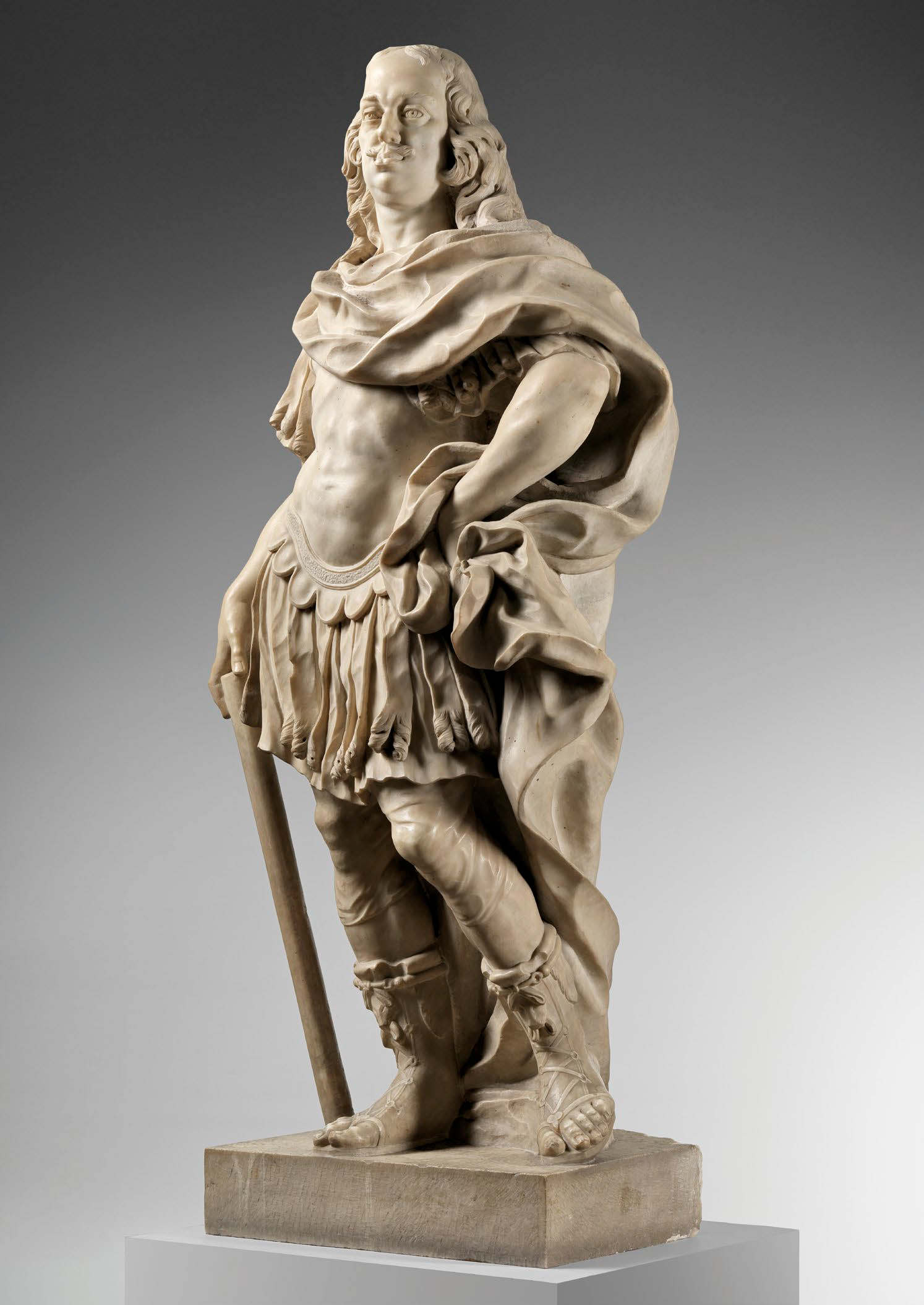
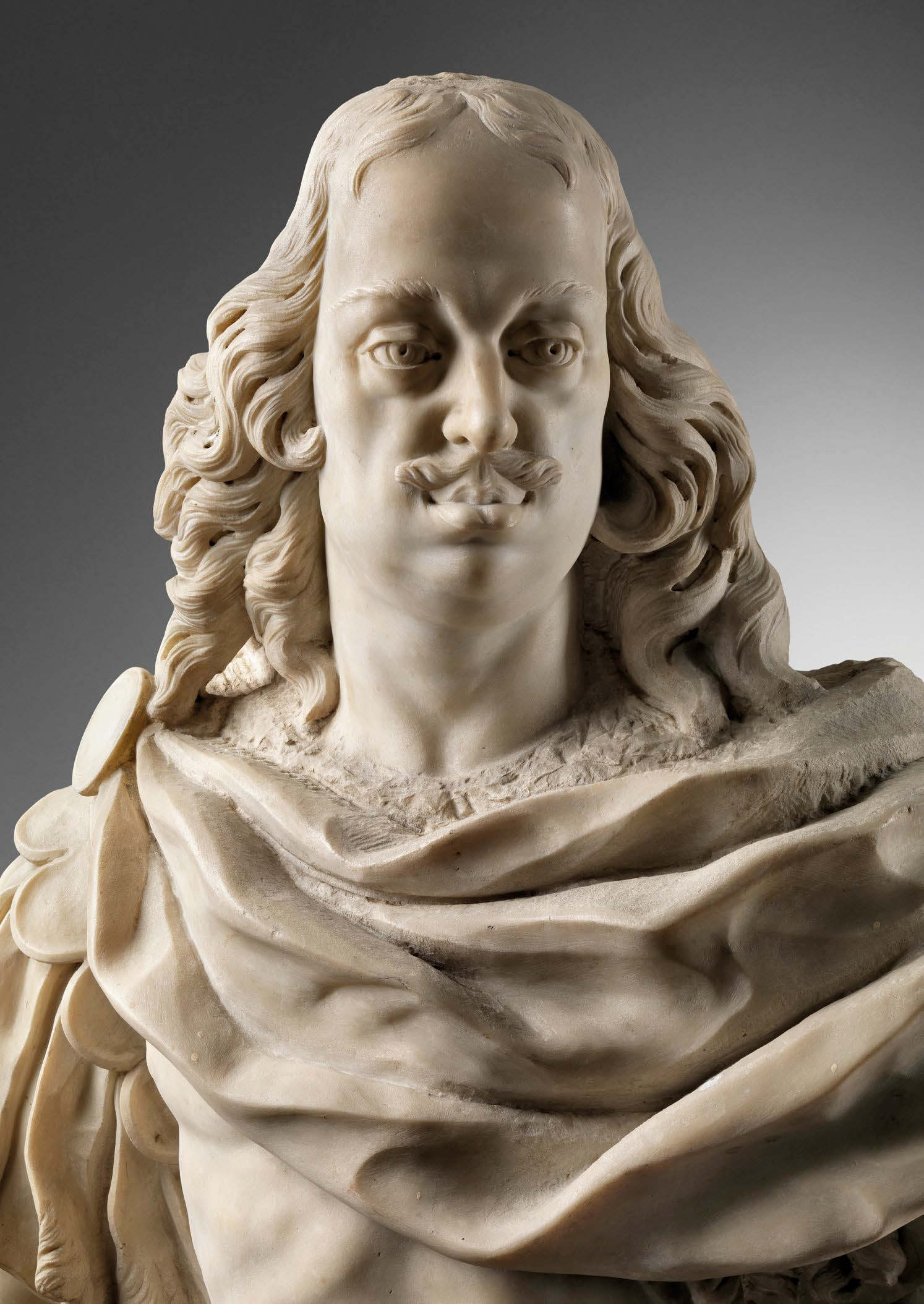
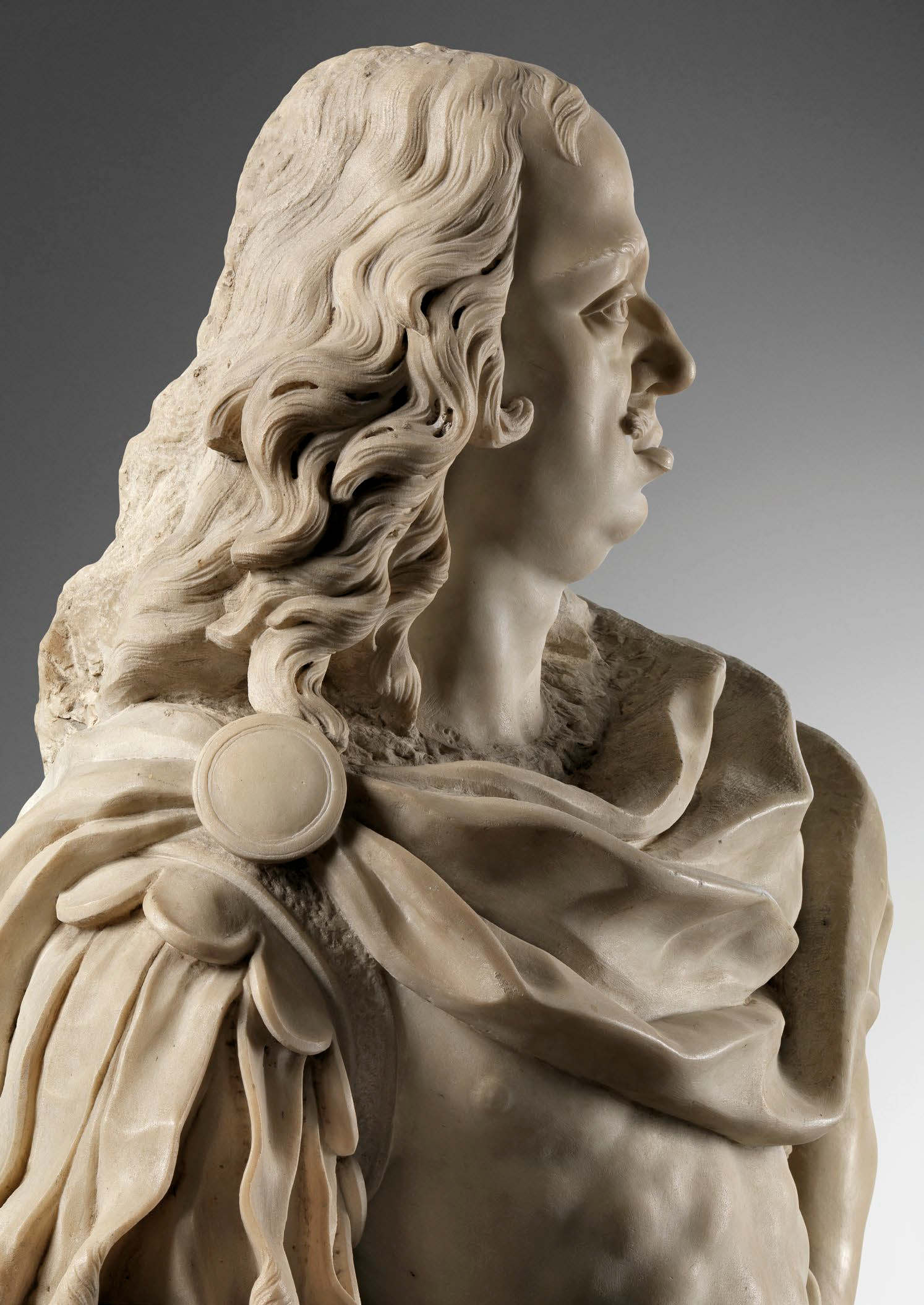
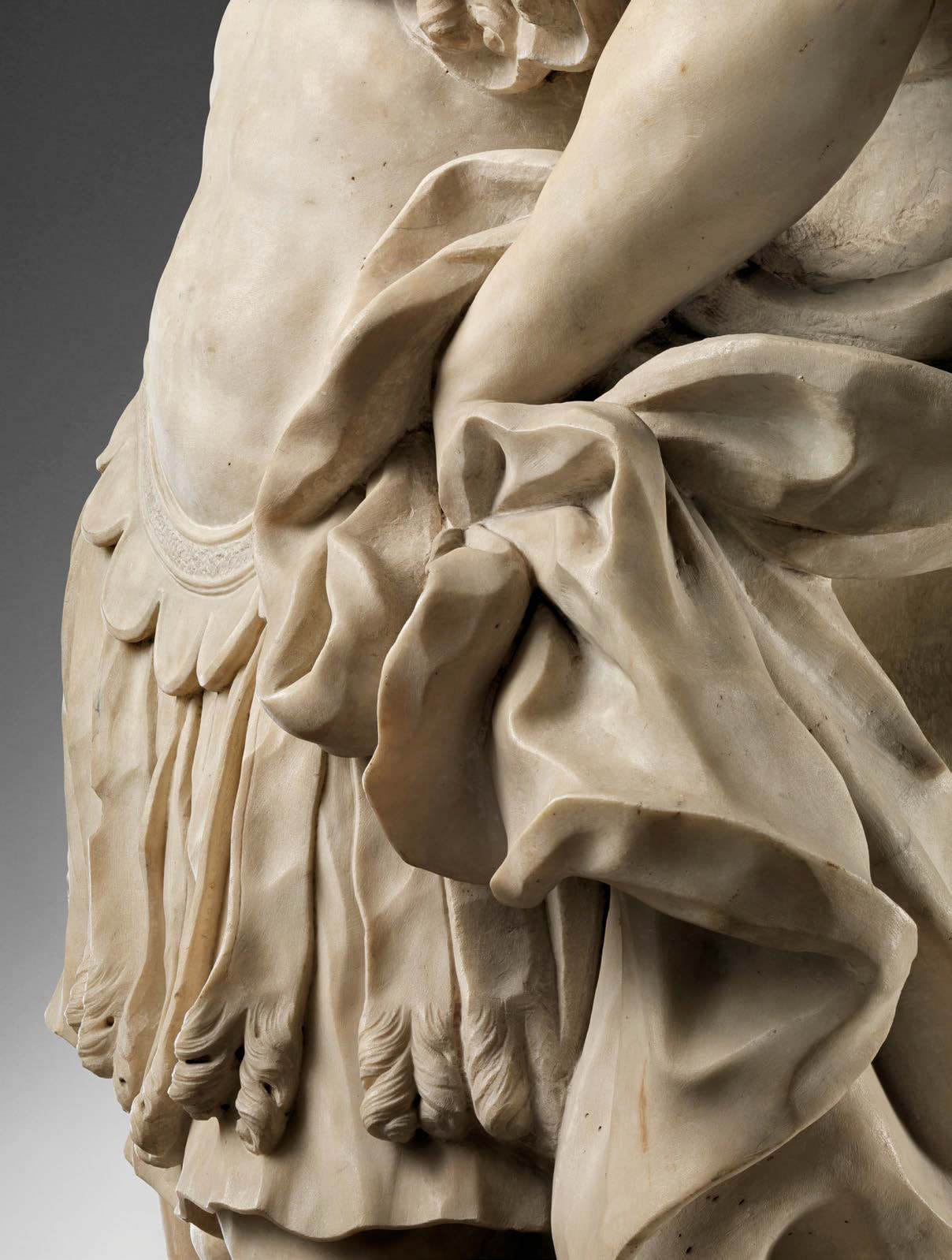
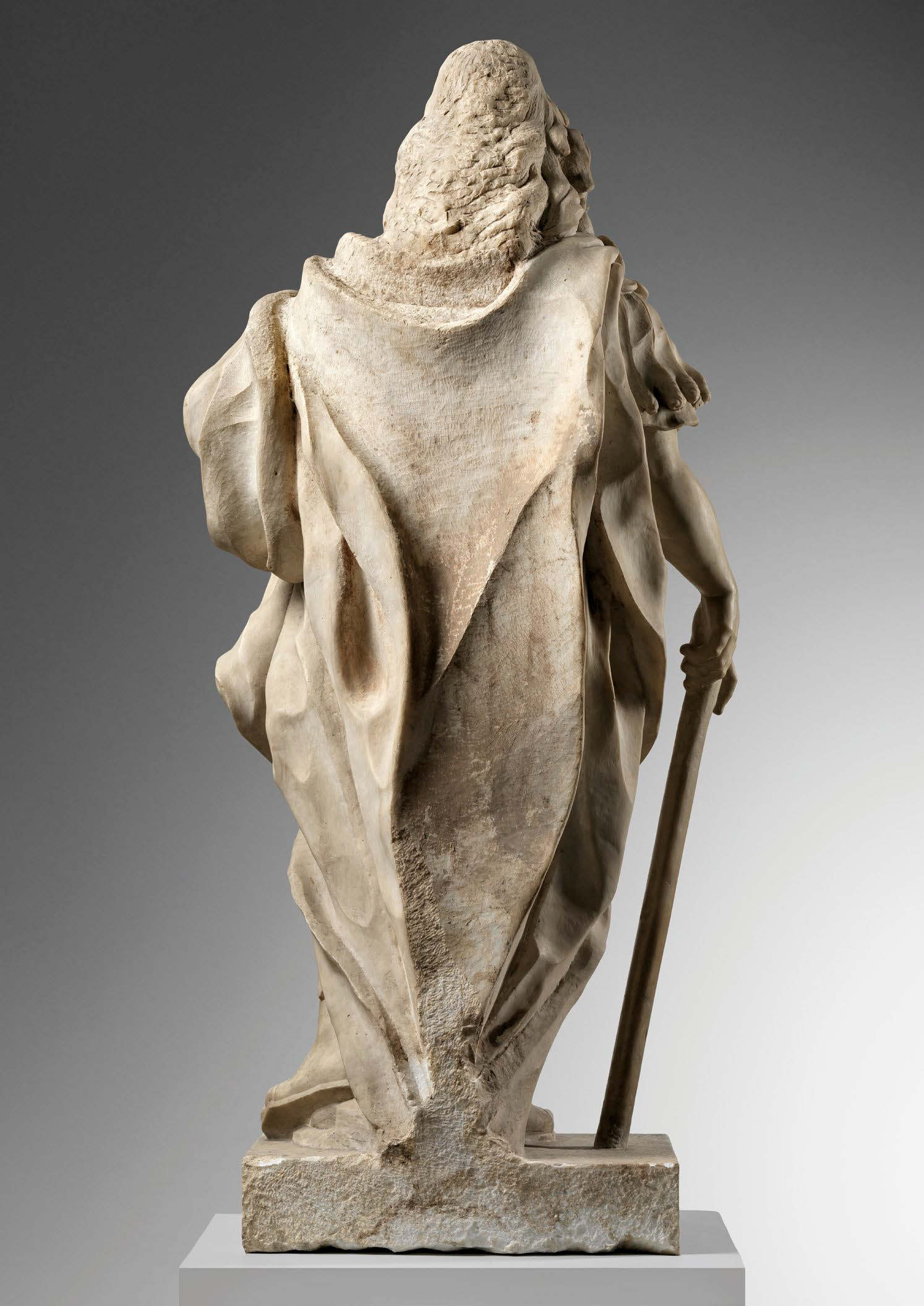
Lorenzo Merlini’s artistic and biographical trajectory is also firmly anchored in art history thanks to the valuable and concise notes left by the sculptor himself in his handwritten autobiography, in which he specifically recounted the story of the statue of Cosimo III in Fiesole. Active throughout his career between the capital of the Grand Duchy and Rome, Merlini trained at the famous and renowned workshop of Giovanni Battista Foggini, a leading figure in Florentine sculpture of the time. Under Foggini, the young Merlini mastered the virtuosic technique of rendering drapery, which in the statue at Villa Vitelli skillfully alternates between broad, flowing folds and sudden, angular cuts. However, the younger artist’s work stands out distinctly from that of his master due to an unusual freedom in the pose and the extraordinary clarity and precision of the drawing. It is no coincidence that a famous contemporary description characterized Merlini as a sculptor capable of combining “correct drawing” with “witty” invention, identifying the genre of portraiture as the highest, most mature, and most expressive pinnacle of his complex body of work.
From the perspective of formal rendering and material execution, the marble sculpture reveals technical and aesthetic qualities of the highest order. On the surface of the work, Merlini orchestrates a skillful and carefully calibrated interplay of chiaroscuro contrasts: areas finished to an extremely high level of polish and smoothness alternate with sections worked in a more rough and unrefined manner, with the precise aim of enhancing the luminous quality of the marble and its distinctive tactile qualities. What makes this example of Grand Ducal sculpture even more exceptional and valuable is its extraordinary and exemplary state of preservation, which has remained virtually intact both in the anatomical structure of the body and in the surface of the marble, allowing us to fully appreciate the refinement and confidence of the artist’s chisel to this day.
The history, provenance, and critical significance of this masterpiece have been extensively reconstructed through a rich and well-established historiographical tradition of specialized studies. Mentioned in 1962 by Klaus Lankheit in his seminal study on Florentine Baroque sculpture at the court of the last Medici (Florentinische Barockplastik), the statue was subsequently cataloged and analyzed by Karla Langedijk in the monumental catalog dedicated to the portraits of the Medici (The Portraits of the Medici, 1981). Subsequently, the work was included in the Repertorio della scultura fiorentina del Seicento e del Settecento, edited by Giovanni Pratesi in 1993, leading up to the detailed biographical entry on Merlini written by Sandro Bellesi for the Dizionario Biografico degli Italiani in 2009. Capping this long journey of rediscovery and critical appreciation is a monographic study entirely focused on the work, authored by Gianluca Moscariello and titled *Lorenzo Merlini and the Cosimo III of Villa Vitelli* (Milan, 2025). And now, on the international market, the sculpture of Cosimo III awaits its next home.
 |
| Cosimo III as a Roman Emperor: Lorenzo Merlini’s Rediscovered Masterpiece at the BIAF |

Warning: the translation into English of the original Italian article was created using automatic tools. We undertake to review all articles, but we do not guarantee the total absence of inaccuracies in the translation due to the program. You can find the original by clicking on the ITA button. If you find any mistake,please contact us.

























 IT
IT FR
FR DE
DE ES
ES CN
CN


