





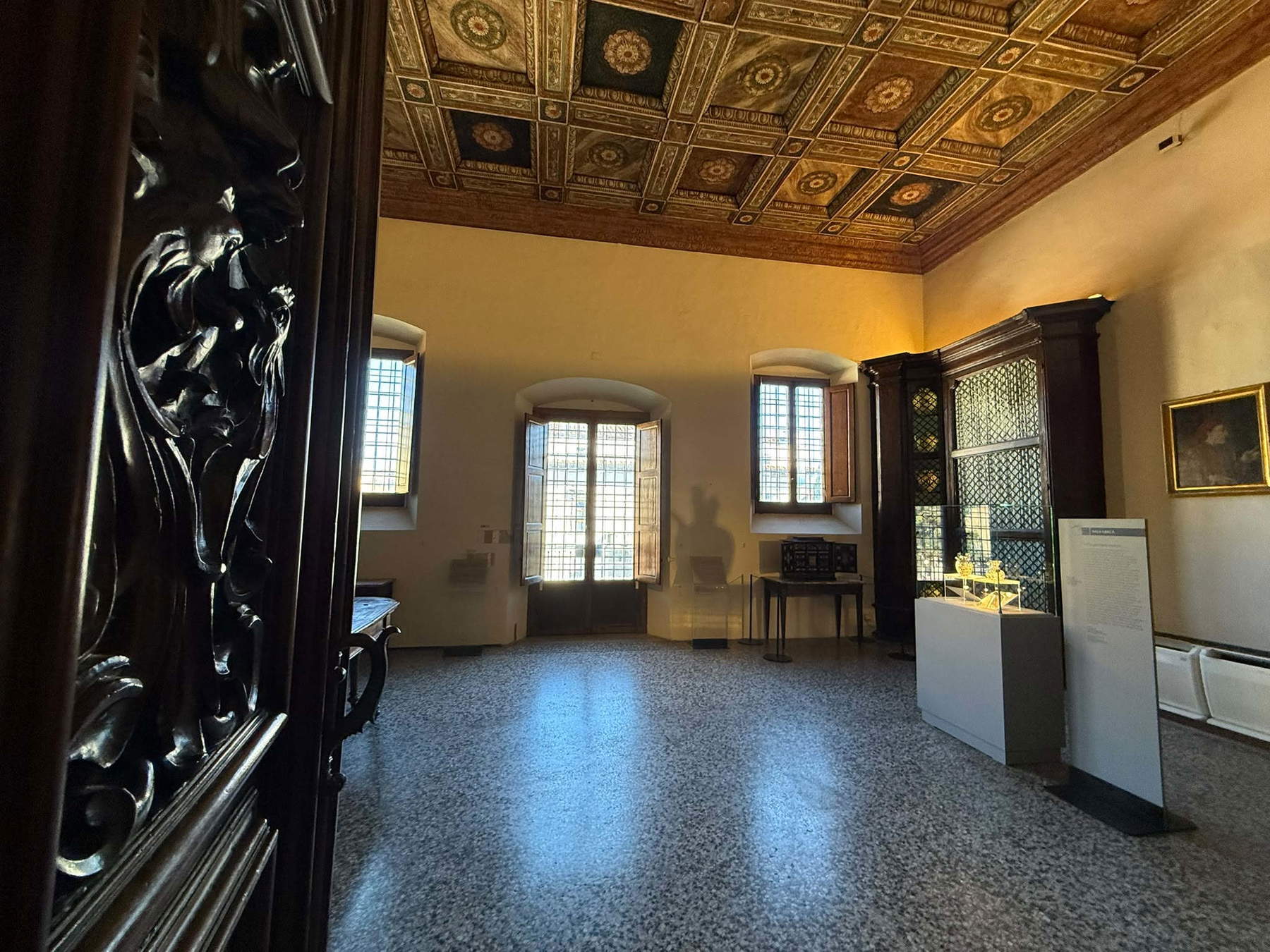
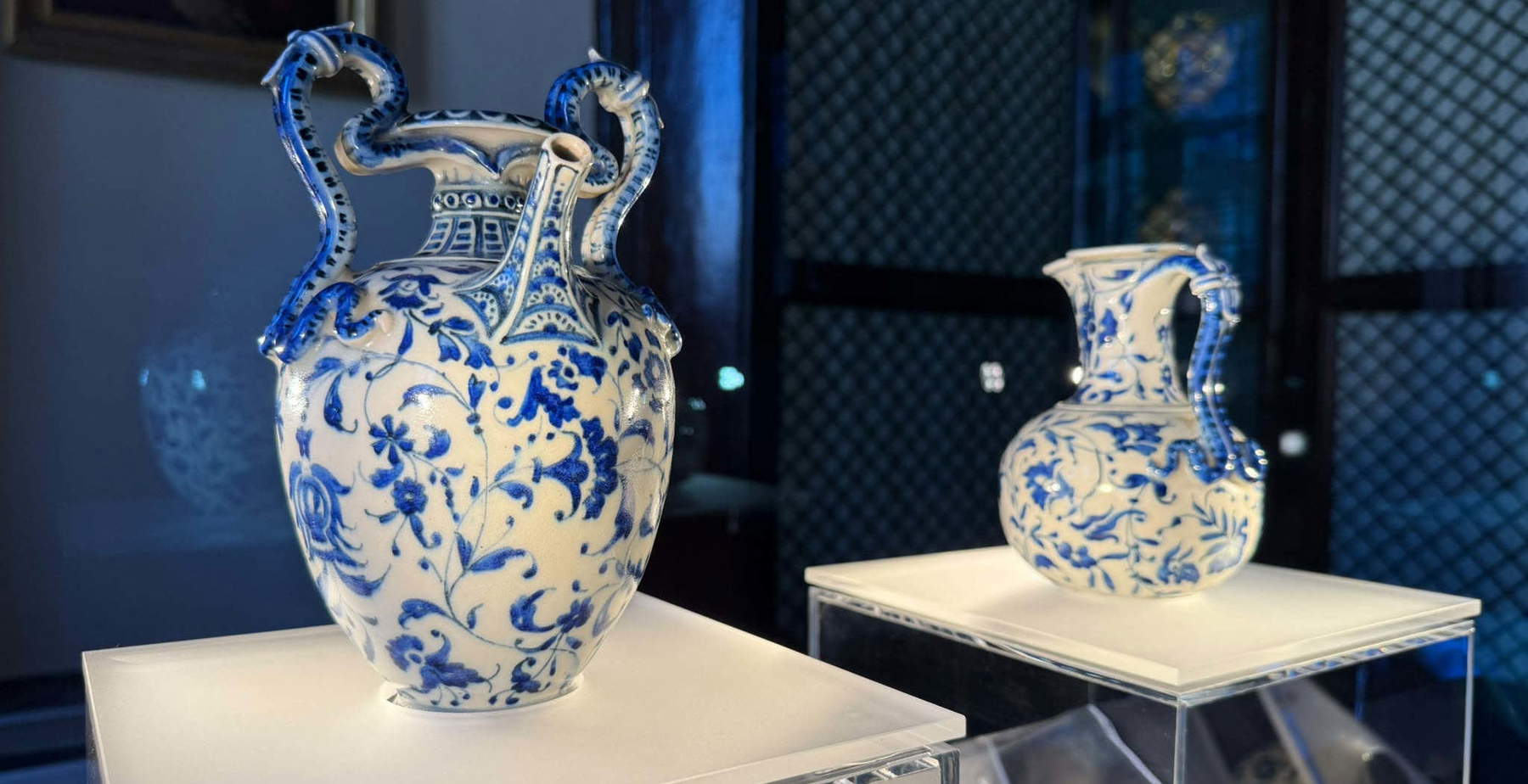
Two vases made in Florence during the second half of the sixteenth century bring to the forefront one of the most remarkable undertakings of the court of Francesco I de’ Medici: the attempt to produce in Europe the porcelain that had been importedfrom the East for centuriesand whose secrets were still not well understood. The pieces in question are a jug with a snake-shaped handle and a small pitcher with two serpentine handles, both dating from a period between approximately 1575 and 1585: they were donated to the Museo di San Marco in Florence and will be on display in the Sala Greca starting September 29.
Their history is directly linked to the Casino di San Marco, the complex commissioned by Francesco I not far from the Dominican convent and conceived also as a place for experimentation. Here, in the second half of the 16th century, the Grand Duke brought together artists, artisans, and scholars engaged in experiments that included the search for a formula to produce porcelain. In 1595, Agostino del Riccio noted the presence in the Casino’s garden of master craftsmen who created “beautiful porcelain vases, royal vases, which were of beautiful and rare forms.” The two objects that have just arrived at the Museum of San Marco are a tangible testament to that research.
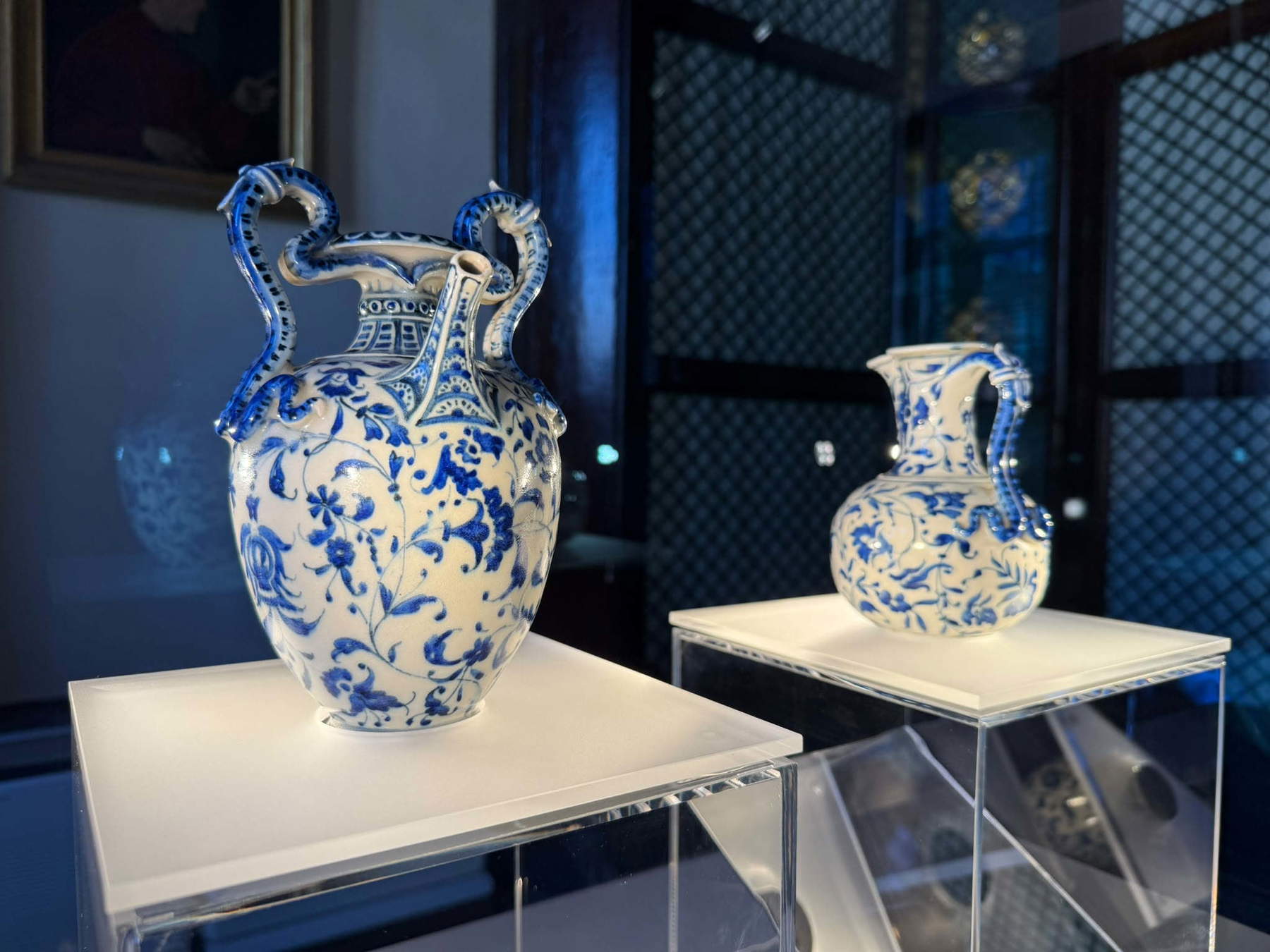
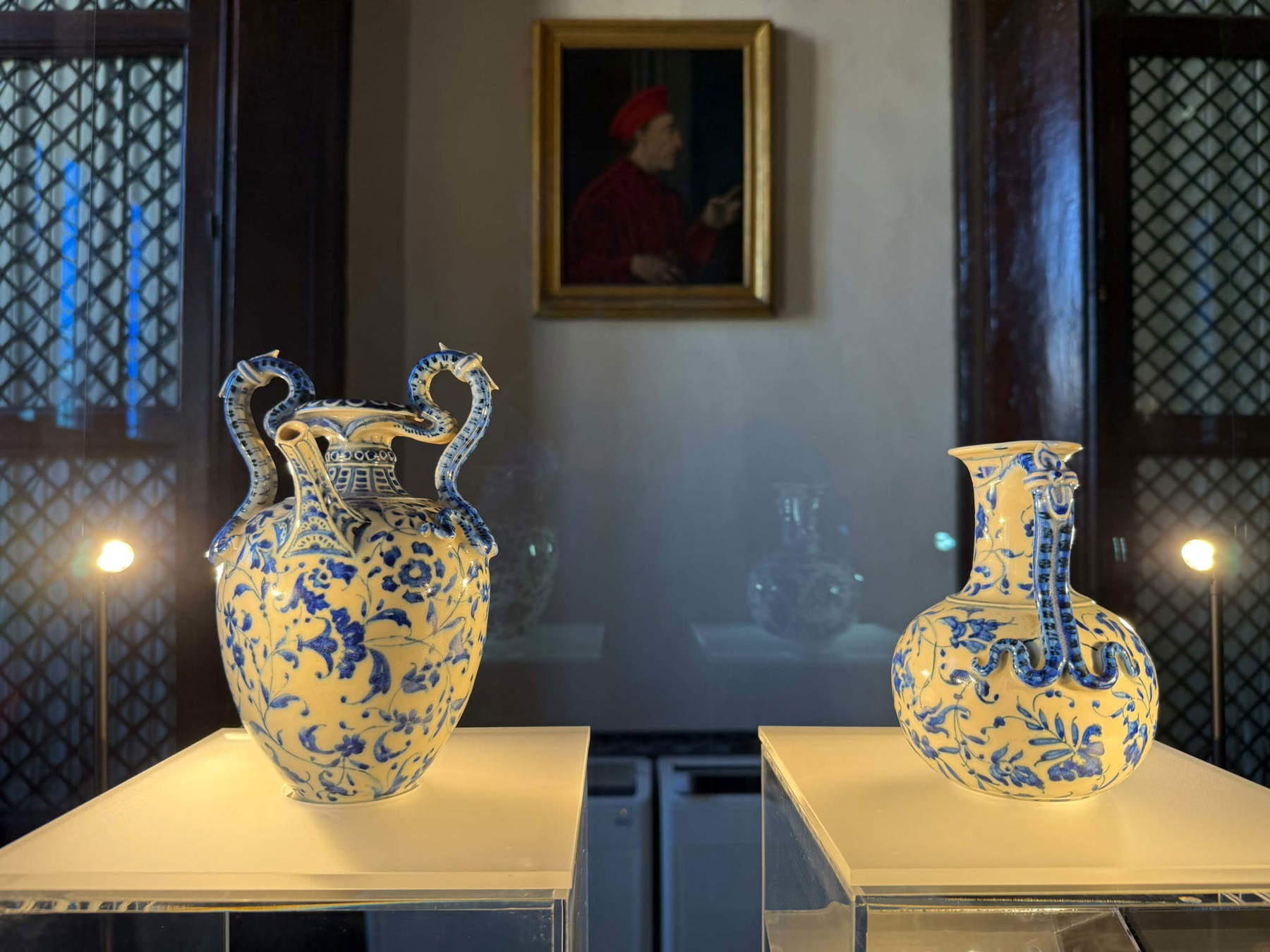
In 1575, the Florentine manufactory succeeded in producing the first examples of what would come to be known as “Medici Porcelain, ” a soft-paste porcelain that represented Europe’s first successful attempt to reproduce the Eastern material. The venture was short-lived, however: the very high temperatures required for firing and the high production costs limited its development, and the manufactory ceased operations after the death of Francesco I in 1587, resulting in a very limited production run (the inventories of the Medici court recorded about three hundred pieces, but today only sixty or seventy survive worldwide). It is in this context that the donation of the two vases to the Museum of San Marco should be viewed, as it expands an already extremely rare presence in Tuscan public collections.
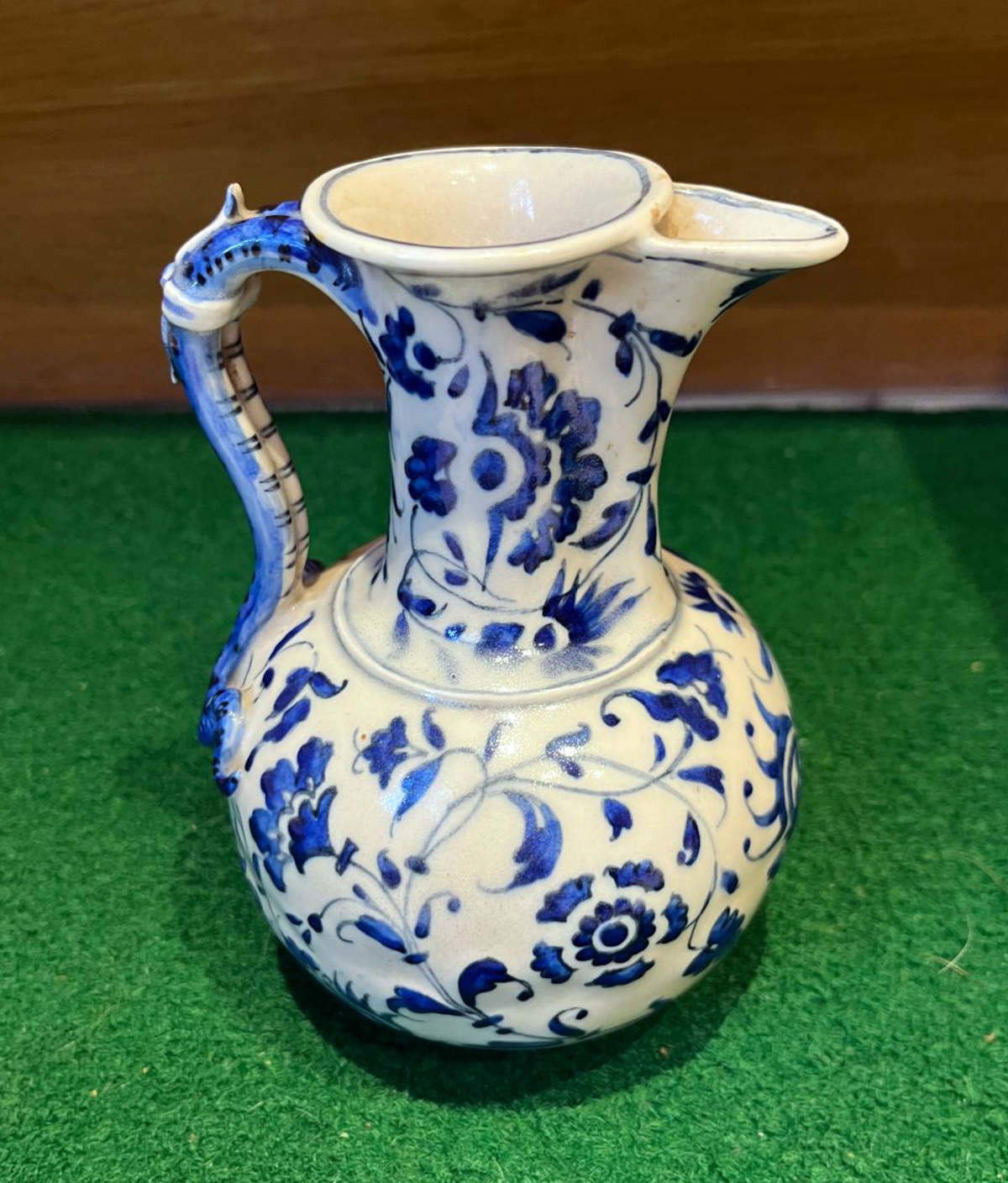
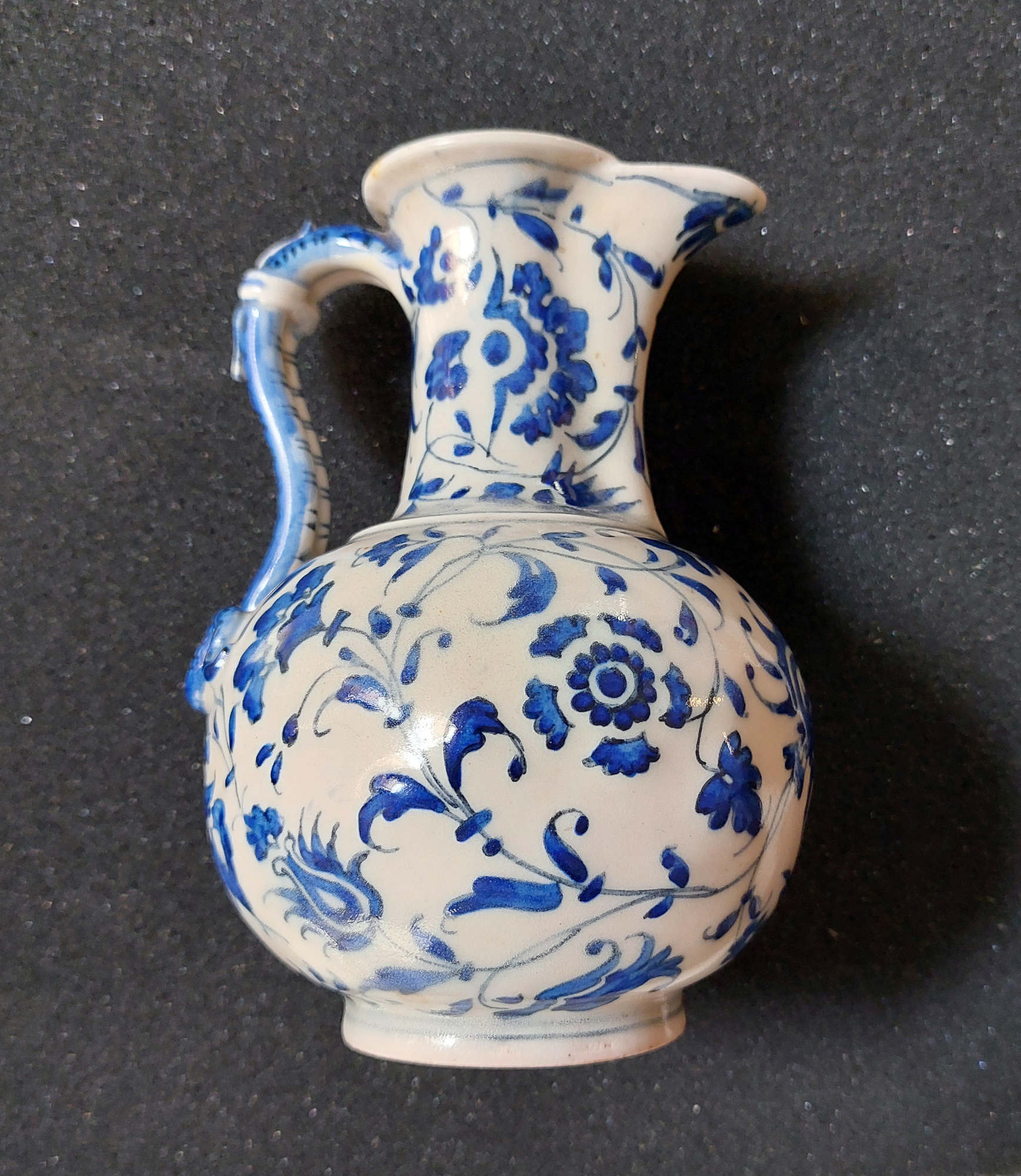
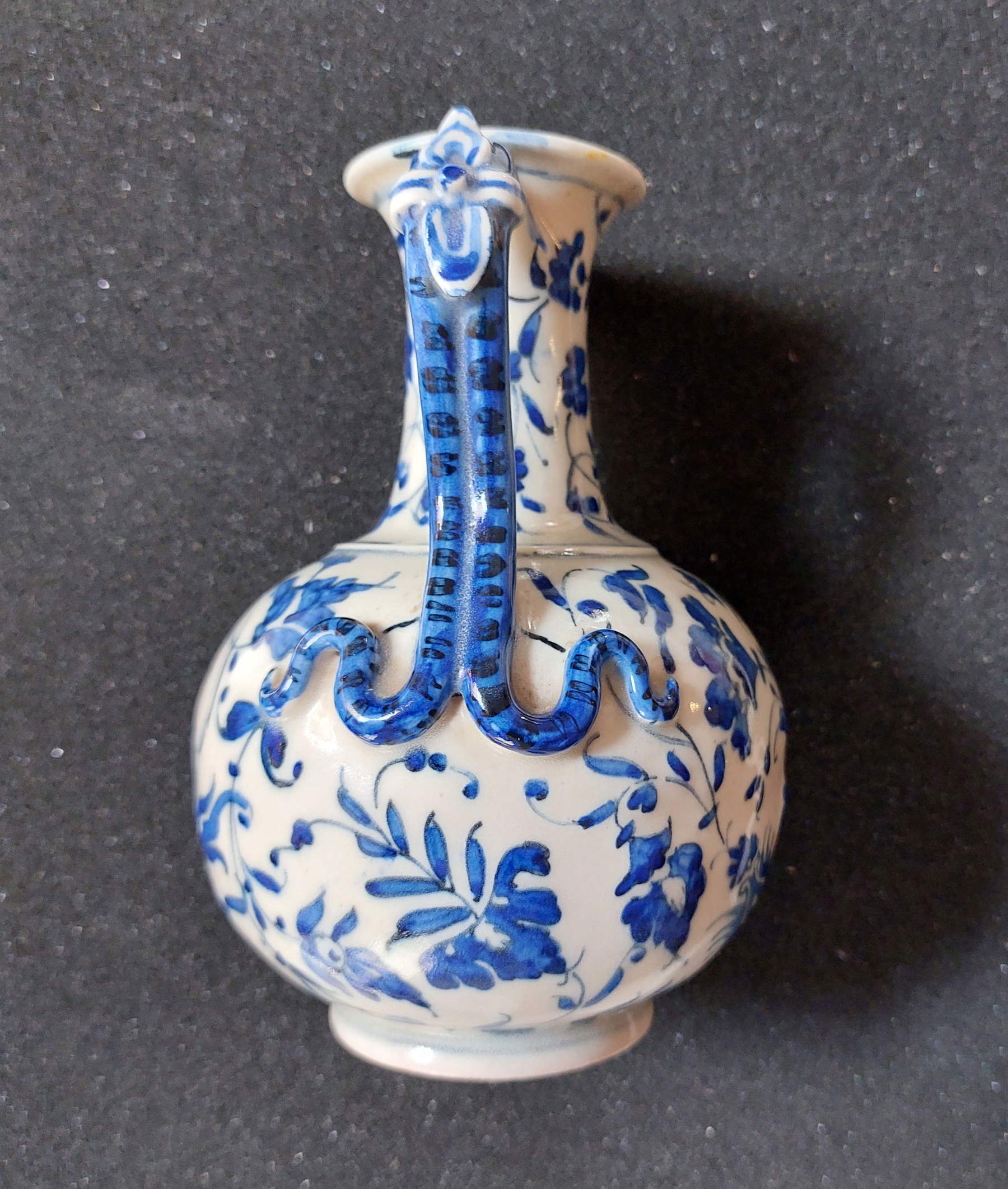
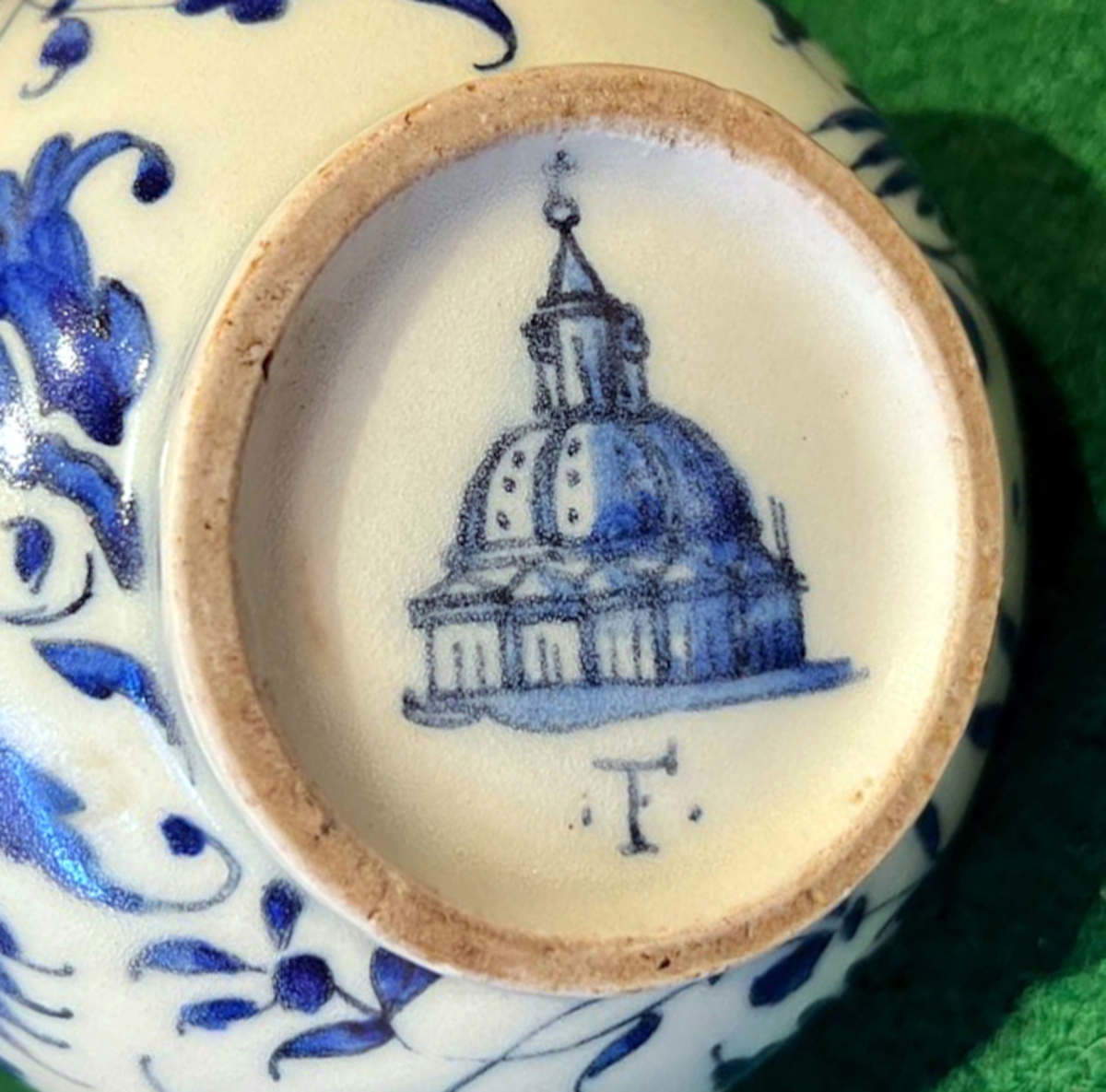
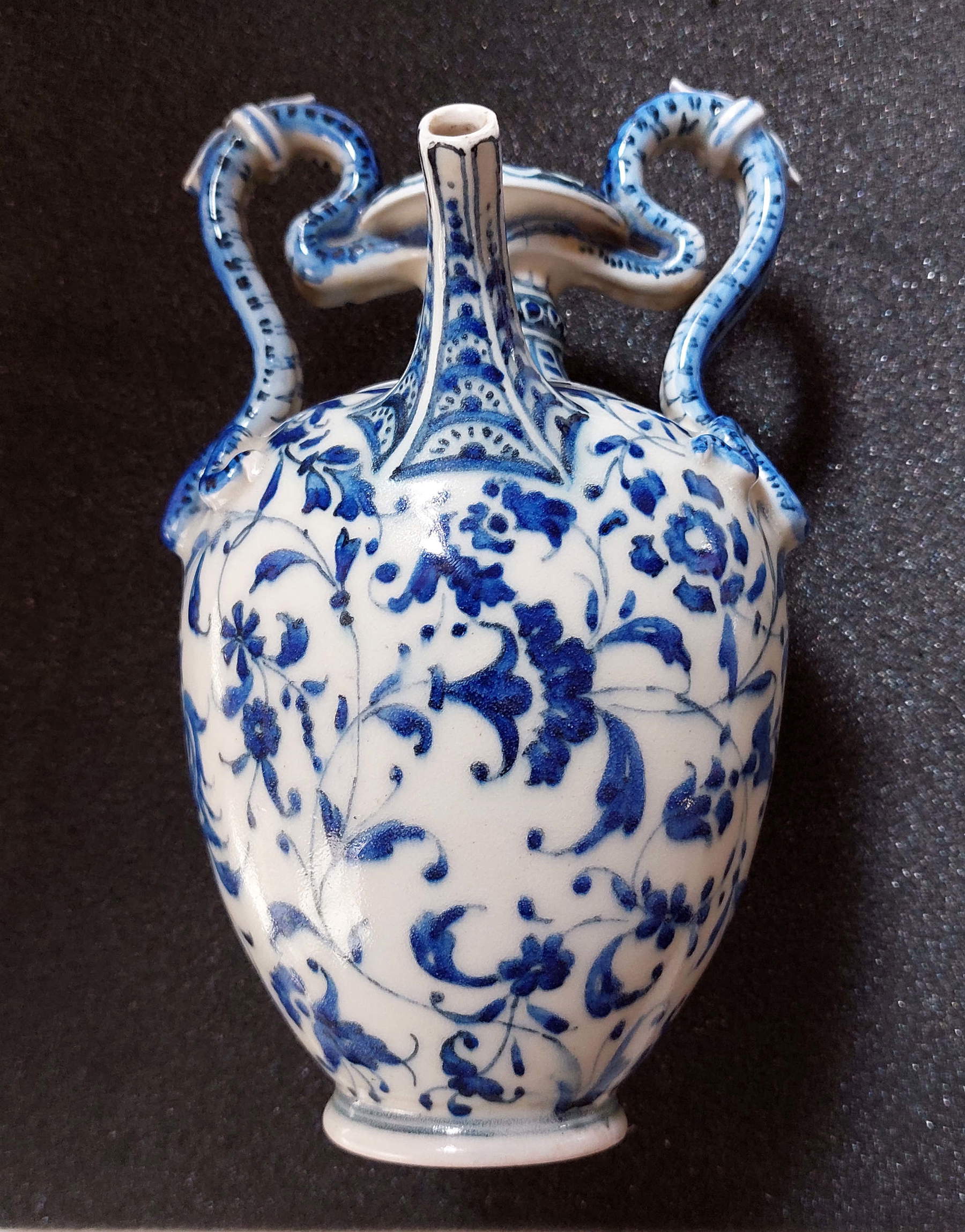
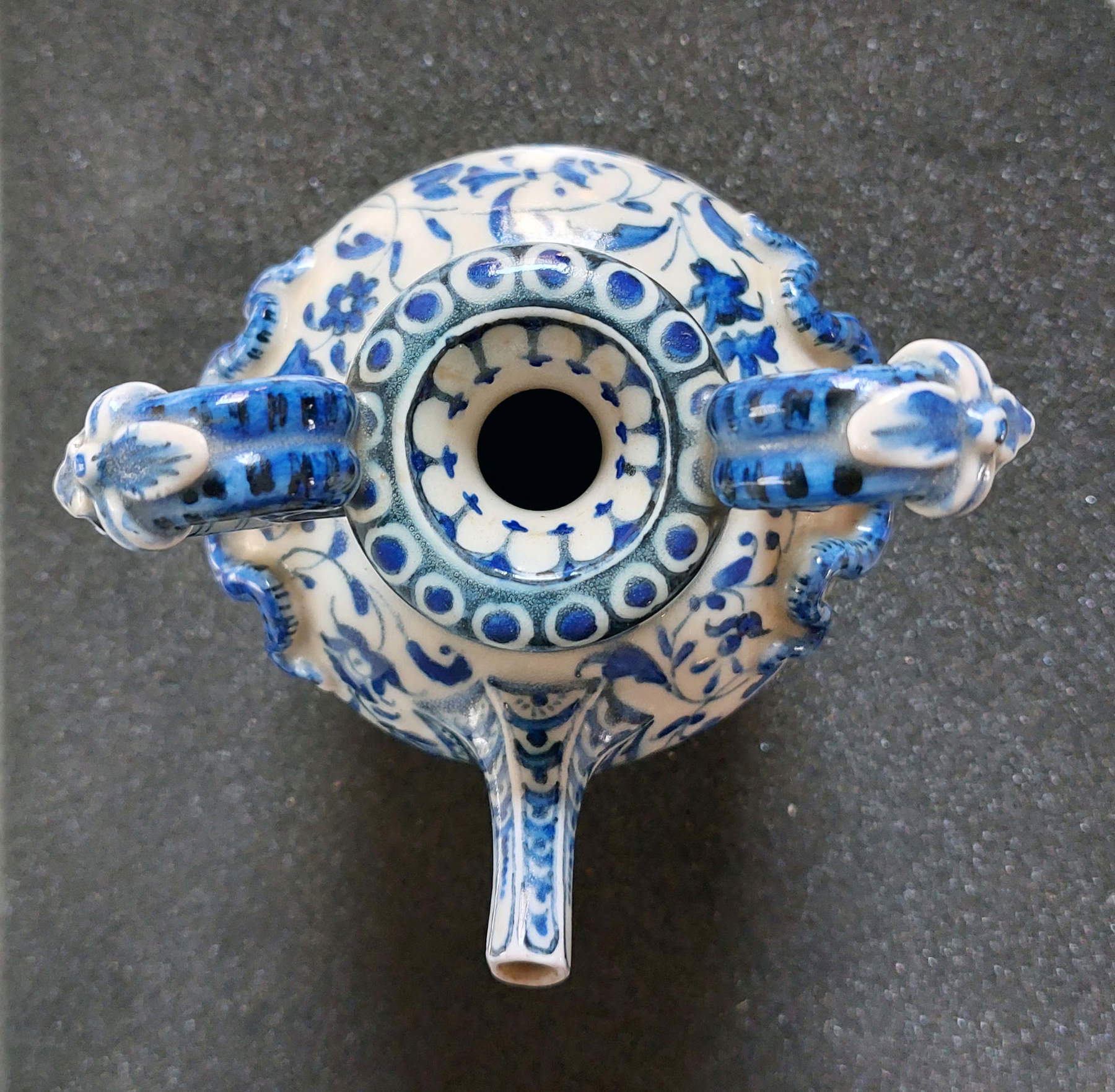
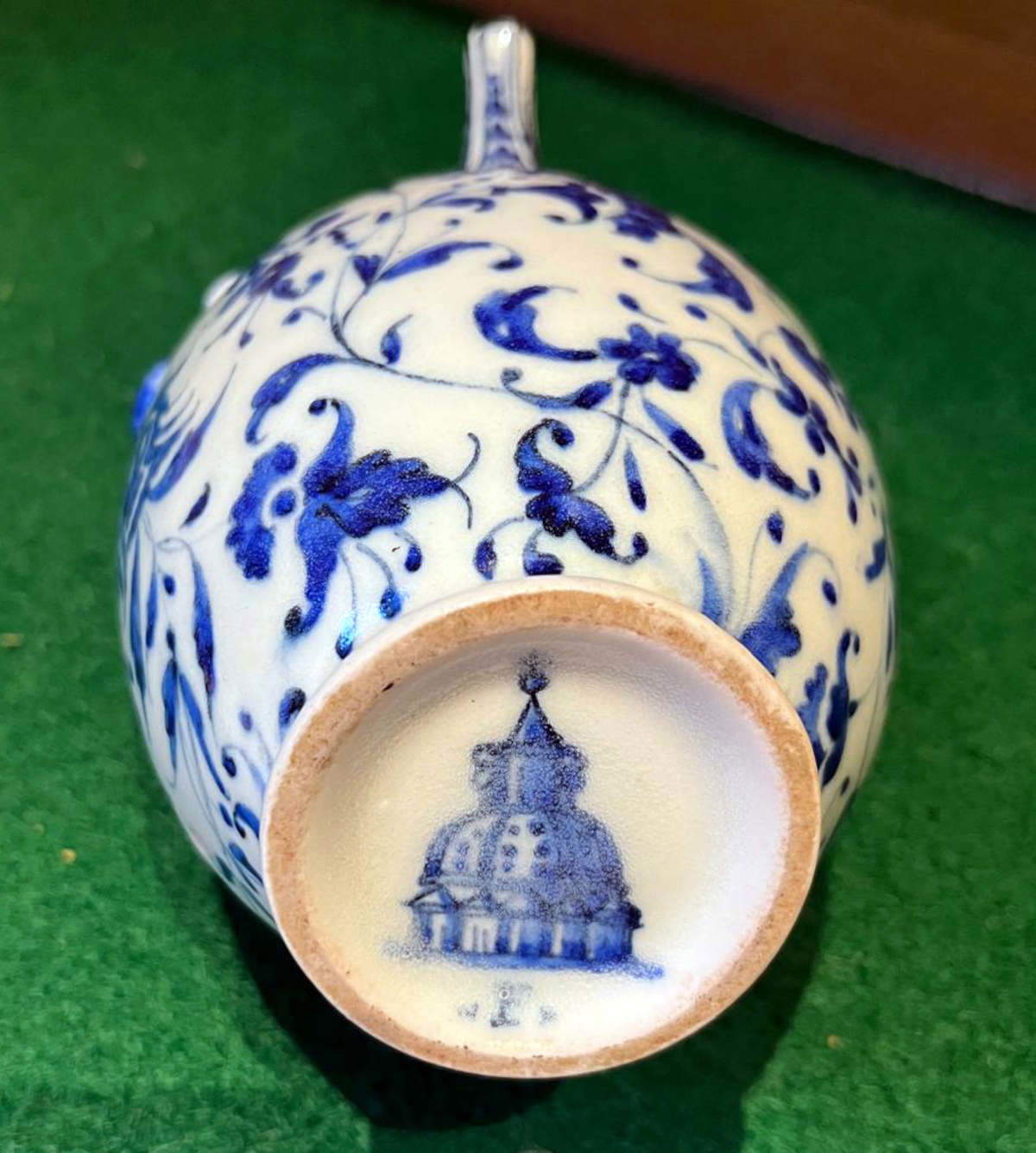
Both vases bear the workshop’s mark on the bottom: the dome of Santa Maria del Fiore painted in blue, surmounted by the letter “F,” the initial identifying Florence. This is one of the features that allows us to recognize production linked to the court of Francis I and immediately connects the objects to the experimentation carried out in the Tuscan capital. The first vessel is a jug, or mesciroba, 16 centimeters tall. It has a globular body, a long cylindrical neck, and a spout with a distinctive triangular cross-section, while the handle consists of two snake-like forms joined together—a design that gives the object a particularly elaborate appearance. The white surface is decorated in deep blue with peonies, daisies, and lotus flowers. The decoration draws specifically on Chinese porcelain from the Ming Dynasty and the Yongle period, but the Eastern model is not the object’s sole source of inspiration. The shapes of the flowers, in fact, derive from a decorative tradition that had already been influenced by Islamic metalware, while the structure of the vessel recalls the Hispano-Moorish mescirobes with tall necks and spheroidal bodies produced in the Valencia region between the 14th and 15th centuries.
The vase thus brings together very different influences in a single object: Florentine potters sought to imitate Eastern porcelain, but they did so through forms and motifs that also belonged to European and Mediterranean ceramic culture, and it is precisely this overlap of models that characterizes many of the objects produced by the Medici workshop. A document from the Medici Wardrobe also appears to describe a vessel very similar to the one now donated to the museum: “a small porcelain jug from Florence, with its serpent-shaped handle broken at the mouth, 1/4 tall.” The description of the shape and handle thus provides a possible documentary reference for the type of object represented by the jug.
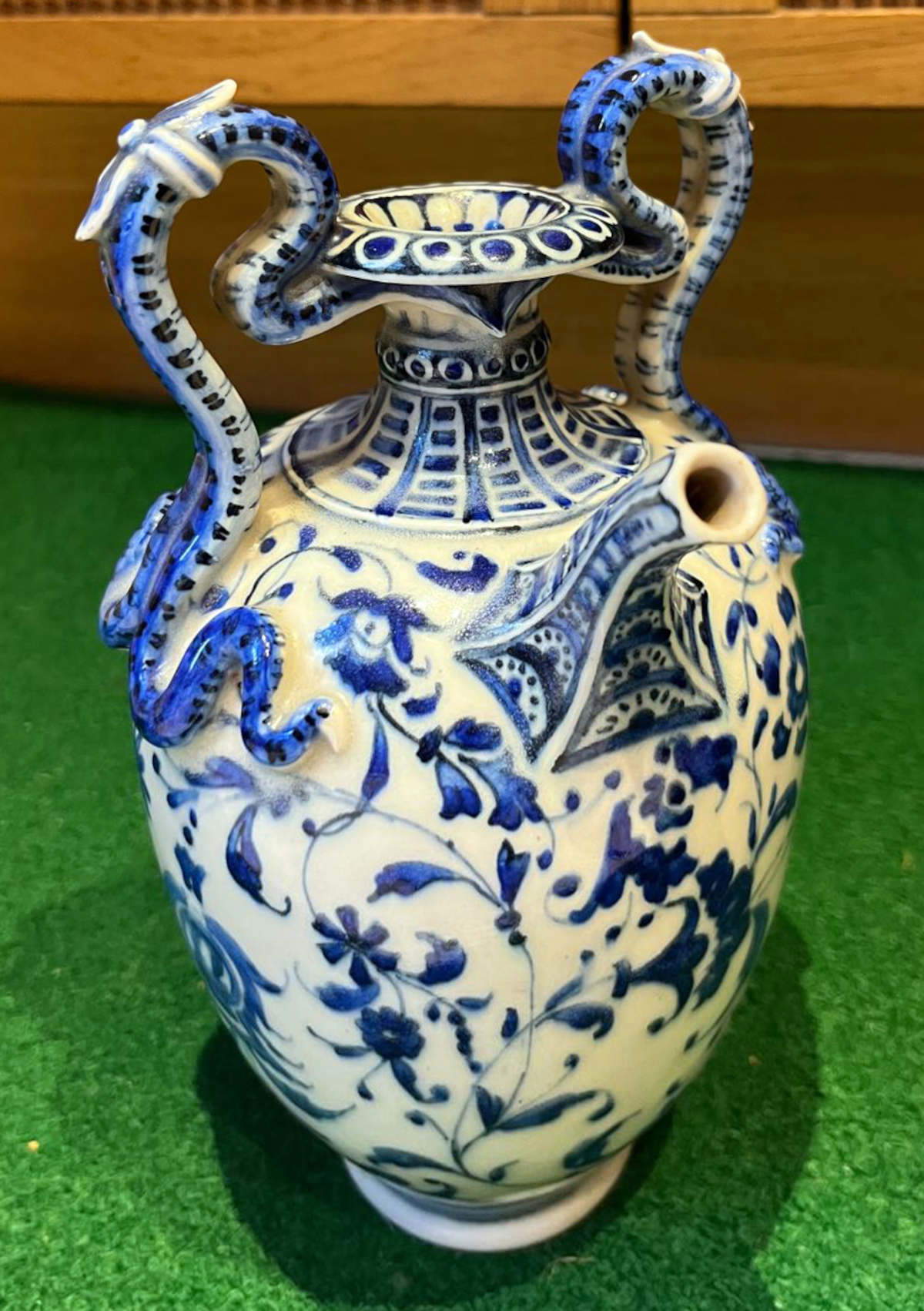
The second piece, on the other hand, is slightly larger, about 20 centimeters tall, and has a different shape. It is a vase with an ovoid body, two opposing serpentine handles, and a hexagonal spout protruding from the body (its shape finds a parallel in the grotesque-decorated Urbino majolica pieces that had already been part of the Medici collections since 1569). Here, too, the court inventories provide a particularly significant reference. A description from the late sixteenth century refers to a “small pitcher with two serpent-shaped handles made of local porcelain and the spout integrated into the body,” a description that corresponds very precisely to the structure of the vase that had just entered the museum’s collections.
The history of Florentine porcelain had begun several years before the first results of 1575. As early as 1568, Giorgio Vasari noted in his *Lives* Bernardo Buontalenti’s attempts to uncover the secrets of porcelain. It was then the research sponsored by Francesco I, together with the involvement of an unspecified “Levantine,” that led to the production of the first documented examples. In 1575, the Venetian ambassador Andrea Gussoni recorded in his dispatches the results achieved in Florence, highlighting some of the qualities that made Oriental porcelain (the “porcelains of India,” as they were called) so highly sought after: transparency, hardness, lightness, and delicacy. Francis I, in particular, was interested in alchemy and scientific experiments, activities that found a privileged setting precisely at the Casino di San Marco. Porcelain production was thus part of a broader context of research into the properties of materials and the techniques required to transform them.
The new exhibition layout at the Museo di San Marco, moreover, connects this history with another important component of the museum’s collections: the two vases will in fact be placed in the Sala Greca, alongside the collection of Renaissance majolica that once belonged to the apothecary of the Dominican convent, so that this juxtaposition allows for a comparison between objects linked to the material culture of pharmacy and Renaissance ceramics and artifacts born instead from the technological experimentation promoted by the Medici court. The choice of location also establishes a connection with the National Museum of Medieval and Modern Art in Arezzo, whose collections include a rare example of Medici porcelain: a large basin bearing the mark of the Florentine manufactory on the bottom, decorated with Saint Matthew and the angel, a scene derived from an engraving by Heinrich Aldegrever based on a drawing by Georg Pencz (the basin dates from between 1570 and 1580). The piece belonged to the collection of engineer and architect Vincenzo Funghini. After his wife’s death in 1935, the collection was bequeathed to the City of Arezzo and the Fraternity of the Laity of Arezzo; since 1958, the basin has been on display in the collections of the city’s National Museum of Medieval and Modern Art.
With the arrival of the two new vases in Florence, the institutions under the Regional Directorate of National Museums of Tuscany of the Ministry of Culture now hold three examples of Medici porcelain. And the Museum of San Marco has received two objects that can be interpreted on multiple levels: as examples of 16th-century court ceramics, as evidence of the Medici’s interest in Eastern material culture, and, above all, as records of technical research that sought to reproduce in Florence a material that was still, at the time, shrouded in an aura of exceptionality.
 |
| Florence: Two Extremely Rare Medici Porcelain Pieces Join the Collections of the San Marco Museum |

Warning: the translation into English of the original Italian article was created using automatic tools. We undertake to review all articles, but we do not guarantee the total absence of inaccuracies in the translation due to the program. You can find the original by clicking on the ITA button. If you find any mistake,please contact us.


























 IT
IT FR
FR DE
DE ES
ES CN
CN


