


by Redazione 21/10/2026


Categories: Ancient art / Disclaimer
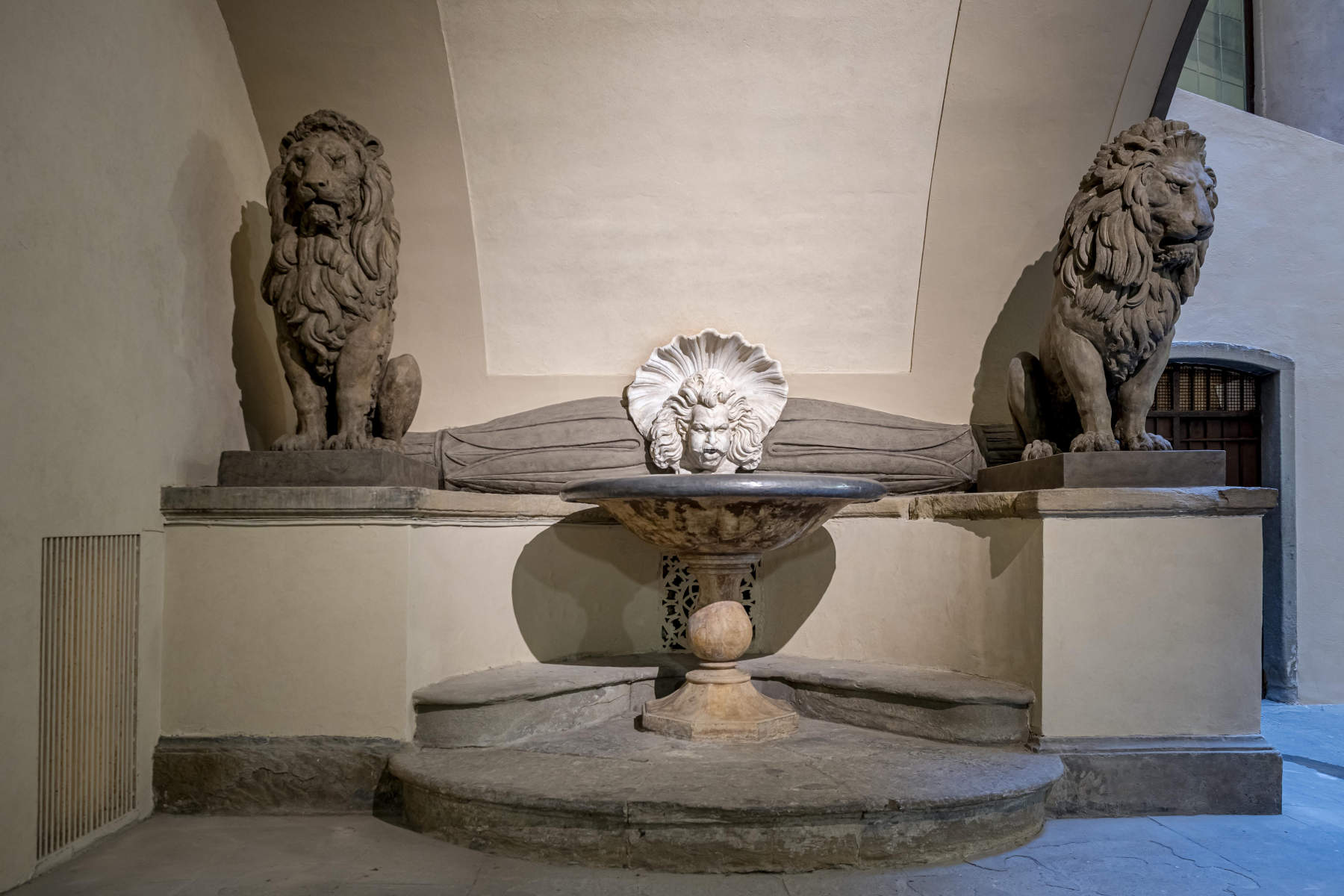
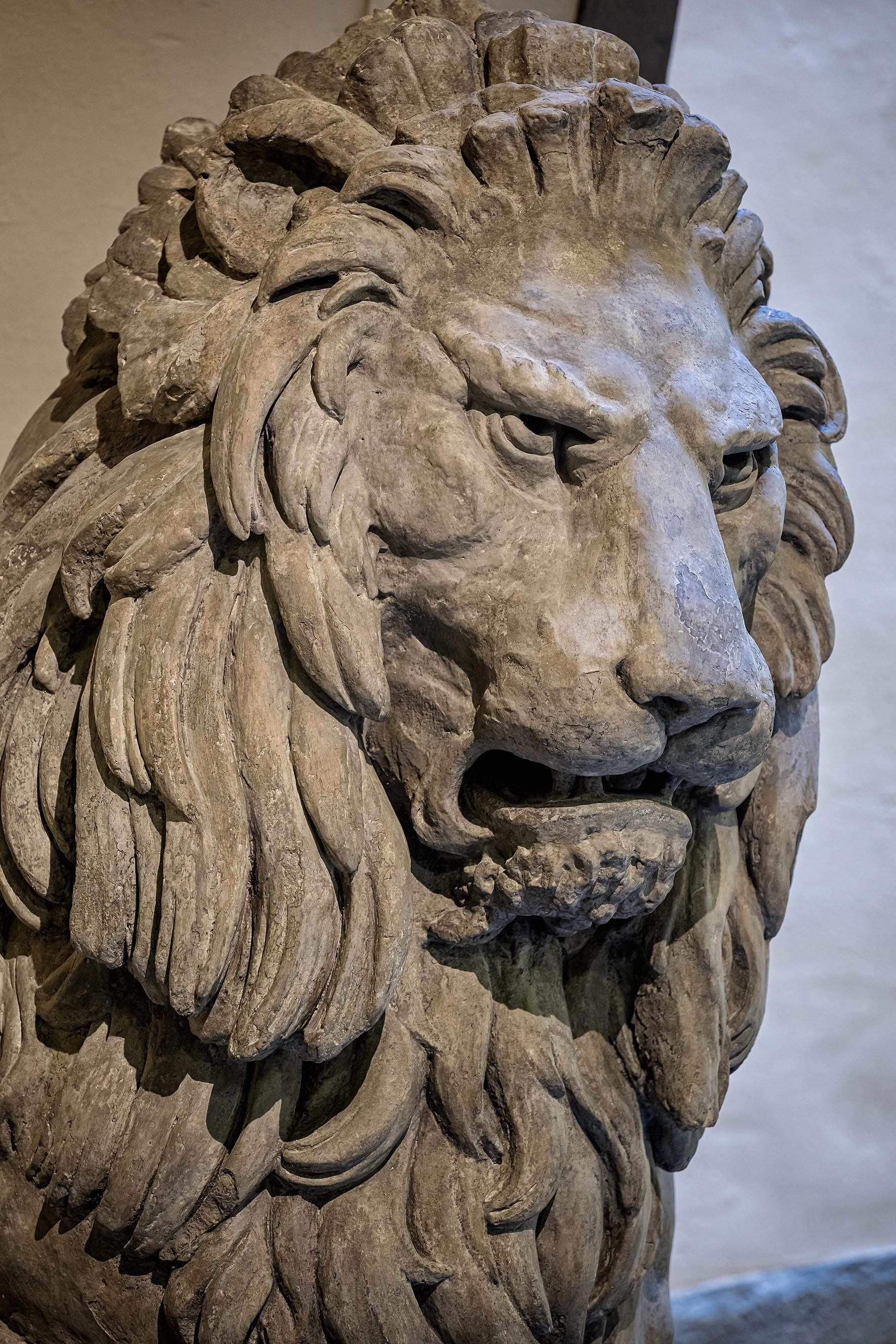
The restoration of the Fonti dei Leoni and the Cortile della Dogana in Florence has been completed, funded by the Scuola del Cuoio with a grant of 50,000 euros. The work revealed that all four lions are period plaster casts.


Restoration work on the Fonti dei Leoni and the Cortile della Dogana has been completed at Palazzo Vecchio in Florence. The project was carried out in sixty days with an investment of 50,000 euros, thanks to technical sponsorship from the Scuola del Cuoio, as part of FLIC – Florence I Care, the City of Florence’s program that promotes public-private partnerships for the preservation of cultural heritage.

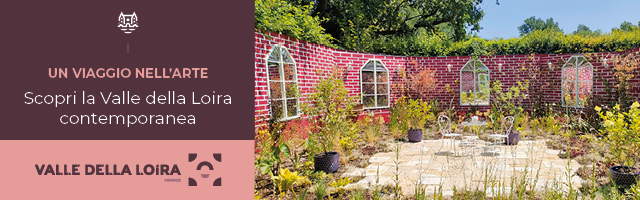
The project involved the fountains and basins, the lion sculptures, the decorative masks, the ornamental elements, and the architectural surfaces of the courtyard, as well as the statue of the Electress Palatine, Anna Maria Luisa de’ Medici. The work was preceded by analyses and tests to identify the techniques best suited to the materials and their state of preservation. The work included the controlled removal of deposits, cleaning, restoration of finishes, and localized consolidation measures. Laser technology was also used to clean the masks and fountains, with different systems employed depending on the materials.


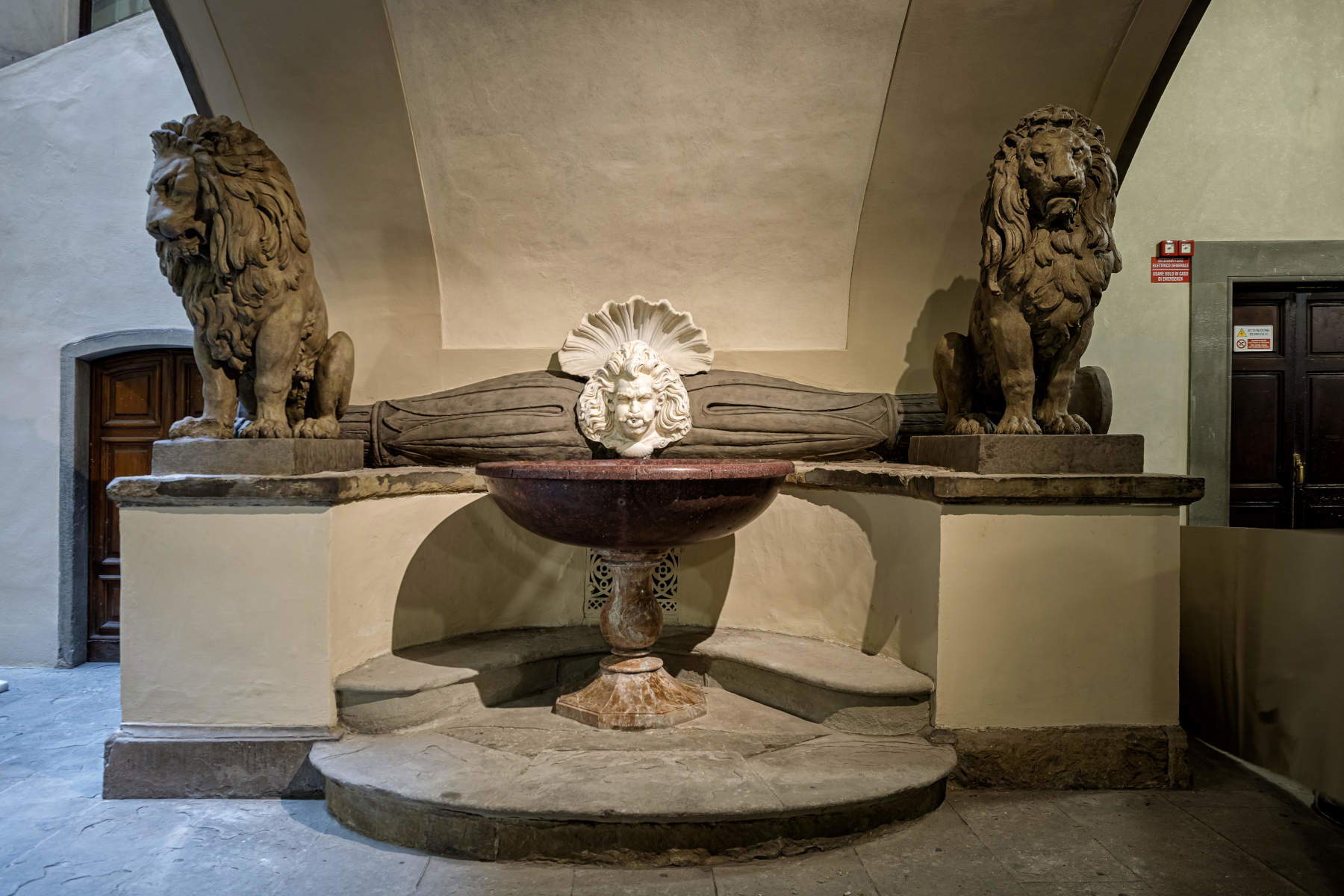
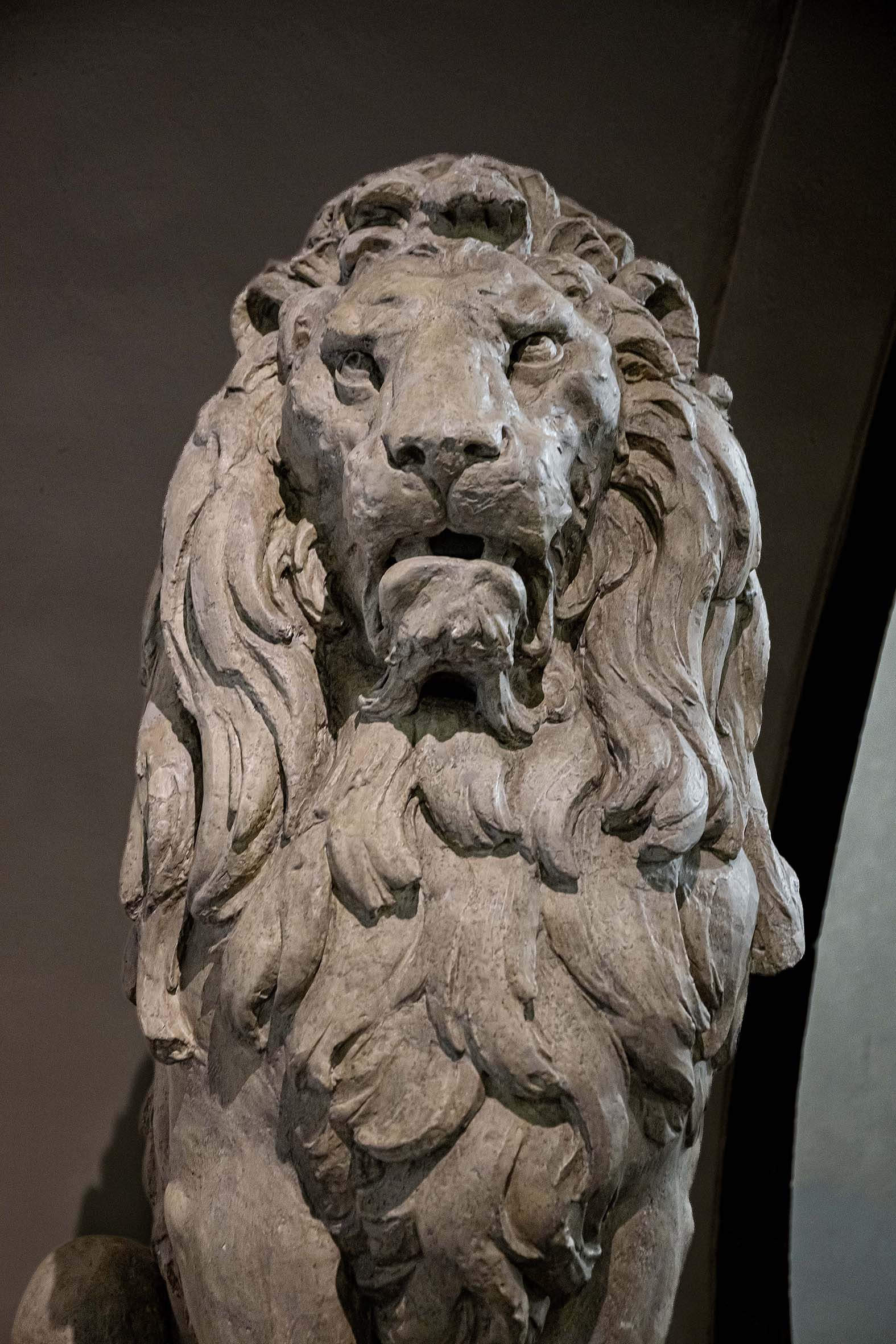
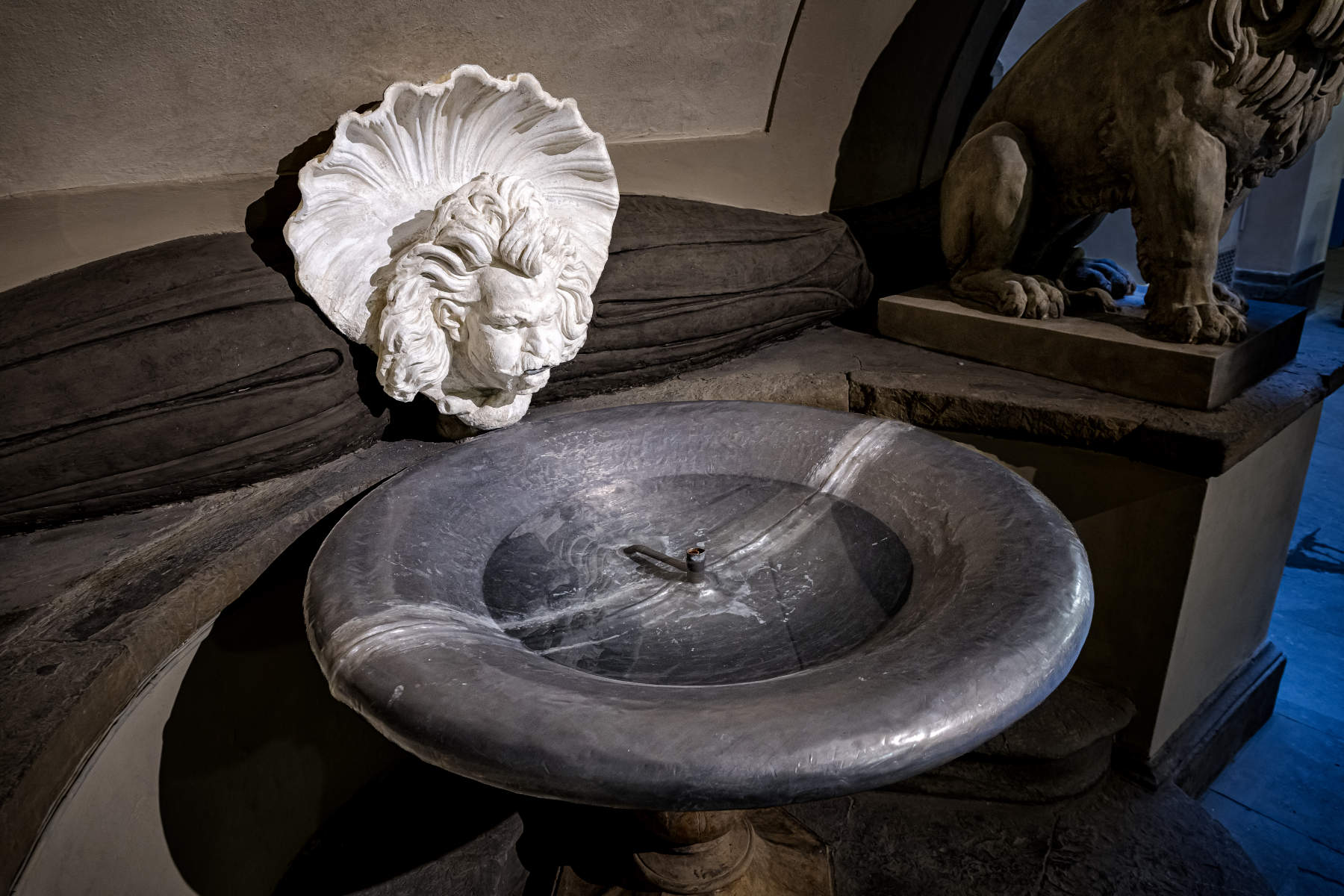
During the restoration, a significant finding emerged: all four lions are period plaster casts with an internal metal framework, contrary to what was previously believed, when two of them were thought to be made of stone. Stratigraphic analyses of the decorative bands behind the fountains also made it possible to identify the original color scheme, preserved beneath subsequent alterations, providing a reference for restoring the chromatic continuity of the ensemble.
The project was supported by the Gori family, led by Laura, Francesca, and Barbara Gori, together with Filippo and Beatrice Parri Gori, in memory of Tommaso Melani, Laura Gori’s son and an integral part of the history of the Scuola del Cuoio, who passed away prematurely in New York. Upon completion of the work, his daughter Isabella Melani unveiled a commemorative plaque dedicated to her father, placed next to the Fonti dei Leoni. Beatrice Parri Gori emphasized the desire to continue the collaboration with the City, which began with the restoration of the Novitiate of Santa Croce and is set to continue with new projects for the city’s cultural heritage.
Housed within the monumental complex of Santa Croce, the Scuola del Cuoio is linked to the Florentine tradition of artisanal leatherworking and the training of craftsmanship. The project is part of the FLIC – Florence I Care program, which allows private individuals to support the conservation of cultural heritage through technical, financial, or combined sponsorships.
The restoration project was overseen by architect Rita Balzano, who was responsible for the design and supervision of the work, with architect Paolo Ferrara serving as the Project Manager and architect Ilaria Vallifuoco handling coordination. The restorer is Barbara Bersellini; the contractors are Edis S.n.c. and Ireco S.r.l.
Statements
“Preserving Palazzo Vecchio means protecting the history and identity of Florence,” said Giovanni Bettarini, councilor for culture . “The work in the Cortile della Dogana and at the Fonti dei Leoni restores the original beauty and colors of these spaces to the city, as well as providing new historical insights. But above all, this project has profound human value: I thank the Gori family and the Scuola del Cuoio for honoring the memory of Tommaso Melani through the Florence I Care program. His vision of heritage preservation as active participation is the best example of how collaboration between the public and private sectors can transform remembrance into a concrete contribution to the community.”
“When we last saw each other in April,” recalls Barbara Gori, CEO of the Scuola del Cuoio, “Tommaso reminded me that in the United States, citizens themselves actively contribute to the preservation of cultural heritage. I was struck by his perspective—the idea that participating in the care of one’s city’s historic sites is a concrete way to look after them and feel part of a community.
“We wanted to bring his wish to life by contributing to the preservation of a heritage that belongs to everyone,” says Beatrice Parri Gori. “We believe that even a small gesture can demonstrate participation and responsibility toward the city, so that its history and beauty can be preserved and passed down to future generations.”
“Being here today moves me deeply. This plaque is a sign of the affection and esteem that so many people have for my father. On behalf of my family, I thank everyone who chose to honor his memory in this place and on this occasion. Thank you from the bottom of my heart,” said Isabella Melani.
“The restoration required a careful assessment of the materials and the most appropriate techniques to respect the original substance,” explains architect Rita Balzano, who is in charge of the project and overseeing the work. “Particularly significant was the restoration of the original colors of the decorative elements, along with the use of laser technology to clean certain parts. This work has allowed us to highlight the value of the artworks and deepen our understanding of their history.”
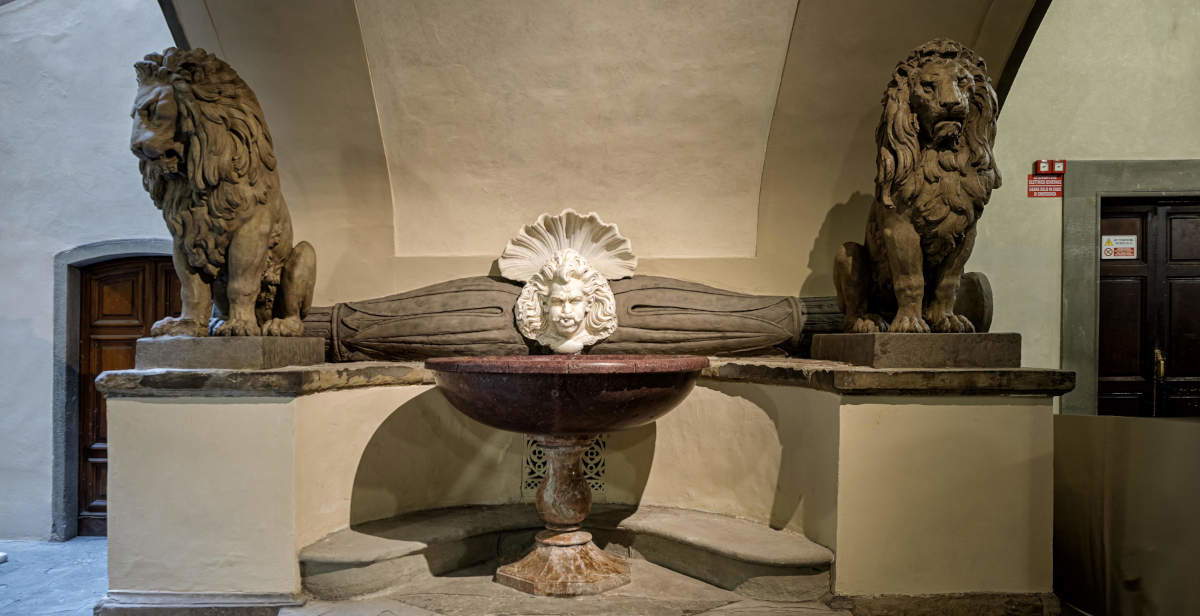 |
| Palazzo Vecchio: The Fonti dei Leoni Have Been Restored—The Lions Are Period Plaster Casts |
Warning: the translation into English of the original Italian article was created using automatic tools. We undertake to review all articles, but we do not guarantee the total absence of inaccuracies in the translation due to the program. You can find the original by clicking on the ITA button. If you find any mistake,please contact us.