



by Redazione 04/09/2026



Categories: Ancient art / Disclaimer
Starting September 4, the museum will be displaying the painting on a special basis; it was purchased with an Art Bonus contribution from AgriEuro. The work, which was once part of the “Pala dei Cacciatori” from Castiglion del Lago, will be reunited with the surviving fragments in the spring of 2027.

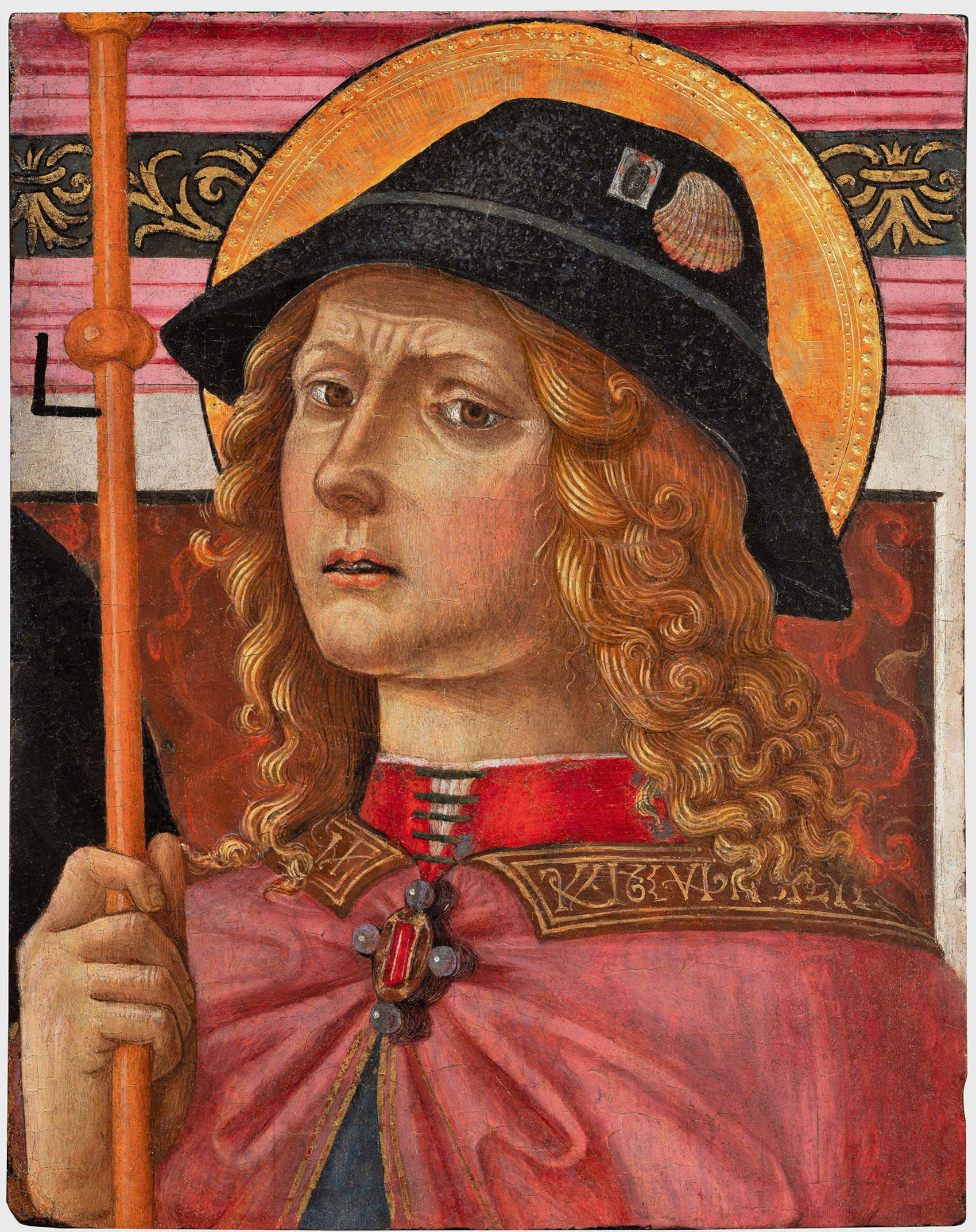
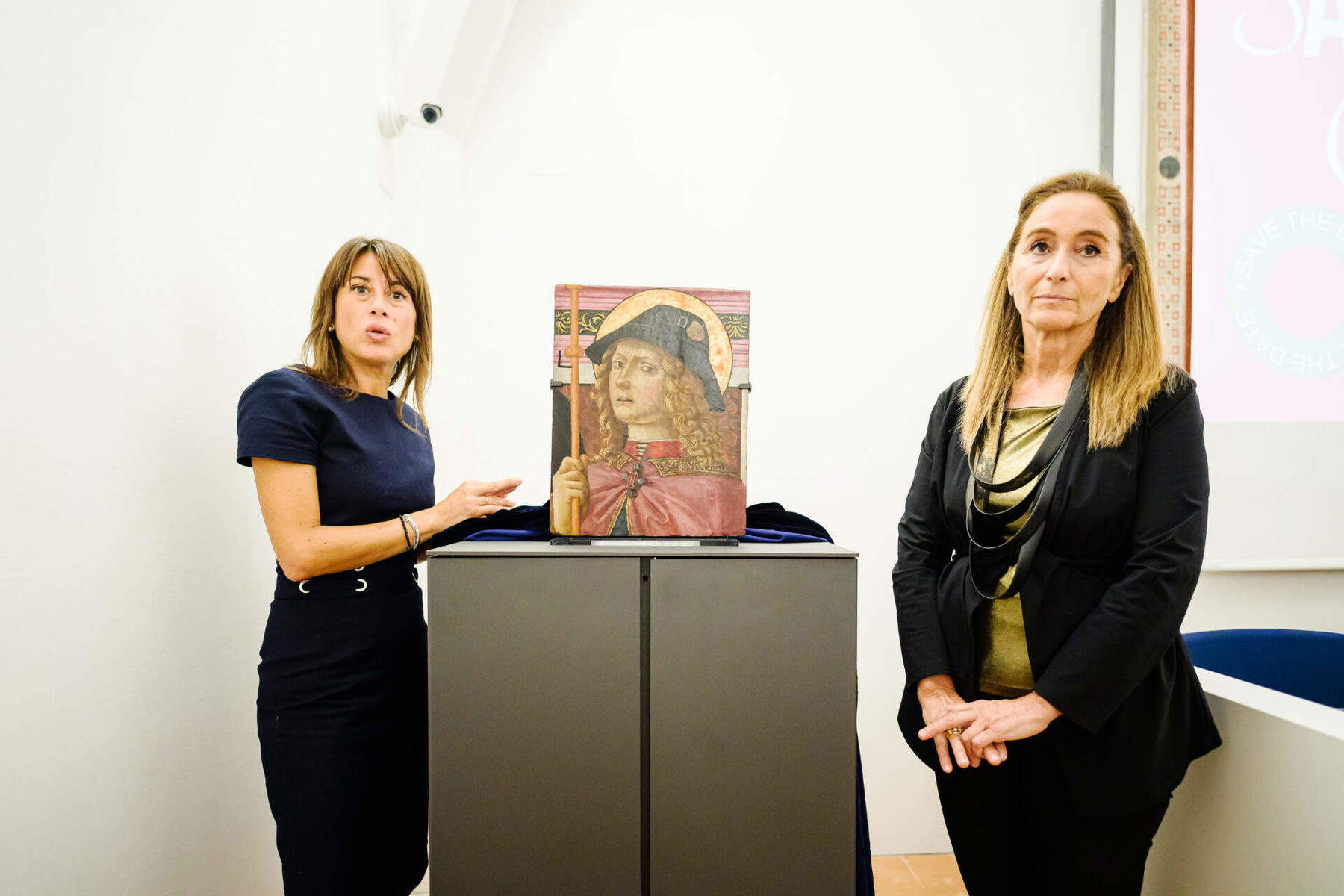
The National Gallery of Umbria in Perugia has acquired *San Rocco* by Bartolomeo Caporali (1420–1505), a painting created around 1487 and believed to have been lost until recently. The work, once part of the so-called “Pala dei Cacciatori” from Castiglion del Lago, will be on public display in Room 18 of the museum from Friday, September 4, through Sunday, September 6, 2026, beginning at 3:00 p.m. on September 4. The painting will then be transferred to storage pending its reunification with the other surviving fragments of the altarpiece, on the occasion of an exhibition dedicated to the Gallery’s new acquisitions, scheduled for spring 2027.
The purchase, valued at 60,000 euros, was made possible by an Art Bonus contribution from AgriEuro, an e-commerce company based in Spoleto committed to supporting the preservation and promotion of the region’s cultural heritage. The company had previously used the same program to fund the restoration of the historic curtain of Spoleto’s Teatro Nuovo Gian Carlo Menotti, a project completed in 2025 in collaboration with the Municipality of Spoleto.
The recovery of the San Rocco painting was made possible after Emanuele Zappasodi, a professor at the University for Foreigners of Siena, identified the work on the antiquities market. The Moretti Fine Art gallery in London played a significant role in the negotiations and also supported the restoration of the work, which was carried out in Florence by Loredana Gallo. The painting had circulated on the French antiquities market with incorrect attributions before being identified and returned to Italy.


This acquisition is part of the Umbrian National Gallery’s program aimed at showcasing works that have recently entered the collection. A significant portion of the exhibition schedule for the coming months will, in fact, be dedicated to these new acquisitions, including both paintings and a photography collection.
From September 18 to November 1, 2026, the Sala Podiani will host an exhibition dedicated to the photographic collection acquired through two editions of the “Strategy for Photography” call for proposals, promoted annually by the General Directorate for Contemporary Creativity of the Ministry of Culture. The 2024 edition enabled Luigi Spina to create, on commission from the National Museums of Perugia—Regional Directorate of National Museums of Umbria—a photographic series dedicated to the Umbria of St. Francis. Through the 2025 edition, the museum acquired prints from the series created in Umbria by Fulvio Roiter in 1957, as well as several original photographs by Mario Giacomelli that document, in an unusual color version, the Castelluccio di Norcia Plain during its flowering season.
The spring of 2027 will be dedicated to the paintings that have entered the collection of the National Gallery of Umbria over the past ten years, that is, since it attained the status of an institution with special autonomy. The centerpiece of the exhibition will be Caporali’s *San Rocco*, which will be accompanied by the four surviving fragments of the *Pala dei Cacciatori*: the two already in the Gallery’s collection and those housed at the Civic Museums of Udine and the Federico Zeri Foundation.
The exhibition will also include other acquisitions considered particularly significant and linked to the artistic history of Umbria and the museum’s identity. The works will be presented through a display designed to contextualize them and explore their historical backgrounds and formal characteristics, including through juxtaposition with other works considered representative of their artistic trajectories.
The “Pala dei Cacciatori” was commissioned in 1487 from Bartolomeo Caporali by the hunters of Castiglion del Lago for the parish church of Santa Maria Maddalena, located outside the city walls. It was a squarepanel depicting a Sacred Conversation, at the center of which the Virgin and Child were depicted seated on a throne, flanked by two pairs of saints: on the left, Saint Mary Magdalene and Saint Sebastian; on the right, Saint Anthony the Abbot and Saint Roch.
The panel was divided into several pieces in 1774, due to its irreparably poor state of preservation, by order of Reverend Don Giuseppe Bernardi, and was placed in the parish house. In 1864, Giovan Battista Cavalcaselle viewed and sketched the individual fragments, providing documentation that made it possible to reconstruct the altarpiece’s original composition.
In the years following Cavalcaselle’s survey, the paintings entered the circuit of the post-unification antiquarian diaspora. Two fragments—the head of an angel and the face of Mary Magdalene—were recovered by the Prefecture of Venice and assigned in 1870 to the Civica Pinacoteca Vannucci, thus entering the collection of the National Gallery of Umbria. Two other elements, depicting Saint Anthony the Abbot and another angel, were acquired by the Civic Museums of Udine after a stint in a private collection and published by Umberto Gnoli in 1916 alongside the two fragments from Perugia. The fragment depicting Saint Sebastian, on the other hand, was identified in 1969 by Elizabeth Gardner, curator of the Metropolitan Museum of Art in New York, in the collection of Federico Zeri. The scholar and collector had previously purchased it on the Florentine antiquities market.
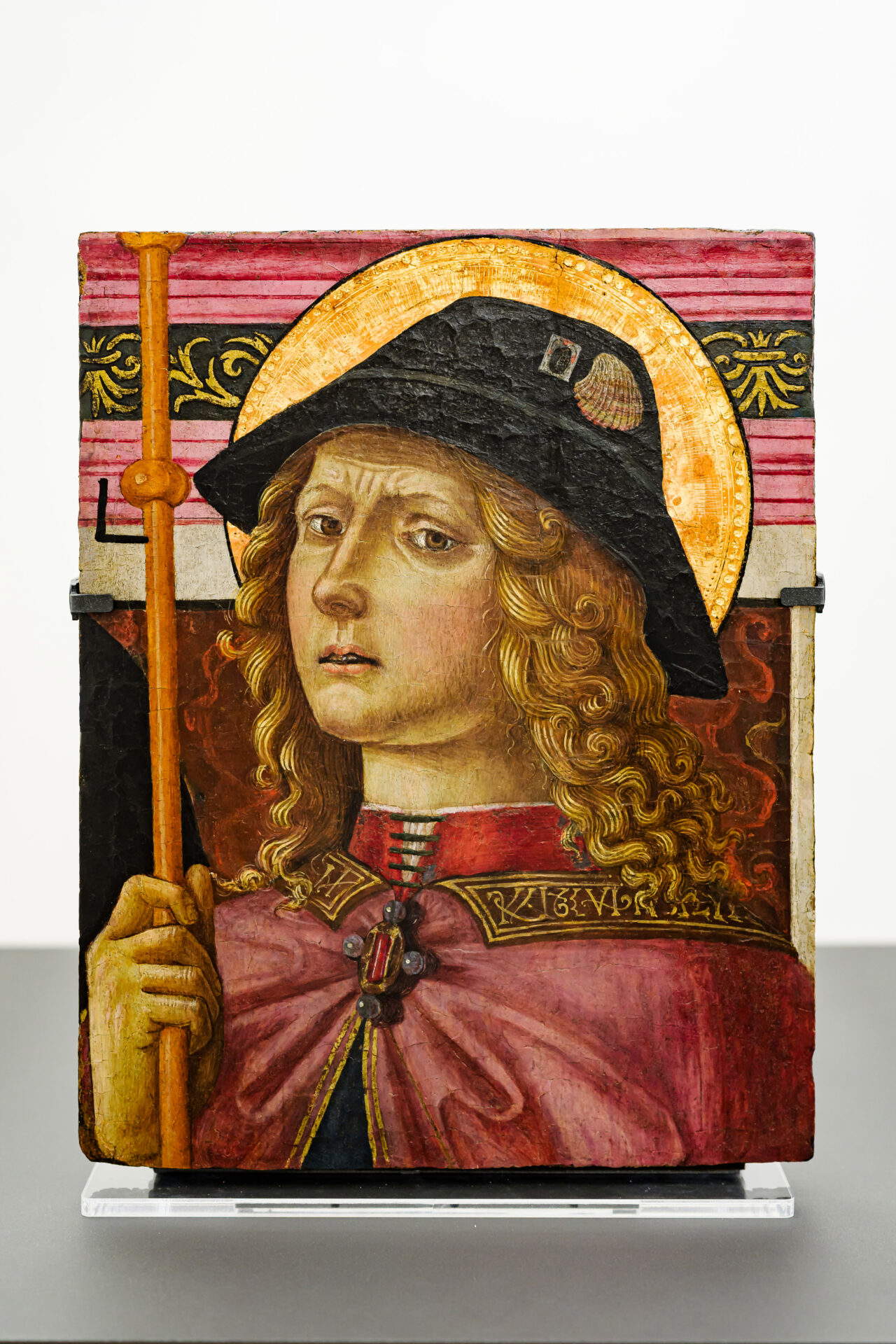
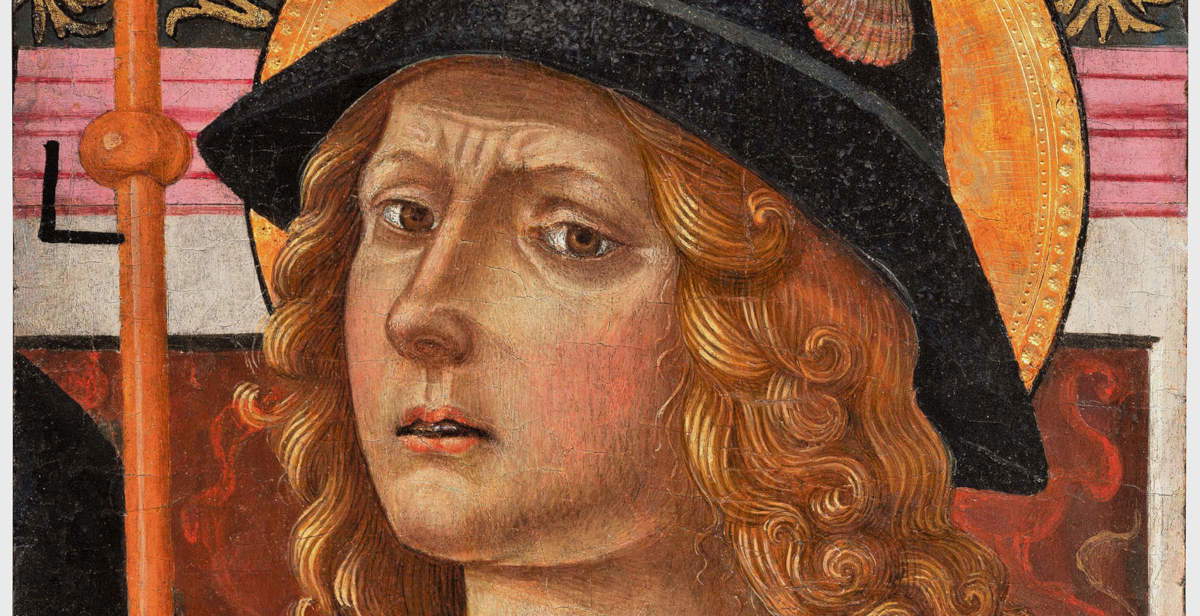
The Saint Roch, however, remained outside the reconstruction of the altarpiece until recently. Its reappearance on the French antiquities market had been accompanied by attributions considered irrelevant. The identification of the work made it possible to bring it back to Italy and subject it to restoration, after which the features of the young pilgrim saint became legible once more: his furrowed brow, the blond curls falling over his shoulders, and the dark, wide-brimmed hat.
The reunification of the painting with the fragments already held by the National Gallery of Umbria marks a significant step toward the reconstruction of the *Pala dei Cacciatori* and the study of Caporali’s mature period. The artist, active in 15th-century Umbria, is considered a transitional figure between the Bonfigliesque tradition and the new Florentine figurative culture introduced to Perugia at the time by the young Pietro Vannucci.
The arrival of the *San Rocco* is part of the process of expanding the collections of the National Gallery of Umbria, which has been underway for over ten years since the institution gained autonomy, beginning with Prime Ministerial Decree No. 171 of August 29, 2014, and continuing through subsequent regulatory changes. Furthermore, since 2024, the Gallery has been administratively merged with the other fourteen state museums in Umbria, creating a single autonomous institution.
The collection of the region’s leading museum has grown through acquisitions and donations made directly by the Ministry of Culture, the Gallery, and private individuals—both through bequests and via the Art Bonus program. This growth has been particularly significant in recent years and has made it possible to fill in some gaps in the sequence of artists who have shaped the history of Umbrian art, as well as to open up new areas of collection through the photographic collection. The new acquisition ofthe “San Rocco” thus fits into this strategy of expanding and studying the heritage, with the goal of physically reconstructing, whenever possible, groups of works that were previously dispersed.
Statements
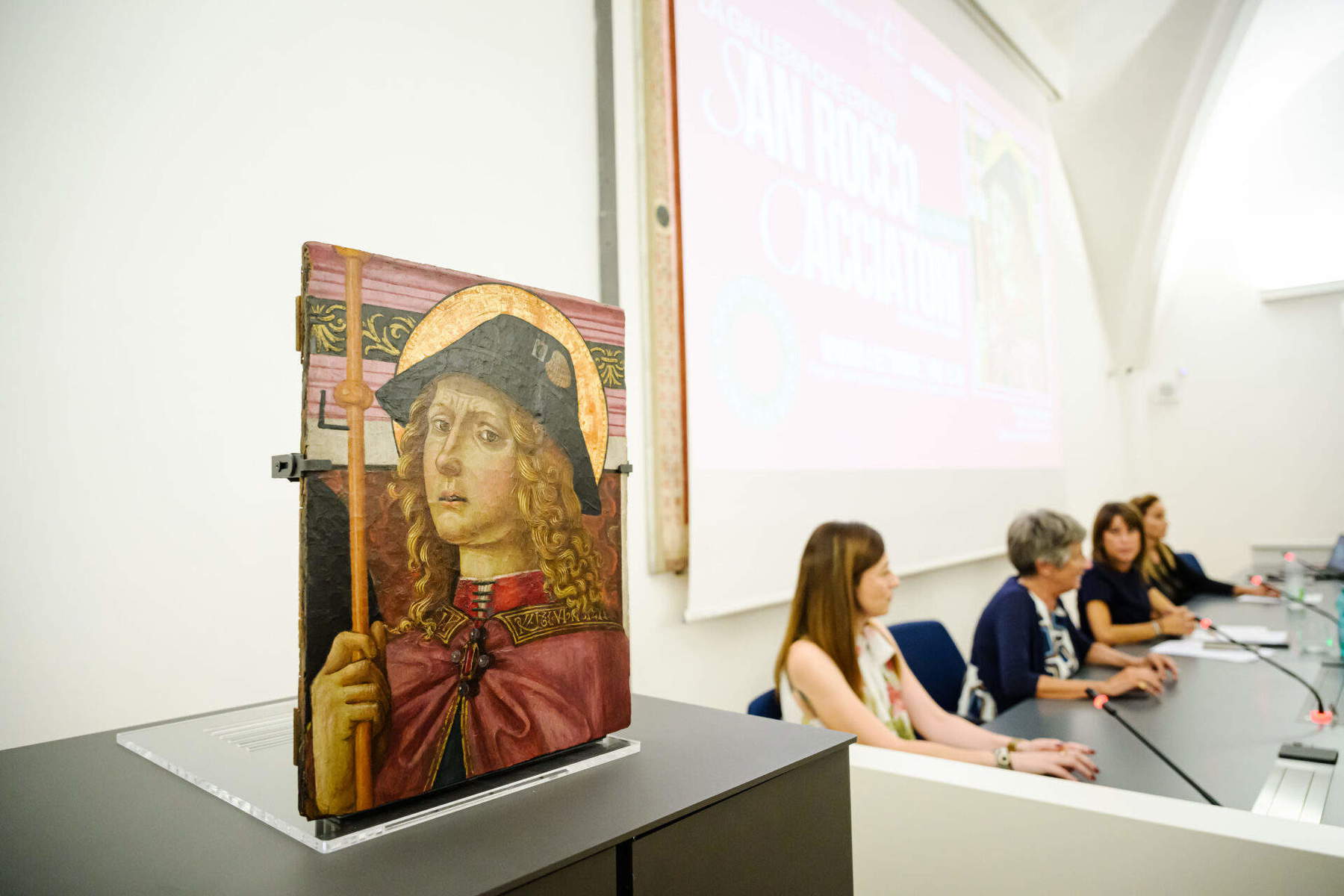
“The acquisition of this painting by Bartolomeo Caporali,” states Veruska Picchiarelli, deputy director of the National Museums of Umbria, “represents a moment of great importance for the National Gallery of Umbria. Welcoming a work of such significance into our collections—one that, moreover, helps to reunite a dismembered and partially dispersed collection—means not only restoring the proper recognition to one of the leading figures of 15th-century Umbrian painting but also reclaiming an important part of our cultural identity. The addition of *San Rocco* is, in fact, part of the museum’s ongoing effort to study and promote the region’s figurative art, offering the public a new opportunity to explore the richness and quality of Umbrian Renaissance art. Special thanks go to Alessia Settimi and AgriEuro, an Umbrian company with an international reach that has chosen to support the National Museums of Umbria through the Art Bonus contribution, which for the first time is being allocated to expand the Gallery’s collection. “This significant act of corporate patronage aligns the forward-thinking vision of a business that is attentive to and sensitive toward enhancing the context in which it operates with the mission of creating synergies with the local community—a mission shared by cultural institutions.”
“We believe that corporate patronage can help strengthen the bond between cultural heritage and the community, preserving what we have received and making it accessible to future generations. Companies change and evolve over time; a work of art, on the other hand, spans the centuries,” stated Alessia Settimi, Chief Operating Officer of AgriEuro. “Having contributed to the acquisition of Bartolomeo Caporali’s *San Rocco* is a source of great pride for us and represents the continuation of a journey of cultural enrichment that we feel is part of our way of doing business. We were also deeply captivated by the values embodied by the figure of Saint Roch, a pilgrim dedicated to caring for others, as well as by the work’s own journey—having been scattered outside Italy and now finally returned to Umbria.”
 |
| The National Gallery of Umbria Brings Bartolomeo Caporali’s “Saint Roch” Back to Perugia |
Warning: the translation into English of the original Italian article was created using automatic tools. We undertake to review all articles, but we do not guarantee the total absence of inaccuracies in the translation due to the program. You can find the original by clicking on the ITA button. If you find any mistake,please contact us.