




by Redazione 16/10/2026



Categories: Ancient art / Disclaimer
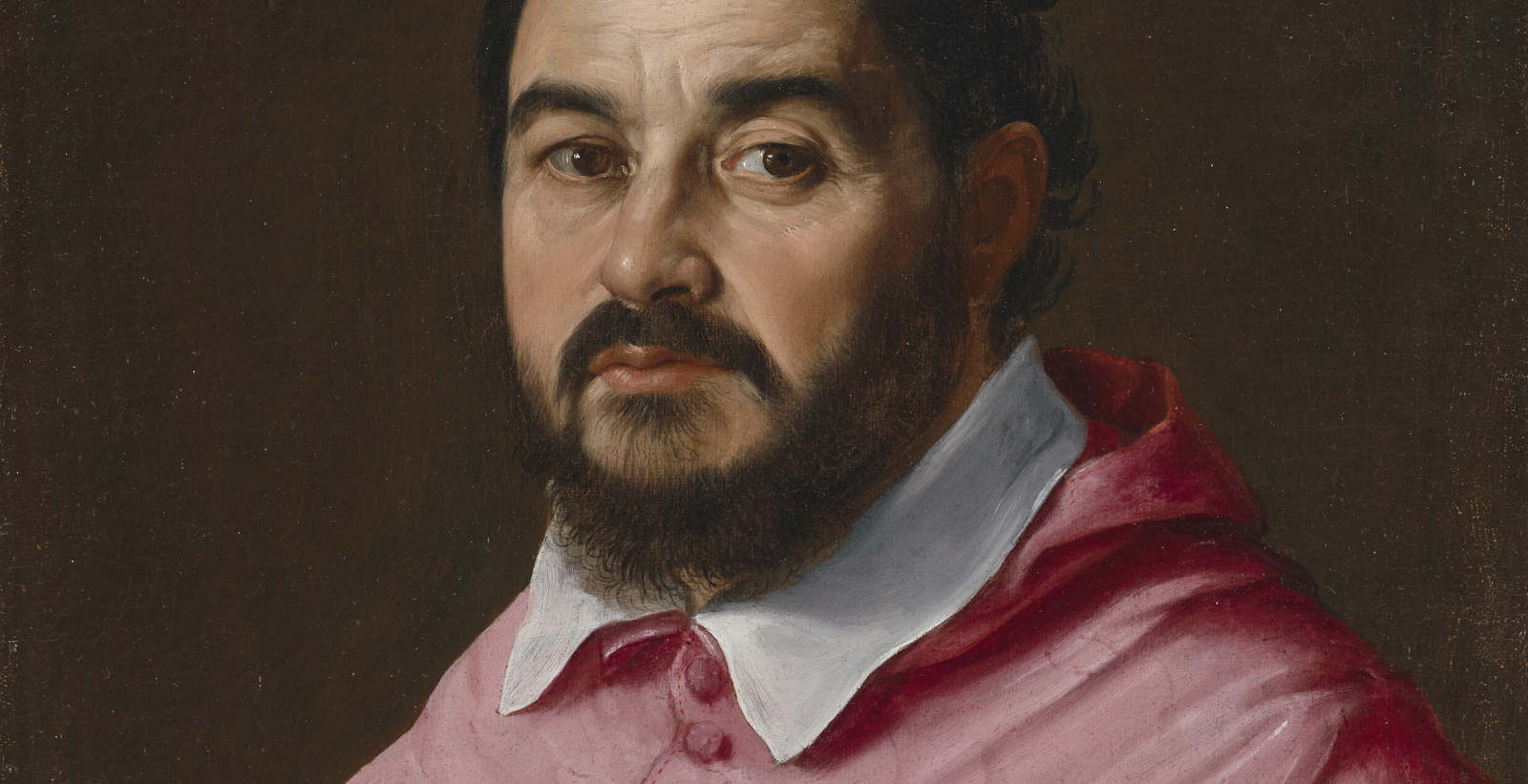
An important work by Guido Reni, the *Portrait of Cardinal Giacomo Sannesi*, painted in 1609 and long misattributed, has been acquired by the Städel Museum in Frankfurt. The painting was sold in June by Christie’s in New York for $355,600.


The Städel Museum in Frankfurt has pulled off a major coup by acquiring an important portrait by Guido Reni ( Bologna, 1575–1642)—that of Cardinal Giacomo Sannesi. The work, which had long been incorrectly attributed, was recently rediscovered and acquired by the German museum at a Christie’s sale in New York in June 2026, as part of the auction titled “A Lifelong Pursuit: Old Masters from a Distinguished Private Collection.” The painting fetched $355,600 (317,000 euros), compared to an estimate of between $100,000 and $150,000 (89,000–133,000 euros).


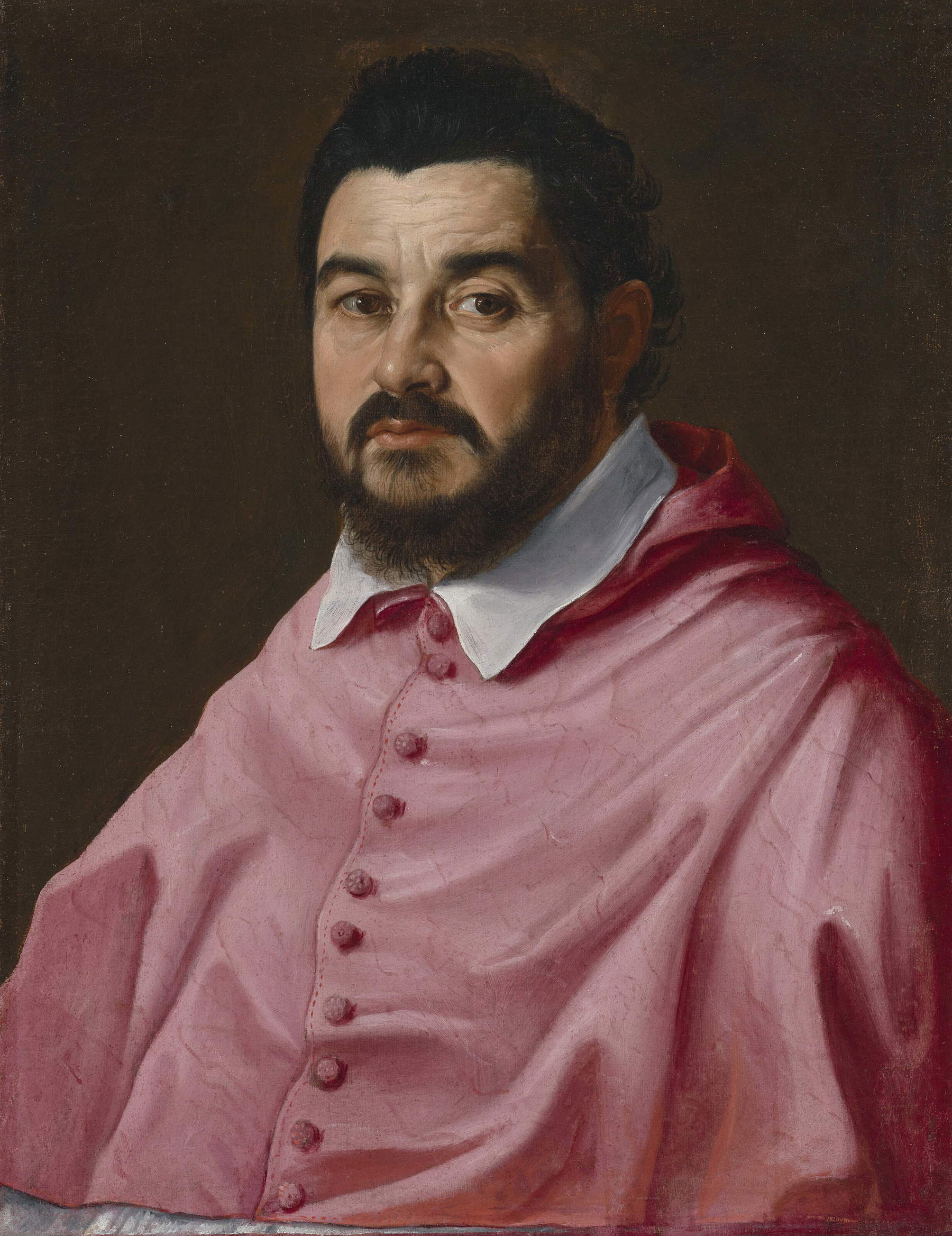
In the painting, Cardinal Sannesi looks directly at the viewer of his portrait. His face, framed by a thick head of black hair, stands out vividly against his ecclesiastical attire: a robe with a white collar, a rochet barely visible in the lower left corner, and a pink mozzetta—the short, buttoned cape traditionally worn by cardinals. It is above all his gaze that dominates the composition, capturing the attention of those standing before the canvas with an expression that is at once understated and eloquent.


Guido Reni painted this portrait in 1609, during his first stay in Rome. The rediscovery of Reni’s authorship restores a work of particular interest for understanding his early career in Rome. According to the art-historical description published for the auction, this is in factthe only surviving portrait identified with certainty among those created by the painter during his first period in Rome, which can be roughly dated between 1601 and 1614. The painting is also linked to a payment recorded in the artist’s account book on November 17, 1609, when Reni received eight and a half scudi for “a portrait painted by Guido [Reni] and retouched by Cardinal Sanesio.” This accounting document is a fundamental reference for the history of the work: it is not only evidence of its creation but also confirmation that links the painting now preserved in Frankfurt to a commission recorded during the artist’s lifetime. The portrait was painted for Sannesi himself and, according to the reconstruction of its provenance, remained in the possession of the cardinal and his heirs until 1724.


Early art history literature also preserves a reference to the painting. Carlo Cesare Malvasia, in his biography of Reni, listed the work among the approximately twelve portraits by the painter then present in Roman collections. The painting was thus known in the biographical tradition of the artist, but its identification was subsequently lost, until it reappeared on the antiquities market with an attribution to the 17th-century Roman school. The turning point came in 2004, when the painting was offered for sale by Sotheby’s in London on December 9 as lot 174: the catalog listed it as a work from the Roman school of the first half of the 17th century and described it simply as a portrait of a cardinal. It was on that occasion that art historian Erich Schleier identified the subject as Giacomo Sannesi, by comparing the painting with an old copy preserved in the town hall of Belforte del Chienti, in the Marche region, the prelate’s birthplace. The copy bears the cardinal’s coat of arms, a detail that made it possible to identify the subject depicted.
After the London auction, the painting went to the Galerie Canesso in Paris, where it had already been since 2006, and was purchased by its last owner, who put it up for sale at Christie’s—a circumstance that facilitated its acquisition by the Städel Museum, which has thus added to its collection a work linked to a crucial phase in Reni’s career.
Giacomo Sannesi had been appointed cardinal in June 1604 by Pope Clement VIII, thanks to the support of his patron, Cardinal Pietro Aldobrandini. His position in the Roman Curia changed after the election of Paul V Borghese in 1605, which marked the decline of influence of the faction linked to the Aldobrandini family. Sannesi was then sent to Orvieto and returned to Rome in 1607, officially for health reasons. Although he did not hold a prominent position in Roman political life, by 1609 the cardinal had amassed an art collection considered particularly selective: the most famous core of the collection consisted of paintings by Caravaggio, including the first, rejected version of The Conversion of Saint Paul, created for the Cerasi Chapel and now in the Odescalchi Balbi Collection in Rome.
The relationship between Sannesi and Reni presents, in this context, a particularly interesting aspect: the painter was by then closely associated with Cardinal Scipione Borghese, who was aligned with the opposing Aldobrandini faction. The commission of a portrait of a prelate close to the Aldobrandini family has been interpreted by scholar Lorenz Sickel as a possible diplomatic gesture: an artistic commission that, in addition to its celebratory function, might have helped maintain relations between rival factions within ecclesiastical politics.
The painting seems to have quickly assumed the role of the cardinal’s official portrait, and confirmation of its reputation can be found in an album of cardinal portraits compiled around 1690 by Cardinal Celestino Sfondrato and preserved at the Vatican Library. Sfondrato selected images that he evidently considered to be of particular artistic quality, and Sannesi’s portrait was included in the collection. The same album also features a copy of a *Portrait of a Cardinal* by Scipione Pulzone, traditionally identified as Giacomo Savelli (1522–1587) and now housed at the National Gallery in London, with inventory number NG1048.
The date of 1609 places the painting in a decisive phase of Guido Reni’s artistic development. During those years, the painter was developing a style in which the influences of Caravaggio and Annibale Carracci were in tension. Chronologically, the portrait falls between the painting *Saint Peter Repenting, Rebuked by Saint Paul*, housed at the Pinacoteca di Brera in Milan, and the *Massacre of the Innocents* ( 1610–1611 ) , now at the Pinacoteca Nazionale in Bologna. Stylistically as well, the catalog entry identifies a significant parallel between the cardinal’s face and that of Saint Paul in the Brera painting: the structure of Sannesi’s facial features and his thick black hair are, in fact, mirrored in the figure of the saint. The modeling of the face, the subdued color palette, and the compact format of the portrait reflect a phase in which Reni was still working within a style influenced as much by Caravaggio as by Annibale Carracci.
This stylistic proximity likely contributed to making the painting’s artist less recognizable in subsequent centuries. When the canvas entered the collection of the Genevan patrician Jean de Sellon—likely following a trip to Italy in the mid-1780s—it was attributed to Annibale Carracci. The attribution is documented by an inscription on the reverse, dating from the late 18th century.
An earlier inventory, however, had correctly recorded Reni’s name. In 1755, when the painting still belonged to the collection of Marquis Emilio De’ Cavalieri in Rome, it was described as “a portrait of a cardinal by Guido Reno” and valued at one hundred scudi. This was a considerable sum, placing the painting among the most valuable works in the entire collection. The discrepancy between this document and the subsequent attribution to Annibale Carracci shows how the artist’s name, although preserved at one stage in the work’s collecting history, was lost in the transition from one collection to another.
The reconstructed provenance of the work allows us to trace part of its journey through various European collections: after being commissioned by Sannesi and remaining with his heirs until 1724, the painting passed to Marquis Emilio De’ Cavalieri, who died in 1754, and remained in his family. It subsequently entered the collection of Count Gaspard de Sellon (1702–1785) at Allaman Castle in Switzerland, then passed to Jean de Sellon—who died in 1810—and was held between Allaman Castle and Geneva, and eventually to his descendants. The painting then reappeared on the London art market in 2004, when it was still classified as a work from the Roman school. The confirmation of the attribution to Guido Reni has also been supported by scholars who have examined the work directly or evaluated images of it. Keith Christiansen endorsed the attribution after an in-person inspection, in a verbal communication to Christie’s on April 16, 2026. Daniele Benati and Bastian Eclercy expressed their agreement based on photographs, in written communications dated May 5, 2026. Eclercy also provided additional bibliographic references useful for the historical-artistic reconstruction.
With its acquisition by the Städel Museum, the portrait is once again recognized as a documented work by Guido Reni, created in 1609 and linked to the life of the Roman Curia during the pontificate of Paul V. Its history highlights how attributions can change over time and how important it is to compare works, consult archival documentation, and examine the history of collections in order to reconstruct the identity of a painting. In this case, the artist’s account book, the ancient copy preserved in Belforte del Chienti, the inventory of the De’ Cavalieri collection, and Sfondrato’s album of cardinals constitute distinct pieces of a story that, after centuries, has made it possible to attribute the portrait to its original artist.
 |
| The Städel Museum in Frankfurt acquires an important portrait by Guido Reni |
Warning: the translation into English of the original Italian article was created using automatic tools. We undertake to review all articles, but we do not guarantee the total absence of inaccuracies in the translation due to the program. You can find the original by clicking on the ITA button. If you find any mistake,please contact us.