



by Redazione 03/11/2026


Categories: Ancient art / Disclaimer
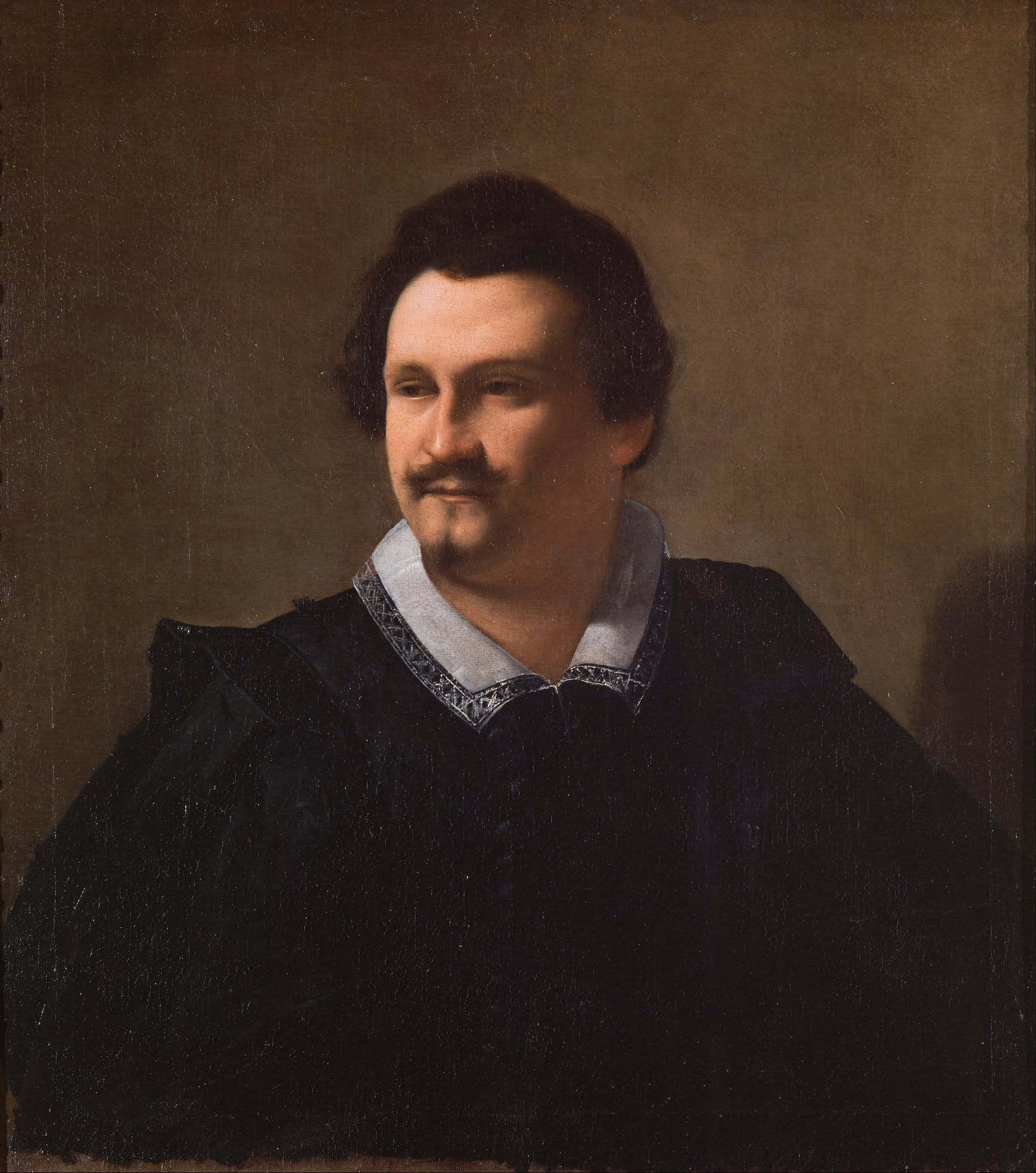
On display since 1861 at the top of the picture gallery at the Montepulciano Museum, the *Portrait of a Gentleman in Black* was attributed to Caravaggio more than fifteen years ago by Massimo Pulini, who identified the subject as possibly Scipione Borghese. The proposal did not gain much traction, but on November 7, a symposium will revisit the painting.

The *Portrait of a Gentleman in Black* is back in the news ; a few years ago, a hypothesis was put forward attributing it to Caravaggio. The work, housed at the Museo Civico – Pinacoteca Crociani in Montepulciano ( Siena), had hung for nearly a century and a half on the top row of a picture gallery, in a hall with a very high ceiling, covered by a layer of oxidation and overpainting; to view it up close, one had to find a ladder, convince the museum director, and climb up. That is exactly what art historian Massimo Pulini did more than fifteen years ago, when he was preparing an exhibition in the area and became convinced that the painting was by Caravaggio, and that the young man depicted might be Scipione Borghese, the cardinal nephew of Pope Paul V and one of the great collectors of seventeenth-century Rome.


Today, the *Portrait of a Gentleman in Black* occupies a small room all to itself in the Montepulciano museum, housed in the 14th-century Palazzo Neri Orselli—one of the few buildings in the city that still preserves the architectural legacy of 14th-century Siena. And it is once again at the center of the debate: on Saturday, November 7, 2026, Montepulciano’s Town Hall will host the symposium *Identity Portrayed at the Dawn of the 17th Century*, curated by Pulini himself and dedicated to portraiture in Italy between the late 16th century and the first decades of the following century, with a particular focus on Caravaggio and early Caravaggism.


The History of the Attribution
The first to announce Pulini’s attribution to the public was Marco Vallora in 2010 in the pages of *La Stampa*, when the scholar from Romagna made his proposal public: Pulini, in fact, made his proposal known in an appendix to a small volume titled *Nero fumo*, published by the Medusa publishing house, founded by journalist and art historian Maurizio Cecchetti. The core of the book was a theatrical monologue in which the author gave voice to Caravaggio himself, intended to be performed by Alessio Boni at the Teatro Bonci in Cesena on November 7 of that year. Only at the end of the text did the arguments regarding the portrait’s authorship appear, which Vallora described as supported “with all the hallmarks of philology.”


The journalist recounted that the insight had actually come to him more than eight years earlier. Pulini wasn’t on the hunt for Caravaggio: he was curating a small exhibition in Pienza and had been given a guide to the museums of the Siena area. Leafing through it, he had been struck by the portrait, which had been on public display since 1861 in a small, rich museum—that of Montepulciano—where no one had noticed it. The soiling was concentrated mainly on the background, where, according to Vallora, the interplay of light and shadow is clearly visible—a work that can be placed in a transitional phase between Caravaggio’s earlier, lighter style and the more nocturnal style of his mature period. In his book, Pulini described the light on the young man’s face as follows: “There is, however, no sharp, Manichean division between light and shadow: an enveloping glow illuminates the cheek, ear, and neck, as if it were reflected in the silk of the shirt.” The painting was later restored by Mary Lippi, who brought to light a row of buttons belonging to a non-ecclesiastical garment. That detail dispelled an initial hypothesis by the scholar, who had believed he saw a lawyer’s toga on the blackened shoulder. But the starting point was now established, and Pulini continued his comparisons: a bust once attributed to Algardi, a drawing by Bernini, and another similar portrait preserved in a New York collection and studied by Mina Gregori. Hence the hypothesis that the gentleman in black is Scipione Caffarelli, adopted by the Borghese family.
Vallora reconstructed the story: his uncle Camillo had sent him to study law in Perugia, and upon ascending to the papal throne in 1605 as Paul V, he had appointed him cardinal after just two months, bypassing the entire religious career path. A sensational case of nepotism, the journalist observed, but also a decisive turning point in the history of art collecting, sometimes pursued through unscrupulous methods: Scipione allegedly stole an altarpiece by Raphael from Perugia, replacing it with a copy, and had Cavalier d’Arpino—Caravaggio’s teacher—arrested on the pretext of undeclared arquebuses in order to seize his pupil’s paintings. Nevertheless, Vallora noted, he remains the patron who founded the Borghese Gallery, and perhaps for this very reason he had no interest in displaying a portrait from his youth that too openly documented his rise to prominence.
Cautions and Opinions
Pulini was aware of the skepticism that a new attribution to Caravaggio would inevitably arouse. There were, however, some voices in favor: Francesco Petrucci, a scholar of 17th-century Roman portraiture, had expressed his support by signing the book’s afterword. Maurizio Calvesi seemed to have overcome his reservations, especially after seeing the photographs taken following the restoration. Mina Gregori had said she was ready to view the work in person. Gianni Papi had not yet made an official statement, but he acknowledged that, if confirmed by direct examination, the attribution would be the most interesting proposal of the last few decades. Two years later, in 2012, the restored painting was the focus of a scholarly conference chaired by Mina Gregori herself, in which Calvesi, Papi, Petrucci, and Pulini participated. However, the attribution was not pursued further, and the *Portrait of a Gentleman in Black* has not yet entered the “canon.”
The study day on November 7—which, as the organizers note, comes fifteen years after the initial studies and in-depth analyses dedicated to the work— resumes that discussion and broadens it to the wider themeof identity as represented through portraiture and the transformations in language and culture that shaped this genre during a crucial phase in the history of European art. For the occasion, the painting underwent a new, ultra-high-definition photographic campaign, carried out by Gilberto Urbinati.
The day’s program
The proceedings, chaired by Francesca Cappelletti, director of the Galleria Borghese in Rome, the museum founded from the collection of the very Scipione whom the portrait may depict, will begin at 9:30 a.m. with welcoming remarks by the mayor of Montepulciano, Michele Angiolini; the president of the Consorzio del Vino Nobile, Andrea Rossi; and the director of the Museo Civico Pinacoteca Crociani, Patrizia La Porta.
The morning session, coordinated by Pulini, begins with Francesca Curti of Sapienza University of Rome, who will discuss Caravaggio’s portrait of a musician in the collection of Cardinal Carlo Emanuele Pio of Savoy. Next will be Francesco Petrucci of the Palazzo Chigi Museum in Ariccia, offering some reflections on portraiture and the Counter-Reformation; art historian Ettore Giovanati, who will propose two possible additions to the catalogs of Scipione Pulzone and Ottavio Leoni, based on the forms and functions of the portrait; Yuri Primarosa of the Barberini Corsini National Galleries, who focuses on the face of Ottavio Leoni himself, a portraitist in the mirror. Gianni Papi concludes the morning session, returning to the subject of Caravaggio’s portraiture.
At 4:00 p.m., the second session resumes, coordinated by Roberto Longi, former director of the museum in Perugia. Massimo Pulini, former professor at the Academy of Fine Arts in Bologna, directly addresses the Montepulciano painting with a presentation titled “The Portrait and Its Shadow. A Lombard-Venetian Canon and the ‘Gentleman in Black’ from Montepulciano.” Costume historian Paola Goretti will discuss the Spanish influence on European fashion in a presentation titled “Nigredo Consurgens.” Claudia Renzi traces the depictions of Scipione Caffarelli Borghese from Caravaggio to Bernini, while Marco Ciampolini, former professor at the Academy of Fine Arts in Carrara, examines Sienese portraiture during Caravaggio’s century, from Rutilio Manetti to Mattia Bolognini.
The conference proceedings will be published, with the aim of making them a permanent research resource for studies on the figurative culture of the early 17th century. The event, sponsored by the Consorzio del Vino Nobile di Montepulciano in collaboration with the City of Montepulciano, with the participation of the Museo Civico Pinacoteca Crociani, is dedicated to Mina Gregori, an art historian, member of the Accademia dei Lincei, and professor emerita of Modern Art History at the University of Florence, and is part of the Valdichiana 2026 – Tuscan Capital of Culture program.
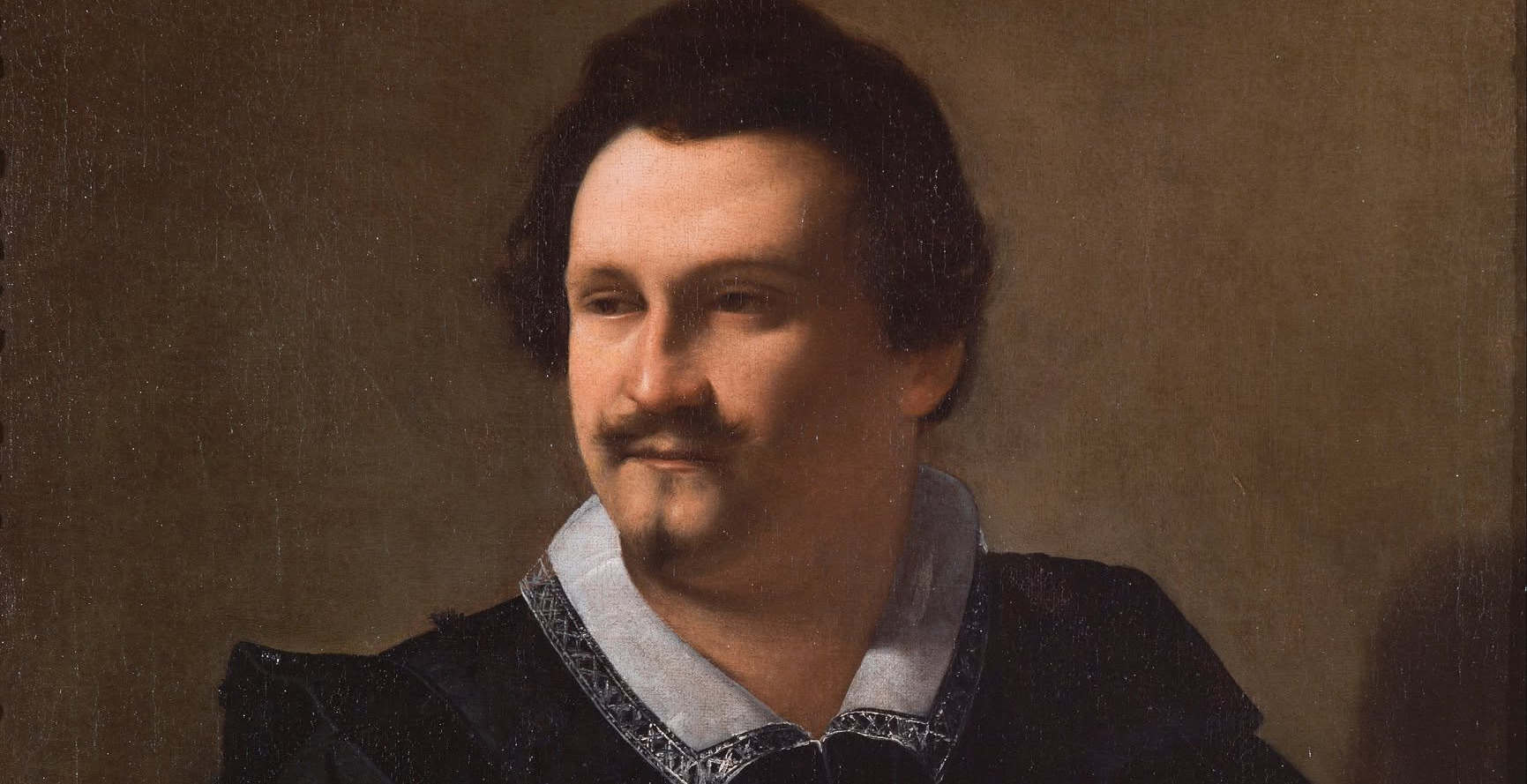 |
| Years ago, it was attributed to Caravaggio; now this portrait is once again at the center of the debate |
Warning: the translation into English of the original Italian article was created using automatic tools. We undertake to review all articles, but we do not guarantee the total absence of inaccuracies in the translation due to the program. You can find the original by clicking on the ITA button. If you find any mistake,please contact us.