





A rare example of a 5th-century B.C. gold coin from Syracuse was discovered in the Maddalusa necropolis, in Agrigento, during an emergency excavation ordered by the Superintendency to recover a Greek-era tile-lined capuchin tomb located in the dune west of the mouth of the Akrágas River. The discovery is part of the numerous archaeological findings that have emerged in the area since the 19th century and helps to enrich our knowledge of the ancient city’s vast necropolis.
“This discovery,” said the councilor for Cultural Heritage and Sicilian Identity, Francesco Paolo Scarpinato, “attests to the importance of archaeological research in the region and the value of conservation efforts, confirming that the archaeological heritage continues to offer new insights into the complex history of Akrágas, one of the richest and most celebrated Greek cities in Sicily and the ancient Mediterranean.”
The burial ground was in use from the earliest decades of Akrágas’s existence, in the first quarter of the 6th century B.C. Excavations and discoveries over time have made it possible to reconstruct a site extending over three kilometers, along the coastline and in the central and western parts of the Maddalusa hill. The site has yielded marble and calcarenite sarcophagi, box tombs constructed from roof tiles and stone slabs, and burials within vessels, including both cremations and the inhumation of children. Some of these artifacts are now preserved and on display at the “Pietro Griffo” Regional Archaeological Museum in Agrigento. The necropolis remained in use until the end of the 5th century B.C., the period to which the recently recovered coin also belongs.
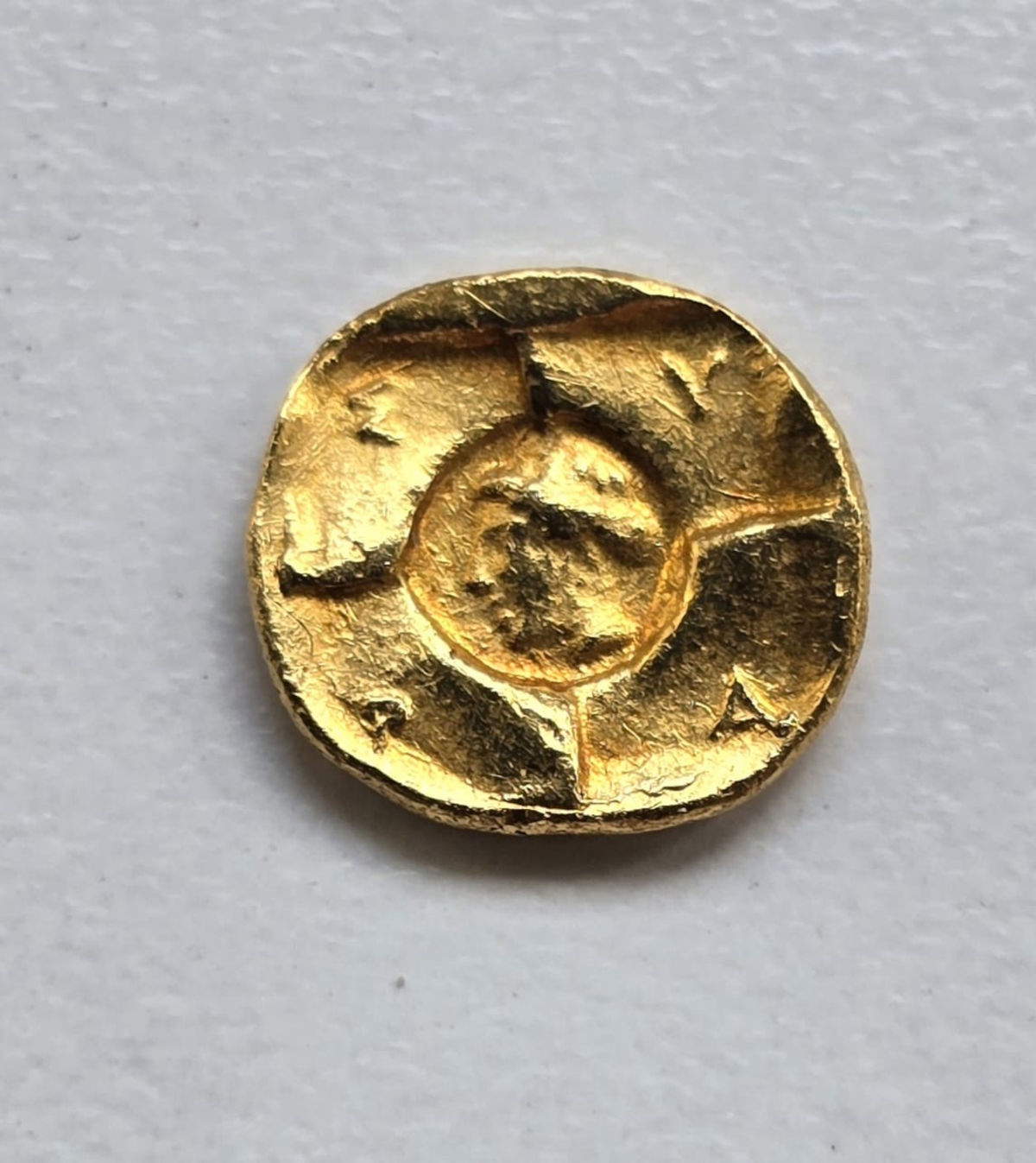
The coin, preserved in exceptional condition, features on the obverse the head of Heracles facing left, with his head covered by the leontè, the skin of the Nemean lion. The reverse features an incuse square divided into four parts, with a small female head in the center and the inscription “Syra,” referring to Syracuse. The artifact is considered of particular interest due to its rarity and the historical context to which it refers: it belongs to the series of gold coins minted by Syracuse to support the war effort during the Carthaginian invasion of Sicily at the end of the 5th century B.C., events that culminated in the conquest and destruction of Akragas by the Carthaginians in 406 B.C.
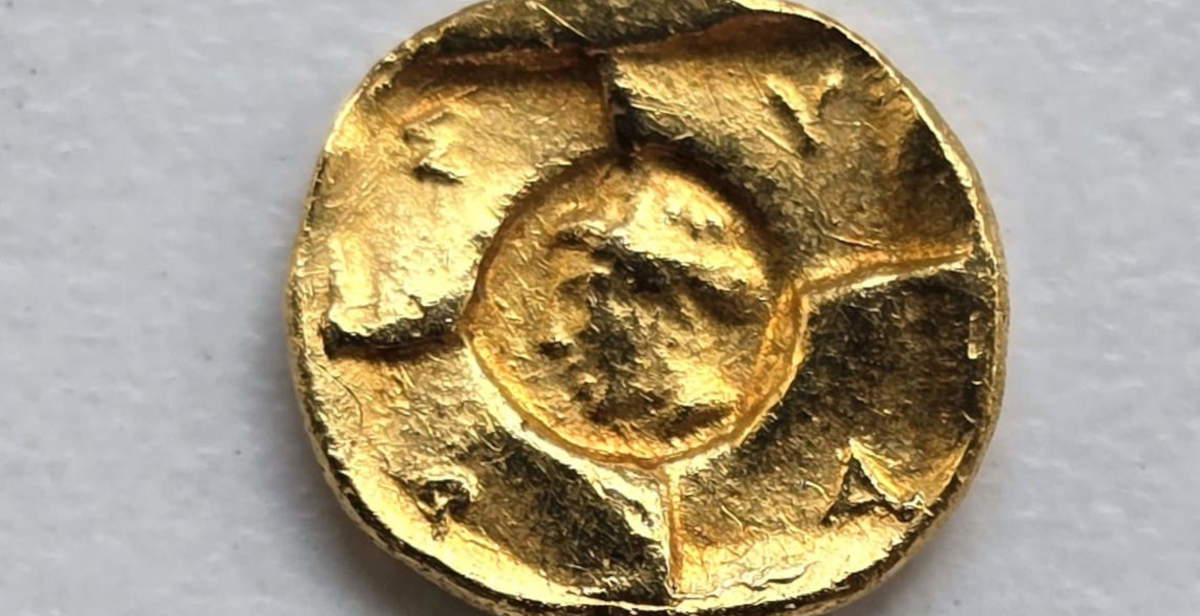 |
| Agrigento: A rare 5th-century B.C. gold coin has been unearthed at the Maddalusa necropolis. |

Warning: the translation into English of the original Italian article was created using automatic tools. We undertake to review all articles, but we do not guarantee the total absence of inaccuracies in the translation due to the program. You can find the original by clicking on the ITA button. If you find any mistake,please contact us.



















 IT
IT FR
FR DE
DE ES
ES CN
CN


