





A new archaeological discovery has been announced in the Bir el-Shaghala area, in the Dakhla Oasis, in Egypt’s New Valley Governorate. The news was released byEgypt’s Ministry of Tourism and Antiquities through its official channels. An Egyptian archaeological mission from the Supreme Council of Antiquities has identified a pyramid-shaped tomb built of mud bricks and dating back to the Roman era, intended for the burial of a man and his wife.
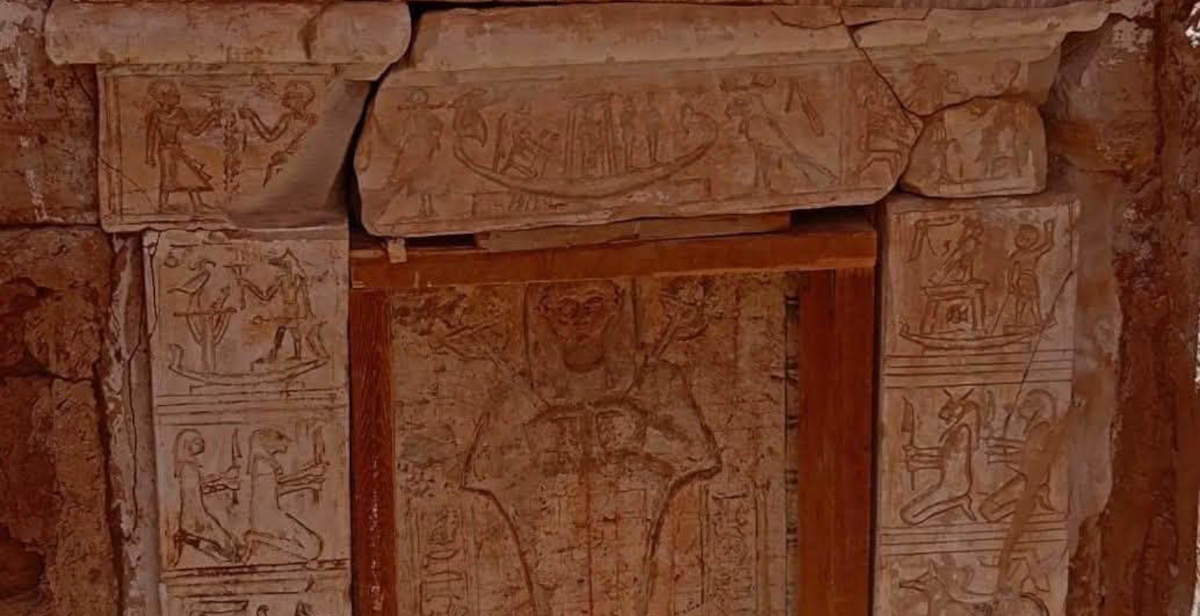
The tomb features an architectural layout characterized by a sandstone entrance, accessible via a staircase of fourteen steps. The entrance, built according to Egyptian architectural models, is decorated with relief hieroglyphic inscriptions engraved with funerary formulas and recitations intended to protect the deceased. The crowning element includes an Egyptian frieze featuring a winged sun disk and a cobra, followed by an element shaped like a bundle of reeds.
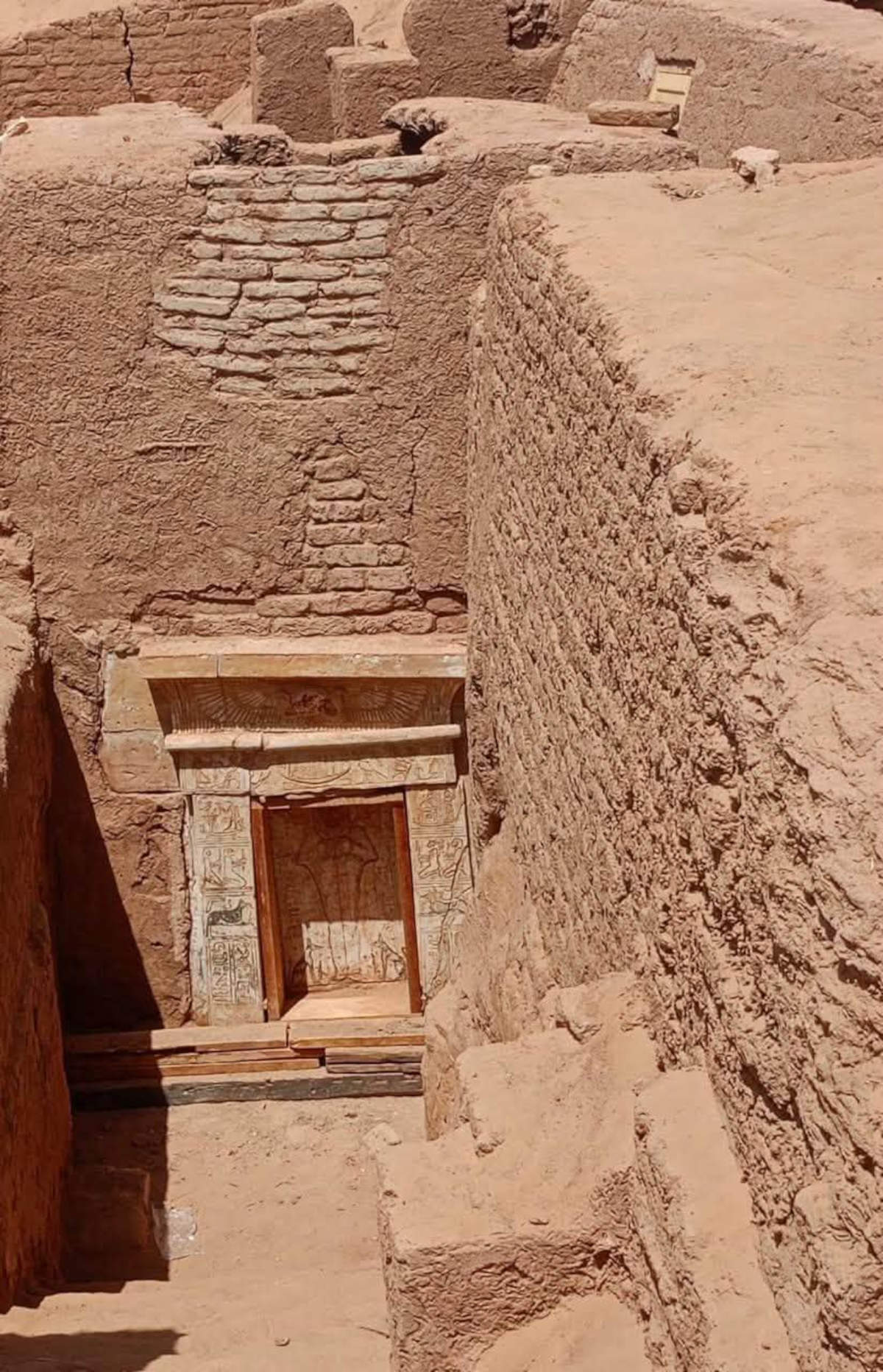
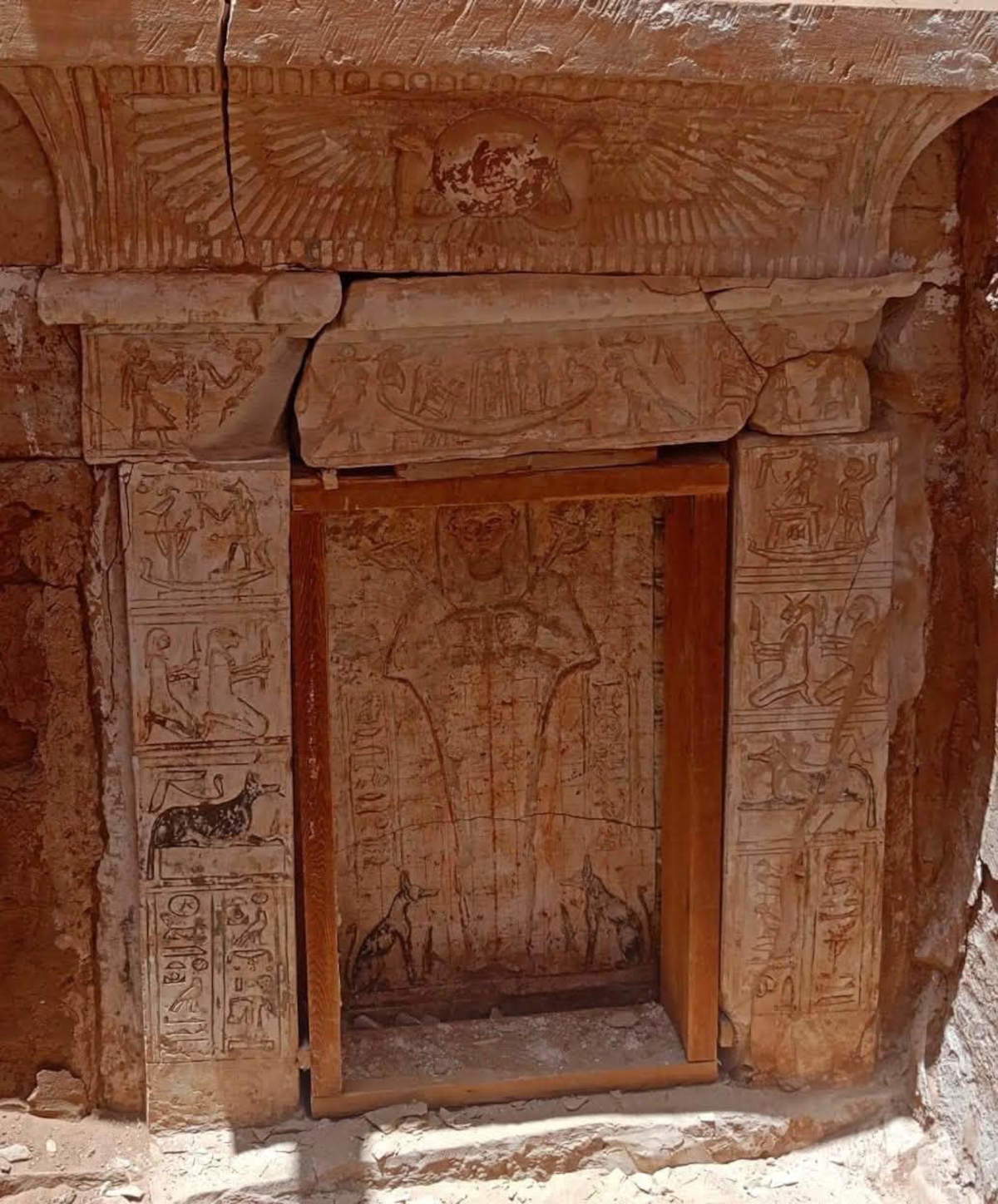
The lintel also features a funerary scene identified for the first time in the necropolis: the depiction of the seventh hour from the Book of Amduat, one of ancient Egypt’s texts on the afterlife. On either side are additional inscriptions and depictions related to the tomb’s owners. The entrance was sealed by a stone slab bearing an Osirian figure surrounded by protective formulas.
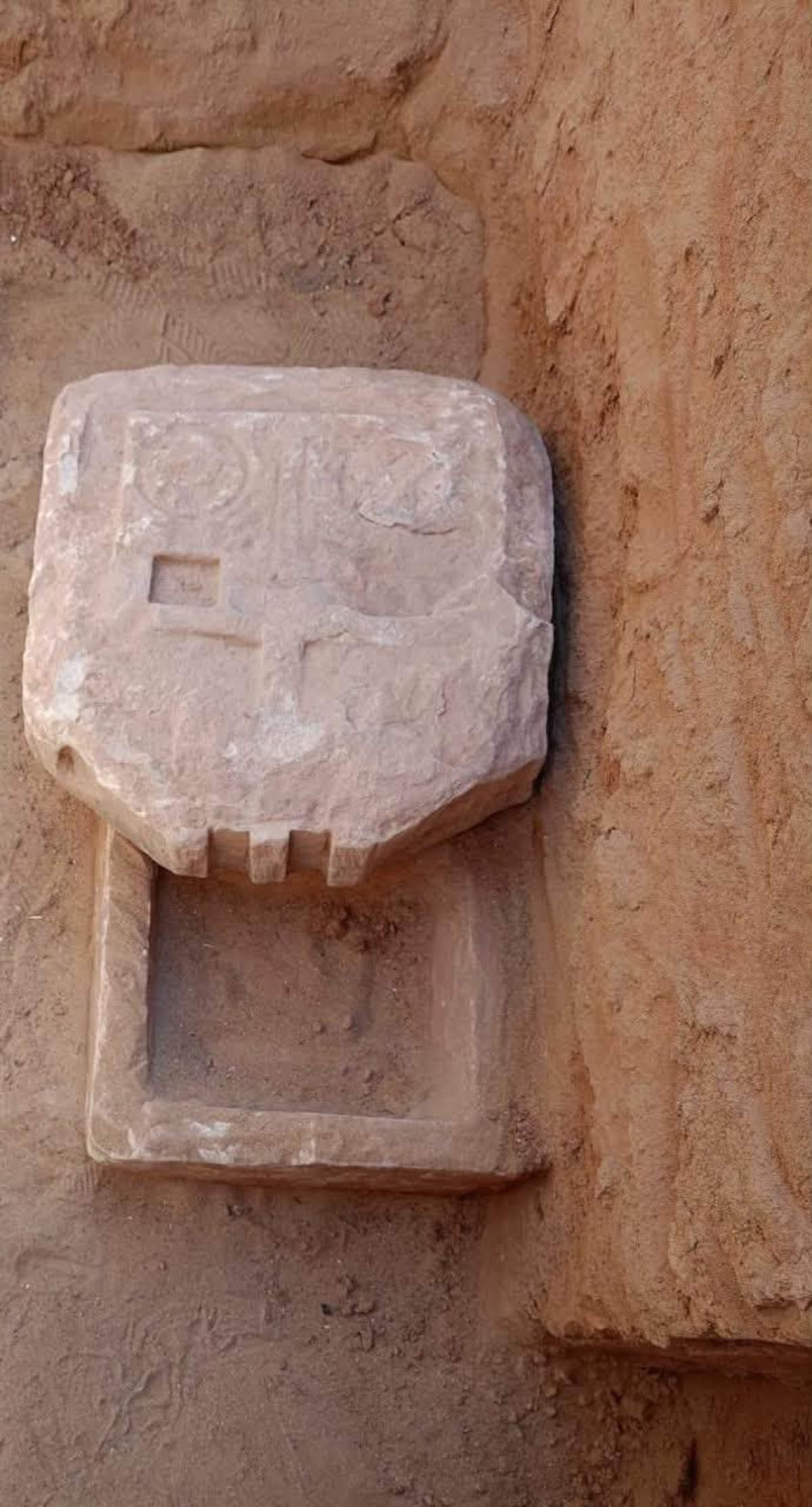
The corridor leads to a transverse chamber made of unfired bricks with a vaulted ceiling, from which two burial chambers on the right-hand side can be accessed. The chambers are also constructed of unfired bricks and coated with mortar, while the pyramidal structure rises above them. The excavations also uncovered a sandstone offering table placed above a basin for ablutions (purifications) made of the same material, several ceramic vessels, and a bronze coin bearing a relief effigyof the Roman Emperor Constantine.
Among the finds, a rectangular funerary stele set into the southern wall of the pyramidal structure stands out. The upper part, with a pediment-shaped profile, features a sun disk in relief at its center. The stele bears a funeral elegy in ancient Greek, written in red ink and consisting of 19 verses, dedicated to a man named “Pesikhtis,” who, according to a preliminary study, may have held the office of judge. The text is dated to between the late 3rd and early 4th centuries A.D. and provides insight into the literary and cultural life of the oasis during the Roman era.
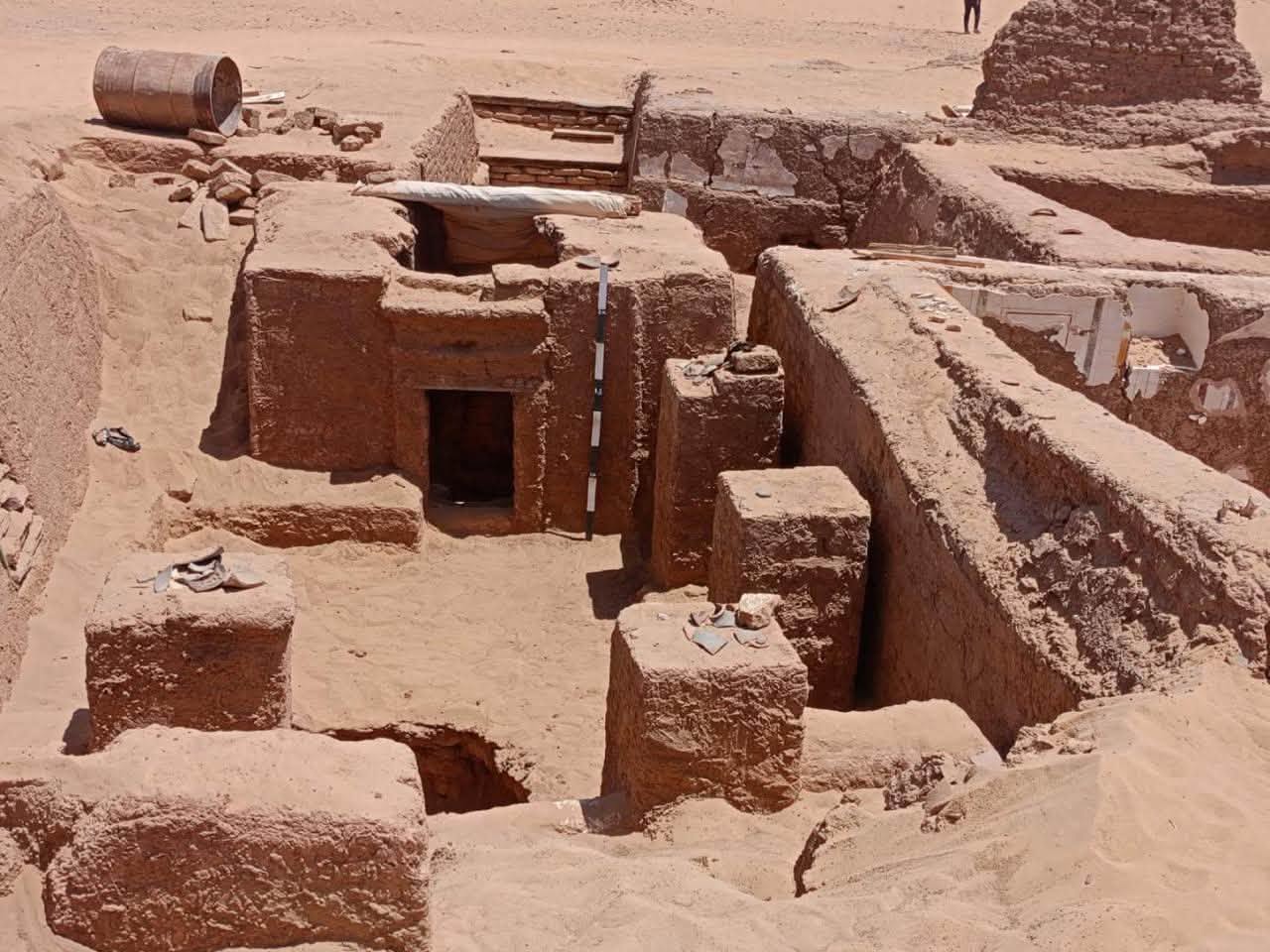
According to the Supreme Council of Antiquities, the tomb’s architectural features, inscriptions, and funerary texts provide insights into burial practices and the cultural and religious life of the Dakhla Oasis during the Roman period. Some features also suggest a possible later reuse of the tomb: in the upper section, a mud-brick chapel was identified above the main entrance, preceded by a funerary sanctuary with four square pillars.
Bir el-Shaghala is one of the main archaeological sites in the Dakhla Oasis and is part of the necropolis of the ancient city of Mothis, today’s Mut, which served as the oasis’s capital during the Ptolemaic and Roman periods. The area’s modern name derives from a water well known as Bir el-Shaghala. Excavations by the Supreme Council of Antiquities began in 2002 and, over the course of several campaigns, have led to the discovery of numerous tombs characterized by different layouts and architectural features.
 |
| Egypt: A Roman pyramid tomb with funerary texts in Greek has been discovered at Bir el-Shaghala |

Warning: the translation into English of the original Italian article was created using automatic tools. We undertake to review all articles, but we do not guarantee the total absence of inaccuracies in the translation due to the program. You can find the original by clicking on the ITA button. If you find any mistake,please contact us.





























 IT
IT FR
FR DE
DE ES
ES CN
CN


