





The Archaeological Park of Pompeii presents a new scientific bronze reconstruction of the famous Canon of Polykleitos, one of the most iconic masterpieces of ancient Greek sculpture, created using the historic molds from the former Chiurazzi Foundry. The project combines archaeological research, conservation, and promotion, bringing one of the greatest symbols of classical art back into the spotlight.
The reconstruction was unveiled at the Archaeological Park of Pompeii in the presence of Minister of Culture Alessandro Giuli and the Park’s Director, Gabriel Zuchtriegel. Also attending the event was the Public Prosecutor at the Court of Torre Annunziata, Nunzio Fragliasso, who spoke on the topic of the preservation and promotion of cultural heritage. The initiative marks the launch of a broader project dedicated to the promotion of the historical molds from the former Chiurazzi Foundry, an important testament to Italy’s artistic and manufacturing traditions. Acquired by the Archaeological Park to prevent their dispersal abroad, the molds are thus once again serving as tools for research and cultural production, returning to the public a heritage that for over a century has contributed to the understanding and dissemination of ancient art throughout the world.
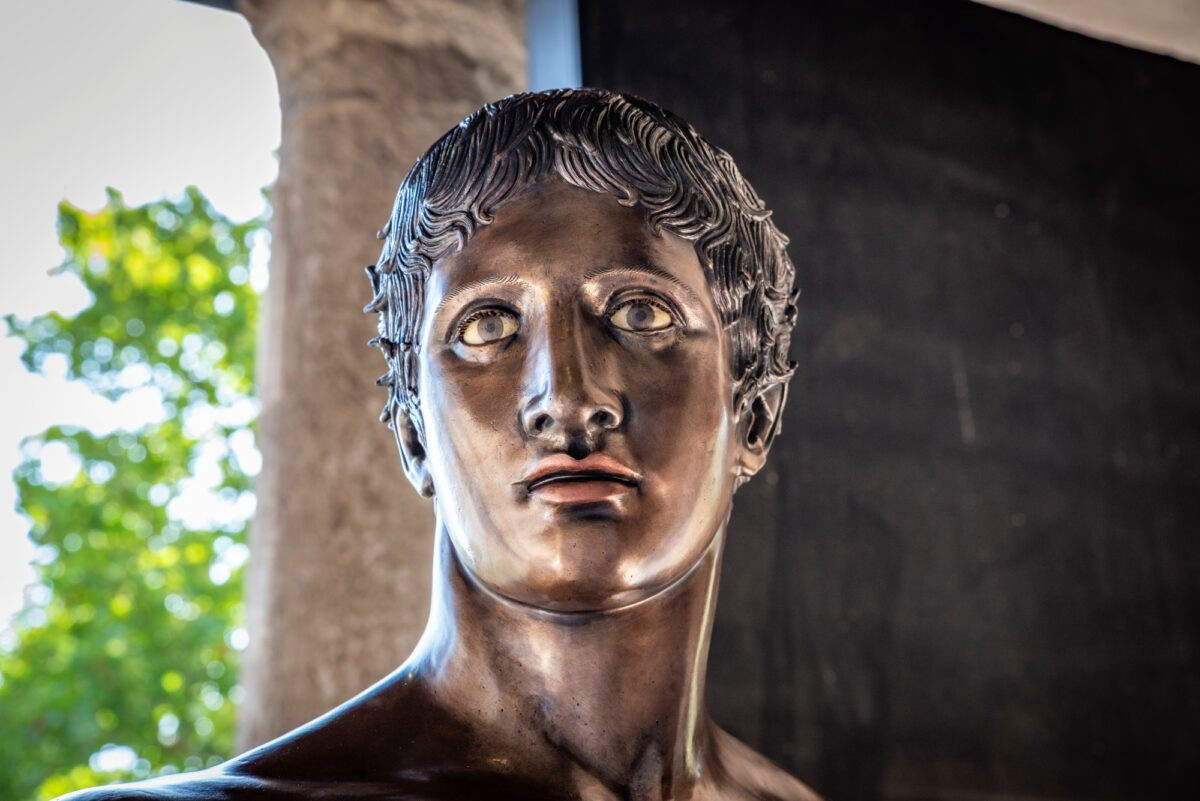
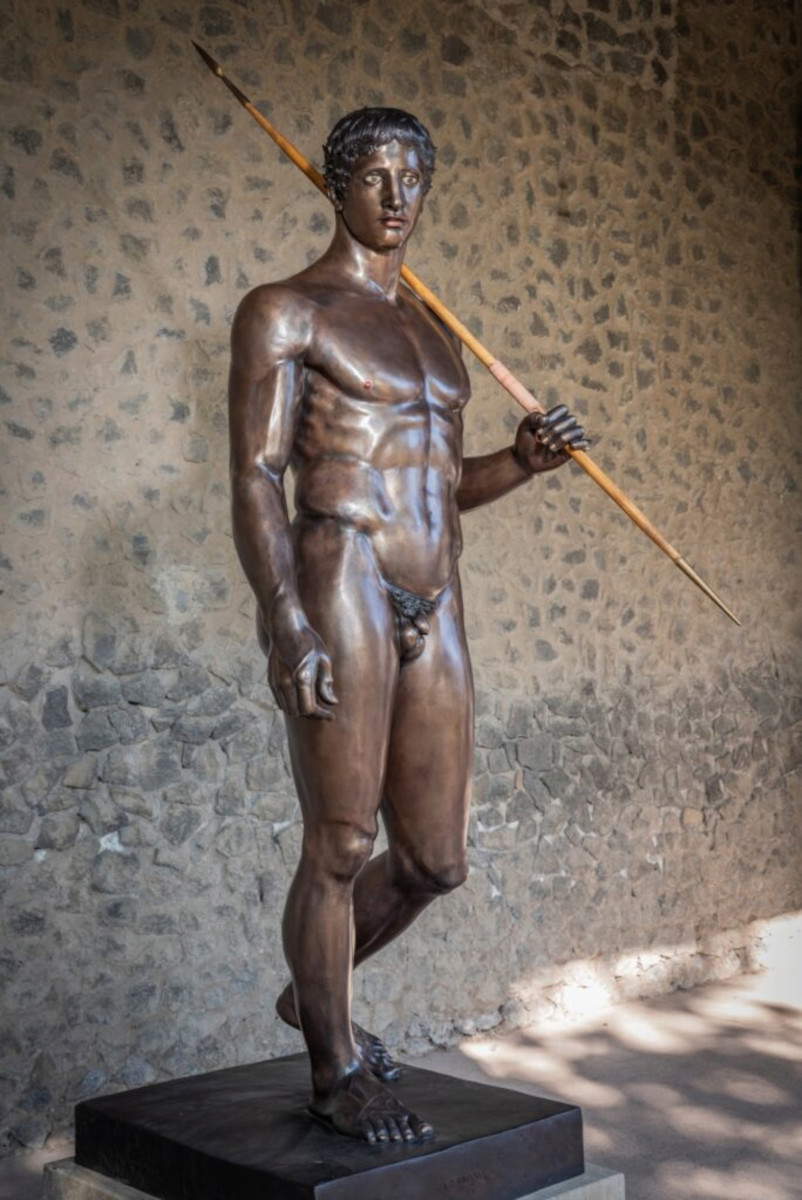
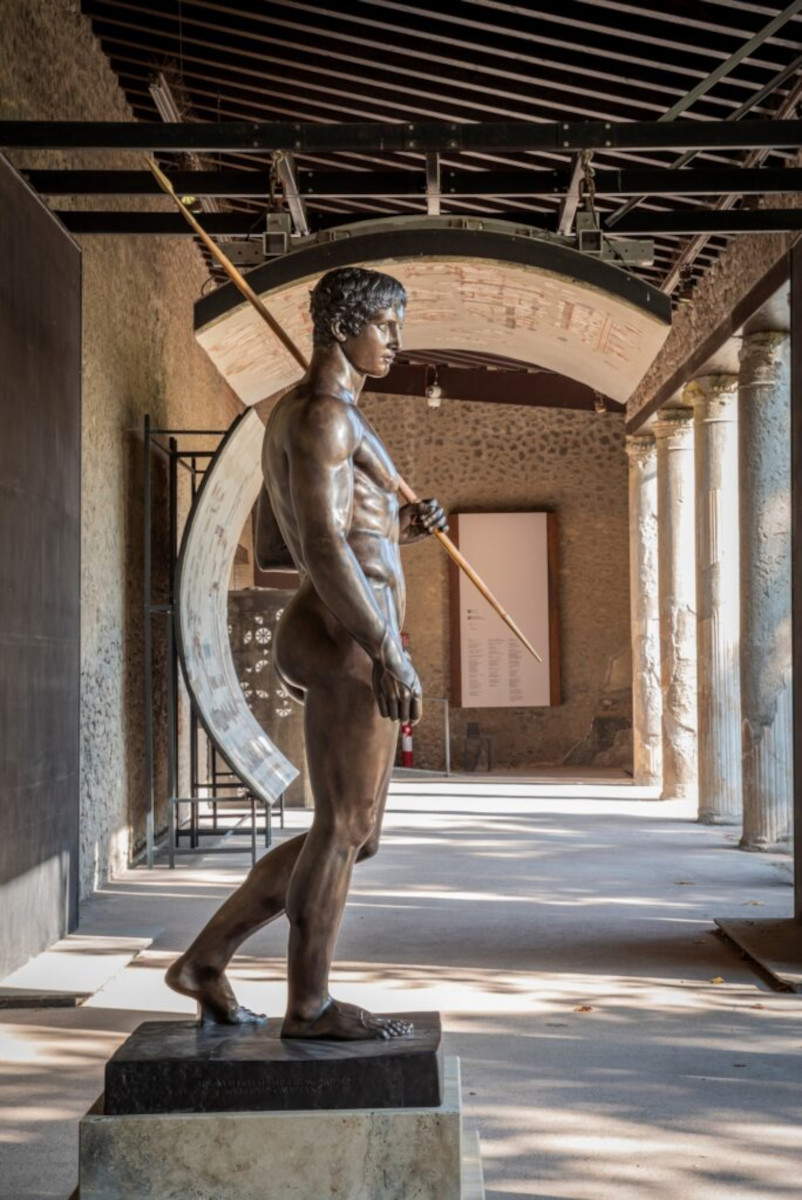
Created in Greece around 440 B.C., Polykleitos’ Canon is considered one of the most emblematic works of classical art. The original Greek sculpture, however, has not survived to the present day, as is the case with numerous masterpieces of sculpture from the 5th and 4th centuries B.C. The works of the great masters of antiquity, including Polykleitos and Phidias, are in fact known primarily through the numerous copies made during the Roman era. Many of these Roman copies come from Italy itself, particularly from the regions of Lazio and Campania. It was through the comparative study of these ancient copies that the so-called “criticism of copies” developed—a fundamental discipline for attempting to reconstruct the appearance of the lost Greek originals.
A decisive turning point occurred in 1863, when the scholar Karl Friedrichs identified Polykleitos’s most famous work in a Roman copy discovered in the Samnite Gymnasium in Pompeii. On this basis, between 1910 and 1912, the first philological bronze reconstruction of the Greek original was created in Germany, assembling elements from various ancient copies and employing the lost-wax casting technique used by Greek sculptors over 2,500 years ago.
More than a hundred years after the first reconstruction, Pompeii now presents a new reconstruction of the Canon, the result of extensive research and an international collaboration involving Italian, Greek, and German institutions and specialists. The new reconstruction introduces several significant innovations. The first concerns polychromy: ancient sculptures were not, in fact, conceived as exclusively white works, but could feature colors intended to make hair, lips, and skin tones more realistic. A second aspect concerns the object held by the figure. Archaeological research and the study of ancient reproductions suggest that the figure may have been clutching a javelin—the Greek akontion—rather than a spear, the dory. This interpretation calls into question the traditional identification of the Canon with the Doryphoros, Polykleitos’s famous “spear-bearer.”
Ancient sources and iconographic evidence would in fact seem to indicate the existence of two distinct works, rather than a single sculpture alternately identified by both names. This issue remains at the center of scholarly debate and contributes to a reevaluation of some of the most established interpretations of Polykleitos’s work.
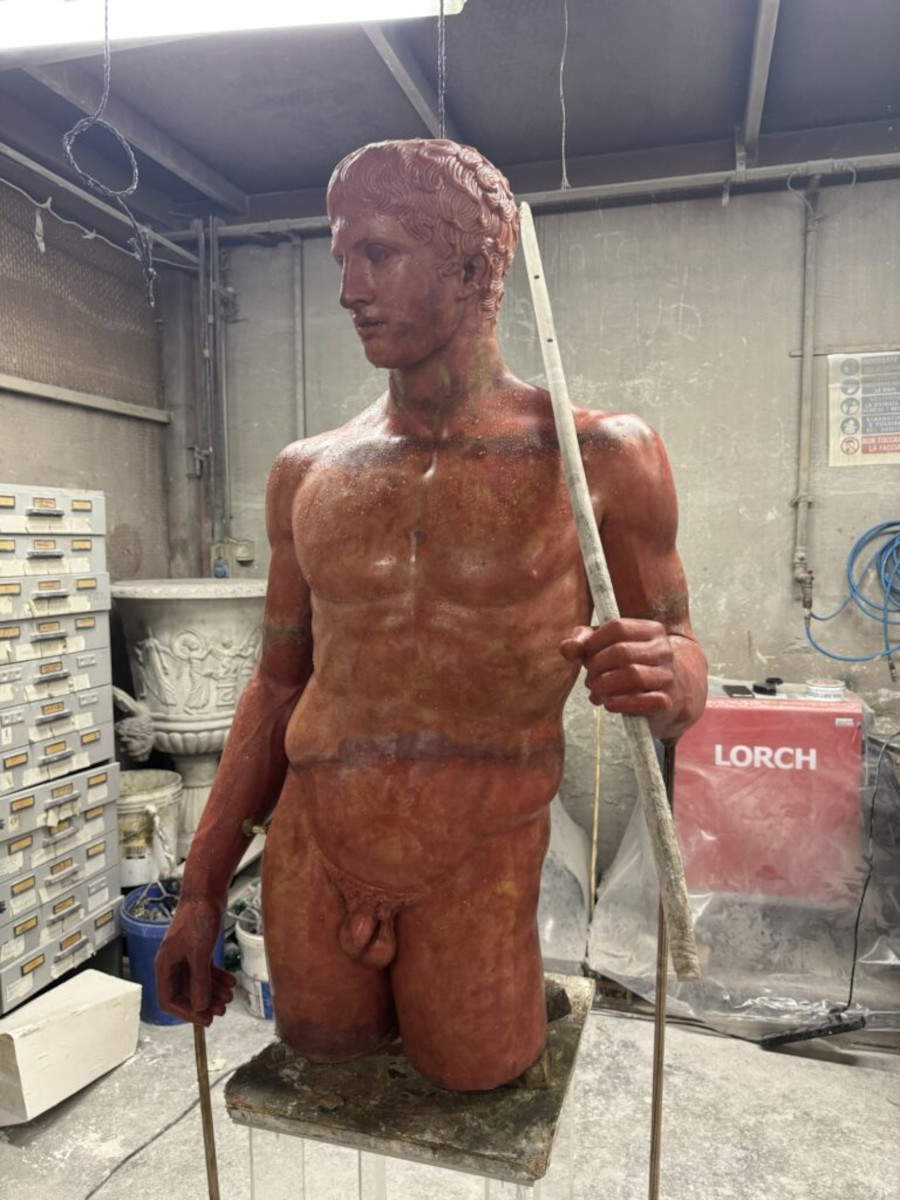
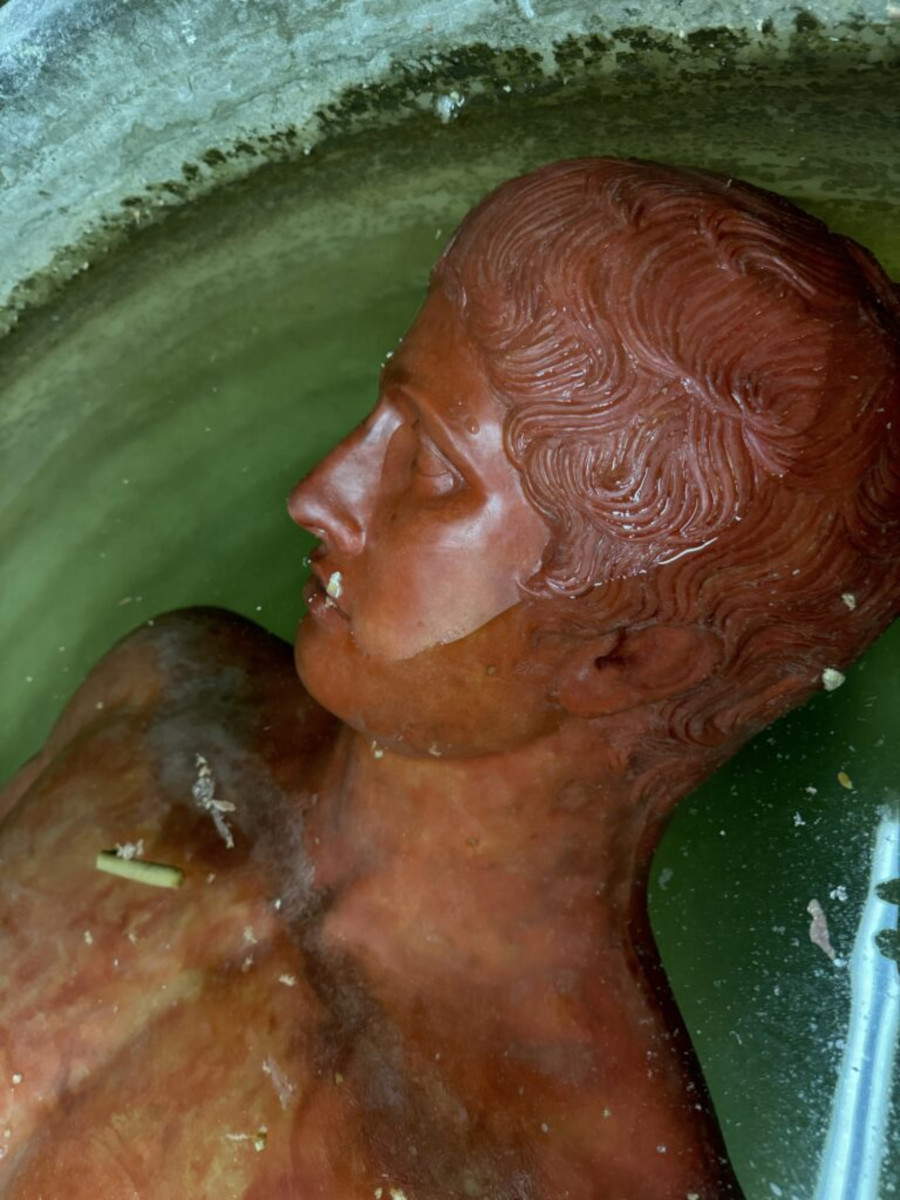
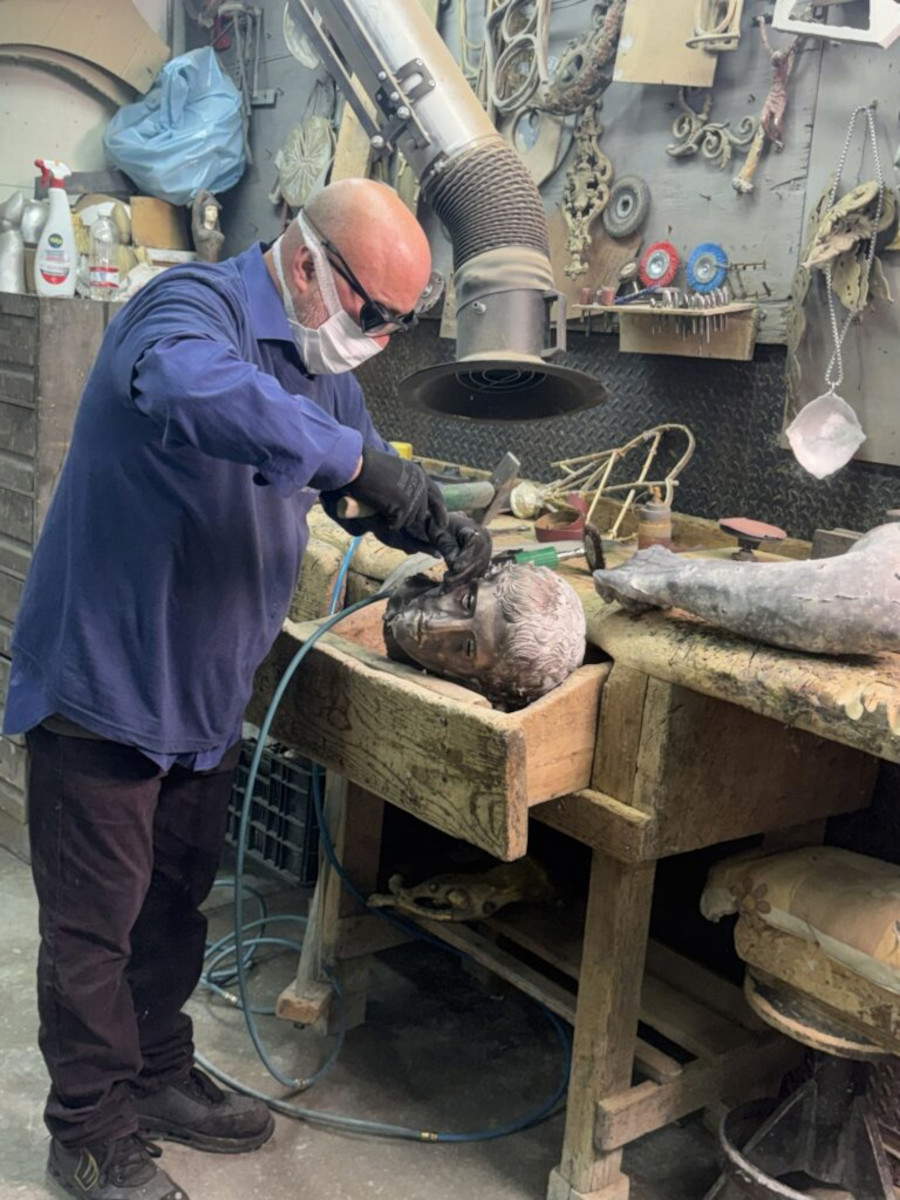
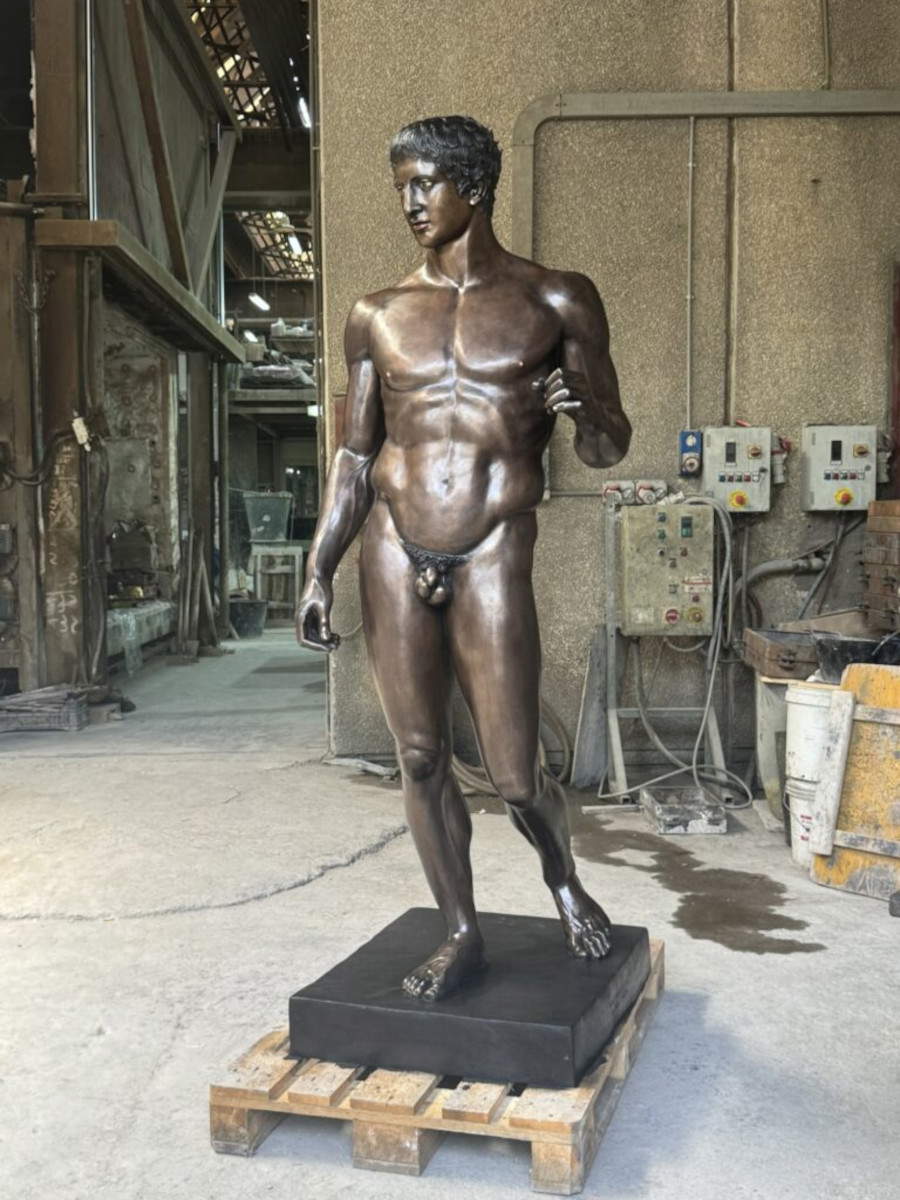
Two different casts were used to create the new reconstruction. For the body, the marble statue discovered in 1793 in the Samnite Gymnasium in Pompeii was used as a reference; it is considered the most complete of the more than fifty Roman copies of the Canon currently known, while for the head, a bronze bust from the Villa dei Papiri in Herculaneum was used, which is considered to be of particularly high quality and closer to the original Greek model. The javelin was crafted using a combination of wood, leather, and metal.
The project is directly linked to the history of the former Chiurazzi Foundry, a historic Neapolitan foundry specializing in the reproduction of ancient works. The acquisition of its collection, carried out through the exercise of the right of first refusal, allowed the Archaeological Park to save a heritage of extraordinary value from the risk of dispersion. The restoration of the molds now represents the first step toward a broader project, which also aims at the possible resumption of casting activities and the marketing of the artifacts.
The goal is twofold: to expand the Park’s cultural and productive activities and, at the same time, to support a craft tradition that still maintains a direct link to ancient bronze-working techniques. In Naples, there are in fact foundries that still use the lost-wax casting method—the same technique employed by Greek sculptors in the 5th century B.C.
The new reconstruction of the Canone thus serves as a meeting point between archaeology, scientific research, craftsmanship, and heritage preservation, demonstrating how the study of antiquity can translate into concrete, contemporary practice.
The scientific project was curated by Maria Rispoli, Alessandro Russo, Maria Chiara Scappaticcio, Giuseppe Scarpati, and Gabriel Zuchtriegel. The exhibition design is by Silvia Bertesago and Tiziana Rocco, while Anna Onesti, Andrea Foti, and Stefania Giudice worked on the acquisition, preservation, and enhancement of the former Chiurazzi Foundry. The bronze casting was entrusted to the Ruocco Foundry, with Giuseppe Ruocco, Maurizio Pinto, and Maria Rosaria Ruocco. The javelin was created by Anna Civale, Ettore Pizzuti, and Angelo De Marzo. The digital reconstruction of the Westmacott Ephebe as the “Doryphoros” was carried out by Francesco Colace, Angelo Lorusso, and Michele Pellegrino of the University of Salerno. The project also benefited from the collaboration of international scholars and institutions, including Olimpia Vikatou (Director General of Antiquities and Cultural Heritage, Greece), Demetrios Athansoulis (Ephorate of the Cyclades), Eleni Kalavria (National Archaeological Museum of Athens), Carmela Capaldi (University of Naples “Federico II”), Angelo Meriani (University of Salerno), Martin Maischberger, and Agnes Schwarzmaier (Berlin Museums).
“I asked whether resuming production—on a limited and controlled scale, of course—could damage the plaster molds, considering that they are a protected cultural asset,” says the park’s director, Gabriel Zuchtriegel, “but the opposite is true: they are damaged by not using them, since the plaster crumbles into dust.” I find this a beautiful metaphor for our classical heritage, which is destroyed if we do not use it—in schools, in museums, and in our cultural life. There are those who consider the classical world a dead legacy that can safely be abandoned. We, on the other hand, are convinced that the classical world is alive and can foster growth—not only cultural, but also economic and social.”
“The reason we chose to begin the restoration of the Chiurazzi with this statue is simple,” explained Zuchtriegel. “We wanted to demonstrate how knowledge of Greek art from the Classical period cannot be separated from Roman archaeology, from the study of contexts such as those around Vesuvius that have yielded various copies of the Canon, including one discovered in the 1970s at Castellammare di Stabia and now housed at the Minneapolis museum. Beyond any legal considerations—which fall under the jurisdiction of Prosecutor Fragliasso, who has taken up the case of the so-called Stabian Doryphoros—this is a scientific fact: without the contexts—that is, the homes and public spaces that housed the statues—we cannot understand the phenomenon of copies.”
“We are witnessing the scientific reconstruction of one of the most famous works of art of all time, whose significance transcends the aesthetic realm and embodies philological, artistic, and cultural value. Polykleitos’s art is founded on the universal language of harmony. This is the lesson handed down to us by our ancestors, the Pythagorean school, and Polykleitos, whose Canon is now being presented to the public,” stated Minister of Culture Alessandro Giuli, who added: “By supporting projects like this, the Ministry of Culture will continue to fulfill its duty. Culture is diplomacy, research, education, pluralistic identity, dialogue, and a creative force for harmony—just like Polykleitos’ Canon.”
|
| Polykleitos’ Canon Is Reborn in Pompeii: A New Scientific Reconstruction in Bronze Has Been Created |

Warning: the translation into English of the original Italian article was created using automatic tools. We undertake to review all articles, but we do not guarantee the total absence of inaccuracies in the translation due to the program. You can find the original by clicking on the ITA button. If you find any mistake,please contact us.






















 IT
IT FR
FR DE
DE ES
ES CN
CN


