



by Redazione 04/11/2026


Categories: Contemporary art / Disclaimer
Manet jotted down her name, Laure, in a notebook, but for a long time art history referred to her only by a racial epithet: “la négresse.” She is the Black woman who appears in *Olympia*. At the Pinacoteca Agnelli in Turin, one of the world’s greatest artists, Chris Ofili, imagines Laure’s life beyond the frame, drawing inspiration from the film *Io Capitano* by

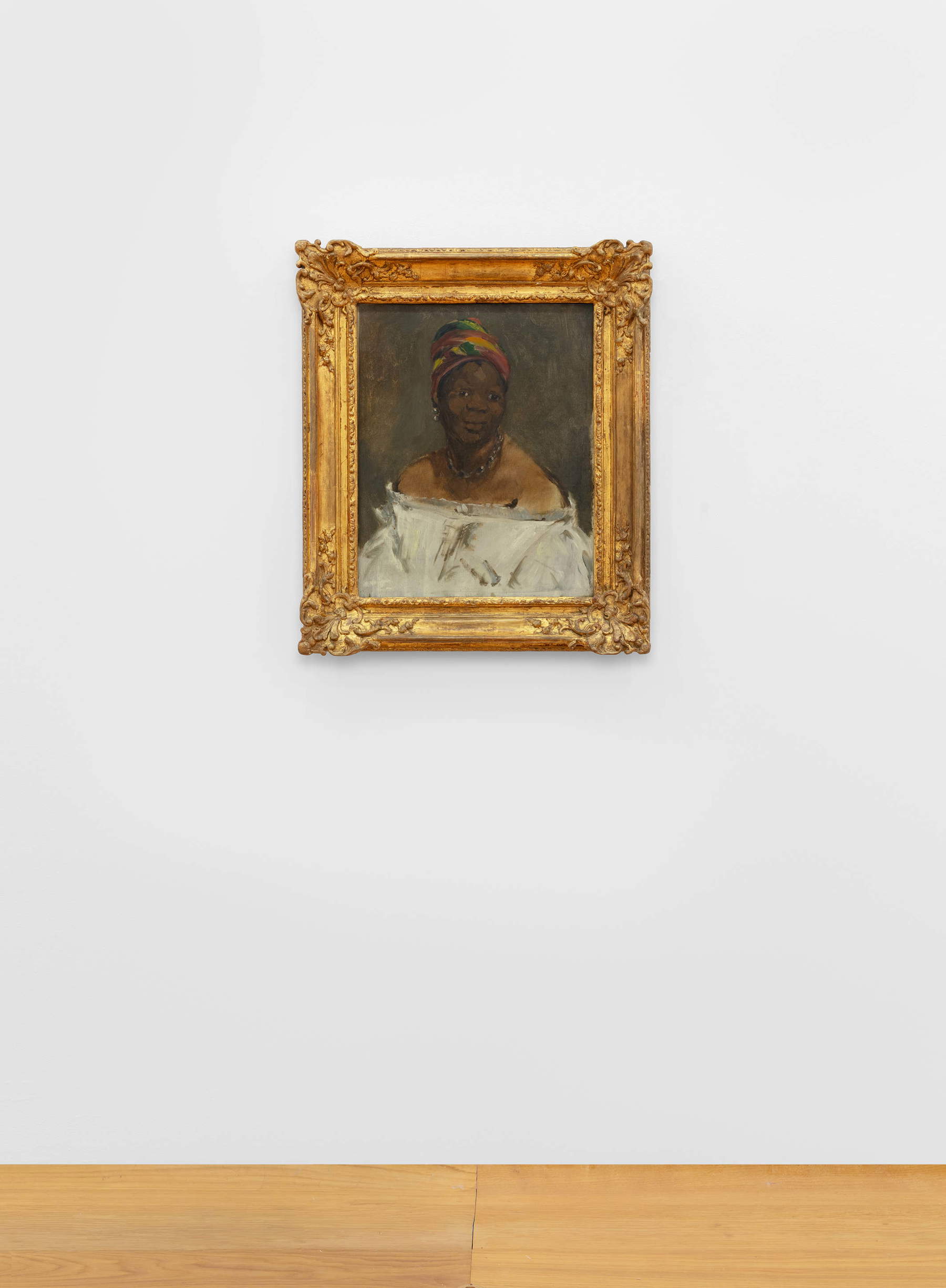
In a notebook belonging to Édouard Manet (Paris, 1832–1883), a name appears: Laure. It is the name of the woman the painter portrayed between 1862 and 1863—the same woman who,in *Olympia*(now at the Musée d’Orsay in Paris), offers a bouquet of flowers to the courtesan reclining on the bed. Yet that name, written in the artist’s own hand, had long disappeared from the history of the painting. In interpretationsof *Olympia*, Laure has often been regarded as an accessory to the white protagonist, or as a device to accentuate the work’s sexual and racial connotations. And the other painting Manet dedicated to her—a half-length portrait purchased by Giovanni and Marella Agnelli in 1959—was identified for decades solely by a racial epithet: “la négresse,” “la negra”—a term that, in the painter’s time, evoked associations with people in slavery and is now considered offensive.


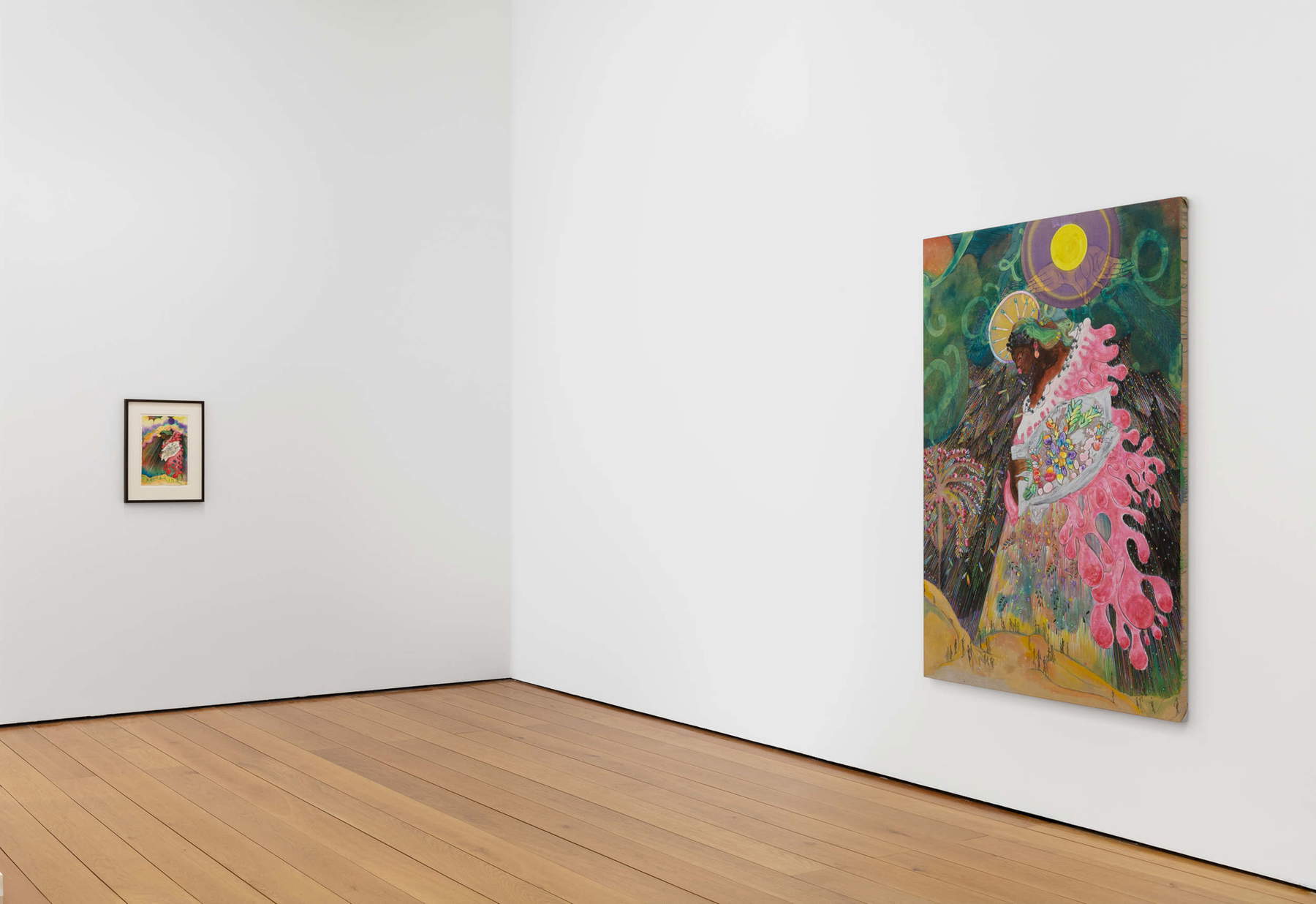
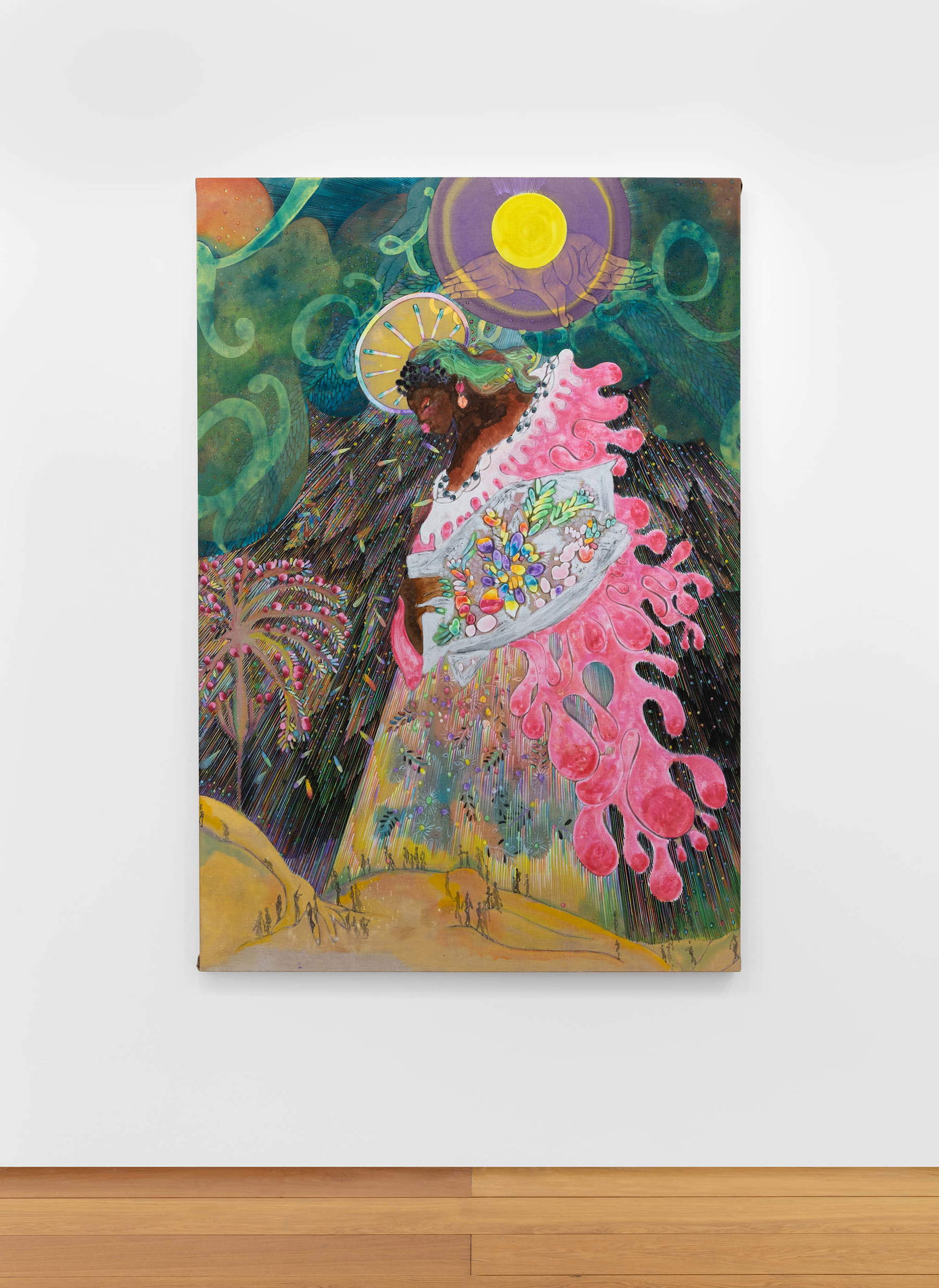
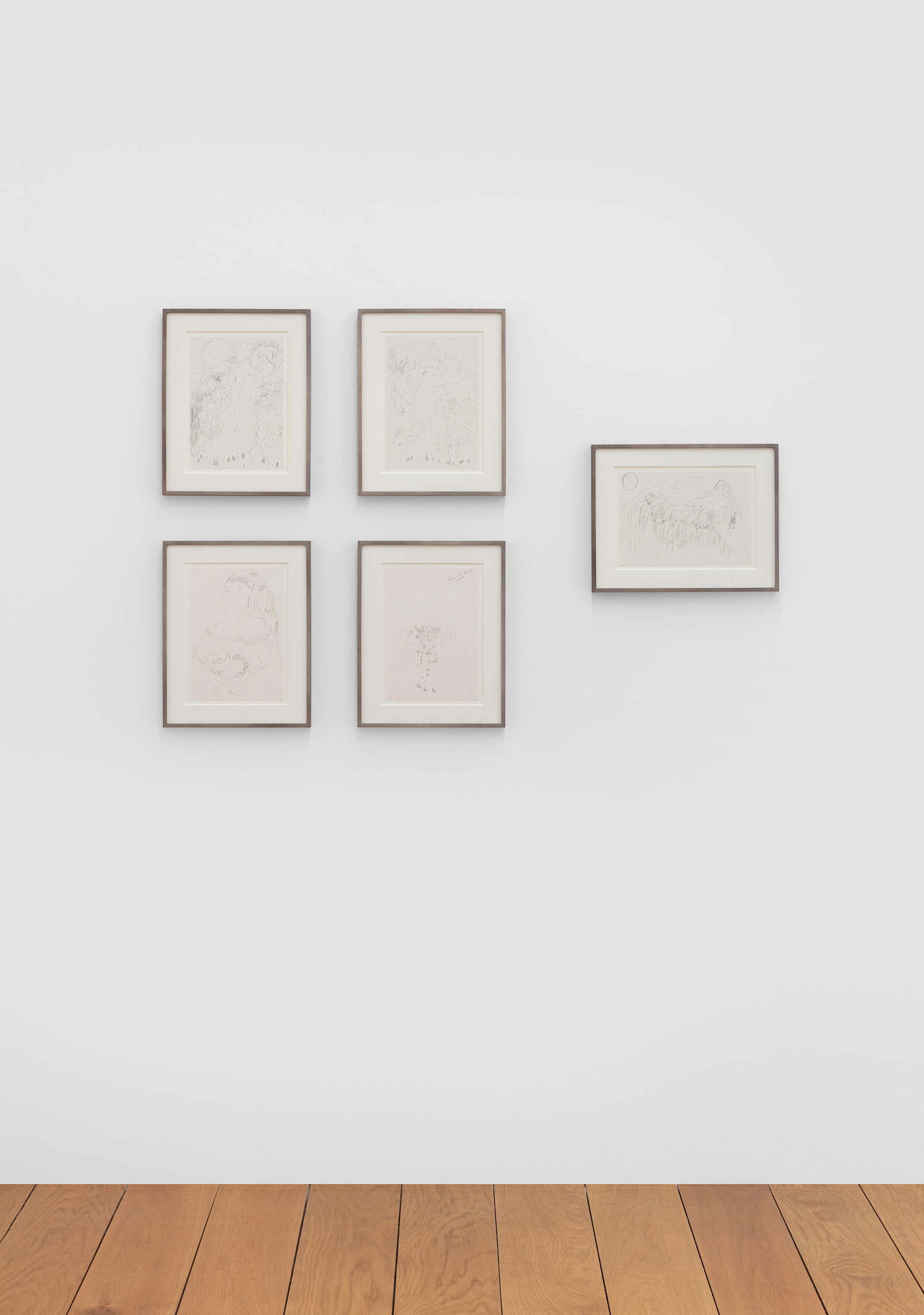
It is from this absence that the project by one of the greatest contemporary artists, Chris Ofili (Manchester, 1968), for the Pinacoteca Agnelli in Turin takes its starting point. The British artist has created a body of new works in response to Manet’s portrait, with the aim of restoring to the woman a centrality that images and historiography had denied her. The exhibition, titled *Laure. Chris Ofili & Édouard Manet and curated by Pietro Rigolo, opened on October 30 and will remain on view through April 4, 2027.


To understand why Laure’s story is significant, one must look at the Paris where Manet worked. In the early 1860s, the city was undergoing profound social and cultural changes and was home to a growing population of free Black people: barely fifteen years had passed since the abolition of slavery in the French colonies in 1848. Laure, therefore, did not represent some exotic or distant place, but was part of contemporary life in the French capital. According to the exhibition’s organizers, the way her figure was subsequently interpreted—first by the popular press of the time and then by art historians—reveals the persistent difficulty of European art history in recognizing Black subjects as fully individual.


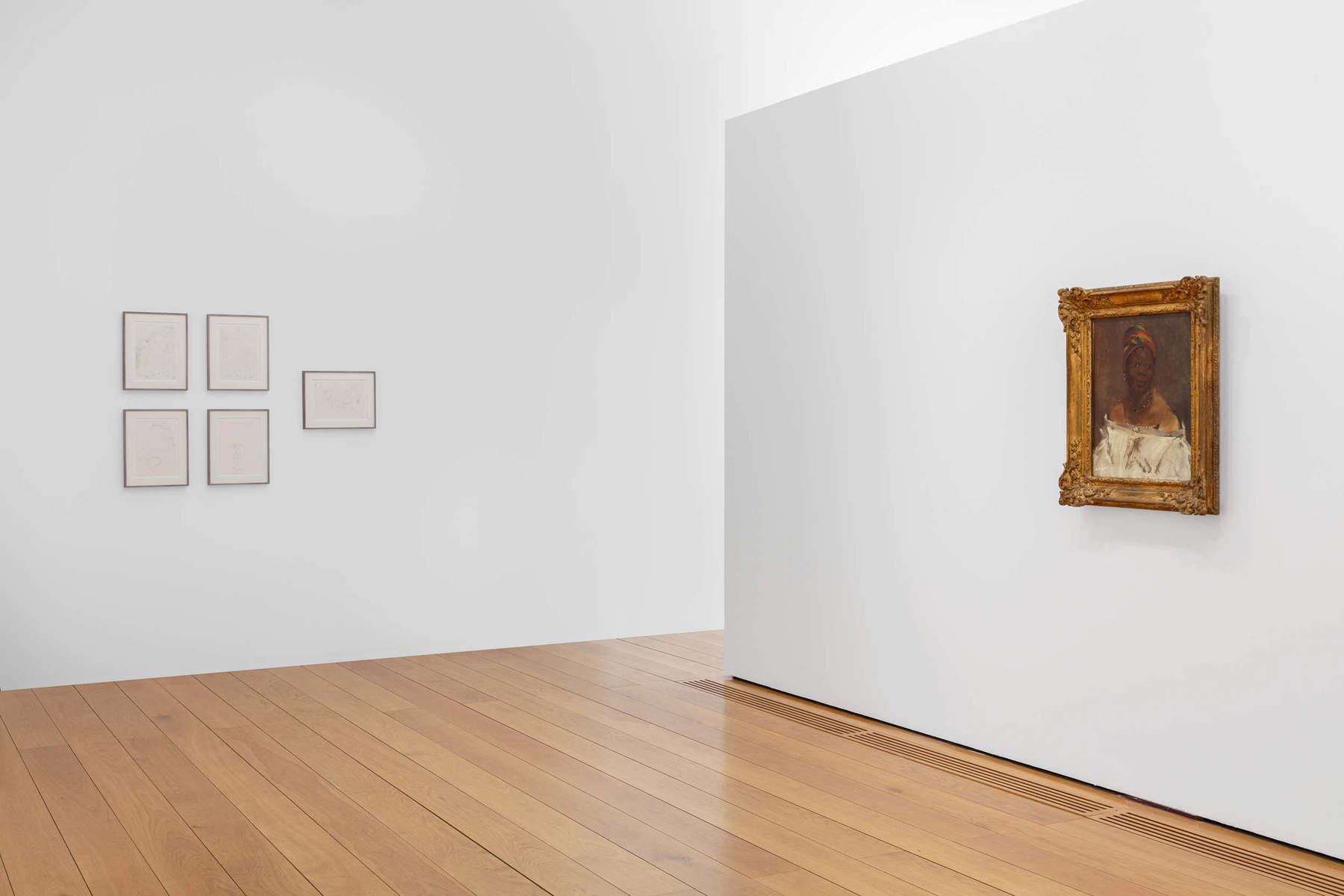
Something, however, has changed. Research into documents that belonged to Manet has led to a partial identification of the woman: we now know that her name was Laure and that she lived near the painter’s studio. In light of these discoveries, the Pinacoteca Agnelli has decided to change the title of the painting from *La Négresse* (*Portrait of Laure*) to *Portrait of Laure* (*La Négresse*). The model’s name thus takes center stage, while the old title remains in parentheses to facilitate archival and art-historical research. A seemingly minor reversal, yet one that shifts the perspective from which the work is viewed: first the identity of the person portrayed, then the label that long replaced it.
Ofili takes precisely this gesture—the attribution of a name and the recovery of identity—as the starting point for an exercise in imagination. Who could Laure have been? What stories did she carry with her beyond the margins to which the images had relegated her? The institution clarifies that the project does not aim to offer a definitive reconstruction of her life, but rather to open a space for reflection on the narratives that art history has handed down and on the possibility of restoring visibility to those who have long remained in the background.
The approach chosen by the artist comes from an unexpected source: recent Italian cinema. The starting point for her reinterpretation is *Io Capitano*, Matteo Garrone’s 2023 film that follows two Senegalese cousins, Seydou and Moussa, on their perilous journey from West Africa to Italy. A figure appears in the film that Ofili directly links to Laure: the “Woman of the Desert,” played by Béatrice Gnonko, who appears to the protagonist suspended above the dunes, like a hallucinatory and supernatural presence. For the artist, both Laure and the Woman of the Desert become guardian figures—symbols of protection, care, and hope—accompanying the arduous journeys of migrants from Africa to Europe across different eras.
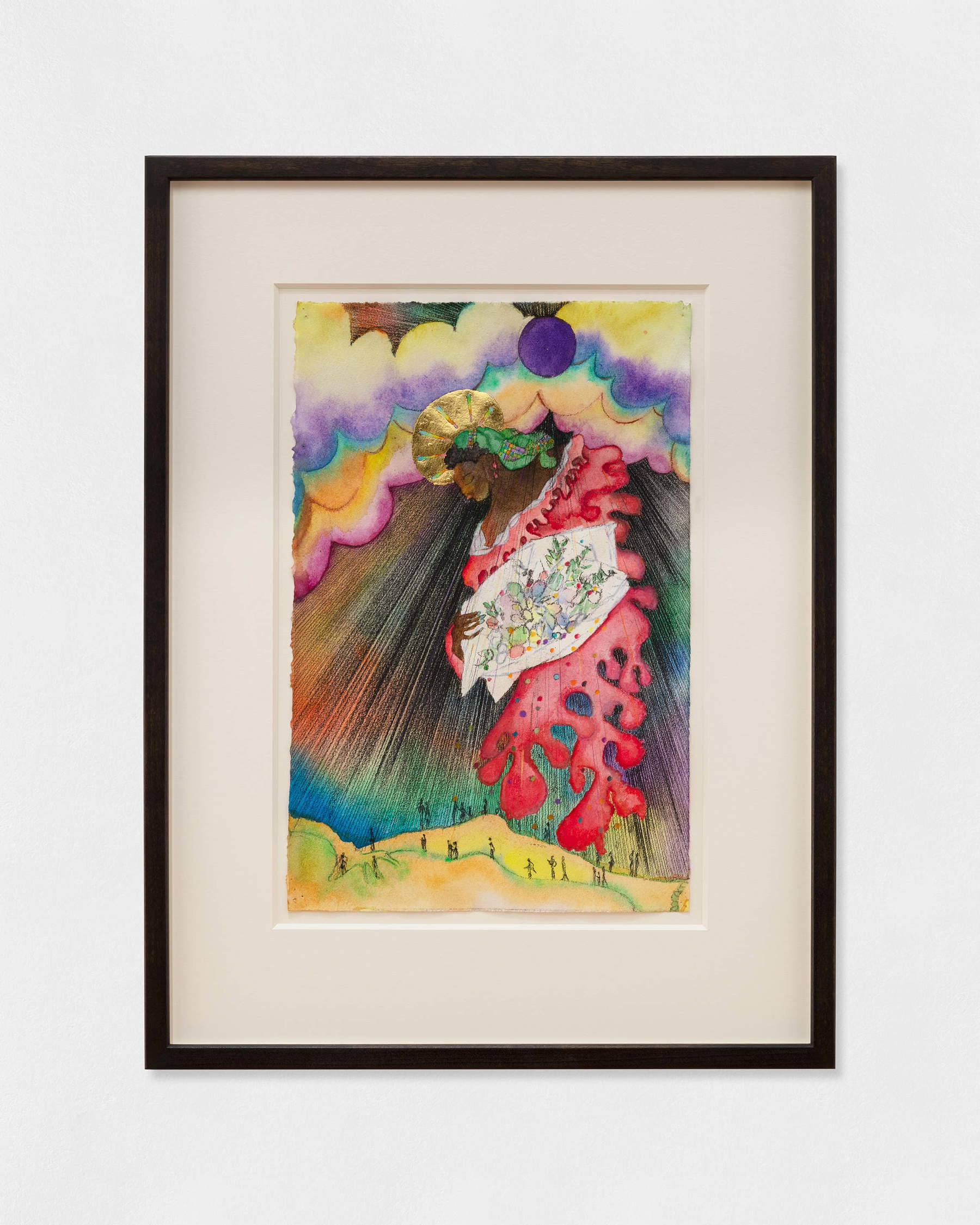
To this interweaving of nineteenth-century Paris and today’s migrations is added a third element: the tradition of Italian religious painting. Ofili looks in particular to the Annunciations and other depictions of encounters with the divine, using them as a framework through which to transform the figure of Laure. In her works—a large-scale painting and a series of works on paper—the woman becomes an autonomous presence, endowed with inner life and spirituality. Flowers, desert landscapes, and references to sacred iconography construct a new imagery, in which Laure takes on the role of a symbol of care, hope, and transformation. According to the exhibition’s introduction, the artist thus restores to Black women authority, inner life, spiritual presence, and the capacity for action—qualities traditionally denied to them in Western art.
The connection to the Annunciation is not merely iconographic: the name “Laure” recurs insistently in Ofili’s works and their titles, and this repetition is presented as a true act of annunciation: the way in which the woman emerges from the mystery of Manet’s paintings and enters her own story, bearing her own name and a new present.
Ofili’s selection for this comparison comes as no surprise to those familiar with his work. Born in Manchester in 1968, the artist lives and works in Port of Spain, Trinidad and Tobago, and his painterly practice has always interwoven art history, popular culture, mythology, spirituality, and experiences of the African diaspora. From the very beginning, he has drawn on African American culture—from blaxploitation films to 1970s funk, and on to 1990s hip-hop and gangsta rap—challenging the conventions through which Western culture has represented Black subjects. After moving to Trinidad and Tobago in 2005, her work took a more introspective turn, in which nature, intimacy, and spirituality play a central role. Her work continues to explore the tensions between visibility and erasure, beauty and stereotype, history and invention—themes that find almost natural ground in Laure’s case.
Ofili’s career has been marked by significant accolades. He won the Turner Prize in 1998 and represented Great Britain at the Venice Biennale in 2003; he has also participated in the Sydney Biennale, the Istanbul Biennale, and the Carnegie International in Pittsburgh. His solo exhibitions have been held, among other venues, at the National Gallery, Tate Britain, and the Serpentine Gallery in London; the New Museum and the Studio Museum in Harlem in New York; the Aspen Art Museum, the Arts Club of Chicago, and the Kestner Gesellschaft in Hanover, as well as at the Victoria Miro galleries in London and Venice, David Zwirner in New York and Paris, and Gavin Brown’s enterprise in New York. His works are included in the collections of the British Museum, the Tate Modern, the Victoria & Albert Museum, and the National Portrait Gallery in London; the Metropolitan Museum of Art and MoMA in New York; the National Gallery of Art in Washington, D.C.; the National Gallery of Canada in Ottawa; the Carnegie Museum of Art in Pittsburgh, the Hammer Museum and MOCA in Los Angeles, the ICA Miami, SFMOMA in San Francisco, the Walker Art Center in Minneapolis, and the Whitworth Art Gallery in Manchester, as well as the Dakis Joannou Collection in Athens and the Rubell Family Collection in Miami. In 2017, he was appointed Commander of the Order of the British Empire for his services to the arts.
The Turin exhibition is the sixth edition of “Beyond the Collection,” the program through which the Pinacoteca Agnelli invites contemporary artists and Italian and international institutions to engage with its Permanent Collection, fostering new interpretations and connections between the museum’s historical heritage and contemporary artistic practice. In this case, the dialogue takes place with one of the collection’s best-known paintings, displayed alongside the works that Ofili has dedicated to it.
Accompanying the project is a free publication that explores the exhibition in greater depth with an unpublished essay by Denise Murrell, a curator at the Metropolitan Museum of Art in New York and recognized by the Pinacoteca as one of the leading scholars on the representation of Black subjects in modern art, with a particular focus on the figure of Laure.
|
| In Turin, one of the world's greatest artists has restored dignity to the Black woman painted by Manet |
Warning: the translation into English of the original Italian article was created using automatic tools. We undertake to review all articles, but we do not guarantee the total absence of inaccuracies in the translation due to the program. You can find the original by clicking on the ITA button. If you find any mistake,please contact us.