




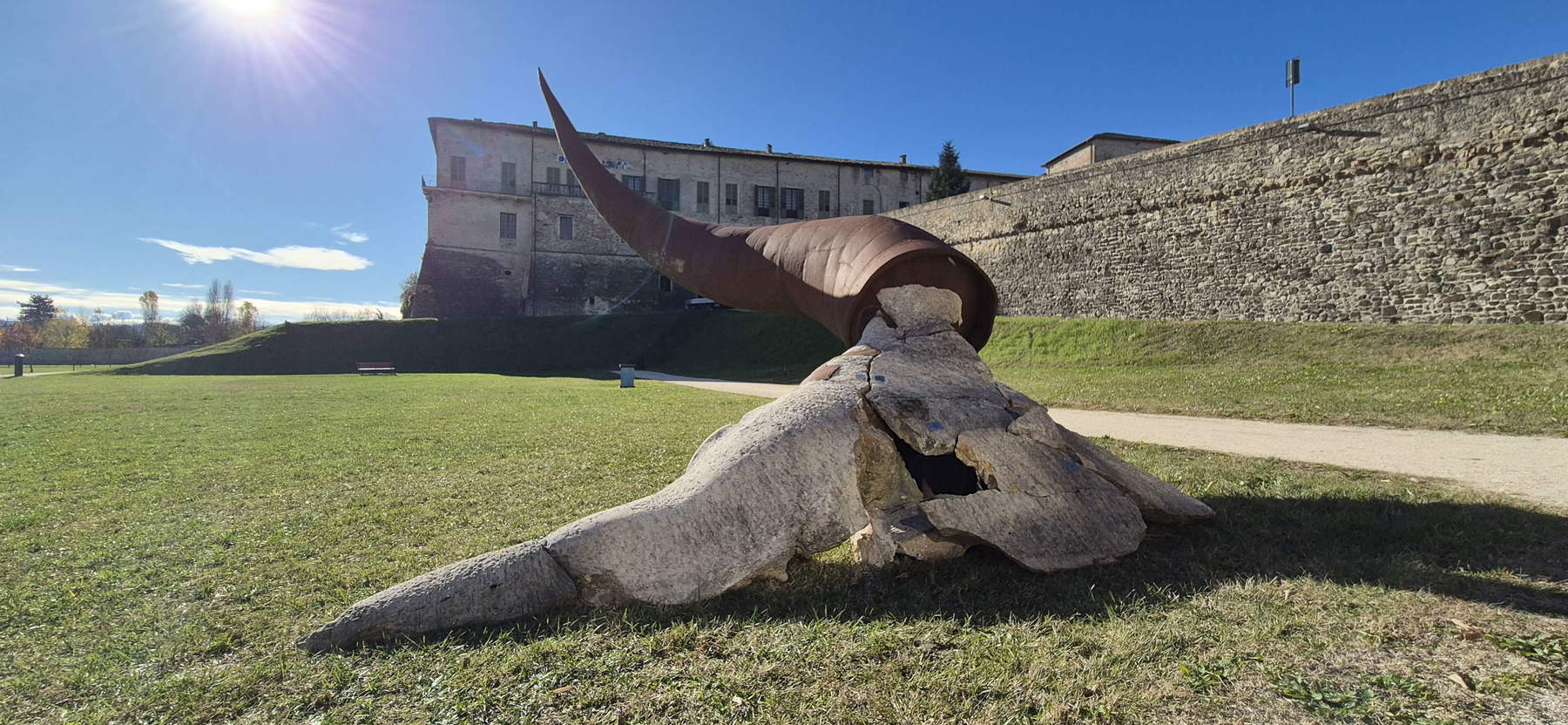
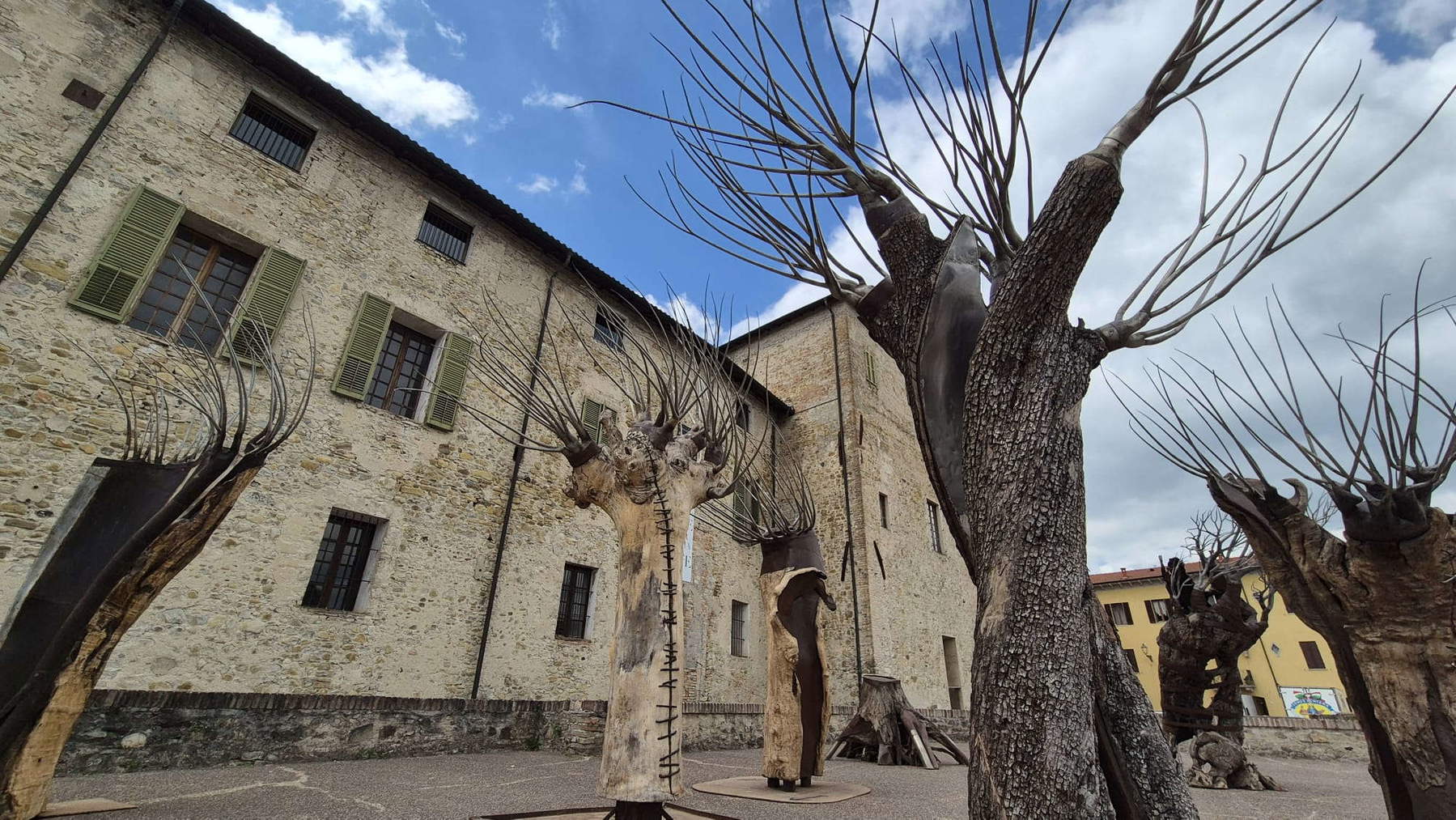
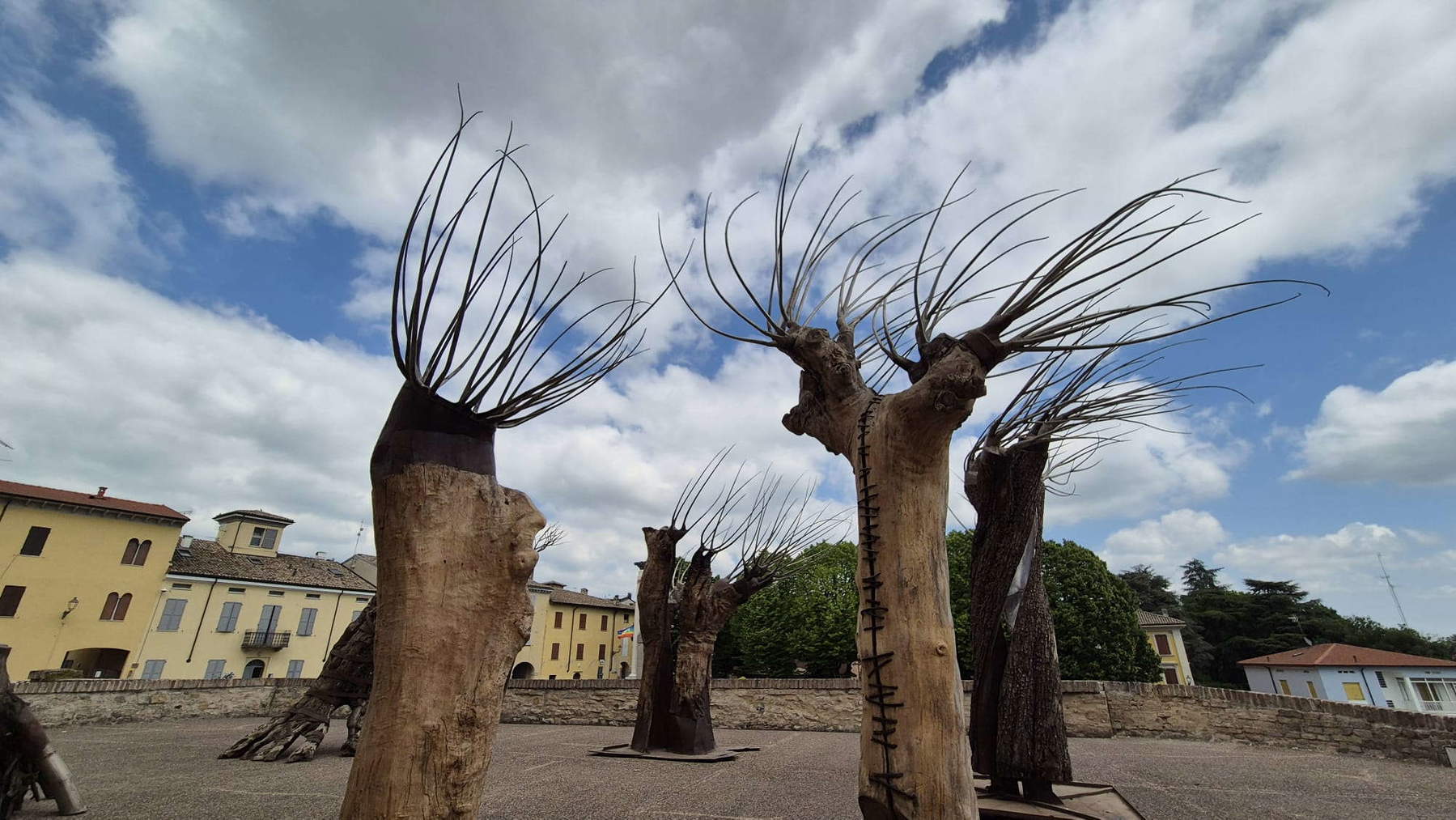
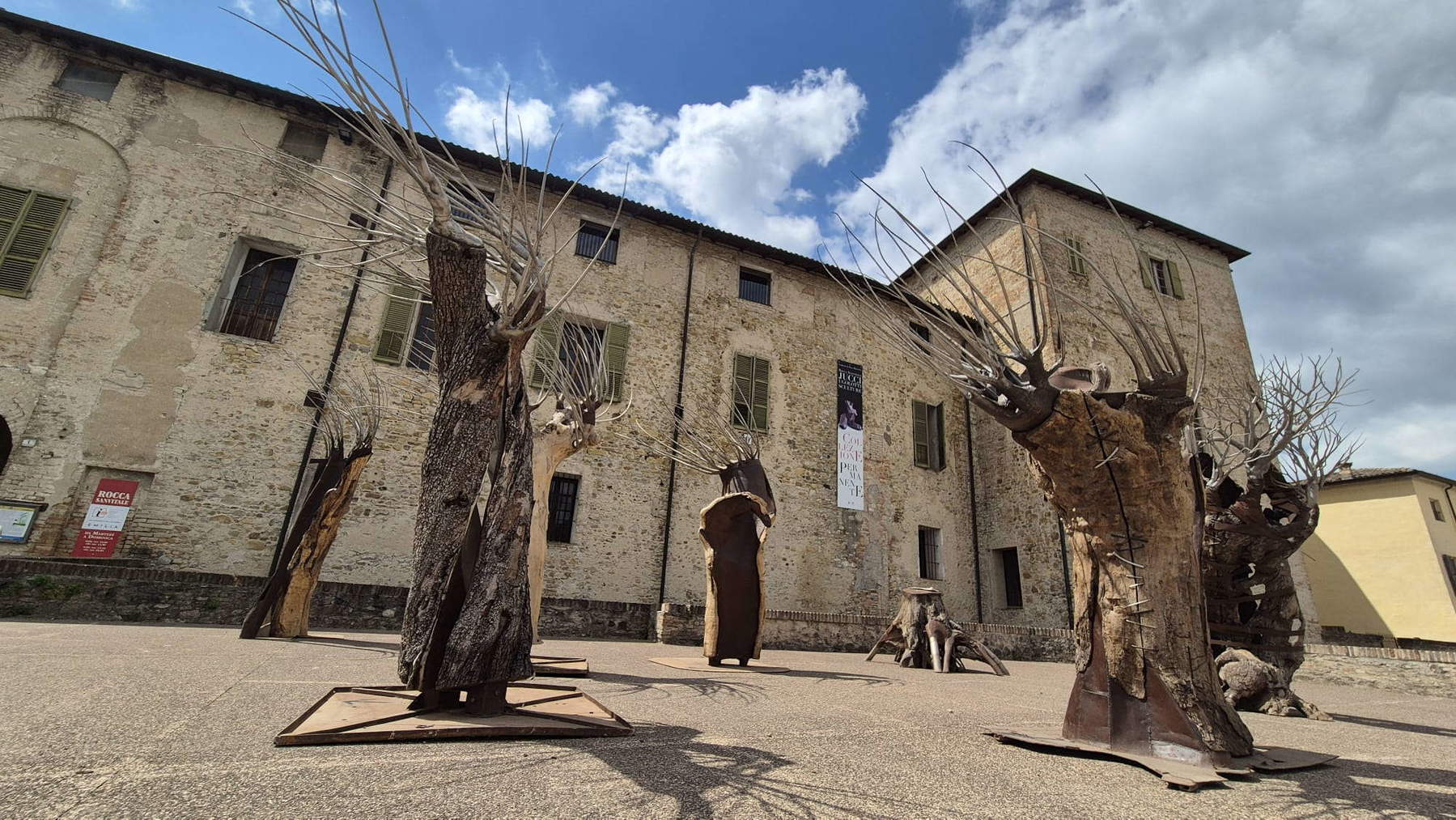
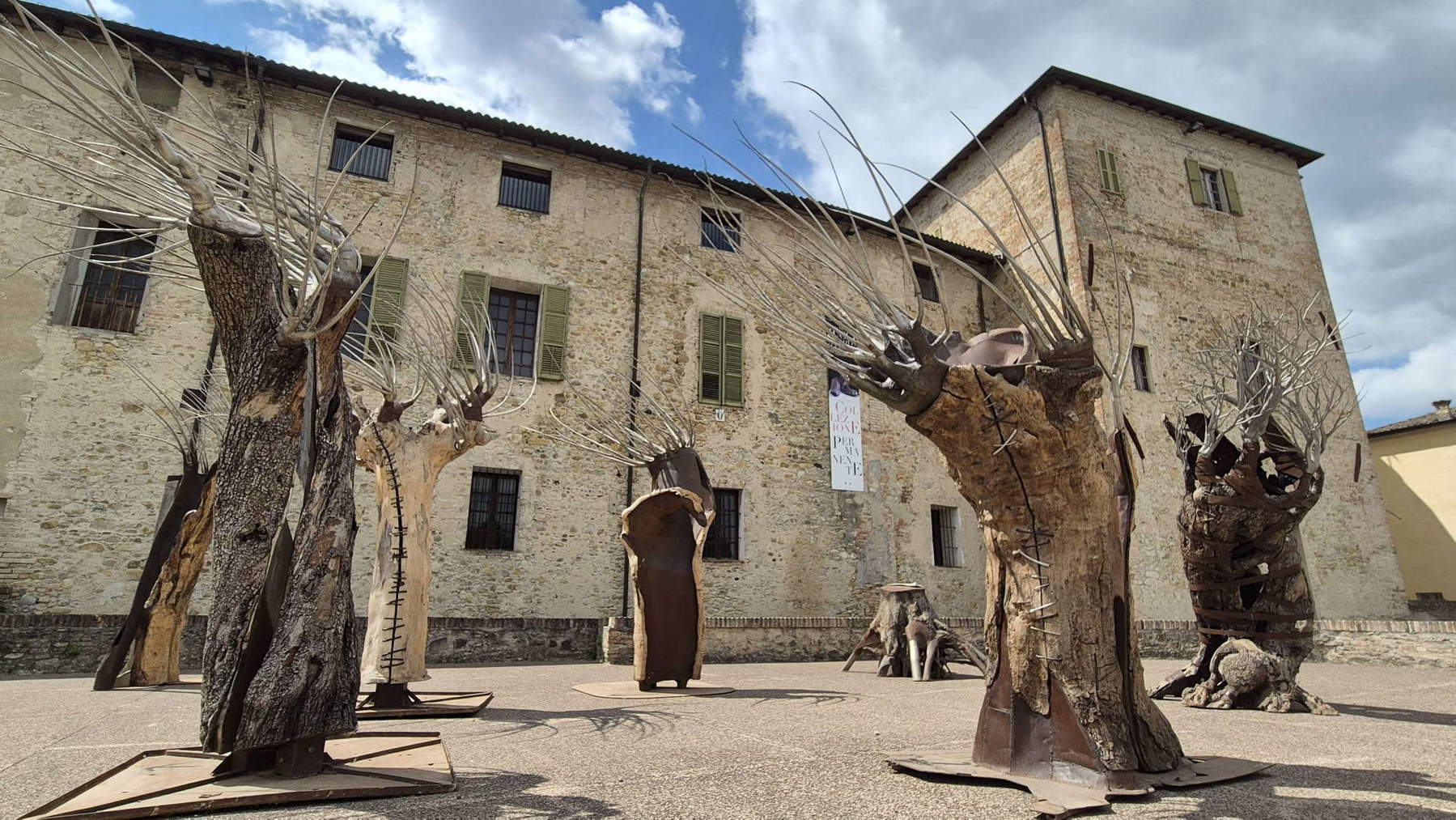
In 2004, during a trip to Calabria, the artist Brunivo Buttarelli (Casalmaggiore, 1946) came across an olive tree devastated by arson: it had been burned from the inside and seemed beyond saving. Buttarelli, however, interpreted it differently: not merely as a wounded natural entity, but as something that could still be healed and transformed. He cut it lengthwise into two large sections of trunk and loaded them onto his van to take them to Casalmaggiore. From those remains emerged the first in a family of sculptural trees. The trunk was set upright again and gradually bound with metal bands, while branches of polished steel reconstructed its form. The wound was not erased, therefore, but made part of the work’s new identity. Over the years, other trees would join the collection: a mulberry tree sacrificed to urban development, an elm split into three parts, an oak felled too soon, a stilt tree patched back together, a pear tree marked by time, and a poplar devoured by pests.
It is one of the images that best allows us to enter into the work of Brunivo Buttarelli, an artist who, for over forty years, has been exploring the possibility of giving new life to what has been discarded, abandoned, or damaged. And it is precisely the material itself—with its fractures, its layers, and the traces of time—that lies at the heart of *Racconti materici*, the exhibition that, through November 29, 2026, occupies the spacesof the FarneseApartment and Garden at Rocca Sanvitale in Sala Baganza, in the province of Parma, organized to mark the artist’s 80th birthday. The exhibition does not present matter as something inert. Wood, stone, iron, steel, paper, and materials drawn from everyday life enter the works through a process of transformation in which the objects’ past history does not disappear. On the contrary, it remains visible, becomes part of the sculpture, and contributes to constructing its meaning.
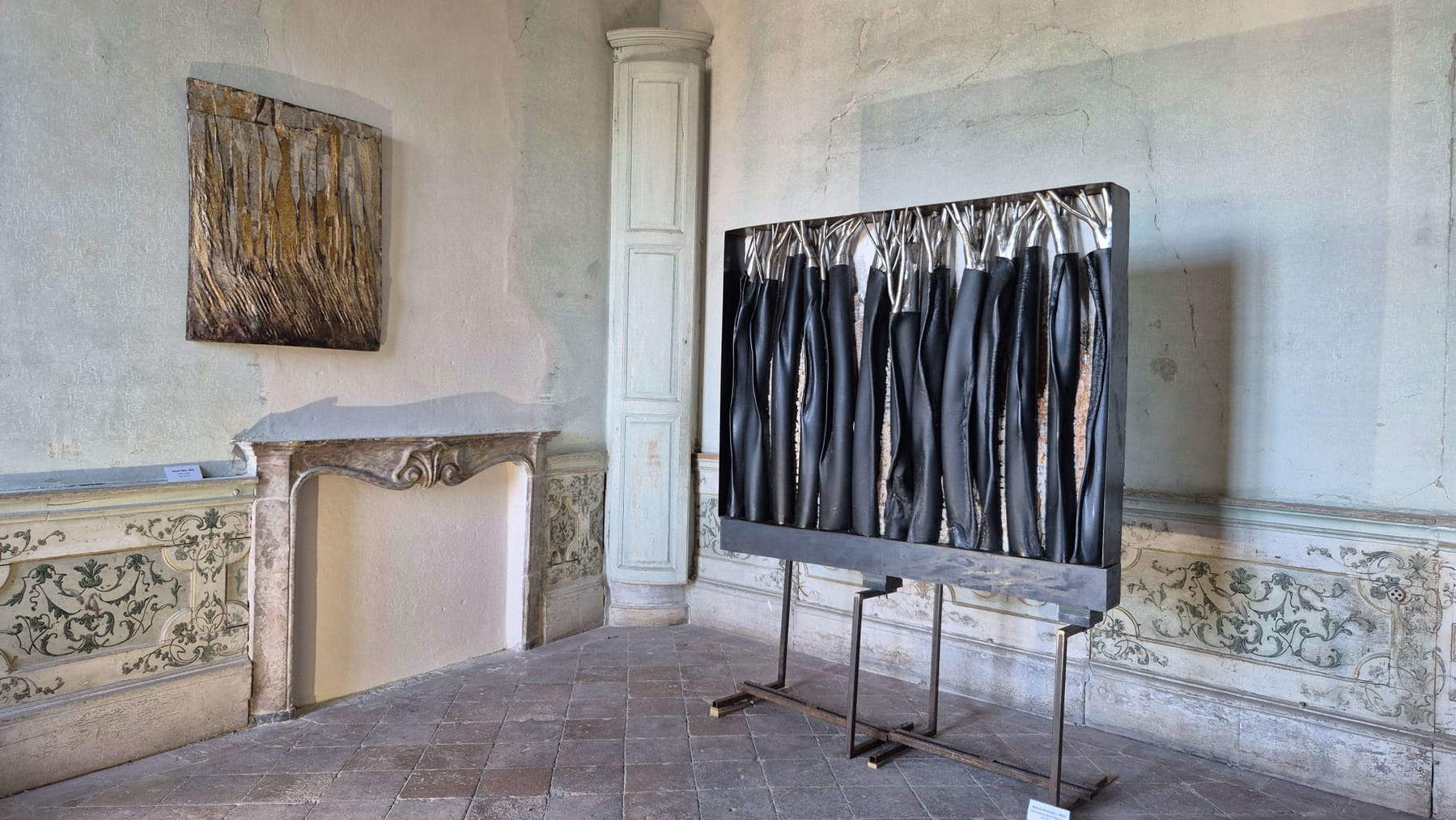
This principle could be summarized in Buttarelli’s own words: “There is no such thing as humble material, only material that has not been listened to.” It is from this act of listening that works take shape, composed of heterogeneous assemblages, often constructed using materials that still bear the marks of contemporaneity and consumerism. Fragments, residues, and objects destined for oblivion are stripped of their original function and incorporated into new configurations.
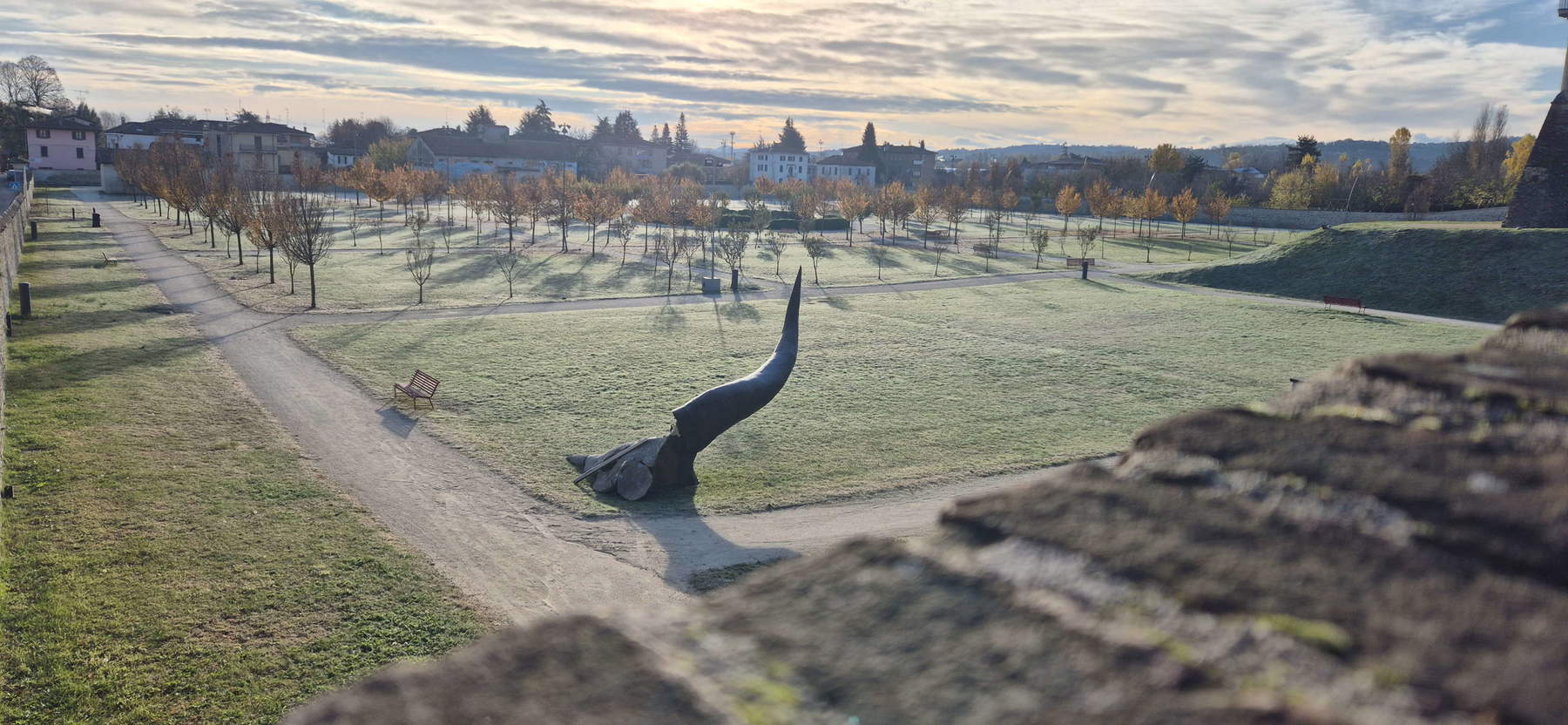
In the Farnese Garden of the Rocca, Buttarelli’s sculptures take on the appearance of presences emerging from a landscape that seems to belong to a time long past. The scene appears to be set in an era preceding human history, marked by geological eras and extremely slow transformations. Yet within these ancient forms lie the materials of the present: the past is not reconstructed as a lost world to be nostalgically contemplated, but is composed of contemporary materials—of what society has produced, consumed, and discarded. Geological memory and the memory of industrial civilization thus end up overlapping.
The works can be viewed individually, but they take on additional meaning when placed side by side. In fact, Buttarelli also works in groups, creating sequences in which individual sculptures become episodes of a broader narrative. These are narratives without a linear plot, constructed through forms, materials, and associations: nature and human intervention, drought and rebirth, death and regeneration, seasons and transformations.
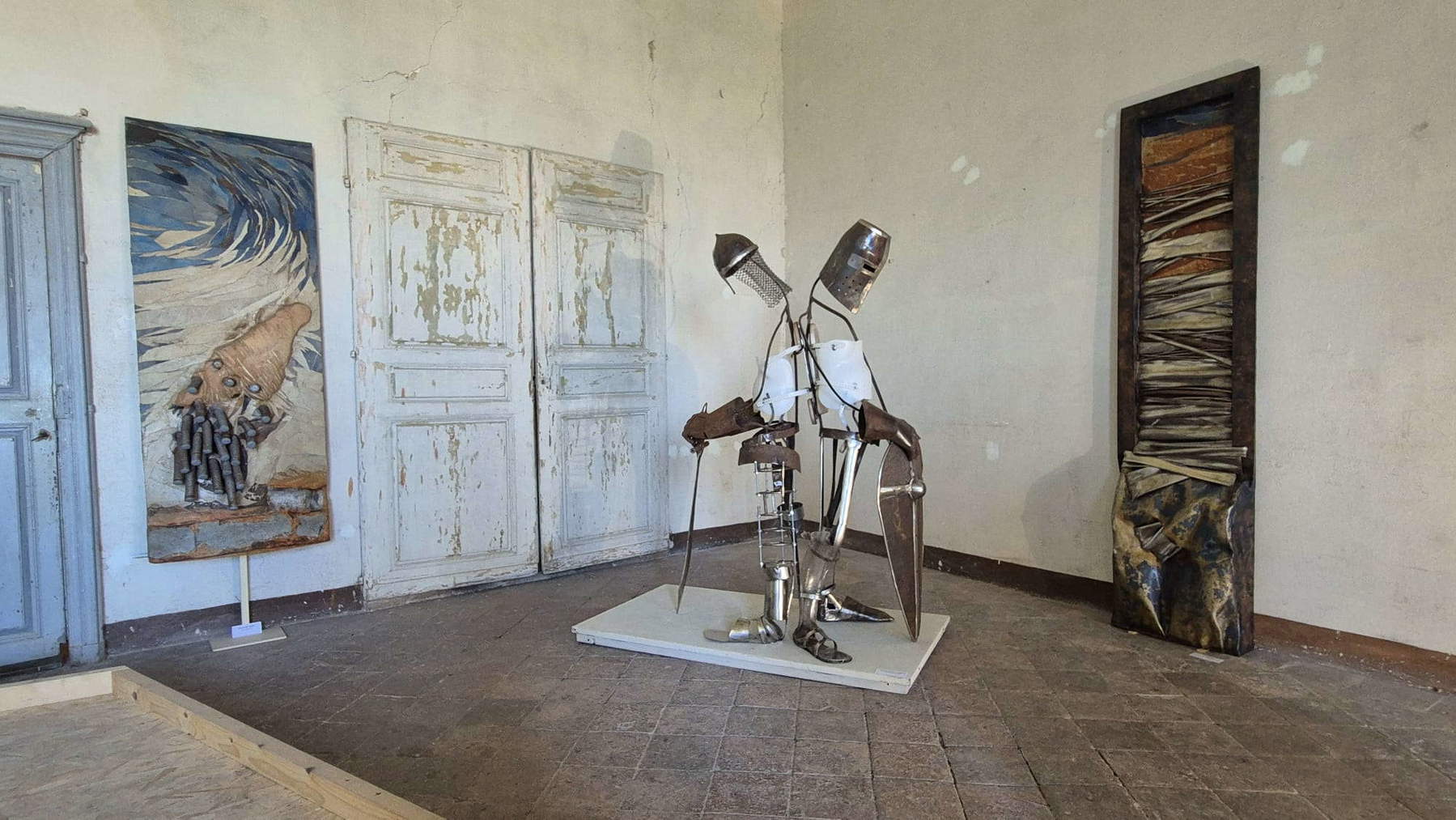
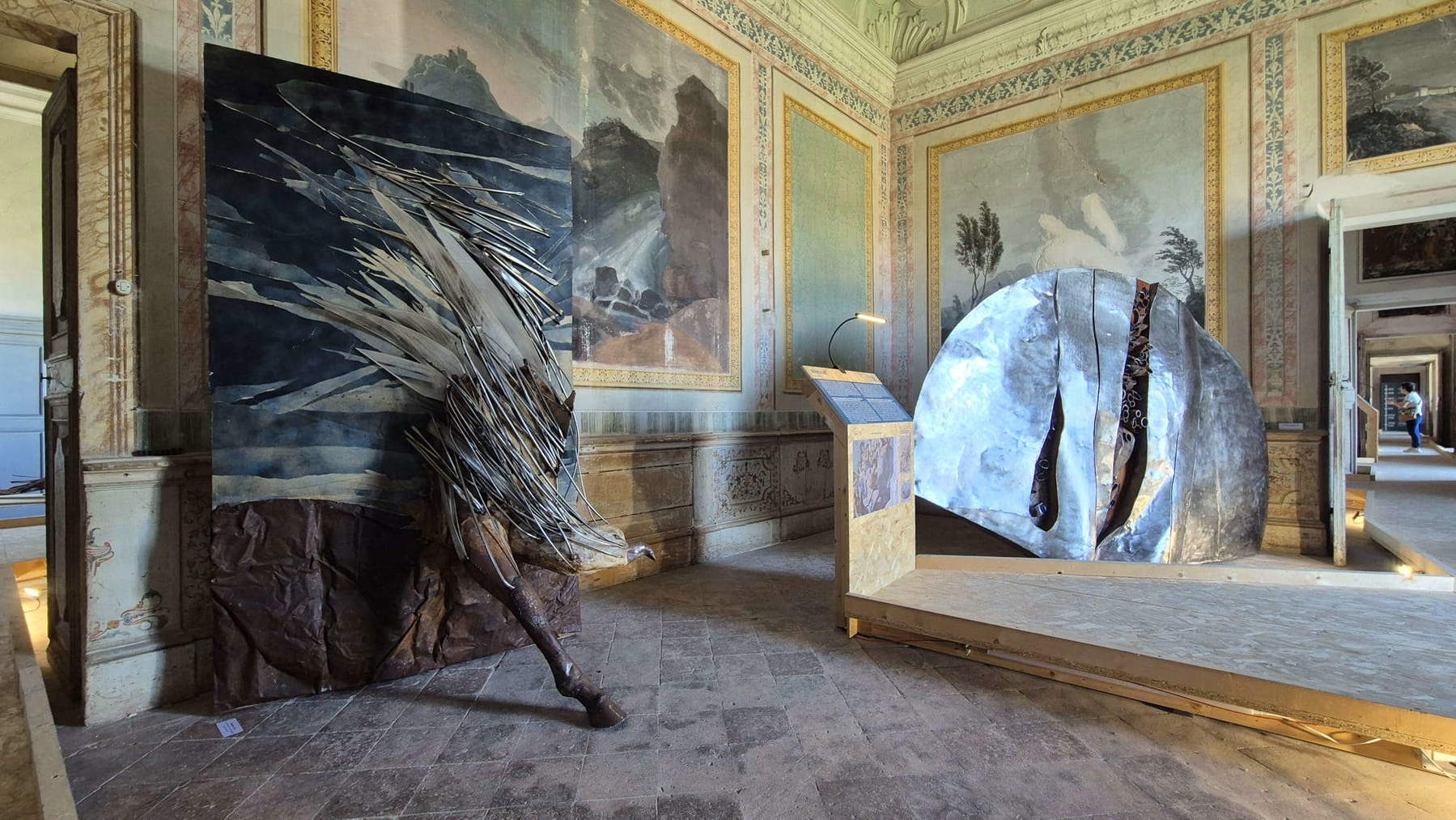
The theme of time recurs constantly: not only historical time—the time that separates the present from vanished civilizations and worlds—but also the cyclical time of nature, in which death and birth are moments of the same process. One of the series featured in the exhibition, *In the Cyclical Time of Life*, focuses precisely on this dimension.
Matter can thus be destroyed, consumed, shattered—but also reactivated. What seems to have reached the end of its journey can enter another story: this is the concept from which Buttarelli draws inspiration for his tree sculptures. The artist does not seek to restore their natural, intact appearance: the trunks bear the marks of fire, cutting, disease, urban development, or the passage of time, but the artist overlays these wounds with iron and steel, bands, structures, and new branches, making the repair as visible as the damage. Furthermore, in his most recent works, the interior of the trunks may contain actual remnants of contemporary society: colored plastics, toys, radiators, electrical devices, and metal mesh. The trees thus become time capsules, containers in which the present is physically deposited. The various materials, on the other hand, are made to react with one another, layered, interlocked, and sedimented. It is a metamorphosis in which both the wound inflicted on the earth and humanity’s attempt to repair it remain simultaneously visible.
This focus on stratification also extends to Buttarelli’s technique. His works arisefrom the juxtaposition of very different materials: wood, granite stones, pink and Carrara marble, Corten steel, stainless steel, iron, and paper. Some materials are left to be altered by time, such as paper and iron, which take on rusty surfaces; others, such as polished steel, introduce an explicitly contemporary dimension. Manual labor plays a fundamental role in this process, because transformation is the result of a physical engagement with the materials—their resistance, irregularities, and potential.
“Racconti materici” also emphasizes the word “story”: the works do not necessarily illustrate a narrative, but rather construct narrative possibilities through the relationship between elements. A sculpture can be interpreted as a moment, a fragment, or a relic of a broader story. When multiple works are brought together, the connections become more evident. According to Elisa Spanevello, the project’s curator, this narrative dimension is linked to the ancient idea of storytelling as a shared experience—that moment when a community gathers around a fire and listens to a story. Buttarelli’s works can be understood precisely as sites of this gathering: not merely objects to be observed, but elements through which to reflect on life, death, transformation, and the relationship between humanity and the natural world.
The series of trees makes this reflection particularly tangible: following the Calabrian olive tree from 2004, Buttarelli has continued to collect tree trunks marked by different fates. Some fell victim to fire, others to urban sprawl, and still others to premature felling, disease, or natural phenomena. In every case, the sculpture arises from something that already existed and that went through a history before coming into the artist’s hands. The artist’s interventions do not erase that history but make it legible: steel can become a branch, iron can bandage a wound, and an industrial element can occupy the space that once belonged to vegetation. The juxtaposition of these materials produces a new form, but above all, it reveals a relationship. The theme of nature in Buttarelli’s work does not, therefore, coincide with an idealized representation of the landscape. Rather, it is a reflection on the transformation of matter and on the way human activity intervenes in its processes.
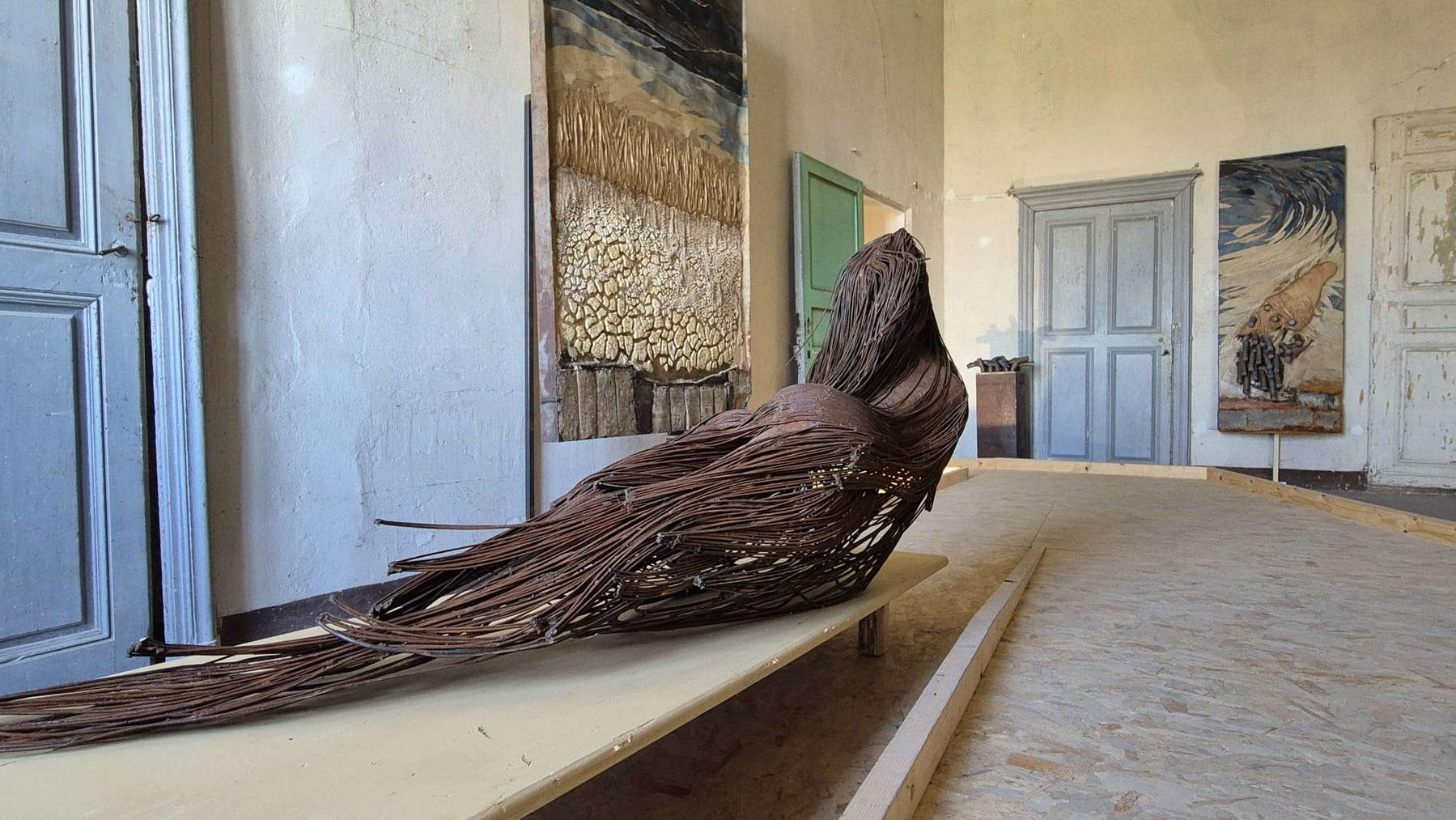
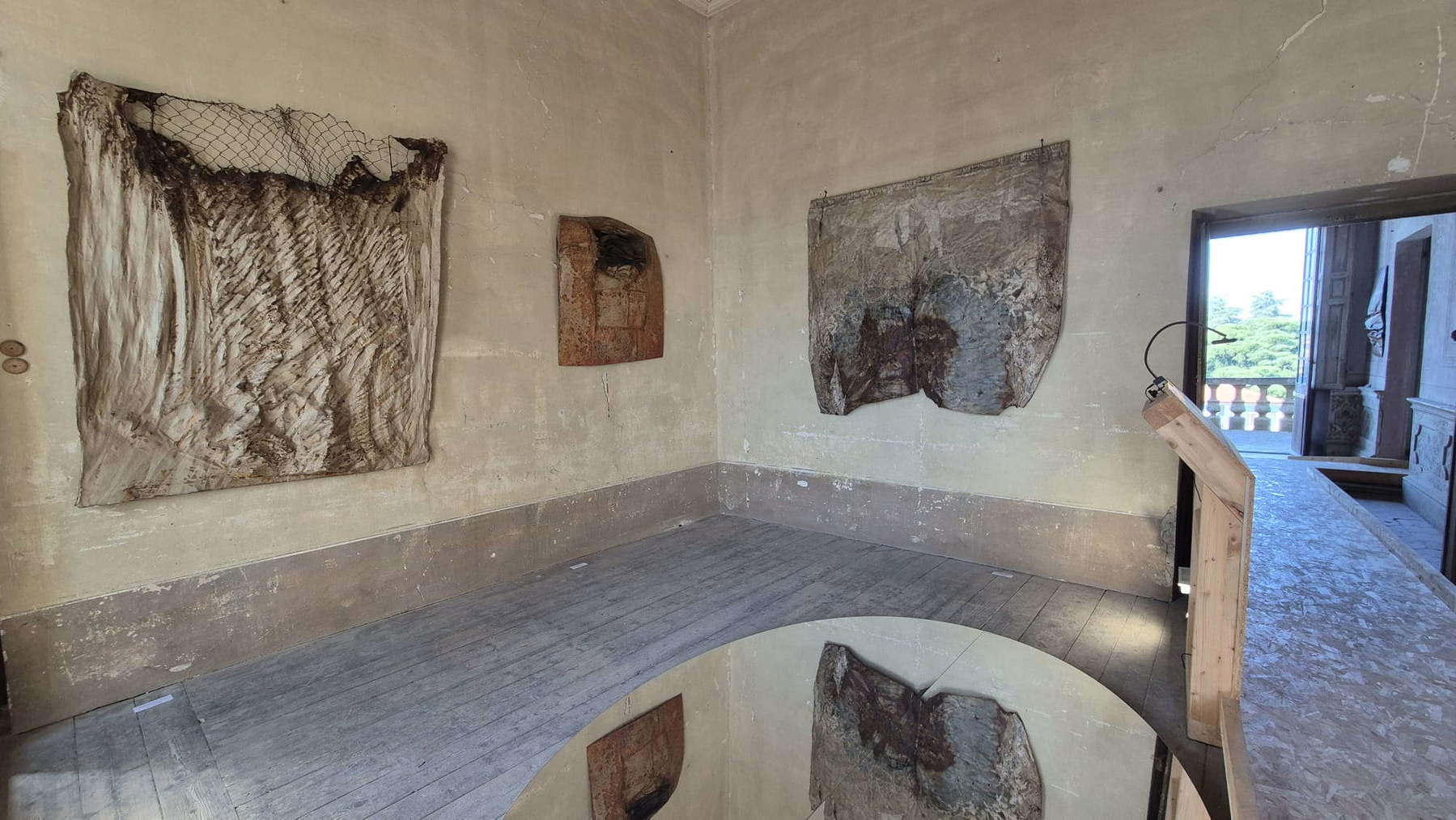
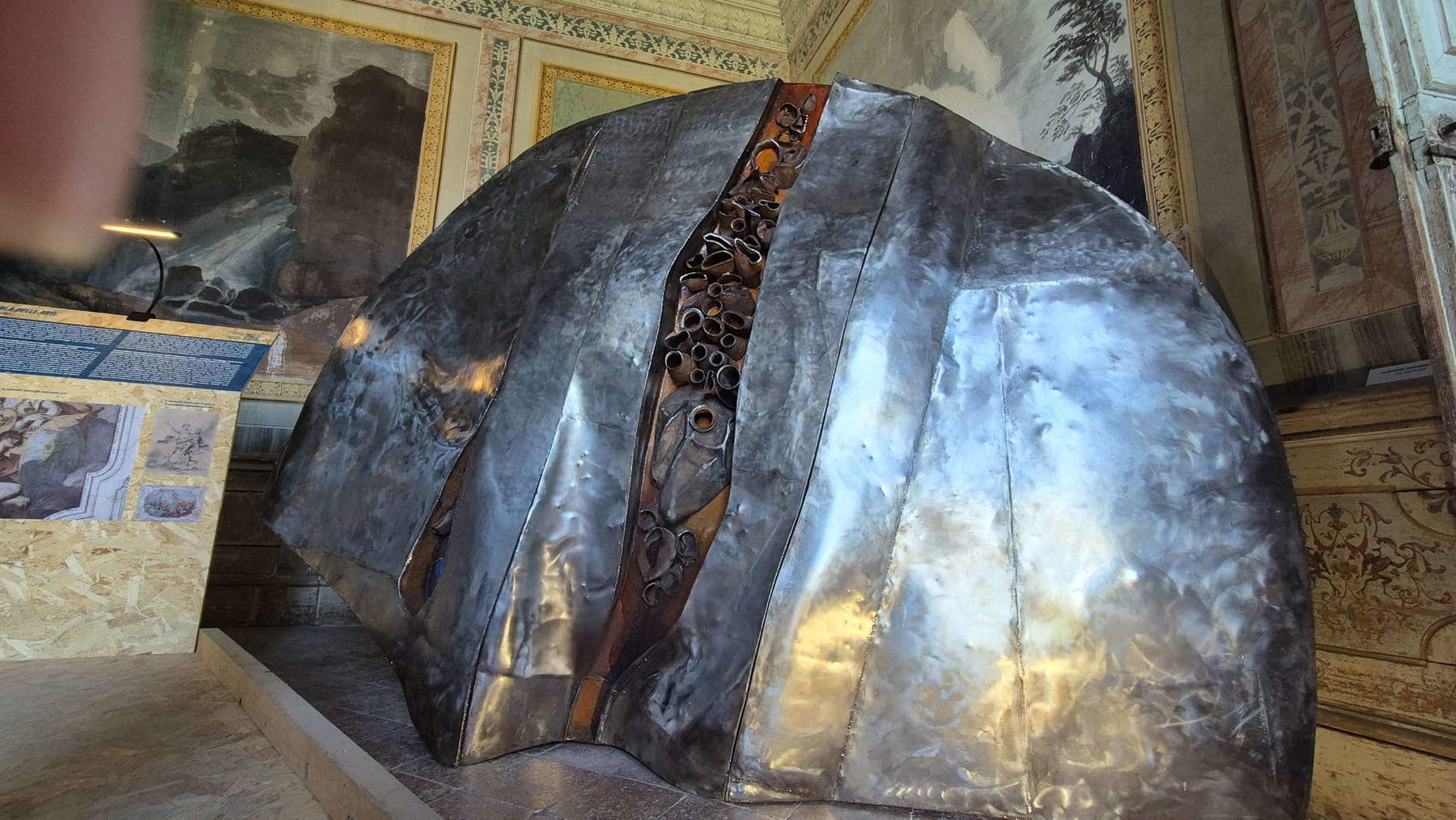
The exhibition is hosted by the Rocca Sanvitale in Sala Baganza, in the Parma area, specifically in the Farnese Apartment, which was recently reopened to the public following a major restoration project. The apartment occupies the northeast wing of the Rocca and preserves traces of the transformation commissioned by Duke Antonio Farnese in the early 18th century. The painter Sebastiano Galeotti was commissioned to undertake the decorative renovation of the rooms, creating a complex interweaving of symbols and mythological references through stucco work and frescoes.
Christian virtues and pagan deities thus coexist in the rooms, creating an environment in which the history of the Rocca is visually layered. The sixteenth and eighteenth centuries converge within the apartment’s spaces, evoking the presence of the Sanvitale and Farnese families.
On one hand, the historic rooms of the Rocca, marked by the transformations of the centuries; on the other, Buttarelli’s sculptures, in which different materials and traces are combined to create new forms. In the Farnese Garden, this juxtaposition takes on a different dimension: the works are placed in an open space, where fantastical figures and artificial materials engage directly with the landscape.
“In this exhibition, as in previous ones,” the artist states, “I present works created from assemblages of various materials, which often bear clear signs of today’s waste. They speak of ancient times, of the carcasses of imaginary animals, of eroded and shattered shells emerging in desolate and forgotten places, where the cyclical nature of time and space is marked by distant geological eras. I also highlight stories, however—stories not merely silenced, shattered, and pulverized by the millennia; within the Earth, its perpetual journey continues, and through diverse horizons, in the perpetual continuity of the present, new visions emerge. I also present works that, while appearing as autonomous pieces, often—when grouped together—become narratives that take into account the changes of time, the history of nature, and human activity. They speak of the cyclical nature of the seasons, of drought and rebirth, of organicity, recovery, and resurrection. In some cases, through changes in the materials themselves, they speak of affirmations and reflections; they can also become forceful denunciations of human behavior.”
The exhibition can also be incorporated into a broader itinerary through the Sala Baganza area. About two kilometers from the town center lie the Carrega Woods, which form the heart of the ancient ducal hunting estate. The landscape alternates between the Po Valley forest, cultivated fields, and fruit orchards, and preserves two 19th-century summer residences linked to Maria Luigia of Austria, Duchess of Parma: the Casino dei Boschi, designed by Ennemond Petitot, and the Ferlaro.
In the southern part of the Woods lie the Calanchi di Maiatico, clay- and marine-origin landforms that add another geological element to the landscape. The area is also crossed by the Via Francigena: the Romanesque parish church of San Biagio in Talignano, dating back to the 12th century, marked a branch of the ancient pilgrimage route, made necessary by the frequent flooding of the Taro River. Traces of two “xenodochi” (pilgrims’ hostels) remain along the road, in Talignano and Vizzola, where friars once offered hospitality to pilgrims. The winemaking tradition is also an integral part of the local identity. The wine-growing heritage of the Colli di Parma is chronicled by the Wine Museum and reflected in the production of Malvasia di Candia Aromatica, which is also the focus of dedicated events and festivals such as the Malvasia Festival.
The cultural landscape in which *Racconti materici* is set is thus composed of different times: that of the Rocca and the families who transformed it, that of the Via Francigena, that of agricultural and winemaking history, and the slower pace of the woods and badlands. Added to these is the dimension of Buttarelli’s sculptures.
|
| There is an artist who brings wounded trees back to life. His work is on display at Sala Baganza |

Warning: the translation into English of the original Italian article was created using automatic tools. We undertake to review all articles, but we do not guarantee the total absence of inaccuracies in the translation due to the program. You can find the original by clicking on the ITA button. If you find any mistake,please contact us.





















 IT
IT FR
FR DE
DE ES
ES CN
CN


