



by
Federico Giannini  @federicogiannini1
01/11/2026


Categories: Exhibition reviews / Disclaimer
At the National Gallery of Parma, in the Pilotta Complex, the first exhibition ever dedicated to Giorgio Gandini del Grano brings together nearly all of the known works by the painter, a collaborator of Correggio and the creator of an original, restless, and surprisingly independent style of painting. This exhibition sheds light on one of the lesser-known artists of the 16th-century Po Valley. A review by Federico Giannini.
A painter of joy even in his name, a painter who “has always dazzled critics with the splendor of his painting, the beatific radiance of his works, and the light that pervades his altarpieces and frescoes, all bathed in splendor,” writes Giuseppe Adani of Correggio. To attempt to contextualize Giorgio Gandini del Grano—who was, in a sense, a protégé of Correggio’s, almost certainly a collaborator, perhaps even a friend, though less likely a student—one must reason by opposites. If Correggio was the light of a midsummer day on the Parma plain, Gandini was that light, cool, slightly shadowy mist that begins to cover the fields with the arrival of the first autumn mists. If Correggio was, for Mengs, the “midday of art,” Gandini was a twilight of wind and metal. If Correggio is a golden radiance that radiates, brushes, blazes, and at times reveals to the point of dazzling, Gandini is the evening air that polishes Correggio’s grace with a frozen, vitreous sheen until it becomes precarious. Giorgio Gandini del Grano is an artist of fissures; he is one of those painters to whom fate has bestowed a sort of masterful renunciation of rupture and to whom destiny has granted the privilege of moving amid the fissures with the slightly sullen air of thoseinterpreters who have nothing to discover but can afford to alter everything, to render everything ambiguous, to fill the cracks with a wealth of inventions.


A total of ten paintings by Gandini are known to exist, and nine have been brought together in Parma, at the National Gallery within the Pilotta Complex, for the first exhibition ever dedicated to this little-known artist. The curators—Stefano L’Occaso, Denis Ton, and Stefania Girometti—seized the opportunity presented by a highly significant acquisition initiated by L’Occaso when he was interim director of the Pilotta, namely * The City of Parma Presented to the Virgin*, which has been placed at the beginning of the exhibition, to gather everything that could be gathered—that is, the entire known easel-painting oeuvre (everything except the variant of *The City of Parma* preserved in Saratov, Russia, and therefore unavailable on loan due to the consequences of the barbaric war of aggression against Ukraine) and a good half of his graphic works, with the aim of bringing this singular artist from the Po Valley—this supposed “favorite pupil of Correggio,” as Giovanni Godi and Giuseppe Cirillo had defined him—out of the shadows of history, who were among the first to attempt to dispel the mist surrounding a painter whom we can now—thanks in part to this exhibition in Parma and the diligent and highly successful work of its curators—recognize as a master capable of full, unyielding autonomy when freed from the duties of Correggio’s workshop. *L’Occaso* imagines Gandini as Antonio Allegri’s right-hand man, so caught up in the daily routine of the workshop that he remained “trapped in a subordinate role,” and to exercise what little autonomy he had left in a couple of altarpieces for city churches, a few objects of private devotion, and little else, “without travels or exposure to other regions, focused on an incessant search for variations on the theme.” An unfortunate follower, who was unable to seize the most important opportunity of his life—the commission for the frescoes in the presbytery of Parma Cathedral, which he received following Correggio’s death: the document regarding the commission is dated May 19, 1536, but Giorgio Gandini del Grano had already died on April 5, 1538 (we do not know the exact date of his death), the very day the Parma Cathedral building committee entered into a contract with Girolamo Mazzola Bedoli, who was entrusted with taking over the project that Gandini had been unable to begin.


What remains undeniable is the notion that the trustees of Parma Cathedral must have considered Gandini so skilled, experienced, and reliable that they regarded him as an *egregius vir* to whom they could entrust the completion of what Correggio had been unable to finish, and thus to believe that his genius could guarantee some form of durability, continuity, and luminous quality. Thus, to reconstruct the personality of Giorgio Gandini del Grano, we must start from a fragmented image, a gap, an absence, a void that must be propped up with some support—support to be found by sifting through documents and examining those few known details.


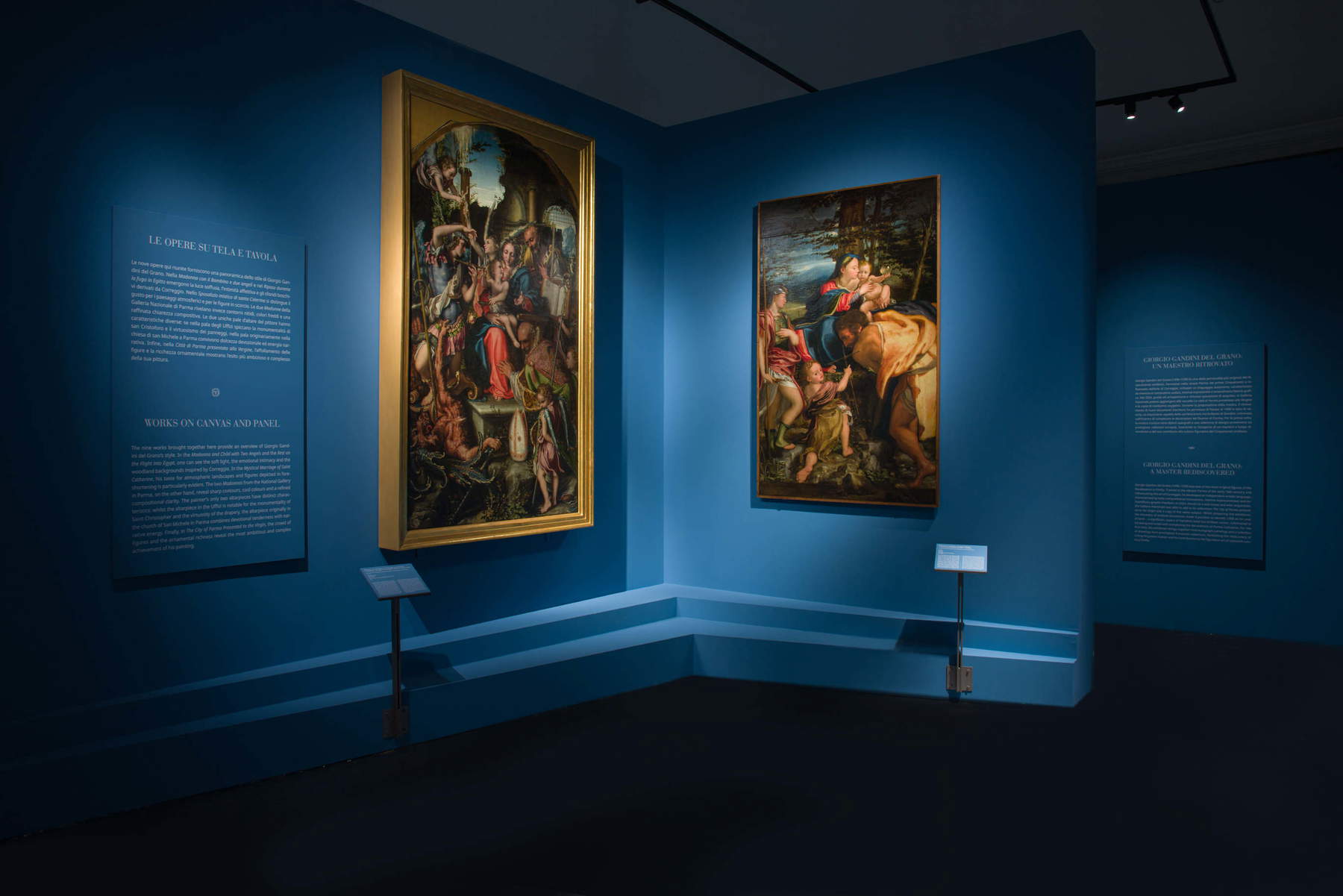
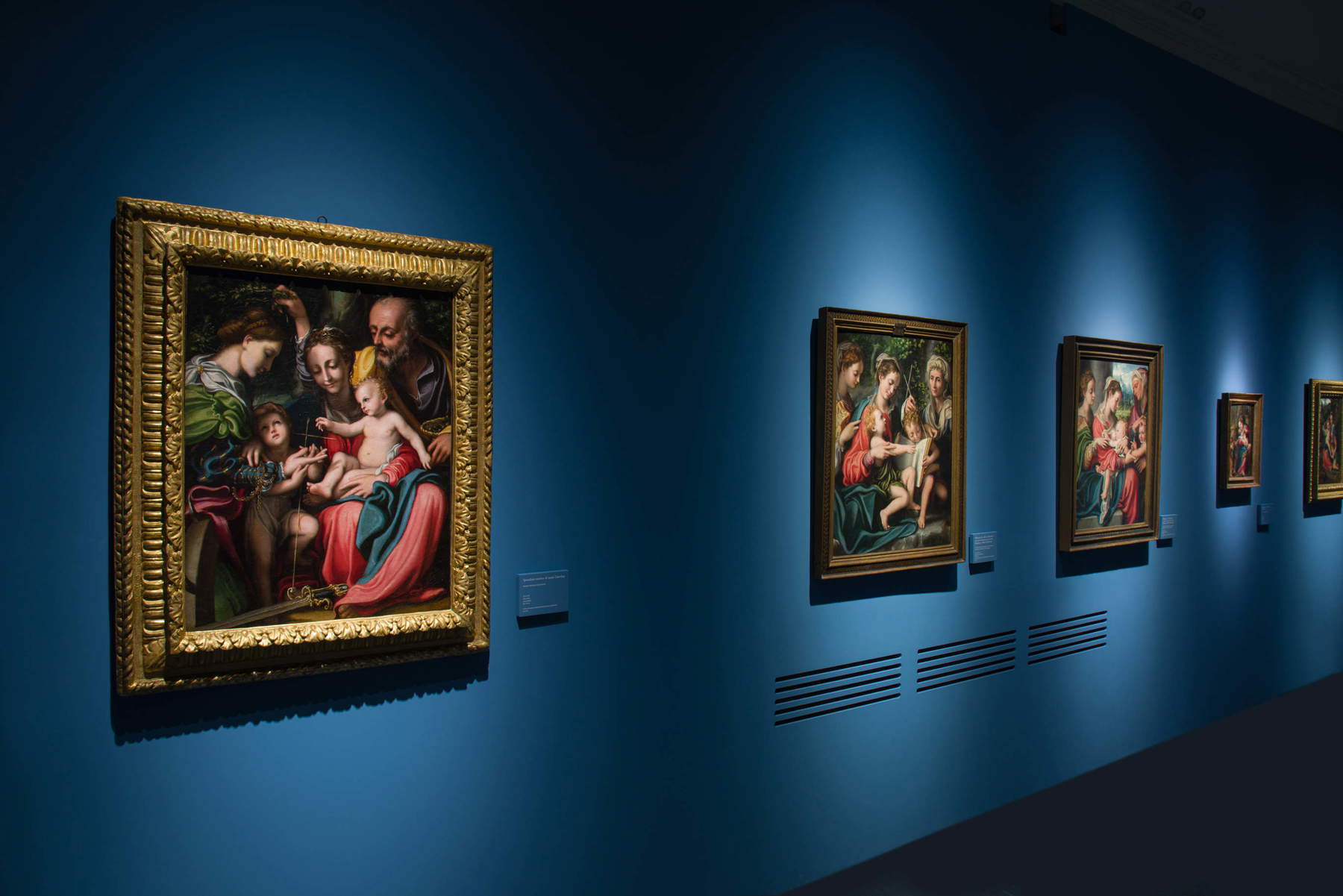
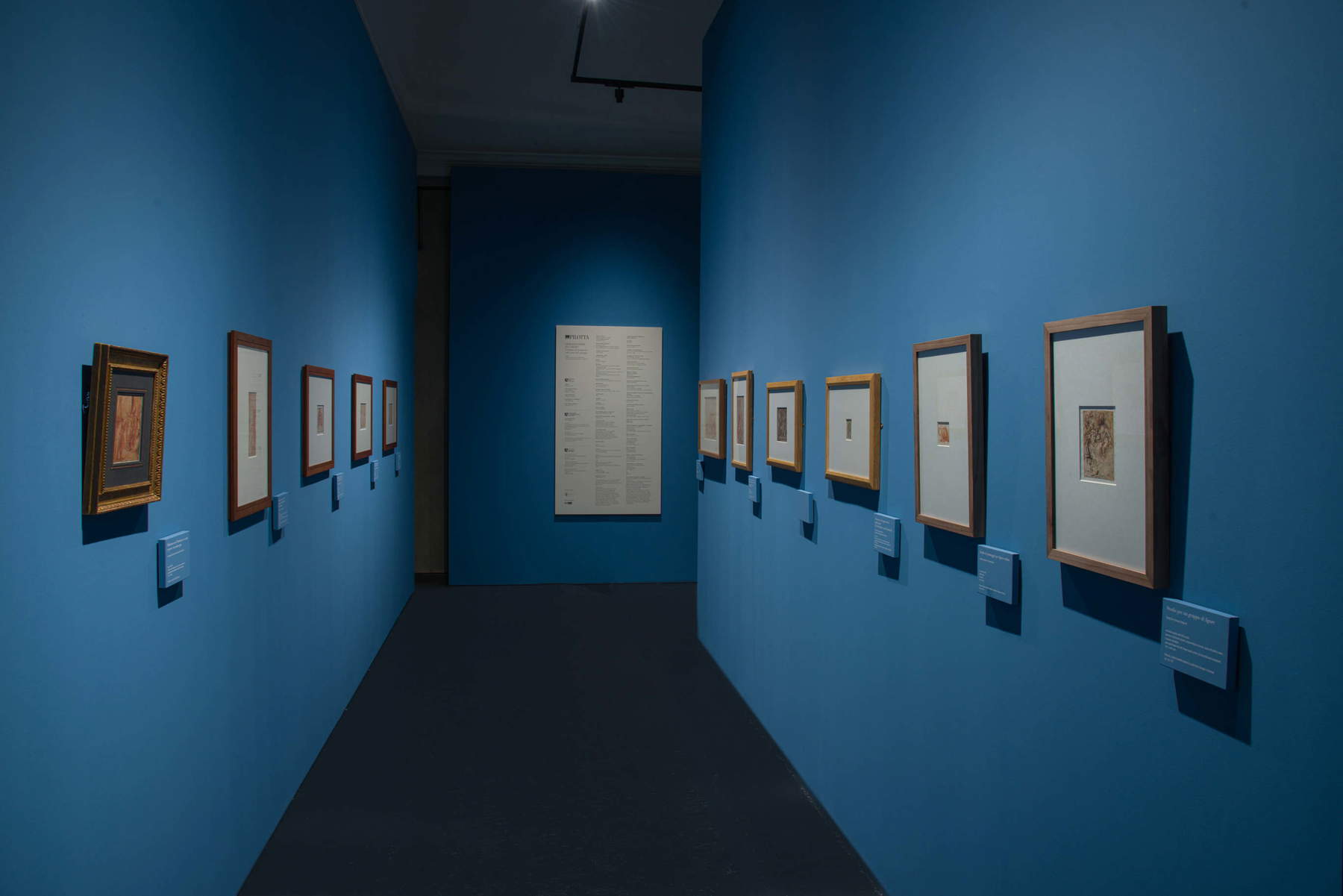
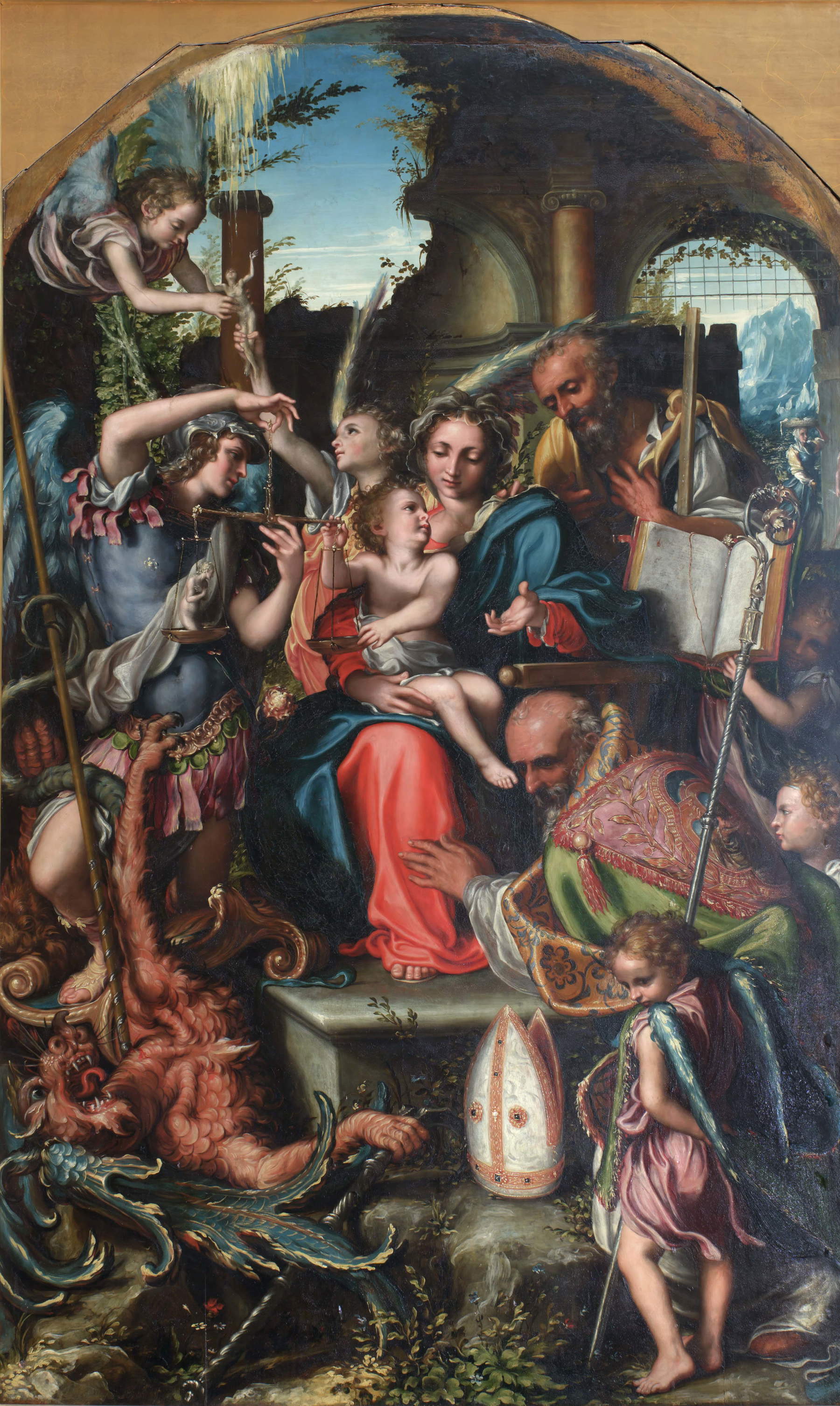
It should be noted that the only dates we can rely on are all archival records or notarial documents: Giorgio Gandini del Grano did not sign or date any of his known works. And even the rest amounts to very little: the contract—certainly fundamental—for the frescoes in the Duomo, and then the payment receipt, dated May 1535, for a crucifix painted in the church of Santa Maria della Steccata, the very church that was being frescoed by Parmigianino during those same years, and yet another document concerning his sole heir, a handful of summonses to testify, and then his date of birth, 1498, discovered by Chiara Travisonni during the preparatory work for this exhibition: until a few weeks ago, we didn’t even know when Giorgio Gandini del Grano had been born. The exhibition, as mentioned, begins with the National Gallery’s recent acquisition: here, then, is the city of Parma, which, in its allegorical role, wears the armor of a young warrior who lays down her crusader’s shield bearing the city’s colors at the foot of the throne, while the patron saints introduce her to a Virgin who is all too surrounded by celestial beings, most of whom seem distracted in this chaotic gathering where Gandini is already Gandini, an artist of accentuated chiaroscuro, of furious and sudden transitions from shadow to light, of sharp iridescences that seem almost like steel, of fluttering folds that are at times broad and almost classical, and at other times engaged in depicting the finest, most insistent edging. All of Gandini’s hallmarks are present in this painting, write Carla Campanini and Maria Cristina Quagliotti in the catalog: “the bright and lively color palette, the rhythm of planes intersecting in depth, the rapid movement of the figures,” the gazes that link one saint to another, one figure to another, so that the disorder is merely the appearance of an order that is crystal clear to Gandini. Yet this is already a fully-fledged Gandini, a Gandini who even suggests a public or quasi-public commission (the presence of Saint Bernardino da Feltre—where portraits of patrons are usually placed—suggests a commission by the Monte di Pietà of Parma), a Gandini already so significant as to have been copied, and the City of Parma’s version is on display at the entrance to the exhibition alongside its copy. However, this is not the Gandini from whom we should perhaps begin our investigation into his origins.
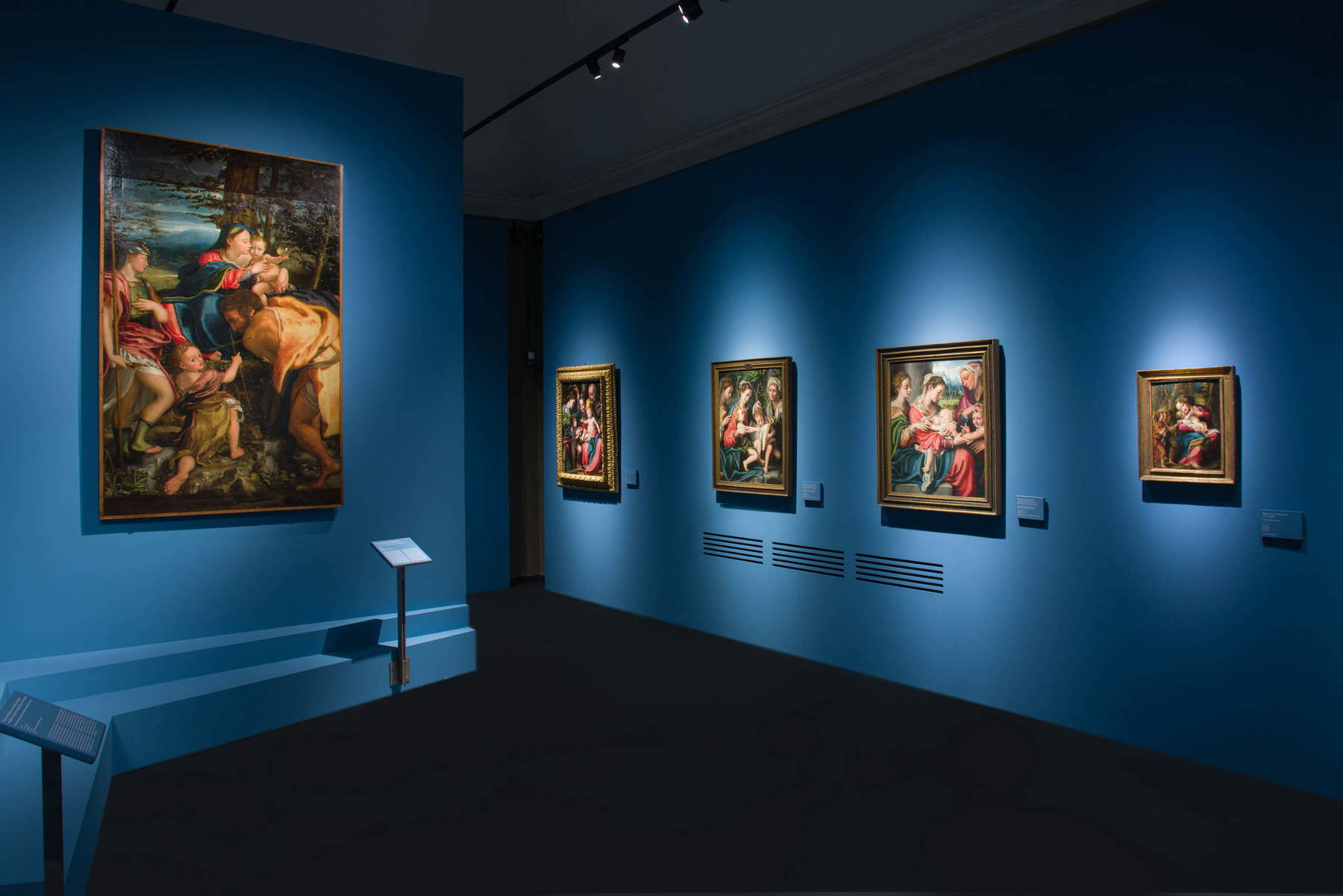
Stefania Girometti suggests starting with the three works she calls “nocturnes”—three works intended for interior spaces: the panel currently in the possession of the antiquarian Daniel Katz, the canvas in the Helsinki museum, and the *Mystical Marriage of Saint Catherine* from a private collection. To these one could add two of the works that most closely follow Correggio’s style—namely, the two canvases owned by the National Gallery of Parma, which are the works for which the earliest dating has been proposed (it should be noted, however, that the chronologies are all uncertain and narrow: all the works on canvas and panel by Gandini that we know of fall within a span of five, at most ten years—no more—and even in the catalog the hypotheses vary, since Girometti, in his proposed chronology, considers the Parma canvases to be slightly later than the three nocturnal works, due to the latter’s more direct references to Correggio’s style of the 1520s, and the shift in style of the other two—toward a more monumental, clearer, and intellectually more elegant approach). These are works in which the Correggio-esque references are evident, where adherence to the master’s style is clear, although signs of a shift are already visible. It is all a suffusion of lively delicacy, of emerald greens, of bright vermilion, and of gilded damasks, of translucent glimmers that illuminate these embraces, these caresses in the midst of the woods—which are, in fact, the very same woods as Correggio’s—and the same holds true for the column serving as a backdrop in one of the two Parma paintings, the very same column—albeit depicted from closer up—that frames the landscapein the Adoration of the Master’s Apprentice, now in the Uffizi. Yet the first signs of Giorgio Gandini del Grano’s independence are already evident: “the first, structural,” says Girometti, looking at the antiquarian’s panel, “concerns the figures arranged along a diagonal that descends from the left toward the Virgin’s bare foot in the lower right, with a more linear and geometric composition than Correggio would have allowed.” Gandini, however, does not embrace this scheme: in the two Parma paintings, for example, he leans toward aligning the figures, a Mantegna-esque approach that had also been employed by Correggio. The second point, on the other hand, concerns “the faces, with more regular ovals, heavier eyelids, and smaller mouths, featuring a style that tends toward stylized repetition.” Furthermore, Gandini does not appear to be particularly comfortable with anatomical studies: the proportions are almost always forced and unnatural. Eyes set too far apart, feet that spread wider than in reality, arms that are at times ape-like, infants nearly as tall as their mothers. These are mental proportions, rather than physical ones. Gandini, however, is an artist who resolves these disproportions through invention, drawing on the fruits of his somewhat restless creativity. Take the Finnish panel, for example: the unveiling recalls the same gesture as in Raphael’s *Madonna of the Veil* and Correggio’s *Madonna Campori* , except that here the veil becomes a sort of spiderweb. Or Saint Catherine in *The Mystical Marriage*: the wheel has become so large that the martyr finds herself living inside it.
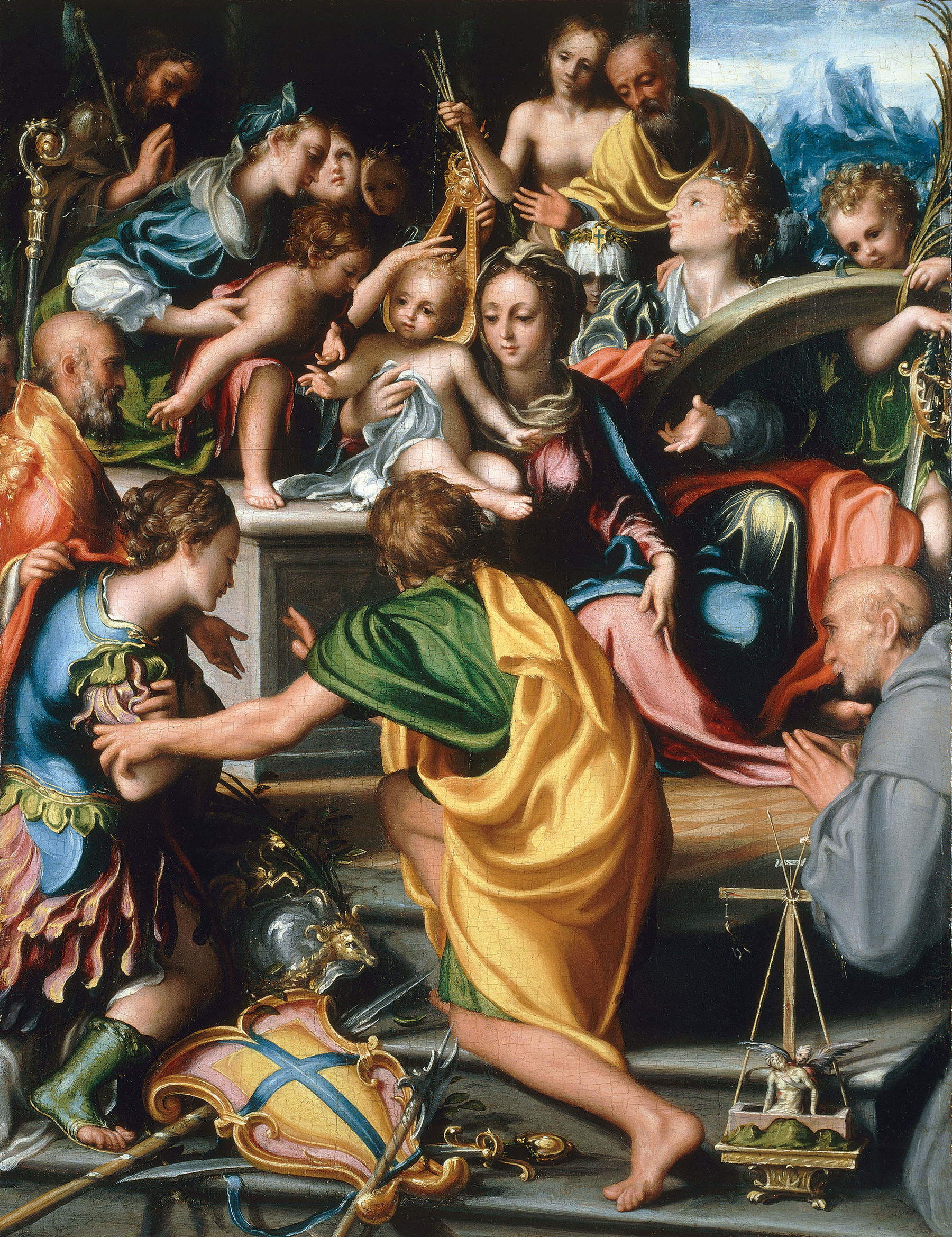
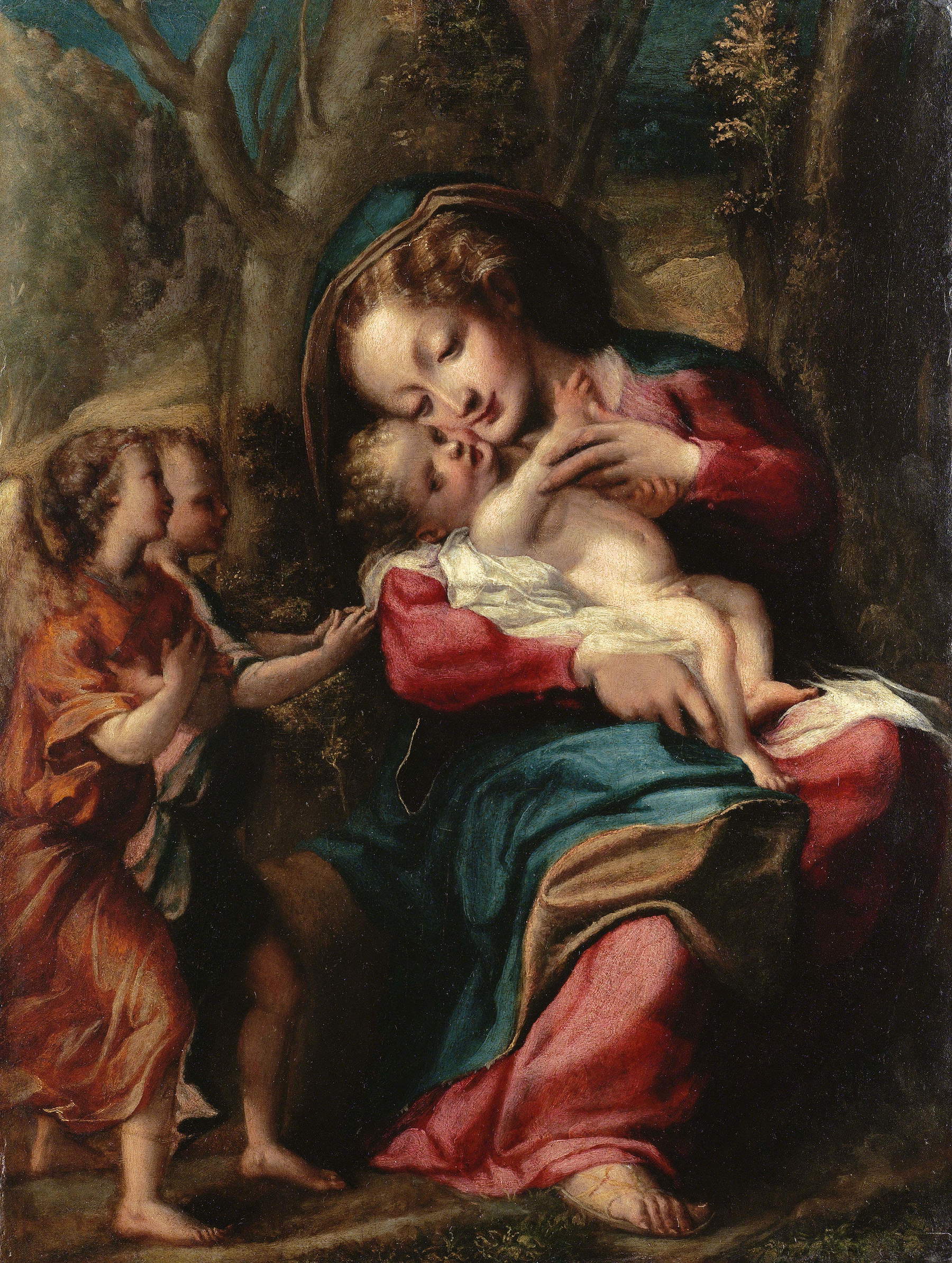
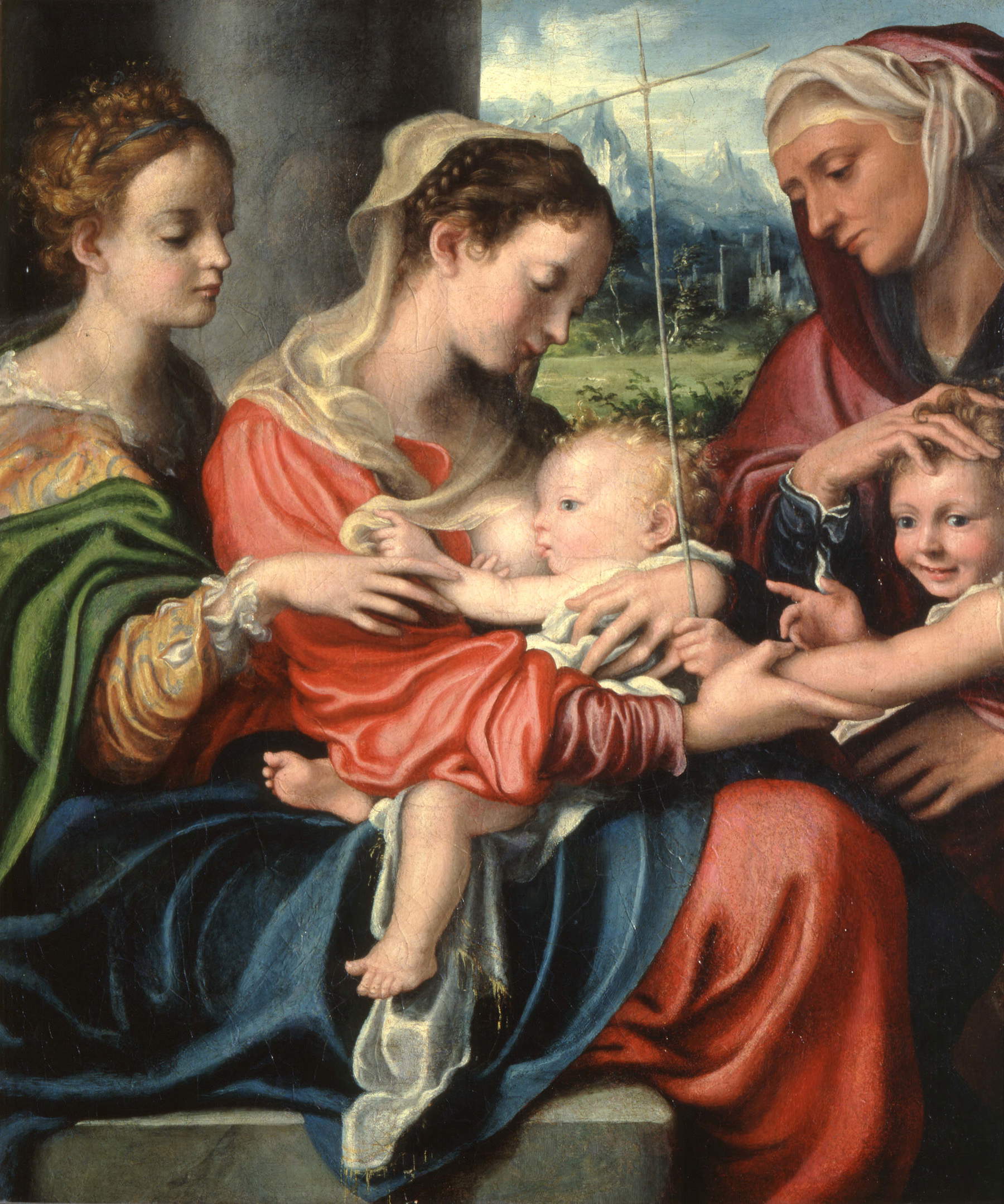
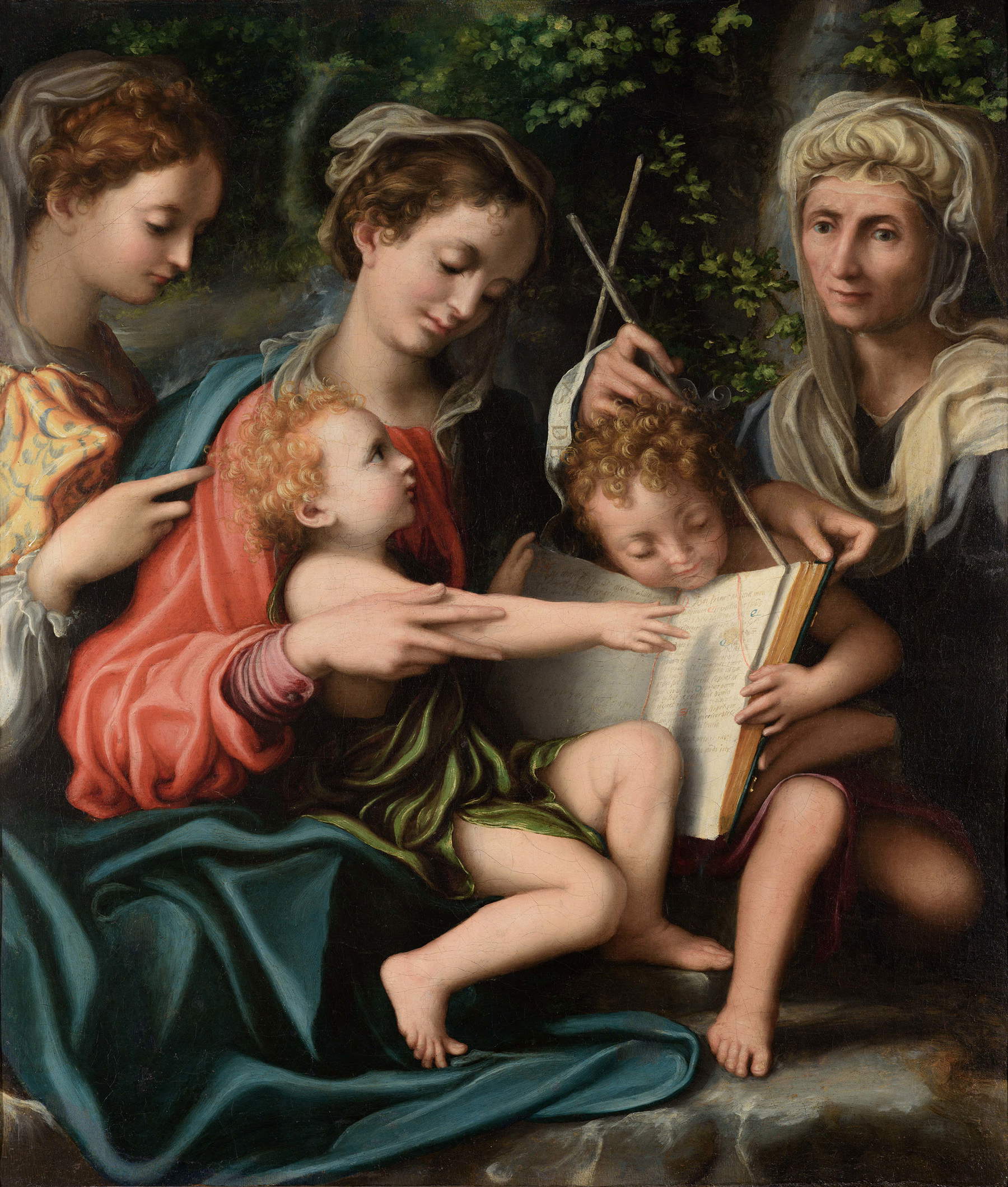
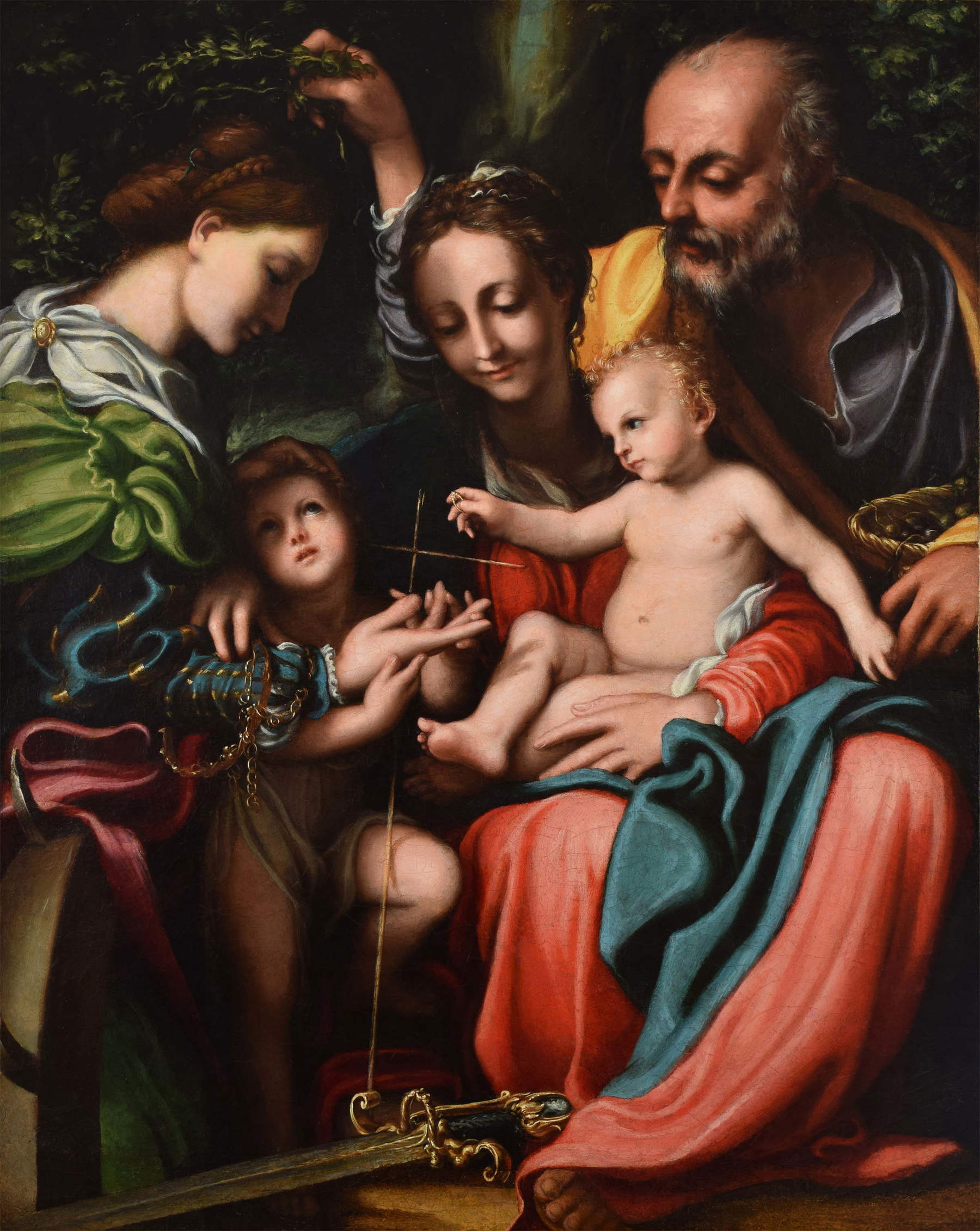
David Ekserdjian sees in the *Sposalizio* from a private collection a stepping stone toward Gandini’s full expressive autonomy, an autonomy that can be considered fully achieved in the other *Wedding*, the one in the Pinacoteca dell’Accademia Albertina in Turin—a sort of cube into which the painter almost forces the figures, all in the foreground, reserving the task of suggesting depth solely for the sword. As in Correggio’s *Wedding* at the Louvre, the Child is still the source of light, the center from which the rays that bathe the figures radiate; but while in the Louvre painting that light was blinding—“an event taking place within the scene,” as Girometti writes”— here the distance is striking: “in the Turin panel, a composed and courteous ceremony is being celebrated, where the light is distributed evenly.” And on the left, where the light does not reach, the ceremony continues through the draping of the garments—a web of unreal drapery that perhaps draws our attention even more than the sacred scene itself. The same holds true for that Saint Joseph, who is one of Gandini del Grano’s few faces—if not perhaps the only one—to retain a strong character. One might almost call it a portrait, or at least the repeated face of a model who had been studied from life, because it recurs—always in the role of Saint Joseph—in *The Marriage*, in *The City of Parma Presented to the Virgin*, and in *The Altarpiece of Saint Michael*. Thus, in thirty percent of Giorgio Gandini del Grano’s known body of work.
In the Altarpiece of Saint Michael—an extravagant, tortuous, and intellectual contraption—he appears twice: he is Saint Joseph who closes out the group of the Holy Family in the upper right corner, but he is also Saint Geminiano, who is lost in an unseemly prayer, his hands reaching out to brush the Virgin’s sacred shins—and this is not even the most striking oddity of this altarpiece, the history of which, on the occasion of the exhibition, Cristina Cecchinelli has reconstructed the history, identifying it as a work commissioned by a confraternity devoted to the Modenese saint who kneels at the feet of the Madonna. The work was created—as was already known—for the church of San Michele dall’Arco. The significance of the confraternity, combined with the symbolic references (according to Cecchinelli, the presence of Saint Joseph is not merely a completion of the Holy Family, but rather a sort of homage to the city at a time when the cult of the saint was on the rise in Parma—so much so that, in 1528, he was named as one of its patron saints), is further evidence of the high esteem in which Giorgio Gandini del Grano must have been held. And the altarpiece, as befits a work intended for such a distinguished setting, ranks among the finest works of the 16th-century Parma school, to be placed in the same lineage as Parmigianino’s works from the early 1530s—such as the *Madonna of Saint Zachariah * and the frescoes of the *Steccata*. And the altarpiece of San Michele is also perhaps the most suitable work for following Girometti as he assesses the differences between Gandini and Mazzola: if, therefore, Parmigianino “builds his painting on a conscious deformation of the canon, which generates formal unease,” Gandini “remains within the canon, working through superimpositions.” In the Altarpiece of Saint Michael—which nonetheless reveals Gandini at his most extreme—there is no trace of the unsettling elongations that distort the proportions of Parmigianino’s figures; there is no trace of physical inconsistency; there are none of his wet transparencies; nor is there that characteristic constructed, cerebral, detached elegance of his. The unease, however, remains the same; yet Gandini arrives at it by a different path, as if he had wanted to subject Correggio’s models to a slow and persistent pressure, without, however, going so far as to shatter them. Giorgio Gandini’s method is more immediate; it works through insertions, contrasts, and apparent adhesions. Take the setting, for example: the ruins of a pagan temple, of which we see a crumbling archway, an archway from which hangs a gate that is half-closed, half-open, and a solitary column that should, however, be interpreted not as an isolated element but as part of a whole—as it will be in Parmigianino’s *Madonna with the Long Neck * or in Girolamo Mazzola Bedoli ’s *Altarpiece of the Conception *. Those curious stalactites hanging above St. Michael’s head, likely studied by observing the effects of a melting candle. Saint Michael weighing souls as if they were little dolls: the one posed like a crouching Venus, already on the scale’s pan, and that sort of naked crucifix being handed to him by his winged assistants. The Child helping the angel by holding up the balance pan. The saint’s nonchalance as he attends to his weighing while crushing that cartoon-like dragon—as Denis Ton observes—which writhes beneath the spear. The dragon’s wings, which resemble the leaves of an exotic plant. Saint Geminian’s crozier, which seems to float in the air—and then we see that it is held by the cherub in the foreground, who clings nonchalantly to the saint’s cope. The other cherub holding the book against the light, the one seen in profile with curly hair that almost looks like the head of a Roman coin, the Virgin’s misaligned legs, the unnatural twist of Saint Geminian, turned as if he wants to flee. There isn’t a single thing that’s normal.
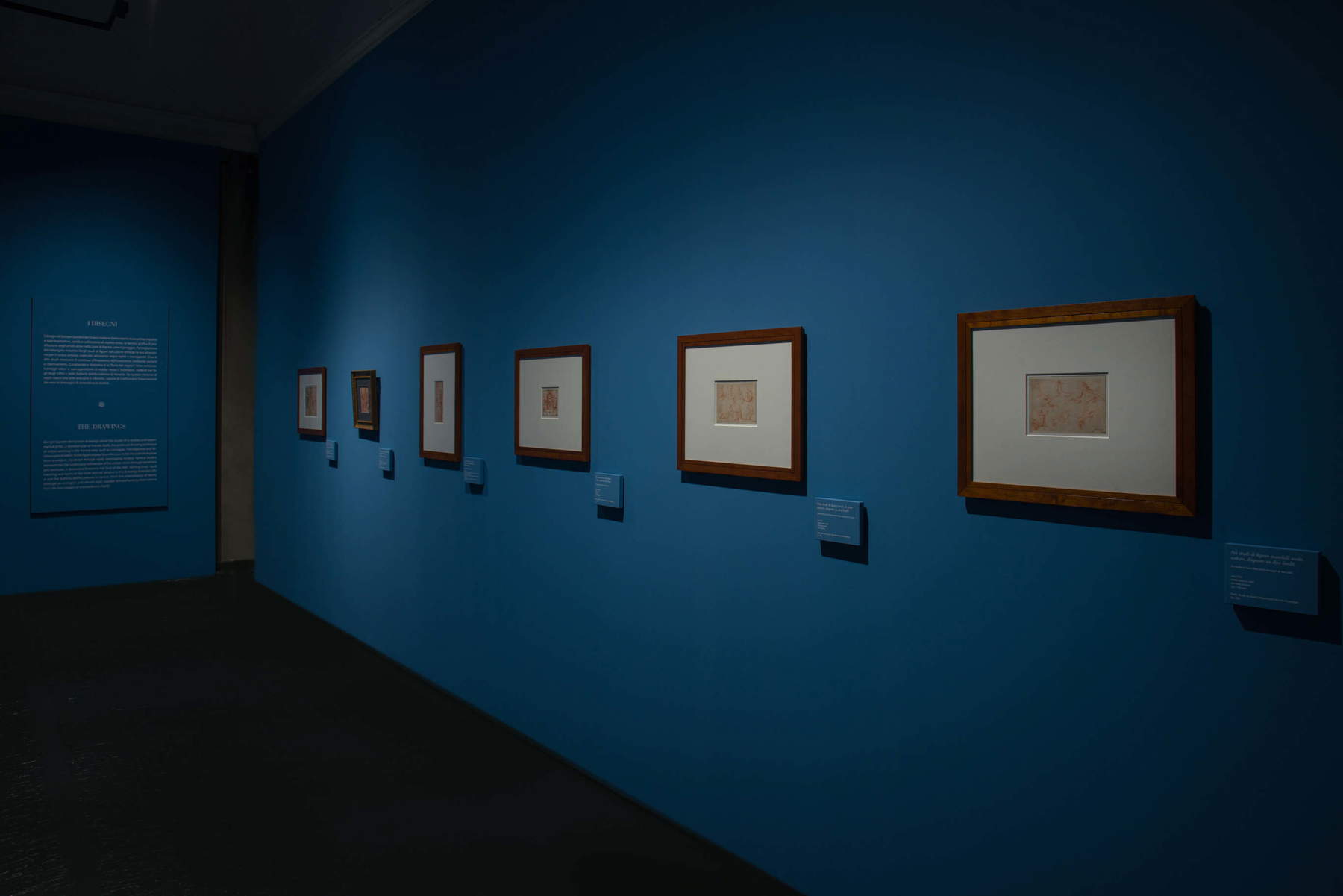
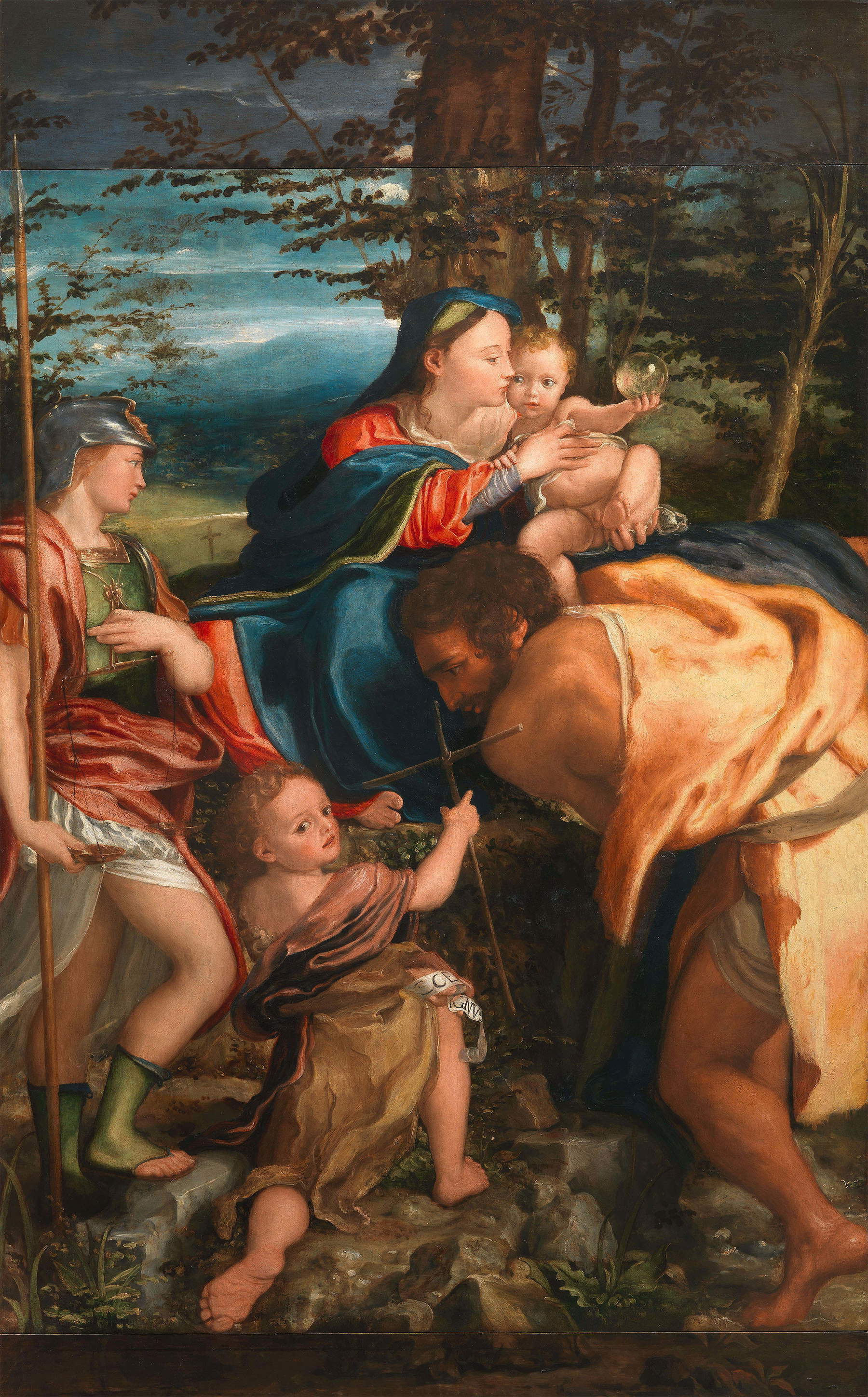
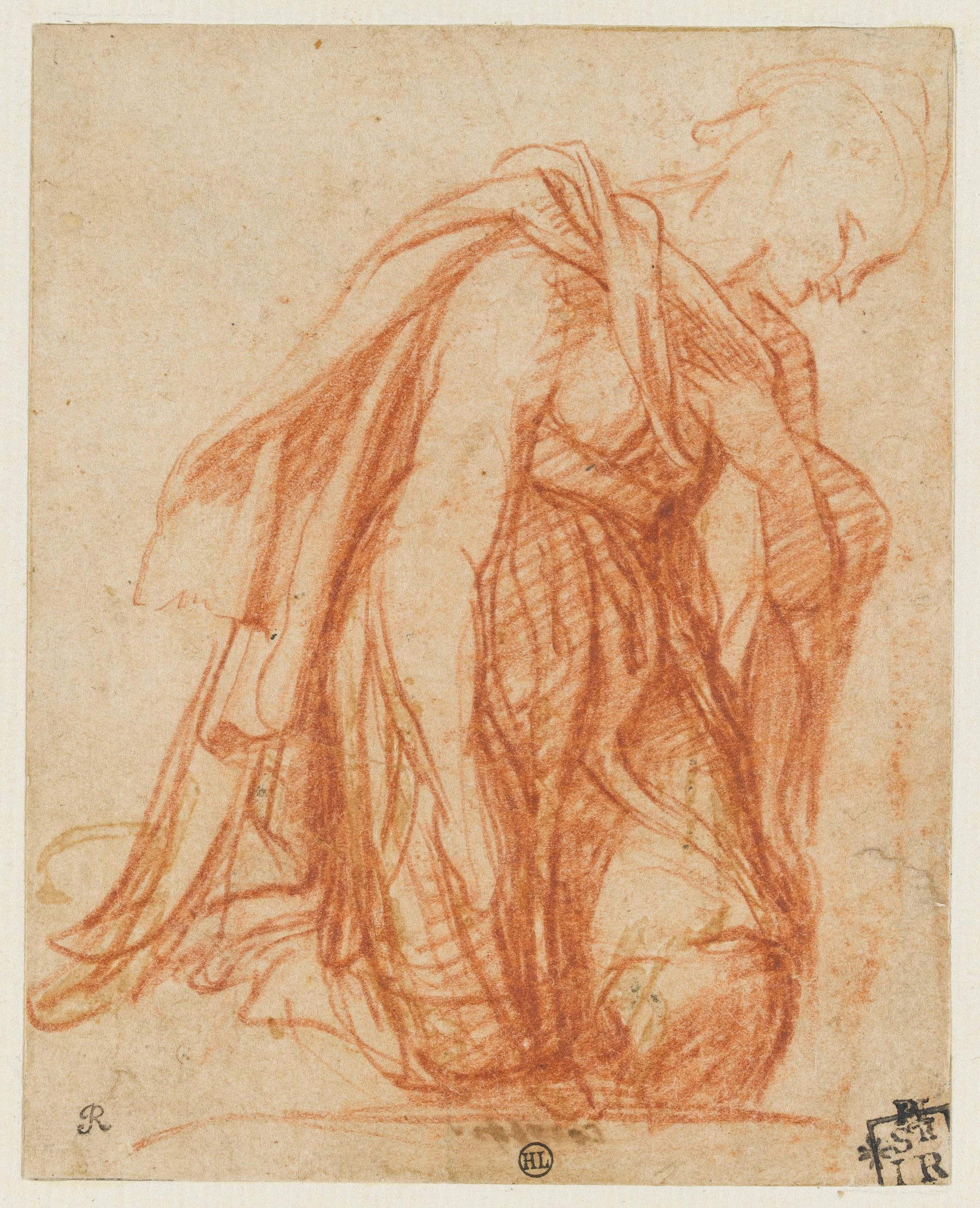
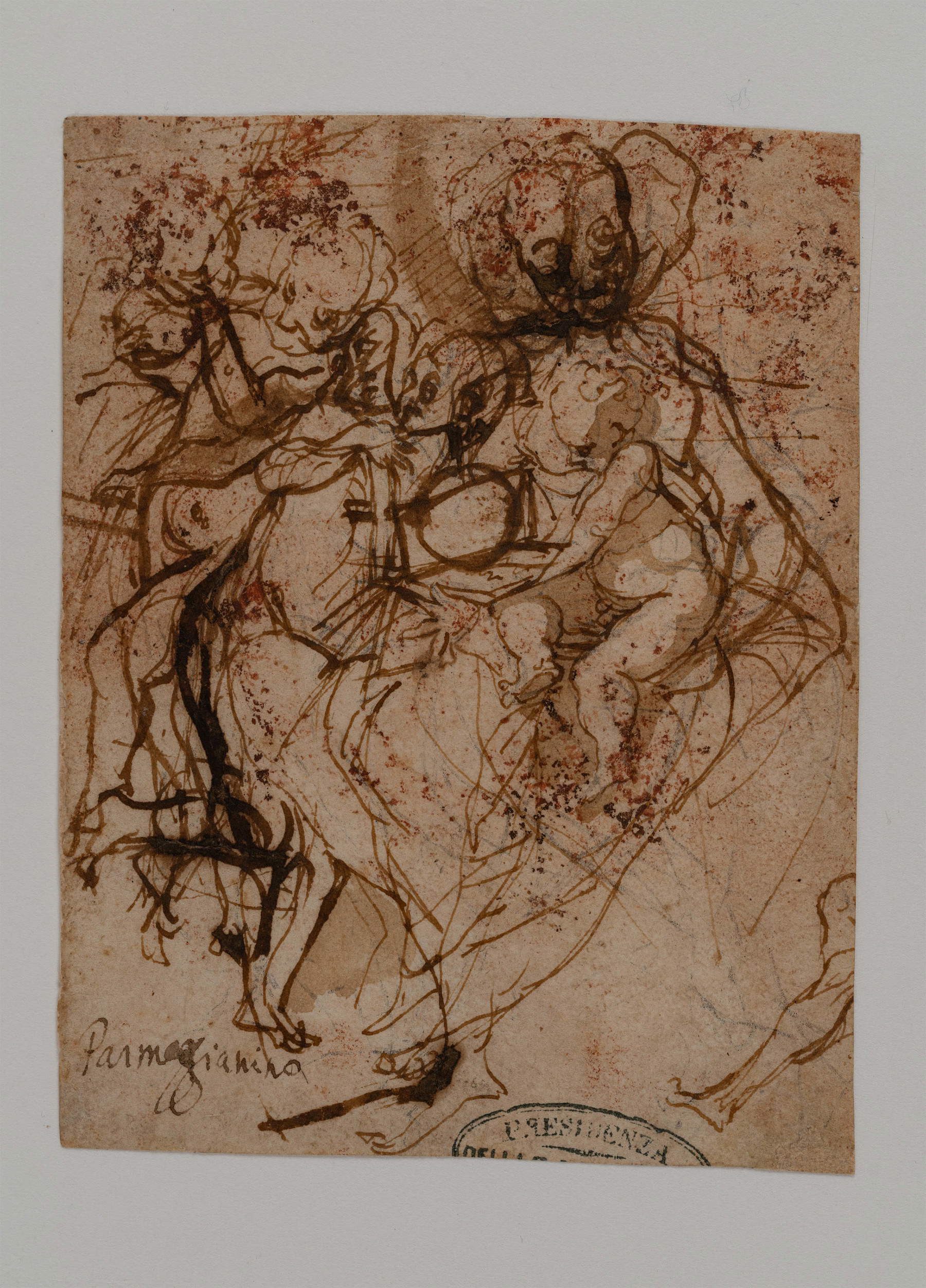
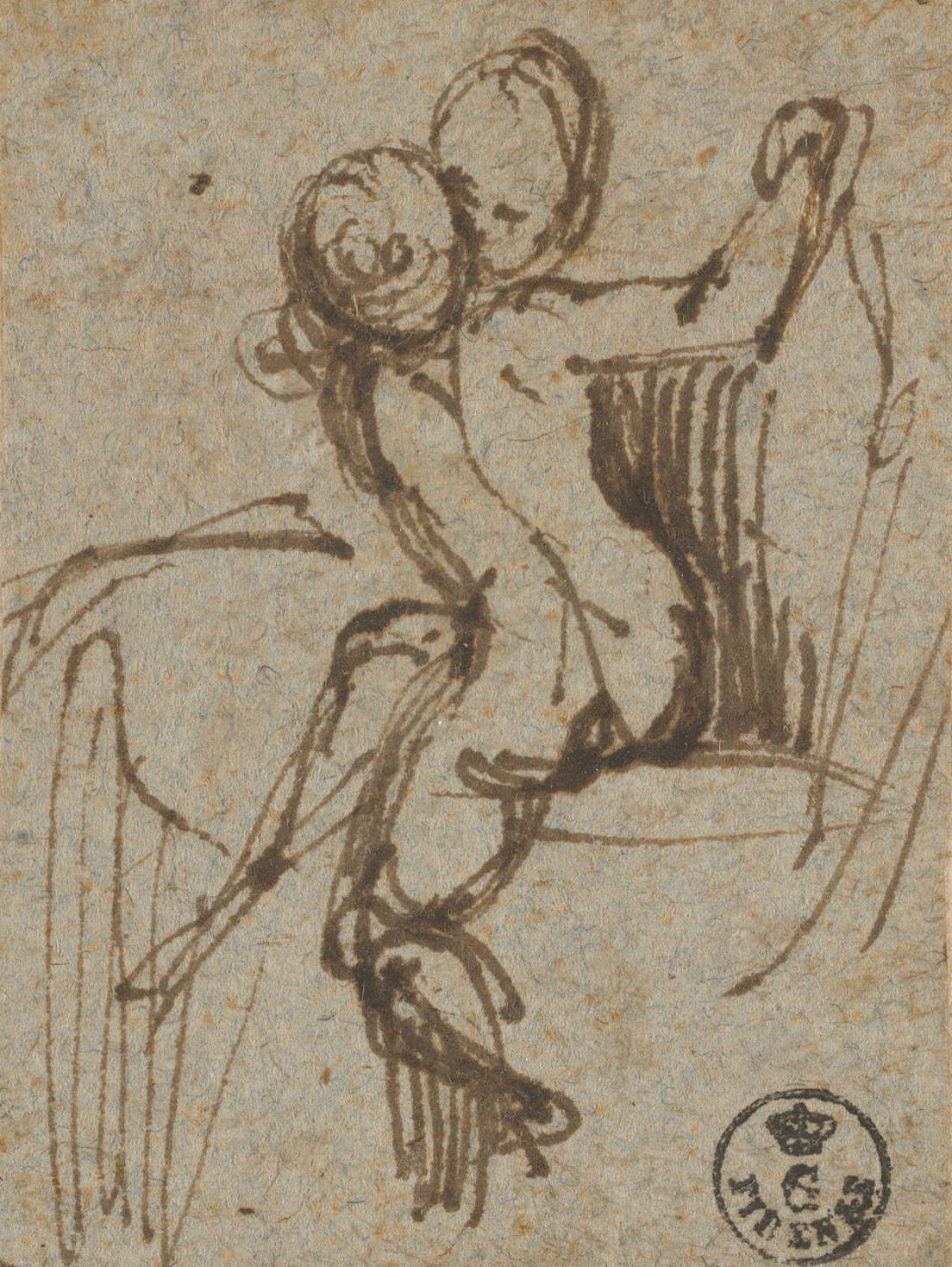
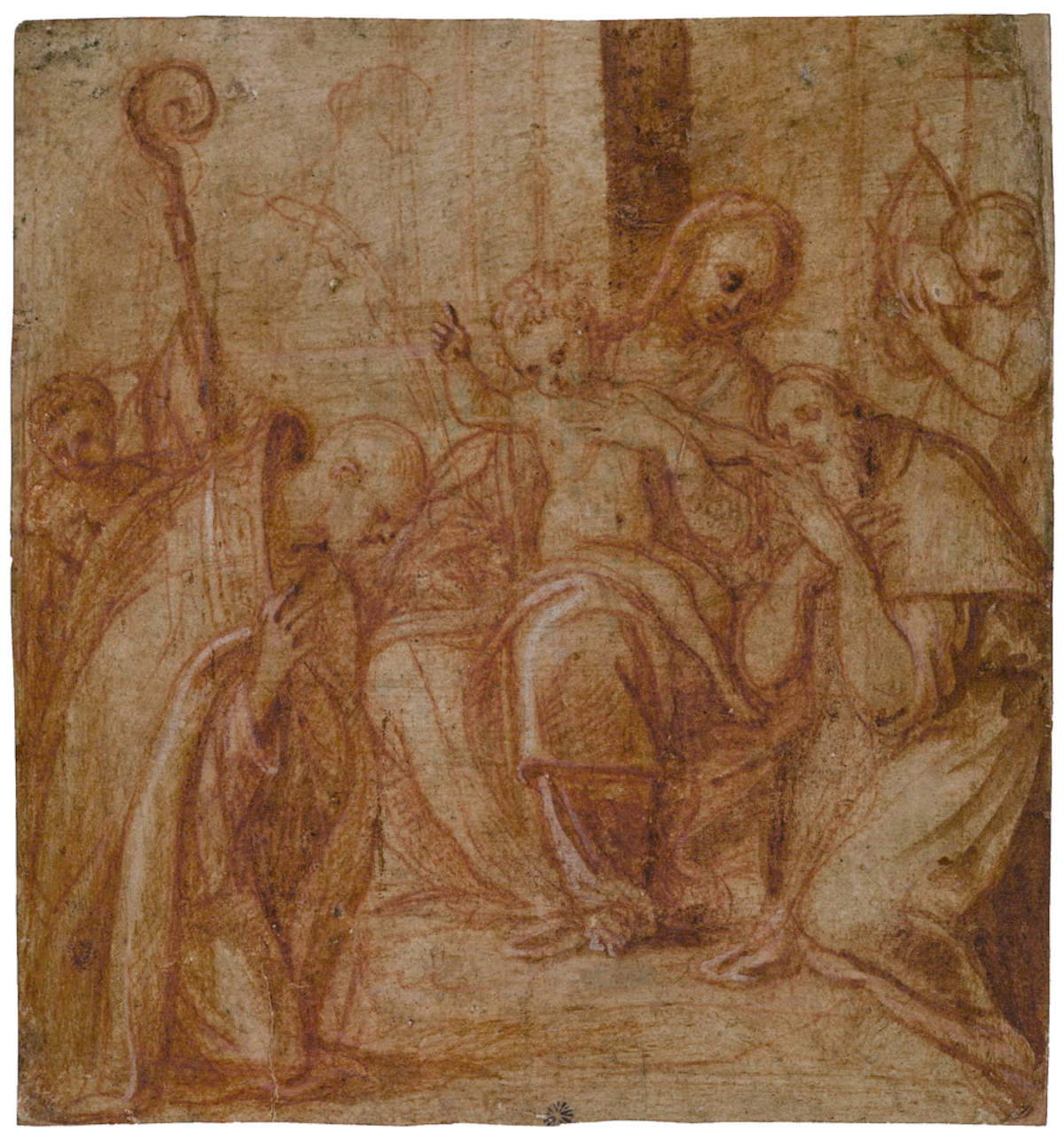
Something similar could be said of the altarpiece in the Uffizi, where the massive figure of Saint Christopher occupies nearly half the lower register and prostrates himself in that manner—almost as if to support the Child holding the glass globe in his hands—to prevent Christ from being depicted twice: the tension here lies between the group of the Virgin—which revives that Correggio-inspired model never entirely abandoned—and the unusually monumental scale of the other figures, a sign of the experimentalism Gandini must have attempted at the peak of his career, which also coincided with its final moments. And his drawing must have been no less experimental: the known body of work consists of a handful of drawings which, in the total absence of signed sheets, have been attributed to him using the most obvious method. That is to say, one starts with a sheet that can undoubtedly be traced back to a finished painting and proceeds by process of elimination. Roberta Serra, who has studied his work in pen and pencil, writes of a “frenzy of the line”: a nervous, feverish, he sketched his figures with overlapping lines and constant corrections that were meant to help him find the best form for the idea he had in mind, but which ultimately imbued those sheets with an unconscious, enduring energy. This is almost always the case: it is clearly evident in the female figure at the Louvre, which is an early sketch for Saint Catherine from a private collection; it is even more apparent in the group of figures at the Gallerie dell’Accademia in Venice, which seem to be a study for a Holy Family; and it is evident in the two figures at the Uffizi, an embrace that almost mimics a classical relief, and it is evident even in the sketches that foreshadow more elaborate compositions, sacred conversations, and altarpieces that were never realized. Those sheets thus become a unique repository of vitality.
Right from its title, *The Enigma of a Master in the Footsteps of Correggio*, the exhibition does not promise more than it can deliver: Giorgio Gandini del Grano is an enigmatic artist and is destined to remain so. What is certain is that much research has been conducted around this enigma; the work of those who had begun to piece together the contours of this figure has been updated (among others, we can mention the aforementioned Godi and Cirillo, Konrad Oberhuber, Mary Vaccaro, and Andrea Muzzi), firsthand information has been uncovered, and everything has been brought together for the first time so that, through comparison, ideas might become a little clearer. The exhibition on Giorgio Gandini del Grano is one of rare intelligence and even rarer scope—an extraordinary opportunity to explore an artist whom we now see somewhat less shrouded in the Po Valley mists that have enveloped him until now and that still partly obscure the bold brilliance of his inventions. And it demonstrates that our public museums, when given the opportunity to do so, can conduct exemplary research of the highest caliber: the exhibition at the National Gallery of Parma belongs to this now-uncommon breed of exhibitions, to these increasingly rare occasions.
Nine works, one copy, and a few drawings: in recent months, Parma has brought together nearly everything we have by Giorgio Gandini del Grano. And if we are to believe David Ekserdjian—who, with the authority that comes from having spent a career reconstructing, perhaps more thoroughly and effectively than anyone else, the complexities of 16th-century Parma, considers the existence of “unknown paintings by Gandini waiting to reemerge from their hiding places” to be implausible, there is reason to believe that, even if the aim of resolving the questions raised by this enigma has not been fulfilled (nor will it ever be), the bulk of this artist’s profile is now firmly established. Certainly, no final word can be spoken on the matter, barring highly unlikely upheavals: like all artists, Giorgio Gandini del Grano will remain forever incomplete.
Warning: the translation into English of the original Italian article was created using automatic tools. We undertake to review all articles, but we do not guarantee the total absence of inaccuracies in the translation due to the program. You can find the original by clicking on the ITA button. If you find any mistake,please contact us.