





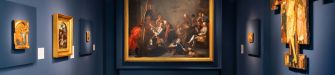
Every year in Italy, there are countless exhibitions—in almost incalculable numbers. In each exhibition, there is almost always something interesting: an adventure, a comparison of works and styles, or even the chance to see how different curators approach the same artist. This, however, does not make them all indispensable—far from it. We could certainly do without many of them. In a landscape of exhibition overload, where the majority of shows have abandoned any pretense of scholarly inquiry and research in pursuit of financial gain, positioning themselves merely as forms of entertainment, I find the exhibitions that emerge far from the recognized and well-trafficked hubs of the exhibition circuit—in smaller, peripheral contexts—with the aim of highlighting some local aspect or one of their famous sons, to be incredibly fascinating and stubbornly romantic. Of course, one might object that they are often the result of civic pride—at times bombastic, parochial, and self-congratulatory. Nevertheless, even if these aspects are just around the corner—as is the accusation of provincialism, which in Italy carries the weight of a definitive, unappealable verdict—they often remain valuable projects, as they maintain a connection to the geographical and cultural context from which they arise, a connection essential to understanding their rationale. The exhibition *Gino Severini: Modernity as Dialogue*, on view at the MAEC in Cortona through November 1, 2026, belongs to this category.
Gino Severini (Cortona, 1883 – Paris, 1966) was an artist who, at times, played a pivotal role in certain developments in early 20th-century Italian art; yet his recognition among the general public does not match the historical significance he held. The exhibition in Cortona succeeds in conveying this importance through a show that, while modest in scale, is built around significant loans from institutions such as the Centre Pompidou in Paris,the Estorick Collection in London, the Museo del Novecento in Milan, and the Vatican Pinacoteca. We can only imagine the organizational (and financial) efforts it must have taken for an institution with undoubtedly limited resources to bring together works scattered throughout Europe and Italy, including the gigantic *La danse du Pan-Pan à Monico*. The effort, however, paid off, as it enabled curators Daniela Fonti and Margherita d’Ayala Valva to trace the artistic journey of an artist like Severini, on the sixtieth anniversary of his death, and to recognize his role as a mediator between cultures and artistic languages, capable of moving with ease between radically different contexts—such as the rural Tuscan countryside and the glittering streets of Paris—while making significant contributions to movements like Futurism and Cubism, and bridging the gap between modernity and tradition, the yearning for abstraction, and engagement with sacred art.
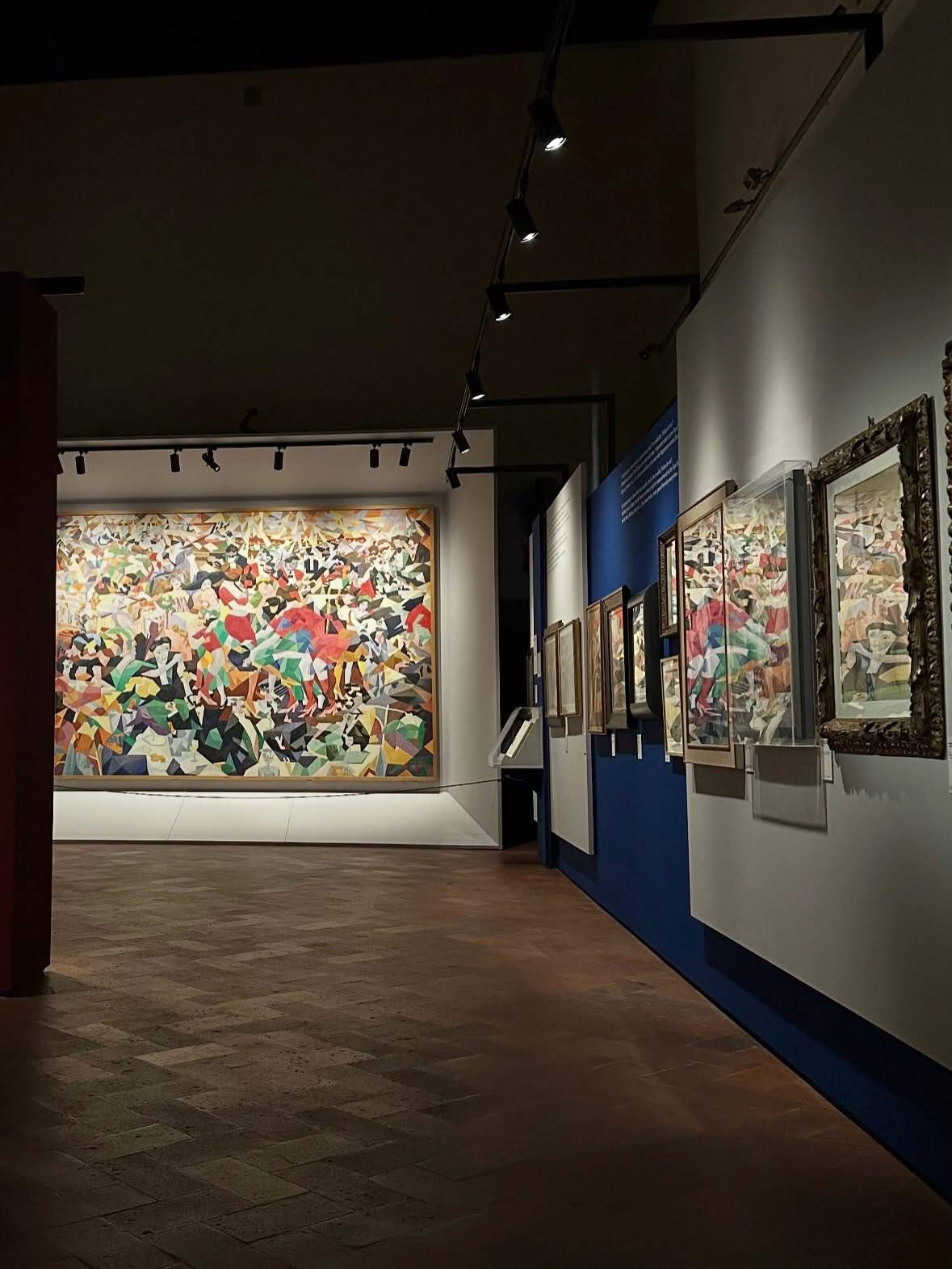
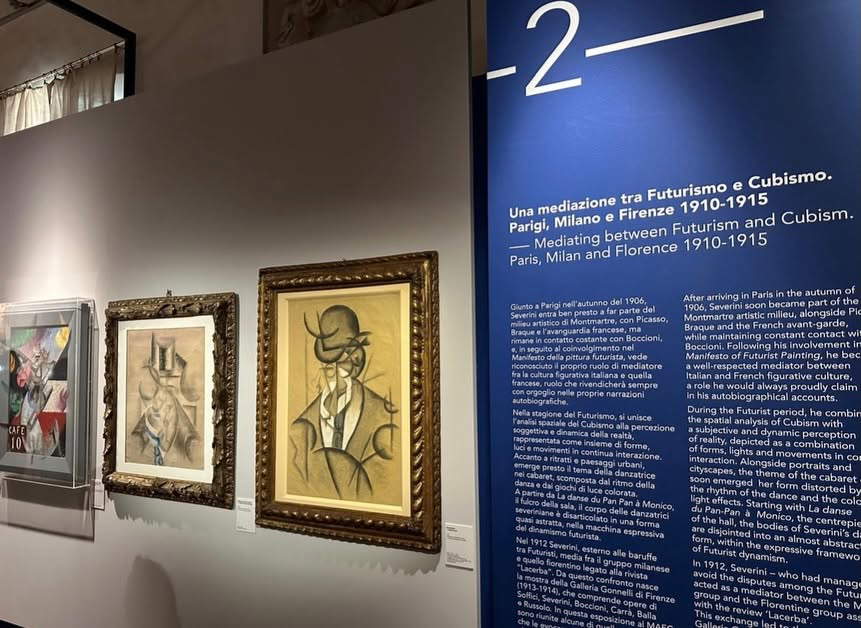
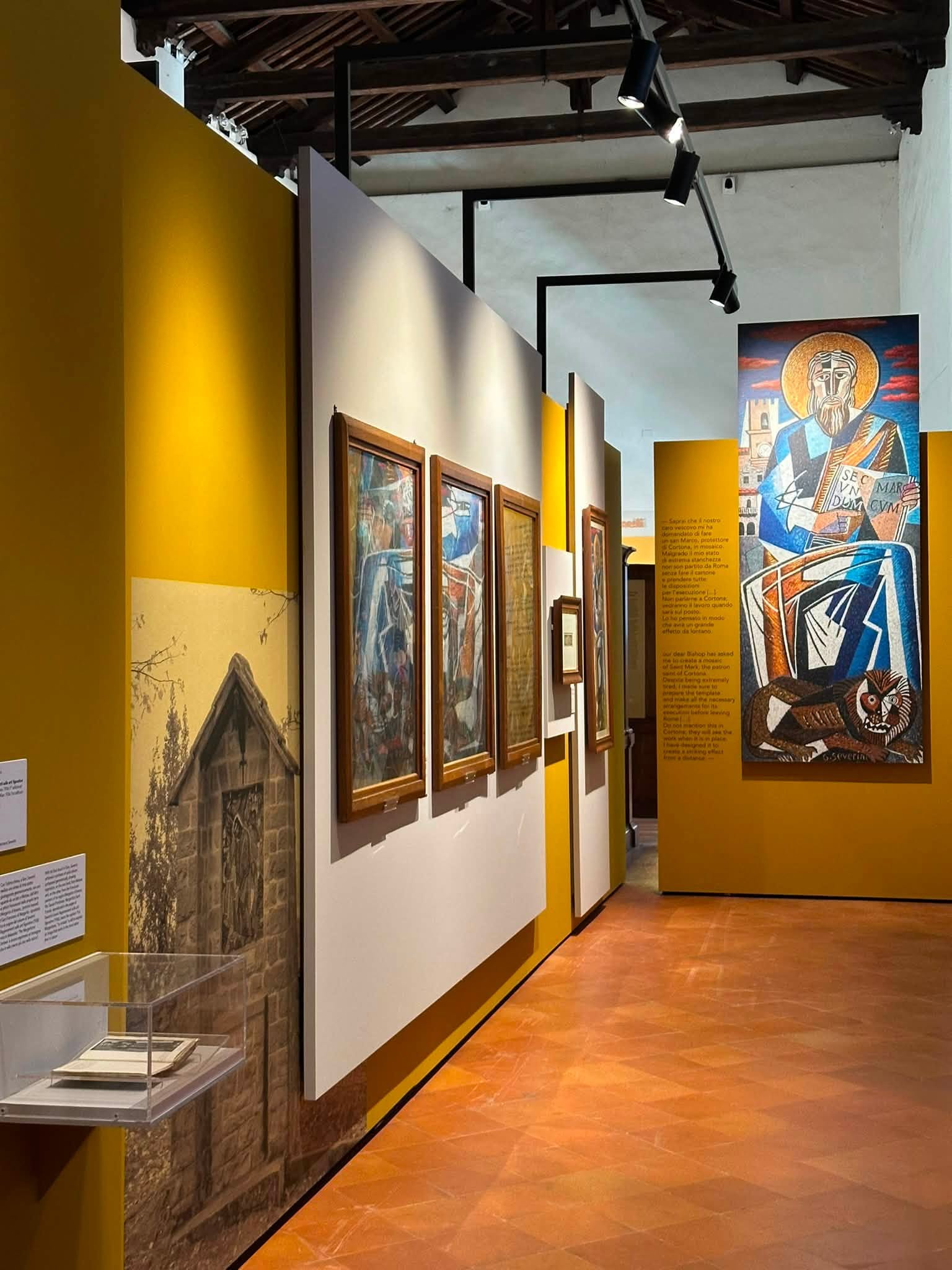
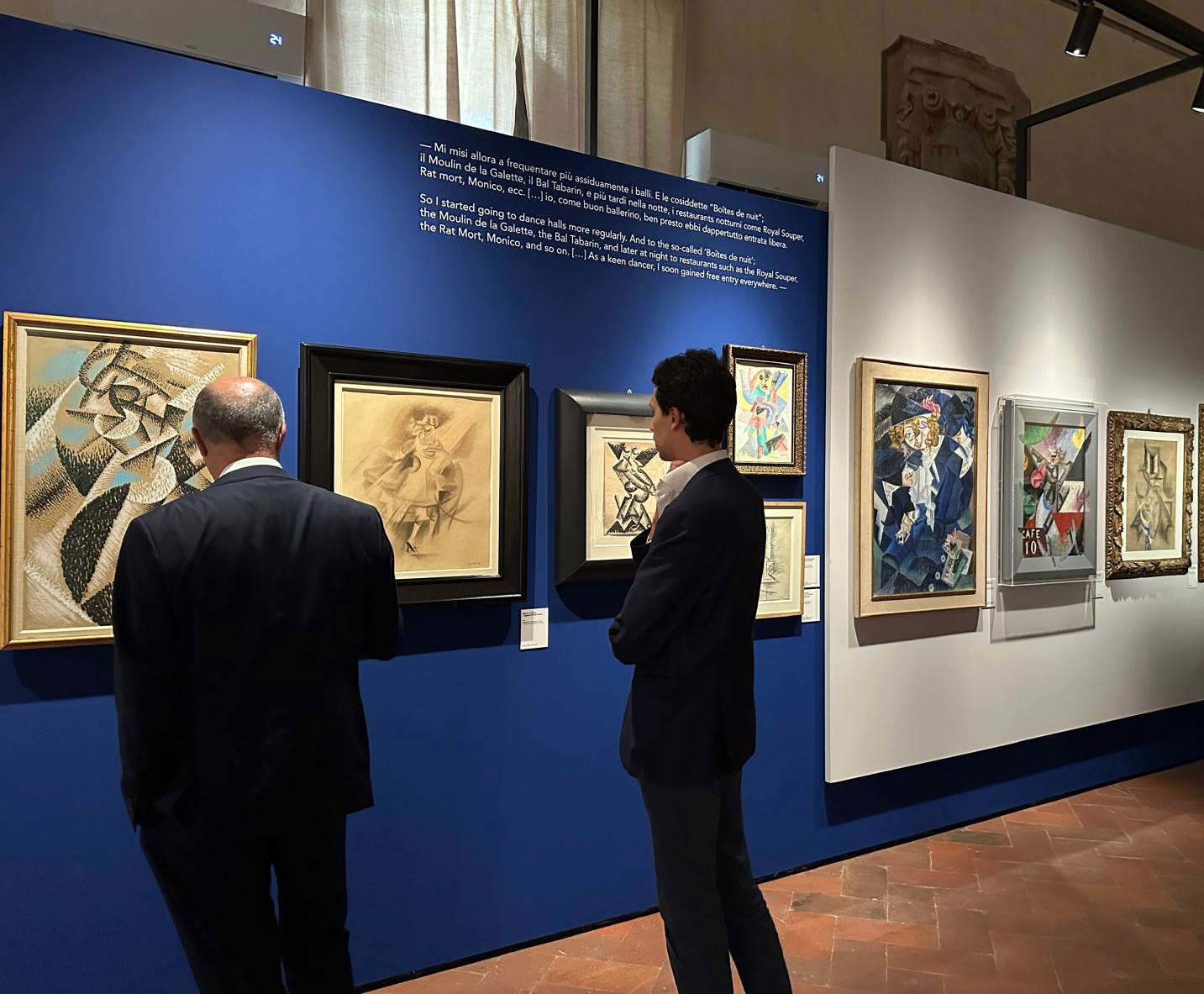
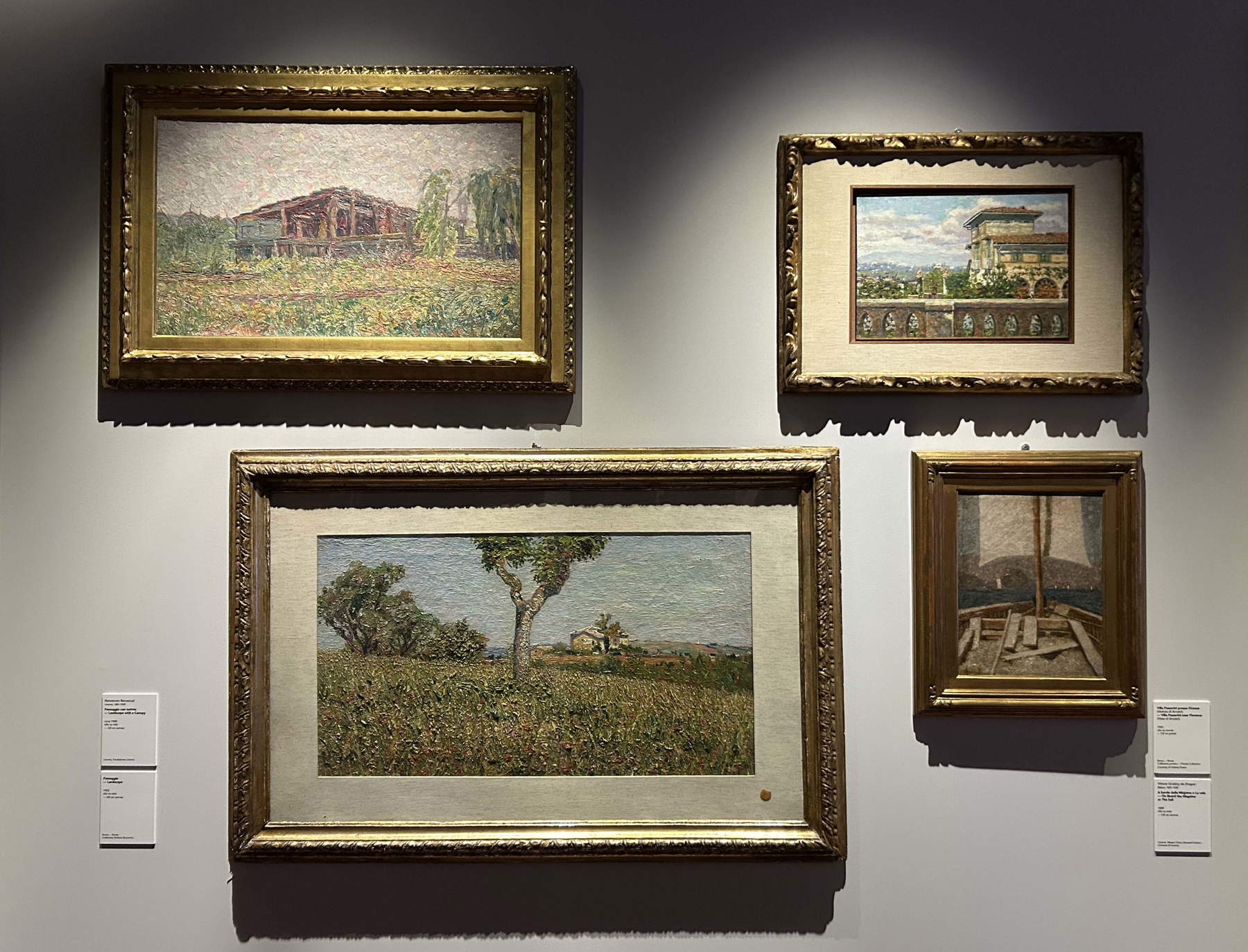
This ongoing exploration of art’s expressive possibilities is presented in the Cortona exhibition not only in comparison with the artists of his time—who were his colleagues and friends (such as Balla, Boccioni, Picasso), but also with the masters of the past, represented here by the “Madonna Enthroned with Child and Angels” by the Lucchese Master, on loan from the Galleria dell’Accademia in Florence, and the *Saint Francis of Margaritone*, from the Museum of Medieval Art in Arezzo, but also through the numerous worksfrom the Etruscan Academy, permanently on display in the museum, including works by Luca Signorelli and Etruscan bronzes of which Severini sent photographs to Picasso.
And it is precisely in Cortona, his hometown, that this exhibition becomes not only valuable but indispensable. The works of Severini and his cultural milieu , exhibited here at Palazzo Casali—home to the MAEC, which already houses a significant collection donated by the artist himself—maintain a constant dialogue with the surrounding landscape. It is precisely in Cortona where Severini is not merely the artist celebrated within the halls of a museum, but an authentic genius loci—the kind you might imagine encountering in Piazza Garibaldi, gazing intently at the splendid countryside stretching all the way to Lake Trasimeno. Everything is imbued with his memory: the streets and alleys speak of the places where he was born and raised; the churches that house great masterpieces by Tuscan artists such as Signorelli, Beato Angelico, Bartolomeo della Gatta, and Pietro da Cortona—whom the young artist studied—all the way to those places where he chose to leave his mark. Here you’ll find the Via Crucis, which winds through a long stretch of the town, with the preparatory cartoons housed in the Diocesan Museum, and the extraordinary mosaic created for the Church of San Marco, along with other works preserved in the churches, as well as his tomb. It is precisely because of this richness that the exhibition can—and indeed must—be viewed in conjunction with the region, its history, and its spaces.
Trained in Cortona, practically as a self-taught artist, Severini remained there until he was sixteen; it is therefore no surprise that his early works drew on the lessons of the Macchia school, which taught the young artist a certain aptitude for rendering reality, without rhetoric or other artificial devices. This was fertile ground on which Divisionist painting took root—a style Severini was able to learn from his teacher Giacomo Balla, sharing this training with Umberto Boccioni, whom he had known since his arrival in Rome. Moreover, he may have already been exposed to this style of painting in Tuscany through Benvenuto Benvenuti, a student of Vittore Grubicy de Dragon—both of whom are represented in the exhibition with a painting. But what stands out in this first section are not so much the landscapes as the portraits, such as *La Bohémienne*, *Portrait of My Mother*, *Portrait of My Father*,*Self-Portrait *, and *Girl in Blue*. These works demonstrate how, within just a few years, Severini managed to bring together diverse artistic approaches, cultivating an interest in portraiture that would accompany him throughout his life. Here, the post-Macchiaioli tradition, Divisionism, and an openness to a more modern approach to portraiture—based on chromatic harmonies and compositional geometry—coexist. Rather than settling for safe solutions, he seems to be seeking what can take him far from academic conventions, through choices that are as formal as they are thematic.
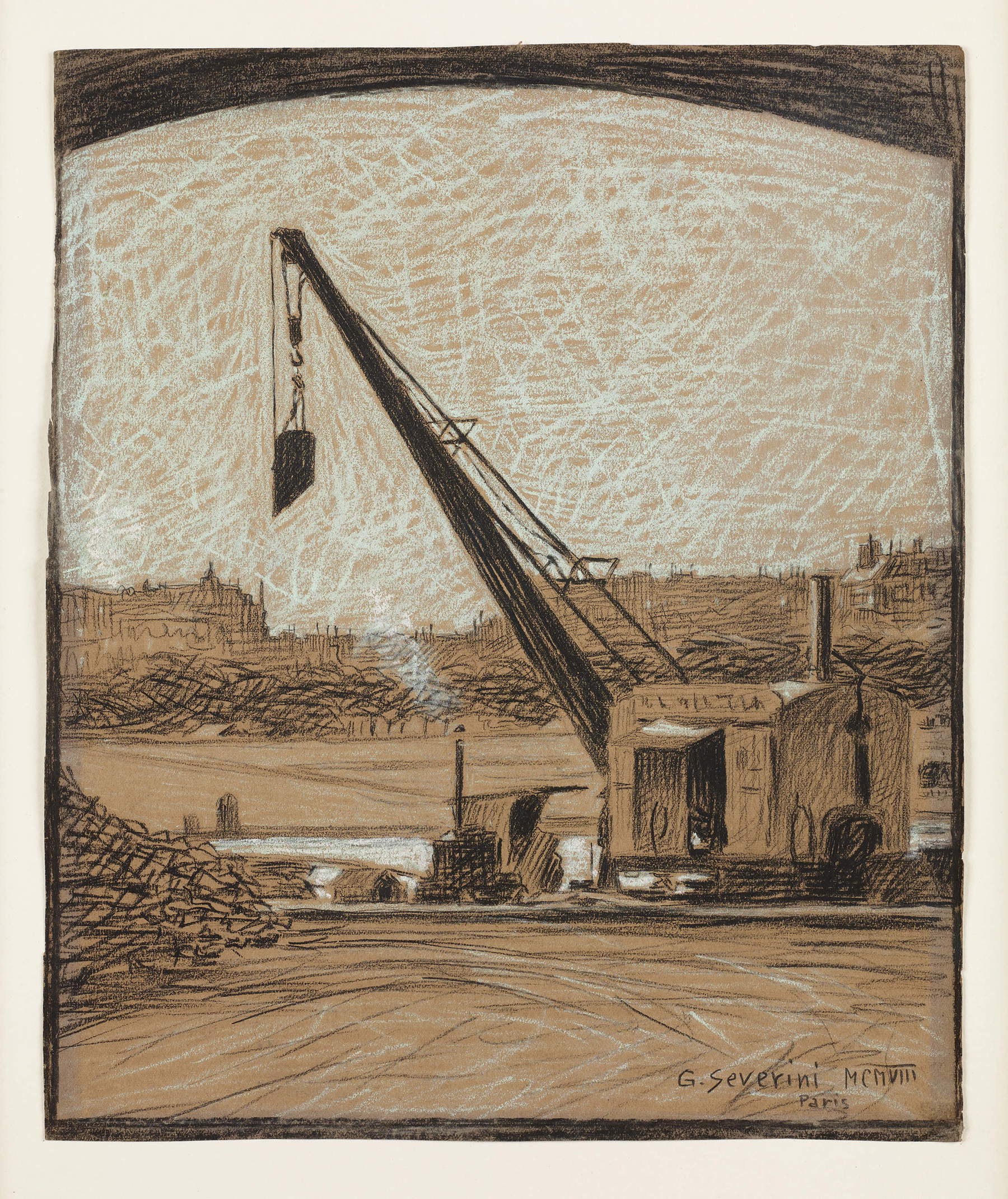
Also of interest is the comparison between the two drawings—both from the Pinacoteca del Divisionismo in Tortona—Severini’s *La gru* and Boccioni’s *Casa in costruzione*, which reveal the two artists’ interest in societal transformations. Here, the construction site is still viewed as a newsworthy event, but a few years later, in Boccioni’s work, the same theme will erupt into an explosion of force, movement, and color in *The Rising City*. The works of the two artists also suggest how deeply socialist and Marxist ideas had taken root in them, though without translating into a sustained program of social realism in painting. But the artistic turning point came in 1906, following his move to Paris—the same year that saw another great Tuscan arrive in the City of Light, Amedeo Modigliani, with whom Severini formed a friendship, as he recounts in his autobiography. However, unlike his fellow Livorno native, Severini did not completely sever his ties with Italy; rather, he continued to serve as a bridge—a role that proved fundamental to the development of Futurism.
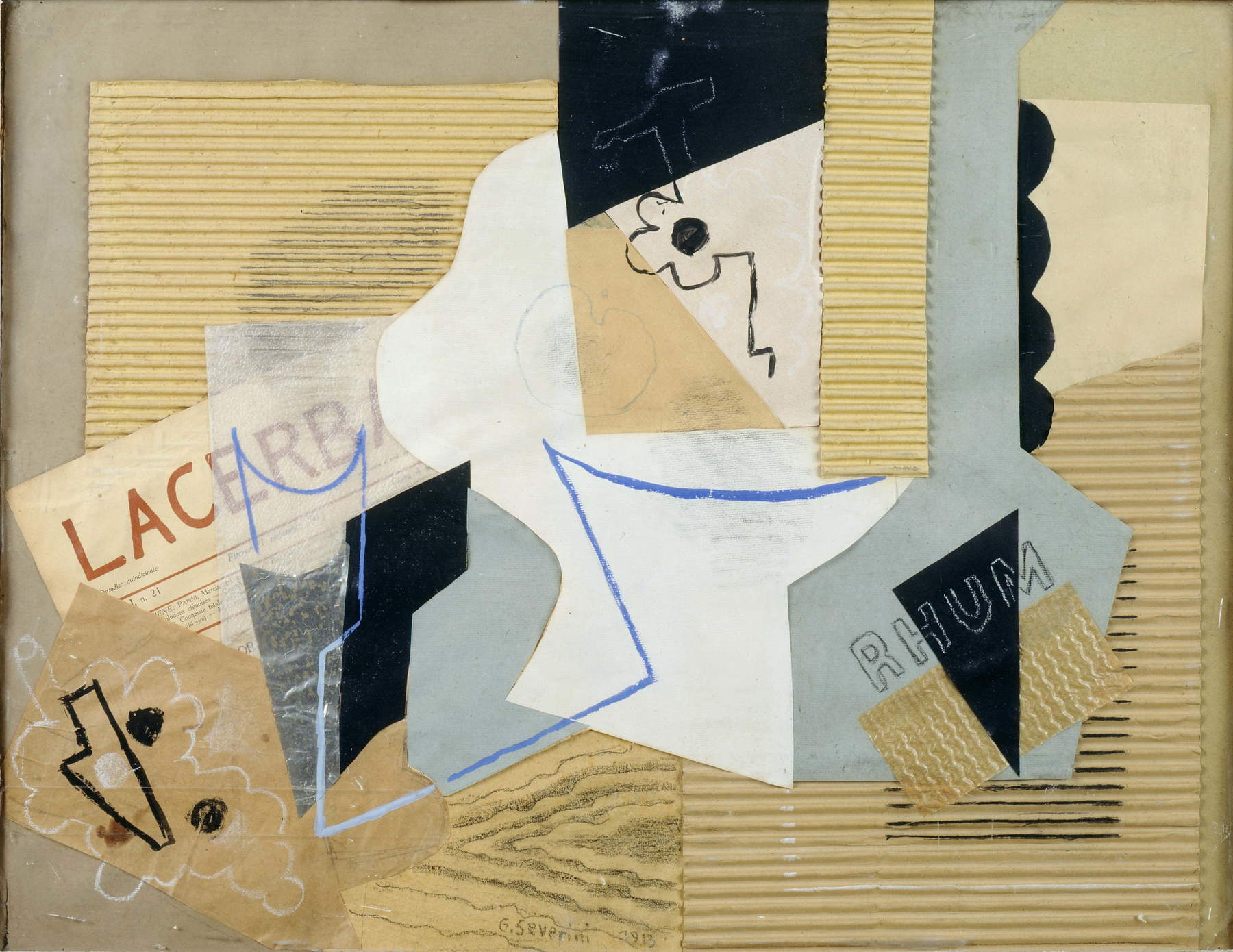
The exhibition is not organized as an anthology but allows visitors to trace the Cortona-born artist’s journey through his experiences and themes. Gino Severini was certainly one of the leading figures of early Futurism, but he consistently maintained a more independent and less dogmatic stance than the others, allowing his art to incorporate a deliberate and unhidden fascination with Cubism. But Severini’s role as a mediator also emerges between two Italian movements: the Milanese Futurist group and the Florentine group associated with the magazine *Lacerba*, whose contributions converged in the Florentine exhibition at the Galleria Gonnelli in 1913–14.
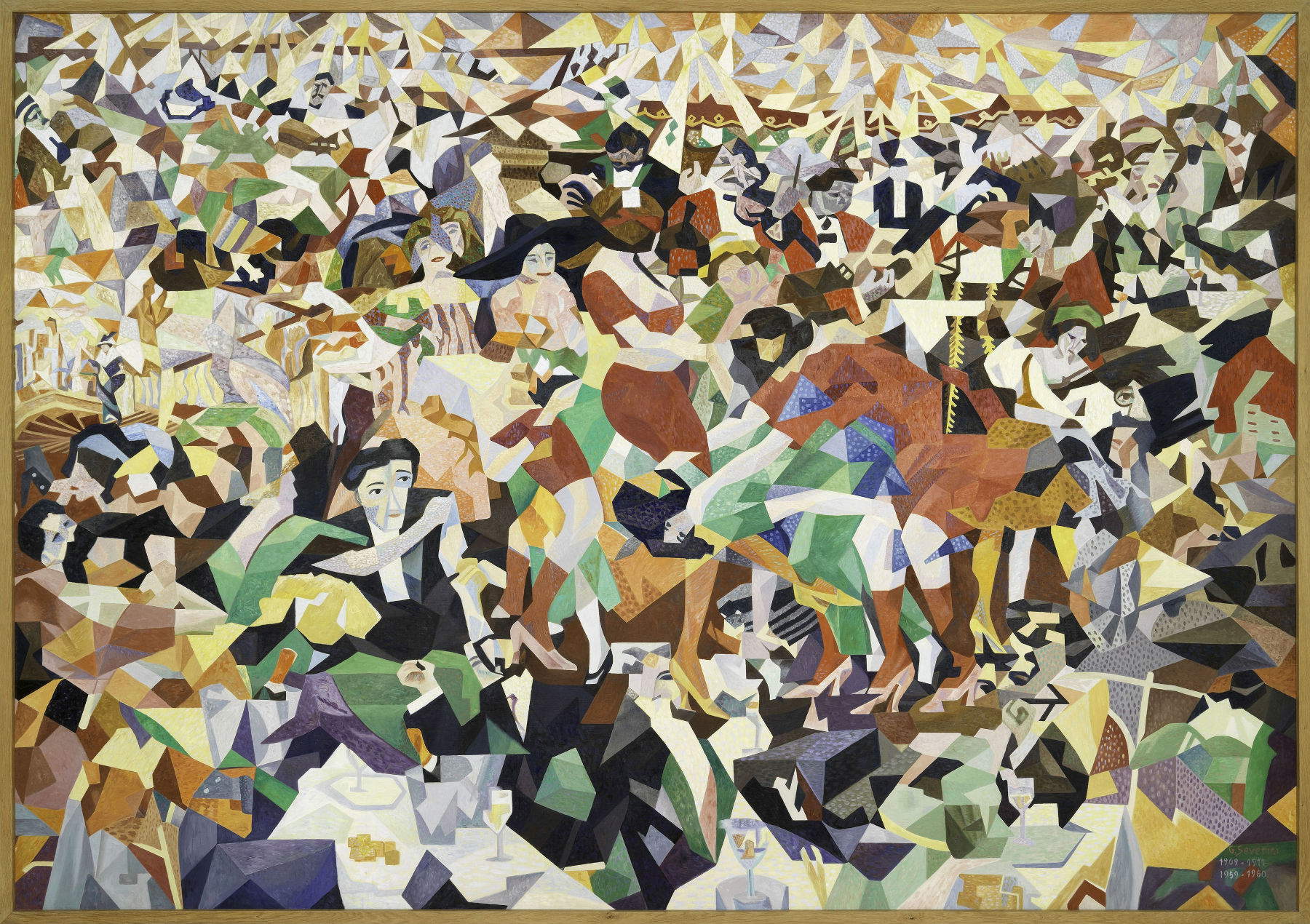
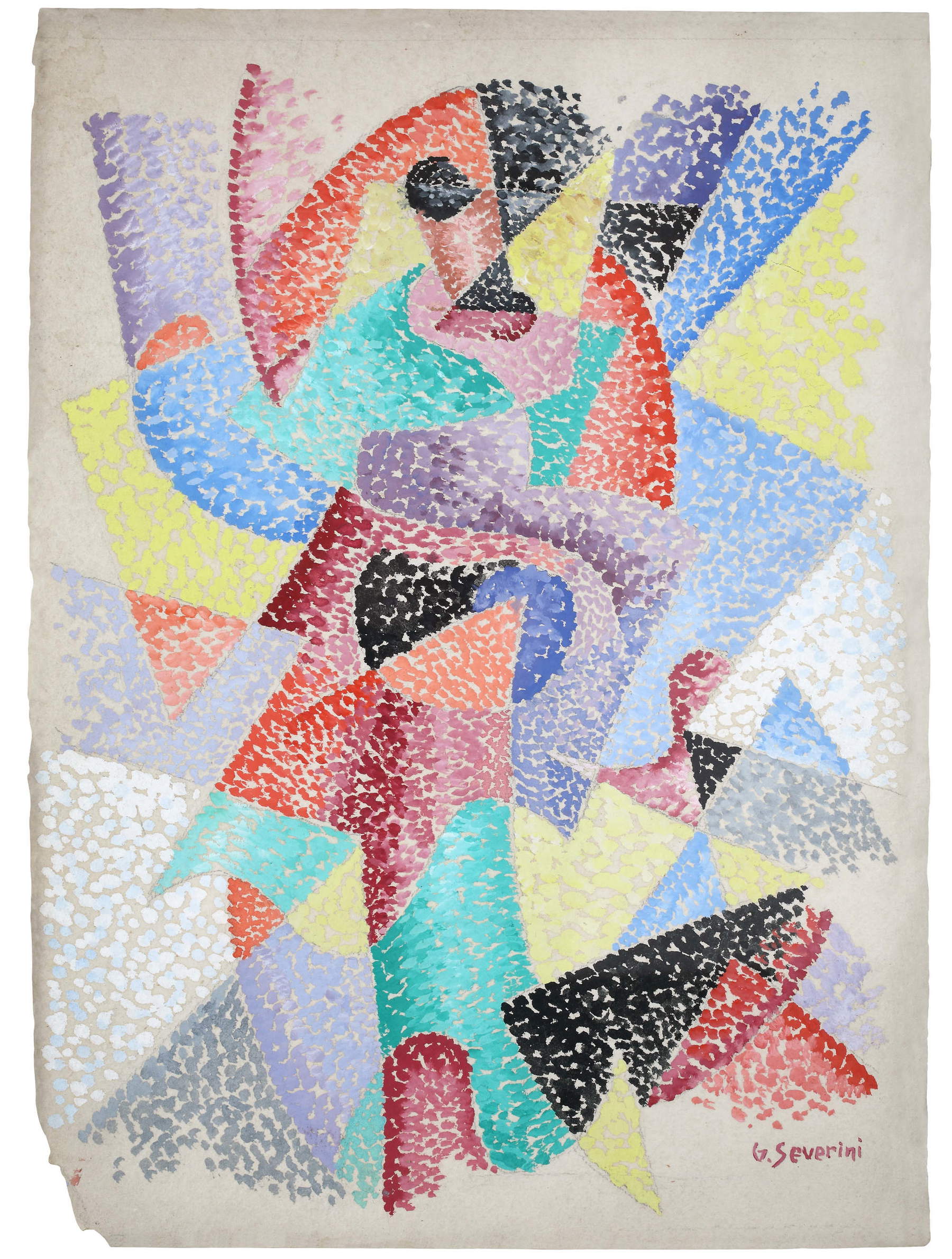
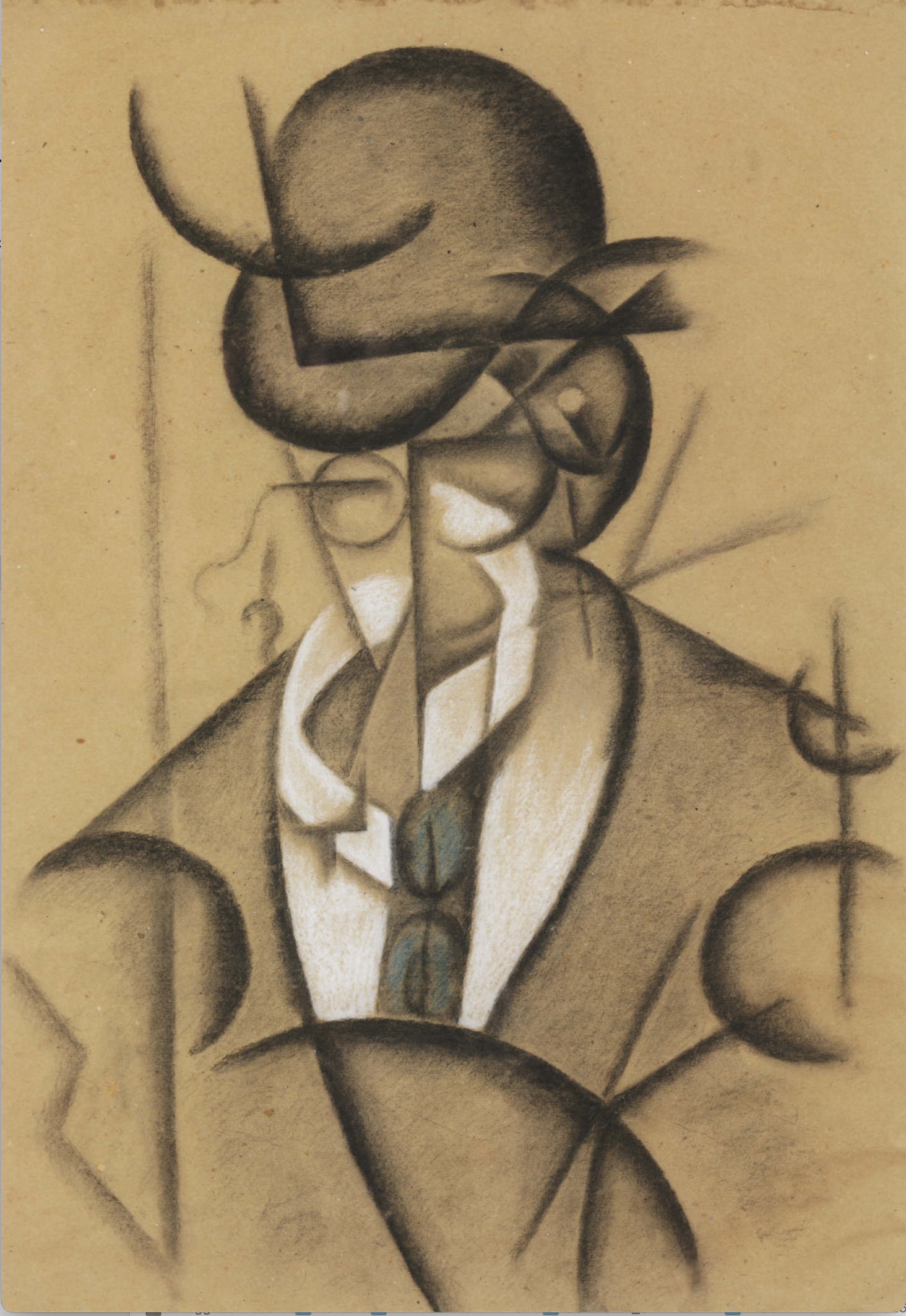
Whether in works such as the famous *Self-Portrait* at the Castello di Rivoli—where his image as a dandy with a monocle and bowler hat is constructed through curves, interpenetrating planes, and few distinctive features—or *Danseuse* (*Ballerina + Sea*), where the dancing figure is rendered in forms, signs, and colors that express the energy of movement—demonstrating full adherence to the stylistic elements promoted by the group led by Marinetti—it is in the great masterpiece *La danse du Pan-Pan à Monico* that Severini reveals how he manages to keep one foot in both avant-garde movements. The work, painted in 1911 and sold in Germany—where it disappeared, likely destroyed during the war—was repainted by the now-elderly artist from Cortona between 1959 and 1960 and depicts a crowded dance scene in a Parisian venue. Through a kaleidoscope of colors, an extremely dynamic composition unfolds, where each element relates to the next, yet stripped of the masculine and heroic restraint characteristic of Futurist works; likewise, the movement is not the violence of planes that twist and fold, but the harmony of a gigantic carnival.
The subsequent sections demonstrate how Severini was consistently able to explore the expressive and formal capabilities of art, rejecting the idea of an artist who proceeds linearly from one experience to another, but instead capable of simultaneously maintaining even very diverse artistic approaches. His interest in various art forms and their applications, his exploration of the golden ratio, the example set by the ancient masters, his desire to engage with sacred art by renewing its symbolism, mural and mosaic art and their dialogue with space are just some of the directions his artistic exploration took.
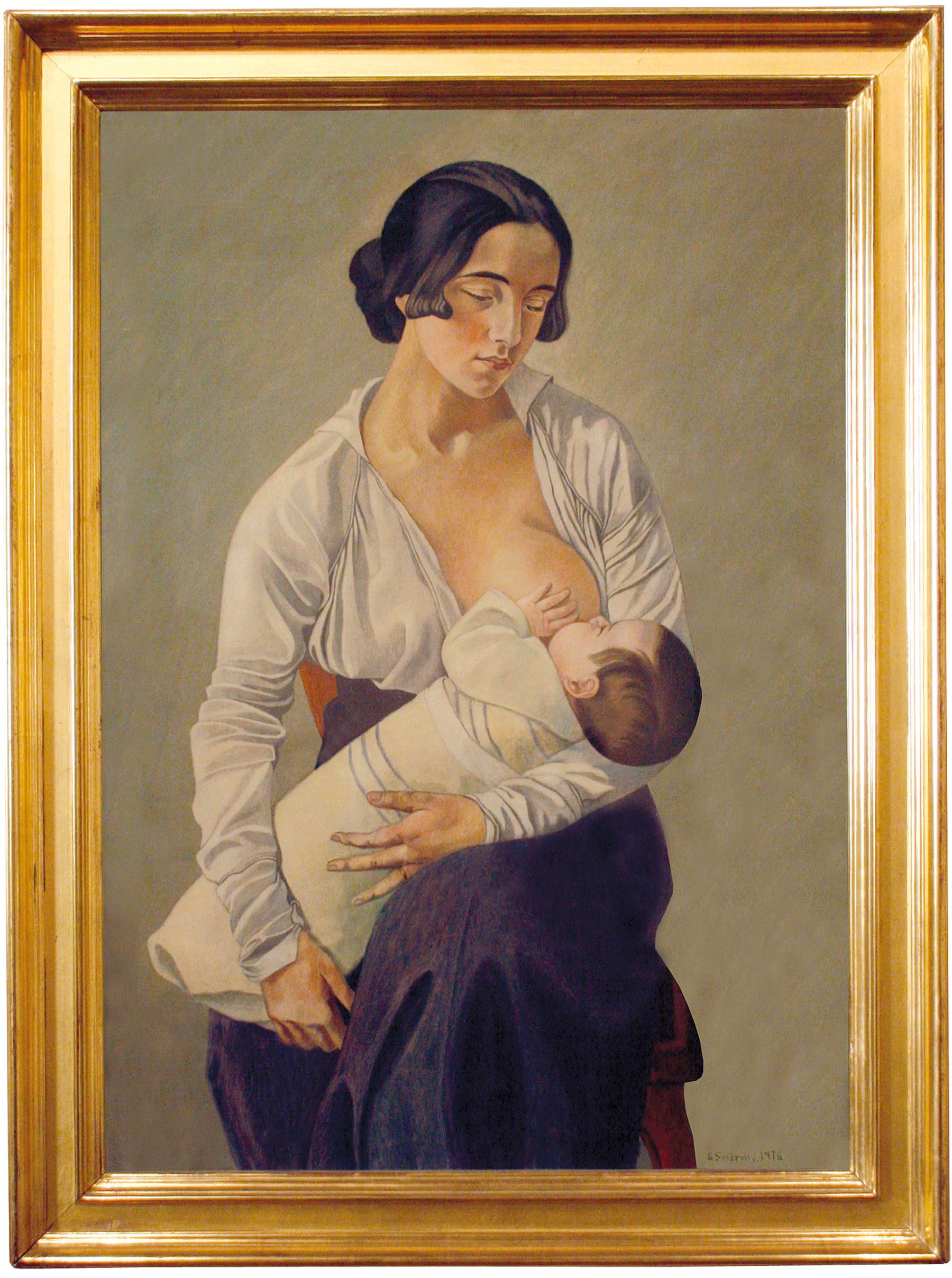
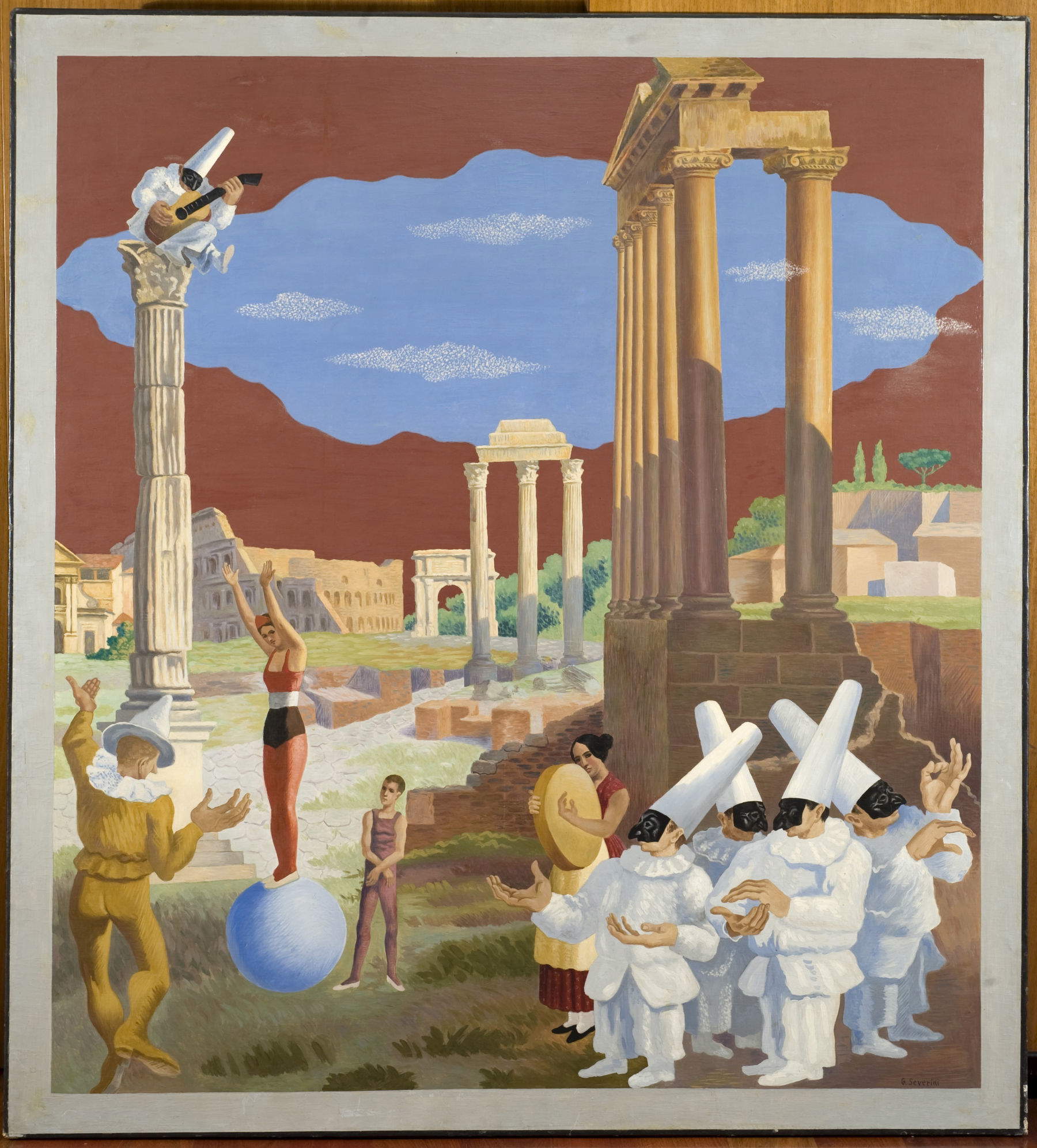
In the 1916 painting *Maternità*, housed in Cortona, his wife Jeanne, holding their young son Antonio, is depicted in a fully figurative manner—composed and austere, monumental and solid like the Madonnas of antiquity—and the work likely stands as one of the key pieces foreshadowing his subsequent return to order. A comparison with the other *Maternità* on display here—the 1920 version, in which the woman holds her daughter Gina in her arms—shows how this artistic exploration could lead to different outcomes: here, brighter color schemes dominate, while the figure and space are governed by a system of golden ratios. The sketches and studies on display allow us to trace the work that preceded the painting, revealing that search for a rule that Severini would later expound upon in his 1921 treatise *Du cubisme au classicisme *. Painting and writing proceed hand in hand, in an ambitious attempt to ground the composition in verifiable relationships. This quest would also lead him to clash with artists and theorists in his circle, demonstrating just how far from peaceful the dialogue evoked by the title actually was. This drive toward construction finds another fertile ground in decoration and in the relationship with architecture. The masks of the Commedia dell’Arte—from the frescoes at Montegufoni to the panels for the Parisian home of the merchant Léonce Rosenberg—allow Severini to arrange figures and settings as elements of a scene. In works such as *L’Équilibriste*, characters and ruins belong to different eras, juxtaposed in an artificial, suspended space. Theater thus enters painting through its subjects, but also as a means of organizing the composition, foreshadowing theatrical experiences that would emerge later.
It is, however, in his religious work that the dialogue between artistic languages becomes most challenging and significant. After his return to the faith in 1923, Severini tackled the challenge of giving sacred art a modern form in the churches of French-speaking Switzerland. Sketches, outlines, and studies reveal a process of exploration that encompasses iconography, techniques, and the relationship with the building itself. In Semsales, where he claimed to have painted a Cubist church, he encountered resistance and misunderstanding, which, however, did not halt the project. Here, geometry engages with the function of images and their ability to speak to a community.
In this section, the juxtapositions with ancient works take on particular significance. The Madonna by Maestro Lucchese, the Saint Francis by Margaritone d’Arezzo, and the mosaic of the Praying Virgin at the MAEC illustrate the ground on which Severini sought a tradition to question and put to the test, tracing his roots even beyond Giotto to Byzantine models. From the Swiss projects, the exhibition finally returns to the Via Crucis and the mosaic of St. Mark, works that lead the viewer back through the streets and churches of Cortona. In the stations of the Via Crucis, the expressive power does not seem to be the same as that sought in the Swiss churches, and at times the geometric abstraction appears to become merely an exercise in style. Finally, it is worth noting that this rich exhibition is accompanied by a catalog featuring new studies dedicated to the painter, demonstrating that it is still possible to organize exhibitions that serve as a meeting point between entertainment, engagement with the local context, and scholarly research. In conclusion, one might say: an exhibition that is a feast for the eyes, but also for the mind and the heart. We thus discover how Cortona preserves the traces of an artist who, navigating European modernity, continued to search tirelessly within his own origins for tools to understand it and give it form. And the exhibition *Gino Severini. Modernity as Dialogue is an excellent opportunity to rediscover a figure who may have been more reserved than others of the early 20th century, but is no less interesting for it.

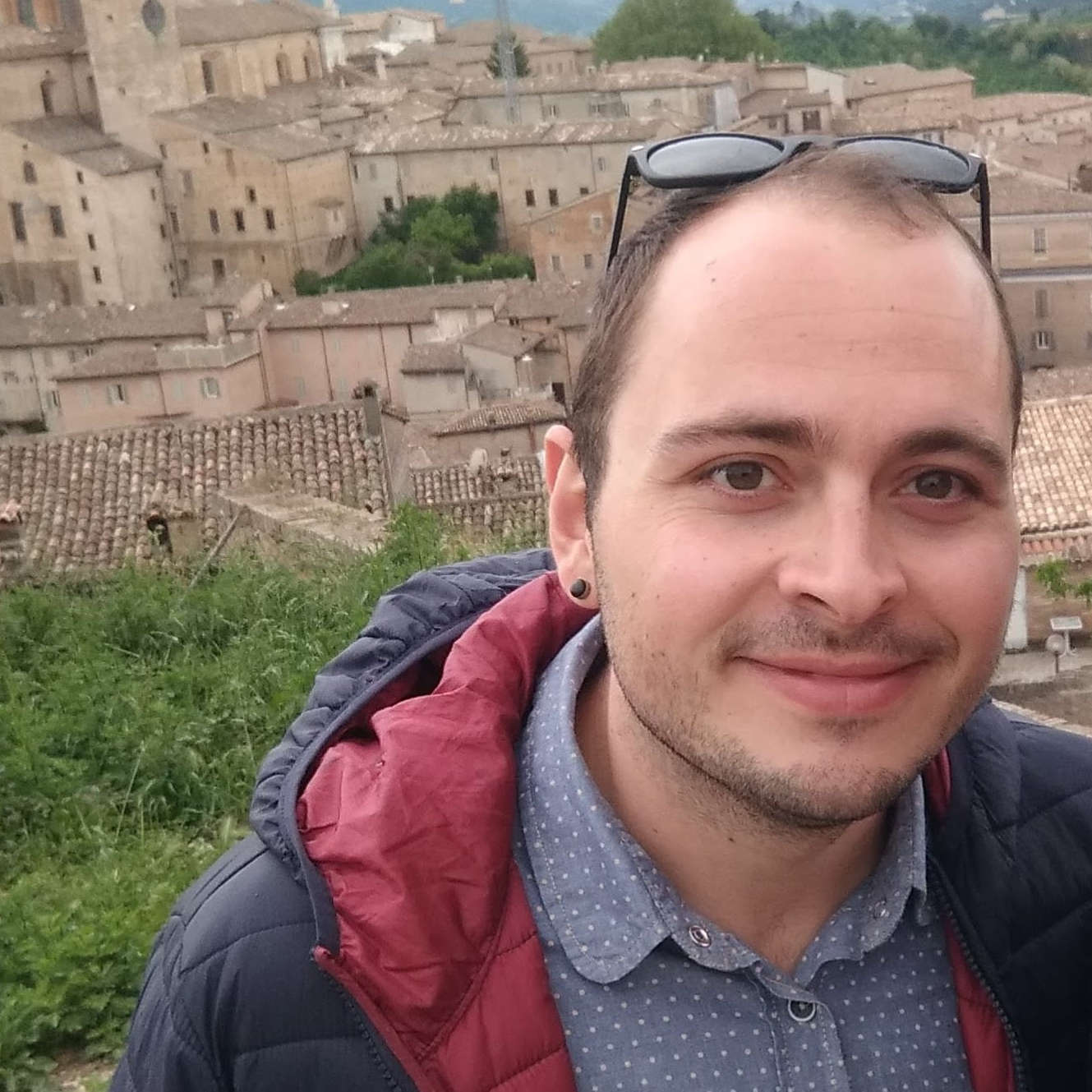
The author of this article: Jacopo Suggi
Nato a Livorno nel 1989, dopo gli studi in storia dell'arte prima a Pisa e poi a Bologna ho avuto svariate esperienze in musei e mostre, dall'arte contemporanea alle grandi tele di Fattori, passando per le stampe giapponesi e toccando fossili e minerali, cercando sempre la maniera migliore di comunicare il nostro straordinario patrimonio. Cresciuto giornalisticamente dentro Finestre sull'Arte, nel 2025 ha vinto il Premio Margutta54 come miglior giornalista d'arte under 40 in Italia.Warning: the translation into English of the original Italian article was created using automatic tools. We undertake to review all articles, but we do not guarantee the total absence of inaccuracies in the translation due to the program. You can find the original by clicking on the ITA button. If you find any mistake,please contact us.






















 IT
IT FR
FR DE
DE ES
ES CN
CN


