



by
Ilaria Baratta  @ilaria.lilly
08/11/2026


Categories: Exhibition reviews / Disclaimer
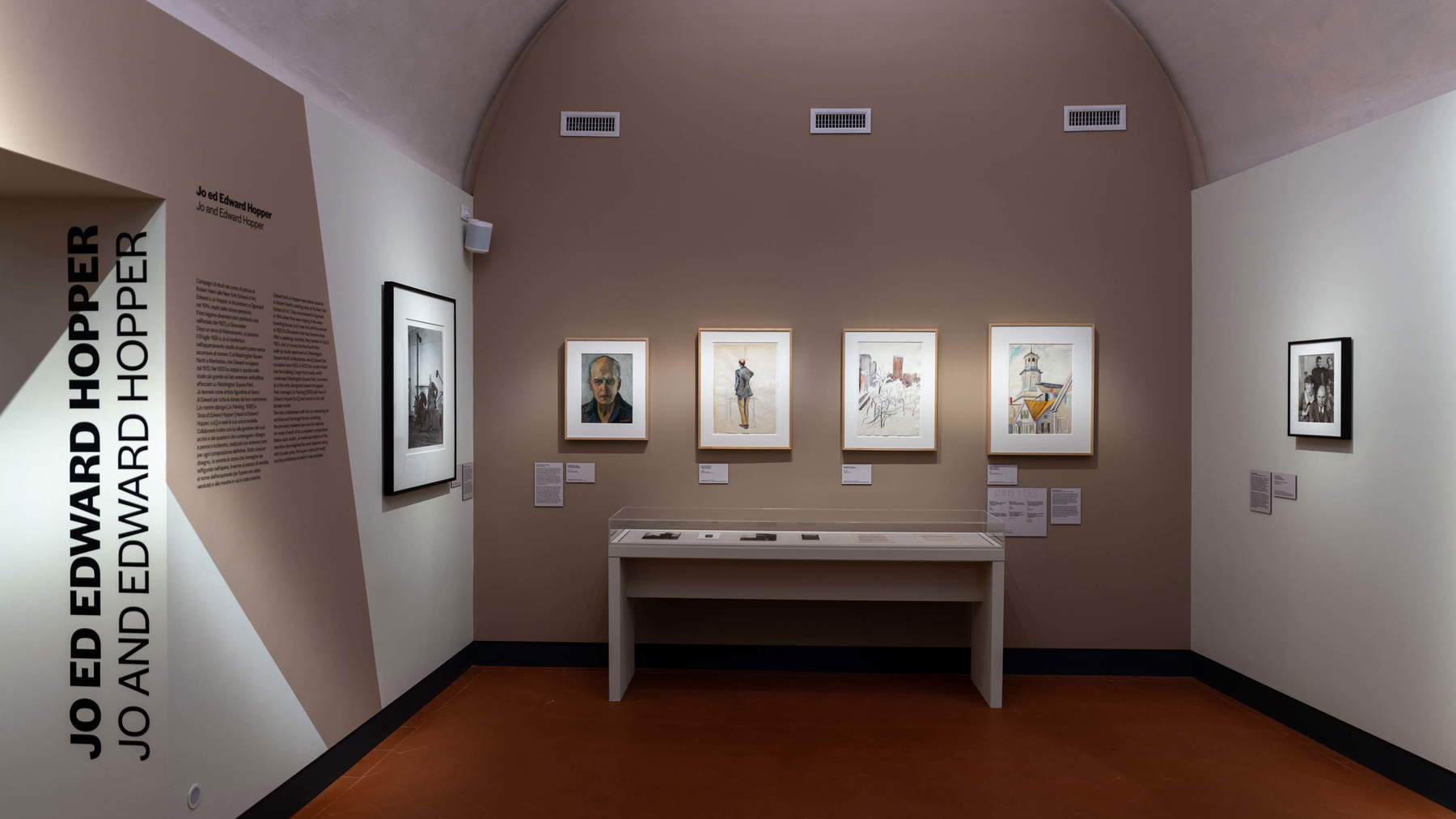
Over one hundred works by Edward Hopper from the Whitney Museum’s extraordinary collection are on display at Palazzo Blu in Pisa, including some of the American artist’s most famous masterpieces. This is an extremely rare opportunity to admire his paintings up close; however, the curators do not take full advantage of it, particularly by neglecting to explore the dialogue with European art. A review by Ilaria Baratta.

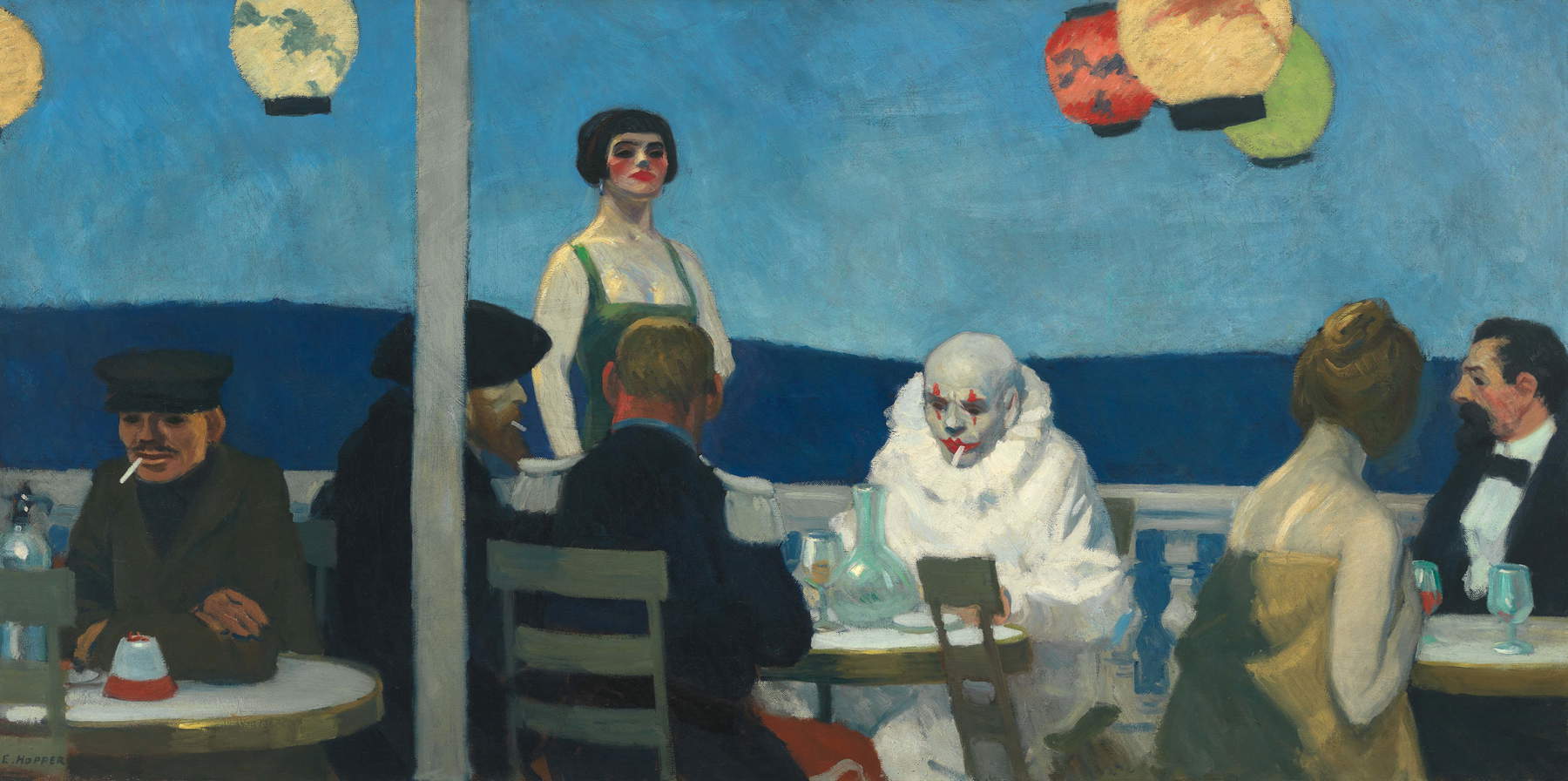
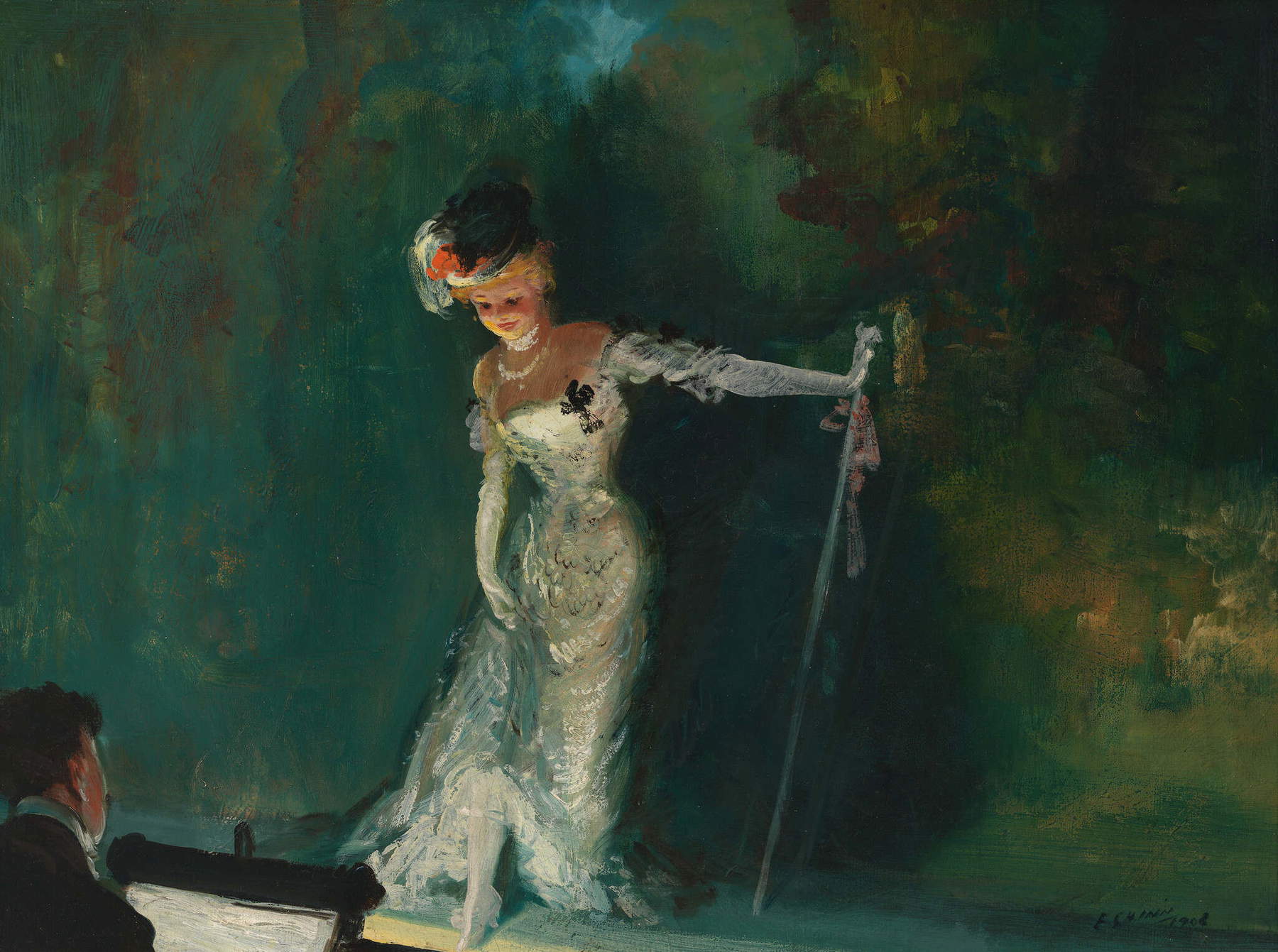
It’s very hard to take your eyes off *Soir Bleu* within just a few minutes. Visitors to the exhibition dedicated to Edward Hopper at Palazzo Blu in Pisa know this all too well . After the introductory section on the early career of the American painter—which concludes with a face-to-face encounter with one of his self-portraits in profile that almost seems to be scrutinizing us— and after the brief section where you learn about the artist’s skill in the fieldof illustration—through drawings, watercolors, and a series of cover illustrations for various hotel magazines such as *Tavern Topics* or *Hotel Management*, or intended for employees of a large shipyard such as *The Morse Dry Dock Dial*, you are taken aback when, in the third room, your gaze falls upon the wall where one of Hopper’s most famous works stands alone. It is the largest oil painting he created after his time in Paris, one that fully reveals “the extent of Europe’s impact on the artist,” as Sasha Nicholas points out in her essay in the exhibition catalog, with subjects inspired by his time in the French capital. Nicholas notes here that the figures and sophisticated composition of *Soir Blue* reveal the influences Hopper had absorbed during and after his travels in Europe, such as Rembrandt’s *Night Watch* as a model for portraying figures gathered in an evening light rich in pathos, James Abbott McNeill Whistler for the shades of blue and the horizontal structure of the composition; the Pierrot figures by Thomas Couture, Antoine Watteau, and Jean-Honoré Fragonard from the Wallace Collection; and the geometries and spatial innovations of Impressionists such as Manet and Degas. A powerful dialogue with Impressionism that is clearly evident in that large painting and that would accompany the artist throughout his career, so much so that when, in 1962, at the age of eighty, an interviewer asked him what influence his travels in Europe had had, the painter replied that he still considered himself an Impressionist, since for him Impressionism was the immediate impression and what interested him most was the third dimension; he upheld the idea that great art was “the expression of the artist’s inner life, and that this inner life is translated into his personal vision of the world,” “the most accurate transcription possible of the artist’s emotions and his most intimate impression of nature.” In short, the external world depicted in a painting—whether a cityscape, a glimpse of streets and buildings, or the interior of a home, a commercial space, or an office—was, for him, a portrait of his own temperament and inner self. How much loneliness and melancholy appear in the world he portrays? These are expressions not only of his own soul butof humanity as a whole—an existential loneliness likely caused by the alienating nature of modern life, which is nonetheless stoically accepted.


It is a pity, however, that this strong influence of Europe on his art—which is so heavily emphasized in the catalog—is not highlighted in any way in the exhibition layout conceived by curators Barbara Haskell and Caroline Webb. In my opinion, it would have been useful to see direct comparisons between Edward Hopper’s works and those of European artists who influenced the American painter—such as an interior by Degas or, to return to *Soir Bleu*, a night scene by Whistler or a Pierrot by Couture or Fragonard. In fact, the eye cannot tear itself away from the face of that completely white figure at the center of the composition of the monumental oil painting: a clown or a Pierrot who serves almost as the focal point of the entire nocturnal scene set in a Parisian café; the heavy makeup on his face, which resembles that of the only woman standing as she moves among the tables—perhaps a prostitute— andthat pensive air make him stand out against the entirely blue atmosphere of the painting, rendering him a perfect emblem of the sense of loneliness and melancholy that permeates Hopper’s paintings.


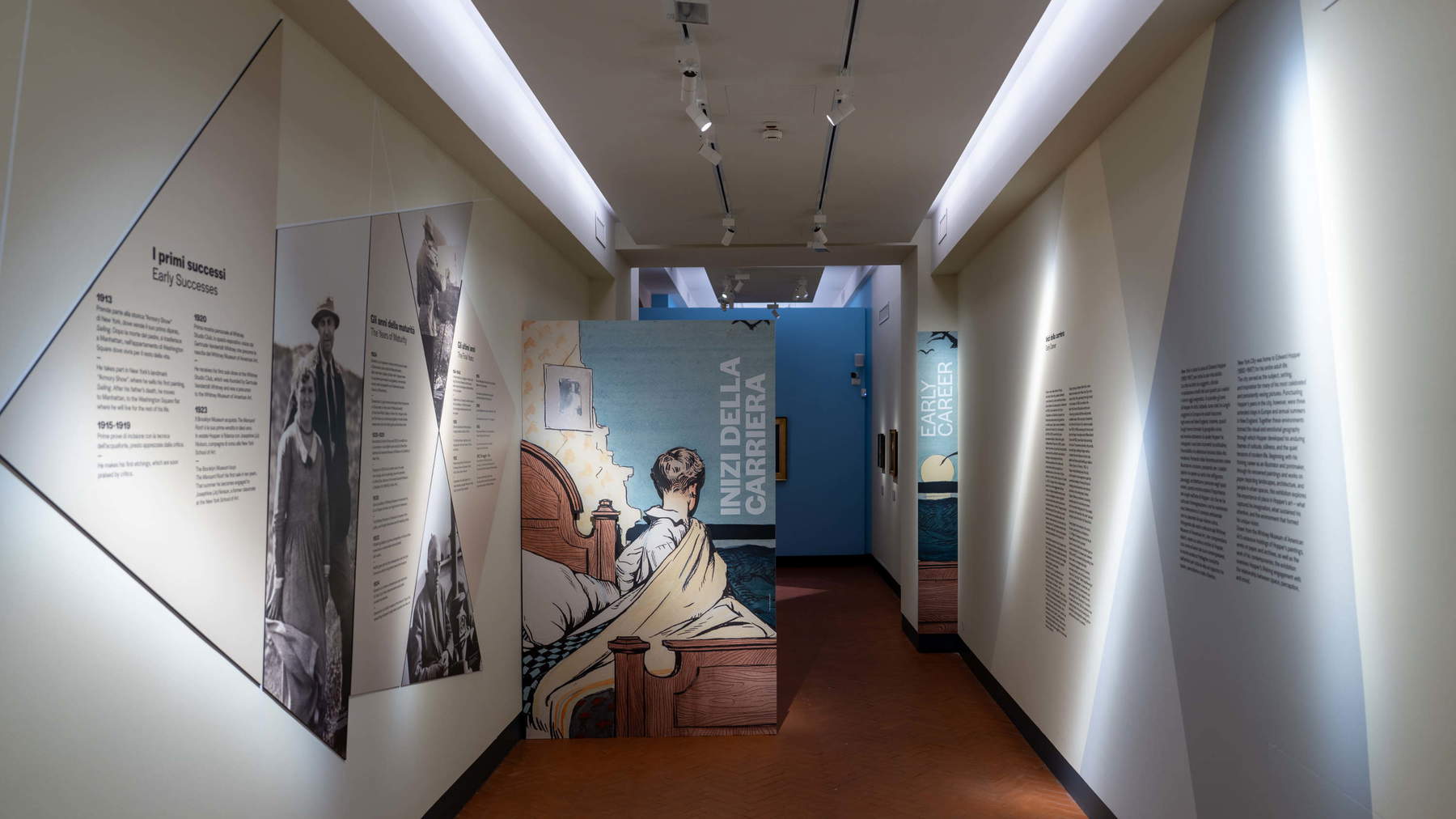
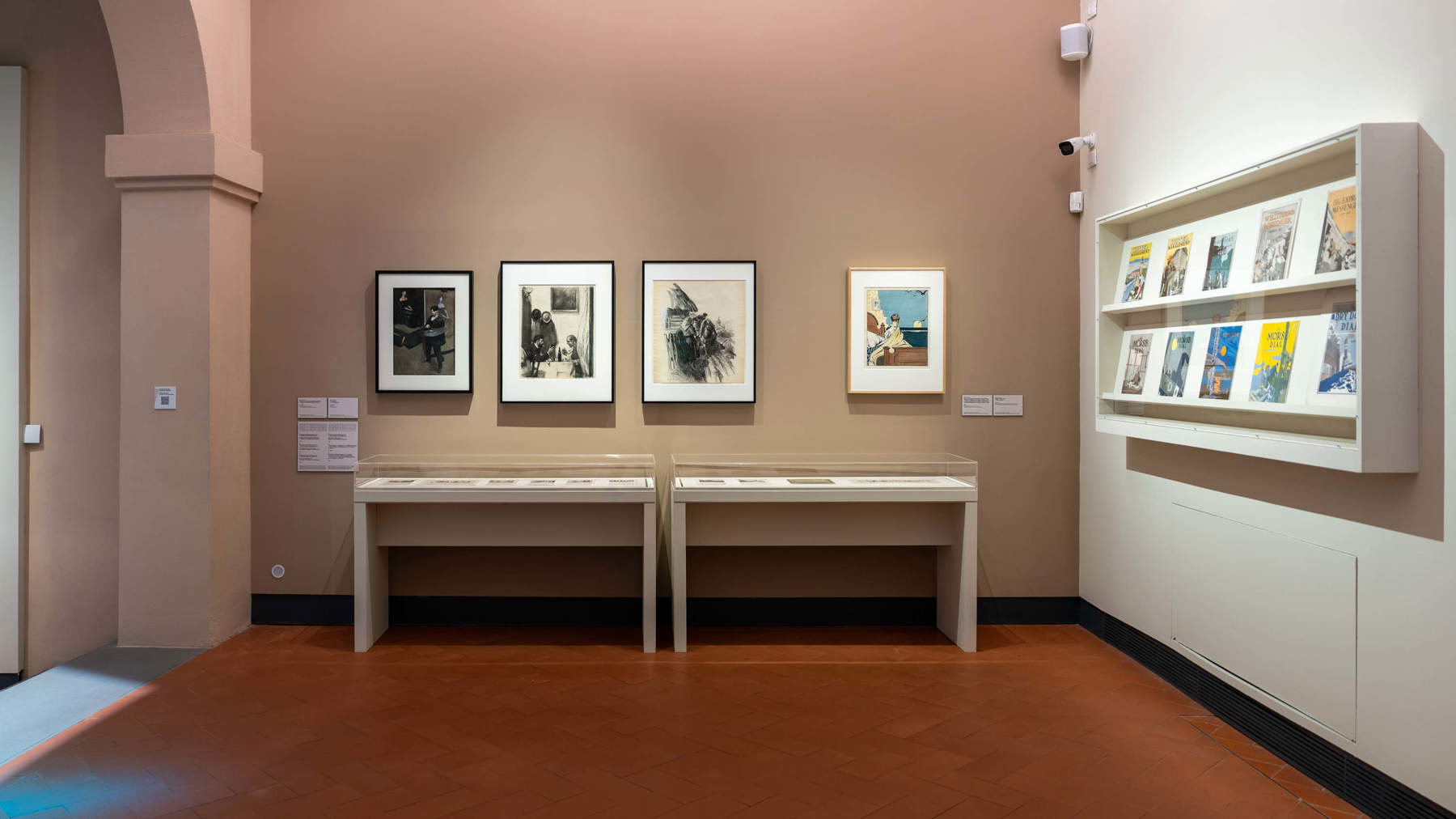
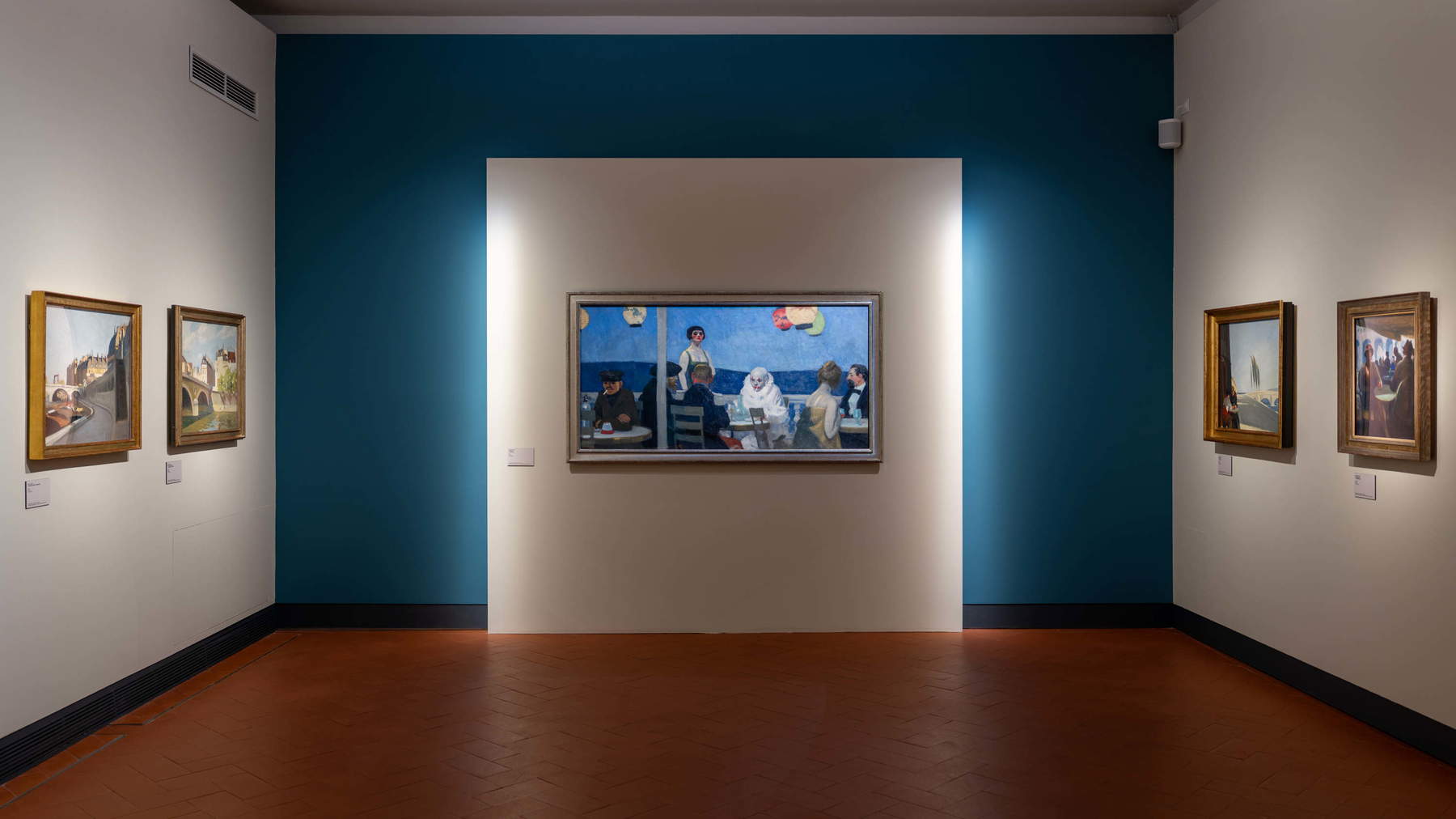
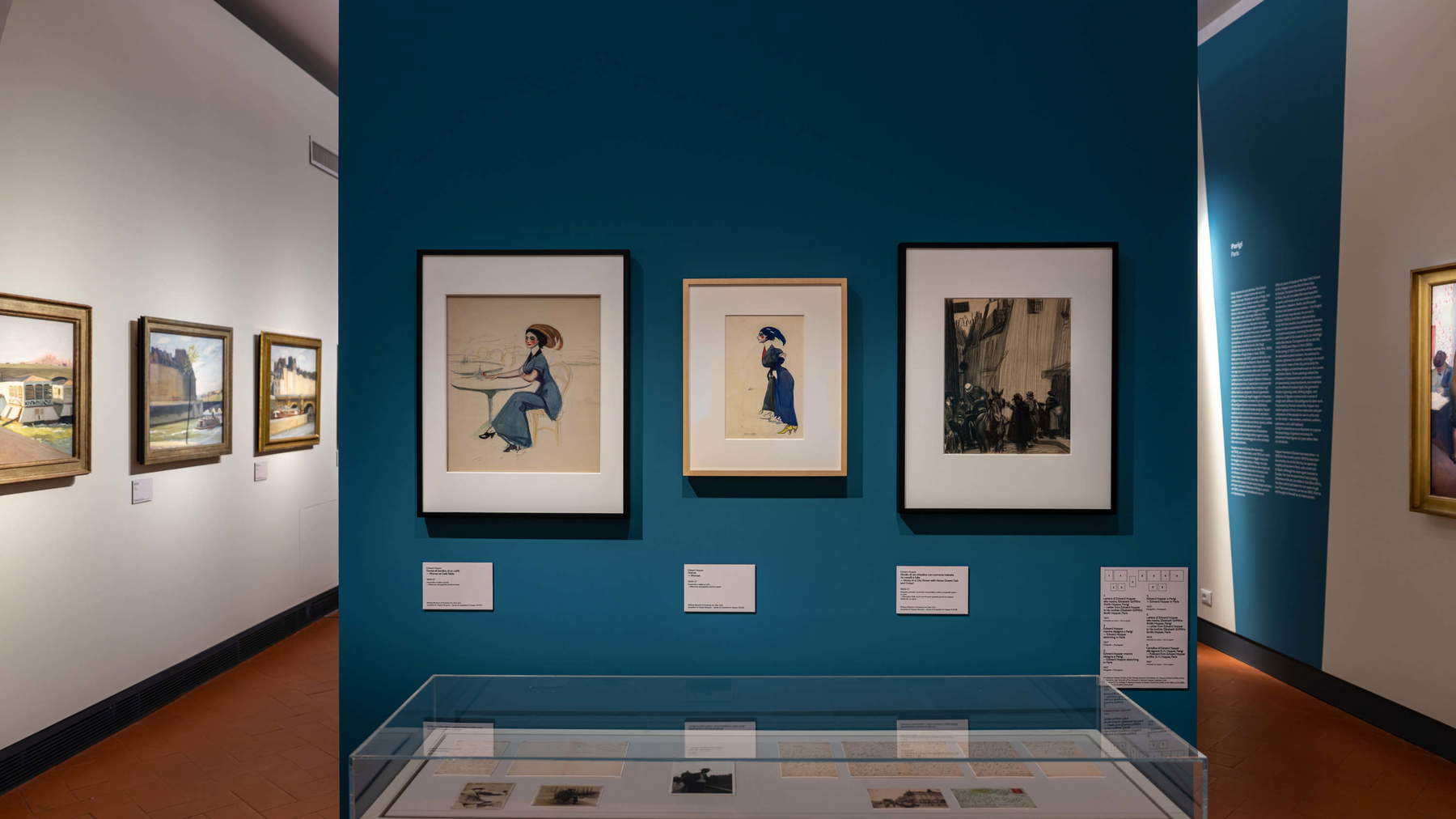
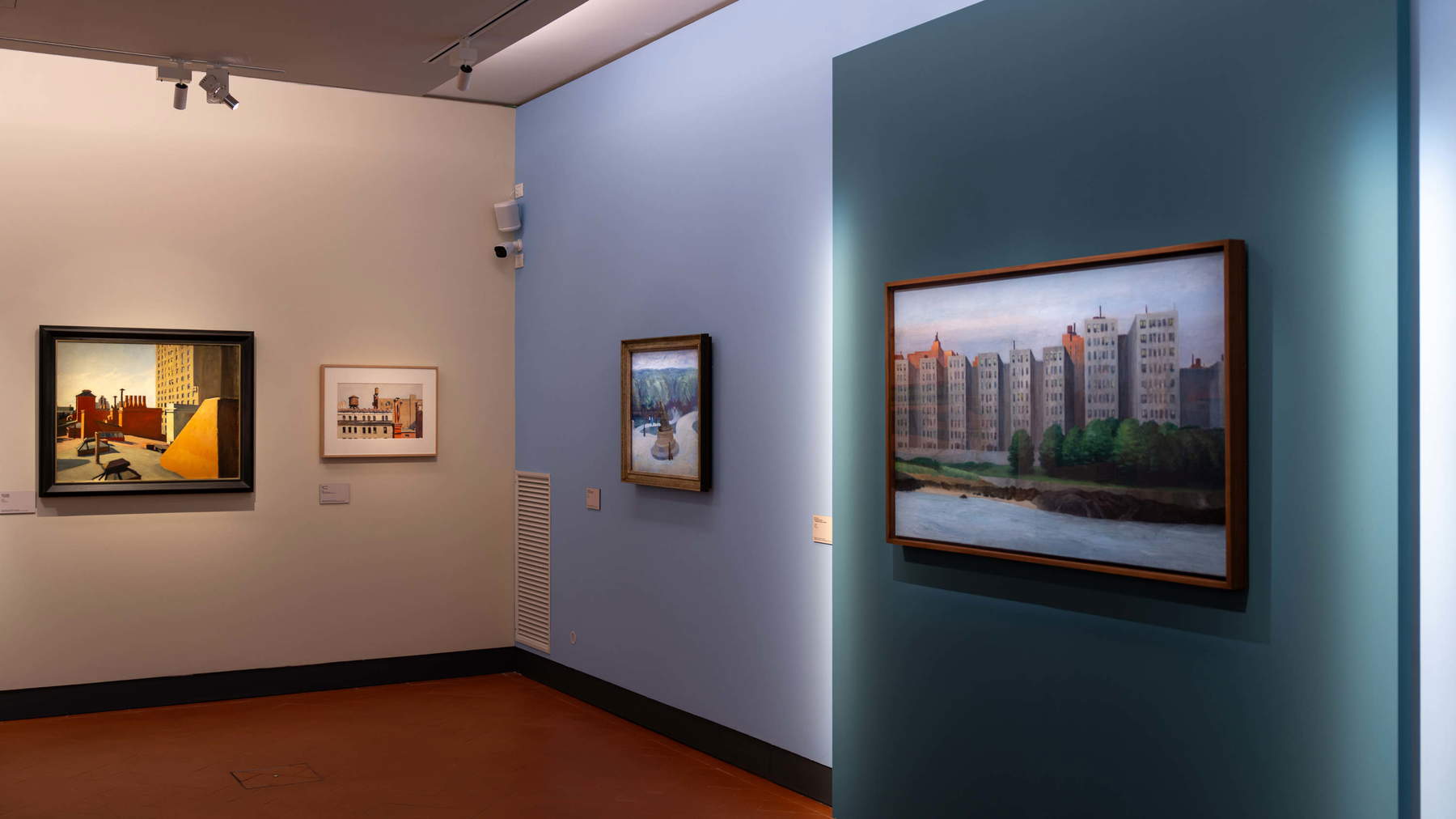
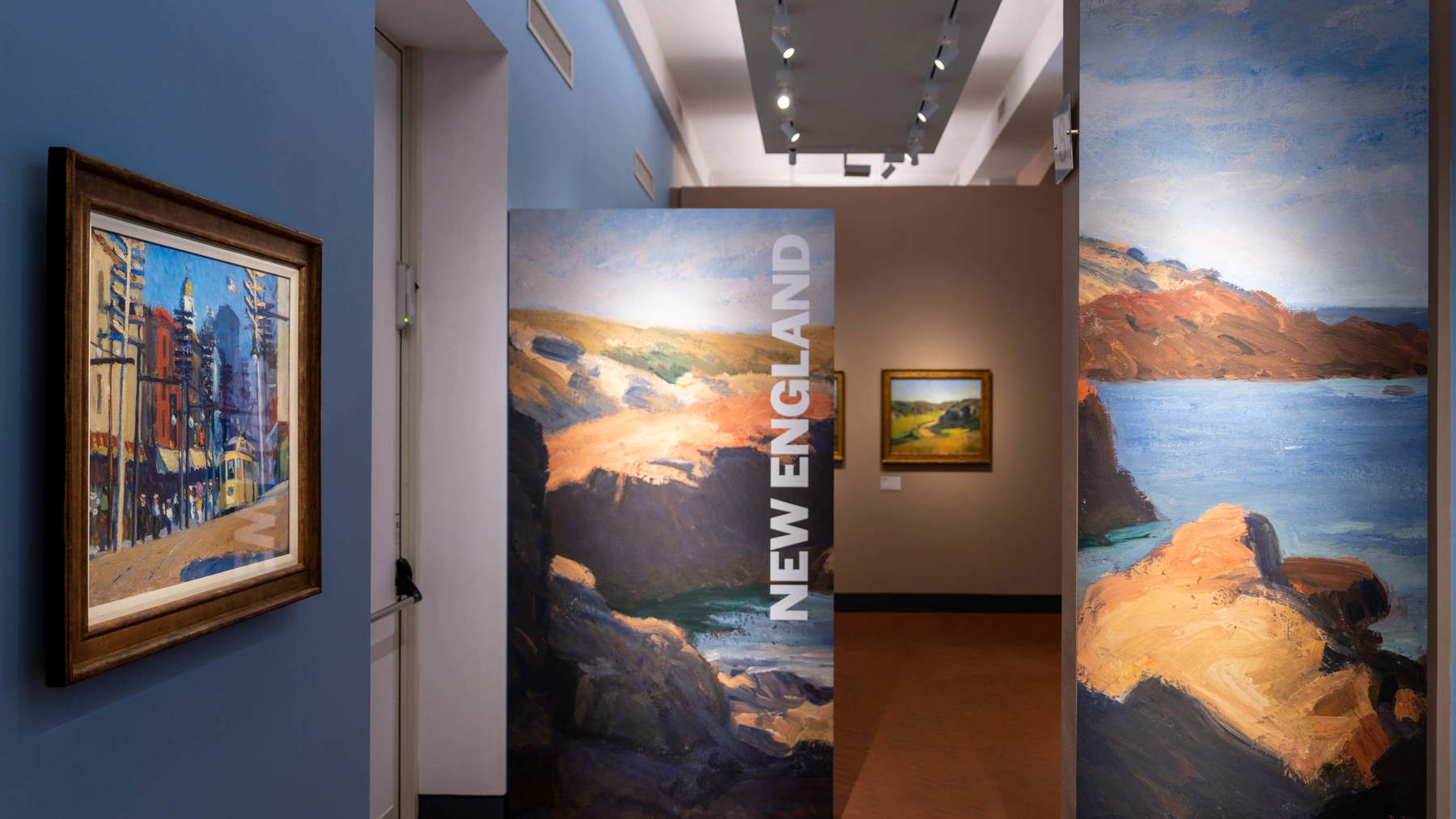
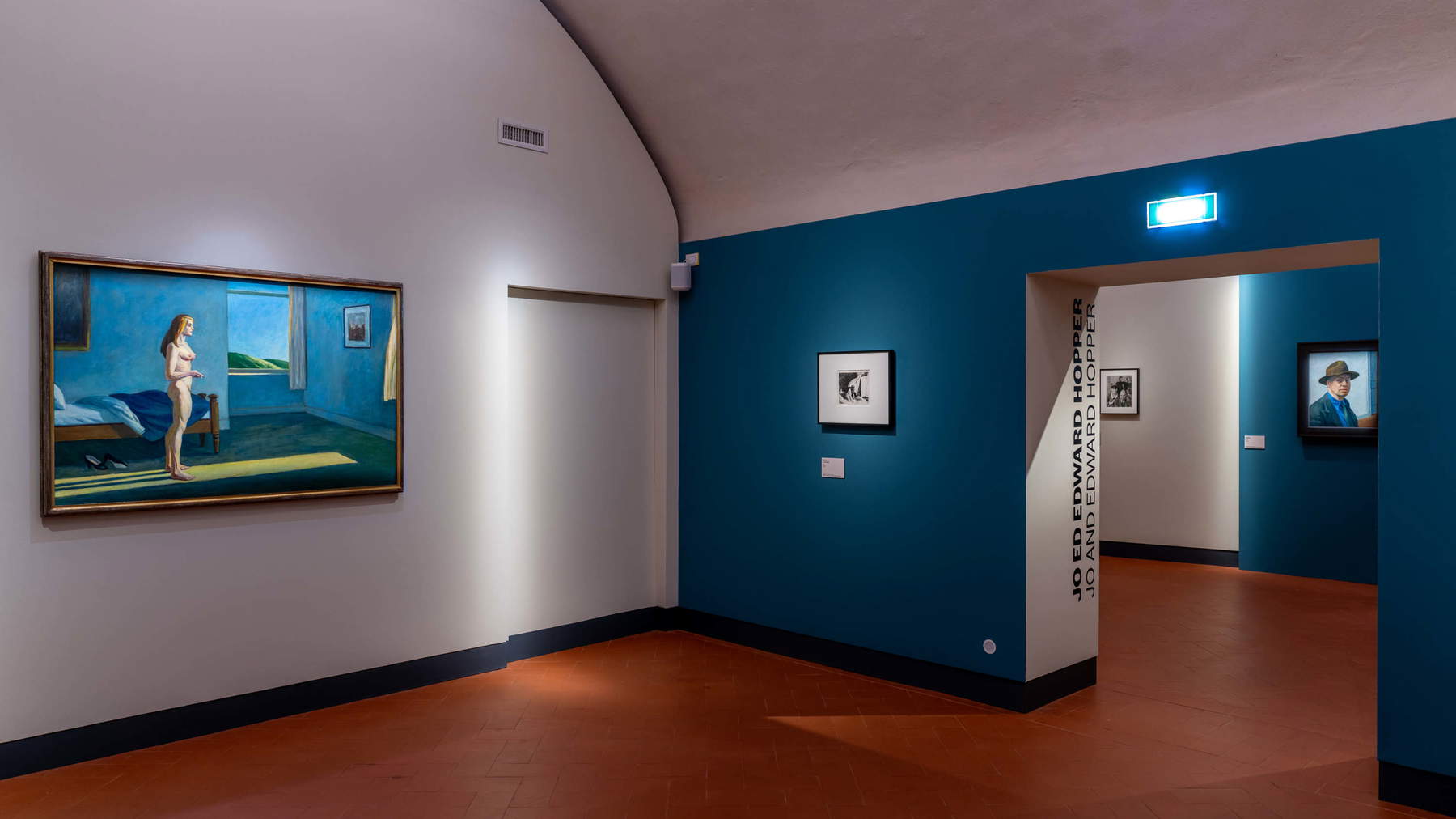
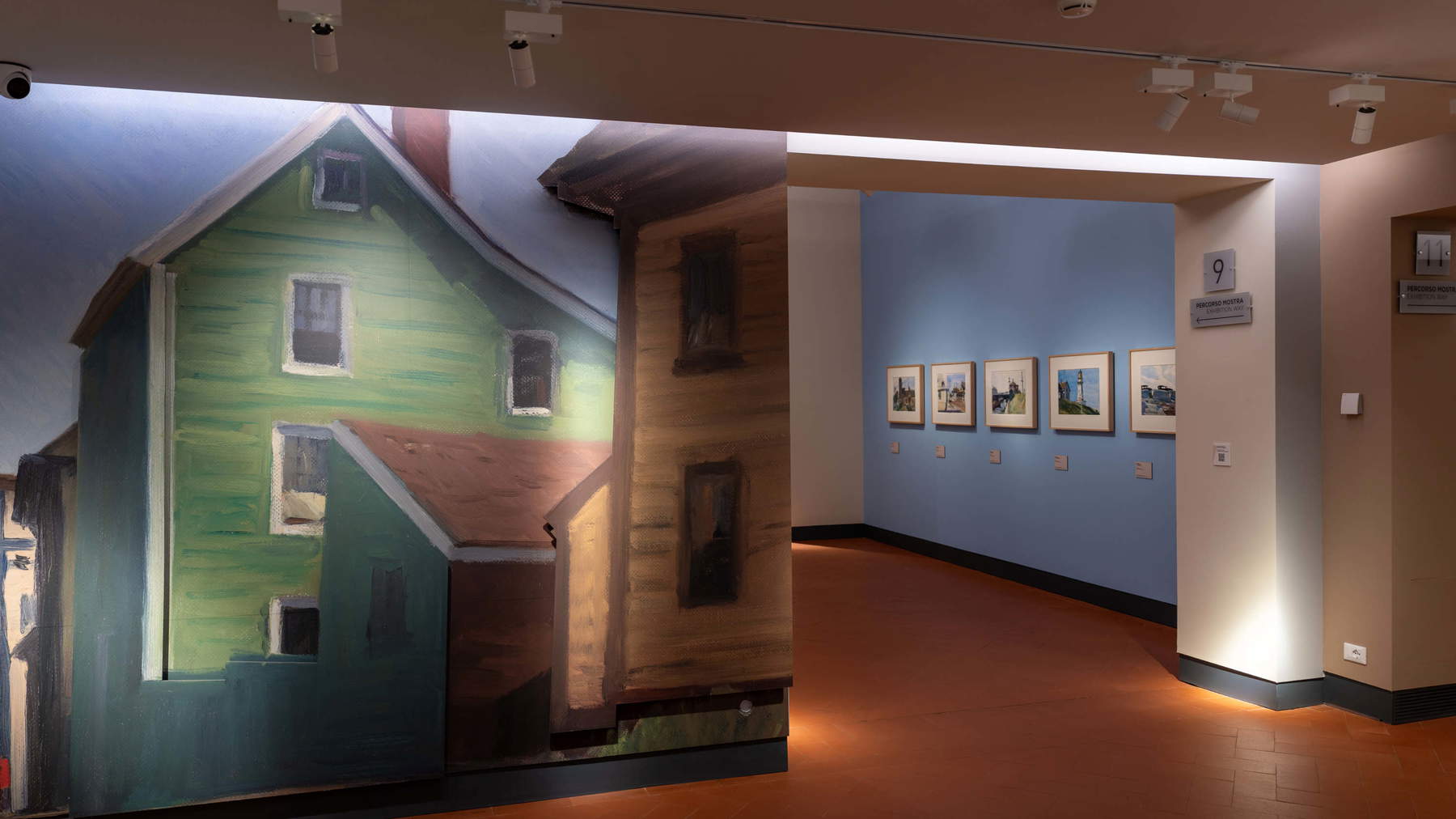
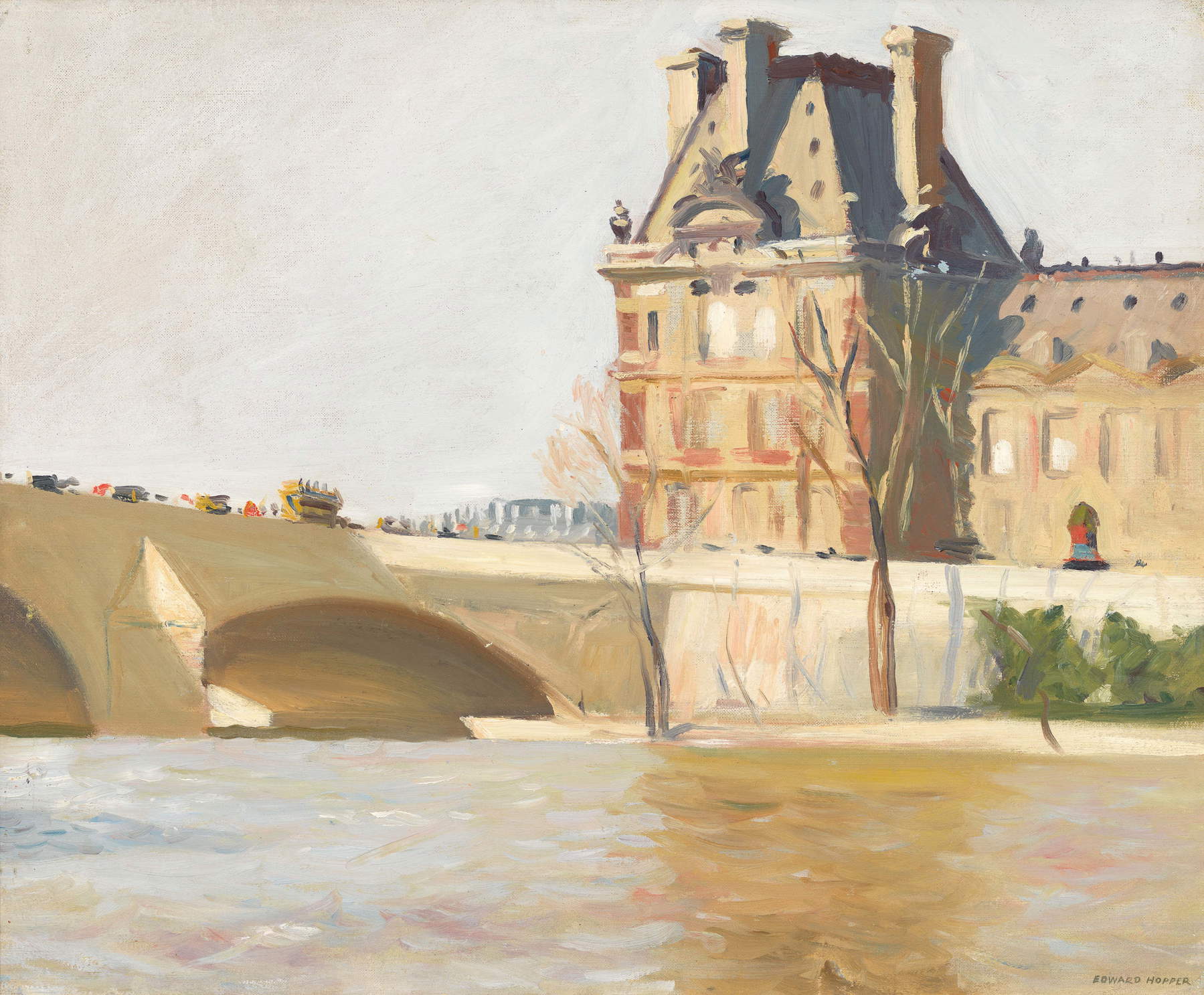
The same third gallery also features several views of Paris, including glimpses of buildings rendered in dark tones—such as *View of the Inner Courtyard at 48 Rue de Lille*, Paris, as well as panoramic views of the city, Notre-Dame de Paris, and the Seine, rendered in lighter tones that nonetheless reflectthe Impressionisten plein air style and the effects of light on architectural structures.


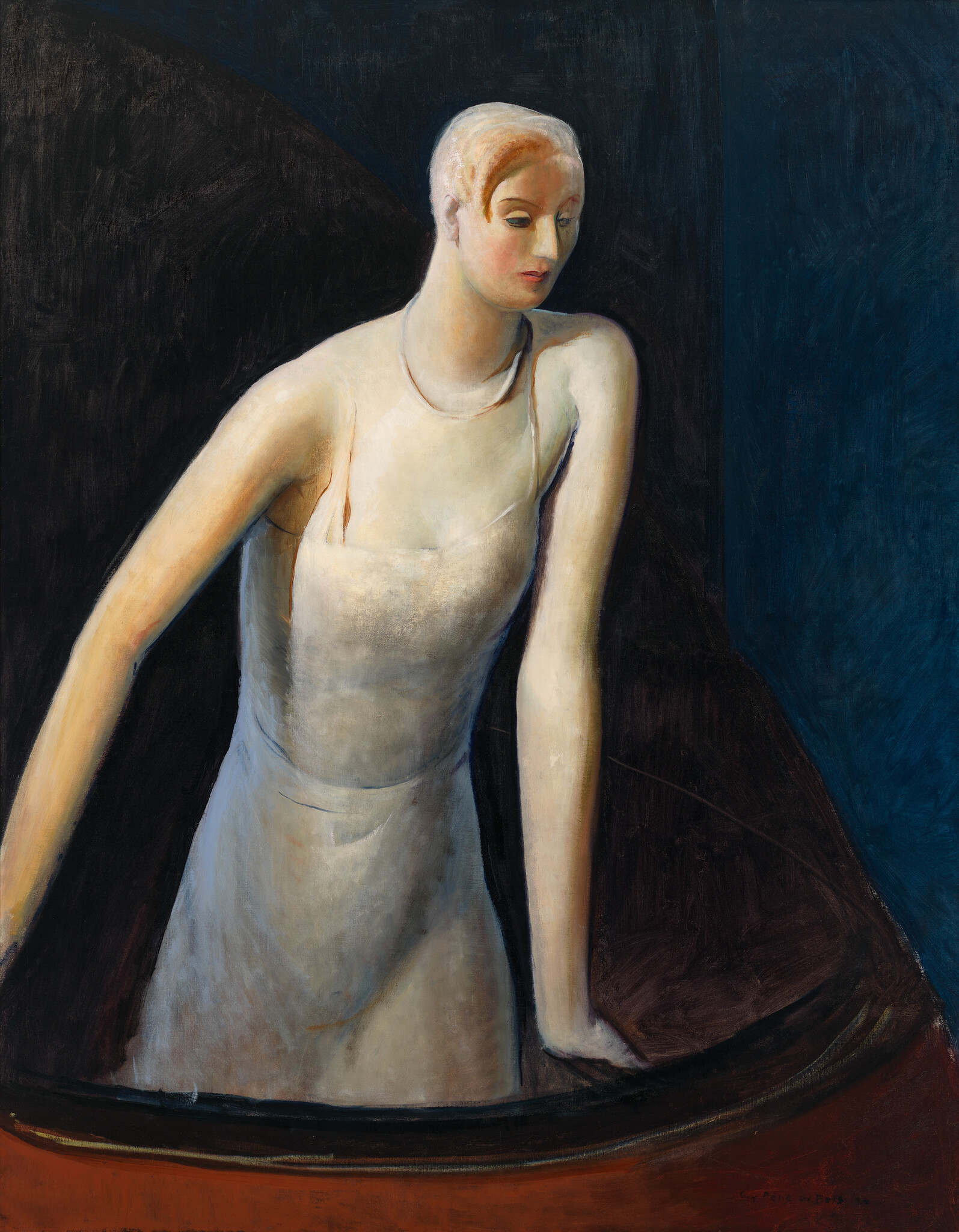
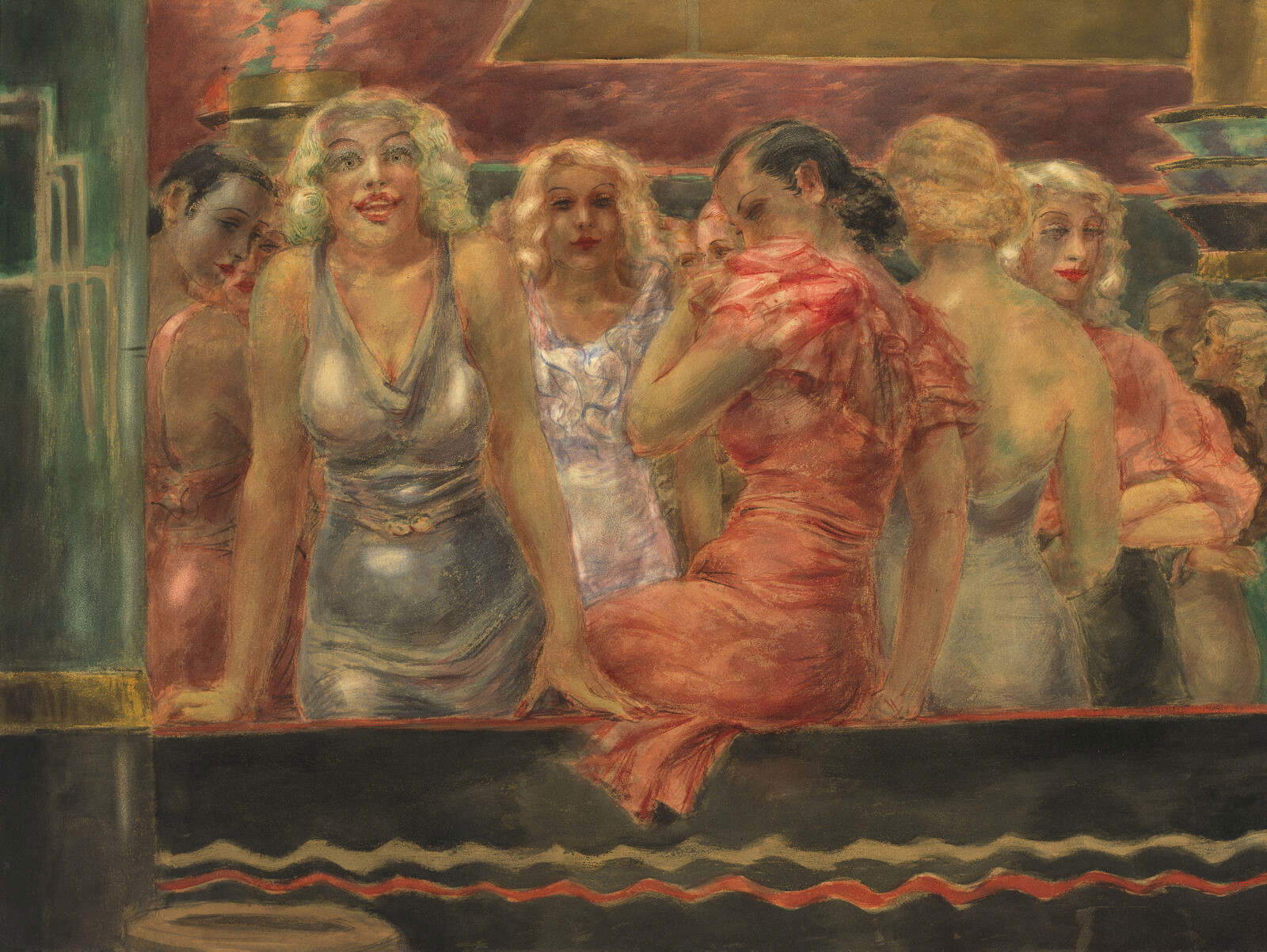
The exhibition at Palazzo Blu is largely structured as a monographic show, since most of the works on display are by Edward Hopper— over a hundred in all out of approximately one hundred fifty—but there is no shortage of comparisons: rather than highlighting, as mentioned, the influence of the Impressionists on his artistic style (which, moreover, did not end with his Parisian period—that is, by 1910, the year after which the artist would never again cross the Atlantic), the curators’ choice instead focused on a comparison with the American painting of his time, on situating Hopper within the context of American urban realist painting associated withthe Ashcan School and the New York School of Art founded by Robert Henri (featured in the exhibition near the end of the tour), which the painter actually frequented, and which sought to depict the vibrancy of cities, particularly through public leisure spaces: examples include Guy Pène Du Bois’s *Country Festival* and *Opera Stage*, Everett Shinn’s *Variety*, George Bellows’s *Introduction of John L. Sullivan*, and Reginald Marsh’s *Ten Cents a Dance*. These works, however, are displayed one after another before visitors, and their context is reduced to a brief biographical caption for each artist—whose names visitors will likely not even remember once they leave the exhibition.
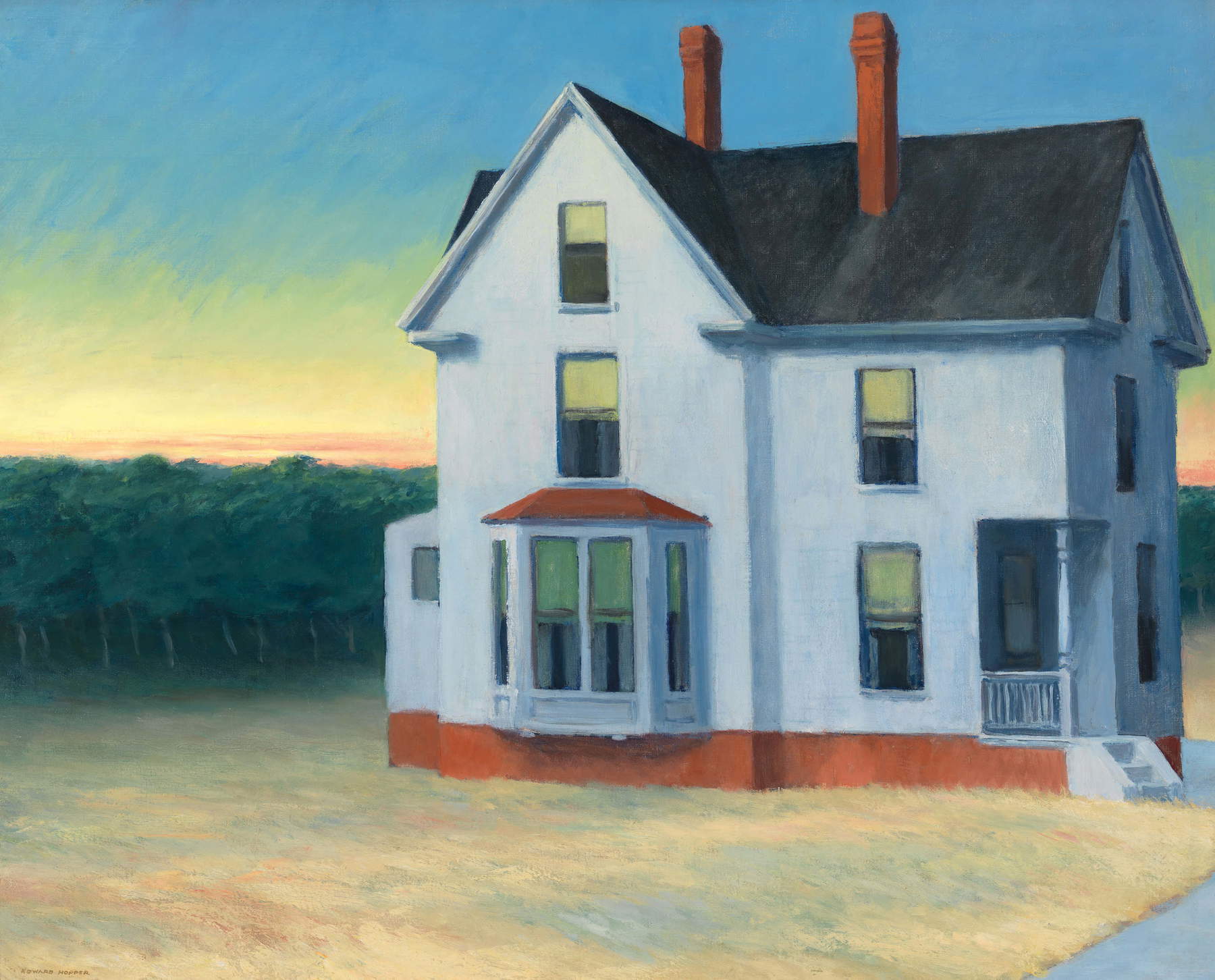
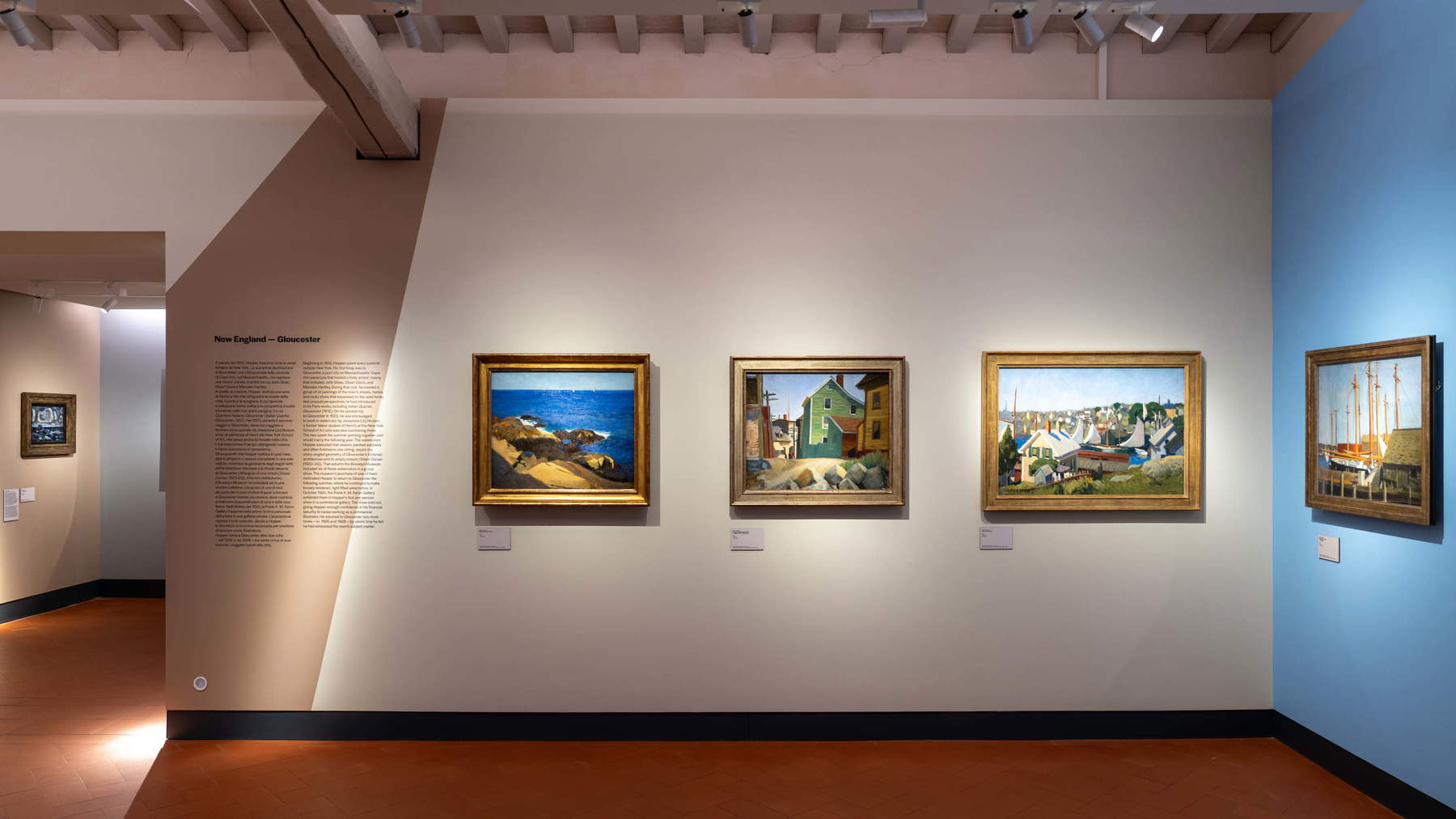
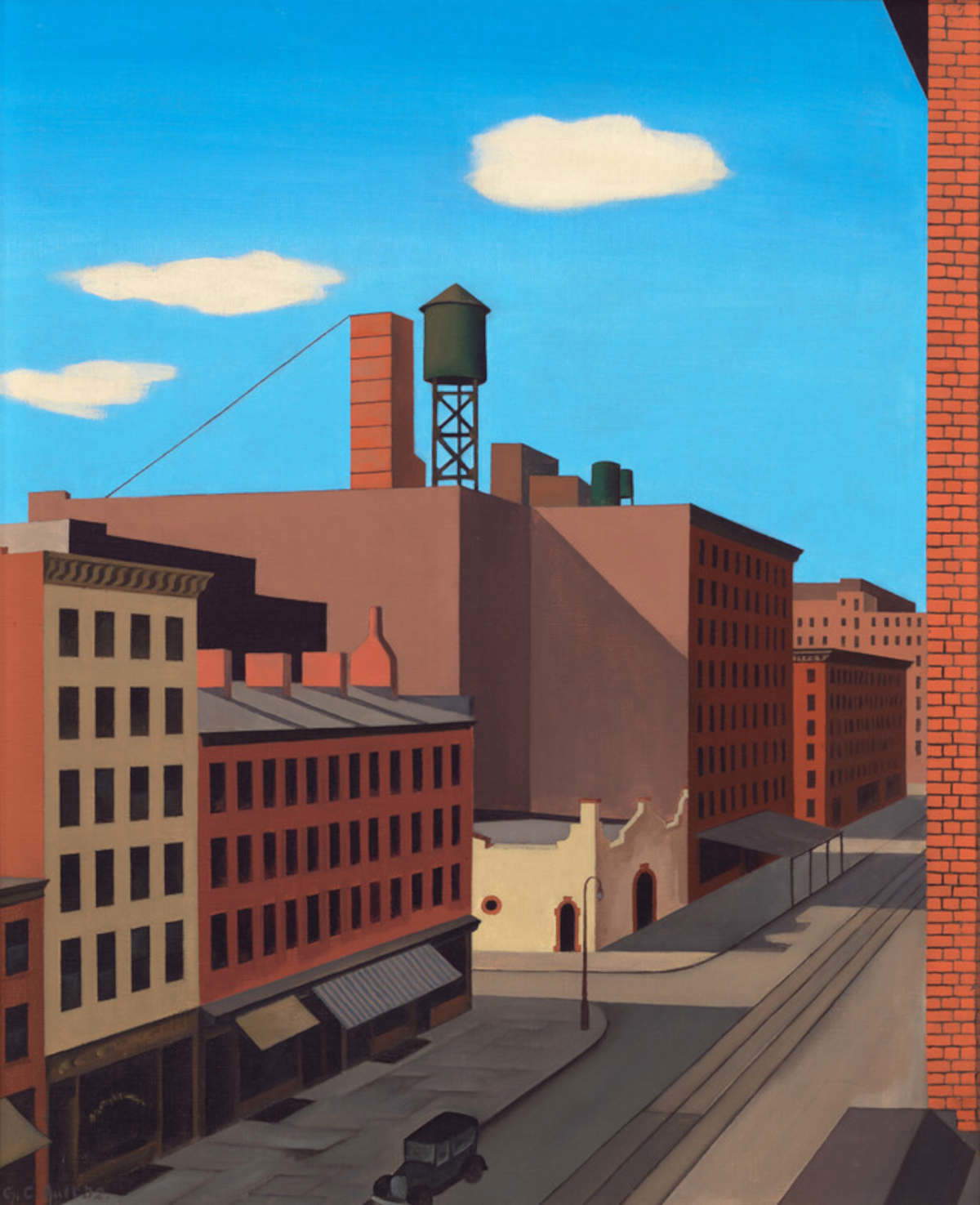
It was also decided to organize the exhibition into three sections based on the locations depicted in Hopper’s works—namely, Paris, New York, and New England, in addition to—as mentioned—an introductory section on his early career, a section dedicated to illustration—an activity he disliked and undertook solely to earn a little money, yet one that did not end before his travels to Europe but rather in the early 1920s— and another section focusing on Hopper and Josephine Nivison, his classmate at the New York School of Art and future wife, where their respective portraits and some watercolors painted by Jo herself are on display. Does it really make sense, I find myself wondering, to reduce the career of one of the greatest American painters of the twentieth century to a thematic journey based on the places depicted? Perhaps the only distinction worth making is that between Paris, on the one hand, and America, on the other—even though, for example, *Summer Interior* (1909), which is included in the New York section of the exhibition, has a very strong connection to the interiors of Edgar Degas. The distinction between New York and New England, on the other hand, seems more contrived to me; it holds only because the metropolis or the coast is represented: on one hand, the apartment buildings along the East River, the ferry docks, the elevated train station, the Queensborough Bridge, and the city rooftops—works that also share a certain affinity with the so-called Precisionists such as Miklos Suba, George Ault, or Francis Criss, as can be seen in the paintings on display; on the other hand, the sun-drenched landscapes of Maine, Gloucester, and Cape Cod—his summer destinations beginning in 1912—so there is no chronological “break” between the two sections. In fact, the artist spent every summer outside New York: she began visiting the port town of Gloucester on the Cape Ann Peninsula in Massachusetts, where she created oil paintings depicting the town’s streets, the harbor, and the rocky coastline, and later also watercolors, encouraged by Josephine Nivison, who was also spending the summer there (they spent the entire summer painting together and were married the following year). But during those same years, he also traveled to Maine, specifically to the fishing village of Ogunquit, Monhegan Island, the coastal town of Rockland, and then to Cape Elizabeth. He spent his last summer in Maine with Josephine in 1927, the year in which he painted one of his most famous works: *The Two Lights Lighthouse*. They spent the summer of 1930 in the coastal town of South Truro, on Cape Cod, in search of a milder climate than that of Maine. They moved permanently to the hook-shaped peninsula in 1934, into a house they had built on a hill thanks to an inheritance Josephine had received the year before: from that moment on, Hopper would paint back roads and solitary houses immersed ina still atmosphere, such as the one depicted in another of his best-known masterpieces: Sunset on Cape Cod. In the case of the New England section, comparisons are drawn with John Sloan, Stuart Davis, Marsden Hartley, and finally Robert Henri—artists who, like Hopper, frequented these places in the summer.
Works such as *New York Interior*, the aforementioned *Summer Interior*, or *Woman in the Sun* , on the other hand, depict everyday life in New York apartments, where solitary figures—sometimes portrayed with a hint of eroticism—appear in still, silent snapshots of their existence.
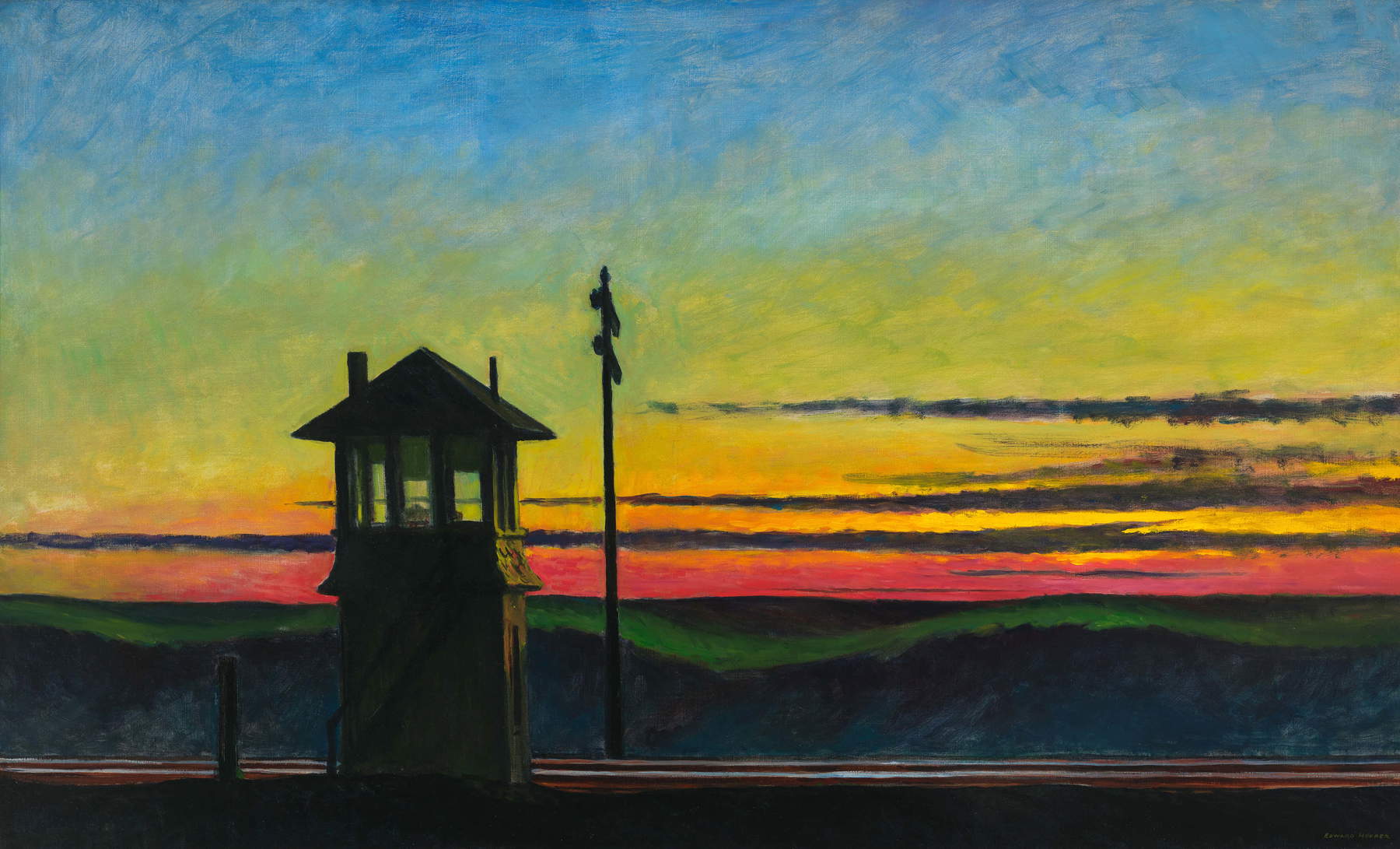
This three-part journey through the artist’s travels highlights some of his most famous masterpieces, which visitors have the extraordinary opportunity to admire all together in Pisa—without having to board a plane and fly across the Atlantic Ocean to reach New York City: these and all the other paintings, drawings, and documents come from the Whitney Museum of American Art, the museum that houses the world’s largest collection of works by Edward Hopper. This is truly a one-of-a-kind opportunity to see so many works by the American artist all in one place—unless, of course, you’re planning to visit the museum in the Big Apple in person. *Soir Bleu*, *The Lighthouse at Two Lights*, *Woman in the Sun*, *Sunset on Cape Cod*, and the masterpiece that closes the exhibition, *Sunset on the Railroad*, are worth the price of admission all on their own. Was this perhaps a missed opportunity for the Tuscan city, which—given the enormous potential—could have offered visitors an exhibition more focused on exploring Hopper’s painting in terms of its influence on European art, considering the catalog’s introduction and the nature of the artist’s work itself? A curatorial choice that surely had its reasons. It is nonetheless extraordinary to be able to see all the major Hopper works from the Whitney Museum’s permanent collection, especially considering that these are not works that come to Europe very often—in fact, it is very rare.
The fact that the exhibition was organized using works from only a single museum could be seen as a drawback, especially if—as in this case—it offers no new insights into the artist, who is already extremely well-known to the general public. However, I believe this choice was dictated by the deep connection Hopper had, even during his lifetime, with the Whitney Museum: even before its founding in 1930, the painter had held his first solo exhibition at the Whitney Studio Club in 1920, which had been established six years earlier at the behest of the sculptor and philanthropist Gertrude Vanderbilt Whitney. His works were subsequently displayed in numerous exhibitions—both solo shows and Biennales—organized over the years by both the Club and the Whitney Museum. Upon Hopper’s death in 1967 and that of his wife Josephine the following year, their artistic estate was bequeathed to the museum, comprising over three thousand works—mostly paintings and drawings—and constituting the world’s largest collection of the artist’s works. In 2017, the Sanborn Hopper Archive was also added to the museum’s collection: nearly four thousand items, including magazines, illustrations, photographs, notebooks, and personal documents, collected by the Hoppers throughout their lives and careers. So, really, from which museum in the world—if not the Whitney Museum—should the works have come to tell the story of Edward Hopper’s art?
Warning: the translation into English of the original Italian article was created using automatic tools. We undertake to review all articles, but we do not guarantee the total absence of inaccuracies in the translation due to the program. You can find the original by clicking on the ITA button. If you find any mistake,please contact us.