




by Gabriele Landi, Gabriele Salvaterra 20/07/2026



Categories: Exhibition reviews / Disclaimer
Four venues in Bergamo’s Upper Town are hosting Maurizio Donzelli’s *Atlante*, the centerpiece of the sixth edition of Art Together Now. Gabriele Landi and Gabriele Salvaterra explore the city-wide exhibition in this audio review, reflecting on perception, drawing, memory, and the dialogue between contemporary works and historic architecture.
Through August 26, as part of the sixth edition of Art Together Now—an event running concurrently with the celebrations for the patron saint’s day of Sant’Alessandro—four venues in Bergamo’s Upper Town will feature installations and exhibits by artist Maurizio Donzelli. At the former University of Sciences, Letters, and Arts, the Bishop’s Palace (Bernareggi Museum), beneath the Old Cathedral (also part of the Bernareggi Museum), and at the former Church of San Michele all’Arco, the Brescia-based artist’s*Atlante* comes to life, curated by Giovanni Berera and Anna Bertulini Frigè. Artist Gabriele Landi and curator Gabriele Salvaterra traverse the spaces of this widespread exhibition, inhabiting its pathways, reflecting on the meaning of Maurizio Donzelli’s work as he continually questions the subjective gaze and multisensory perception.
GL. Until now, I’ve always seen Maurizio Donzelli’s work in sterile or minimally contextualized settings. I must confess that, on this occasion, one of the things that surprised me most is precisely his ability to engage in dialogue with the spaces themselves. This ability seems to operate simultaneously on multiple levels: light, cultural stratification.... to name just a few of the many elements present in the spaces hosting this exhibition—they become elements with which Donzelli’s work seems to me to resonate fully.


GS. Forced to stay for an extended period and “happily stuck” in the former Church of San Michele all’Arco due to the interesting talk taking place there , I had the opportunity to observe Maurizio’s tapestries and installation for a prolonged period, in a leisurely and non-functional way compared to the usual museum experience. A note on the context: the church is a miracle of triumph and abandonment, glory and decay, with Baroque epiphanies—sugary and almost Rococo—along with clusters, collapses, floral motifs, and the insertion of contemporary metal trusses and functional structures that are certainly ungainly. My thoughts on Donzelli’s intervention revolve around wonder. It took me back to the church’s earliest visitors and the awe that the painted images must have inspired in a largely illiterate population, unaccustomed to our exposure to media images—interactive and in motion. Thus, even the works in Donzelli’s context acted as intensifiers of that experience—perceptual traps that interposed themselves upon the iconographic layers of the past to revive this imaginative, productive, and wondrous idea. Am I exaggerating?
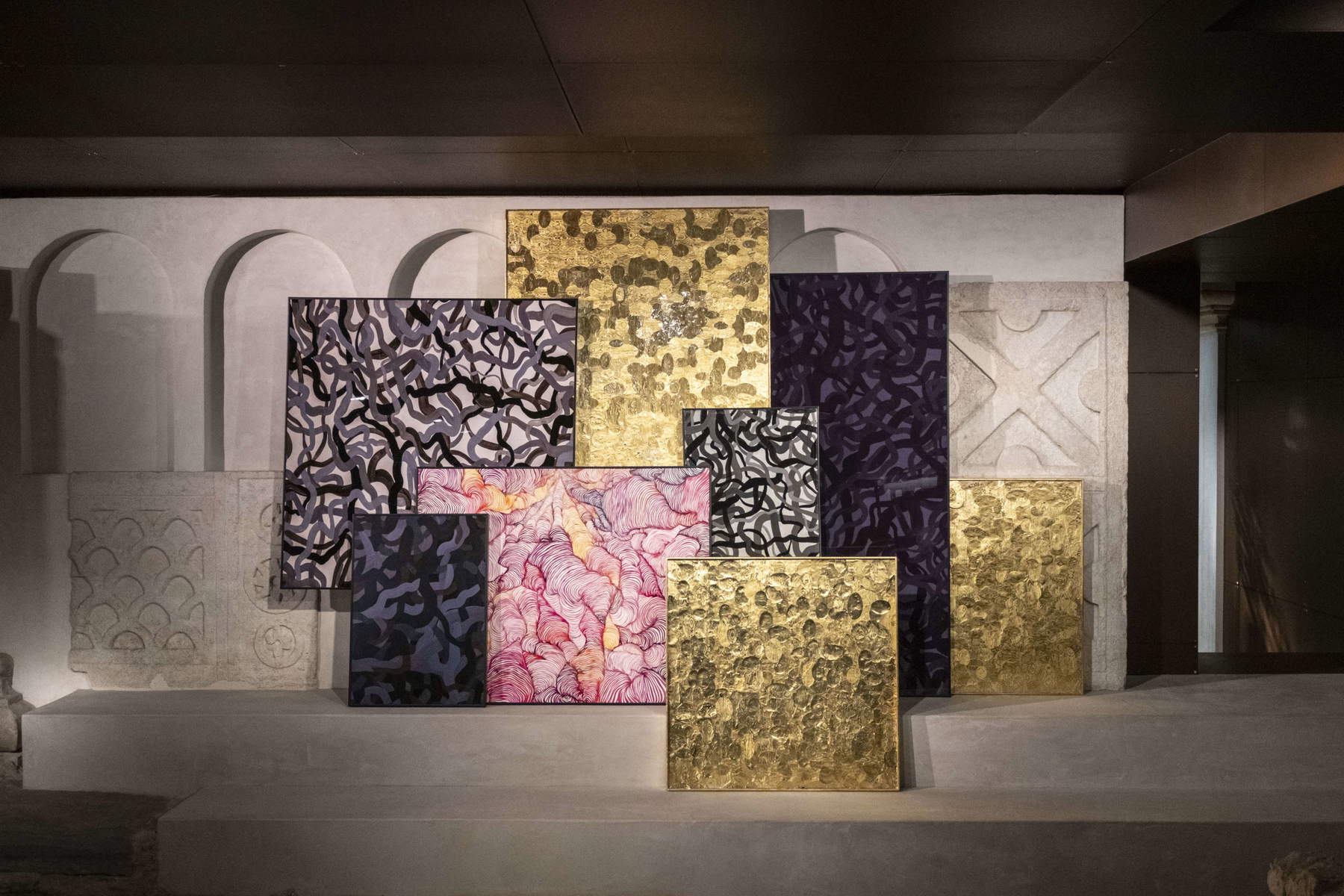
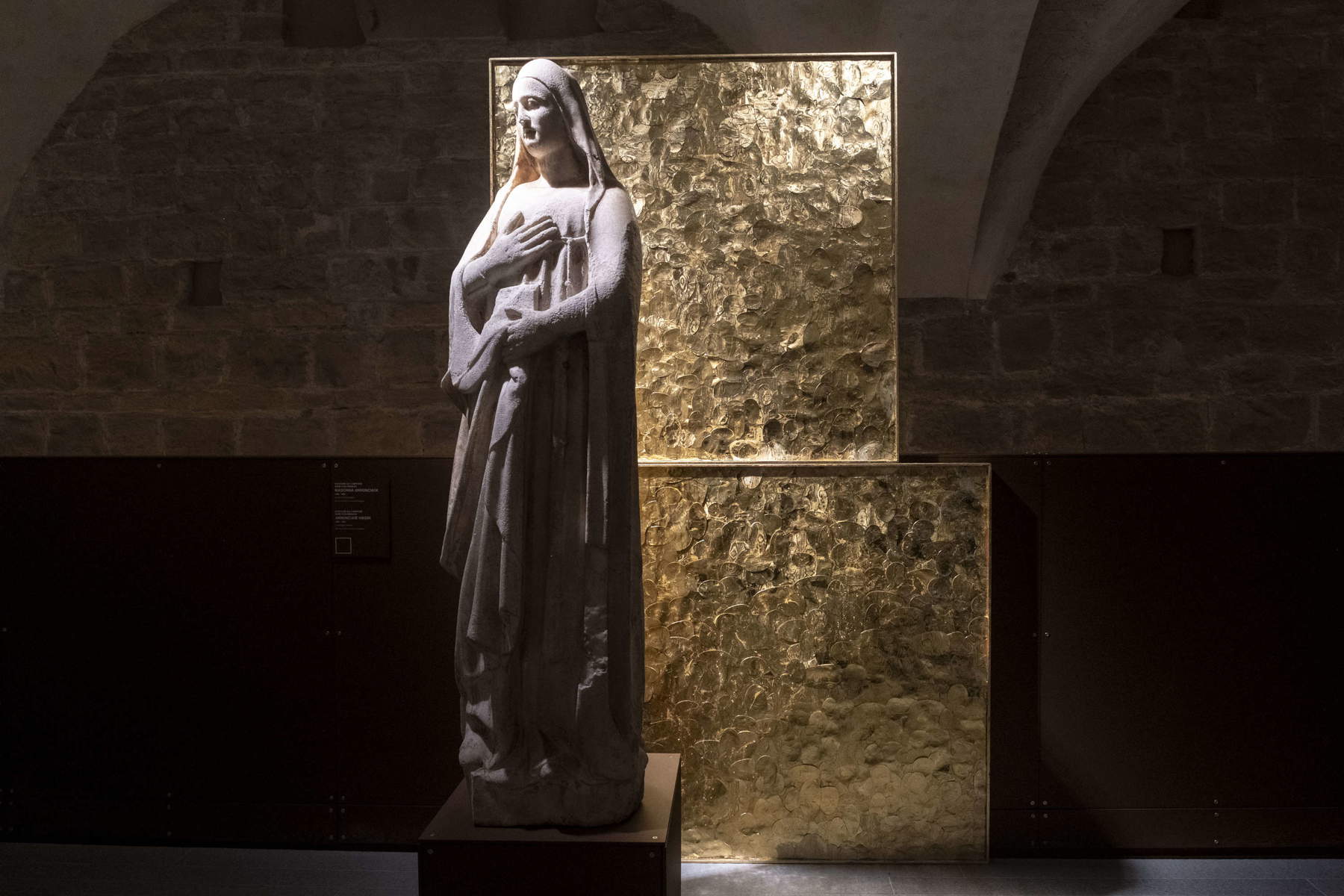
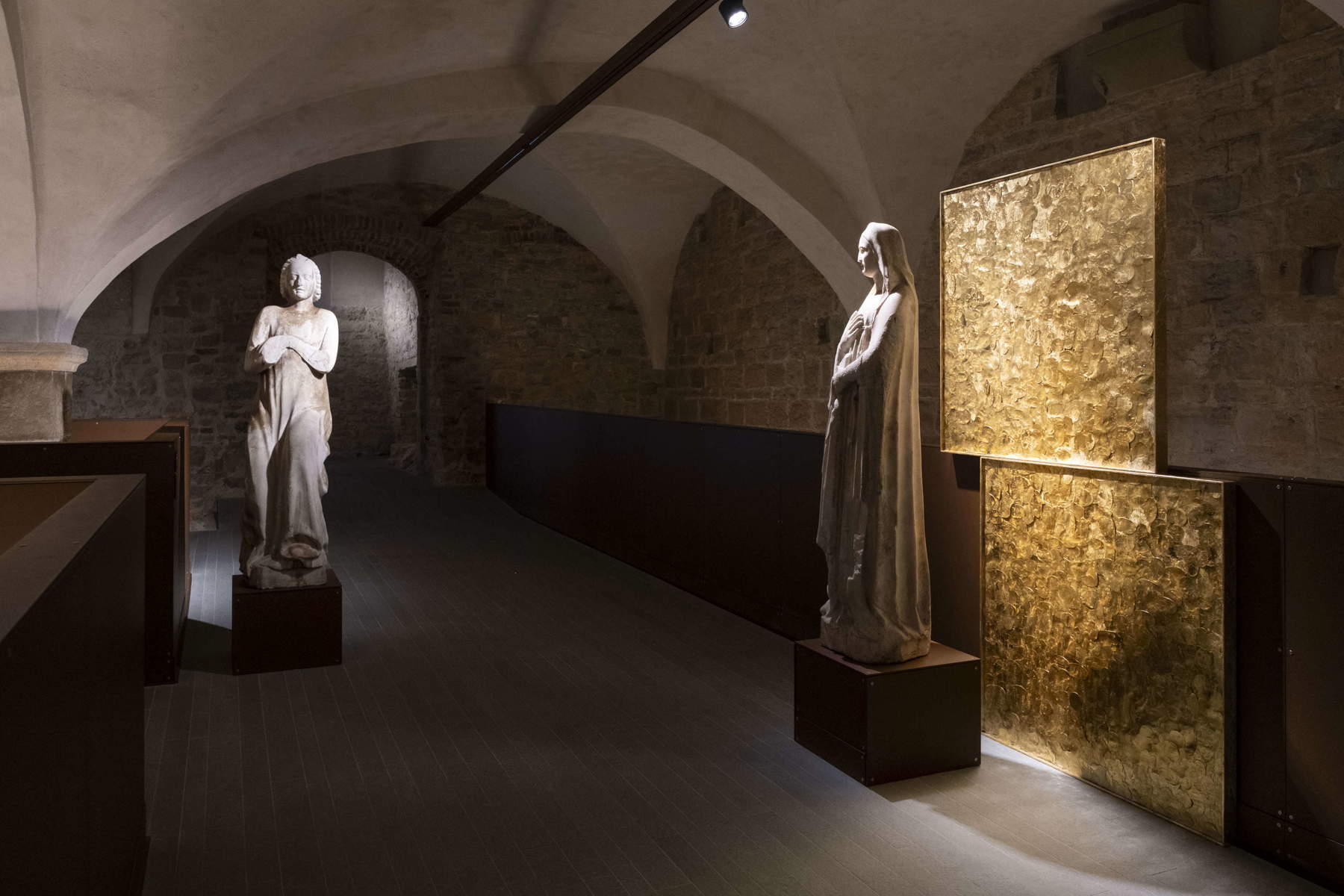
GL. No , not at all; on the contrary, it seems to me that you’ve clearly captured the way Donzelli approached these spaces on this occasion. It’s as if his work had always been there. Sometimes it’s just a subtle emphasis, as in the Diocesan Museum with the two gold works placed behind the statue of the Virgin of the Annunciation. At other times, however, as in the case of the installation featuring the well-shaped palindromic tapestries in the small temple, arranged on a mirrored surface, the artist goes so far as to subvert the space—not only in a playful, illusionistic way, but above all in a historical and symbolic sense, given that the small temple was built directly over a well, creating a short circuit in which, however, it is impossible to grasp the whole. There is always something elusive that slips away, rendering itself ineffable.
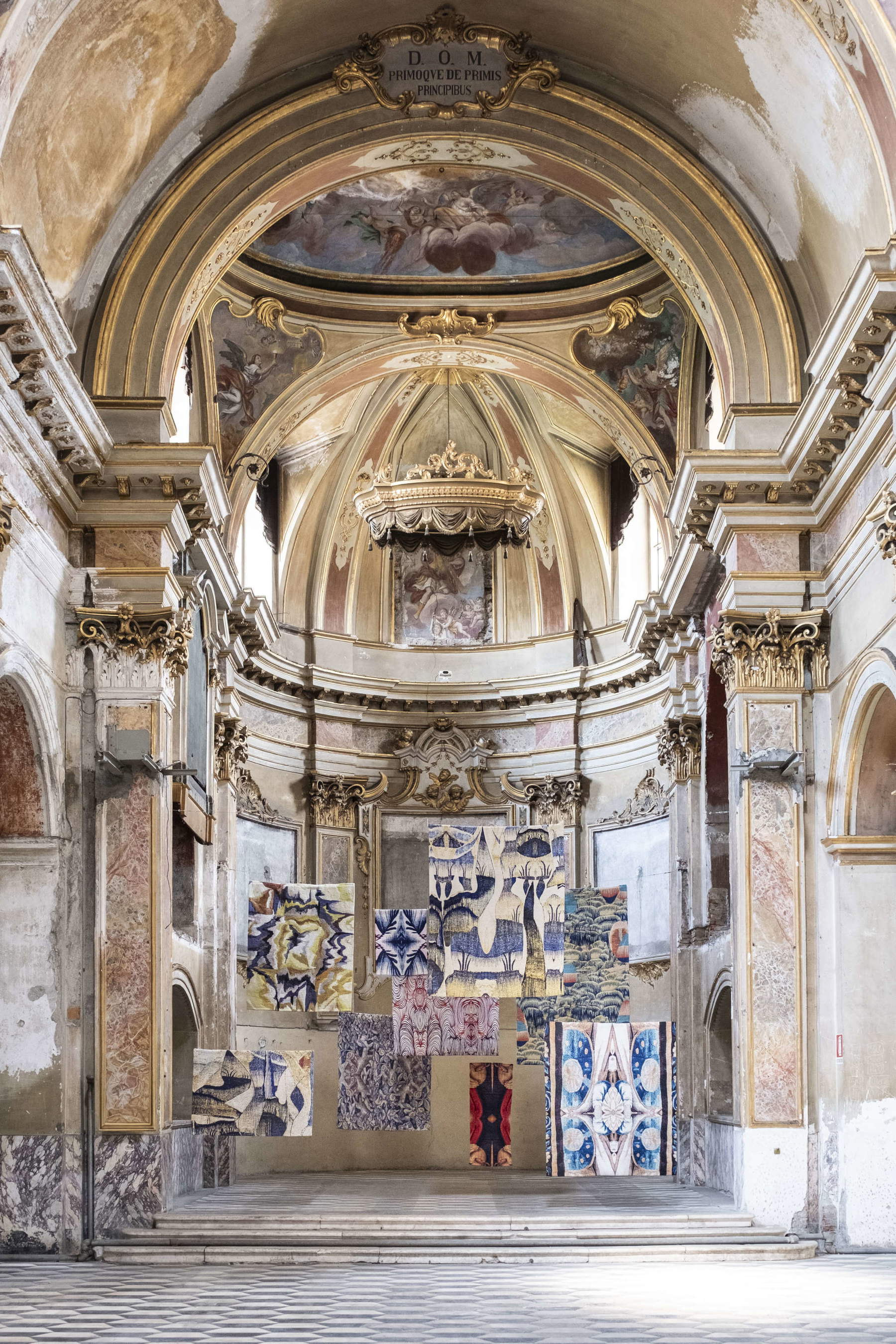
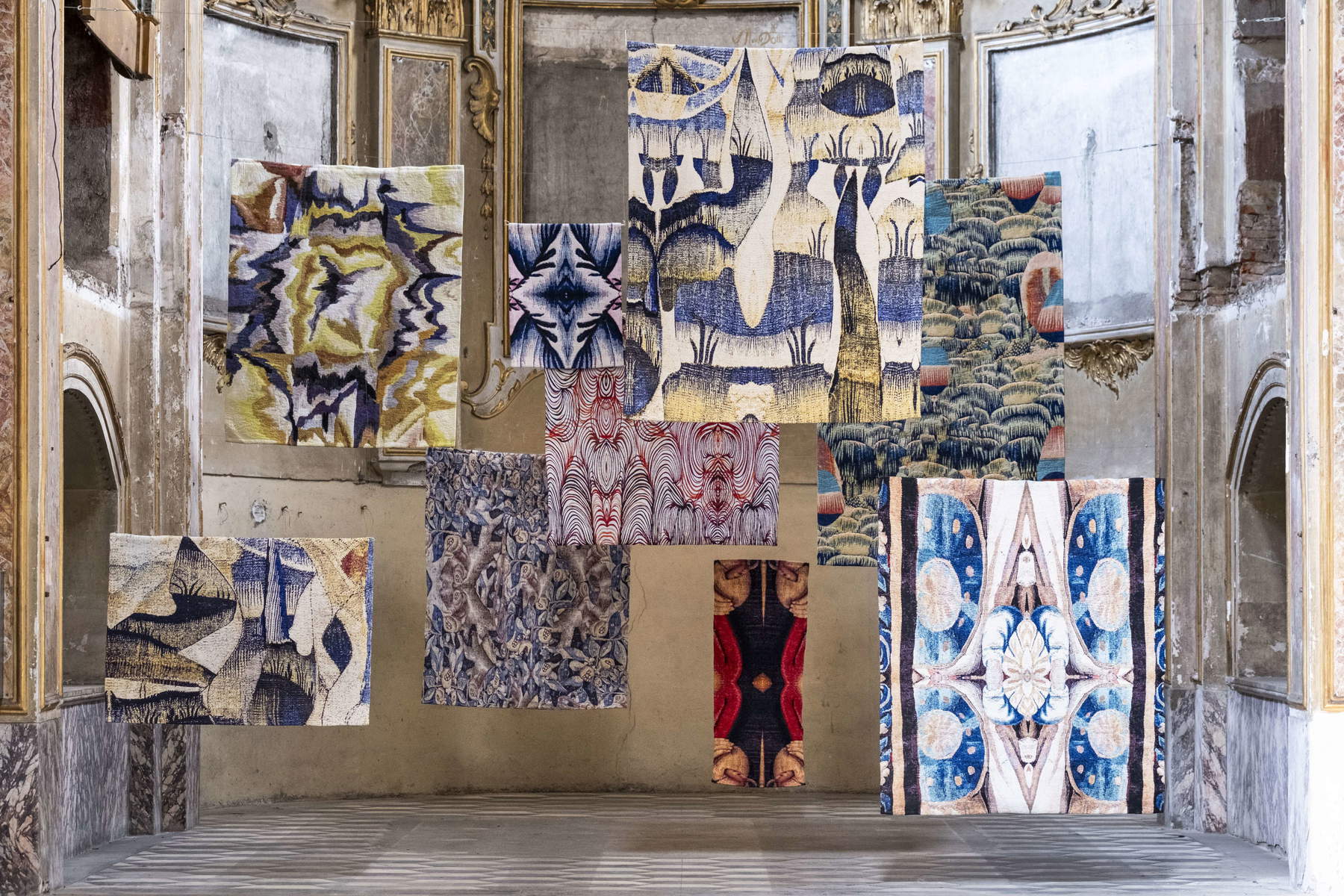
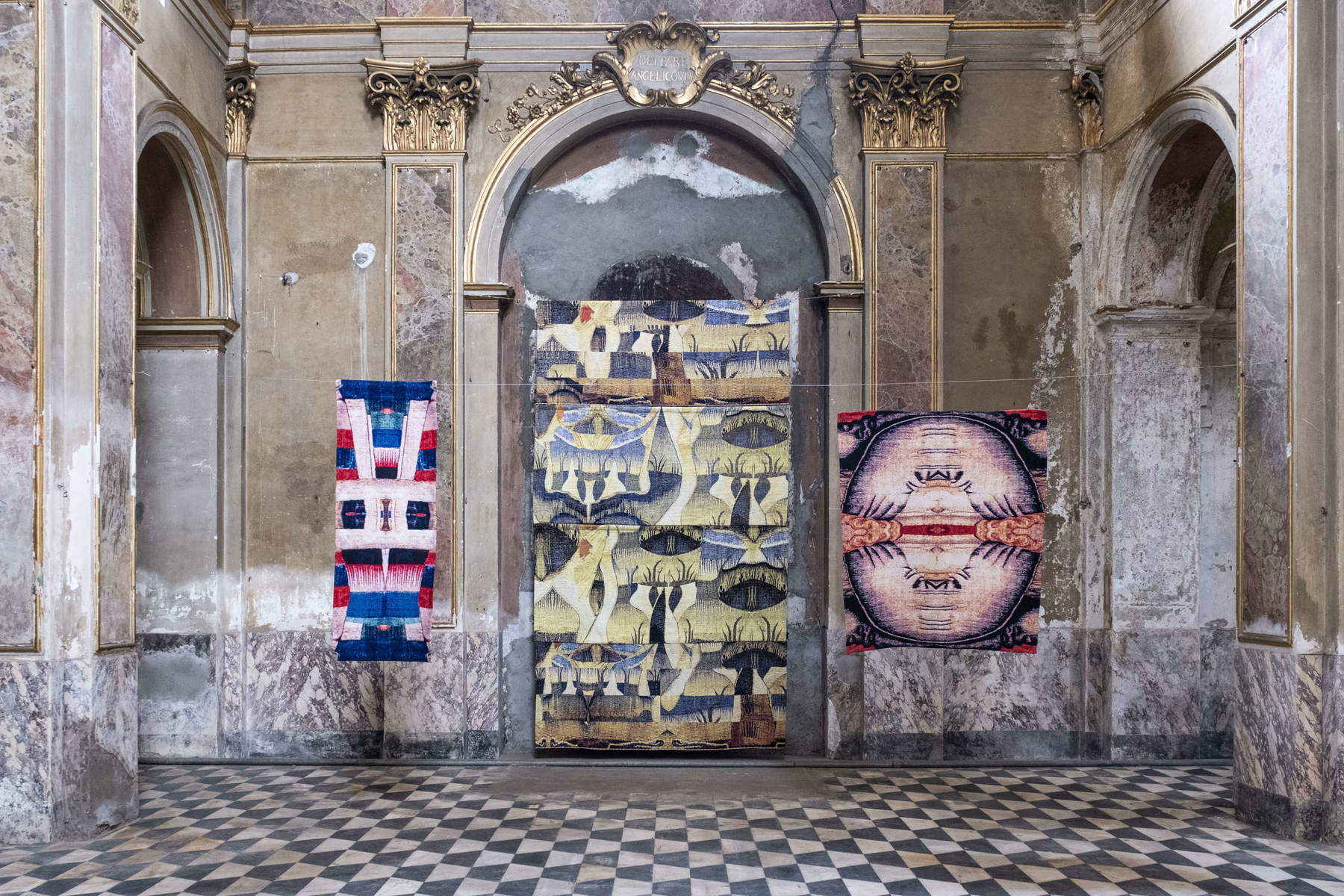
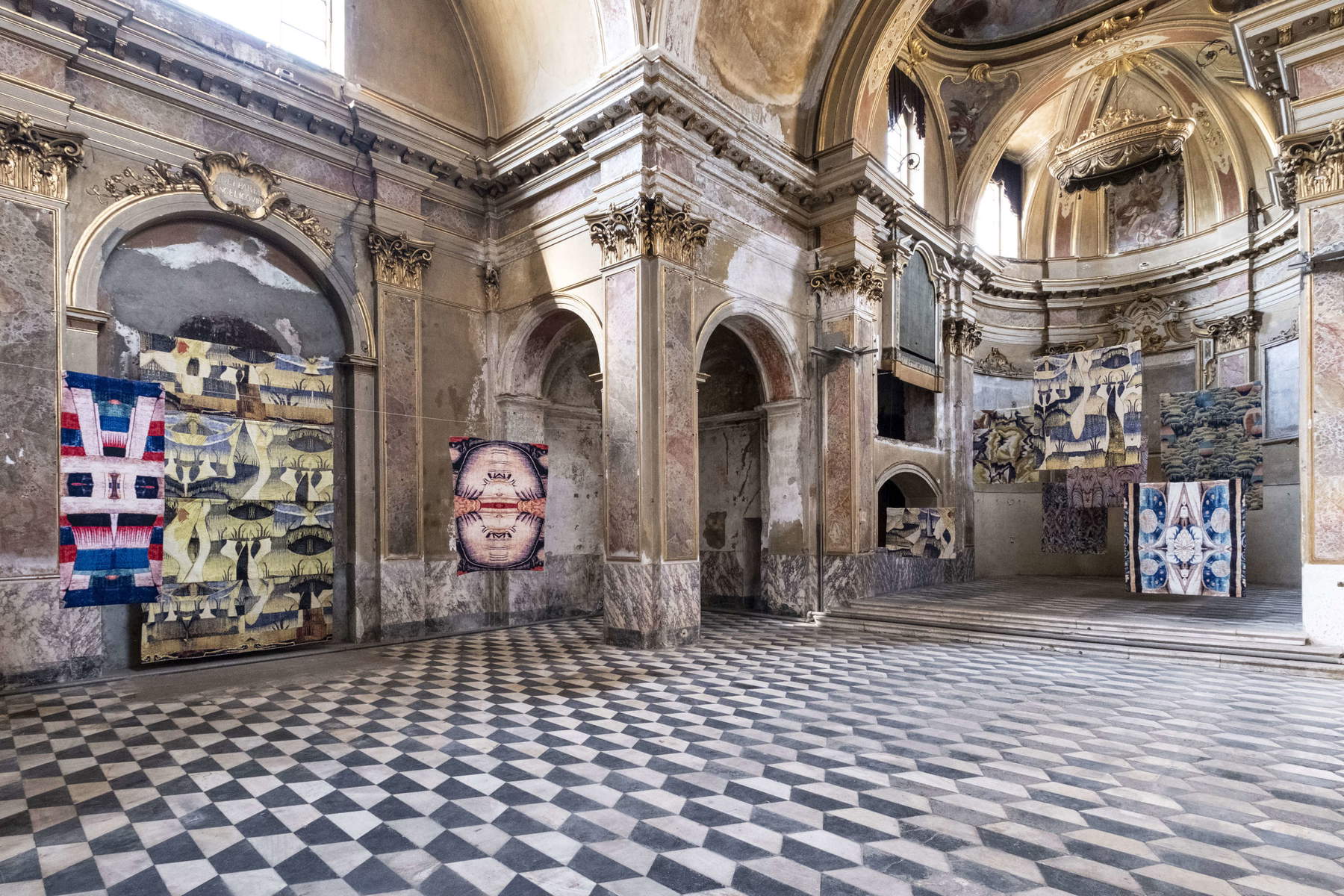
GS. “Palindromic Tapestries” is definitely a beautiful image. Yes, perhaps—since you mention the installations at the Diocesan Museum—it’s worth noting that Donzelli’s works, in that instance, in a way that’s quite unique among contemporary installations, chose to serve as a backdrop to medieval sculptures. The Virgin of the Annunciation and another saint whose name I can’t recall right now. The works from the “O” series and drawings from various sources were juxtaposed and layered, simply to create a choreographed composition that was truly a sight to behold. I think there’s a discussion here about margins and decoration, about the peripheries of artistic languages, which I find very important. It’s no coincidence that in the Romanesque Tempietto of Santa Croce, I found myself lost in observing the faux-marble decorations and the aniconic textures adorning the walls. These are timeless (and oblique) languages that challenge the linear progression of historiography and, I believe, share many aspects with Donzelli’s work. Which part do you think was the most successful? Or is there anything that didn’t quite convince you?
GL. Overall, I really appreciated the exhibition and the variety of elements it brings into play. I found that the artist approached the project with great generosity, offering visitors multiple ways to interpret the work, all of which find their common ground in drawing. This artistic language features prominently in the exhibition: both in the small works housed in the two display cases of the former Church of San Michele all’Arco—which deserve careful observation—and in the large works on paper presented at the Faculty of Sciences, Letters, and Arts. Here, at the request of curator Giovanni Berera, the works are displayed as if we were inside the artist’s studio, secured to their supports with clamps—an approach different from the one Maurizio usually adopts. In light of the variations this exhibition explores, I found the second installation inside the Diocesan Museum—the one where the drawings are magnetically attached around a statue of a saint—less effective, in my opinion, than the one featuring the two paintings from the *O* series near the statue of the Virgin, which struck me as more impactful. In your opinion, however, which part was the most successful, or which one convinced you the least?
GS. Overall , everything served a broad, layered, and varied conceptual framework. Across the board, I’d say it was the very idea of drawing that proved most successful. A humble medium and, in many ways, an immediate one, capable of conveying a very simple, fundamental, human creative urgency—through which, however, a sophisticated and rich exploration can be developed. I believe that this conception of drawing—which is at once a primary and an extremely complex language—manages to carry over even into works that objectively have a higher degree of constructive processuality (tapestries, paintings, and Lux drawings, for example). To be honest, I was less moved by the “well-like” installation in the small temple, but perhaps that’s because it represented an approach to Donzelli’s work that was new to me. That said, I’d like to emphasize my support for this seemingly theme-less exploration and for the nobility of these forms of decoration. Do you think there’s still room for art that isn’t limited to being a caption for reality?
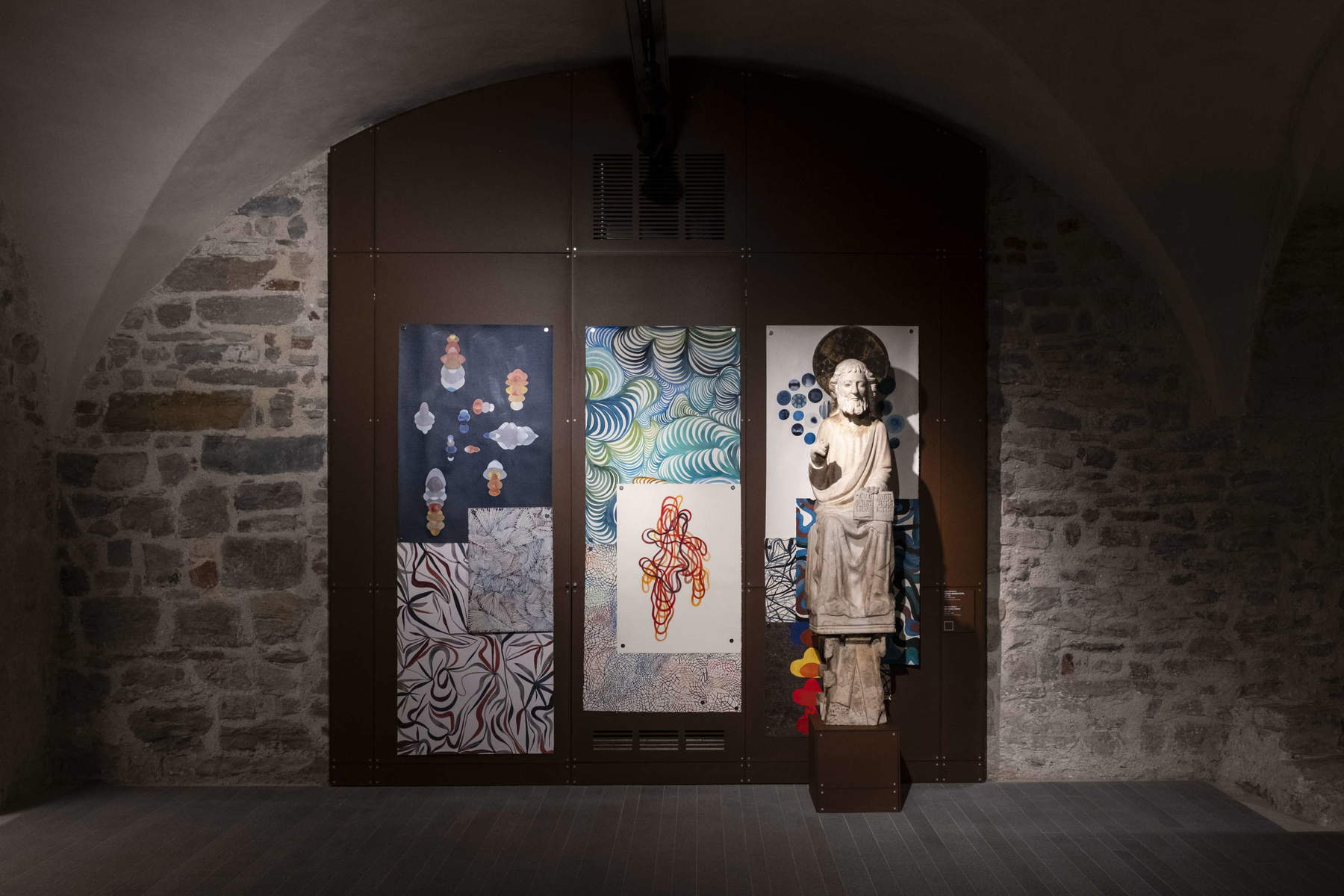
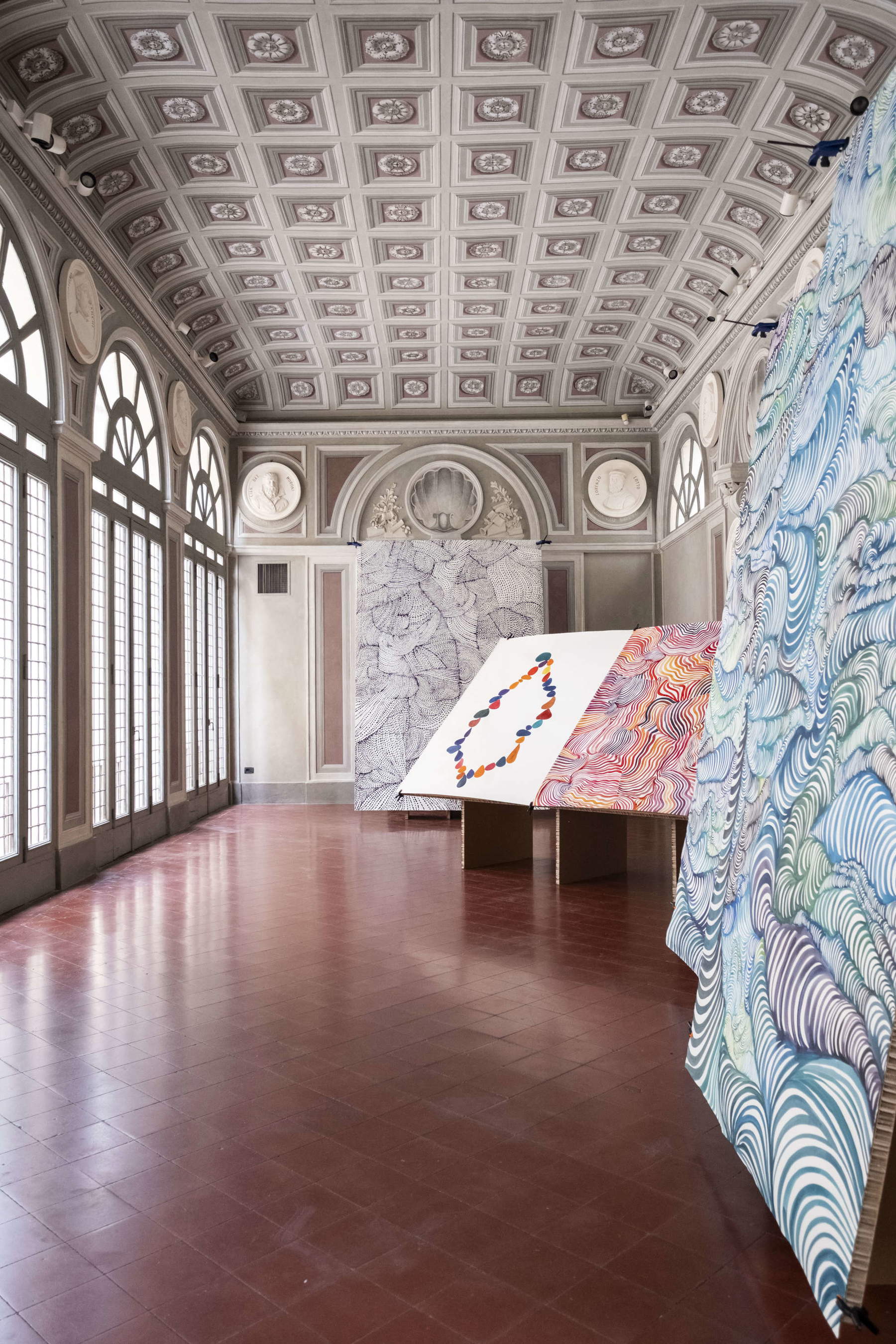
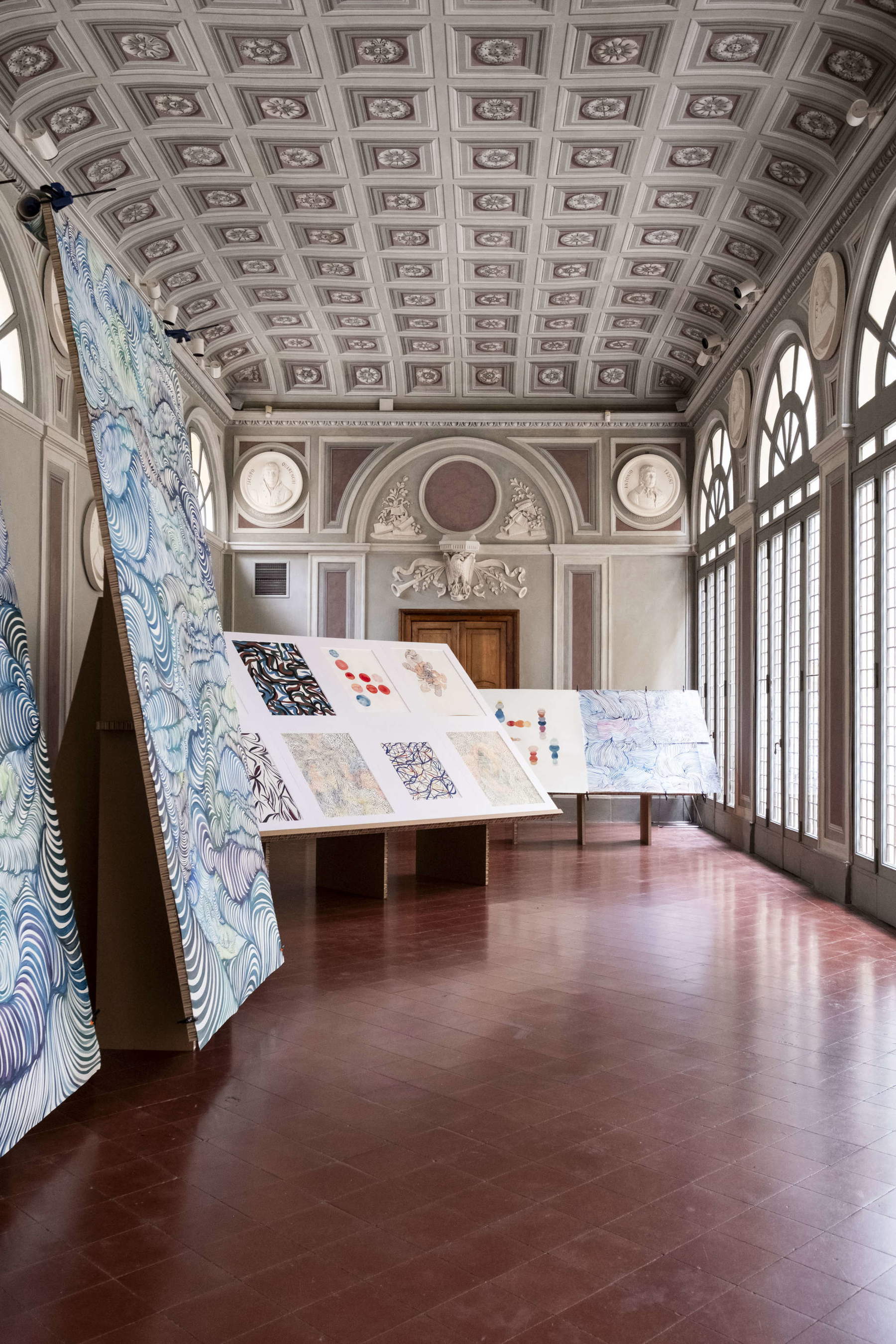
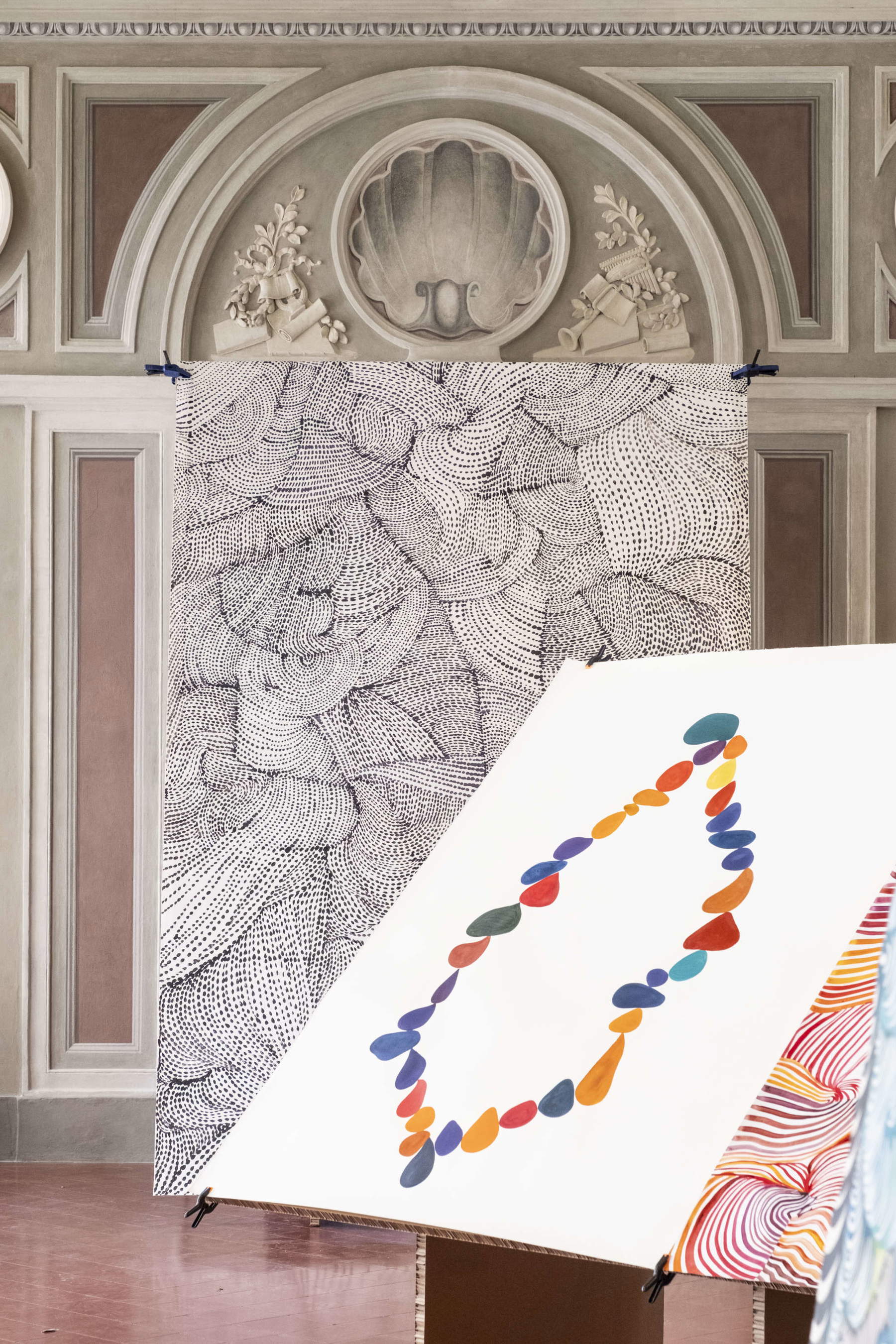
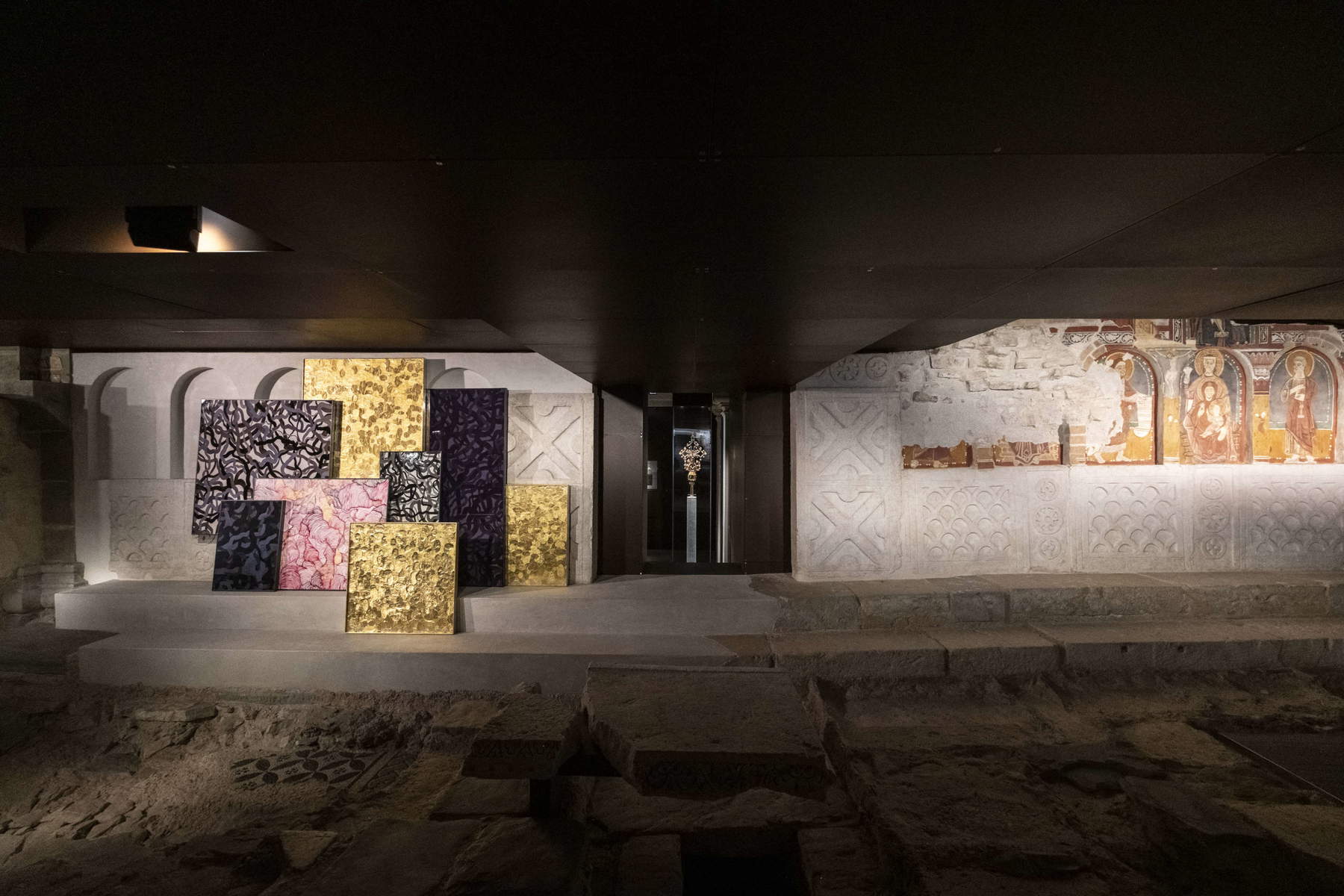
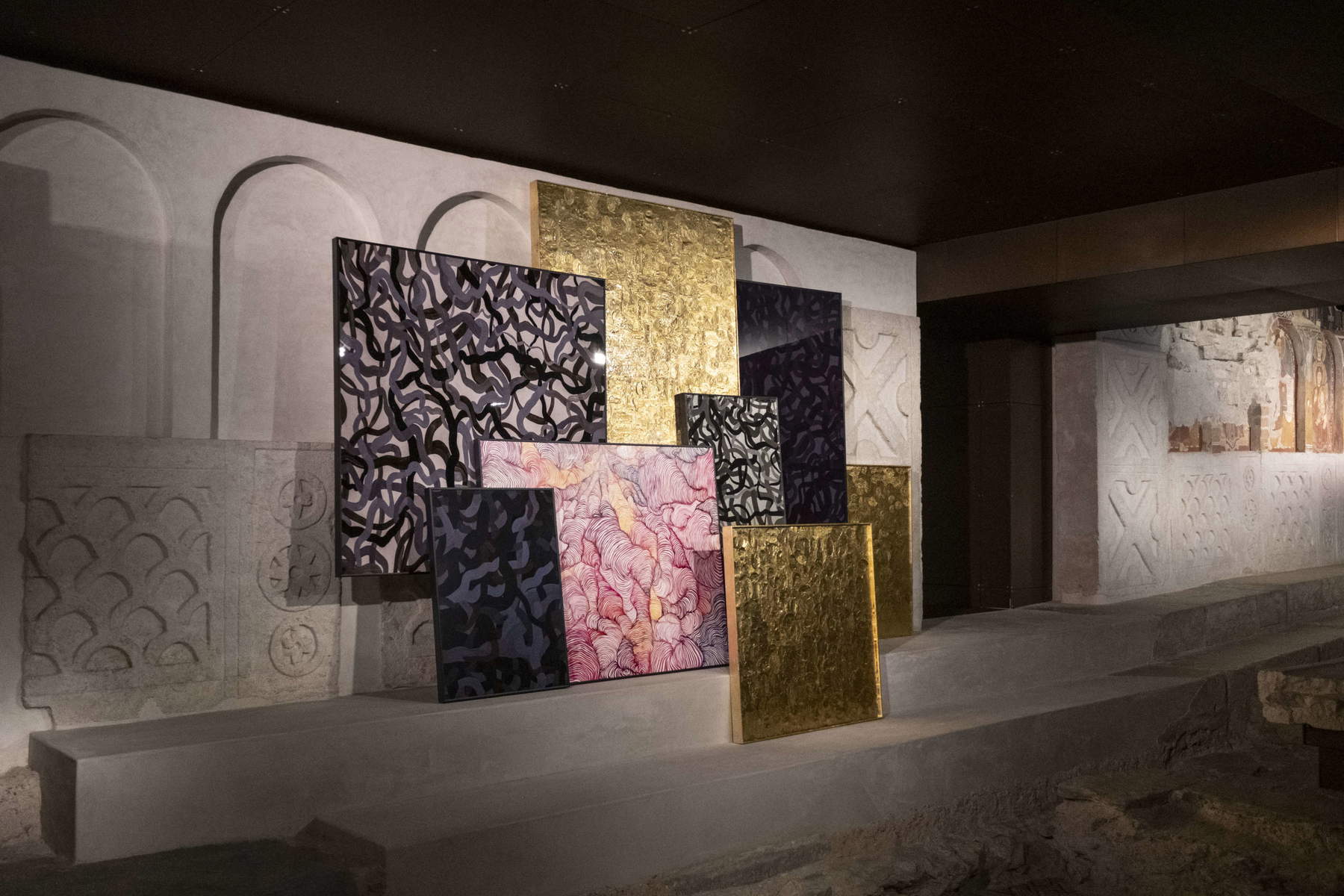
GL. “Freedom of expression belongs to those who claim it. When there is no space, you can invent another one. The very method of inventing it is already almost the new space.” I believe this statement by Giulio Turcato perfectly answers your question; moreover, it seems very relevant to Maurizio’s exhibition and, in particular, to the latest installation in the archaeological area beneath Bergamo’s Duomo. It is a variation on the work presented a few years ago by Massimo Minini, *Immaginale*. The work takes the form of an iconostasis and clearly emphasizes the sacred dimension, thereby adding yet another map—or possible path—to the rich atlas drawn by the artist.
The *Mirrors*—perhaps the work that most epitomizes Donzelli’s practice—are completely absent from the exhibition. I believe this choice benefits the exhibition, opening up, by way of subtraction, to a different perspective or, to quote Turcato, to new inventions or reinventions of spaces.
GS. Mirrors, which by their very nature are devices that open up spaces, perspectives, and images—and where reality can only manifest as multifaceted and non-univocal. It is paradoxical that this same concept can be achieved through other, seemingly more static media . I also think that, often, an artist’s most iconic expression—such as the “Mirrors” for Donzelli—risks becoming a constraint or a label in relation to the public’s expectations. I am therefore glad that this opportunity arose to express seemingly alternative poetic potentials, which still have great scope for visibility and development.
Warning: the translation into English of the original Italian article was created using automatic tools. We undertake to review all articles, but we do not guarantee the total absence of inaccuracies in the translation due to the program. You can find the original by clicking on the ITA button. If you find any mistake,please contact us.