





Contemporary American society is rife with deep-seated structural tensions. On the political front, with Trump’s second term and the contradictory emergence of the MAGA movement, the fragmentation of the two historic political camps—the Democrats and the Republicans—has generated centrifugal polarization, making it increasingly difficult to find common ground on fundamental issues such as gun control, abortion rights, immigration, and the role of the federal government. Economically, income inequality is among the most pronounced in the Western world, with the middle class having seen its purchasing power progressively eroded over the past few decades, while the concentration of wealth at the top has increased exponentially. The costs of higher education and healthcare are two crucial issues that have a decisive impact on social mobility. On the front of civil coexistence, racial tensions have reached unprecedented heights, exacerbating the public debate surrounding police violence (recently intensified by ICE’s controversial anti-immigration actions), the historical legacy of slavery, and policies aimed at addressing the inequalities inherited from that history—on which positions have become increasingly divergent and irreconcilable in recent years. Added to this is a mental health crisis of alarming proportions, particularly among young people, exacerbated by the impact of social media and a devastating new wave of fentanyl addiction. Finally, the issue of national identity is more contentious than ever, with radically different views on what it means to be American today—a conflict that encompasses language, religion, attitudes toward immigration, and the United States’ role in the world. None of this seems to be reflected in the U.S. Pavilion at the 2026 Venice Art Biennale, where self-taught artist Alma Allen presents large biomorphic sculptures made of local materials (American walnut burl, volcanic rock, white Colorado marble) inspired by the geological formations of the Americas and oriented toward an idea of elevation as collective optimism. This choice—opting for a neutrality that in practice amounts to deliberate invisibility—is impervious to any engagement with the political and social tensions sweeping the country and equally detached from both domestic and international artistic discourse. Also in Venice, this silence finds an eloquent counterpoint in the exhibition *Helter Skelter: Arthur Jafa and Richard Prince, widely perceived as the true U.S. Pavilion of the Biennale, which, at the Prada Foundation—Ca’ Corner della Regina, for the duration of the 61st International Art Exhibition, brings together the works of two of the most significant American artists in an unprecedented and fruitful dialogue.
Unlike the virtually unknown Allen, both artists have, from the very beginning of their careers, unflinchingly confronted the raw nerves of their country, developing artistic languages united by an ethic of appropriation and manipulation of images that becomes a tool for a ruthless investigation of American visual culture: its endemic violence, its myths, its contradictions, and its ability to absorb and neutralize any critical voice. Richard Prince (Panama Canal Zone, 1949), a painter and photographer, explores the codes of white masculinity, consumerism, and desire with a deliberate ambiguity that oscillates between fascination and demystification, while Arthur Jafa (Tupelo, Mississippi, 1960) draws from a perspective rooted in African American identity to restore to images the historical trauma, collective memory, and political urgency that circulation tends to erode. The counterpoint between the two artists gives rise to an exhibition that, in every respect, embodies what the official U.S. pavilion has forsaken: an unflinching gaze, staged as a productive relationship between two complementary positions within the same culture—that of a white man who has turned his fascination with his own myths into a critical practice, and that of an African American man for whom every image is also a battlefield of memory and identity.
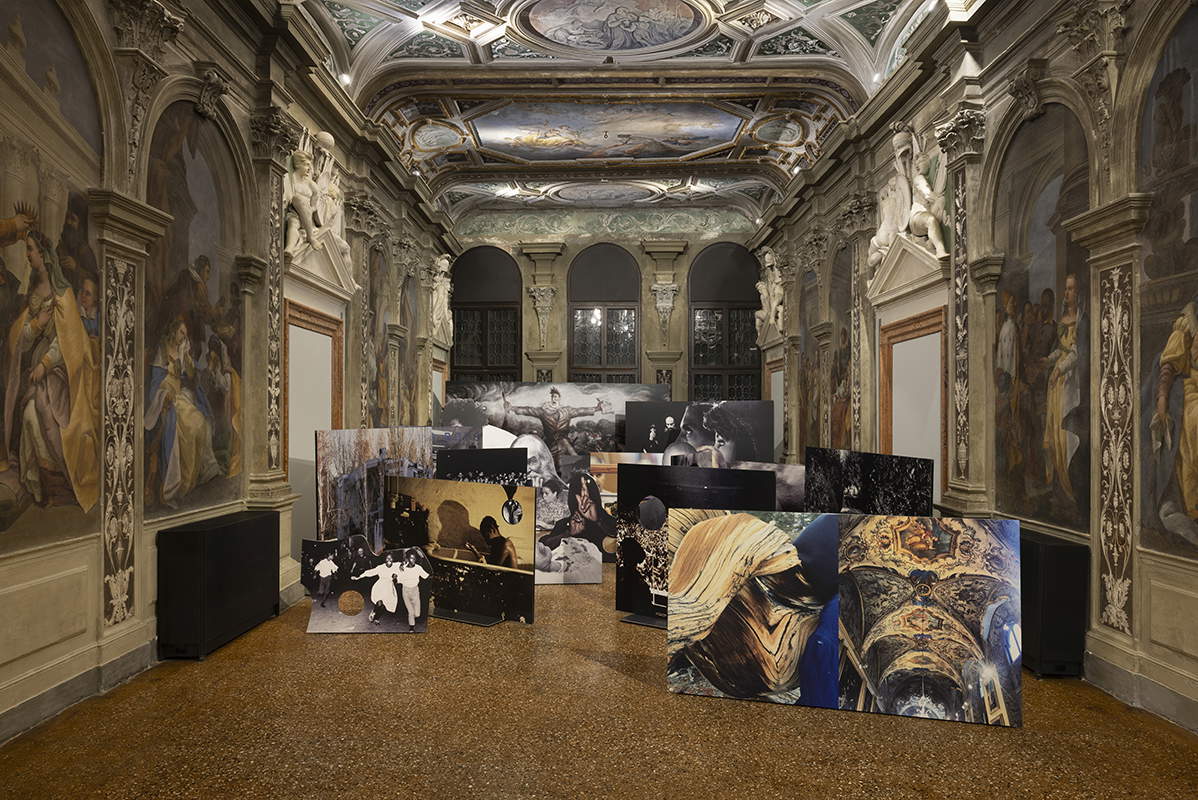
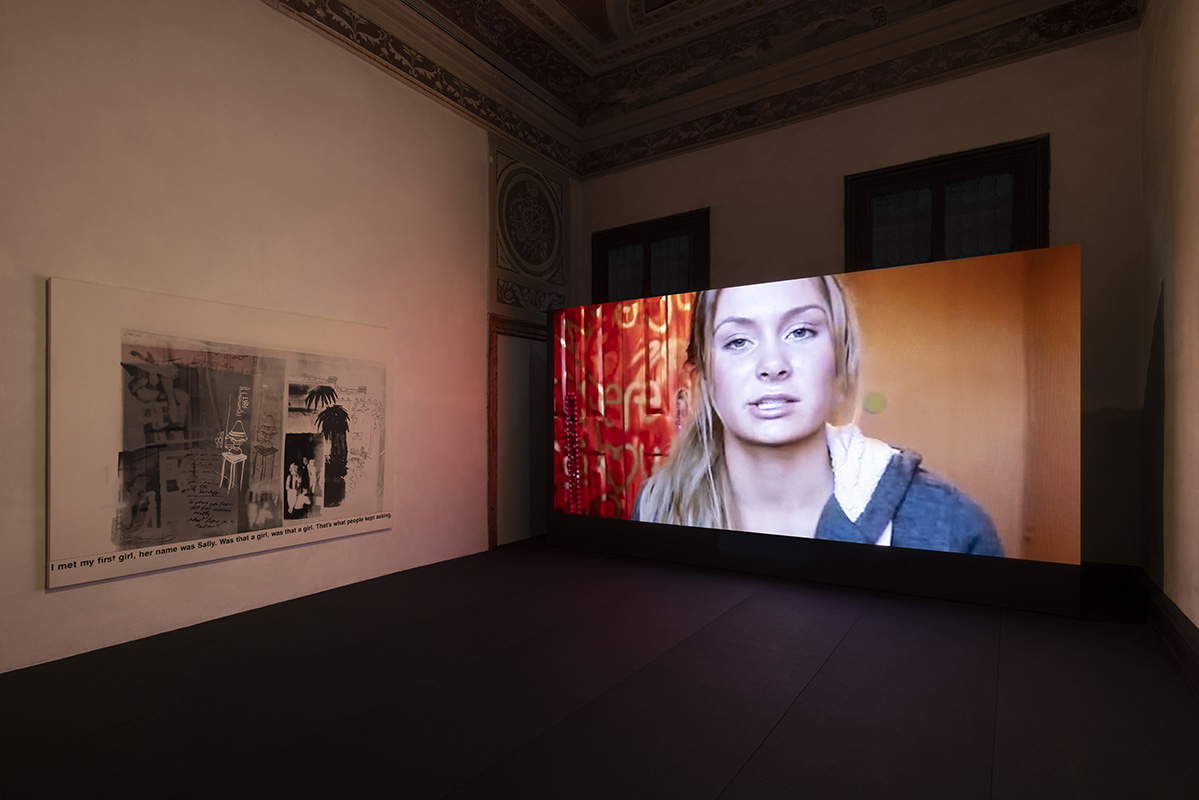
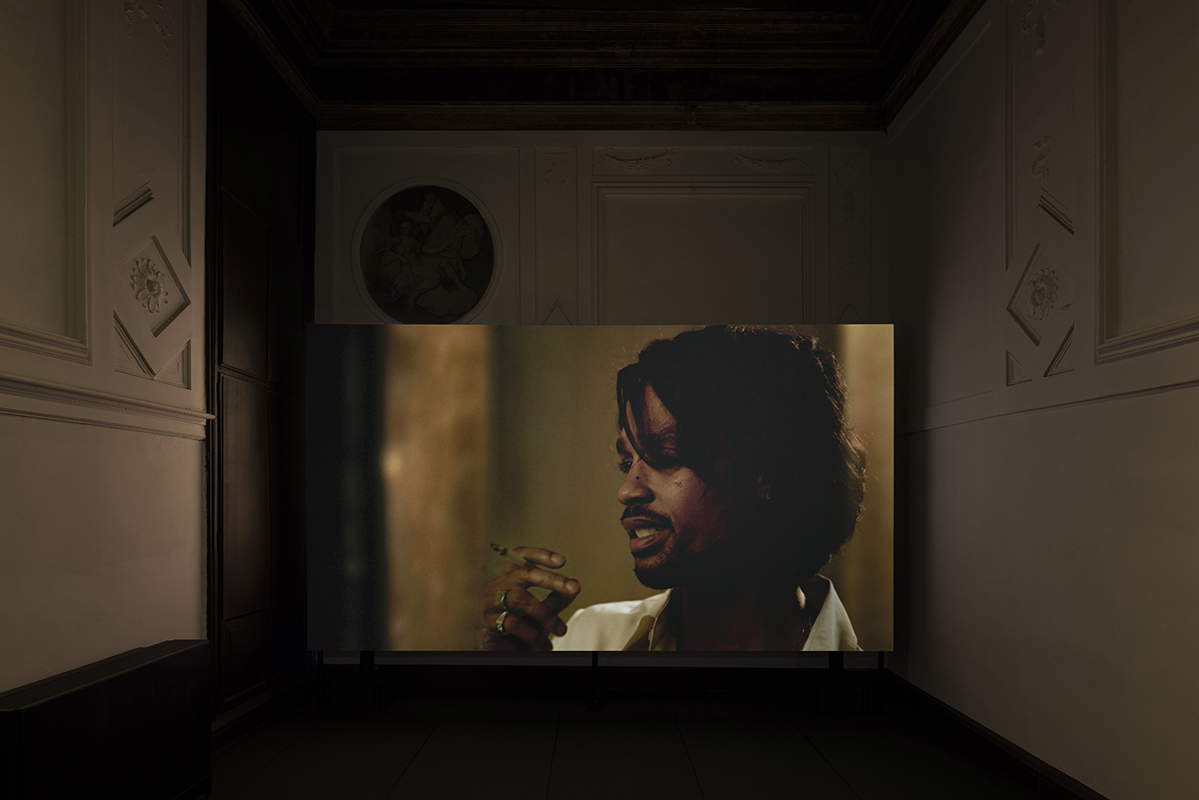
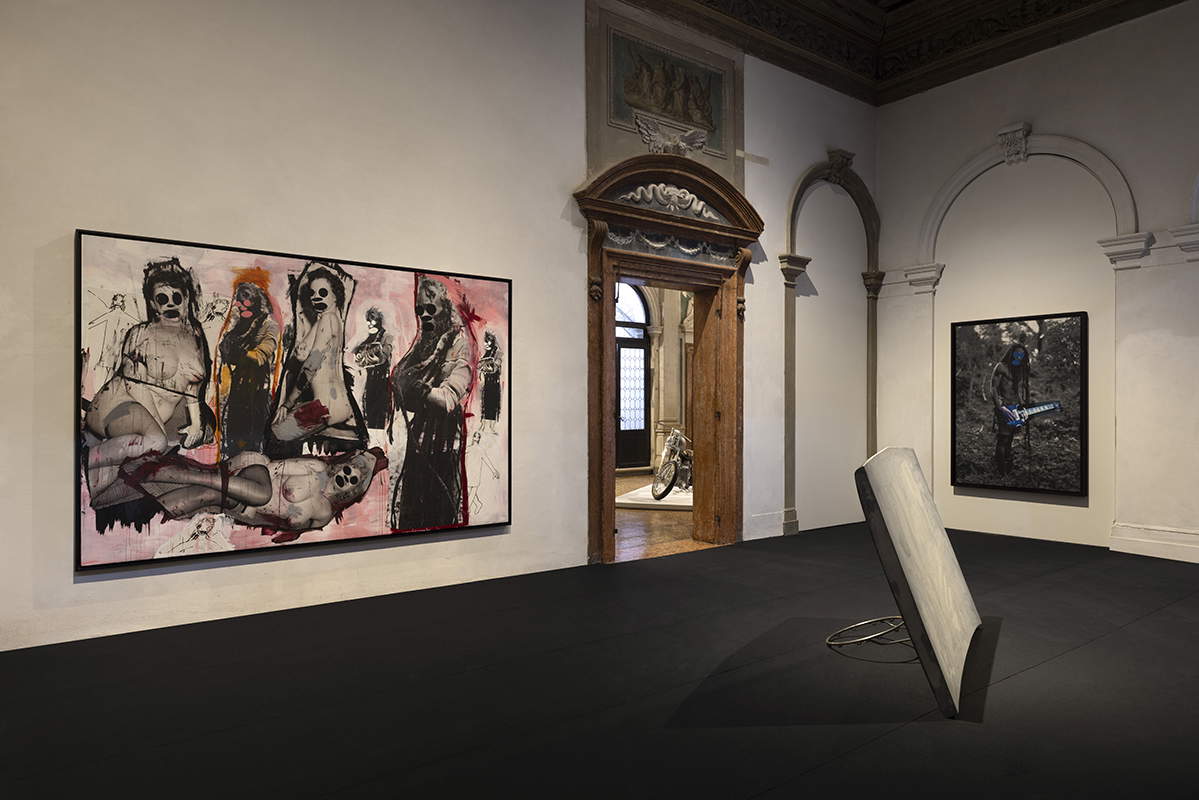
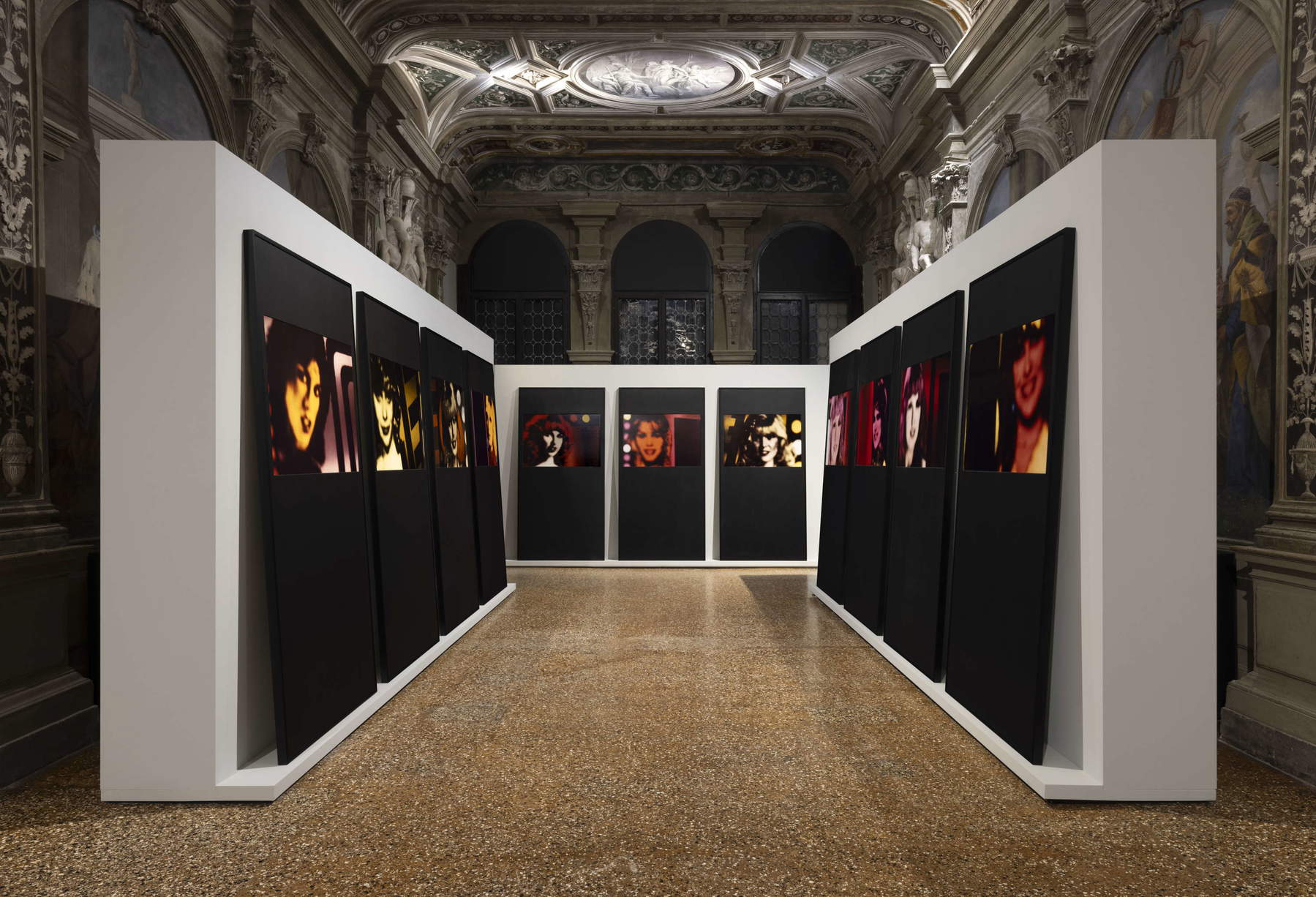
The semantic layers embedded in the title, after all, foreshadow what awaits the visitor even before they cross the threshold of Ca’ Corner della Regina: “helter skelter” is, first and foremost, an iconic British-origin amusement park ride consisting of a tall tower—often resembling a lighthouse—that visitors climb from the inside and then descend via an external spiral slide. The expression, which has entered colloquial language to denote a state of mental confusion, is also the title of a famous Paul McCartney song from the Beatles’ *White Album* (1968) by the Beatles, and was later used the following year in the blood-stained inscription found at the scene of a brutal murder committed by Charles Manson’s followers, who were convinced that the song contained a coded prophecy of a racial apocalypse. Finally, “Helter Skelter” is the title of the group exhibition with which the Museum of Contemporary Art in Los Angeles surveyed the city’s art scene in 1992 without including a single Black artist. In the Venice exhibition, this verbal appropriation of existing appropriations is adopted by curator Nancy Spector as both a guiding principle and a method, proposing the dizzying and vaguely nauseating spiral descent as the very form of the visitor’s experience. For this is indeed a descent into the depths: the more than fifty works distributed across the two floors of the 18th-century palace compose a journey through two concurrent hells that intersect without ever coinciding. On the one hand, Prince’s air-conditioned underworld, made up of freeze-dried advertising surfaces, posed smiles, and pre-packaged desires, where despair has the temperature-controlled atmosphere of an autopsy room; on the other, Jafa’s incandescent hell, where every frame is laden with the history that produced it and burns the viewer’s gaze. Two damned souls, one might say, dancing in a macabre circle, fueling a single hallucinatory dream nourished by violence and emptiness (the violence that America inflicts upon itself, the void it stubbornly refuses to face), into which the viewer slips by gravity, searching in vain for a foothold to save them from plunging into the foundational repression upon which American society continues to build itself.
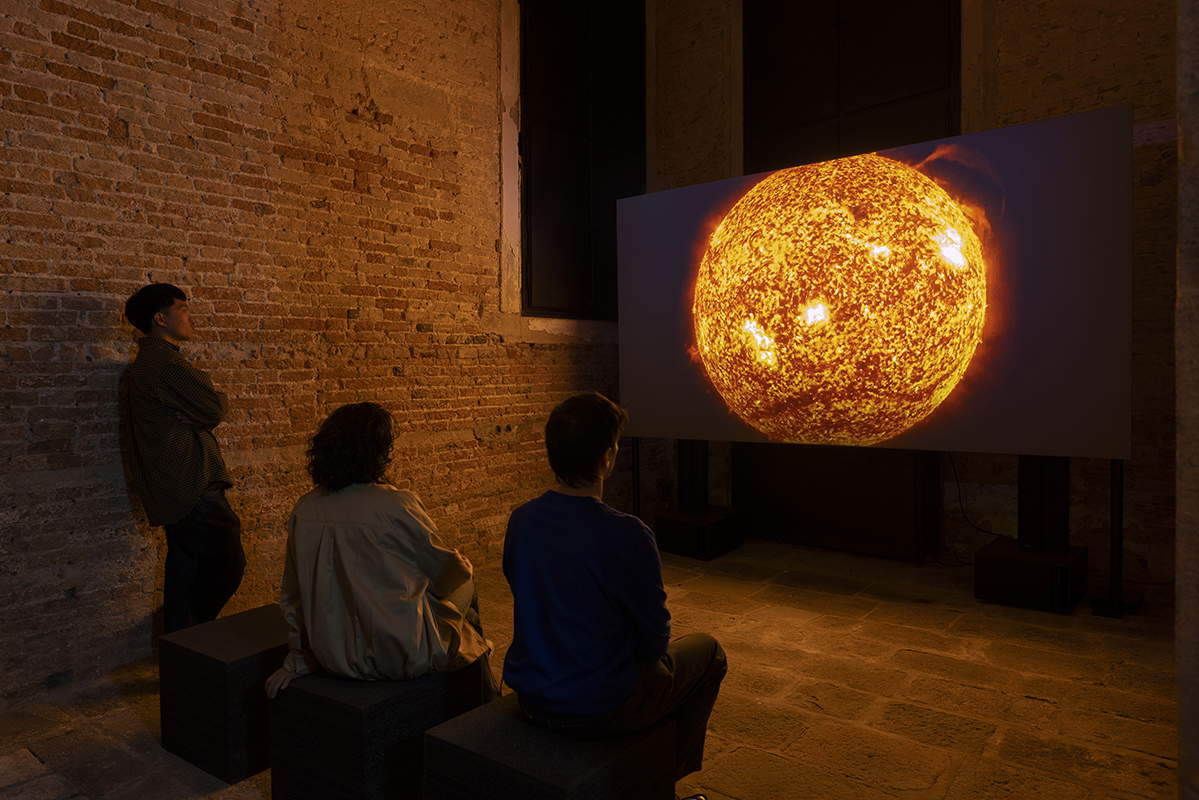
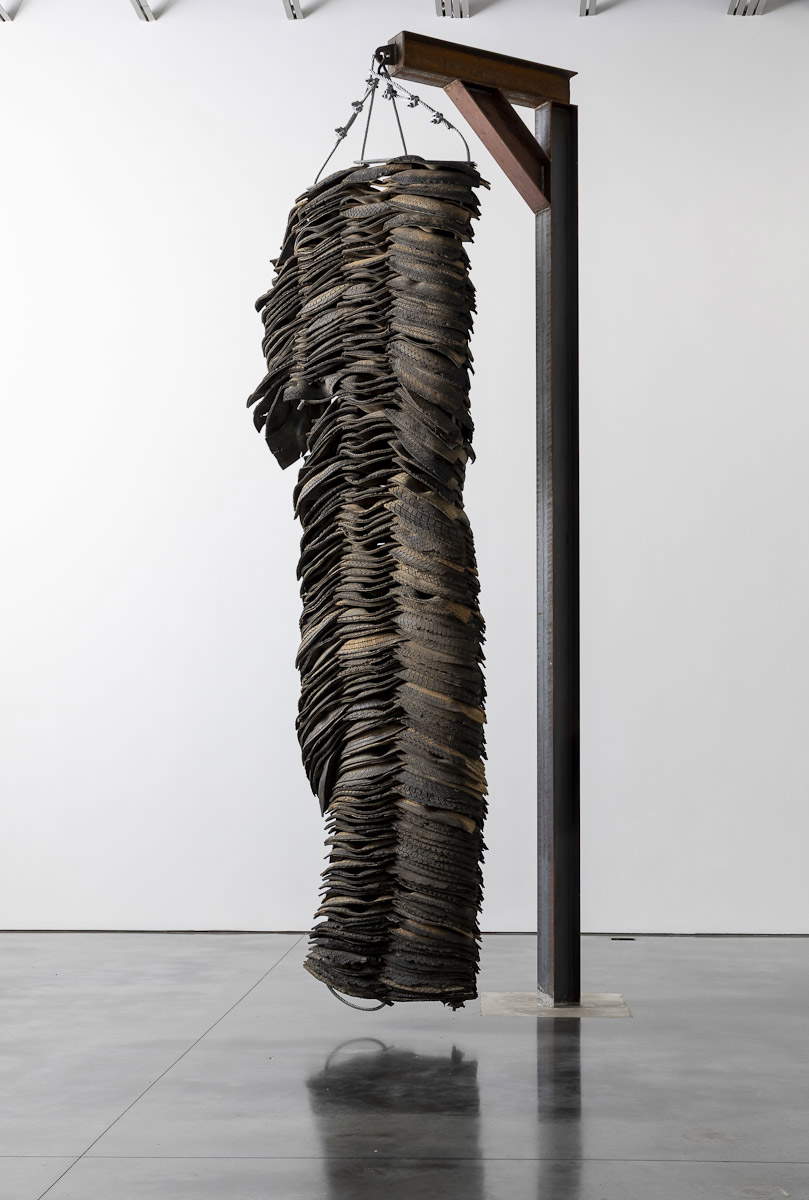
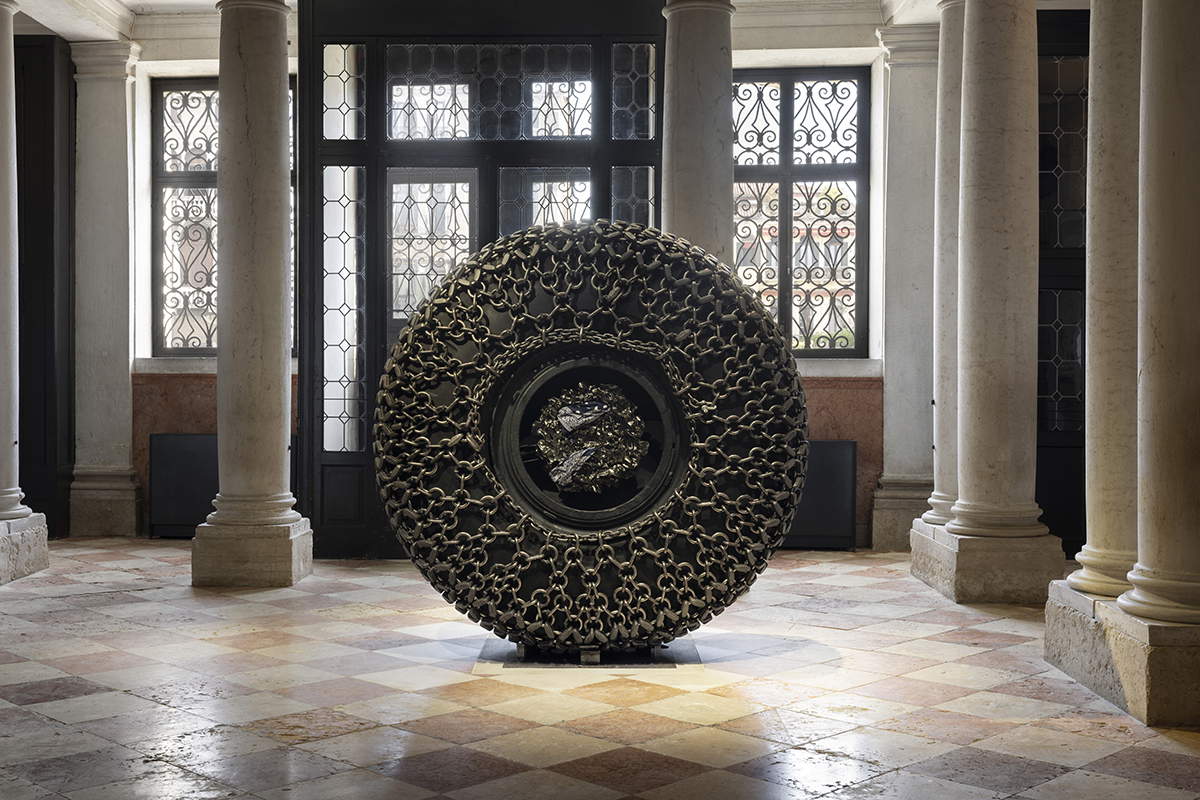
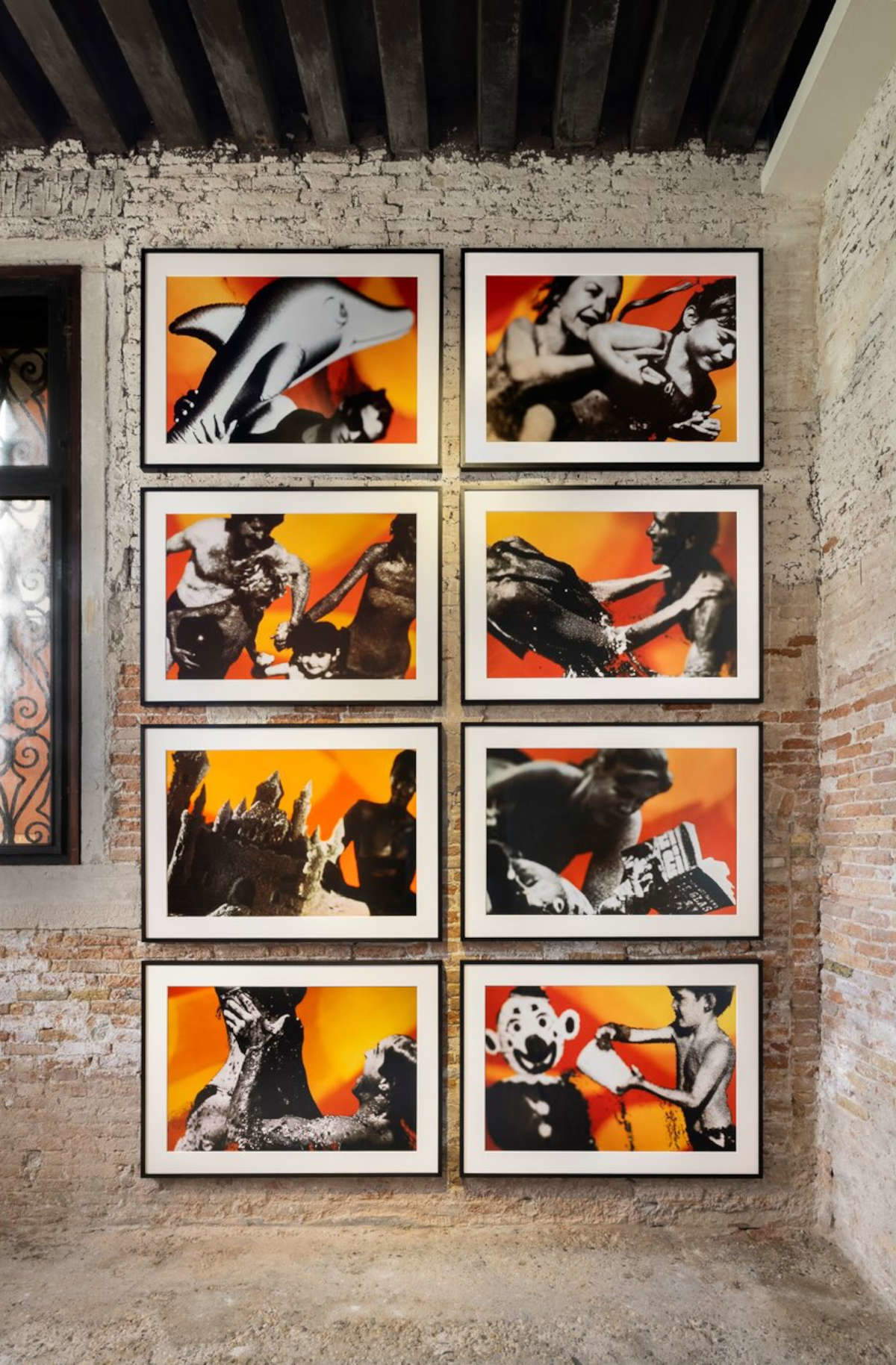
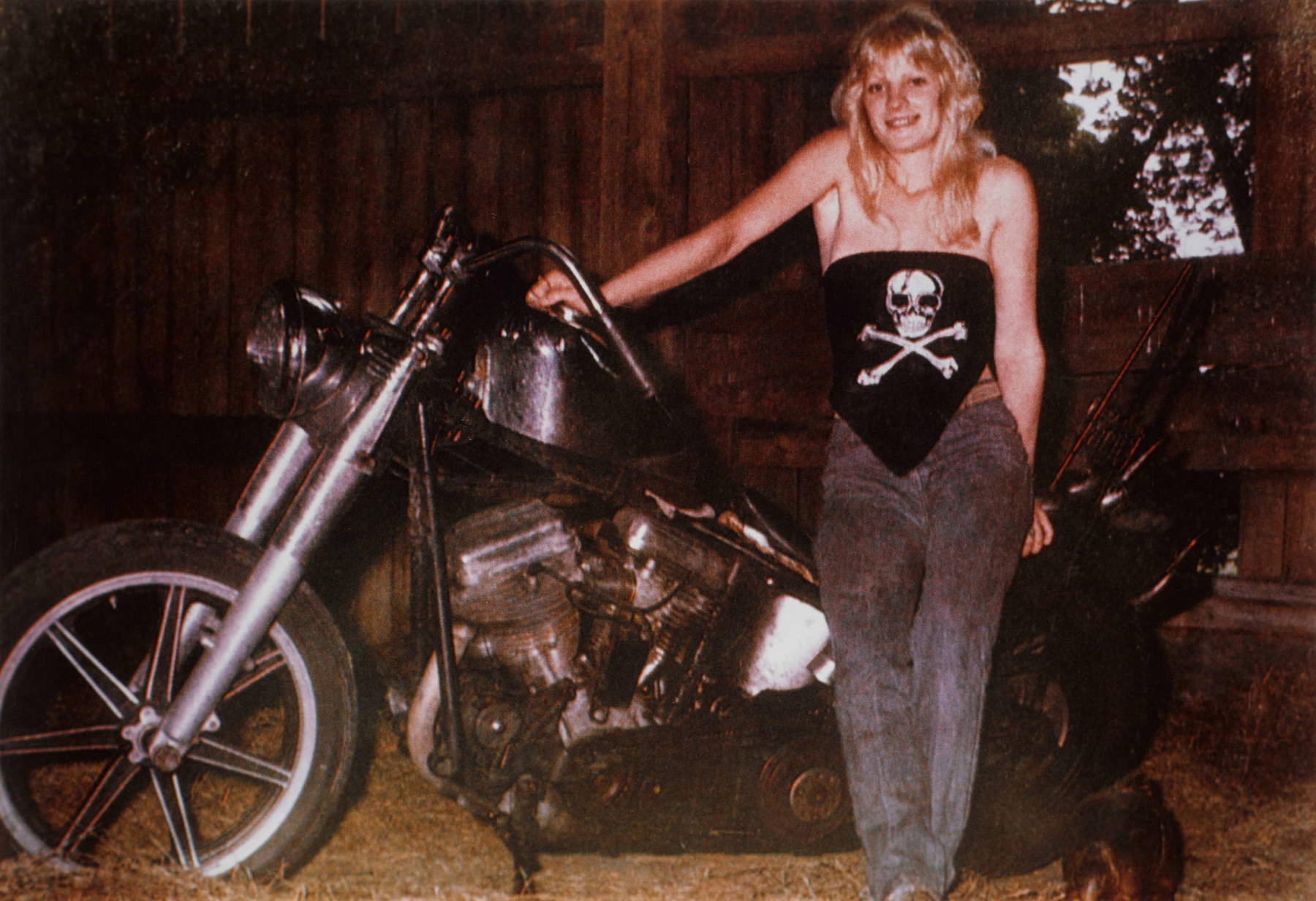
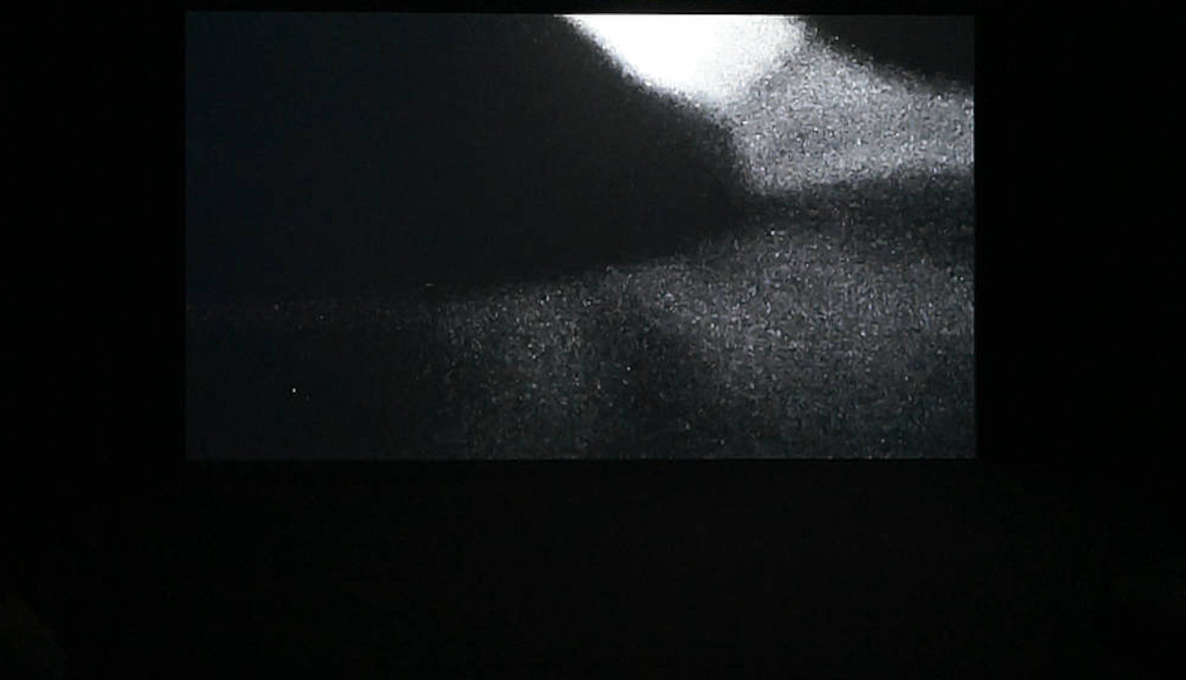
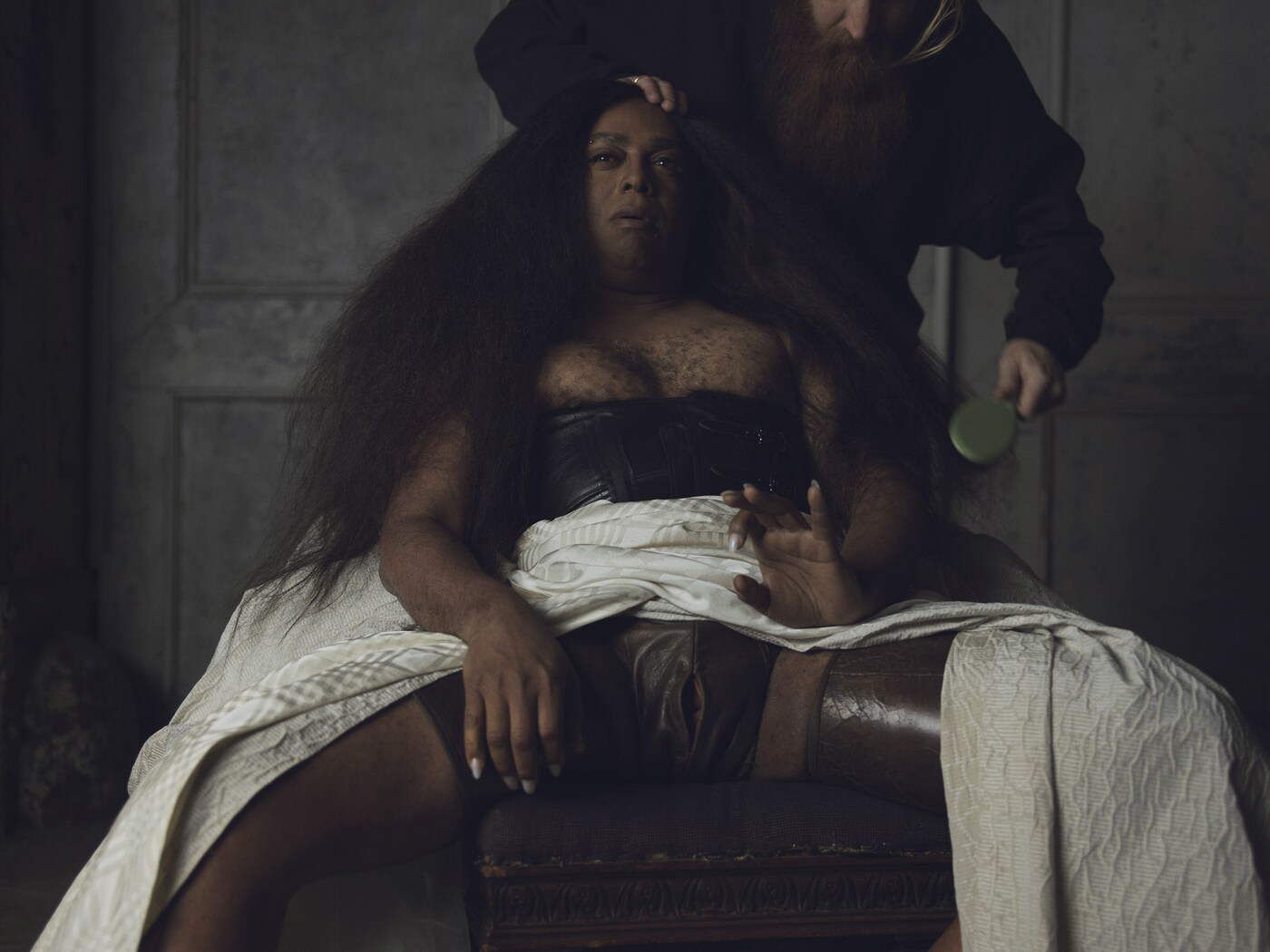
The antechamber of the underworld is in the building’s courtyard, where two colossal sculptures from Prince’s 2006 series *Folk Songs* (Blasting Mats) from 2006, constructed from dismembered tires and steel construction cables, hang from metal structures with the carnal inertia of slaughtered beasts, slowly deforming under their own weight. A short distance further on, inside, Jafa’s *Big Wheel II* (2018), a gigantic monster truck tire bound in iron chains—part of a series of six sculptures exhibited at the 2019 Venice Biennale—explores the memory of the destructive, aggressively modified vehicle races the artist witnessed as a boy in the Mississippi Delta. In both types of works, the American mythology of the open road and the motor as a promise of freedom is turned into a deadly relic: chained and suspended, the wheels serve their punishment in perpetual stillness, while the shackles holding them in place cannot help but bring to mind the coercion of slavery upon which the misleading American ideal of liberal democracy was built. Moving forward, the curatorial montage proceeds through juxtapositions and resonances, where each point of affinity introduces a new circle. Prince’s *Sunsets* (1981–1982), scenes of seaside leisure set in an abstract landscape on the verge of melting, excerpts from vacation advertisements bathed in apocalyptic acid orange, find their counterpart in the adjacent room in the incandescent sun that intermittently reappears in *Love Is The Message*, Jafa’s *The Message Is Death* (2016)— found footage on Black American life accompanied by the notes of Kanye West’s “Ultralight Beam,” an epic and spiritual track halfway between gospel, hip-hop, and electronic music, which explores themes related to faith, redemption, and the search for divine guidance. The debut of this work at Gavin Brown’s Enterprise in Harlem in November 2016, just a few days after Trump’s election and at the height of the Black Lives Matter movement—incidentally, established the artist, who until then had been known primarily in the film world as a cinematographer, as one of the most significant voices in American art. And furthermore, Prince’s *Girlfriends* ( 1986–1993) and * *, enlarged amateur photographs pirated from the back pages of motorcycle magazines where readers flaunted their girlfriends posing on motorcycles, offering them to the gaze of others in a mix of pride and voyeurism. Their awkward eroticism, tinged with the melancholy of an unfulfilled and trivialized desire, finds an unexpected counterpoint in the abstract mourning of *LOML* (2022), a film sequence of light, darkness, and grain created by Jafa in memory of his friend and critic Greg Tate: on the one hand, desire incapable of reaching its object; on the other, affection that has forever lost its recipient.
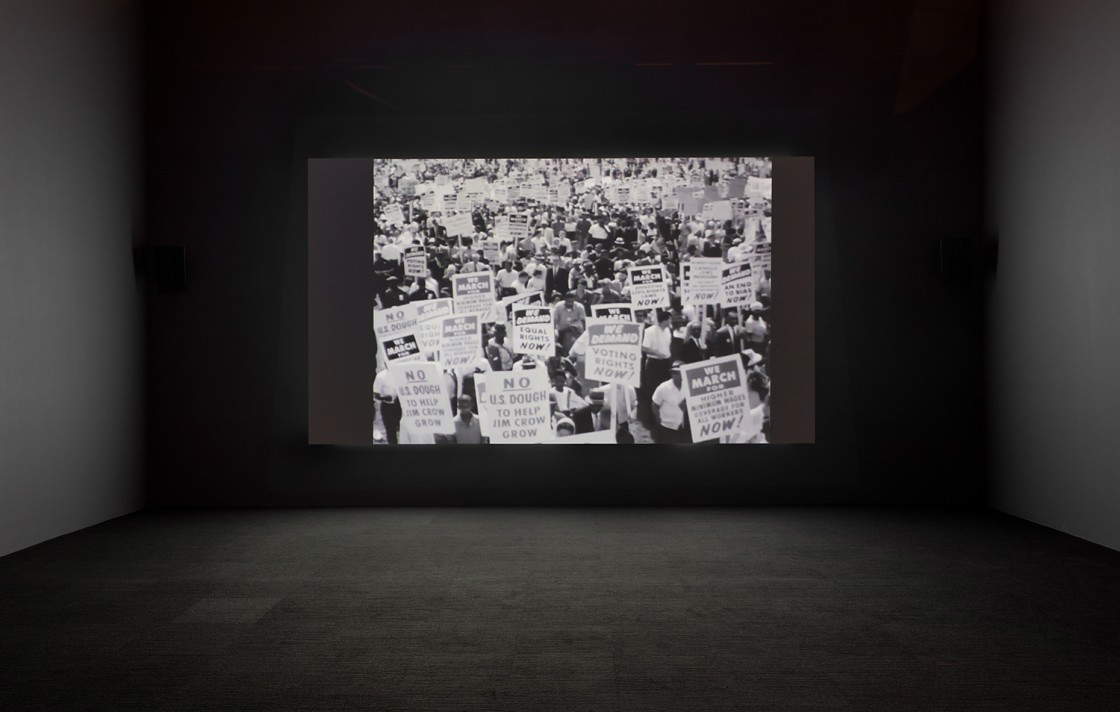
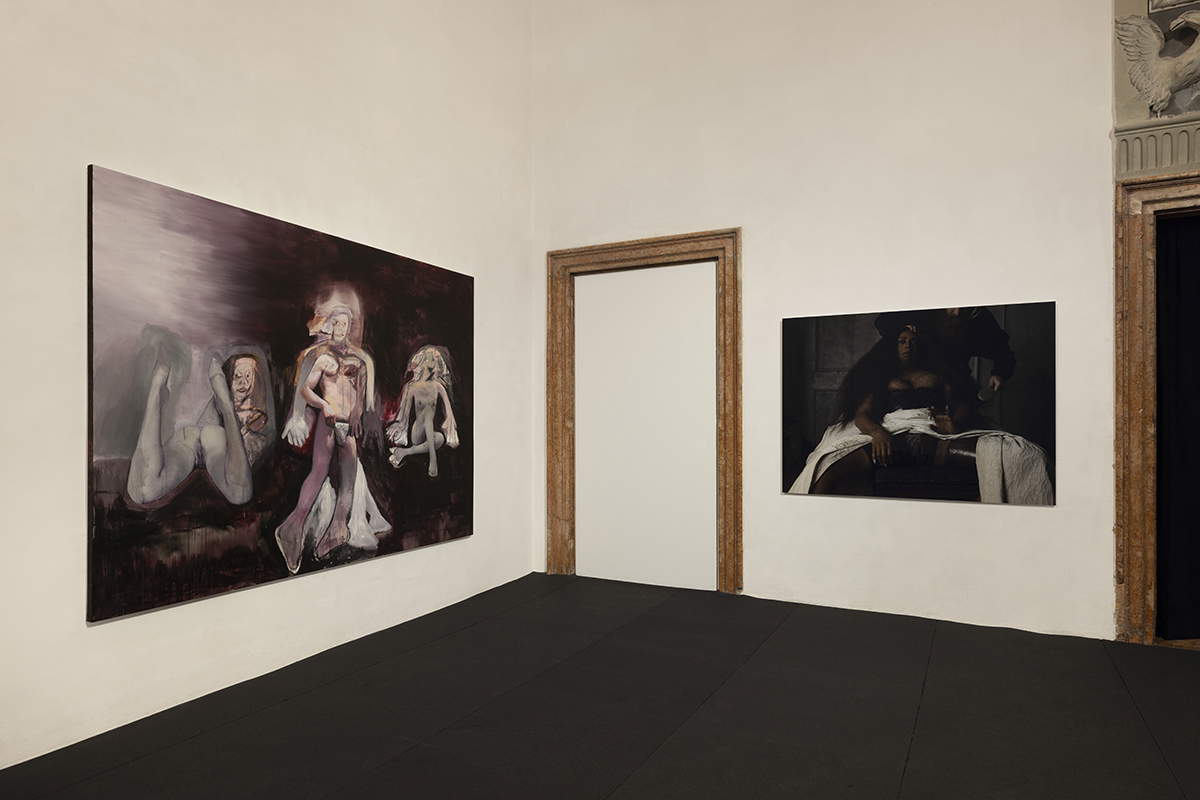
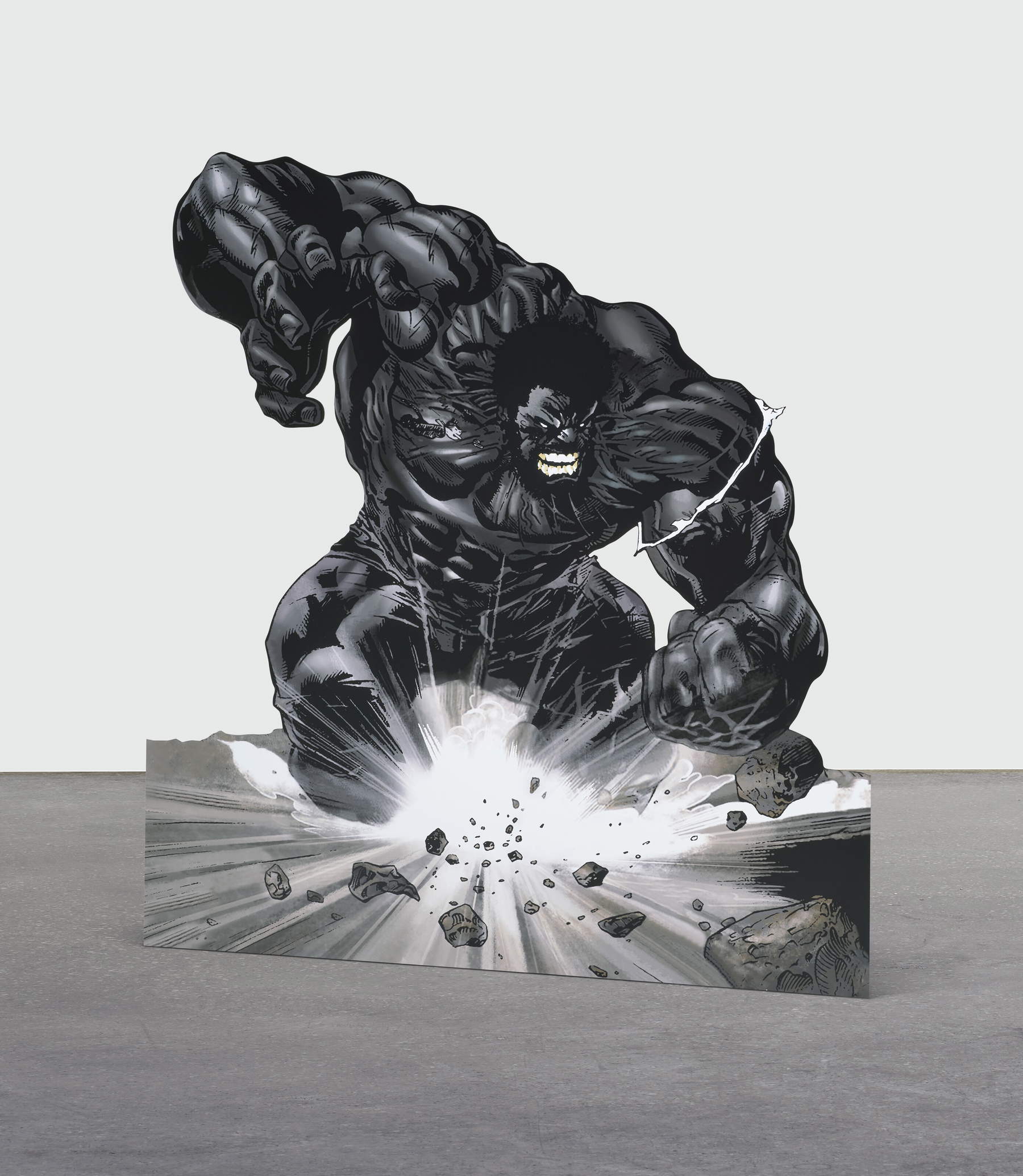
In the central room on the first floor, *The Entertainers* (1982–1983)—aspiring actors from the Times Square area photographed by Prince and enclosed in Plexiglas cases like relics of a failed ambition—face *Viriconium* (2026), Jafa’s new environmental self-portrait. Here, a forest of aluminum silhouettes (in which figures such as Angela Davis, Billie Holiday, and Walt Whitman can be recognized alongside anonymous figures from the news) forms a deliberately syncretic pantheon, resistant to any monolithic interpretation of identity. It’s a shame that visitors aren’t allowed to walk through it during the tour to experience the intersections of perspectives engineered by the artist through circular openings that frame precise correlations. And then there are Prince’s *De Kooning Paintings* (a large 2006 painting is on display), with their anatomies recombined beyond any binary code, alongside the photographic disguise of *Man Monster-Duffy* (2018), in which Jafa steps into the shoes of Mary Jones, a Black transgender sex worker from the mid-19th century. Or the “Protest Paintings” (1989–1994), vertical canvases in which Prince incorporates the silhouettes of protest signs, leaving them speechless. Stripped of their slogans, they present American protest as a pure, malleable form—a vessel that any cause can fill and which, precisely for this reason, no longer belongs to any single one. Opposite them stands the compressed rage of Jafa’s *LeRage* ( 2017), where the Incredible Hulk—a man feared and isolated by civil society because his rage has transformed him into a monster—becomes, in his Black incarnation, a figure of fury that needs no justification to be legitimate. The anger drained from the white signs returns here in a pop and monstrous form—not articulated in words but already entirely political.
Finally, the room where Jafa’s *Ben Gazarra* (2024) brings out the negative of Scorsese’s *Taxi Driver*: in the film’s original screenplay, the pimp and the clients of the child prostitute were supposed to be Black, but the production, fearing what that portrayal might unleash, insisted they be white. The artist, through a virtuosic digital montage, reinstates the omitted Black actors and restores the film’s erased plot, exposing the racial anxiety that constituted its unspoken undercurrent. Next to it is not a work by Prince but its source: Alfred Stieglitz’s *Spiritual America* (1923), a photograph depicting a detail of a castrated and saddled horse. The artist adopted the same title for his most infamous work, the 1983 rephotograph of a 1975 shot taken for *Playboy* by Garry Gross—with the signed consent of her mother-manager—of a ten-year-old Brooke Shields, naked and made up like an adult in a bathtub. The work, not included in the selection because it was deemed too morally disturbing— it has been said—even for an exhibition as averse to prudence as this one, is very much present in its absence. It is worth noting, however, what the exhibition does allow elsewhere: in *I Don’t Care About Your Past, I Just Want Our Love To Last* (2018), Jafa reproduces the image of the lynching of three young Black men arrested on false rape charges and hanged by a white mob in Duluth, Minnesota in 1920—an image that circulated at the time as a postcard, souvenir, and warning—and superimposes it with a photograph of a Compton gang that found its way onto a 2018 rap album cover, under a title borrowed from a James Brown love song. The tortured Black bodies can, therefore, be shown, and their display is the ethical heart of Jafa’s work; the white body of a commodified little girl, however, cannot. This disparity in treatment has its reasons (Gross’s image perpetuates pedophilic violence with every new exhibition, while Duluth’s bears witness against its perpetrators), but the fact remains that the boundary of what can be shown reproduces, even here, an atavistic regime of differential visibility: the Black body is thrown to the gaze of anyone and everyone, while the white body is protected by modesty because, in America, modesty has a class and a color.
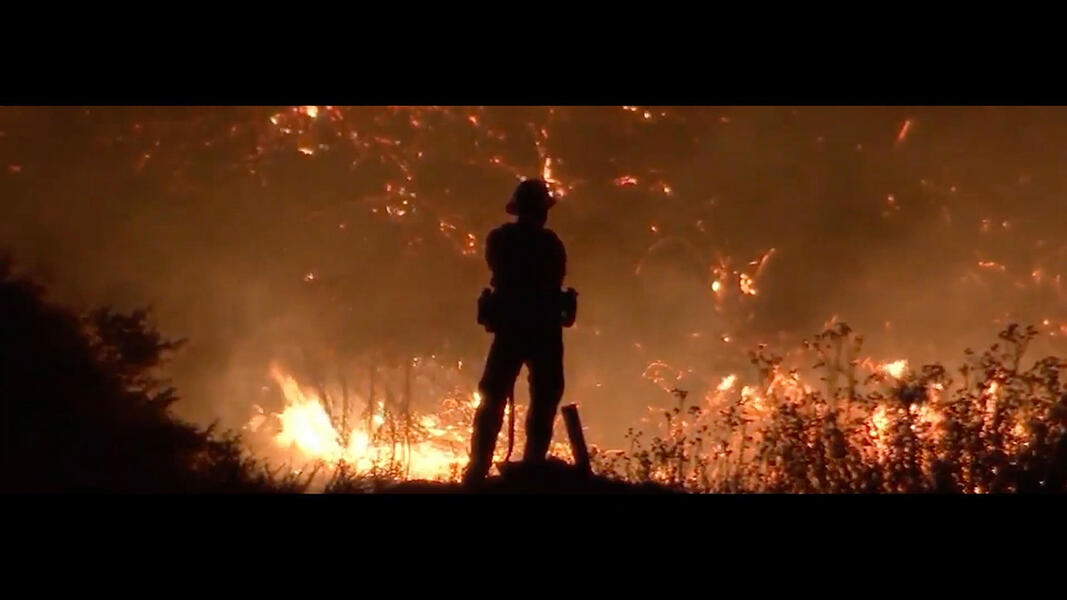
The final room is dedicated to *akingdoncomethas* (2018), a montage of Pentecostal liturgies and gospel choirs filmed in large Black congregations, where Jafa’s conviction that African American culture resides in the body (in song, in speech, in movement—the sole possessions of slaves torn from their homelands) unfolds over nearly two hours of collective ecstasy. This mystical flow is interrupted by footage of the wildfires that periodically devour the hills of Los Angeles and, for an instant, by the return of the burning sun from *Love Is The Message*: the circle closes where it began, in the light of a fire. It is the perfect image to conclude an exhibition that has the density of a deposit of flammable images, layered into a journey that allows for neither pause nor escape, and which, precisely in this saturation, reveals the deep bond between two genealogies of appropriation born worlds apart. Prince’s lineage descends from Duchamp’s ready-made through the era of the Pictures Generation and proceeds with the detachment of a medical examiner, stripping away and dissecting the image to expose its commodified unconscious; Jafa’s stems from cinema and found footage and operates by overheating, recharging every frame with its original historical weight. In between lies a difference that is the real issue at stake: for those descended from people once reified as the property of others, appropriation is not a conceptual detachment but a survival tactic, and authorship is not a dogma to be deconstructed but a right to be claimed, as Jafa well knows, having recognized in Prince’s precedent the very condition of possibility for her own work. The ready-made, employed by both as a Trojan horse designed to undermine American belief systems from within, thus confirms itself as one of the most versatile and ruthless tools that twentieth-century art has bequeathed to this century. To the polished aphasia of the official pavilion, the two artists respond with an excess of visibility that stuns and wounds, laying bare the tragic and bloody soul of an America that for nearly four centuries has sought to be a city upon a hill, a shining example offered to the world according to the promise of the Puritan fathers (the expression dates back to the sermon *A Model of Christian Charity*, delivered in 1630 by the Puritan preacher John Winthrop, the first governor of the Massachusetts Bay Colony, before the colonists traveling to the New World: drawing on the Gospel image of the Sermon on the Mount, Winthrop entrusted the future community with the task of setting a moral example for the whole world to see, and his phrase was revived in 20th-century presidential rhetoric, from John F. Kennedy to Ronald Reagan: the “shining city upon a hill” has since been the symbol of American exceptionalism and the idea that the United States is not just one nation among many, but a beacon of light offered to humanity). But the only hills on display here are those of Los Angeles, ablaze.

The author of this article: Emanuela Zanon
Laureata in Discipline dell’Arte, della Musica e dello Spettacolo all’Università di Bologna, città dove ha continuato a vivere, si è specializzata in Beni Storico Artistici all’Università di Siena. Curiosa e attenta al divenire della contemporaneità, crede nel potere dell’arte di rendere più interessante la vita. È direttrice editoriale di Juliet Art Magazine online.Warning: the translation into English of the original Italian article was created using automatic tools. We undertake to review all articles, but we do not guarantee the total absence of inaccuracies in the translation due to the program. You can find the original by clicking on the ITA button. If you find any mistake,please contact us.



















 IT
IT FR
FR DE
DE ES
ES CN
CN


