





Eight hundred years after the death of St. Francis of Assisi, Arezzo is celebrating its historical and spiritual bond with the patron saint of Italy through a major exhibition dedicated to the evolution of his image in art. Paintings, sculptures, miniatures, and documents illustrate how, from the Middle Ages to the 20th century, the figure of the saint has been reinterpreted in accordance with the religious, cultural, and artistic sensibilities of different eras. Titled “The Image of Francis—From the Middle Ages to the 20th Century, ” the exhibition runs from October 3, 2026, to January 10, 2027, and is held at two venues: the Gallery of Modern and Contemporary Art in Piazza San Francesco and the Baroque spaces of the former Church of Sant’Ignazio on Via Giosuè Carducci.
The exhibition is curated by Cristina Acidini, with a scientific committee chaired by Carlo Sisi and composed of Sandro Bellesi, Stefano Casciu, Liletta Fornasari, and Angelo Tartuferi. Sponsored by the City of Arezzo and the Fondazione CR Firenze in collaboration with the Fondazione Guido d’Arezzo, the initiative is organized in agreement with the dioceses, the Franciscan communities, and the agencies of the Ministry of Culture, under the patronage of the National Committee for the celebrations marking the eighth centenary of the death of St. Francis.
The exhibition brings together nearly eighty works and documents, most of which originate from Tuscany, alongside loans from major Italian and international institutions. These include the Metropolitan Museum of Art in New York, the National Gallery in London, the Vatican Pinacoteca, the Uffizi Galleries, and the Borghese Gallery in Rome. Alongside the masterpieces housed in museums, the exhibition features works from churches, convents, monasteries, and private collections—some of which are difficult to access or rarely loaned out. The works on display allow visitors to trace the spread of Franciscan iconography and follow its evolution through various artistic languages.
As Cristina Acidini points out in the catalog published by Mandragora, “Every era had ‘its own’ Francis, entrusting his image to the arts.” It is precisely this diversity of interpretations that guides the exhibition, organized primarily in chronological order—from the Middle Ages to the 20th century—with thematic focus areas.
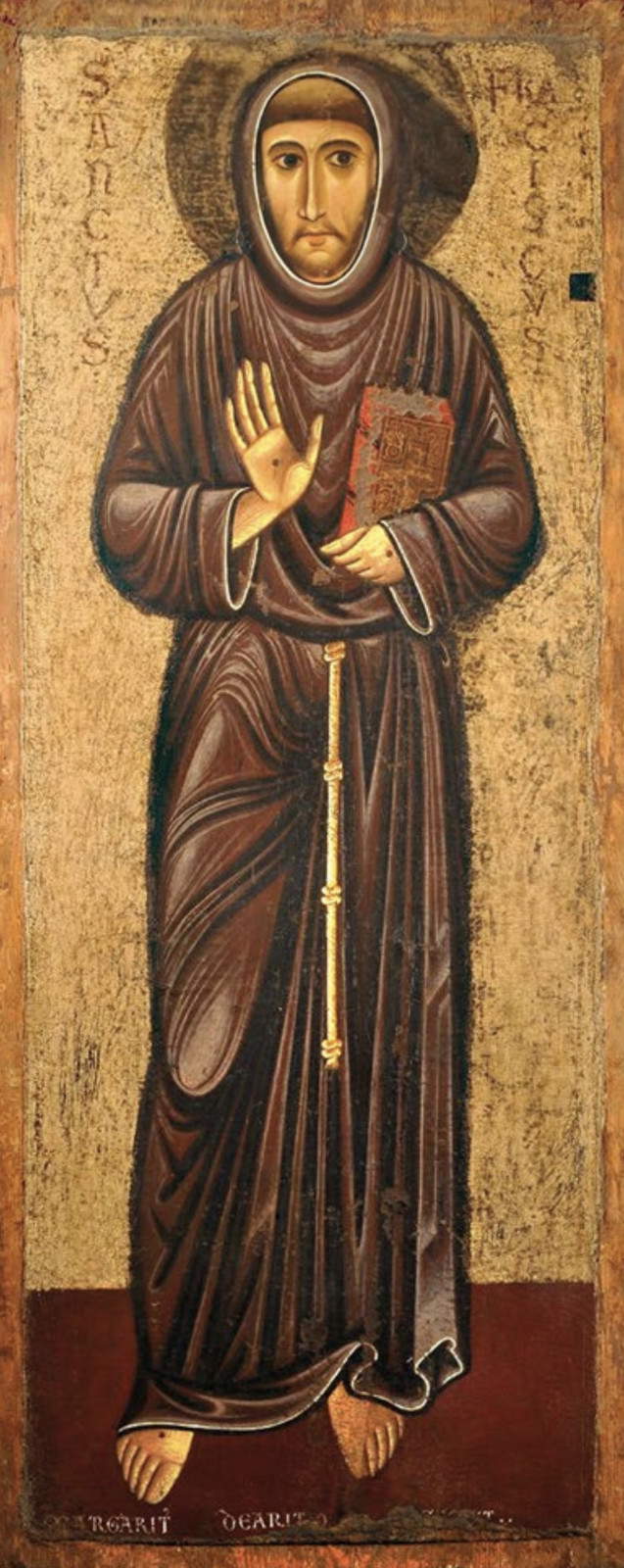
The earliest depictions portray St. Francis as still closely tied to his earthly life and his rapid canonization, which took place in 1228. The panel by Margarito d’Arezzo, from the Civic Museum of Montepulciano, depicts him with the tonsure visible beneath his hood and a beard that would disappear in later depictions. The Franciscan habit—with its brown habit, hood, and three-knot cord—became one of the distinctive elements of his iconography. In 13th-century altarpieces, a visual narrative also developed depicting episodes from the saint’s life and the miracles attributed to him after his death, a tradition that would find full expression in the frescoes of the Basilica of Assisi.
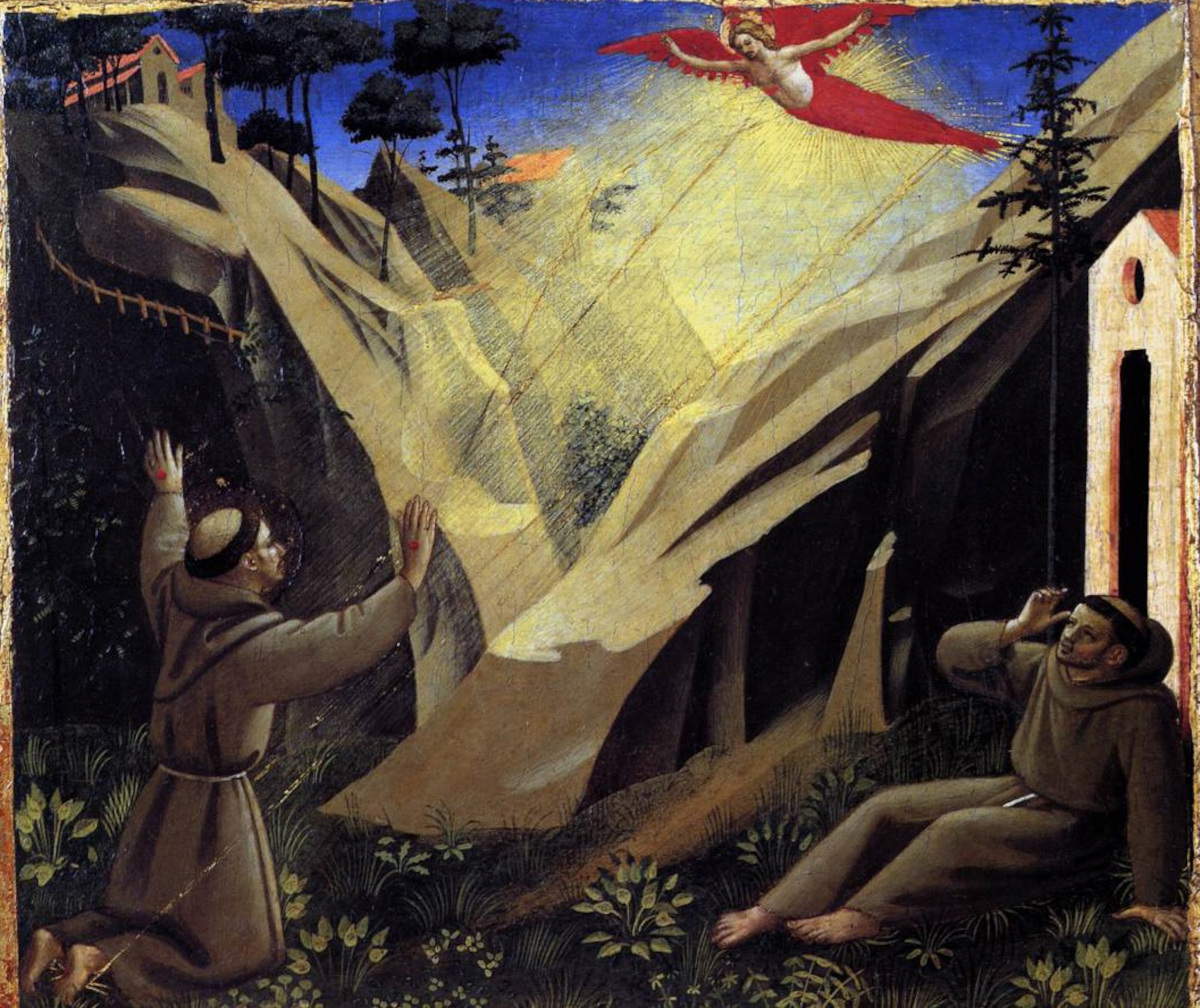
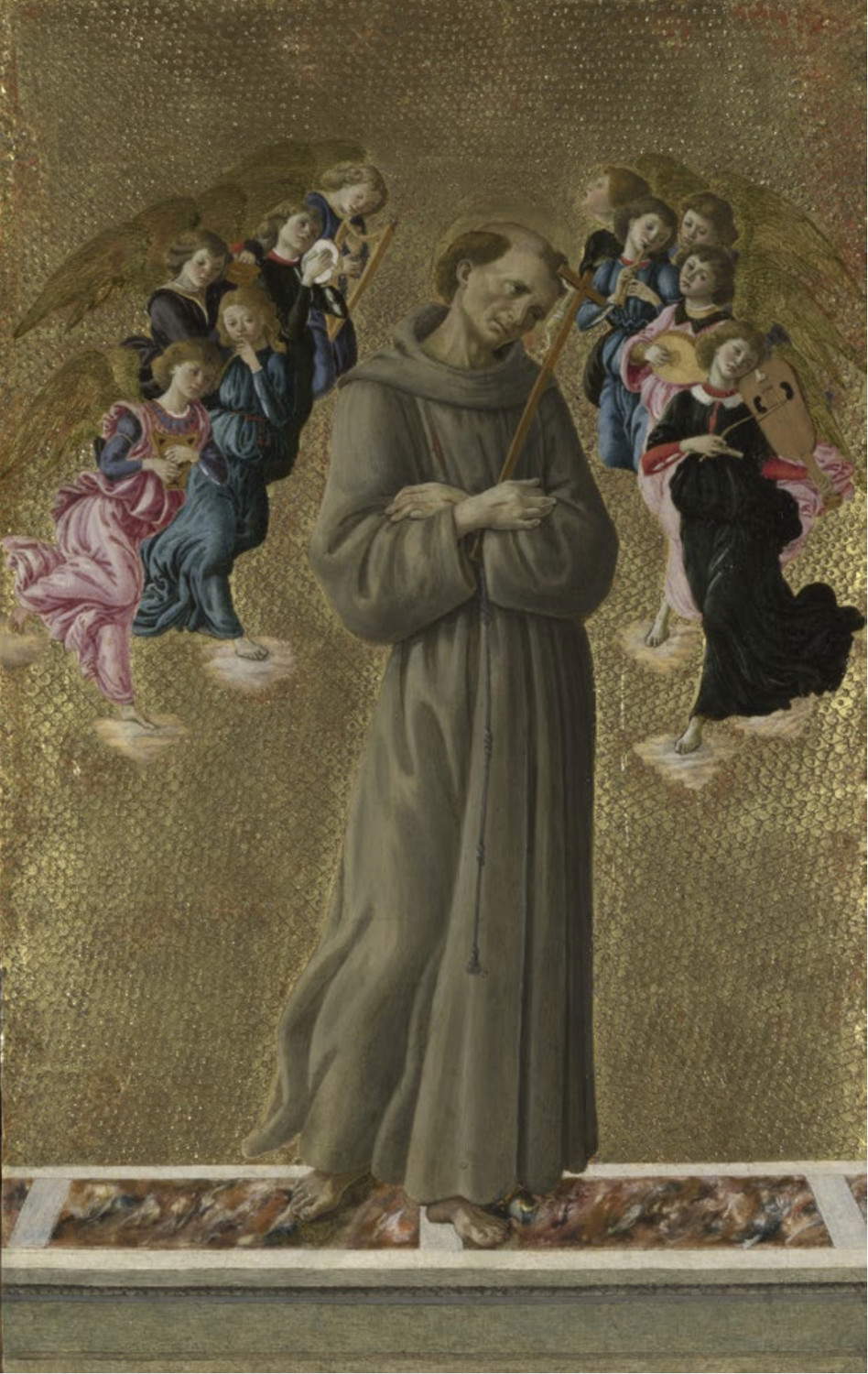
A central role is reserved for the stigmata, a pivotal episode for the Franciscan Order, which presents Francis as alter Christus. Among the works on display is the exquisite panel painting by Beato Angelico, *St. Francis Receives the Stigmata*, on loan from the Vatican Museums, in which divine light illuminates Mount La Verna as the saint receives the five wounds from the apparition of the winged Crucifix. Also of particular note is Sandro Botticelli’s *St. Francis with Angels*, on exceptional loan from the National Gallery in London, which evokes the comfort the saint received through angelic music during his illness.
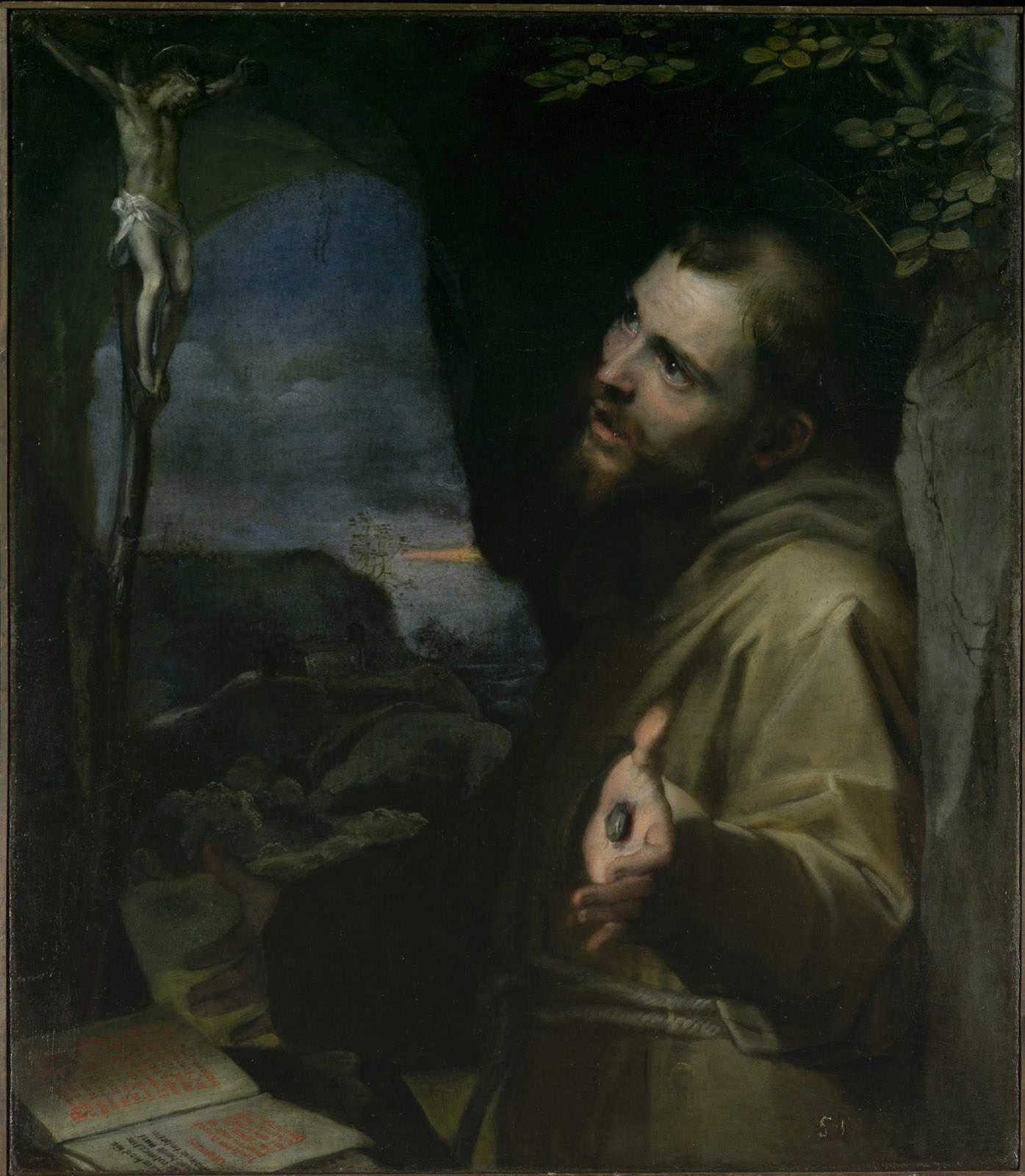
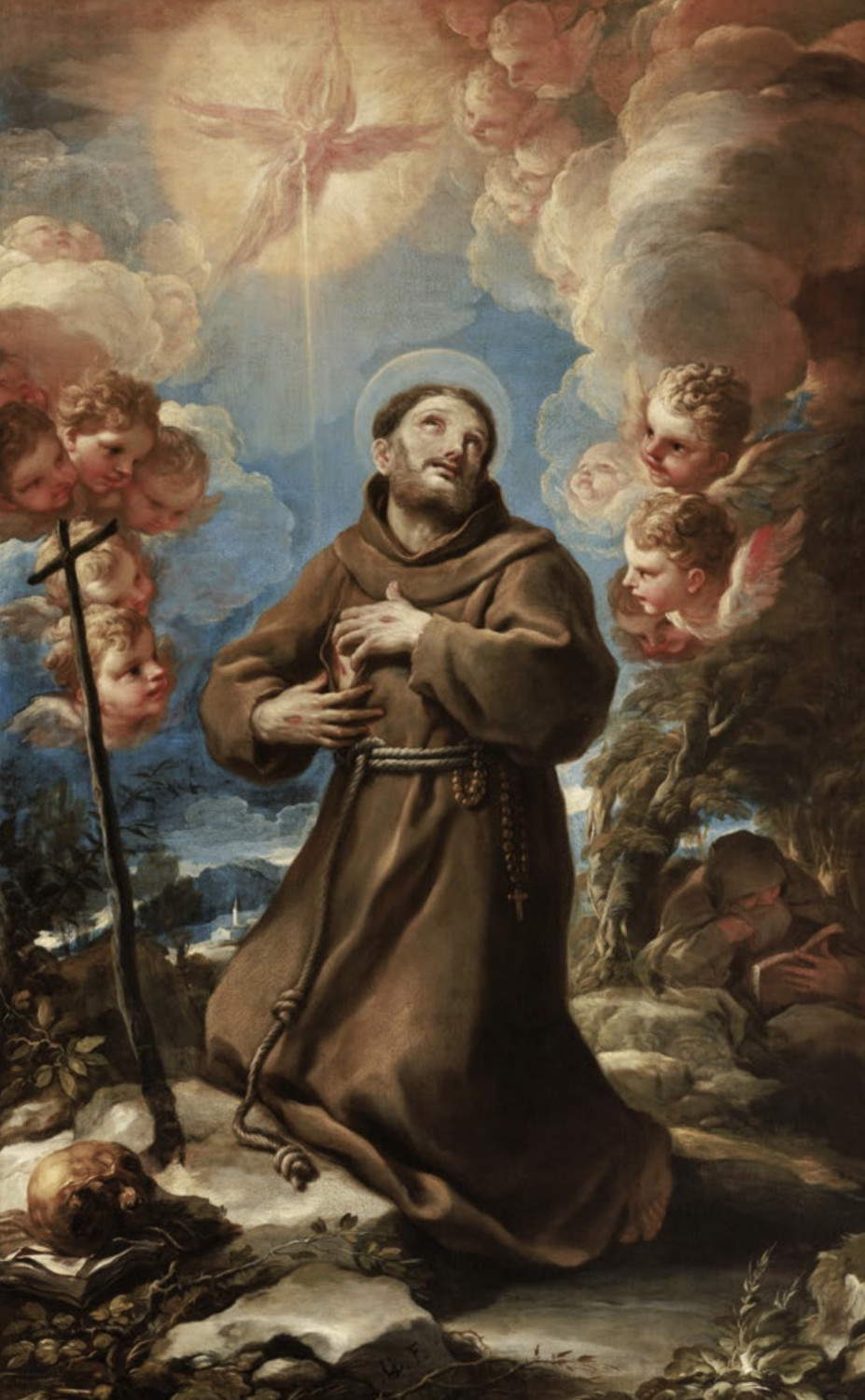
In the late sixteenth and seventeenth centuries, the atmosphere of the Counter-Reformation led to new depictions of the saint, in which meditation, prayer, and mystical experience took on greater importance. The large Baroque altarpieces are gathered primarily in the spaces of the former church of Sant’Ignazio. Among these, *St. Francis Adoring the Crucifix* by Annibale Carracci and *St. Francis in the Grotto* by Federico Barocci—the latter on loan from the Metropolitan Museum of Art in New York—convey a serene and contemplative image of the saint, immersed in the solitude and spirituality of Franciscan life. Other works, however, interpret the more spectacular dimension of Baroque devotion. In Luca Giordano’s *The Stigmata of Saint Francis*, the saint is depicted in a heavenly vision characterized by a dynamic and triumphant composition. Jacopo Ligozzi, in his *Description of the Sacred Mount of La Verna* (1612), captures the rugged and physical nature of the La Verna landscape, which is linked to Francis’s spiritual experience.
In the centuries that followed, Franciscan iconography underwent further renewal. Antonio Ciseri, in his 1887 painting *St. Francis Receives the Stigmata*, returns to a direct confrontation with the Crucifix, while Libero Andreotti, in 1920, created an ascetic figure in plaster, reaching out toward God. Gio Ponti also engaged with the image of the saint through a wooden sculpture designed for the Church of Santa Maria Annunciata, attached to the San Carlo Borromeo Hospital in Milan, as part of a series of 22 figures of saints.
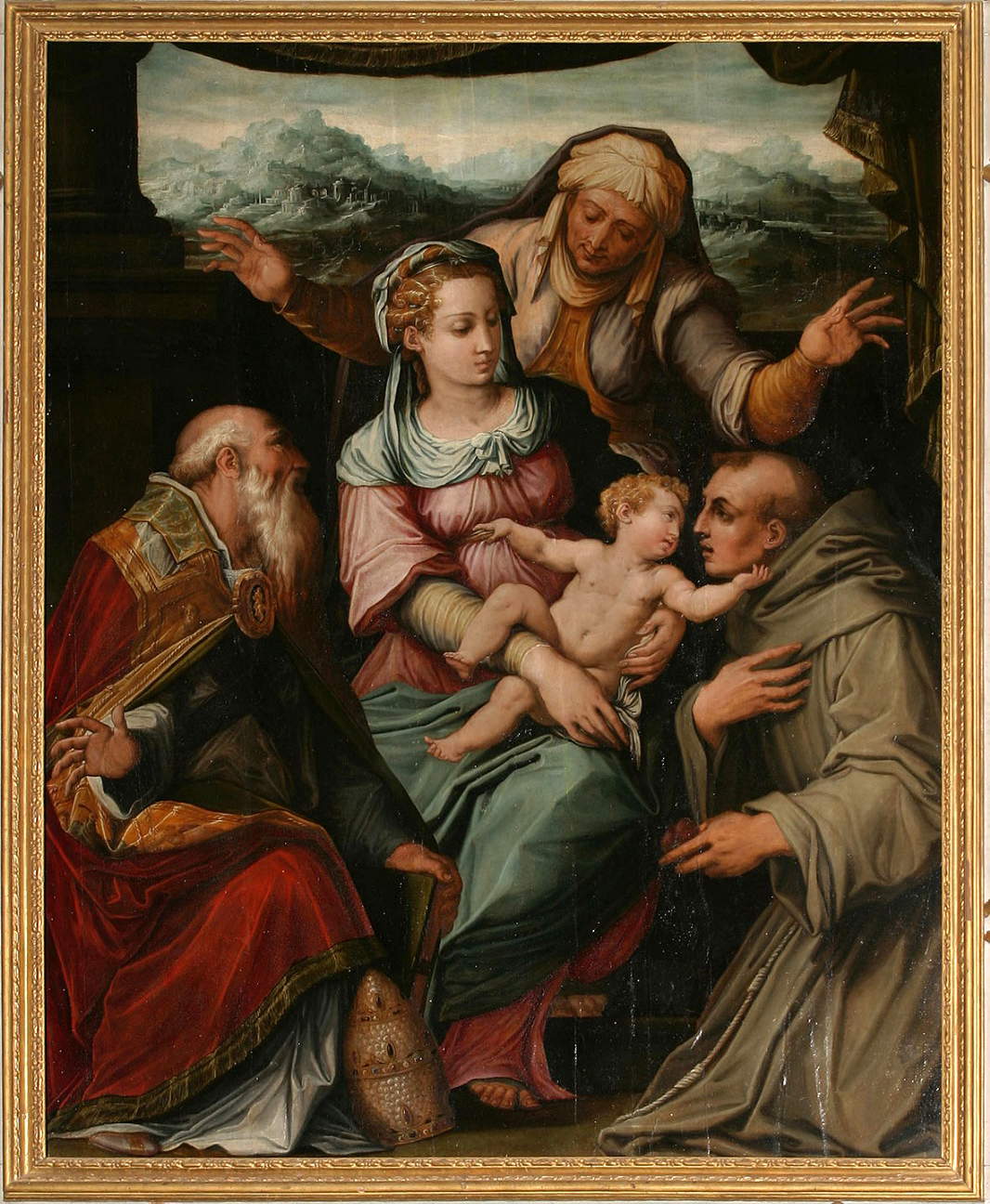
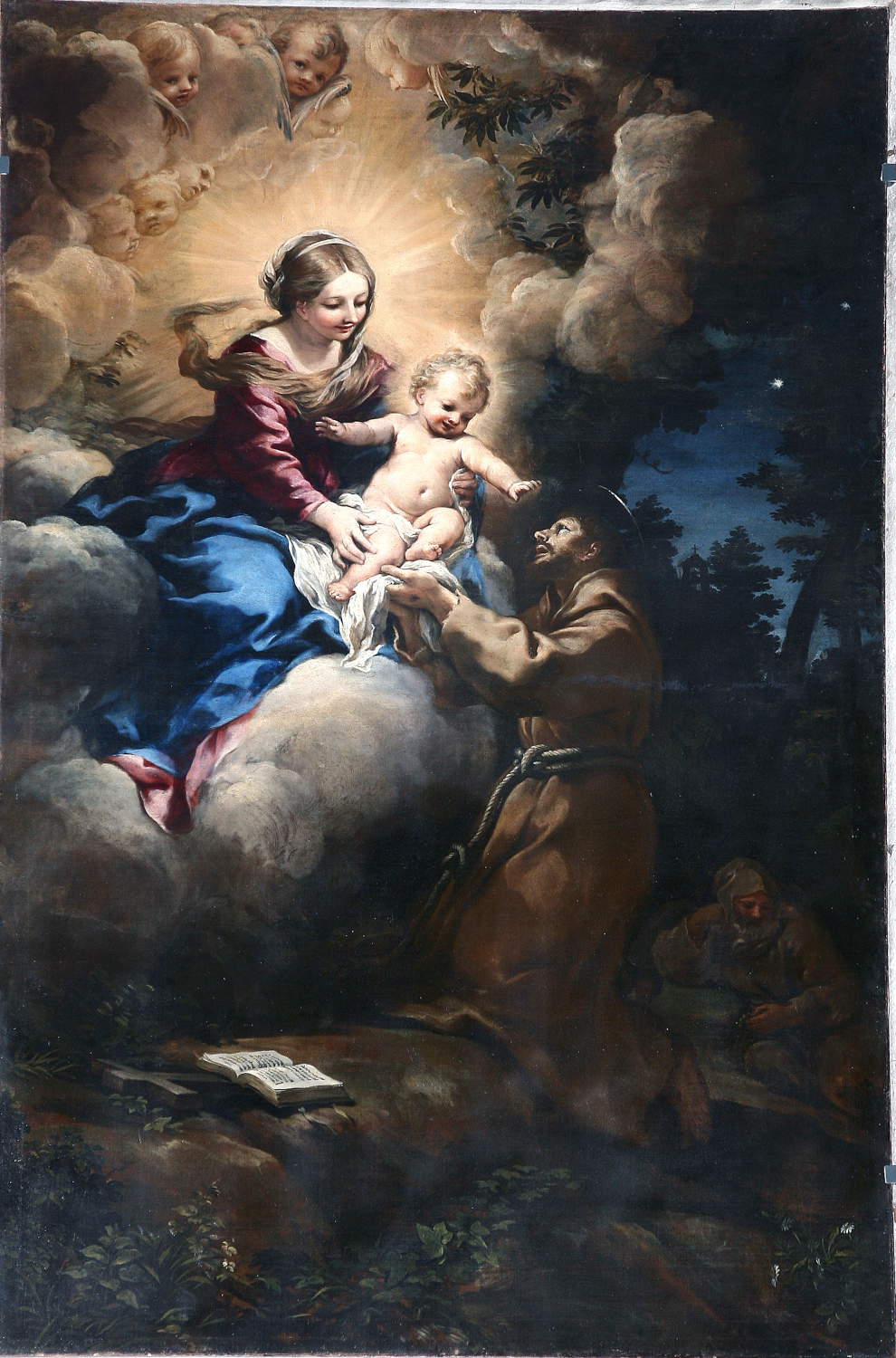
Works of particular interest also include Giorgio Vasari’s *Holy Family with Saint Francis*, Guercino ’s *Saint Francis in Adoration of the Crucifix *, and Pietro da Cortona’s *Enthroned Madonna with Child and Saints *. Added to these are sculptures by Andrea della Robbia and Tino di Camaino, as well as the miniatures created by Don Simone Camaldolese for the Gradual of 1380, on loan from the Historical Archive of the Opera di Santa Croce.
A specific section focuses on the celebrations of 1926, marking the seventh centenary of Francis’s death, when artistic initiatives dedicated to the saint proliferated throughout Italy, sometimes linked to messages of nationalist propaganda. It is within this context that Duilio Cambellotti emerges as a key figure; he created a stained-glass window dedicated to Francis and was responsible for the graphic design and illustrations of a volume on the *Fioretti* and the miraculous stories of the saint, published in 1926. The exhibition also features numerous tempera paintings created for this publication.
The choice of Arezzo as the venue for the exhibition is linked to the long-standing connection between the saint and the region. In Bonaventura da Bagnoregio’s *Leggenda maggiore*, the city plays a significant role: it recounts the episode in which Francis, seeing demons hovering over Arezzo, sent a companion to drive them away, thereby restoring peace. The scene was later depicted by Giotto in the Upper Basilica of Assisi.
The connection with the province of Arezzo also extends to Cortona, where Francis stopped in 1211 and founded the Convent of Le Celle, and to Mount La Verna, the place where he received the stigmata and the site of one of Italy’s major Franciscan complexes. Even today, these routes are retraced along the “Vie di Francesco” trails, promoted by the Region of Tuscany, which pass through places linked to the life of the saint and his brothers.
Through the works on display, the exhibition in Arezzo thus aims to convey not only the history of religious iconography but also the way in which the figure of Francis has continued to evolve, reflecting the spiritual aspirations, artistic sensibilities, and cultural developments of eight centuries.
Main sponsor: Estra. The exhibition is made possible with the support of Coingas, Caurum, Unicoop Firenze, Tesi, and LFI. Technical sponsors: AXA and Insurance Advisor. Technology partner: Metriks.Ai.
|
| An exhibition in Arezzo traces eight centuries of the depiction of St. Francis in art |

Warning: the translation into English of the original Italian article was created using automatic tools. We undertake to review all articles, but we do not guarantee the total absence of inaccuracies in the translation due to the program. You can find the original by clicking on the ITA button. If you find any mistake,please contact us.


























 IT
IT FR
FR DE
DE ES
ES CN
CN


