



by Redazione 20/07/2026



Categories: Exhibitions / Disclaimer
The City of Ancona is presenting a multi-year project dedicated to 20th-century art in Italy and the Marche region. Curated by Gabriele Simongini, the three-part exhibition series will begin with an exhibition on Corrado Cagli and continue with Osvaldo Licini and the Transavantgarde, as part of the lead-up to Ancona 2028.
The City of Ancona is launching a new exhibition program dedicated to 20th-century art in Italy and the Marche region, featuring a project comprising three exhibitions that, over the course of two years, will explore the role of the Marche region in the development of 20th-century art. The series, promoted as part of the Ancona 2028 – Questa adesso cultural program and curated by Gabriele Simongini, is conceived as a trilogy of research aimed at connecting the region’s artistic history with some of the key developments in Italian visual culture of the last century. Prior to the launch of the series, the project will engage with an exhibition dedicated to Edgardo Mannucci, scheduled to open on September 19 in Fabriano, marking the 40th anniversary of the sculptor’s death.
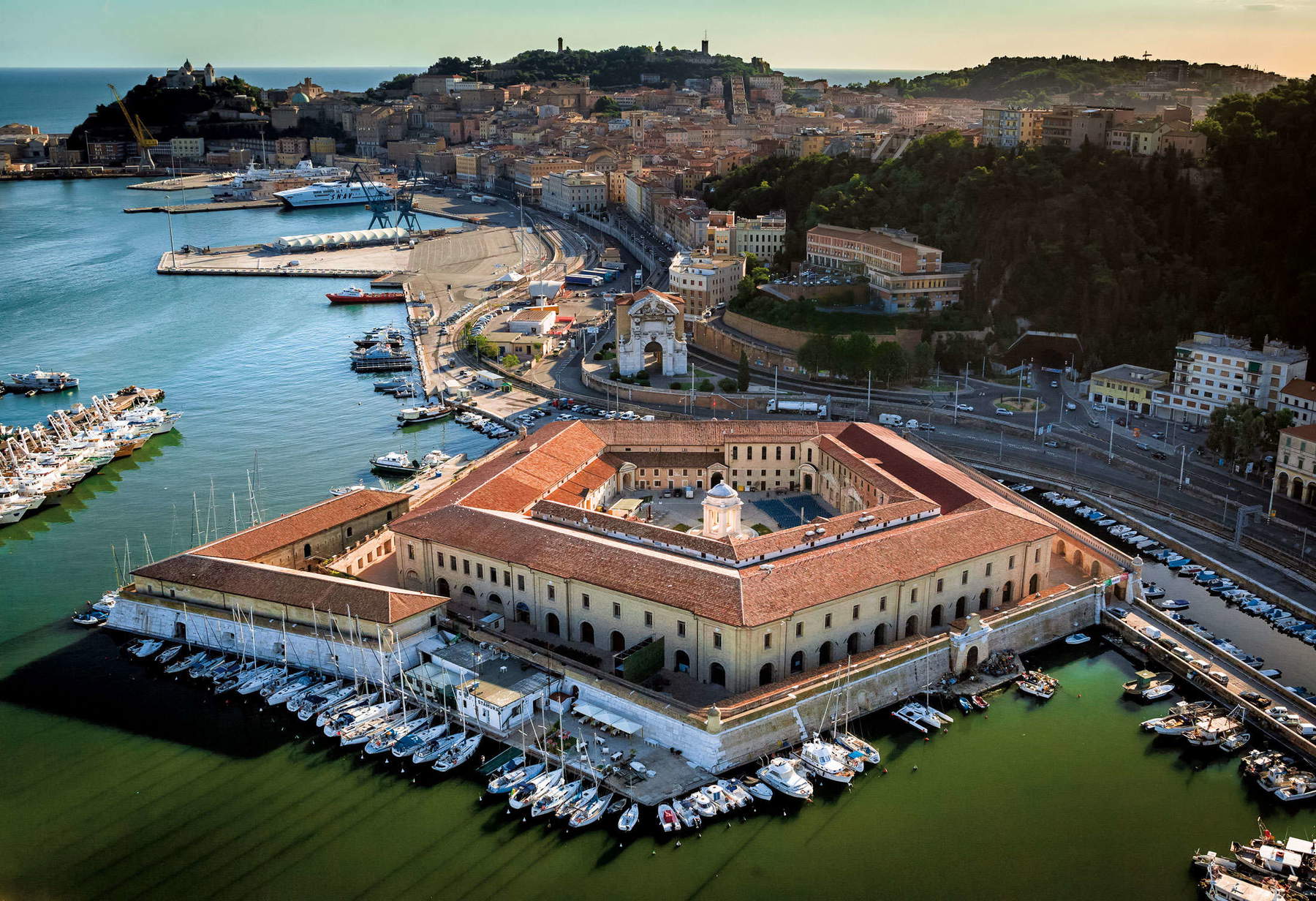
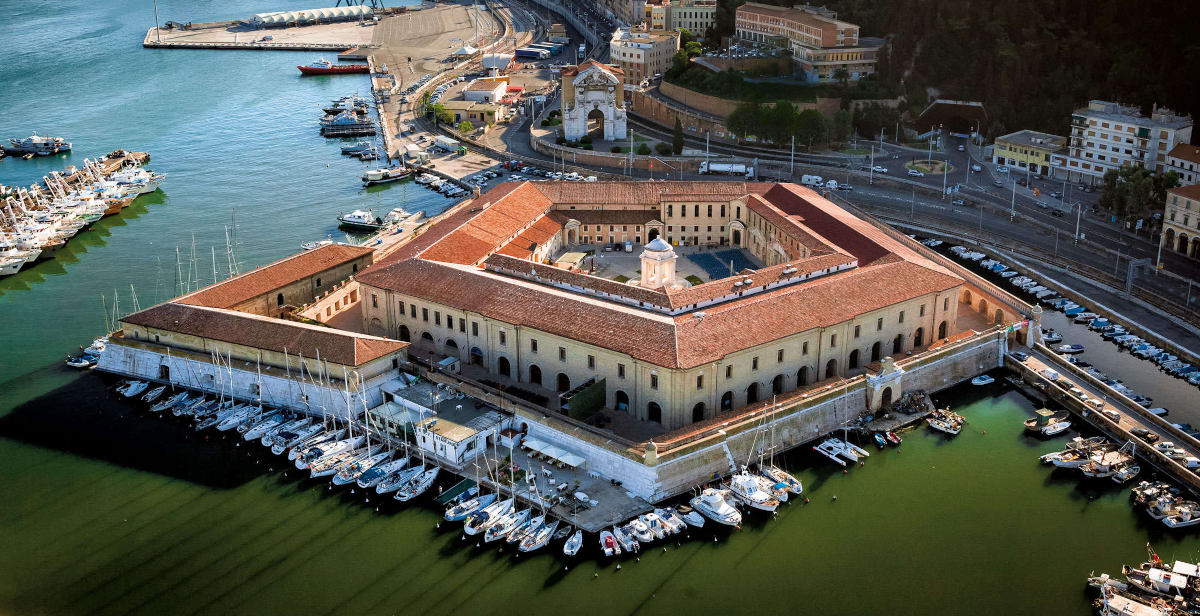
The initiative was launched with the goal of highlighting the central role of the Marche region in 20th-century art and consolidating the role of the Mole Vanvitelliana as a venue for exhibitions grounded in art-historical research. The stated intention is to move beyond the scope of a single commemorative exhibition to create a program that fosters dialogue among public and private collections, archives, museums, and new interpretations of Italian art history.


The project is also part of the regional program dedicated to contemporary art and aims to strengthen Ancona’s role as the cultural capital of the Marche region and as a hub for scholarly and institutional dialogue. Underlying the initiative is the conviction that the contribution of artists from the Marche region to 20th-century art history has often been underestimated, despite the fact that many of them played an important role in Italy’s major centers of artistic experimentation, particularly in Rome, contributing to the renewal of the languages of painting, sculpture, and visual research.
The central theme of the entire program is a reinterpretation of the 20th century as a field still open to critical inquiry. The goal is to demonstrate how the Marche region has produced figures capable of spanning movements, artistic languages, and generations—from the Roman School to abstract art, from material sculpture to the experiments that would lead to the Transavantgarde. The trilogy thus aims to use 20th-century art history as a tool to define a forward-looking cultural policy, with a view to establishing the city as a national hub for research on contemporary art.
The first chapter of the project will be dedicated to Corrado Cagli and the cultural ties that linked Ancona, the Marche region, and Rome from the 1930s through the post-World War II period. Curated by Gabriele Simongini in collaboration with the Cagli Archive, the exhibition will mark the fiftieth anniversary of the artist’s death; he was born in Ancona in 1910 and died in 1976. The initiative will kick off in December 2026 with a symposium hosted by the “Francesco Podesti” Civic Art Gallery, before moving, starting in January 2027, to the Mole Vanvitelliana, where the main exhibition will be held.
The project aims to present Cagli as a central figure of Italian artistic modernity, highlighting his connection to his hometown and, at the same time, the international scope of his work. The exhibition highlights the variety of artistic languages explored by the artist, ranging from painting to muralism, from graphic design to set design, from tapestry to sculpture, and extending to the abstract and material-based works he developed in the post-World War II period. The exhibition thus seeks to convey the image of an artist capable of combining a deep connection to his local roots with an international outlook, recognizing Ancona’s role in shaping the artistic culture of the 20th century.
The exhibition will be organized around a core group of works spanning the various phases of Cagli’s career. A central role will be given to *Mirko* (1936), housed in the “Francesco Podesti” Civic Art Gallery, which is considered a significant testament to the relationship between the artist and his city. Also from the Ancona collection will be *L’Apprendista* (1946), a work that documents the transition from the artistic climate of the 1930s to the artistic explorations developed in the postwar period.
The exhibition will also feature works from major Italian institutions. These include *David and Goliath* (1937), housed in the Vatican Museums; *Saint George and the Dragon* from the same year, on loan from the Museum of the Roman School at Villa Torlonia; *Loculi a Tule (Cellular Rhythm) * (1949); *Daphne* (1955); *The Fable of Philemon andBaucis* (1957), *The Reed Flute* (1958), *Ambito Calibeo* ( 1968), and *Monte Conero (Profile of the Mountain) * (1958). This last work holds particular symbolic value because it reconnects the Marche landscape to the international dimension of Cagli’s artistic exploration.
The exhibition will not be conceived as a monographic retrospective. The curatorial project, in fact, involves a series of comparisons with other artists from the Marche region and throughout Italy, with the aim of reconstructing a network of cultural relationships spanning much of the 20th century. Alongside Cagli’s works, pieces by Scipione, Quirino Ruggeri, Pericle Fazzini, Ivo Pannaggi, Sante Monachesi, Luigi Bartolini, Edgardo Mannucci, Arnoldo Ciarrocchi, Orfeo Tamburi, Giuseppe Uncini, Eliseo Mattiacci, and Valeriano Trubbiani. Joining them will be Alberto Burri, the only artist not from the Marche region included in the exhibition, chosen to highlight his relationship with Edgardo Mannucci and the role both played in the development of material experimentation in post-World War II sculpture and painting.
Edgardo Mannucci’s inclusion takes on special significance within the project dedicated to Cagli. The two artists were bound by a relationship that began as early as the 1930s—in part through their experience with the “Orientalists”—and shared an artistic pursuit aimed at transcending the traditional boundaries of form. In the post-World War II period, Mannucci developed one of the most significant approaches in Italian sculpture focused on material and energy, transforming elements such as metal and worked surfaces into tools for exploring the expressive possibilities of matter.
His relationship with Alberto Burri represents another key interpretive thread of the exhibition. Burri, who was welcomed in Rome after his return from an American prisoner-of-war camp, and Mannucci in fact helped define a new artistic sensibility based on the transformation of materials and their ability to generate visual tension. This comparison with Burri will thus allow us to situate the Marche-born sculptor’s work within one of the most significant phases of Italian art in the second half of the 20th century.
The section dedicated to Cagli will also be linked to the exhibition that Fabriano will host starting September 19, 2026, dedicated specifically to Edgardo Mannucci on the fortieth anniversary of his death. Sponsored by the Fondazione Cassa di Risparmio di Fabriano e Cupramontana, with the support of the “E. Mannucci” Art High School in Ancona, the exhibition will preview some of the themes later explored in the Ancona exhibition, creating a regional dialogue between two initiatives dedicated to key figures of the 20th-century Marche region.
Alongside Mannucci, the exhibition on Cagli will feature a constellation of artists capable of capturing the complexity of the Marche’s art scene in the last century. The inclusion of Scipione, one of the most compelling figures of the Roman School, will evoke the artistic atmosphere of 1930s Rome through works such as *La Piovra*, *Still Life—Split Figs on a Table*, *Portrait of a Girl *, and *Piazza Navona*. His visionary and restless painting represents one of the most original moments in Italian figurative art of the period.
Luigi Bartolini, an artist and writer, will serve as the link between the visual arts and literature. His work as a painter and printmaker is also linked to postwar Italian culture: Cesare Zavattini drew inspiration from Bartolini’s novel *Ladri di biciclette* (Bicycle Thieves), published in Rome in 1946, for the screenplay of the film of the same name directed by Vittorio De Sica. Sculpture will be represented by Pericle Fazzini, the creator of a sculptural language characterized by the union of form, movement, and poetic tension. Among the works to be featured are *Portrait of Giuseppe Ungaretti*, *Sibilla Aleramo*, and *Dancer*—works that reveal his artistic exploration as a balance between figurative tradition and modern experimentation.
The Futurist and Constructivist dimension of the 20th-century Marche region will be introduced by Ivo Pannaggi, an artist closely associated with the historical avant-garde movements and with research into the relationship between art, architecture, and space. Works such as *Perspective Abstraction*, *Sketch of the Prisoners’ Castle*, and *Architectural Function E* highlight the artist’s role in defining a design-oriented vision of form.
The exhibition will then move on to the second half of the 20th century through the work of Giuseppe Uncini, with pieces such as *Ferrocemento n.20*, *Cemento armato*, and *Cementarmato*, in which iron, concrete, and wire mesh become structural elements of a new plastic language. Rounding out the exhibition will be works by Orfeo Tamburi, Quirino Ruggeri, Sante Monachesi, Arnoldo Ciarrocchi, Eliseo Mattiacci, and Valeriano Trubbiani—artists united by their ability to interpret the transformations of contemporary artistic exploration in different ways. The exhibition at the Mole Vanvitelliana will also engage in a dialogue with the artistic heritage present in Ancona’s urban space, where several public works by Fazzini, Mattiacci, and Trubbiani help define the relationship between the city and contemporary art.
The second installment of the trilogy will be dedicated to Osvaldo Licini andItalian abstract art. Scheduled for 2027 and also curated by Gabriele Simongini, the exhibition will explore the role of the artist from the Marche region within the national and international abstract art movement. Licini, described in the project as the “Italian Klee,” will be presented as an artist capable of transforming geometry into a poetic language—free from any theoretical rigidity and grounded in the relationship between form, imagination, and inner dimension.
The exhibition will connect Licini’s work with that of several key figures in European and Italian abstract art. The introductory section will feature works by Kandinsky, Klee, and Balla, alongside works by artists associated with the Galleria del Milione in Milan. There will be references to Atanasio Soldati, Fausto Melotti, Lucio Fontana, Luigi Veronesi, Mauro Reggiani, Bruno Munari, Virginio Ghiringhelli, and Oreste Bogliardi.
The exhibition will focus on the famous series *Amalassunti*, *Angeli ribelli*, and *Olandesi volanti*, through which the artist developed a style of painting suspended between abstraction and figuration. His artistic exploration will be interpreted as an experience of poetic freedom capable of transcending the traditional dichotomies between geometric rigor and imagination.
The trilogy will conclude with an exhibition dedicated to the Transavantgarde, the third chapter of the project and a further step in the reinterpretation of the 20th century in the Marche region. The exhibition will focus on the return to painting, the centrality of the image, and the plurality of artistic languages that characterized the artistic movement that emerged in the late 1970s.
Special attention will be given to Enzo Cucchi, an artist from the Marche region who was one of the leading figures of the Transavantgarde group. His inclusion will serve to bring the journey—which began with Cagli and continued with Licini—full circle, demonstrating a continuity rooted in creative freedom, the transformation of artistic languages, and the transcendence of the rigidity of the 20th-century avant-garde movements.
Statements
“With the Trilogy of the Twentieth Century, we aim to restore to Ancona and the Marche region the place they deserve in the history of contemporary Italian art,” states Marta Paraventi, Councilor for Culture. “Corrado Cagli, Osvaldo Licini, and the path toward the Transavantgarde are not just three exhibition chapters: they represent a cultural vision. We want the Mole Vanvitelliana to increasingly become a venue for research-based exhibitions, capable of attracting loaned works, scholars, the public, and national partnerships. This project is part of the Ancona 2028 initiative and looks to the future: culture is not just memory, but a form of living identity, capable of generating a sense of place, knowledge, and new energy for the city.”
“For some time now, my work has centered on a comprehensive reflection on the identity of 20th-century Italian art, its surprising diversity of artistic languages, and the need to continue reinterpreting it through new perspectives,” says curator Gabriele Simongini. “This is particularly true of 20th-century art from the Marche region, which is of the highest quality and intensity, grounded in a visionary and poetic style that blends with continuous experimentation with techniques and materials. An ambitious project like the Trilogy of the Twentieth Century will emphasize precisely these qualities, helping to reinforce Ancona’s role as a laboratory for innovative and engaging ideas.”
 |
| Ancona Focuses on the 20th Century: A Trilogy of Exhibitions to Reexamine Italian Art |
Warning: the translation into English of the original Italian article was created using automatic tools. We undertake to review all articles, but we do not guarantee the total absence of inaccuracies in the translation due to the program. You can find the original by clicking on the ITA button. If you find any mistake,please contact us.