




by Redazione 15/10/2026



Categories: Exhibitions / Disclaimer
From October 16, 2026, to February 7, 2027, MAXXI in Rome will present the most comprehensive solo exhibition ever dedicated to Sophie Calle in Italy. At the same time, Tatiana Bilbao has created *Campo aperto*, an installation for the ninth edition of NATURE, inspired by the game of pelota and the relationship between architecture and community.


From October 16, 2026, to February 7, 2027, MAXXI in Rome will host two new exhibition projects: Sophie Calle. Weddings, Breakups, and Funerals Included, curated by Simona Antonacci, in Gallery 2, and Campo Aperto by Tatiana Bilbao Estudio, in the Gian Ferrari Hall, as part of the ninth edition of the NATURE 09 program. The first is the most comprehensive monographic exhibition ever held in Italy on the French artist and traces over forty years of her exploration of the themes of memory, loss, and absence; the second is a site-specific installation that, drawing inspiration from the game of pelota played by Mesoamerican civilizations, explores the relationship between architecture, space, and community.


Sophie Calle. Including Weddings, Breakups, and Funerals
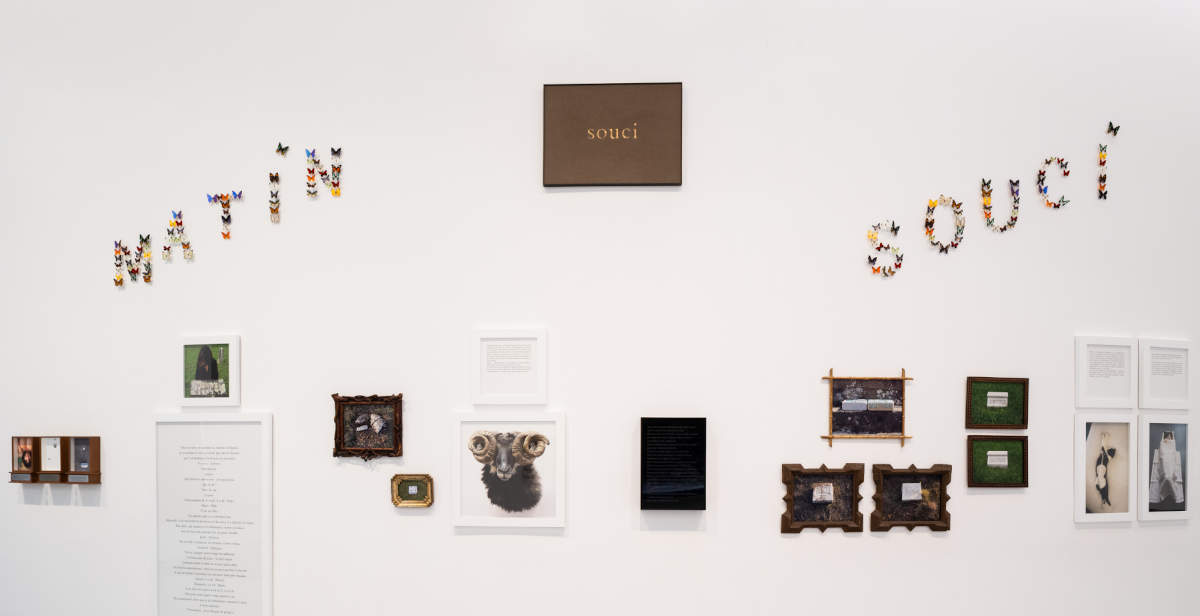
What form does the end of a relationship, a life, or a project take? And what remains after a loss? These are some of the questions at the heart of Sophie Calle. Weddings, Breakups, and Funerals Included, the exhibition that MAXXI—the National Museum of 21st-Century Arts in Rome—is dedicating to the French artist from October 16, 2026, to February 7, 2027. Housed in Gallery 2 and curated by Simona Antonacci, the exhibition is the most comprehensive monographic show ever held in Italy on Calle’s work and brings together eight projects developed between 1978 and 2026, along with a new permanent installation at the Non-Catholic Cemetery for Foreigners in Rome.


Photographs, texts, videos, installations, and autobiographical narratives trace a journey spanning over forty years of his career, challenging the boundaries between public and private, reality and fiction, art and life. Love and separation, mourning and memory, desire and absence, failure and the possibility of starting over constitute the main thematic cores of the artist’s practice, which draws on personal and collective experiences as material to construct works through defined rules, gestures, and rituals.


Calle’s work often emerges from concrete situations, encounters, and autobiographical events, which are subjected to a process of observation and reworking. The countdown leading up to the end of a relationship, the attempt to document the final moments of her mother’s life, the inventory of projects never completed, and encounters with people seeing the sea for the first time all become opportunities to question the meaning of an ending and what may survive it. Loss and absence are conditions through which the artist tests the possibilities of language and images.
The exhibition reflects the continuity of a body of work that transforms even interruption and failure into elements of artistic construction. What could not be preserved, realized, or known finds a new place within the work, without the original experience necessarily being resolved or reduced to a definitive explanation.
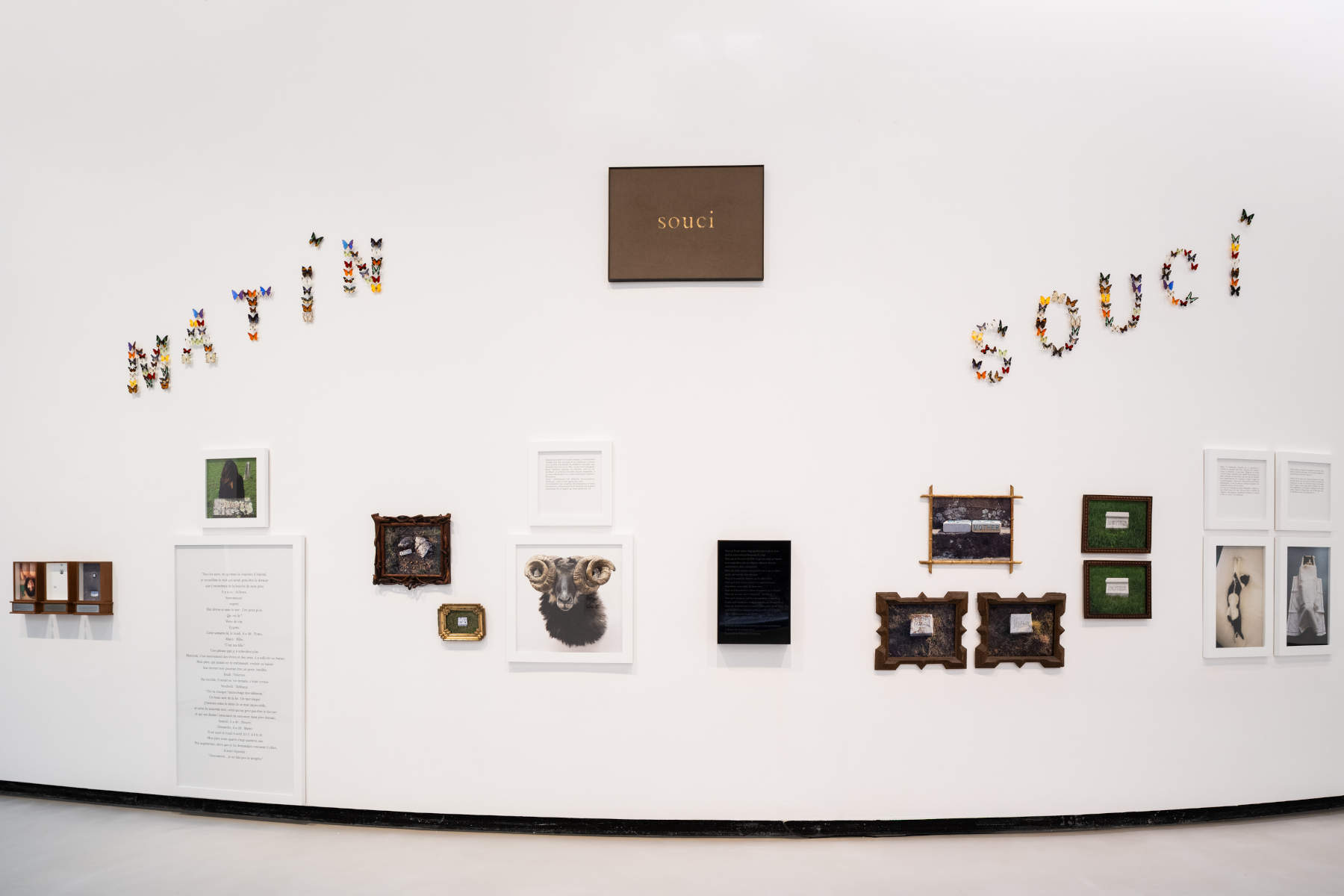
The exhibition’s narrative ideally begins in 1978, when Calle—still an outsider to the art world—photographed several gravestones in the Bolinas Cemetery in California. The inscriptions she chose to document are minimal and limited to indicating family roles, such as “Brother” and “Sister.” These are her earliest photographs, which foreshadow themes that would recur throughout her career: identity, absence, loss, and the attempt to hold on to what is destined to disappear. The series *The Graves* constitutes one of the central themes of the exhibition and introduces, right from the start, the relationship between photography, memory, and the representation of death.
The first section of the gallery opens with *Dolore squisito* (*Exquisite Pain*), one of the artist’s most emblematic projects. It originated in 1984, when Calle left for Japan, leaving the man she loved behind in Paris. At the end of her trip, a message received at a hotel in New Delhi marked the end of the relationship. From this experience emerged a body of work comprising over two hundred elements—including photographs and texts—structured around a dual temporal framework.
The first part follows the countdown to the day of the separation; the second, titled *After the Pain*, unfolds through the repetition of the personal narrative, gradually accompanied by the testimonies of others. Calle asks her interviewees to identify the most painful moment of their lives, thereby linking individual stories to the experiences of others. Repetition becomes a process through which memory is observed from different perspectives, and personal pain relates to collective pain.
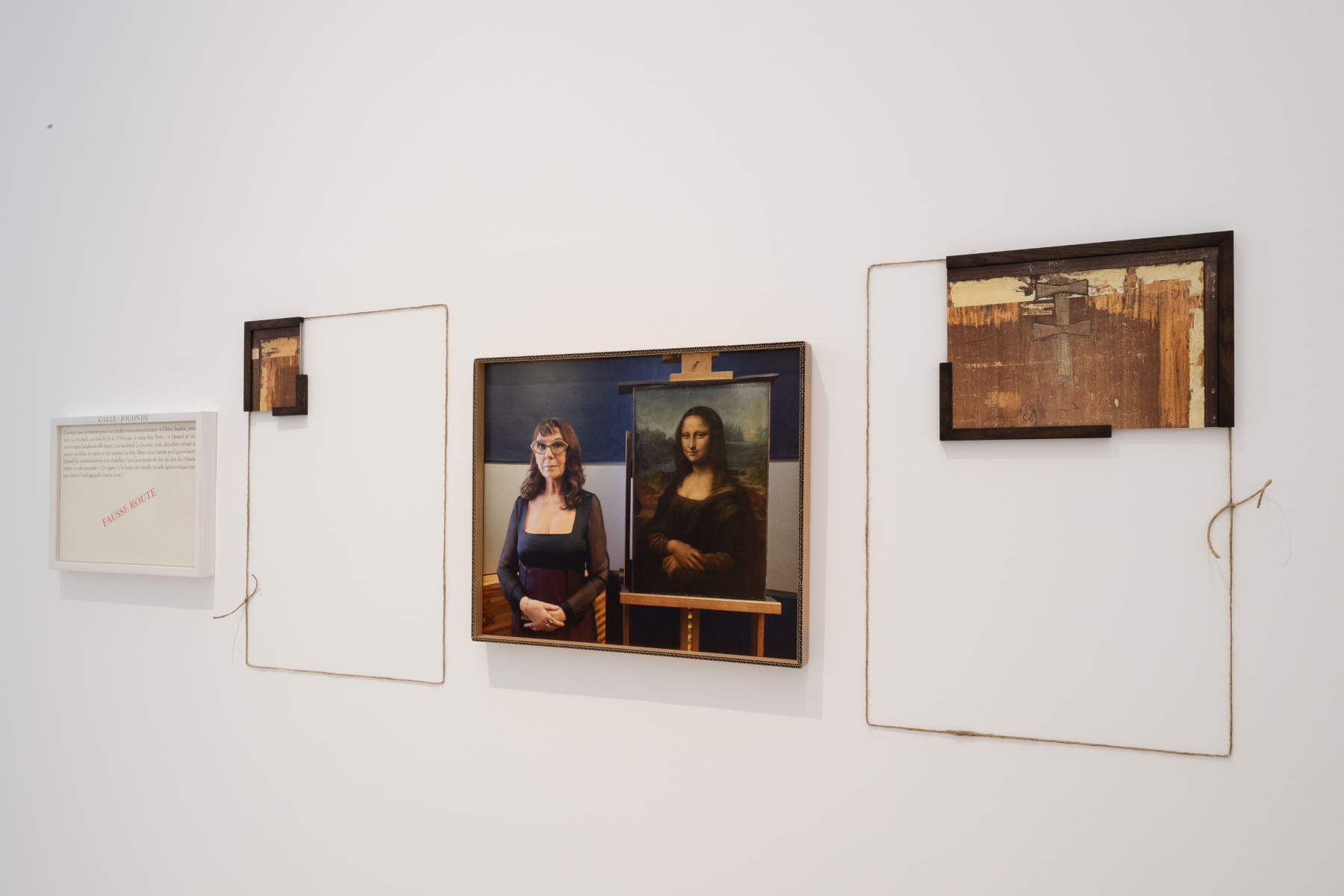
The relationship with what remains unfulfilled, on the other hand, is at the heart of *Catalogo ragionato dell’incompiuto*. In this project, Calle collects the ideas she was unable to realize, the abandoned projects, the failed attempts, and the works that remained mere intentions. The material is organized into a systematic inventory of the possible, structured around clusters of photographs or framed documents. Each project is accompanied by a brief text in which the artist explains the reasons for its interruption.
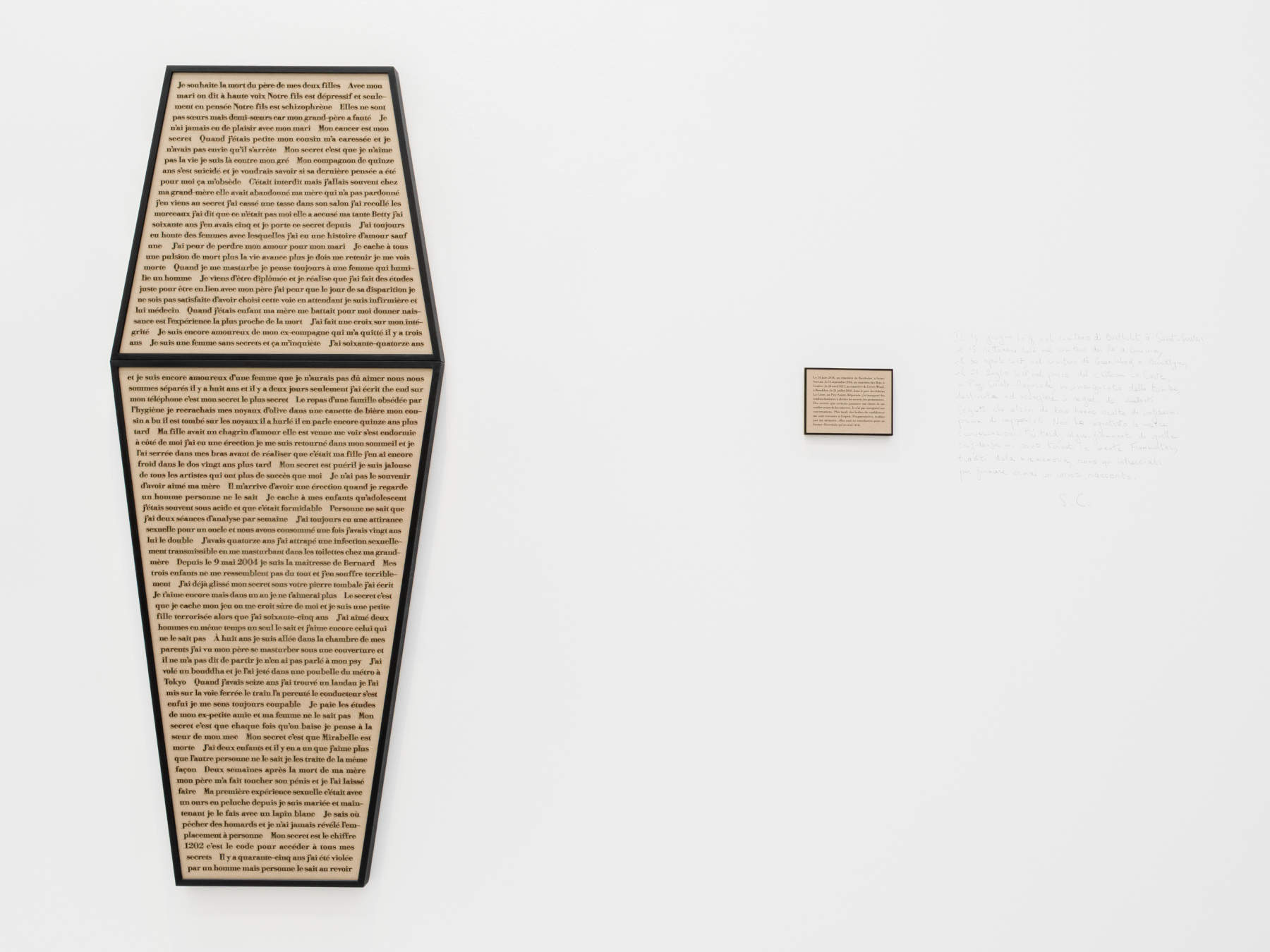
At the heart of the exhibition is *Funerali inclusi* (*Funerals Included*), a project drawn from the *Autobiografie* (*Autobiographies*). The work brings together short stories constructed through the juxtaposition of photographs and texts, in which personal episodes, family memories, and small rituals compose a biography in fragments. The narrative unfolds without drawing a definitive line between testimony and invention: the boundary between truth and narrative construction remains deliberately blurred.
The theme of death takes on a particularly direct form in *I Could Not Capture Death*, a video filmed beside the artist’s mother’s bed during the final moments of her life. Calle attempts to record the exact moment of her passing, but her mother’s last breath eludes her. The act of filming, which is supposed to allow one to capture an event, thus encounters a limit: the camera fails to capture what the artist wishes to preserve. The work focuses on the gap between the intention to document and the impossibility of fully controlling the experience of loss.
This work is accompanied by *Polo Nord*, which recounts a subsequent gesture of farewell. During a trip to the Arctic, Calle buries a photograph of her mother and some of her mother’s jewelry in a glacier, symbolically fulfilling her mother’s desire to reach that place. The gesture takes the form of a personal ritual, in which the objects become tools for connecting with a departed person and with a desire that could not be fulfilled during her lifetime. The journey and the burial shift memory from the realm of documentation to that of action, entrusting the landscape with the task of receiving what is left behind.
After confronting the end, the exhibition gradually opens up to the possibility of a new beginning. In *Perché*, photographs hidden behind embroidered curtains are revealed through a simple gesture: the visitor lifts the fabric and discovers the image. The words accompanying the photographs do not describe what is depicted, but explain the reasons that led the artist to take them. The relationship between image and language is thus constructed through a shift: the photograph shows something, while the text focuses on the motivation behind its creation.
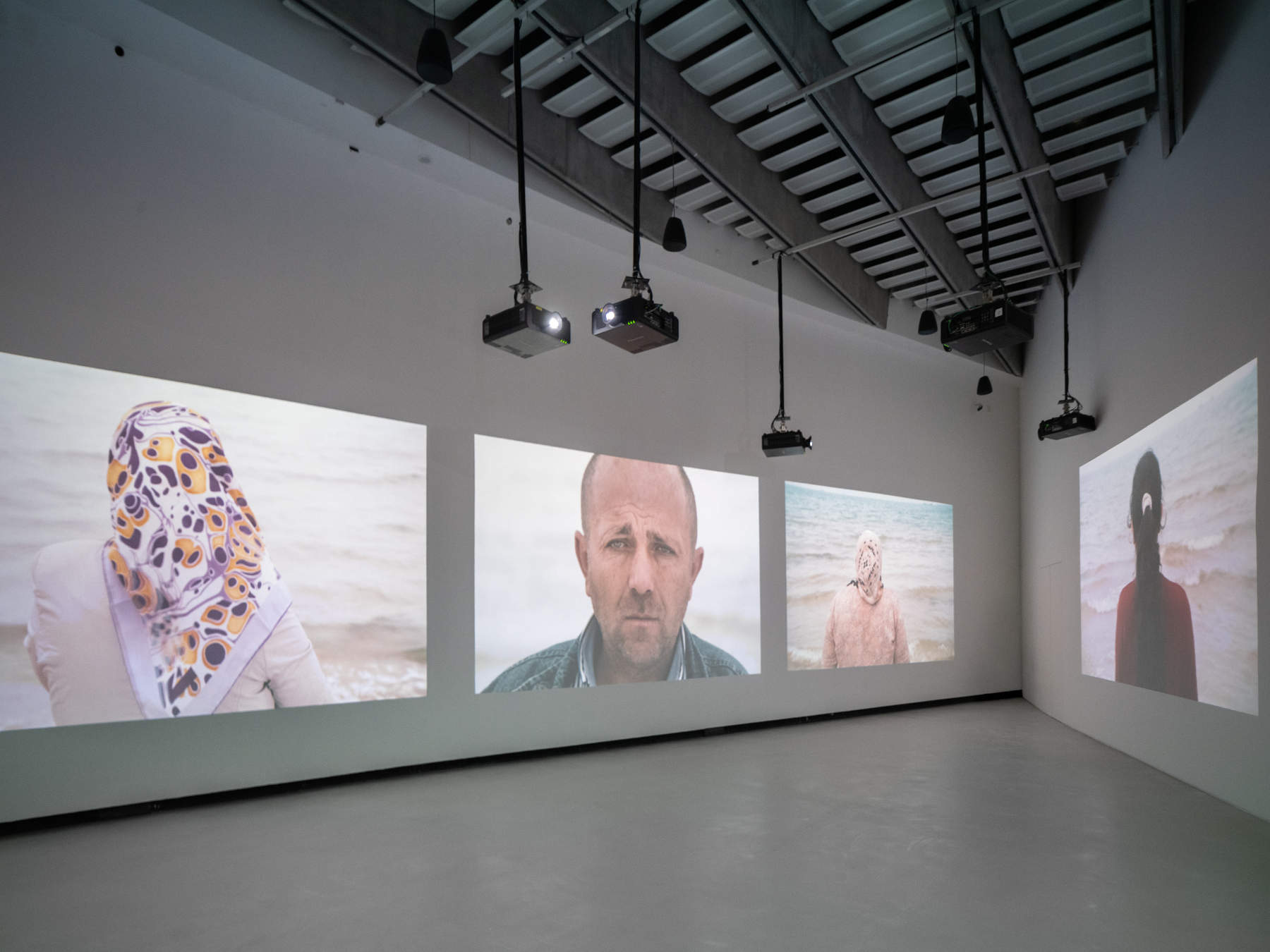
The exhibition concludes with *Voir la mer*, a video installation created in 2011 in Istanbul. On that occasion, Calle took several people to the sea who, despite living a short distance from the coast, had never seen it. The camera records their reactions without intrusively interfering with the intimacy of the experience. The focus thus shifts from the artist’s autobiographical narrative to that of others: the sea, an everyday geographical feature for those familiar with it, becomes a new and individual experience, capable of taking on different meanings for each person. Sharing a moment of discovery opens the narrative to a collective dimension, in which the artistic gesture is grounded in encounter and observation.
The exhibition is accompanied by a catalog published by Skira in two editions—Italian and English—edited by Simona Antonacci and Pippo Ciorra. The volume includes texts by Simona Antonacci, Sophie Calle, Pippo Ciorra, Yvonne A. Mazurek, and Riccardo Venturi.
“Sophie Calle’s exhibition is a source of double pride for us,” states Maria Emanuela Bruni, President of the MAXXI Foundation. “First, because it is through initiatives like this that MAXXI fully fulfills its mission as the leading national museum of contemporary art, bringing such a broad overview of a major international artist’s work to Rome and Italy for the first time. Furthermore, specifically for this occasion, the museum’s first permanent work outside its main venue has been created: a new installation conceived specifically for the city, born from a collaboration with the Non-Catholic Cemetery for Foreigners in Rome. The tomb, which holds “the secrets of travelers,” was inaugurated with an intense performance by the artist. This project demonstrates MAXXI’s commitment to extending its presence beyond exhibition spaces into the fabric of the city, fostering new forms of connection between contemporary art, places, and communities.”
“The exhibition marks the culmination of a journey that began two years ago with the acquisition of *L’Hôtel*, made possible thanks to the support of the Friends of MAXXI,” says Lorenza Baroncelli, Director of MAXXI Contemporary Architecture and Design. “Alongside *L’Hôtel*, six new works are joining the museum’s collection: one piece from the *Catalogo ragionato dell’incompiuto* and five works from the *Perché* series. This collection reflects MAXXI’s commitment to building a collection that captures the diversity of contemporary photography: from landscape documentation to conceptual practices, from photojournalism to the most intimate and autobiographical forms, in which memory, fiction, and narrative become the substance of the work.”
Tatiana Bilbao. Campo aperto
From October 16, 2026, to February 7, 2027, MAXXI will also host *Campo aperto*, a site-specific installation designed by Mexican architect Tatiana Bilbao for the ninth edition of NATURE 09, the program through which the museum invites internationally renowned architects to create interventions that engage with the institution’s spaces and, through a three-dimensional project, offer a synthesis of their research. The work is installed in the Gian Ferrari Hall and transforms the space into a landscape to be explored and inhabited, in which the visitor plays an active role in the experience.
The project draws inspiration from the game of pelota, one of the most significant practices of Mesoamerican civilizations. The activity, often viewed solely through the lens of play, actually played a multifaceted role in community life: it was linked to religion, social organization, life, and fertility, and constituted a collective ritual. The court represented a symbolic space where the individual and the community, the human world and the supernatural, and life and death came into relation with one another. Drawing on this tradition, Bilbao explores the relationship between architecture and human connections.
The installation consists of two large, opposing inclined planes and a central tower that rises toward the museum’s ceiling. The arrangement of these elements creates a dynamic environment, shaped by the interaction between surfaces, forms, and pathways. The structure also enters into a dialogue with light and with the architecture designed by Zaha Hadid, establishing a direct relationship with the space that houses it.
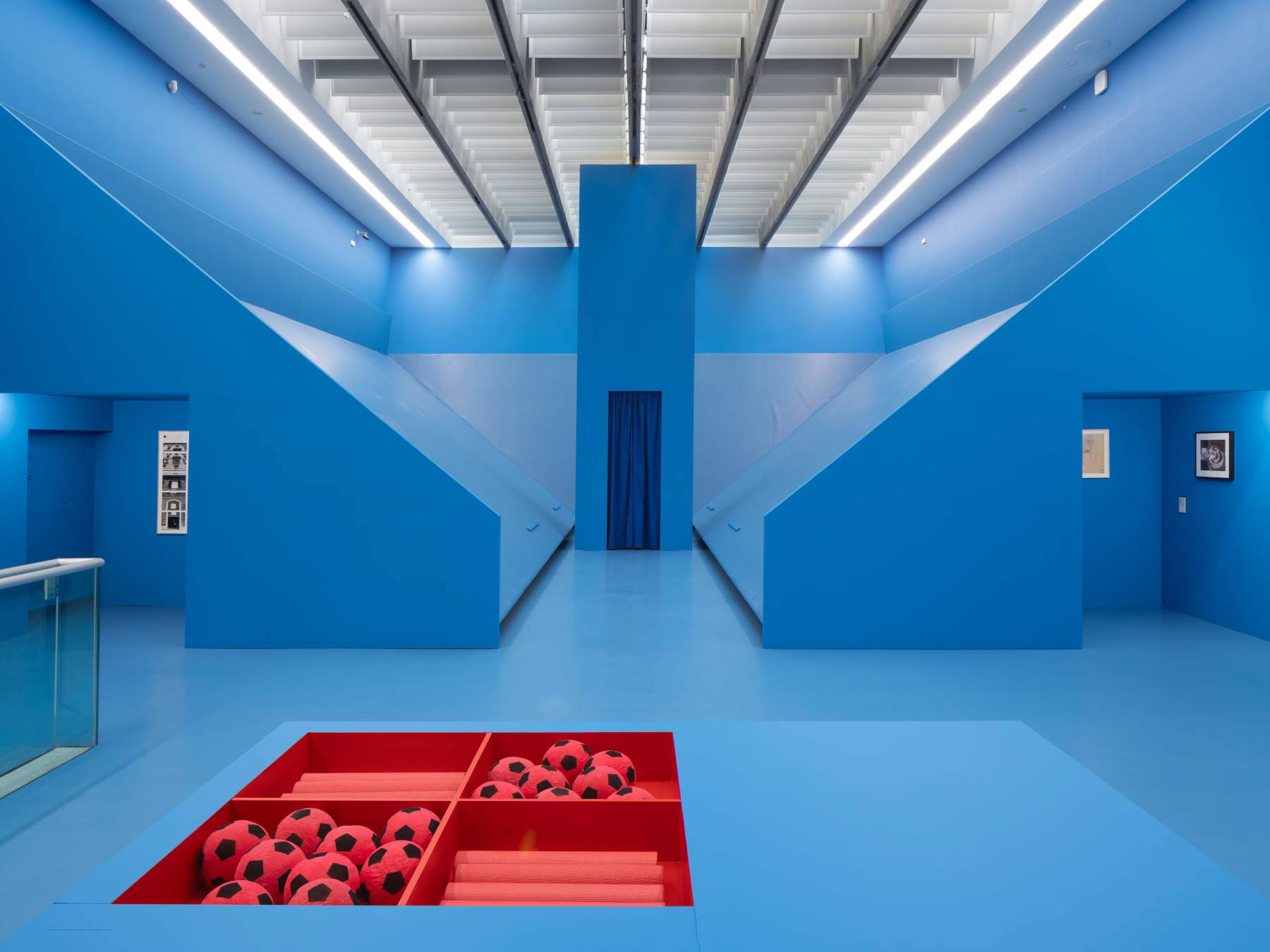
Bilbao’s concept unfolds through a sequence of actions and consequences: the body participates in the game, the game fosters encounters, and these encounters contribute to the formation of a community. From this perspective, the city is understood as the result of the relationships that form between people and the spaces that make such relationships possible. * Campo aperto* translates this idea into a structure to be traversed, in which the visitor’s physical experience plays a central role in understanding the project.
The work also engages with MAXXI’s heritage through the integration of two works from the museum’s collection, selected by Bilbao herself for their ability to explore play as a tool for knowledge and for relating to space. In an intimate setting, conceived as a place of discovery, the exhibition features Labirinto dei ragazzi by the BBPR studio and Il Commutatore, a manifesto-performance by Ugo La Pietra.
Visitors are also greeted by a large “collage of collages,” a composition that reflects the diversity of Studio Tatiana Bilbao’s architectural and artistic output.
NATURE is a program promoted by MAXXI’s Department of Contemporary Architecture and Design, directed by Lorenza Baroncelli, which invites internationally renowned architects to engage with the museum’s spaces through the creation of site-specific installations. Conceived by Pippo Ciorra, the program is now in its ninth edition and has featured, over the years, the participation of Francesco Venezia, West 8, Campo Boeza, UNStudio, Álvaro Siza, Michele De Lucchi, Mario Botta, and Maria Giuseppina Grasso Cannizzo.
 |
| At MAXXI in Rome, Sophie Calle explores the concept of the end, while Tatiana Bilbao reimagines community space |
Warning: the translation into English of the original Italian article was created using automatic tools. We undertake to review all articles, but we do not guarantee the total absence of inaccuracies in the translation due to the program. You can find the original by clicking on the ITA button. If you find any mistake,please contact us.