




The new exhibition season at Palazzo Reale in Milan opens with “Dalí and Fashion,” an exhibition scheduled to run from September 24, 2026, to January 31, 2027, and inaugurated during Milan Fashion Week. For the first time, this project offers a comprehensive exploration of Salvador Dalí’s relationship with fashion, which the artist viewed as a tool for defining identity, transforming the perception of the body, and creating forms of public communication. Montse Aguer, director of the Dalí Museums, serves as the project’s scientific director, while the curators are Laura Bartolomé, deputy director of Research and Projects at the Fundació Gala-Salvador Dalí, and Judith Clark, a fashion historian and professor at the University of the Arts London. Senior curators Lucia Moni and Bea Crespo are also contributing to the project.
Promoted by the City of Milan – Culture and produced by Palazzo Reale, MondoMostre, and Civita Mostre e Musei, the exhibition is the result of a collaboration with the Fundació Gala-Salvador Dalí, an institution founded by the artist to preserve, study, and promote his work. The project is presented under the patronage of the Ministry of Culture, the Spanish Embassy in Italy, and the National Chamber of Italian Fashion.
The exhibition brings together over 200 works and documents, including paintings, drawings, photographs, clothing, jewelry, accessories, objects, and film footage. Many of the items are being presented in Italy for the first time and come from the three main collections of Dalí’s works: the Fundació Gala-Salvador Dalí in Figueres, the Dalí Museum in St. Petersburg, Florida, and the Museo Nacional Centro de Arte Reina Sofía in Madrid. In addition to these loans, the exhibition features items from the historical archives of the fashion houses Schiaparelli, Chanel, Dior, and Rabanne.
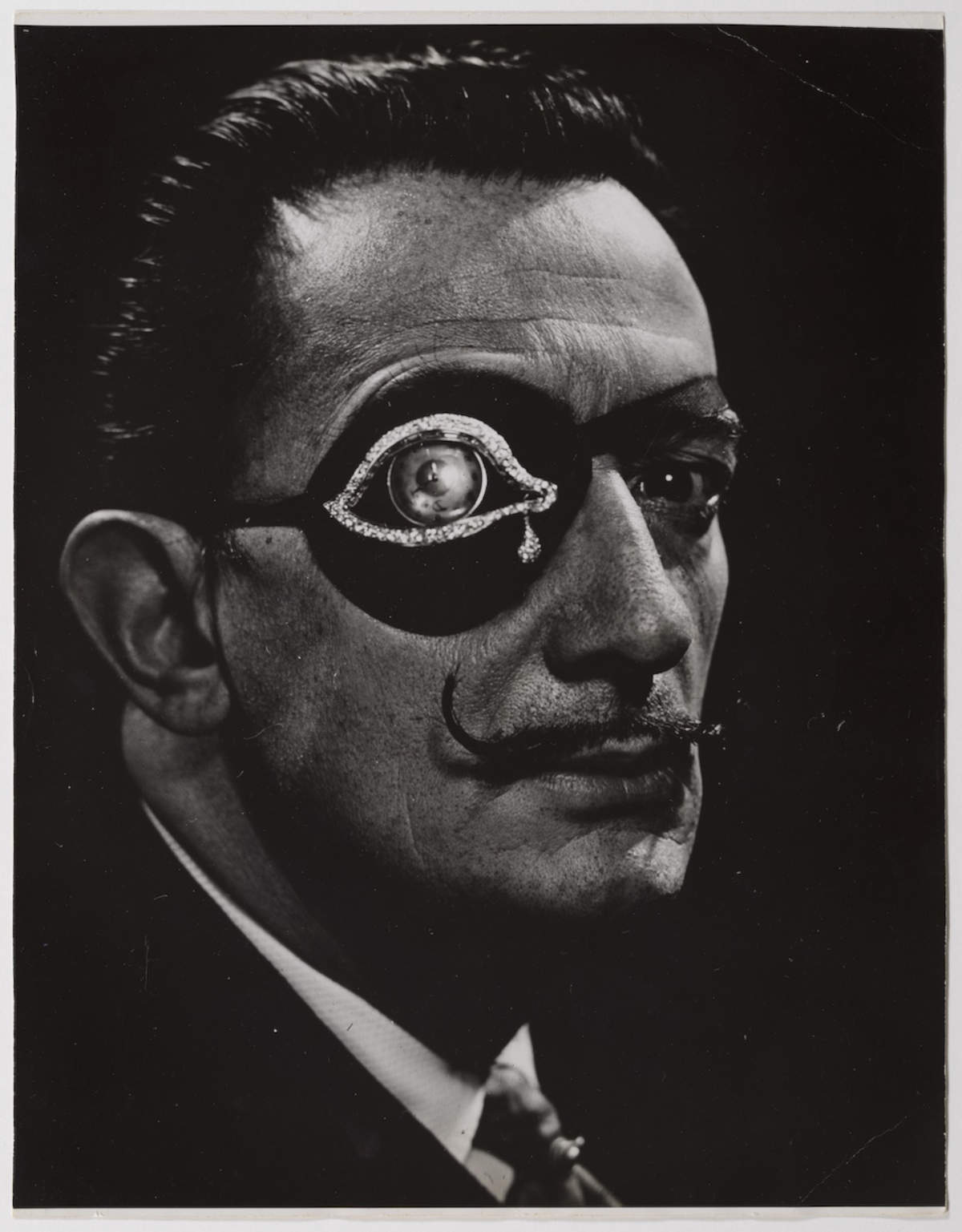
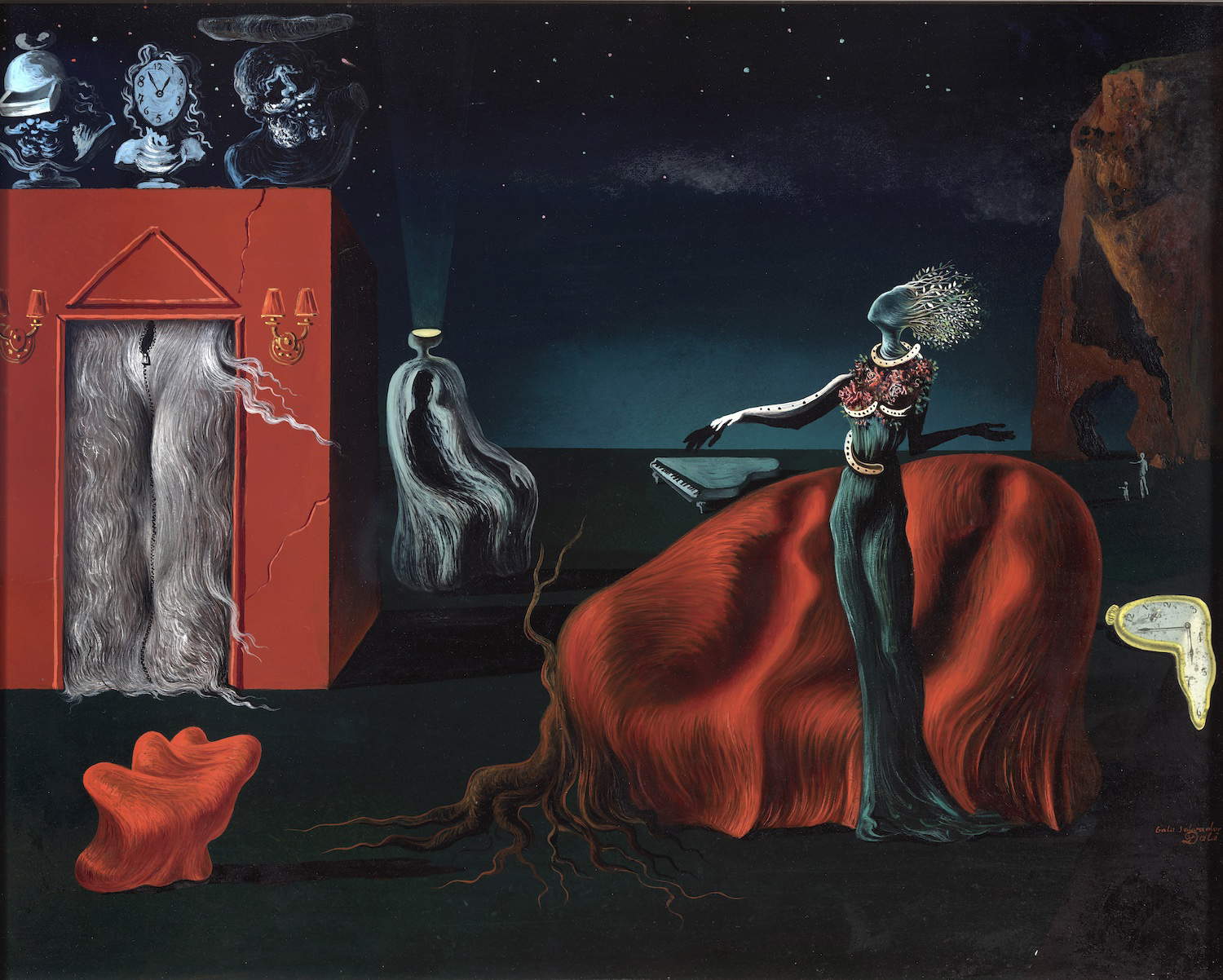
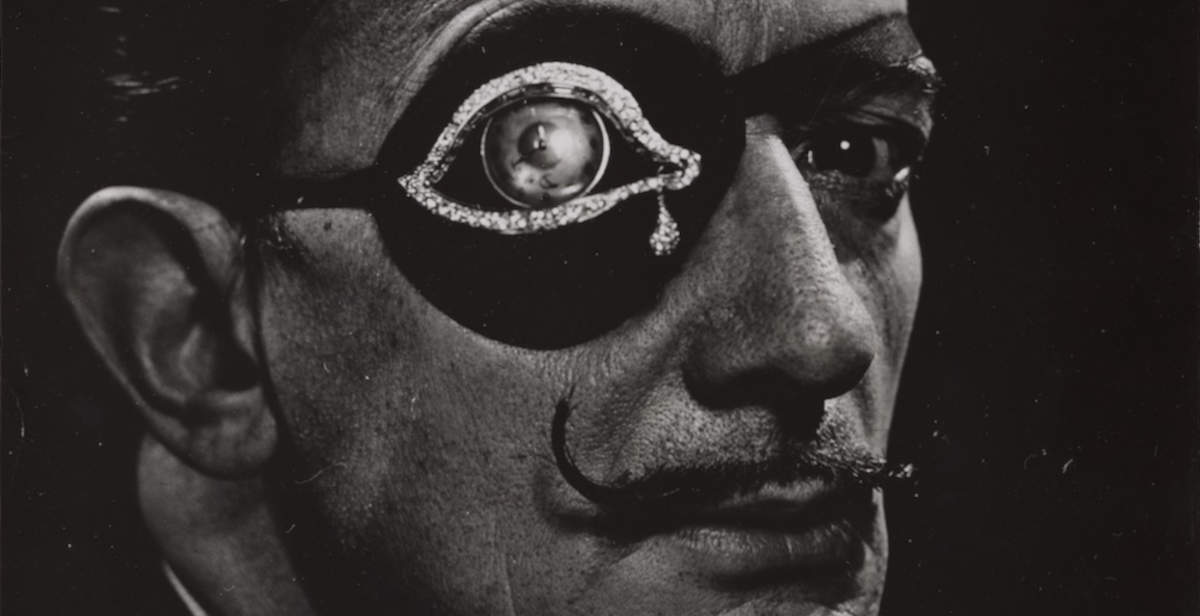
The exhibition’s central image is the painting *Three Young Surrealist Women Holding the Skins of an Orchestra in Their Arms*, presented alongside two pieces of jewelry created in 1949: *The Eye of Time*, in platinum and diamonds, and *Ruby Lips*, in gold, rubies, and pearls. The exhibition examines fashion as an integral part of Dalí’s creative practice, avoiding the separation of the artist’s work from his designs for clothing, accessories, jewelry, set designs, and advertising imagery.
With Gala’s entry into the artist’s life in 1929, clothing and accessories also became part of a shared language. Through their wardrobe, the couple constructed a precise public image, amplified by the work of photographers, magazines, and advertising campaigns. The exhibition thus connects Dalí’s works with a selection of garments and accessories that belonged to the artist and Gala, presented for the first time outside of Spain. Gala’s wardrobe features creations by Elsa Schiaparelli, Christian Dior, Coco Chanel, Pierre Cardin, Hubert de Givenchy, Gucci, and Emilio Pucci. Dalí’s wardrobe, on the other hand, is more eclectic and includes items related to performances, photographs, and public appearances, all used in the process of continuously reinventing his identity.
The relationship between painting and clothing also emerges in the numerous paintings in which Dalí depicts garments with particular precision. Some of the works can be directly linked to the garments preserved and on display at the Royal Palace. The exhibition was made possible in part thanks to the technical sponsorship of Bonaveri, which contributed 26 specially selected dress forms.
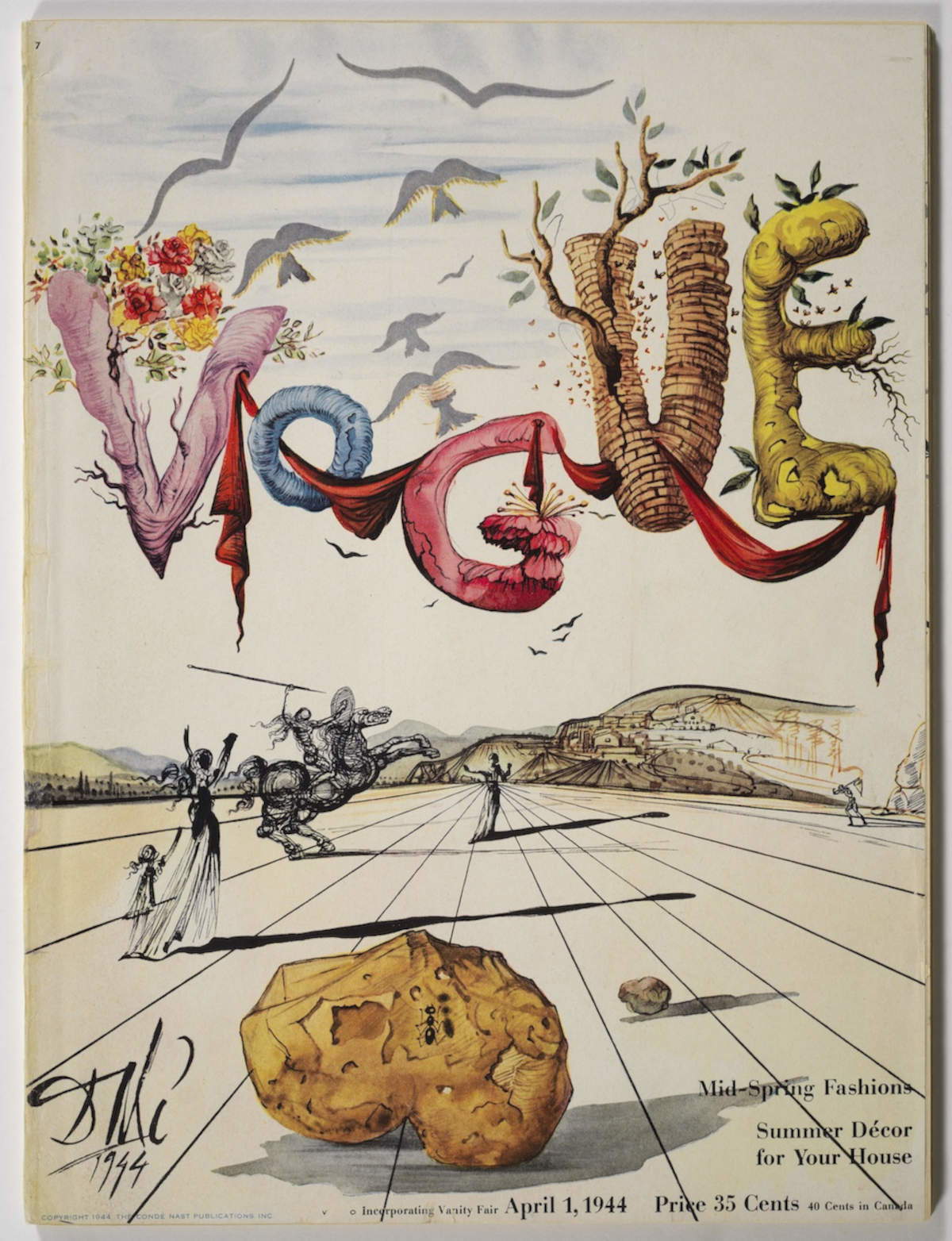
A central section is dedicated to his collaboration with Elsa Schiaparelli, which began in 1936 with the first window display Dalí created for the designer at the Bonwit Teller department store in New York. From that moment on, his imagery found its way into clothing, accessories, jewelry, costumes, fabrics, illustrations, and advertising campaigns. Clothing thus became a tool for altering the perception of the body and introducing ironic, erotic, and unsettling elements into everyday life. The circulation of images through magazines contributed to the international spread of these inventions. A prime example is Cecil Beaton’s photograph of Wallis Simpson wearingthe Lobster Dress, published by *Vogue* on the occasion of her marriage to the Duke of Windsor.
Her relationship with Coco Chanel also extended to the theater. In 1939, the fashion designer collaborated on the costumes for *Bacchanale*, a production by the Ballets Russes de Monte Carlo for which Dalí created the set design and libretto. Another notable event took place in 1951, when Dalí, Gala, Christian Dior, and their friends attended the Bal Oriental organized by Carlo de Beistegui at Palazzo Labia in Venice, wearing costumes designed by Dalí and Dior, with contributions from Gala and the young Pierre Cardin. Painting, fashion, theater, and performance thus converged into a single visual system.
In the 1960s, fashion took on an even more direct role in the artist’s performances. Between 1966 and 1969, in Portlligat, Cadaqués, Barcelona, and Paris, Dalí involved models and performers in Paco Rabanne’s creations, including Donyale Luna, Elsa Peretti, and Amanda Lear. In some performances, the artist painted inside large plastic bubbles, while color spilled onto the garments, linking painting, the body, and performance.
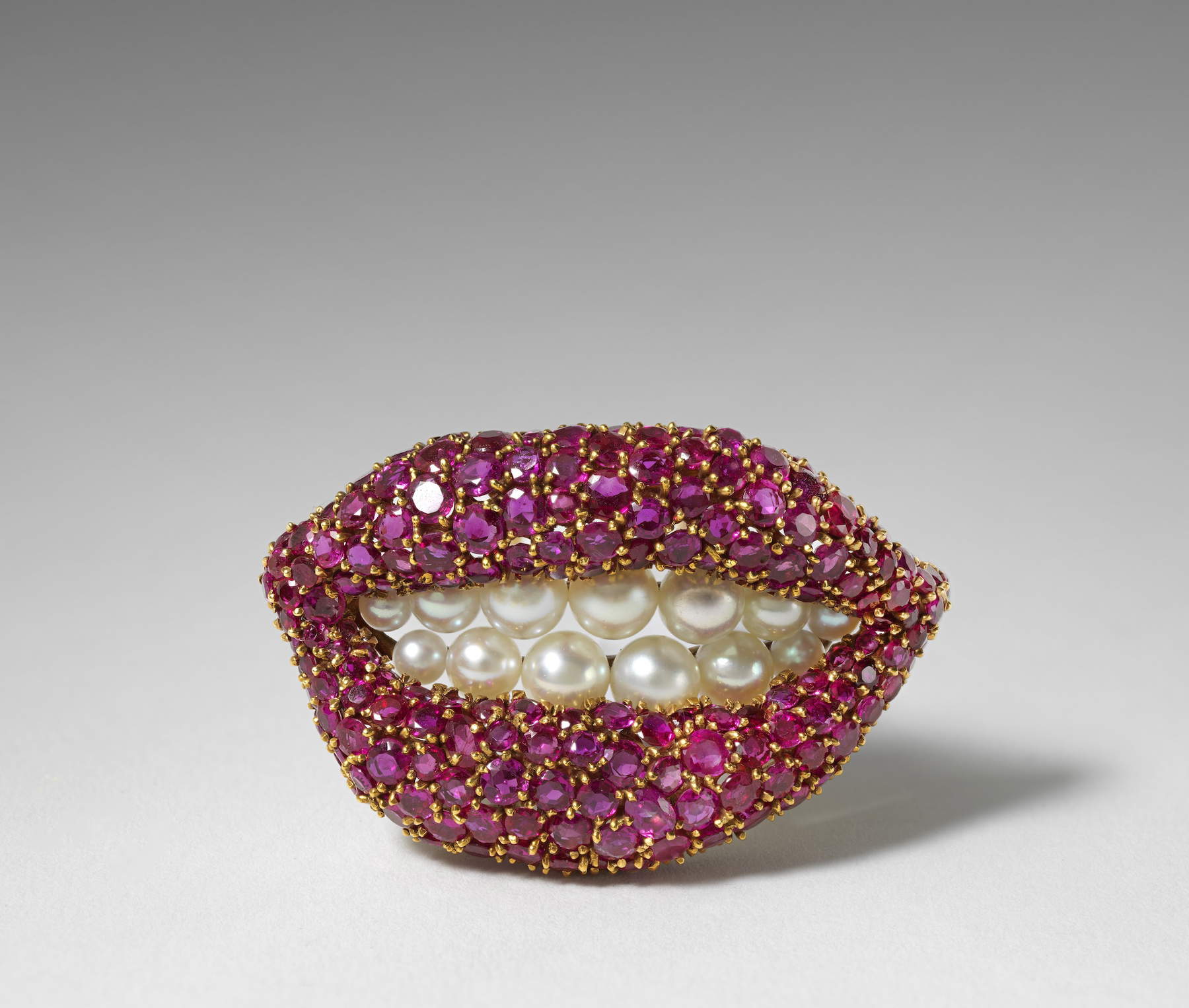
The body, in fact, represents one of the main points of contact between Surrealism and fashion. In Dalí’s works, eyes, lips, hands, and other anatomical parts are isolated and reassembled, while the mannequin assumes a position suspended between individual and object. This same exploration continues in the jewelry he designed starting in 1949, exhibited in Italy for the first time since their acquisition by the Fundació Gala-Salvador Dalí in 1999. These objects, too, influence the representation and perception of the body, foreshadowing certain experiments developed by contemporary fashion.
“Dalí and Fashion” thus reconstructs a field of research in which painting, photography, clothing, jewelry, theater, and advertising intersect. The exhibition also considers fashion as a tool for producing images, identity, and mass culture, highlighting the continuity of this interest in Dalí’s work and its subsequent presence in the work of fashion designers, creative directors, photographers, and contemporary artists. Vogue Italia is the exhibition’s media partner, while StreetVox is the Official OOH partner. The exhibition is made possible thanks to Enel, the main partner, and Fineco, the premium partner, with technical sponsorship from ATM, Bonaveri, VCPC, and Novacolor. Radio Monte Carlo is the official radio partner, X-Style supports the project, and Vivaticket is the official ticketing partner. A book published by Skira Editore is also associated with the exhibition.
“Milan is a city where art and fashion meet and nourish one another with extraordinary vitality,” says Tommaso Sacchi, Councilor for Culture, “and Palazzo Reale, with this unprecedented project, reaffirms its commitment to reinterpreting the great artists through ever-new perspectives, offering scholars fresh tools for analysis and bringing the art closer to both the Milanese and international public. The decision to open the exhibition during Milan Fashion Week stems from the recognition—now shared by major international cultural institutions—that fashion is not merely an expression of taste, but a language capable of interpreting its own era and preserving its forms, symbols, and images for posterity, just like a work of art. The more than two hundred works on display, drawn from prestigious archives and collections such as Schiaparelli, Chanel, and Dior, tell the story of a legacy that continues to inspire the creative directors of major fashion houses around the world. “I would like to thank the Fundació Gala-Salvador Dalí and all the prestigious partners who made this project possible.”
“This exhibition invites us to discover Salvador Dalí from a new perspective on his cosmogony,” state Montse Aguer and Laura Bartolomé. “There is no ‘Dalí the artist’ and ‘Dalí the fashion designer’—only a total artist capable of leaving his mark wherever possible. Like the masters of the Renaissance, like Leonardo or Michelangelo.”
“There is no definitive word on the relationship between Dalí and fashion,” says curator Judith Clark. “The proliferation, this very year, of opportunities to explore this theme at leading institutions such as the FIT, the V&A, and the Metropolitan Museum of Art invites us once again to question our own criteria for judgment: can fashion exist as a conceptual act, beyond its modes of production? Dalí deeply loved the systems of fashion: he appropriated them, imitated them, and transformed them into art. His extraordinary talent for scenography serves as a warning to every exhibition designer against the temptation to imitate. The dramatic, fluid, and dreamlike spaces of his work require a setting of their own. In this exhibition, the diversity of his ideas is celebrated through a variety of media and languages: paintings, magazines, photographs, and, of course, fashion itself.”
 |
| Dalí and Fashion: The Artist’s Relationship with Clothing, the Body, and Identity at Palazzo Reale |

Warning: the translation into English of the original Italian article was created using automatic tools. We undertake to review all articles, but we do not guarantee the total absence of inaccuracies in the translation due to the program. You can find the original by clicking on the ITA button. If you find any mistake,please contact us.























 IT
IT FR
FR DE
DE ES
ES CN
CN


