



by Redazione 19/11/2026


Categories: Exhibitions / Disclaimer
At the Palazzi dell’Arte in Rimini, through January 10, 2027, the exhibition *Rinascimenti* brings together 73 works by 60 Italian illustrators on the Mediterranean, European rights, the climate crisis, and urban transformation. The section dedicated to Rimini was commissioned specifically for this occasion.


How do you depict Rimini? You could start with the Roman city or the Malatesta Renaissance, with Federico Fellini’s imagery, or with the seaside culture that made the Riviera legendary. Or you could start with everyday life—with how the city is experienced by those who live there. Twenty-four illustrators answered this question, invited to depict the city for the exhibition *Rimini. Renaissances. Illustrating the World, Drawing the Future*. The exhibition is open through January 10, 2027, at the Palazzi dell’Arte in Rimini, located in the Palazzo del Podestà on Piazza Cavour. The section dedicated to the city is the previously unseen part of a broader exhibition, curated by Ale Giorgini and Giovanni Carlo Federico Villa, director of Palazzo Madama in Turin. A total of 73 works by 60 Italian illustrators are on display, organized into four sections ranging from the origins of the Mediterranean to the birth of European rights, from the climate crisis to the transformations of the Adriatic city. According to Giorgini, this is “one of the largest and most ambitious group exhibitions of illustration ever held in our country” and “a true state-of-the-art showcase of illustration in Italy.” “We’ve brought together the leading names who showcase Italian excellence around the world,” explains the co-curator, “alongside the young talents who are reshaping the future of this unique art form.”

The underlying idea is that illustration, with its immediate language, can isolate the essential core of major social issues and transform it into images capable of shaping memory and offering a glimpse into the future. The exhibition’s title stems from this, and the plural form is no accident. In Rimini, the word first and foremost evokes the Malatesta Renaissance, one of the historical periods that illustrators have been called upon to reinterpret. Then there are the “renaissances” of a city that is reborn when it transforms its memory into a shared space of knowledge and vision. And there is what the organizers call the new Renaissance of Italian illustration, present today in major publications, publishing houses, and cultural institutions around the world. The organizers’ intention is for the exhibition to demonstrate how figurative art can accompany—and sometimes guide—communities during times of transformation, and how an image can become a common good and a tool for interpreting the present.


“We live in an age that produces images at a speed never seen before, and perhaps precisely for this reason, we increasingly need someone to teach us how to look,” observes Villa. “Italian illustration is experiencing a period of extraordinary vitality, recognized worldwide: artists capable of speaking to audiences that are worlds apart, each with an immediately recognizable artistic vision.” The curators entrusted the artists with questions that, according to the director of Palazzo Madama, “pertain to everyone’s life: what does history offer us, how are rights established, what responsibility do we have toward the planet, and how can a city continue to transform itself while preserving its identity.” Above all, they gave the artists freedom: “We asked them to study, interpret, and imagine, allowing each response to emerge from the freedom of their own artistic expression.” The project, Villa notes, continues work that began in Turin: “It is a line of research that Palazzo Madama has been developing for several years, through projects dedicated to history, institutions, science, and memory—and which takes on a particularly significant dimension here in Rimini.”

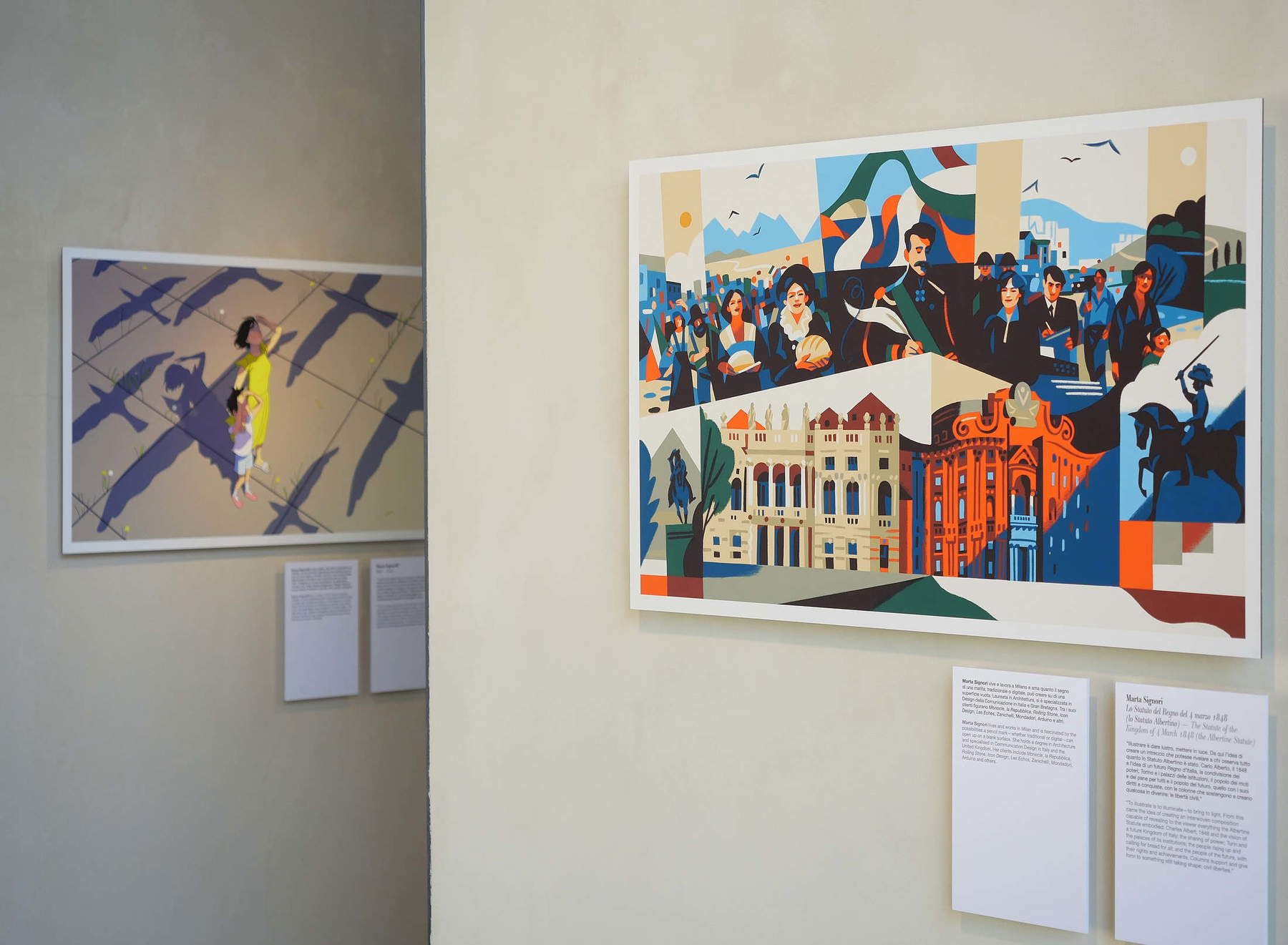
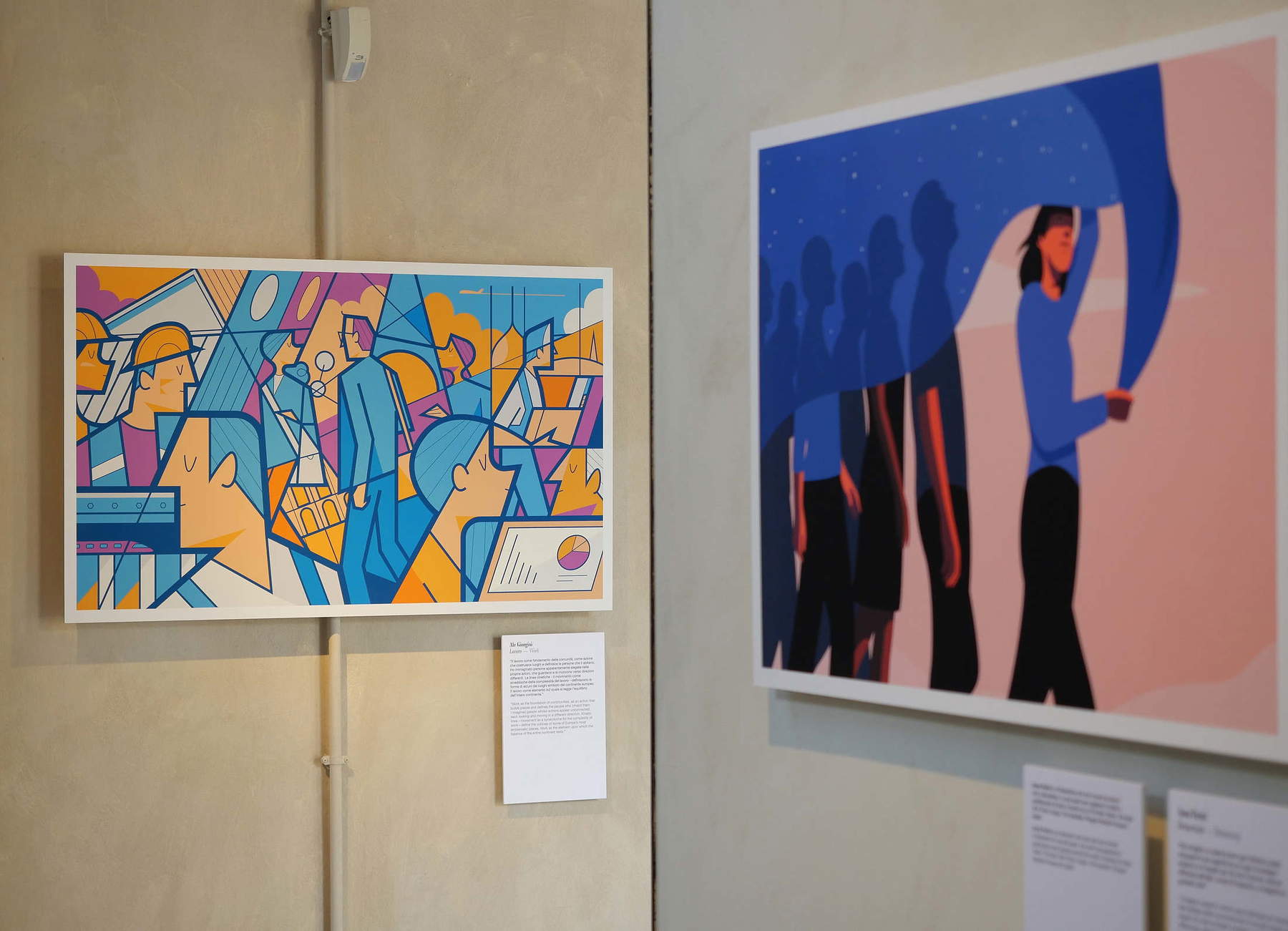
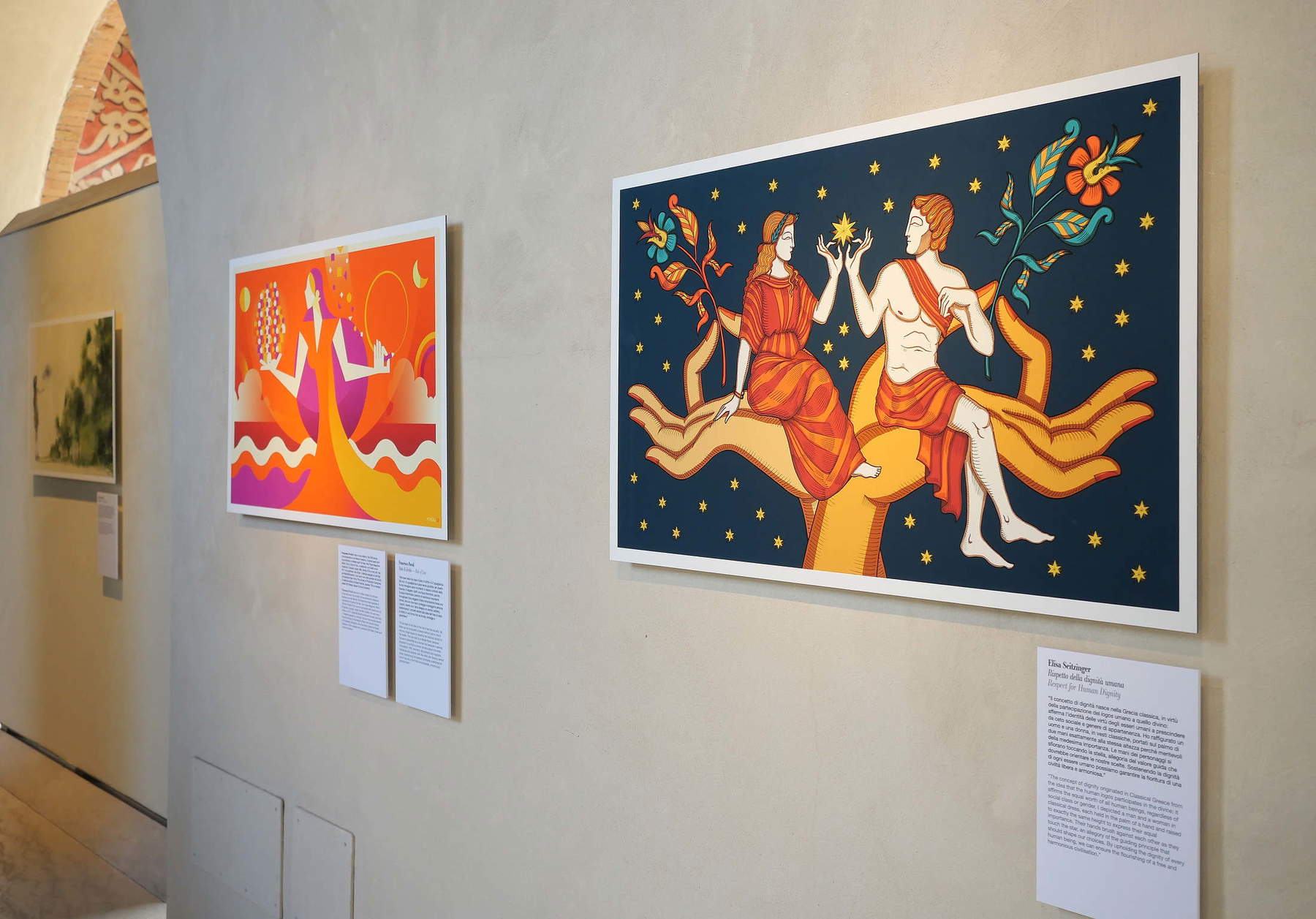
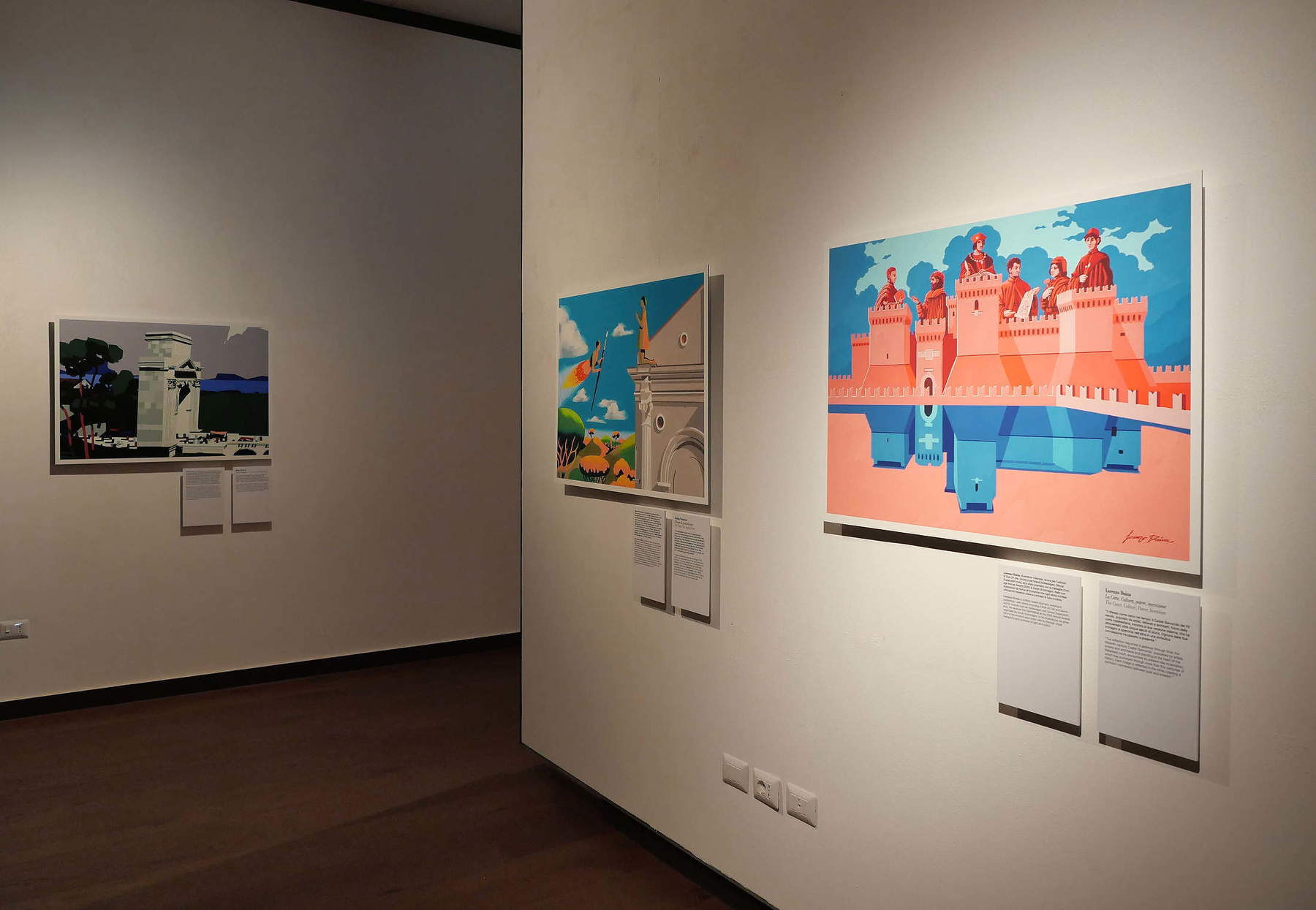
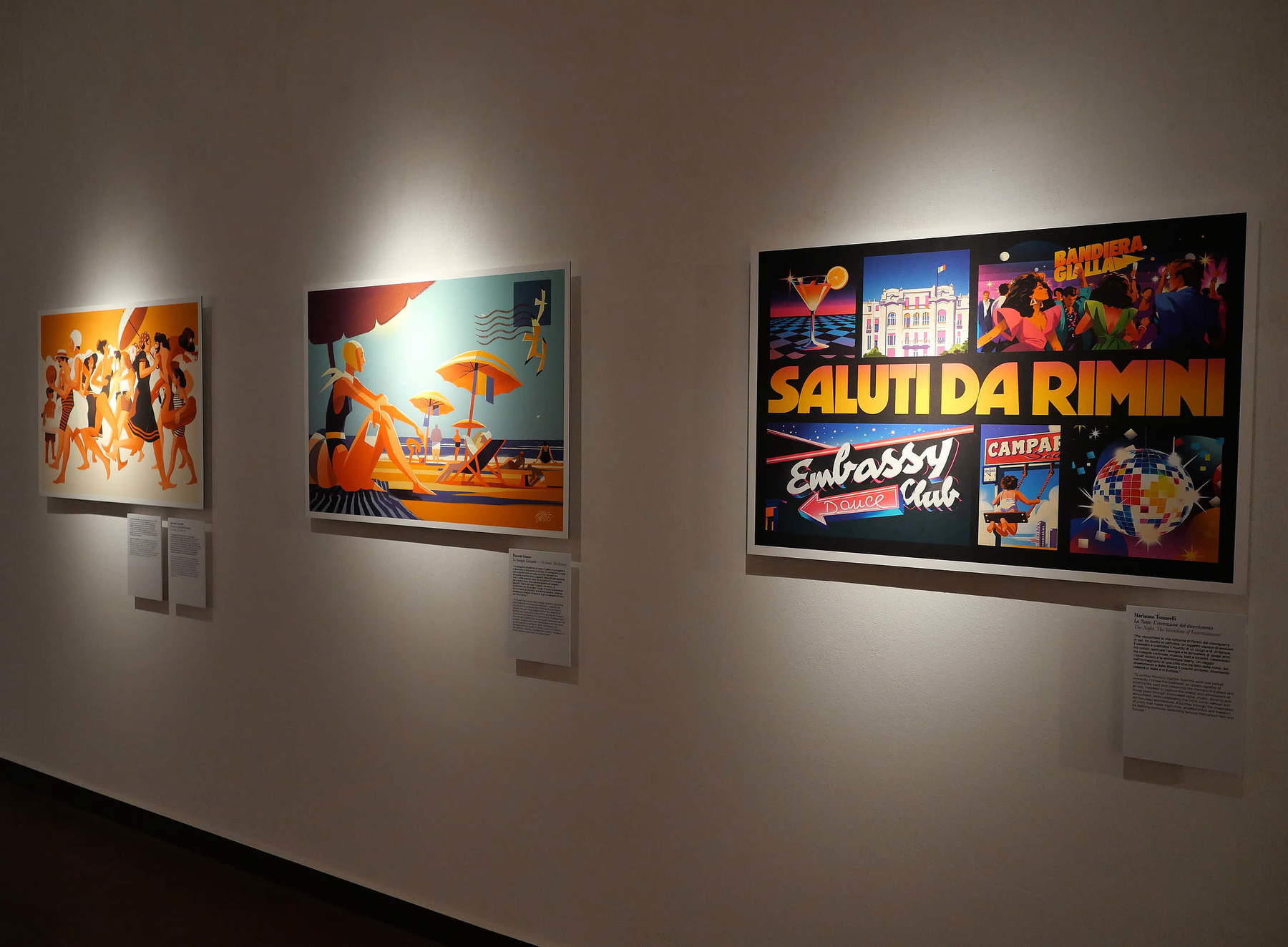
The section on Rimini, titled “Rinascere,” is the heart of the exhibition and is built around two commissions that complement each other. It is the only part of the exhibition designed specifically for this venue, and it is what gives the exhibition its distinctive character. Fifteen works were commissioned from Italian artists: they reinterpret the history and imagery of the city—from Roman Rimini to the Malatesta Renaissance, from Fellini’s vision to seaside culture—and juxtapose them with today’s issues: heritage preservation, the environment, and the city of the future. Another nine illustrations were commissioned from nine artists from Rimini, who depict the region through their own personal experiences. The twenty-four works thus juxtapose the perspectives of those who interpret Rimini from the outside with those who experience it from the inside—blending memory, a sense of belonging, and everyday life.
This is a deliberate choice, which Villa emphasizes: “Here, alongside the perspectives of the great Italian illustrators, we wanted to include those of artists from Rimini, so that a city can also tell its own story through the eyes of those who live there every day.” Alessandro Giovanardi, director of the Municipal Museums of Rimini, sees the exhibition as a way to place local history within a broader context: “Rimini’s past becomes part of a broader Italian and European narrative here: the Roman city, the pilgrimage routes, the Malatesta era, and its extraordinary hinterland. This past serves as a starting point for imagining the future.” The director emphasizes the dual nature of the project, which views the city “through the eyes of great Italian illustrators—including several artists from Rimini—who depict the region through their own personal poetic experiences.” For Giovanardi, “entrusting this heritage to the artists’ perspectives means making its meanings legible once again and exploring its possibilities, even in the face of today’s environmental and social challenges.” Michele Lari, Rimini’s Councilor for Culture, hopes that the new works will offer “even those who live here every day the opportunity to discover something unexpected.”
Before reaching Rimini, the exhibition passes through three sections previously presented, which emerged from research that Palazzo Madama has been conducting for several years through projects dedicated to history, institutions, science, and memory. It begins with Selinunte, under the title “Founding.” The ancient city is presented as a frontier in the Mediterranean, marked by encounters, exchanges, and conflicts, and its history serves as a way to explore the relationships between different communities and the forms of coexistence. The curators clarify that they do not intend to establish direct lineages: rather, the story of Selinunte offers a starting point for reflecting on the long history of democratic institutions and values in Europe.
The narrative continues with “Europe,” under the heading “Living Together,” dedicated to the long journey of civil liberties and rights. The illustrators revisit several foundational texts—from the Albertine Statute to the Ventotene Manifesto, from the Treaties of Rome to the European Social Charter—translating into images the values upon which democracy and peace are founded. The third section, “Change!”, under the heading “Changing,” was produced for the G7 Climate, Energy, and Environment Summit and puts democratic values to the test in the face of the climate crisis. The goal is to transform ecological emergencies from technical data into shared responsibilities and choices. Of the four, this is the section most closely tied to current events: created for an international summit, it calls on illustration to make a topic—which is usually presented in the form of numbers and graphs—accessible and relatable. The sequence of sections thus follows a specific path: from the founding of a community to the establishment of rights, from environmental threats to the rebirth of a city. Of the 73 works on display, 49 belong to these three previously mentioned sections. The other 24 were created specifically for Rimini and conclude the exhibition by bringing the major issues addressed in the previous galleries down to the scale of a single city.
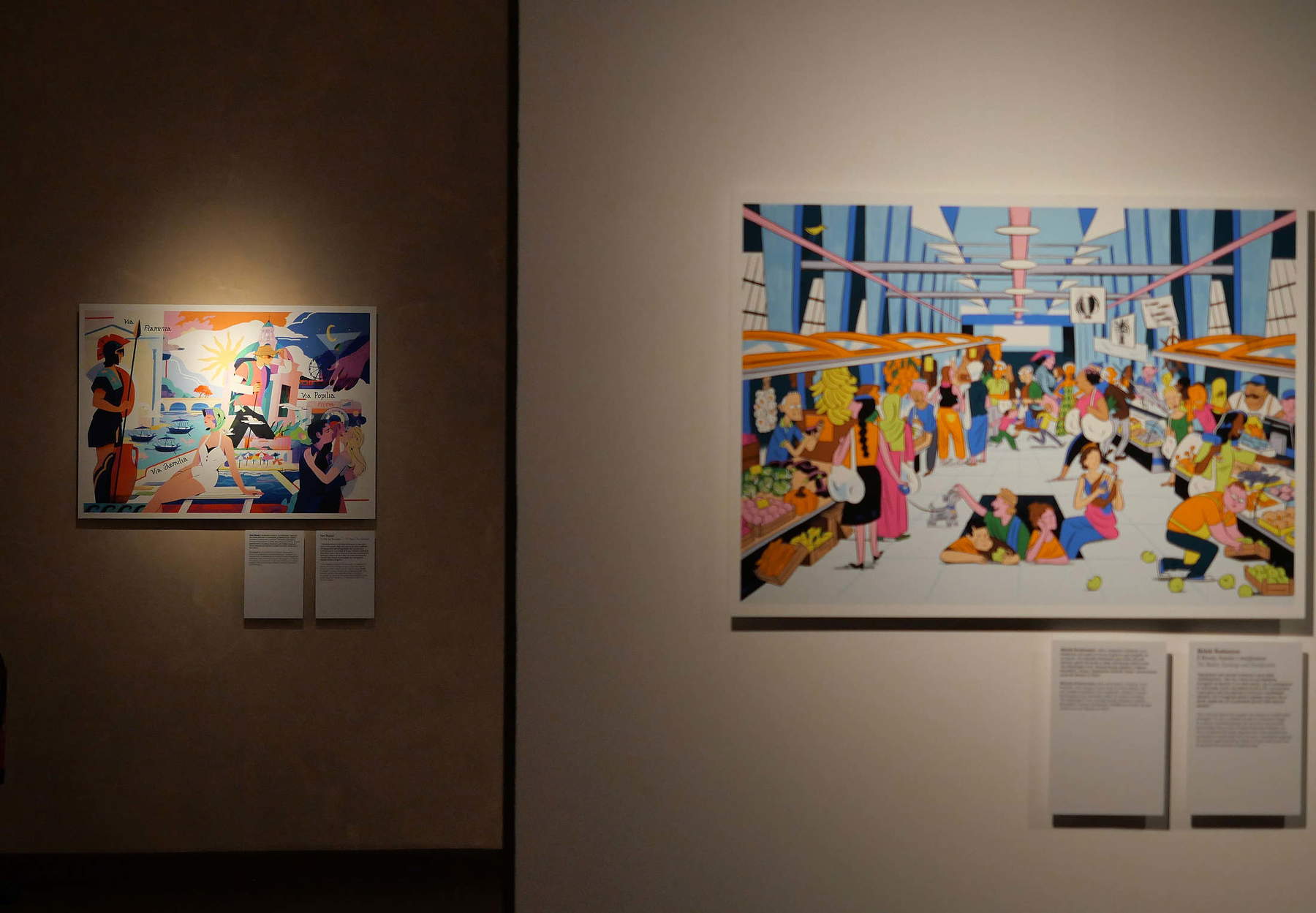
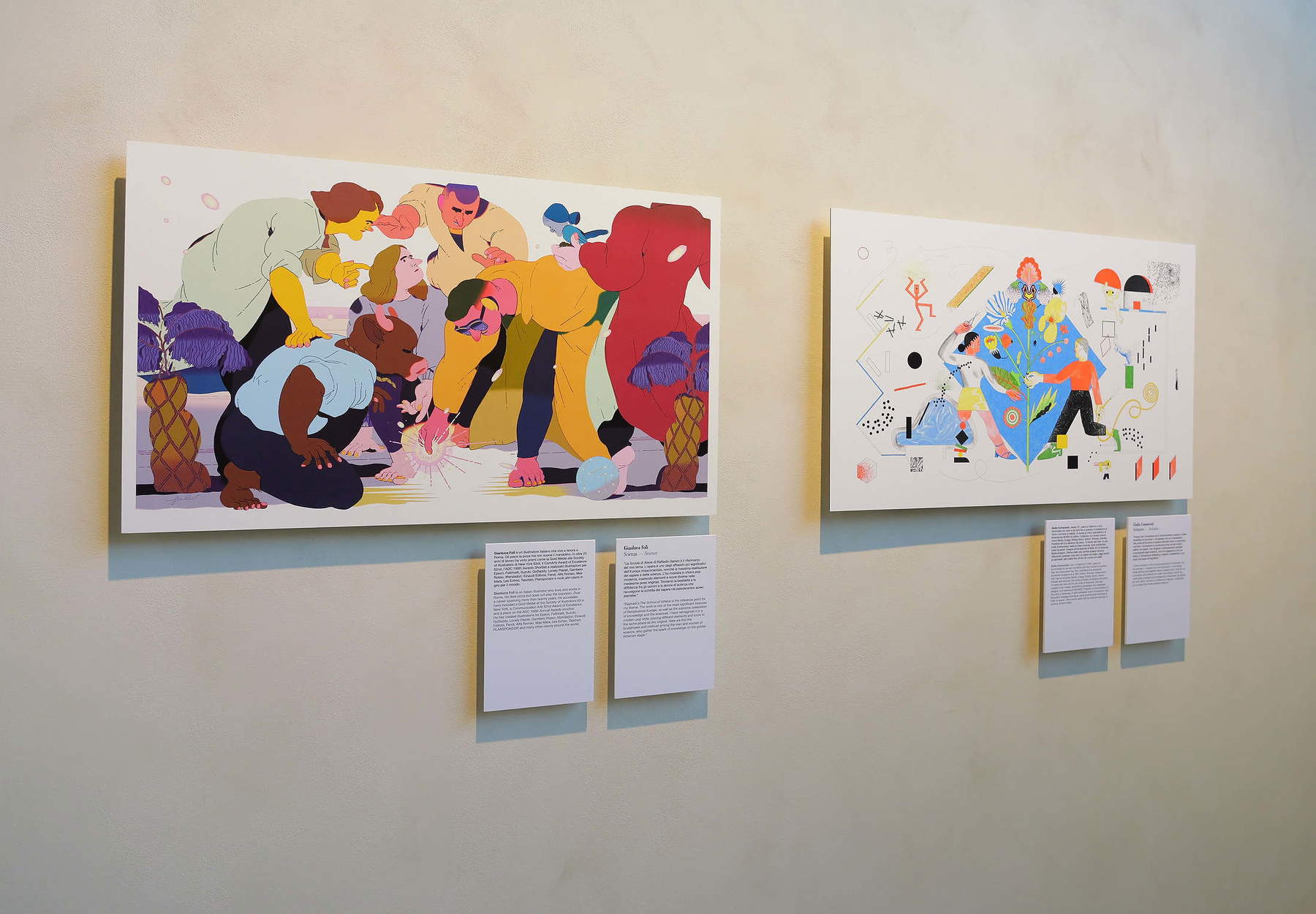
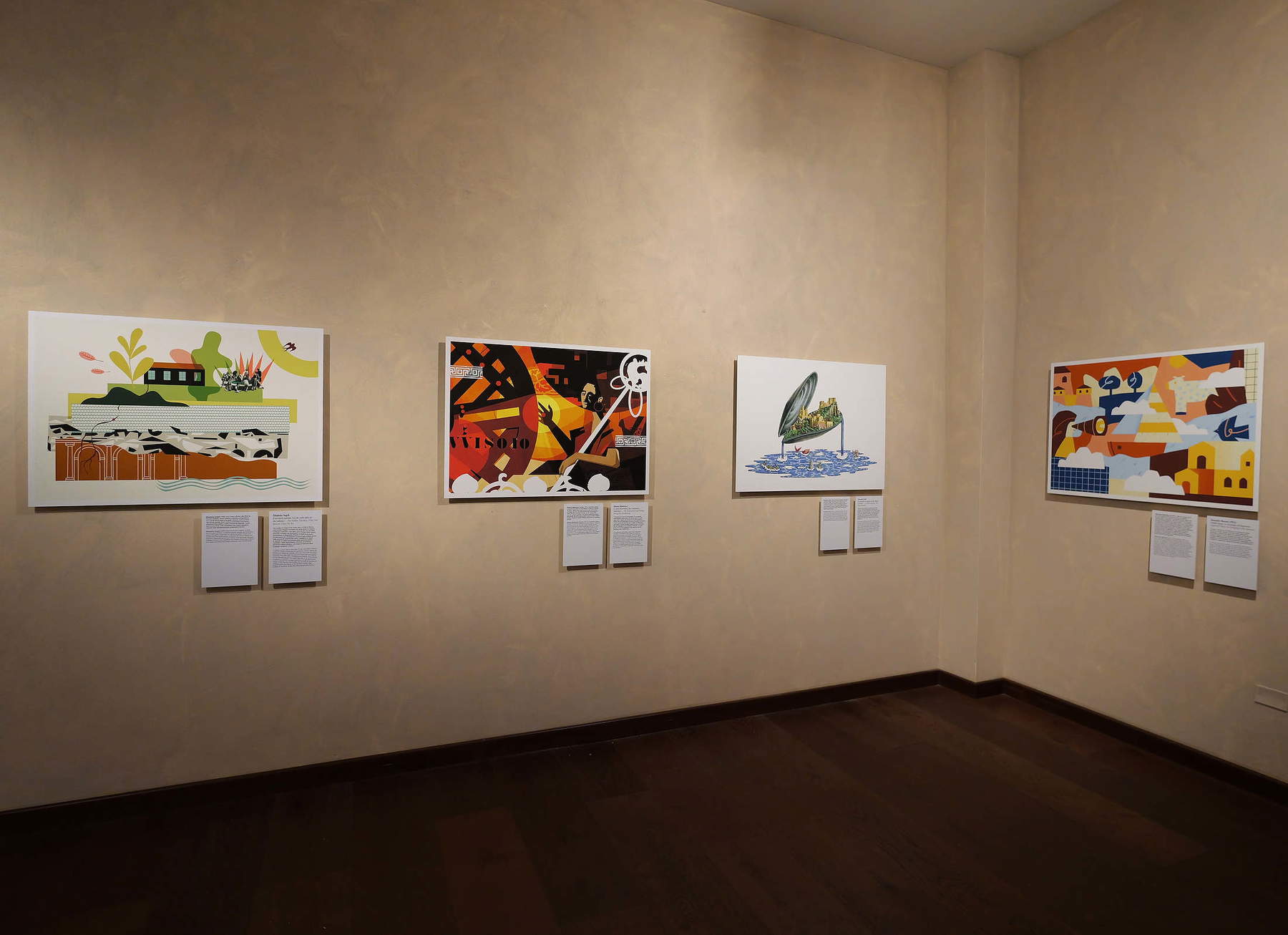
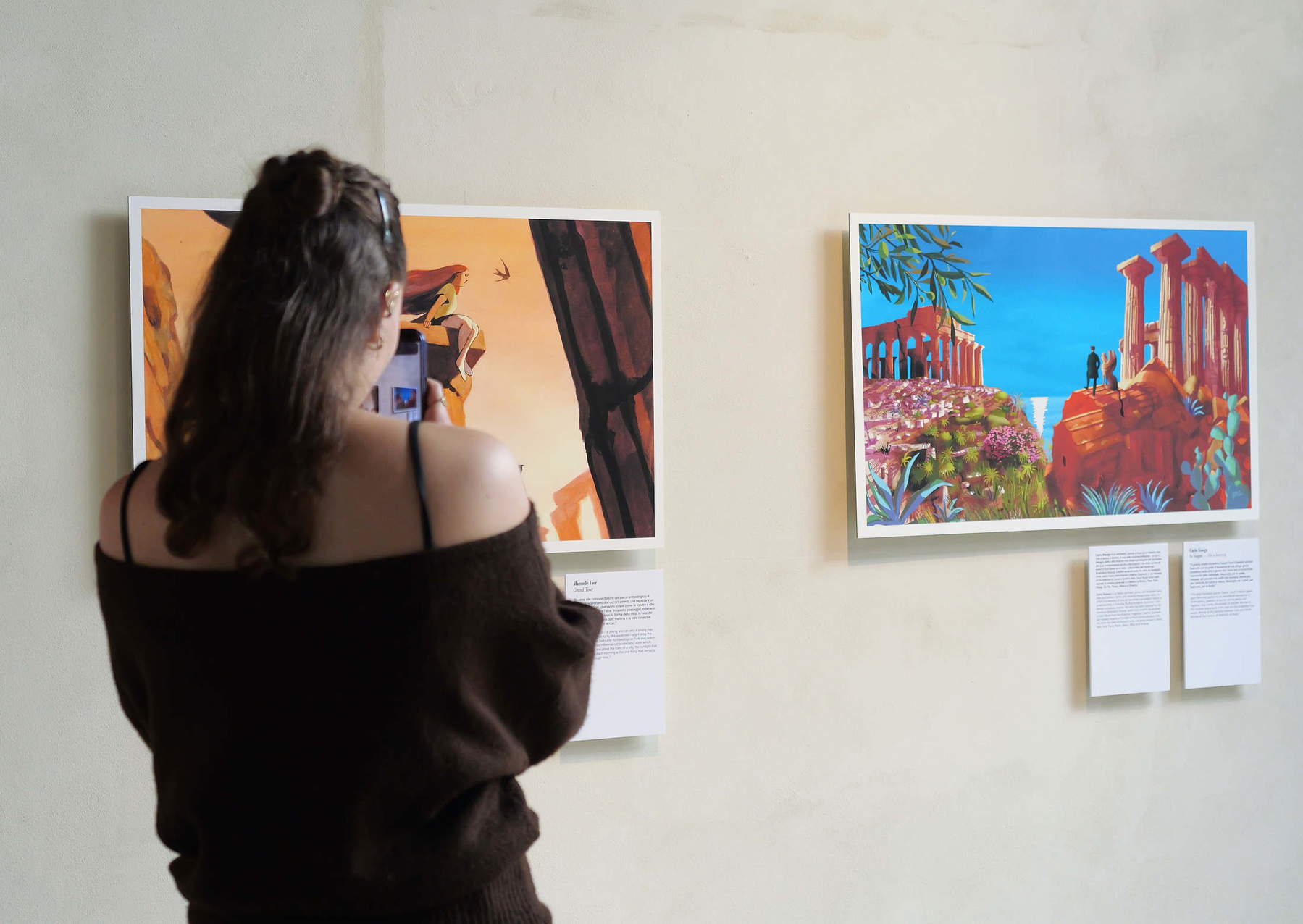
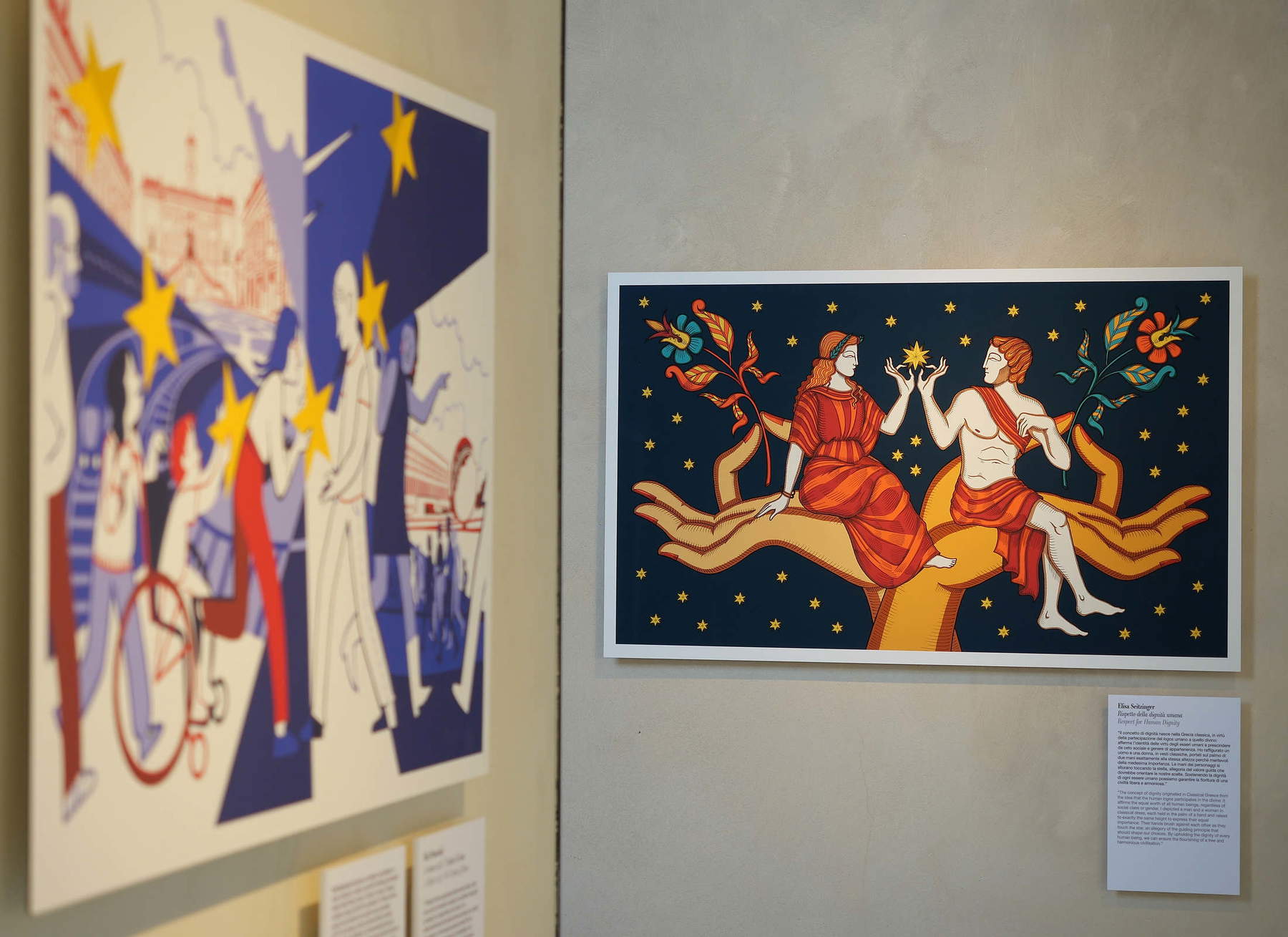
The stars of the exhibition are the illustrators, each with their own unique style. The organizers speak of artistic approaches that differ in sensibility and method, which together create a very diverse landscape. Many of the artists work between Italy and cities such as New York, Berlin, Paris, Barcelona, and Toulouse. They have created illustrations for publications such as *The New Yorker*, *The New York Times*, *Le Monde*, and *The Guardian*, and have worked for brands such as Apple, Nike, Gucci, Barilla, Hermès, and IKEA. Among the awards received by the artists featured in the exhibition are gold medals from the Society of Illustrators in New York, the Fauve d’Or from the Angoulême Festival, and the Gran Guinigi Award from Lucca Comics. Alongside established masters and artists from Rimini, the exhibition also features the new generation: Margherita Caspani and Stefania Sbrighi, both born in 1999, and Andrea Mongia, who has already been included by Forbes on its “30 Under 30 Europe” list. The diversity of the artists—each with their own distinctive style—is one of the aspects the exhibition emphasizes most: there is no single common style, but rather many different ways of approaching the same themes.
For Giorgini, the appeal of illustration has ancient roots: “Drawing is the first form of expression through which humanity gave shape to the imagination. And perhaps this is precisely why illustration strikes a deep chord, rekindling that primordial sense of wonder. When faced with an illustrated panel, we are not mere spectators: we are transported elsewhere.” “I am happy to kick off this journey,” adds the co-curator: the exhibition “demonstrates how the power of images can define the identity of a community, the places we inhabit, and who we are.”
“With *Rinascimenti*, we’re bringing an exhibition to the Palazzi dell’Arte that speaks to the world and, at the same time, invites us to look more deeply at our city,” declares Lari, who believes the new works place the history and transformations of Rimini “in dialogue with the sensibilities of contemporary illustrators.” The project also reflects a vision of the museum’s role. For Giovanardi, “museums are places where a community can understand its own history and reflect on its own destiny,” and illustration is “an art form capable of bringing together figurative exploration, storytelling, and civic reflection.” The task of a welcoming museum, he concludes, is “to preserve memory and nurture the knowledge and imagination necessary to shape the future.” Lari places the exhibition within the framework of the City’s Strategic Plan for Culture: “to make culture a fundamental component of urban development, to open spaces to diverse forms of expression and audiences, and to harness the creative energies of the local area in dialogue with national and international experiences.” “We want our cultural venues to be increasingly vibrant spaces,” adds the councilor, “where people can find a sense of belonging, come together, and help envision the future of Rimini.”
The exhibition is sponsored by the City of Rimini with support from the Emilia-Romagna Region; it stems from a project by Palazzo Madama – Fondazione Torino Musei and is produced by MondoMostre. “For MondoMostre, contributing to ‘Rimini Rinascimenti’ means giving shape to a vision of culture in which we deeply believe: one that is open, accessible, and capable of connecting institutions, artists, and communities,” states Simone Todorow di San Giorgio, the company’s CEO. “This project demonstrates that art is not merely a guardian of the past, but a vital tool for addressing the great challenges of our time and shaping the future,” continues Todorow, who hopes that contemporary illustration will invite the public to observe the world—and the city—“with fresh eyes.” The catalog is published by Silvana Editoriale. Lari thanked Palazzo Madama and the Fondazione Torino Musei, MondoMostre, the two curators, Turin Mayor Stefano Lorusso, and the Emilia-Romagna Region for their collaboration. The exhibition will remain open at the Palazzi dell’Arte in Rimini, in the Palazzo del Podestà on Piazza Cavour, through January 10, 2027. Visitor information is available on the website palazziarterimini.it.
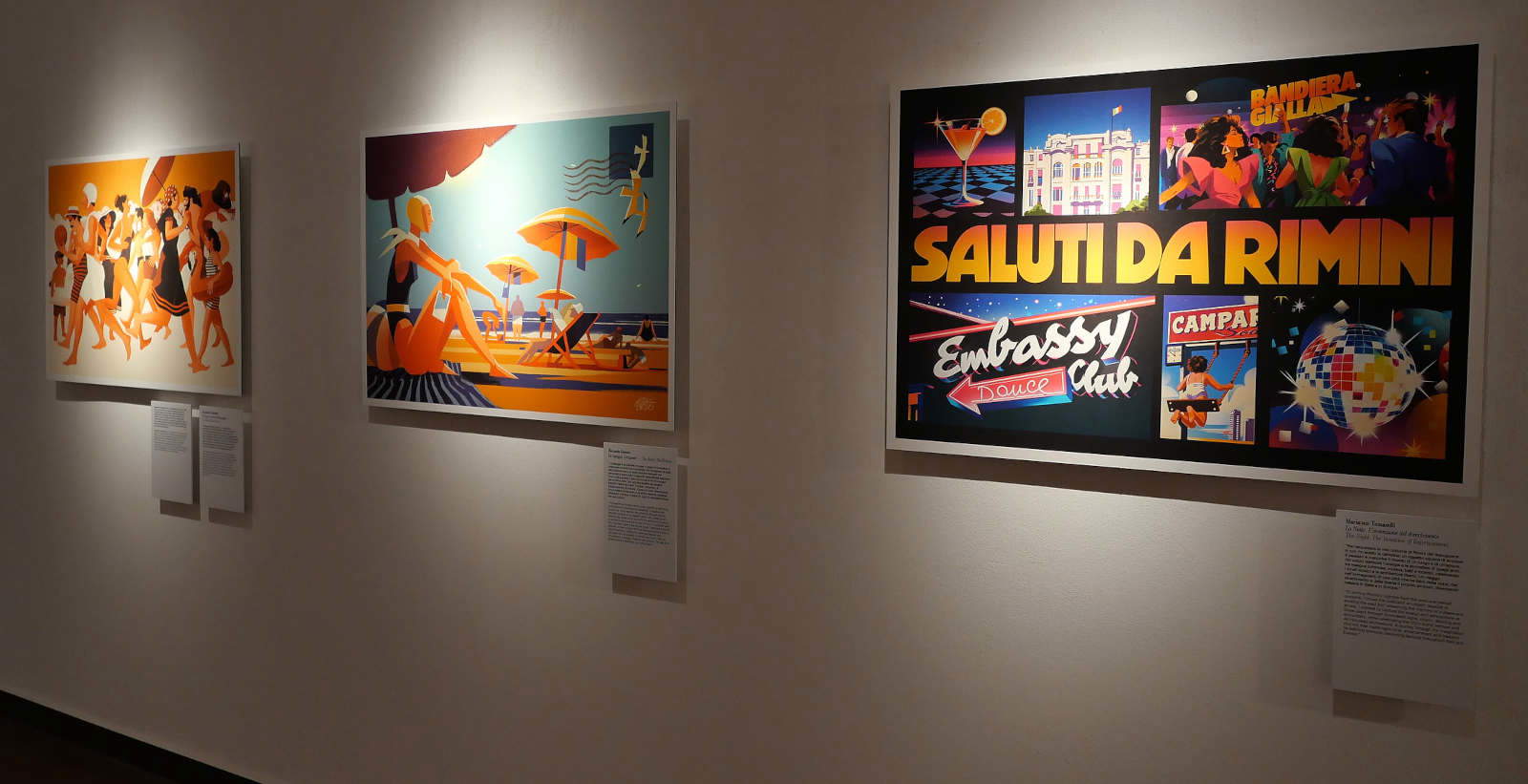 |
| From Fellini to the Malatesta family: Rimini as depicted by 60 Italian illustrators |
Warning: the translation into English of the original Italian article was created using automatic tools. We undertake to review all articles, but we do not guarantee the total absence of inaccuracies in the translation due to the program. You can find the original by clicking on the ITA button. If you find any mistake,please contact us.