





To mark the 800th anniversary of the death of St. Francis of Assisi, the National Art Gallery of Bologna is dedicating an exhibition to the transformation of the saint’s image in Bolognese painting between the 16th and 17th centuries. From October 2, 2026, to January 10, 2027, the museum will host *Il cielo in terra. St. Francis and Bologna in the 16th and 17th Centuries, an exhibition curated by Luigi Gallo, Director of the National Museums of Bologna—Regional Directorate of National Museums of Emilia-Romagna—and art historian Elena Rossoni.
The exhibition marks the first installment of the 2026–2030 program of the National Museums of Bologna and explores the gradual iconographic transformation of the figure of St. Francis through the works of the leading figures of the Bolognese school. The exhibition follows a trajectory that leads from Francesco Francia to the Carracci, then to Guido Reni, Francesco Albani, and Guercino, bringing together paintings from the collections of the National Museums of Bologna with works from other major Italian institutions.
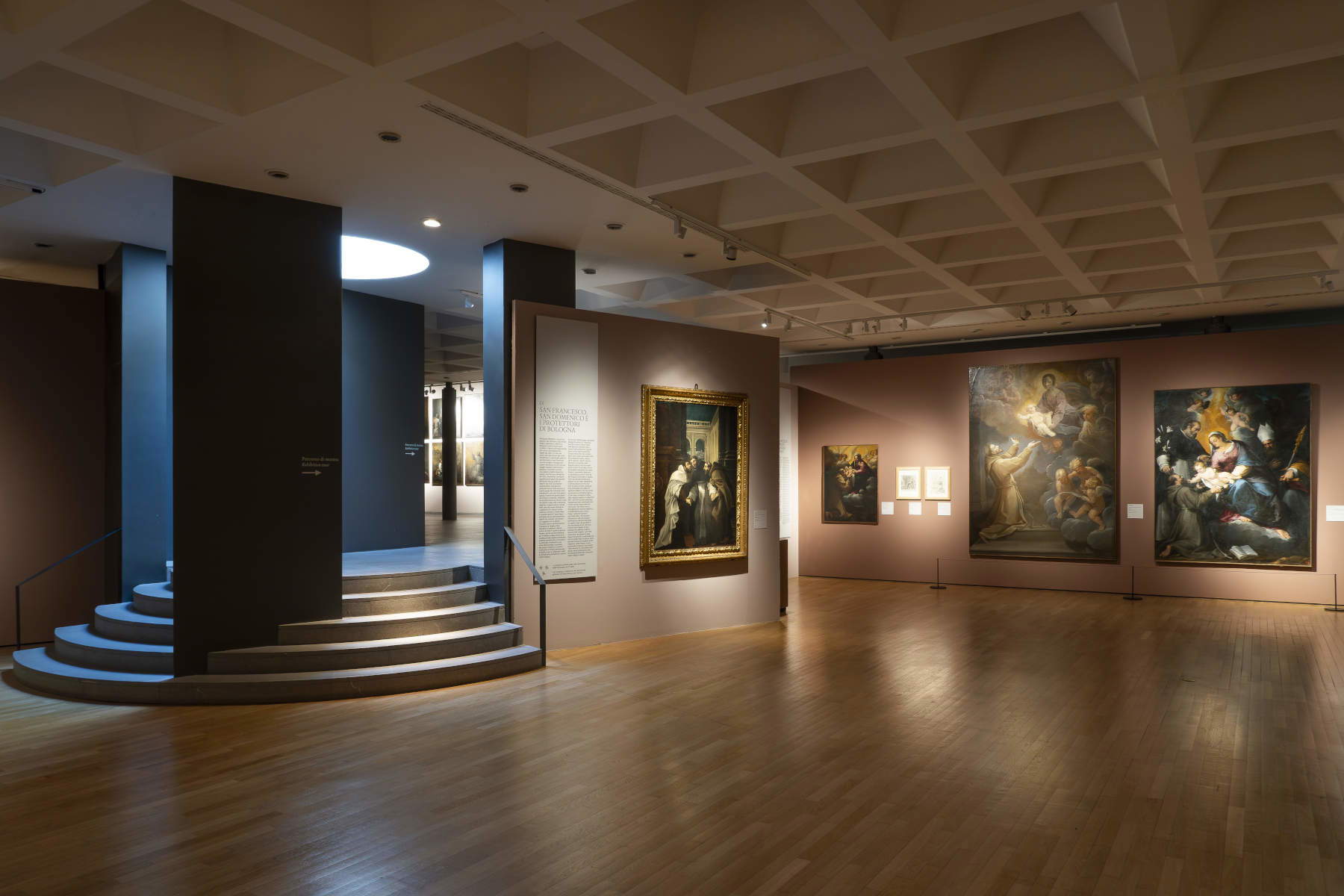
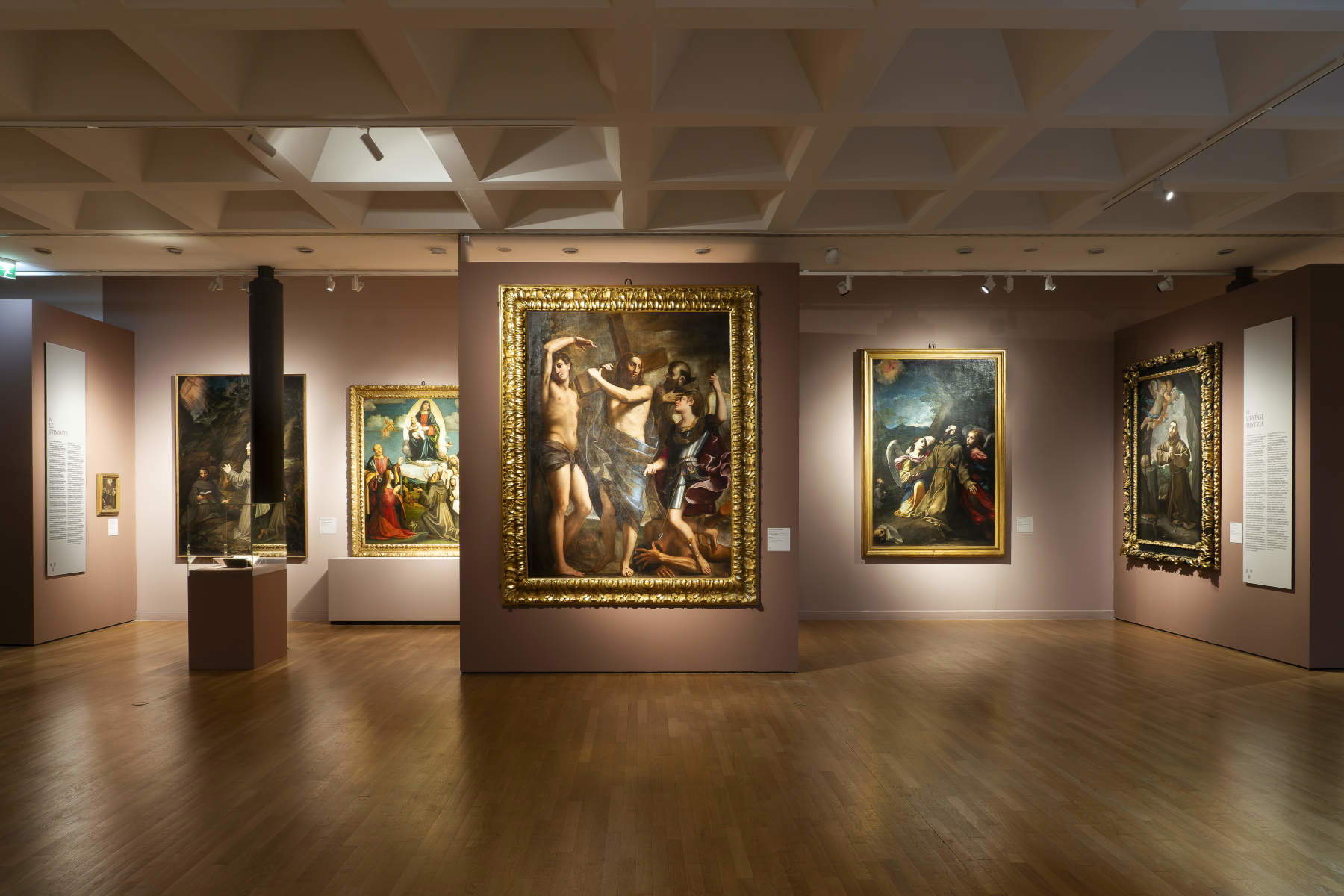
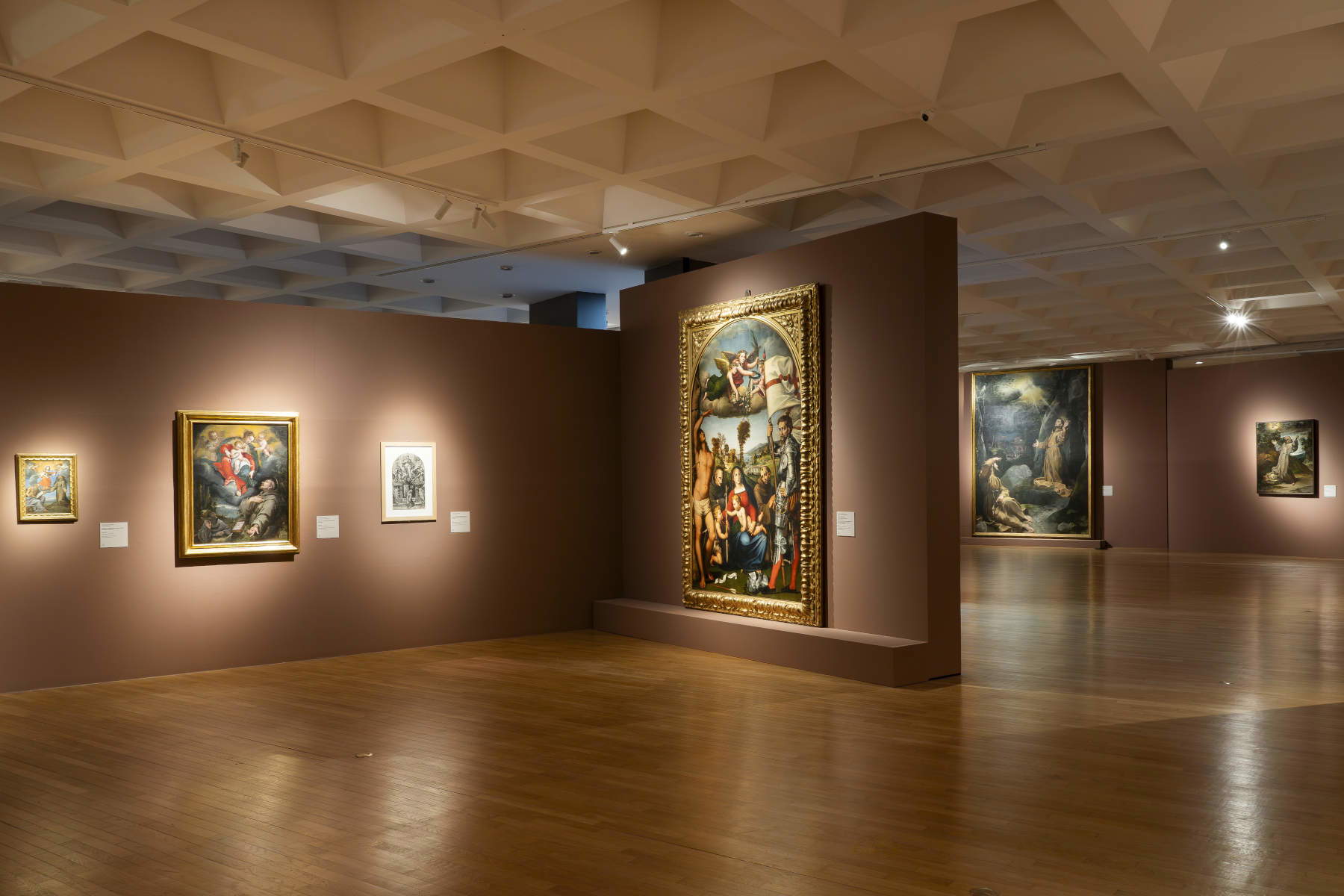
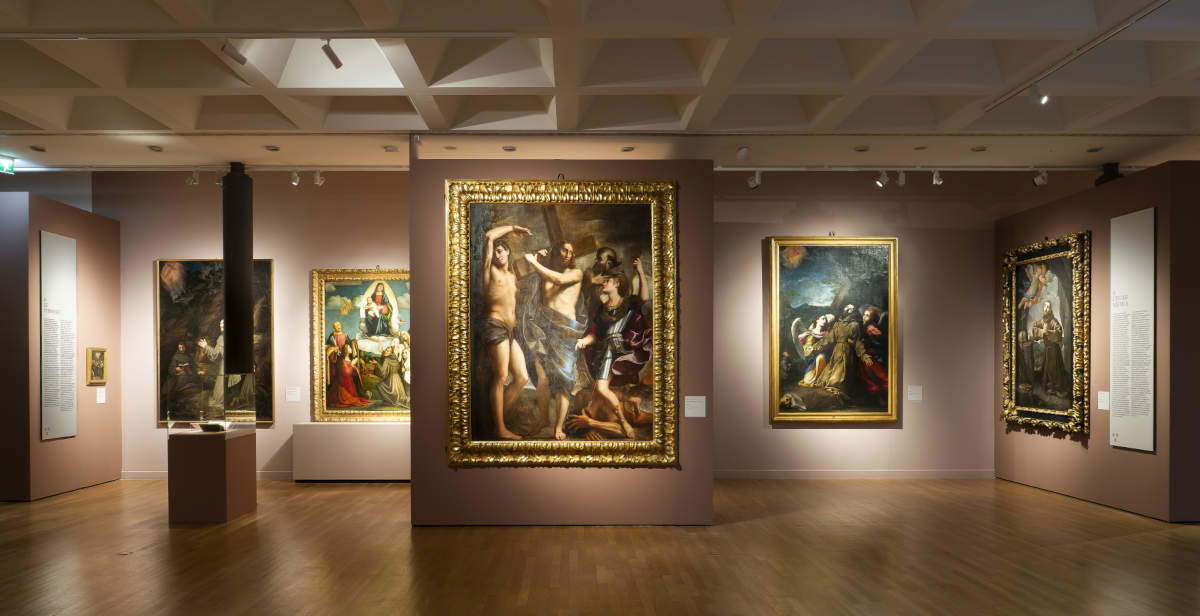
The exhibition is housed in the Salone degli Incamminati, but the project extends beyond the exhibition spaces to include the Pinacoteca’s other galleries as well. The exhibition itinerary thus allows visitors to compare works from the museum’s collections with important loans from institutions such as the Galleria Borghese, the Capitoline Museums, the Pilotta complex in Parma, and the National Gallery of the Marche.
The exhibition project stems from an initiative launched during Costantino D’Orazio’s interim directorship. The exhibition has also received the patronage of the National Committee for the celebration of the 800th anniversary of the death of St. Francis of Assisi and was made possible thanks to the support of Gruppo Hera, Banca di Bologna, Società di Santa Cecilia-Amici della Pinacoteca di Bologna, Boutique Hotel Il Guercino, and TPER-Trasporto Passeggeri Emilia-Romagna.
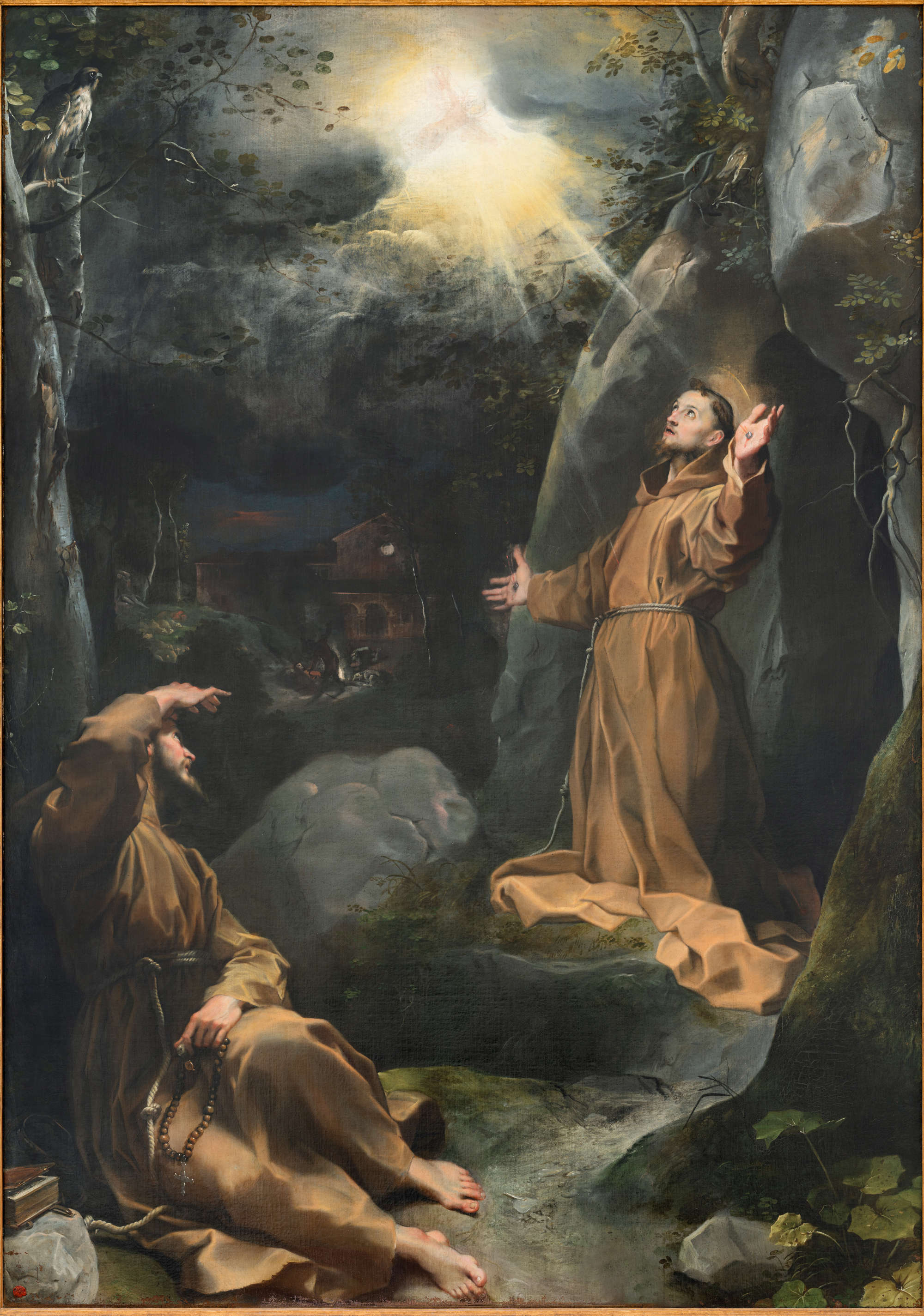
The core of the exhibition focuses on how Bolognese artists contributed to the renewal of Franciscan iconography in the period following the Council of Trent, reinterpreting episodes from the saint’s life and his experiences of communion with the divine. The selection of works allows us to observe how, throughout the 16th and 17th centuries, the depiction of Francis gradually shifted toward themes related to penance, vision, and ecstasy.
This took place during a period marked by intense reflection on the relationship between religion and imagery, as well as new trends in religious and artistic culture. Within this context, a sensibility increasingly attuned to the realm of passions and mystical experiences emerged, one destined to merge with Baroque culture. The figure of the saint is thus depicted in a way that keeps elements related to his earthly dimension clearly visible—from his poverty and bare feet to his constant connection with nature—while at the same time emphasizing his relationship with the divine through visions, moments of ecstasy, and the experience of the stigmata.
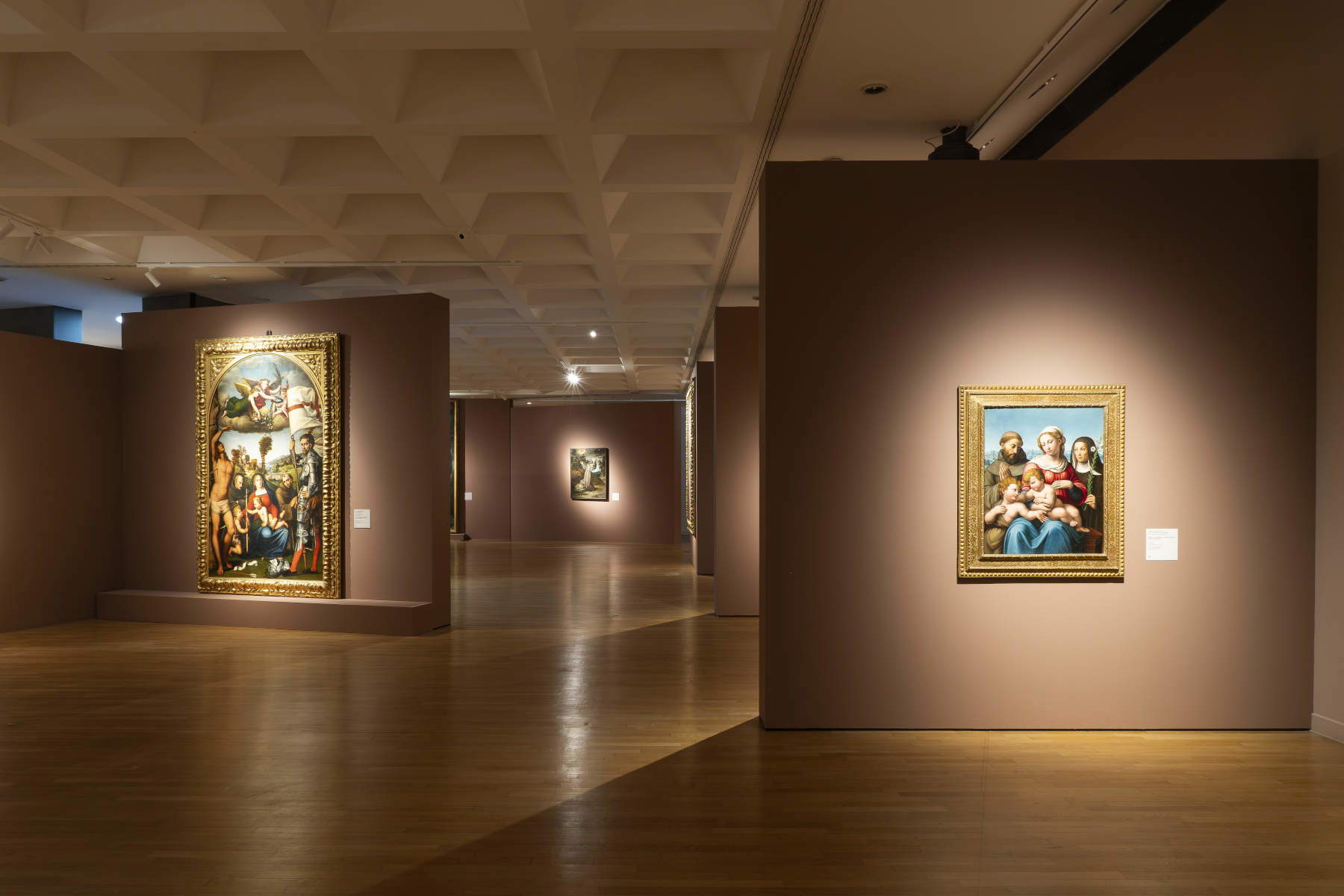
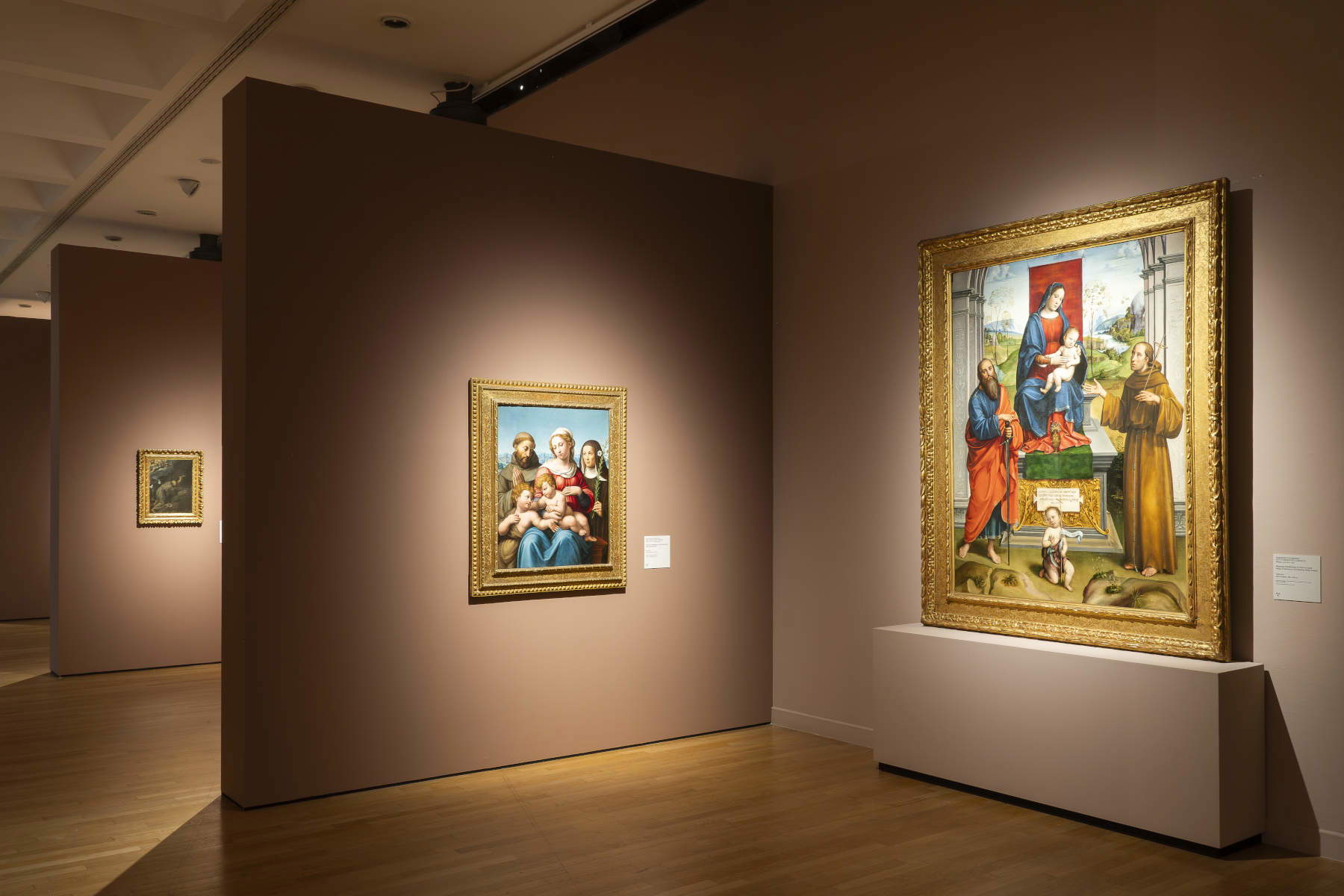
Although the Bolognese artists were not isolated from the artistic explorations taking place in other regions during the same period, they developed their own interpretations of these themes and, in some cases, anticipated approaches that would go on to enjoy wider success. The exhibition thus brings together works dedicated to the most recurring subjects of Franciscan iconography of the time, focusing primarily on new themes or on the ways in which artists reinterpreted episodes already established in the figurative tradition.
Alongside the paintings , the exhibition also features engravings and books—including illustrated volumes—published during the period under consideration and closely linked to the city of Bologna. A comparison with printed sources allows us to reconstruct the cultural and religious context in which some of the new images of St. Francis took shape. The exhibition is organized into nine sections, each dedicated to a specific thematic focus.
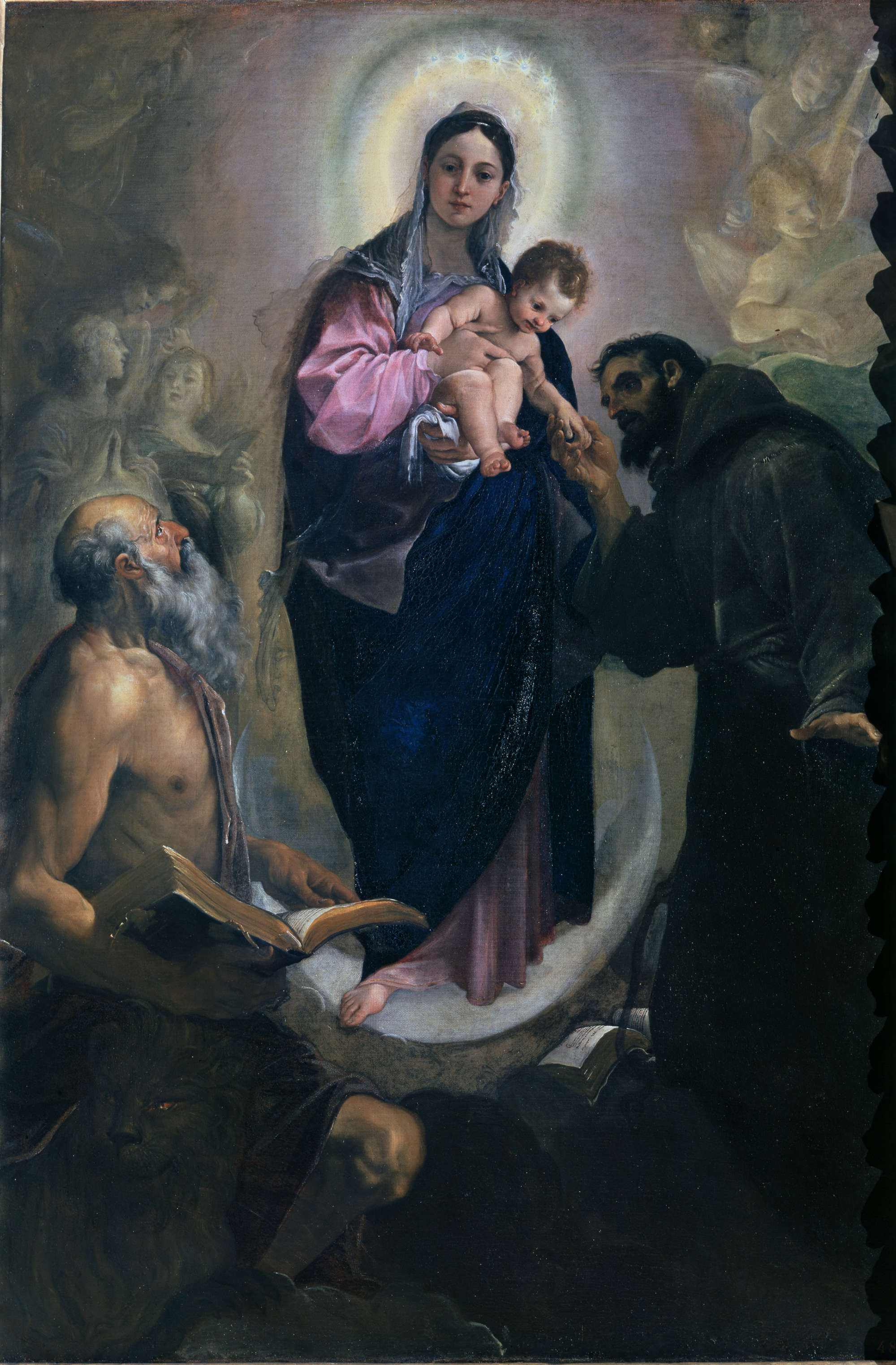
The first section, “Sacred Conversations,” examines one of the most widespread forms in religious painting of the period. In fact, St. Francis appears in numerous compositions alongside the Virgin and Child and other saints. Within this tradition, however, new iconographic interests emerged, linked in part to a greater focus on the direct relationship with the divine. Among the themes destined to gain greater prominence is the “Pardon of Assisi,” which had Federico Barocci among its principal interpreters, while preaching and religious writings contributed to the spread of new subjects. The sources cited by the project also include the writings of the preacher Cornelio Musso, which bear witness to the cultural climate in which these transformations took place.
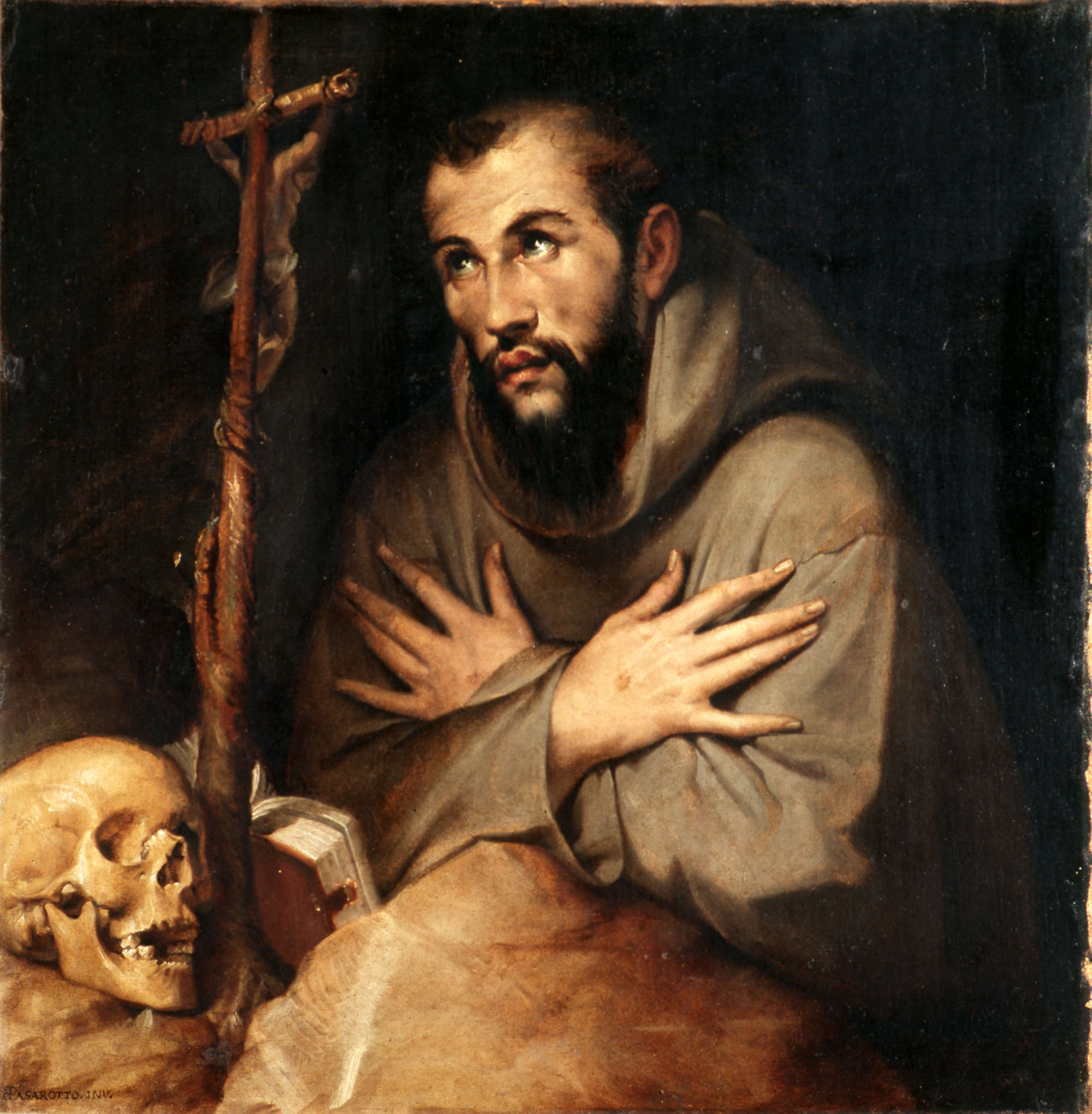
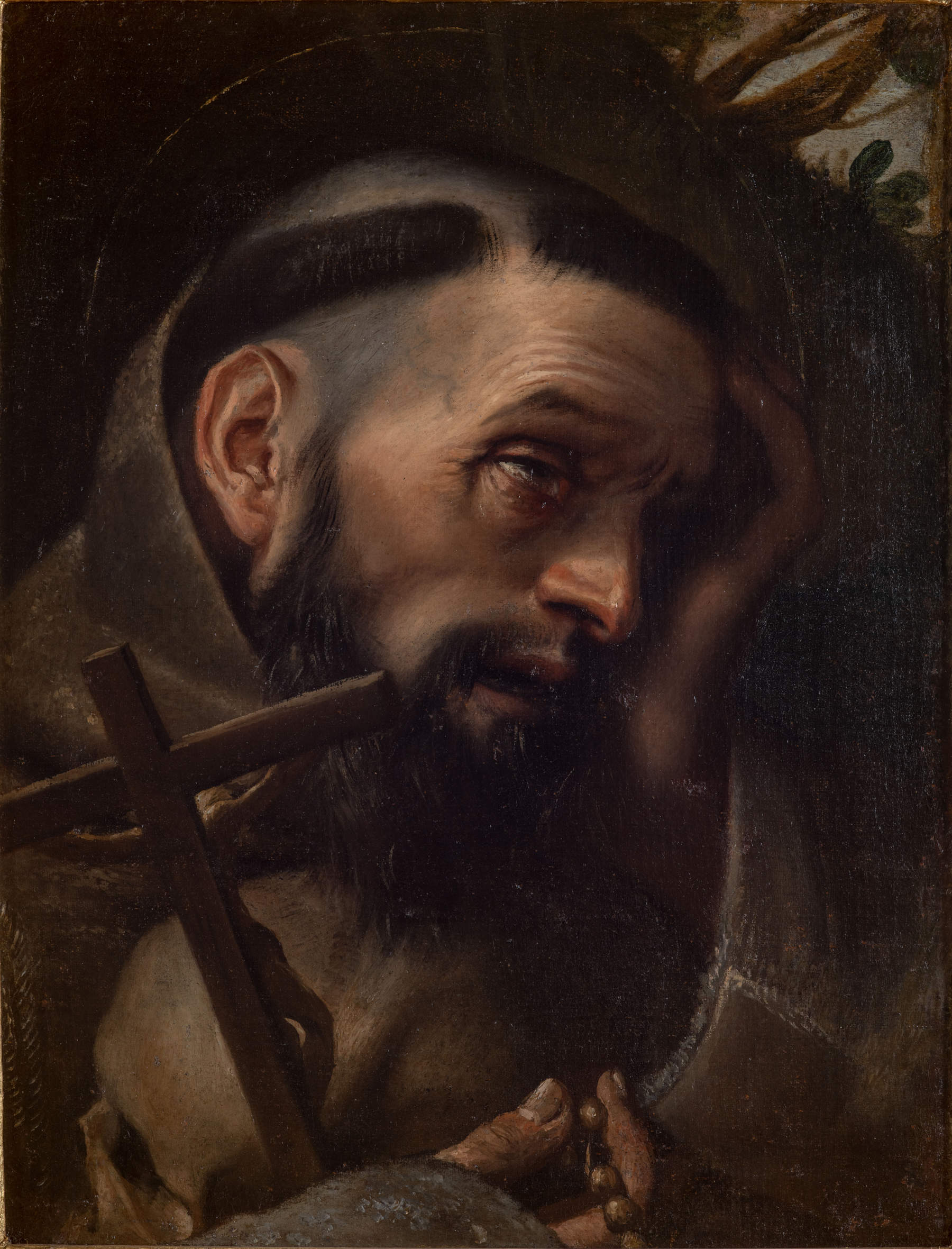
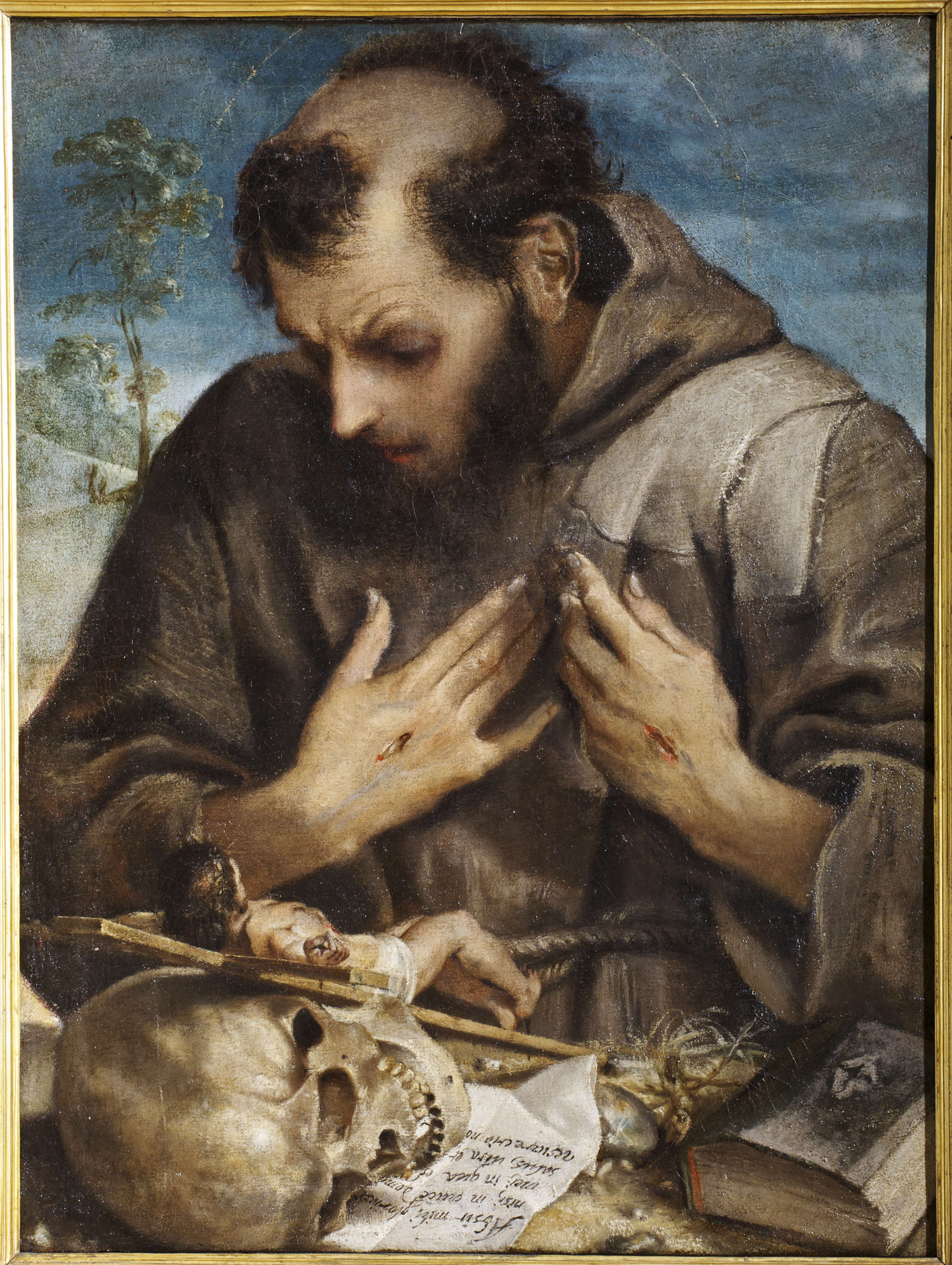
The second section, “St. Francis the Penitent,” focuses instead on the renewal that took hold in Bolognese painting beginning in the 1580s, thanks in part to the artistic reform initiated by the Carracci family. In the devotional works of this period, Francis is depicted as a penitent, immersed in meditation and contemplation, often before the crucifix and sometimes with tears in his eyes. In Annibale Carracci’s paintings, meditation takes on a particularly intense dimension and becomes a sense of yearning, foreshadowing a sensibility that would spread throughout religious painting during the transition from the sixteenth to the seventeenth century, even beyond the Bolognese context.
The third section is dedicated to “Mystical Ecstasy.” The ecstatic experience of St. Francis, recounted in ancient biographies and in *I Fioretti*, became a subject particularly suited to the new spiritual sensibility of the Counter-Reformation. The Carracci family helped to foreshadow this trend through small, intimate paintings, represented in the exhibition by works by their students. In these images, the emotional intensity tends toward an inner, contemplative dimension.
The fourth section, “The Stigmata,” addresses one of the best-known episodes in Francis’s life and one of the central themes of his iconography. The saint is presented as alter Christus, the one who follows Christ along the path of sacrifice. The theme was often depicted through the image of Francis following the Savior as he carries the cross, but it finds concrete expression in the episode of the stigmata. While the subject was already widely present in Franciscan iconography, during the period under examination it took on increasingly mystical overtones and, in some cases, came to be depicted as a true physical martyrdom. This emphasis is part of the broader focus of the era on the sufferings of the martyr saints. This interest is also documented in Antonio Gallonio’s *Treatise on the Instruments of Martyrdom*, published in 1591 and featured in the exhibition.
Another theme of particular interest is addressed in the fifth section, “St. Francis Receives the Child from the Virgin Mary.” This is a subject that Ludovico Carracci helped to introduce and popularize: in a nocturnal scene, St. Francis receives and cradles the Child offered to him by a very young Virgin. The origin of the scene is likely linked to the *Croniche de li ordini instituiti dal Padre San Francesco*(*Chronicles of the Orders Founded by Father Saint Francis*), translated by the Bolognese Orazio Diola from the original by Marco da Lisbona. The edition, dedicated in 1581 to Cardinal Gabriele Paleotti, compiled biographies, legends, and anecdotes relating to the saint’s life, thus providing a new source from which patrons and artists could draw inspiration. Ludovico Carracci’s composition was subsequently reinterpreted by other painters, including Pietro Faccini and, above all, Guercino.
The sixth section, “St. Francis and the Musician Angel,” is dedicated to a theme that gained popularity around the mid-1590s and finds references both in Bonaventura da Bagnoregio’s *Legenda maior* and in other sources relating to the saint’s life. The image of Francis comforted by an angel is part of a new interest in representations capable of linking sensory experience with religious meditation. Music, in fact, becomes an element through which the exaltation of the senses is channeled into a stimulus for faith. Here too, Bolognese artists approached the theme through various artistic solutions. Among the innovative works featured in the exhibition are those by Annibale Carracci, while Guercino revisited the subject in several paintings, confirming its enduring popularity.
The seventh section traces the history of the Chapel of the Cordone in the Church of San Francesco in Bologna. The narrative begins on November 19, 1585, when Sixtus V founded the Archconfraternity of the Cordigeri at the high altar of the Lower Basilica of San Francesco in Assisi. The following year, the Bolognese confraternity—the driving force behind the Cordone Chapel—was established; the chapel was consecrated on May 28, 1606, in the church that is now the Basilica of St. Francis. The chapel was demolished in 1887 by Alfonso Rubbiani. Inside were six statues by Giovanni Tedeschi, six paintings depicting Franciscan saints in the Carracci style—four of which are on display in the exhibition—and works by Mastelletta.
Mastelletta is associated with a series of twelve paintings described as “visionary.” In the past, these works were interpreted as having come from the Cordone Chapel, although it has been hypothesized that they were instead intended for the cells. The exhibition presents the series in its entirety for the first time, allowing it to be viewed as a cohesive whole.
The eighth section, meanwhile, focuses on Franciscan culture and the Immaculate Conception. The Franciscans were among the principal supporters of the doctrine of the Immaculate Conception—which became dogma in 1854 with the proclamation by Pius IX—and made its defense a central element of their identity. The spread of this doctrine also involved artists, who were called upon to translate the theme into images intended for church altars. The Pinacoteca houses several significant works related to this tradition. Some are included in the exhibition itinerary, while others can be found in the museum’s exhibition halls, thereby extending the theme beyond the main body of the exhibition.
The final section,“St. Francis, St. Dominic, and the Patron Saints of Bologna,” focuses on the relationship between the saint of Assisi, St. Dominic, and the tradition of the city’s patron saints. In the late Middle Ages, alongside the patron saint Saint Petronius and the ancient saints Vitalis and Agricola, new devotions dedicated to figures chronologically closer to and more closely linked to the city took root in Bologna. Among these were those that developed in connection with the mendicant orders, particularly the devotions to Saint Dominic and Saint Francis. The two saints represented different spiritual orientations, but their membership in the major mendicant orders led to their frequent joint depiction in major paintings of the 16th and 17th centuries. They may appear individually or alongside other saints in their role as protectors of the city. For this theme as well, the exhibition itinerary is complemented by works on display in the Pinacoteca’s galleries.
Alongside the exhibition, the Pinacoteca’s Educational Services offer various educational activities and guided tours for both adults and children. The program includes various ways to explore the exhibition and its contents in greater depth. A lecture by Professor Daniele Benati, titled “St. Francis: Between Devotion and Art,” is also scheduled for Tuesday, October 13, at 5:00 p.m. in the Gnudi Hall.
The exhibition is accompanied by a catalog published by Moebius and edited by Elena Rossoni, designed to trace a turning point considered pivotal in the history of Bolognese religious art, during a period when the role of the Franciscans was intertwined with some of the key issues in the religious culture of the so-called Counter-Reformation.
In addition to the artwork descriptions—written by various authors, particularly the Pinacoteca’s art historians—the volume includes a series of essays. Luigi Gallo authored *Ritrovare Francesco. The Collections of the National Museums of Bologna: Between Research and Interpretation, while Elena Rossoni is the author of “Ma così dolce punge, e dolce avvampa.” St. Francis of Assisi and the Bolognese Artists from the 16th to the 17th Centuries.
These are followed by Pietro Delcorno’s contribution, “Words and Images: Francis of Assisi in Printed Books of the Early Modern Period”; Arianna Manes’s essay, “The Work *De Origine Seraphicae Religionis Franciscanae* by Father Francesco Gonzaga and a Note on Agostino Carracci and Manuzio the Younger”; an essay by Mirella Cavalli, “Mirrors of the Bizarre Temperament”: Mastelletta’s Paintings for the Cordone Chapel in the Church of St. Francis in Bologna; a contribution by Paolo Broggio, Sine macula. The Regular Orders, Bologna, and the Dispute over the Immaculate Conception between the Late Middle Ages and the Early Modern Period; Vincenzo Lavenia’s essay, “Seraphic Bologna at the Time of the Counter-Reformation”; Gabriella Zarri’s essay, “Franciscan Women’s Monasteries in Bologna (15th–17th Centuries)”; and finally, the contribution by Elisabetta Pasquini, *Teaching and Memory: Dynamics and Key Figures of the Music Chapel at the Basilica of St. Francis in Bologna*.
“With *Il cielo in terra*, we rediscover an important chapter in Bolognese figurative art, showing how the great artists of the school reinterpreted the figure of St. Francis between the sixteenth and seventeenth centuries,” comments Luigi Gallo. “The exhibition is also an opportunity to highlight the Pinacoteca’s collection, showcasing works that have not been on display for some time, some of which have been restored for the occasion. It is a project aimed at strengthening the connection between our collections, research, and visitors, helping the general public appreciate works that are little known to them.”
“St. Francis of Assisi has been able to speak—including through art—to every era, each of which has interpreted his life and works through its own cultural lens,” explains co-curator Elena Rossoni. “The period under examination, in relation to Bologna and its artists, required specific research and greater recognition. The exhibition therefore offers an opportunity to deepen our understanding of the Franciscan culture of the time by highlighting the mutual influence of the cultural context on the artists and their works.”
 |
| How the Image of St. Francis Changed Between the 16th and 17th Centuries: An Exhibition in Bologna |

Warning: the translation into English of the original Italian article was created using automatic tools. We undertake to review all articles, but we do not guarantee the total absence of inaccuracies in the translation due to the program. You can find the original by clicking on the ITA button. If you find any mistake,please contact us.


























 IT
IT FR
FR DE
DE ES
ES CN
CN


