



by Redazione 13/11/2026


Categories: Exhibitions / Disclaimer
From November 11 to January 31, 2027, the Matteo Salamon Old Masters Gallery presents *Dialoghi di carta* at Palazzo Cicogna in Milan. “Lombard Drawings and Masters from Elsewhere,” an exhibition curated by Francesco Ceretti and dedicated to historical drawings, featuring works by Morazzone, Tanzio da Varallo, Carlo Francesco Nuvolone, and Francesco Guardi.


Drawing as the space where a work takes shape, transforms, and gradually finds its balance. This is the perspective from which *Dialoghi di carta: Lombard Drawings and Masters from Elsewhere* begins —the exhibition presented by the Matteo Salamon Old Masters gallery at Palazzo Cicogna, in the center of Milan. Curated by Francesco Ceretti, the exhibition offers a journey through a selection of particularly significant works in Italian graphic art, from Mannerism to the fantastical cityscapes of the 18th century, drawing connections between Lombard artists and creators from other regions.

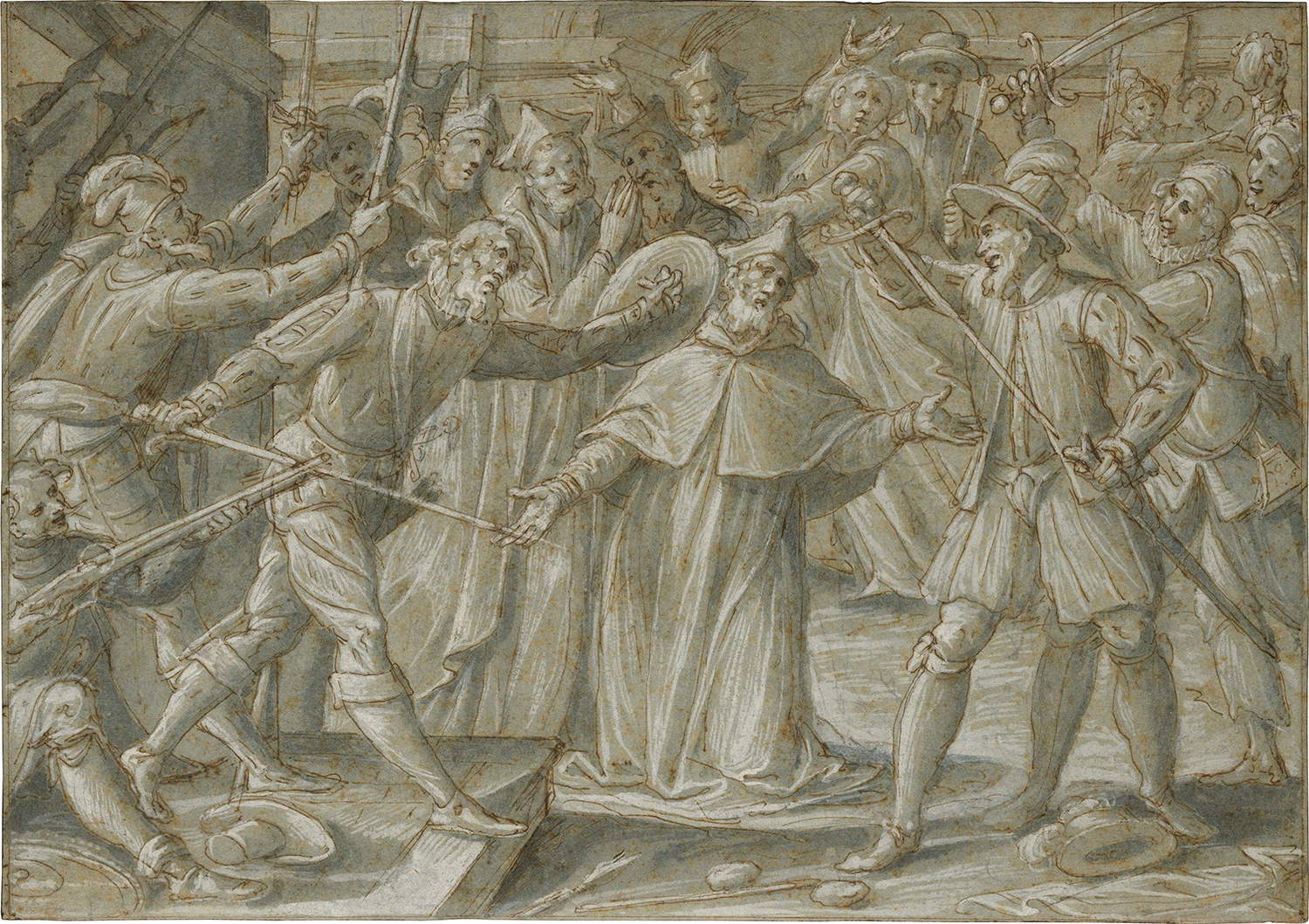
The exhibition, open to the public from November 11, 2026, to January 31, 2027, brings together drawings that document different approaches to preparatory work, offering visitors a glimpse into certain stages of the painters’ creative process. The exhibition focuses in particular on Pier Francesco Mazzucchelli, known as il Morazzone, Tanzio da Varallo, and Carlo Francesco Nuvolone, concluding with a previously unpublished drawing by Francesco Guardi.


Morazzone, chiaroscuro, and the study of the figure
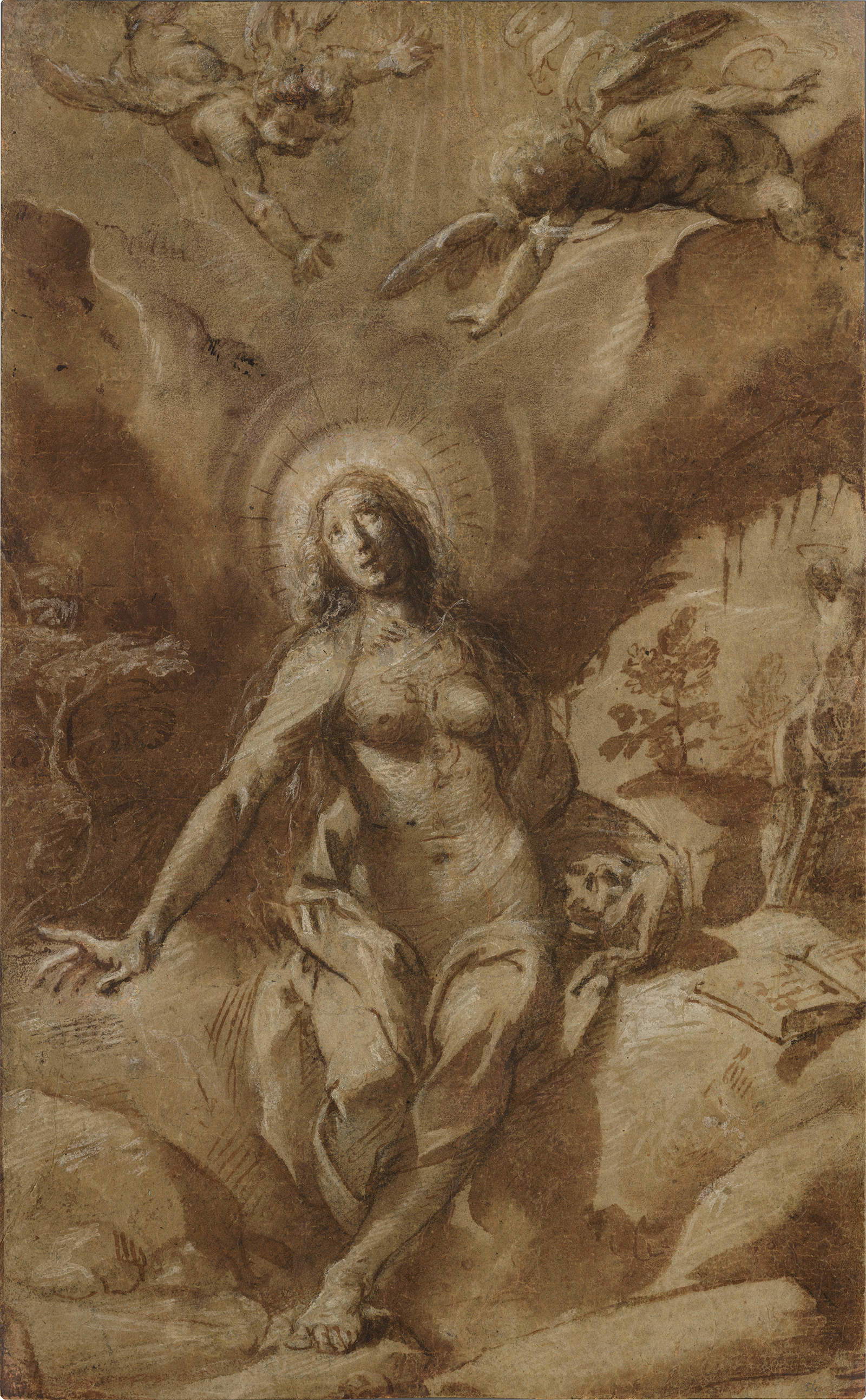
Among the works on display is the Study for Mary Magdalene by Pier Francesco Mazzucchelli, known as il Morazzone (1573–1626), from the Dubini Collection. The sheet is a preparatory study for *Mary Magdalene Escorted in Flight by Angels*, an altarpiece completed in 1611 for the altar of the chapel of the same name in the Basilica of San Vittore in Varese. The drawing offers insight into the artist’s working method, based on progressive refinement and in-depth compositional study. Two similar drawings also document this process: one housed at the Kupferstichkabinett in Berlin, which is virtually identical to the one on display, and another held at the Willumsen Museum in Frederikssund, which dates to a later stage of the design process.

Conceived as a tool for verification during the creation of the Varese altarpiece, the drawing is distinguished by its fluid line and vibrant chiaroscuro. It can be dated to around 1610, both in relation to the altarpiece and due to the transparency and atmospheric lightness that characterize the drawing—elements that would gradually give way, toward the end of the decade, to a more raw realism.
Trained in Lombardy, Morazzone spent time in Rome as a young man, where he came into contact with Federico Zuccari’s Mannerism and Federico Barocci’s Baroque precursors. After an initial phase influenced by Roman figurative art, he became drawn to the thought of Carlo Borromeo and his conception of the emotional interpretation of sacred images, often characterized by a measured pathos.
Tanzio da Varallo: The Movement and Pathos of the Figures
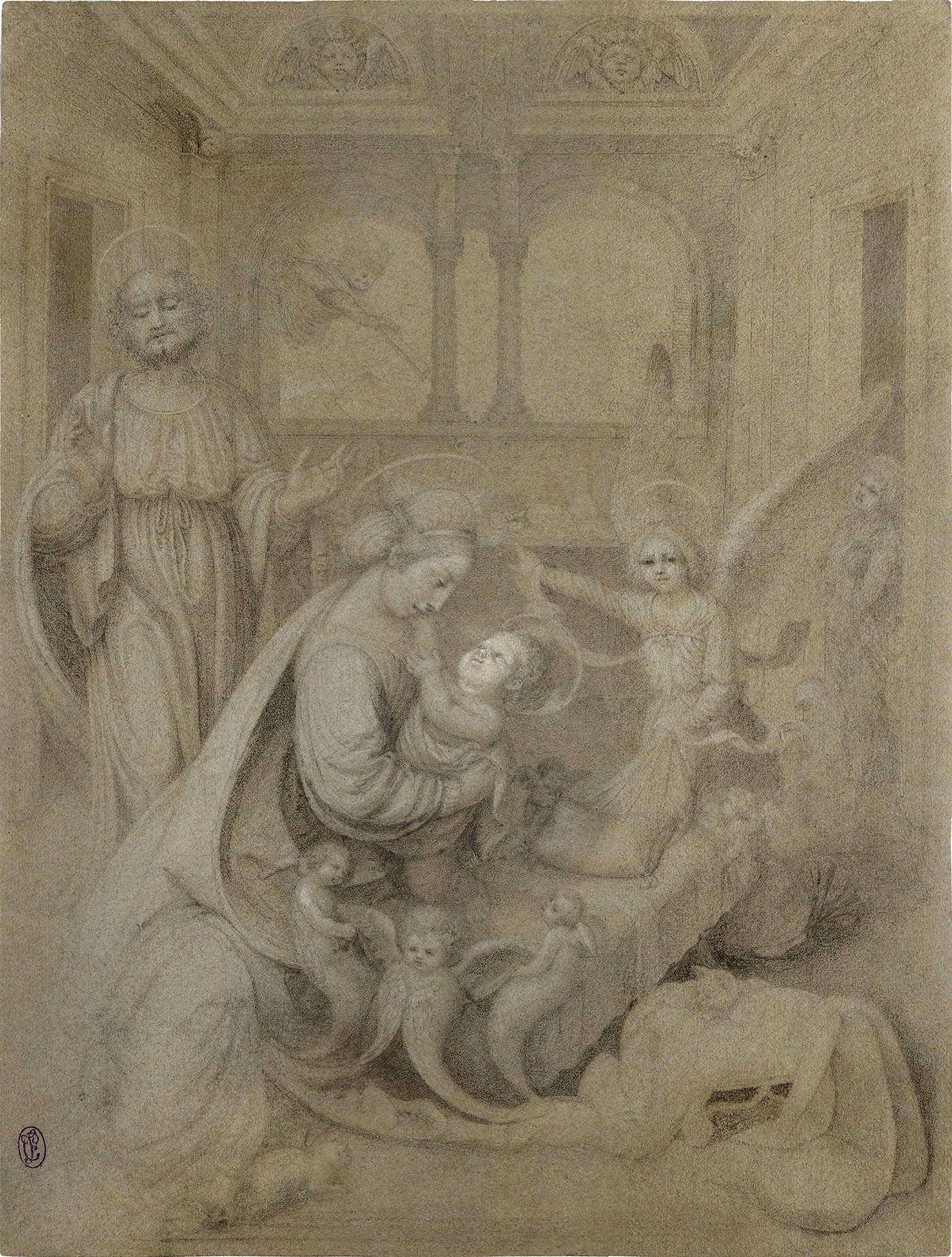
The exploration of the human form and the depiction of movement continues in the drawings of Tanzio da Varallo, born Antonio d’Enrico (1580–1633). The Study for an Angel Playing the Lute depicts a winged figure playing a lute, captured in right-side profile in a complex twist. The body seems to twist through space, while the drapery flows down the legs in broad, substantial folds, defined by strong chiaroscuro contrasts. The energetic line work and the use of light to model the form capture a moment of movement frozen in a moment of particular expressive intensity. The sheet is a preparatory study created during the work on the Chapel of the Guardian Angel, commissioned by the Nazzari family inside the Basilica of San Gaudenzio in Novara.
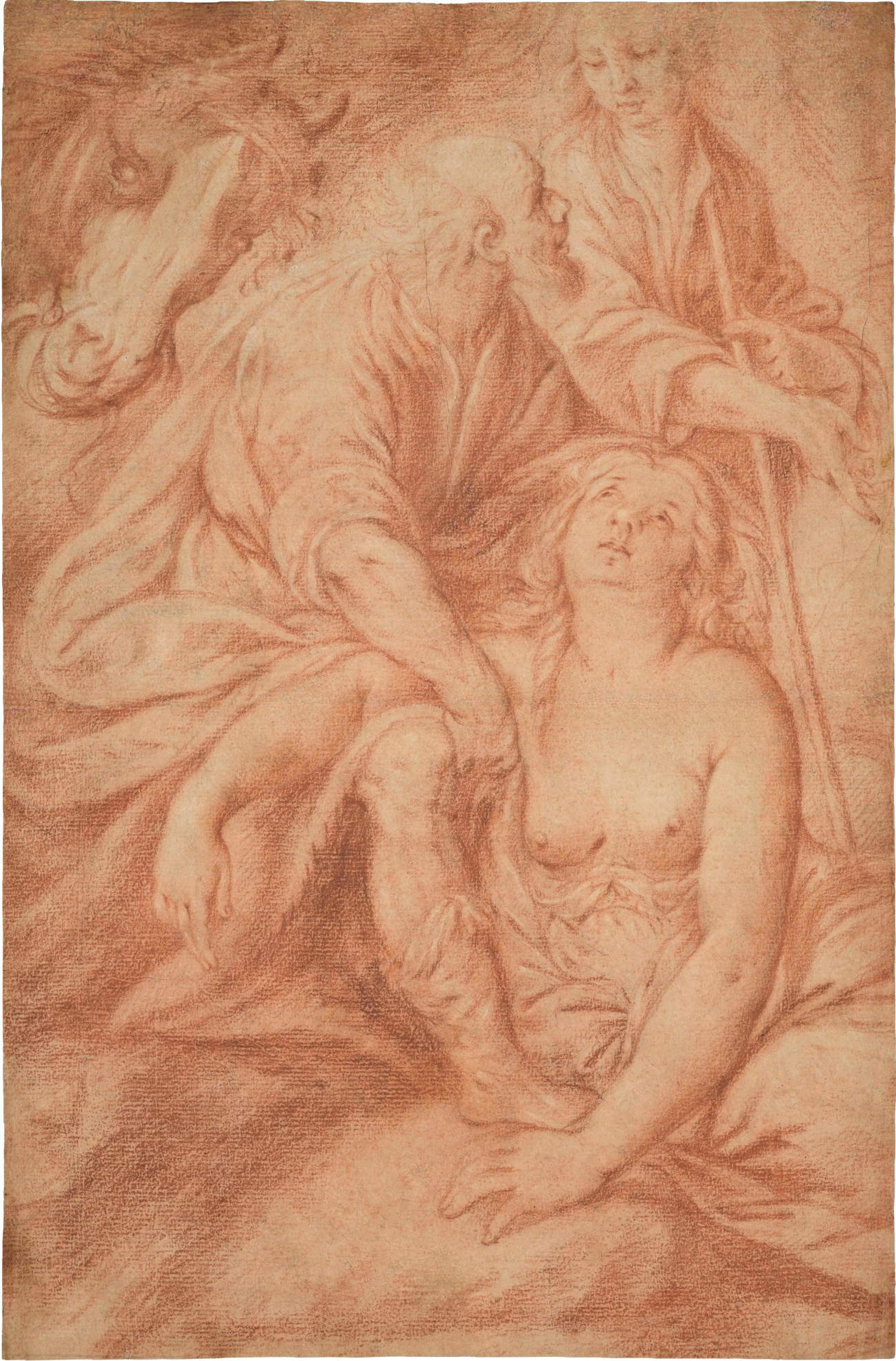
Also on display by the same artist is the Study for a Flying Angel with Little Angels, a red chalk drawing that documents the design of a group of angelic figures. The main figure, depicted from the back and in foreshortening, is characterized by a complex twist, accompanied by the movement of the wings. The sheet is a preparatory study for one of the “Angels in Glory” frescoed in a panel of the presbytery vault of the Church of Santa Maria della Pace in Milan, part of a decorative project dating to a phase after 1630.
Around the main angel are other barely sketched figures, drawn with the lightest of strokes, through which the artist seems to be experimenting with possible solutions and alternative poses. This is evidence of the ongoing compositional exploration, allowing us to follow the process of the image’s development.
Active primarily in Piedmont and Lombardy, Tanzio da Varallo spent time in Rome and Naples, where he became familiar with Caravaggio’s painting, assimilating his realism and his use of light, without sacrificing the elegance of Lombard Mannerism. His interpretation of sacred subjects often takes on dramatic overtones, especially in his works for the Sacri Monti, while in his mature period his painting shows a greater attention to the Venetian sensibility for color and light.
Carlo Francesco Nuvolone and the Theatricality of Emotions
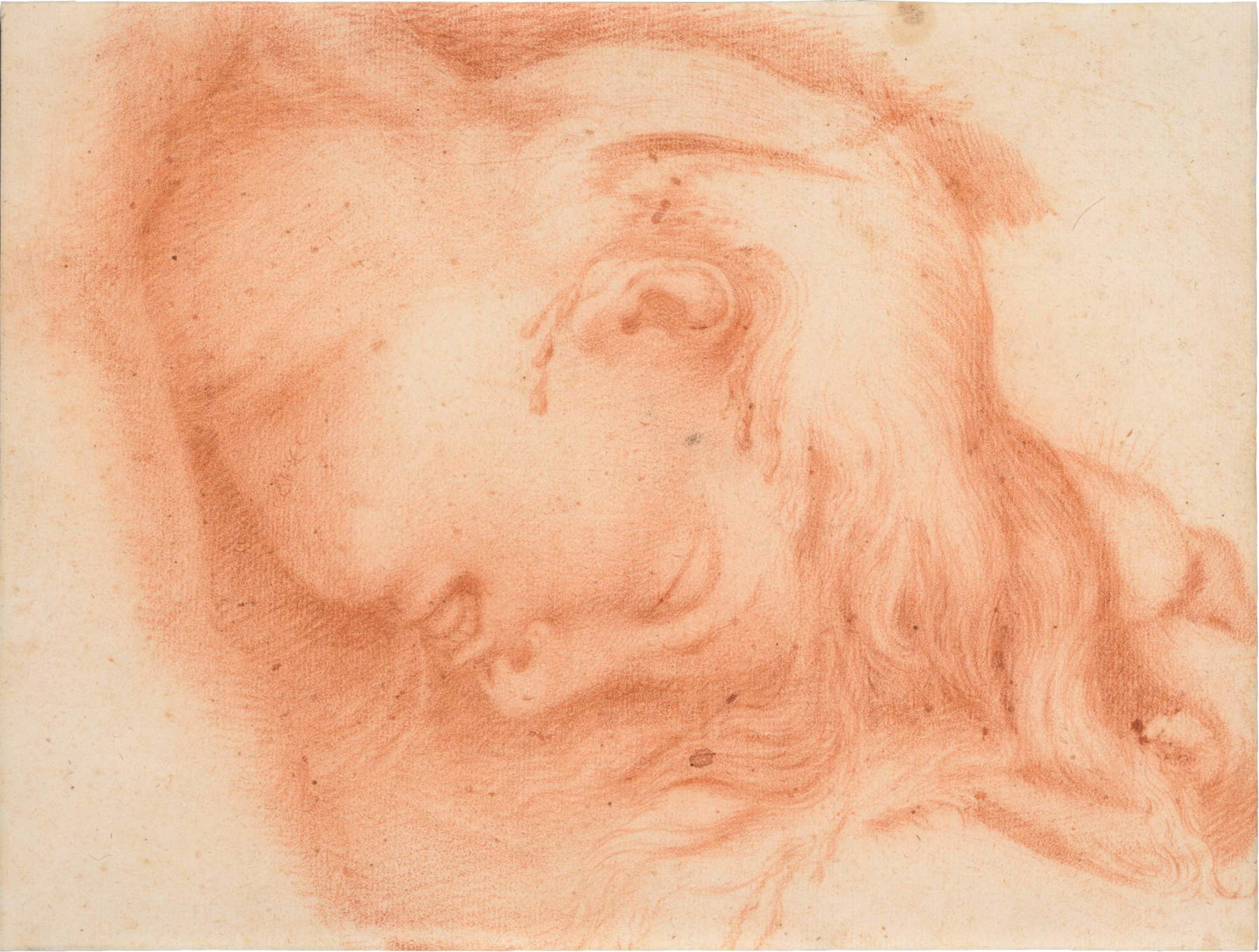
Another section of the exhibition is dedicated to Carlo Francesco Nuvolone (1609–1661), represented by the red chalk drawing *Silvio, Dorinda, and Linco*, inspired by Giovan Battista Guarini’s *Pastor Fido*, a famous pastoral drama published in 1589. The sheet depicts one of the work’s most dramatic episodes: the nymph Dorinda, wounded in the chest by a dart, lies in a moment of despair while being tended to by the wise Linco, under the gaze of the young hunter Silvio, who is unwittingly responsible for her injury. The composition reflects the 17th-century taste for theatricality and the depiction of emotions, featuring figures of aristocratic background.
The drawing is closely linked to a painting by the same artist depicting the same subject. The painted version, also on view in the exhibition, allows for a direct comparison of the two works and an observation of the transition from the graphic design to its execution on canvas. In the painting, the chiaroscuro contrast and the warm color palette—characteristic of Lombard painting—define the male figures and the pastoral landscape. The young woman’s body, with its very fair complexion and bare breasts, stands out against the dark background, while the blue folds of part of her dress introduce an additional chromatic accent.
The drawing, conceived as a full-scale cartoon, served to calibrate the balance of light and the rendering of the emotions to be transferred to the canvas. It is also possible that it was used as a model for subsequent elaborations. On the reverse side are other red-chalk studies depicting two hands, a head, and a back.
The son of the painter Panfilo Nuvolone, Carlo Francesco developed a style that, drawing on Lombard Mannerism, revives sixteenth-century models through fluid composition, sophisticated classicism, and a touch of pathos. His figurative style is also influenced by Northern European painting, particularly that of Van Dyck.
Francesco Guardi and the Fury of Nature
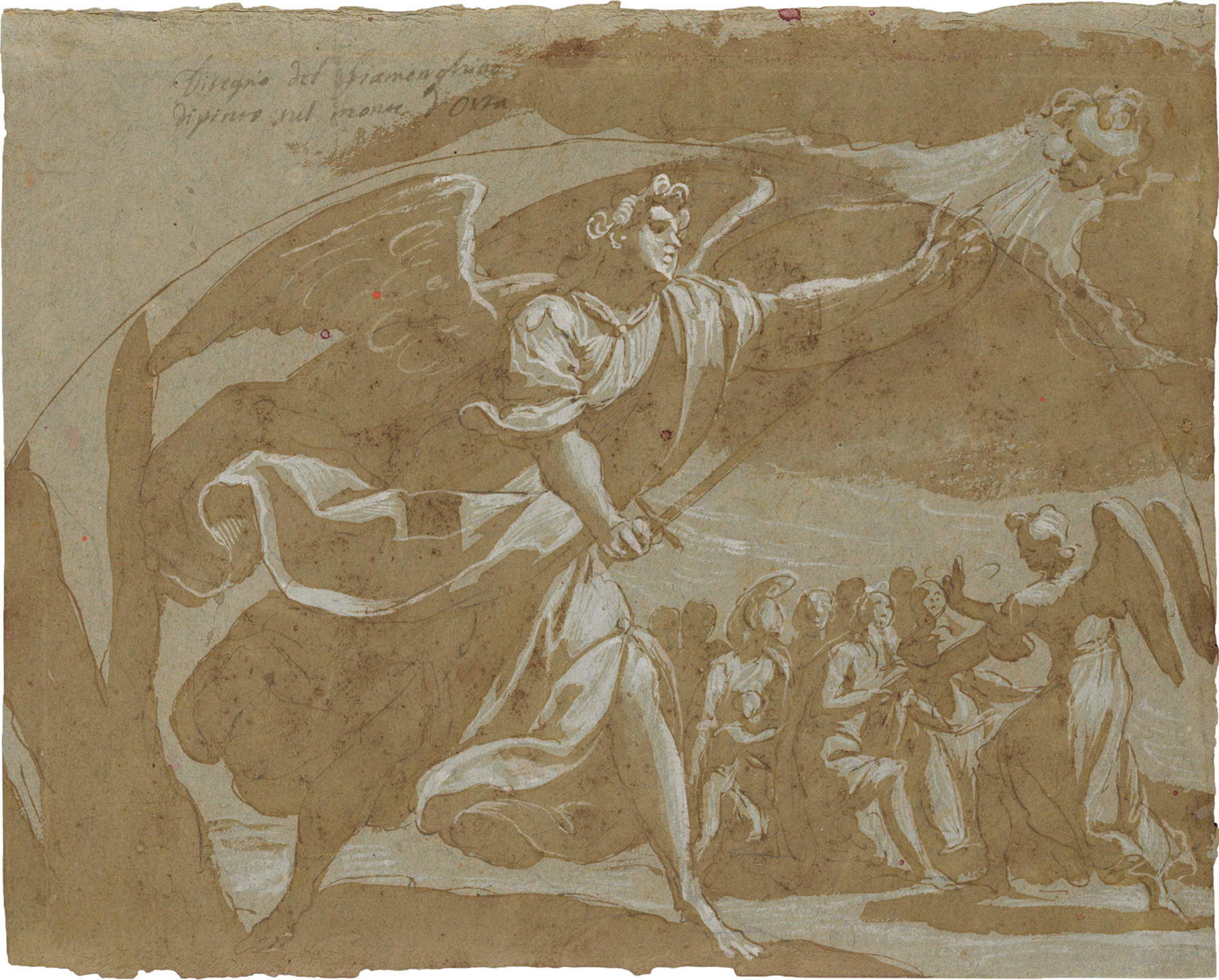
The exhibition concludes with a previously unpublished drawing by Francesco Guardi (1712–1793), from a private collection and depicting a storm at sea. The sheet, executed in pen and watercolor, depicts sailing ships, sheer cliffs overlooking a stormy sea, and shipwrecked survivors in the foreground, creating a scene of intense dramatic tension.
It is a preparatory study for a small panel depicting a storm. A comparison is possible thanks to a pen drawing preserved at the Correr Museum in Venice, in which Guardi had defined the compositional layout of the scene. In the sheet presented in Milan, however, watercolor is used to preliminarily test the lighting effects and painterly rendering intended for the final version.
The fluid line, vibrant chiaroscuro, and expressive intensity are reminiscent of the artist’s late work, when descriptive landscape painting gradually gave way to capriccio and a more theatrical vision of the landscape. The figures lose their anatomical precision and become part of a representation in which the violence of the natural elements stands out above all else.
Trained in the family workshop alongside his older brother Giovanni Antonio, Guardi developed a particular focus on the atmospheric relationships between figures and landscape. In his drawings, the rapid rhythm of the line and compositional freedom are accompanied by dramatic lighting effects, with approaches that also draw on the capriccios of Marco Ricci.
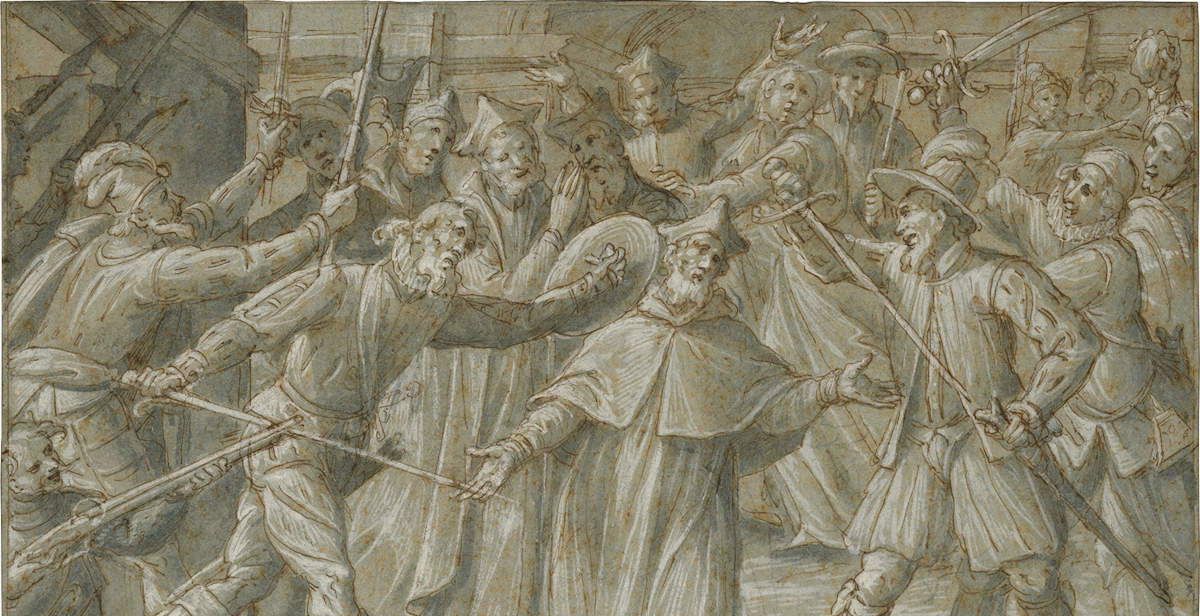 |
| In Milan, the ideas of the great painters take shape on paper: an exhibition of drawings from the 16th to the 18th centuries |
Warning: the translation into English of the original Italian article was created using automatic tools. We undertake to review all articles, but we do not guarantee the total absence of inaccuracies in the translation due to the program. You can find the original by clicking on the ITA button. If you find any mistake,please contact us.