



by Redazione 06/11/2026


Categories: Exhibitions / Disclaimer
From October 24 to December 8, 2026, DISPLAY Project Space in Parma presents *Sull’intrusione: Intromissioni d’archivio*, a project by Francesco Bartoli curated by Ilaria Monti. Drawings, altered books, and works that have remained in the artist’s archive for years examine the mechanisms of assimilation within the contemporary art system and the need to produce co

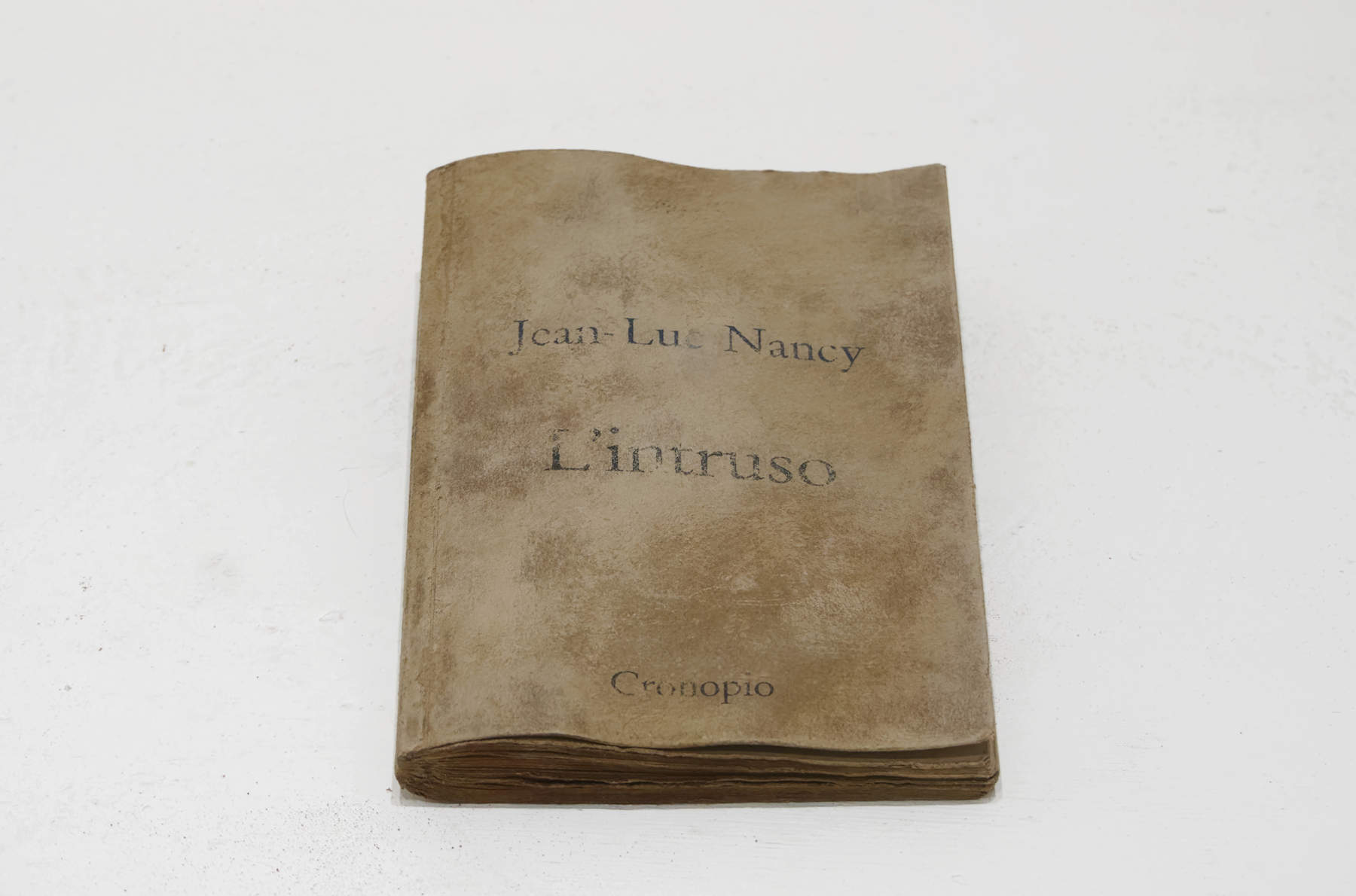
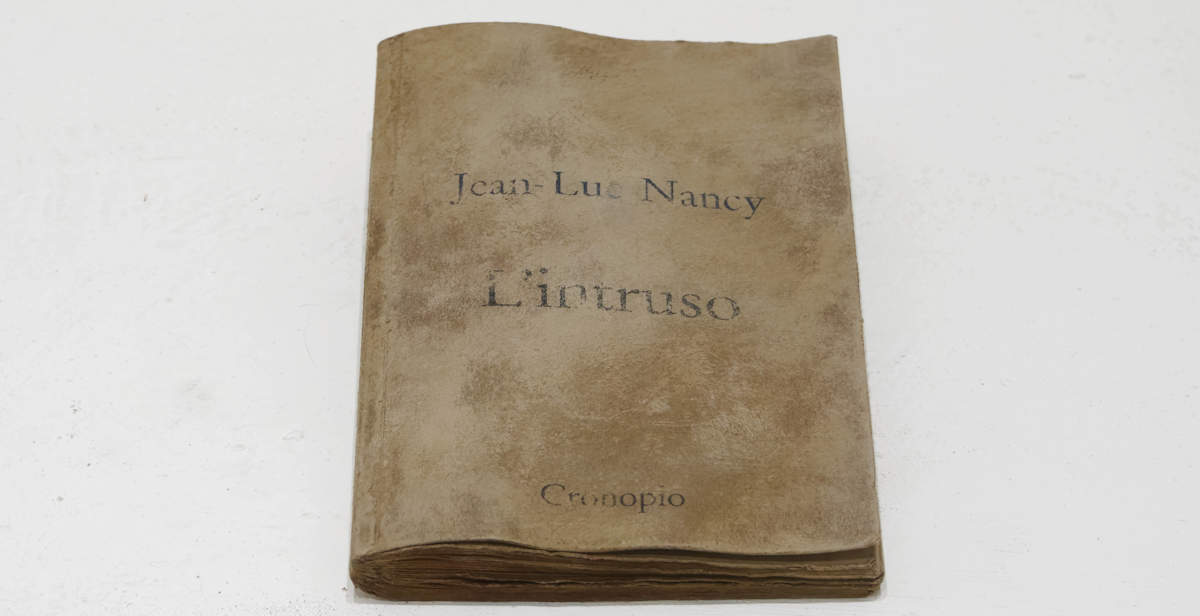
How much space remains for what is not on display? And what happens to the works when their public presentation is suspended? These are some of the questions at the heart of *On Intrusion: Archival Interventions*, a solo exhibition by Francesco Bartoli curated by Ilaria Monti, scheduled from October 24 to December 8, 2026, at DISPLAY Project Space in Parma. The project draws inspiration from the book *L’intruso* (2000) by French philosopher Jean-Luc Nancy to explore the relationship between the artist and the contemporary art system, the latter’s capacity to absorb its own critiques, and the possibility of escaping the constant demand for new exhibition productions.


In Nancy’s text, which spans about thirty pages, the author recounts his experience with a heart transplant and the consequences of the surgery: the risk of rejection, immunosuppression, and a tumor caused by the treatments. A diseased heart is replaced by a foreign organ, which allows survival only on the condition that the immune defenses are suppressed. The treatment therefore entails a new vulnerability and a redefinition of the boundary between what belongs to the self and what comes from the outside.


Bartoli extends this condition to the social sphere, viewing the art world as an organism of which the artist is simultaneously an integral part and a foreign element. To be recognized, the artist must navigate a series of thresholds and selection mechanisms, but recognition also carries the risk of being assimilated. The contemporary art system, while professing to be pluralistic and democratic, manages its own boundaries through calls for submissions, applications, funding, awards, residencies, visibility, and personal connections. Its capacity for absorption is most evident in its ability to incorporate even the criticism directed at it: protest becomes a program, marginality a curatorial theme, and crisis and precariousness subjects to be exhibited.

This dynamic is accompanied by the relentless production of exhibitions, projects, and new initiatives. The artist describes the need for something to continually appear, be documented, and quickly make way for another initiative as “binge curating”: an exhibition model comparable to the consecutive consumption of episodes in a series, without sufficient intervals for forms and meanings to settle. This accumulation thus risks generating a collective amnesia, in which the overproduction of images accelerates the process of consuming and forgetting the present.
The exhibition proposes looking in the opposite direction, reclaiming the function of the archive. While exhibitions follow one another in rapid succession, archives preserve works that were not presented, interrupted projects, and attempts and possibilities that remained outside the context of their original production. If the exhibition responds to the urgency of appearance, the archive preserves what has not found a place and allows it to return at a different time. This reflection also gives rise to an explicit contradiction: after repeatedly questioning the purpose of organizing a new exhibition and deciding not to proceed with it, Bartoli and the curator chose to create an exhibition that would attempt, as much as possible, to break free from the conventions of the exhibition format.
The exhibition’s narrative begins with Bartoli’s first reading of *L’intruso* in 2014—the Cronopio edition—upon his return to Italy after more than fourteen years abroad. The book, dedicated to the theme of alienation, was read at a time of returning to a country and a home that needed to be rediscovered. The artist revisited the text in 2020, during the period of isolation and vulnerability linked to the pandemic. From this second reading, a body of twenty-one drawings created with graphite and oil pastels on paper emerged in December 2021. The project was subsequently put on hold, and the works were never exhibited, remaining for five years in the artist’s archive, in his studio in the hills.
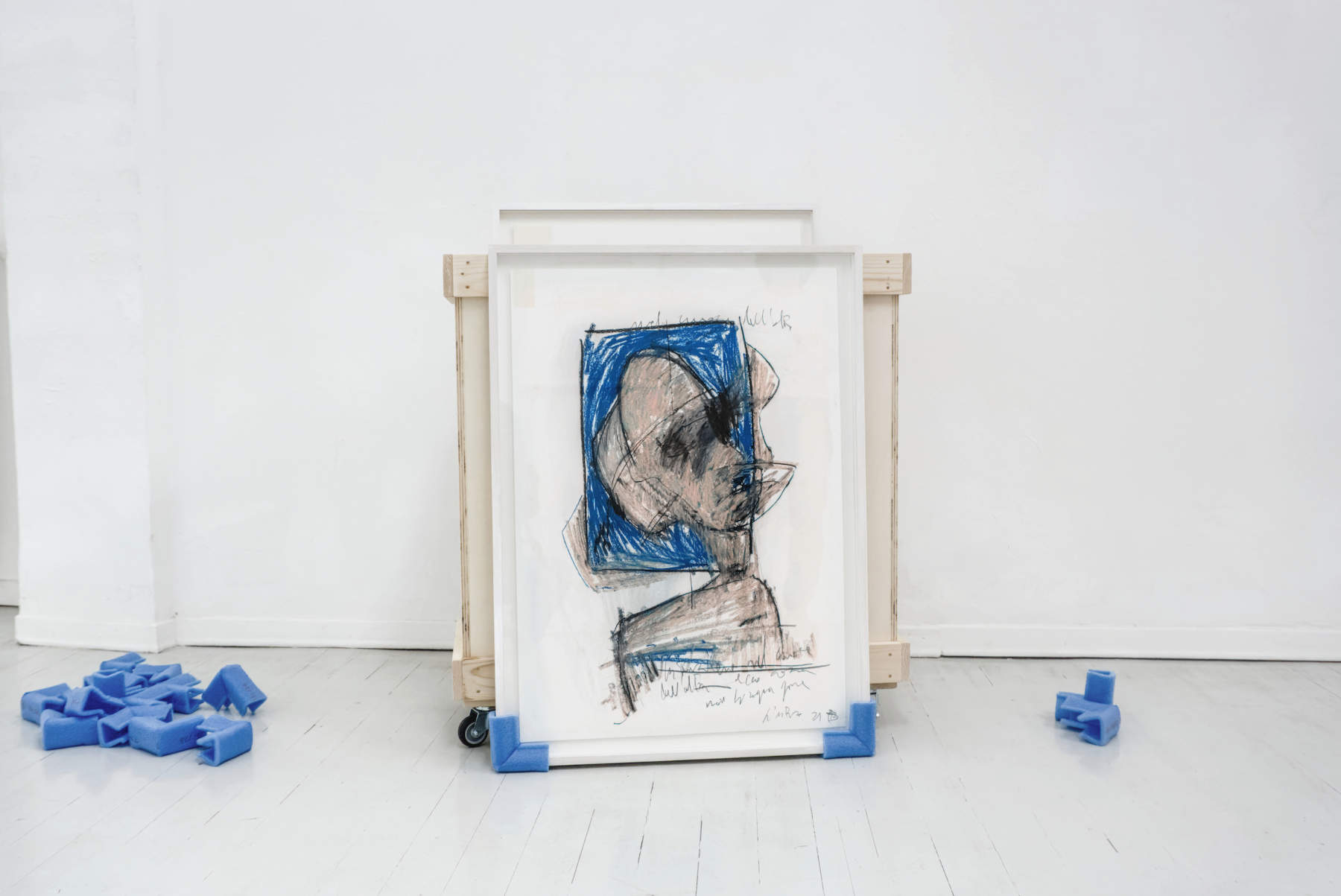
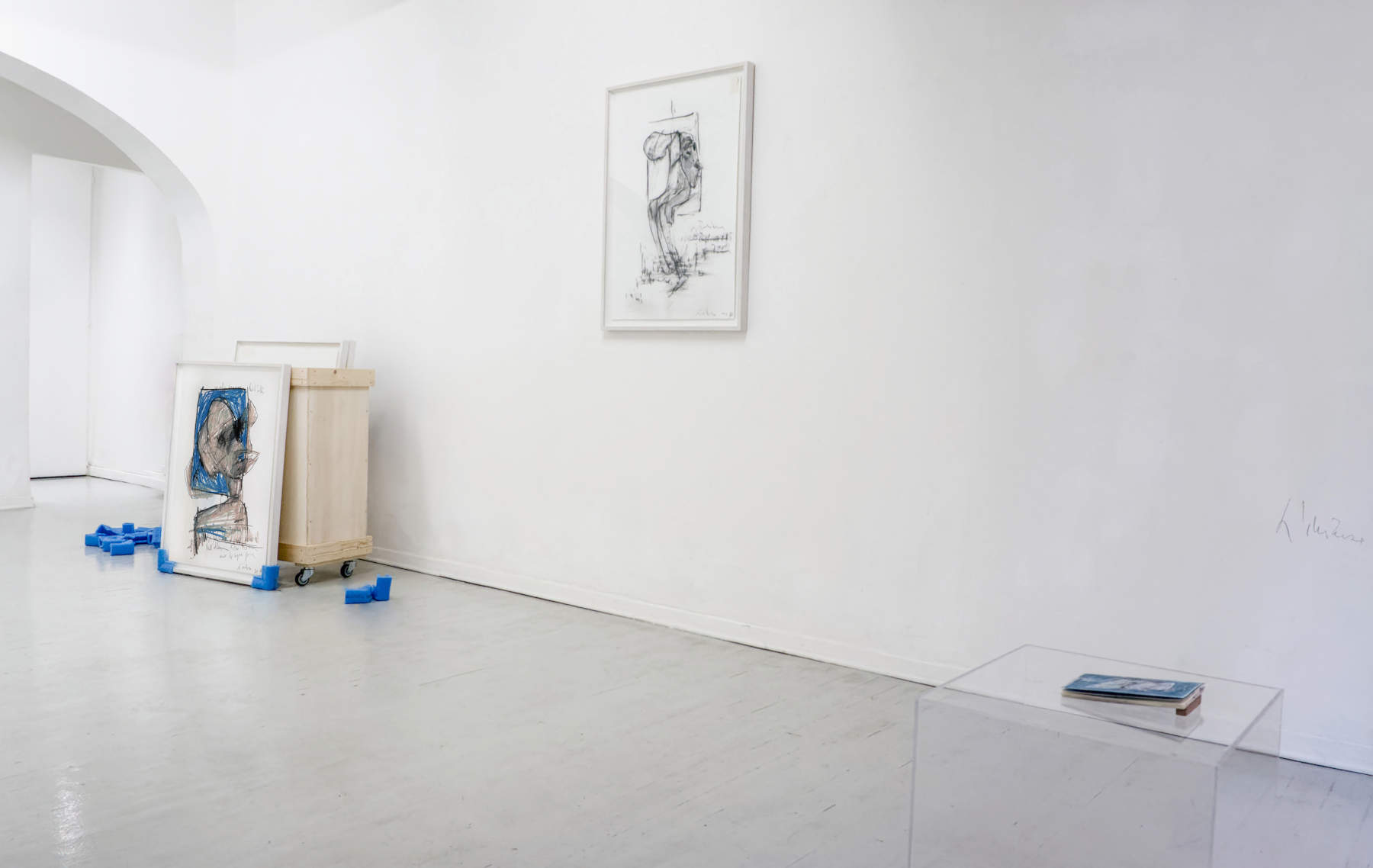
For the exhibition in Parma, some of the drawings are framed and hung on the walls, while others remain in a mobile archive, from which they can be retrieved, viewed, and subsequently returned. The very way the works are presented thus helps to challenge the traditional distinction between exhibited and archived works.
In 2026, Bartoli returned once again to Nancy’s book, working on two copies through distinct yet complementary interventions. The drawings and volumes share a complex relationship with the material and with the paper, upon which writing and image, surface and depth, openness and obstruction overlap. The drawings interweave autobiographical fragments, social criticism, anthropological research, readings, and memory. The human figures, crisscrossed by bundles of vertical marks resembling sutures, appear swallowed up by color and barely recognizable in their deformity. Excerpts from Nancy’s text are either incorporated into the images or remain isolated on the paper: handwritten, they are submerged or outlined by impulsive hatching, sometimes transforming into linear sequences resembling seismograph readings.
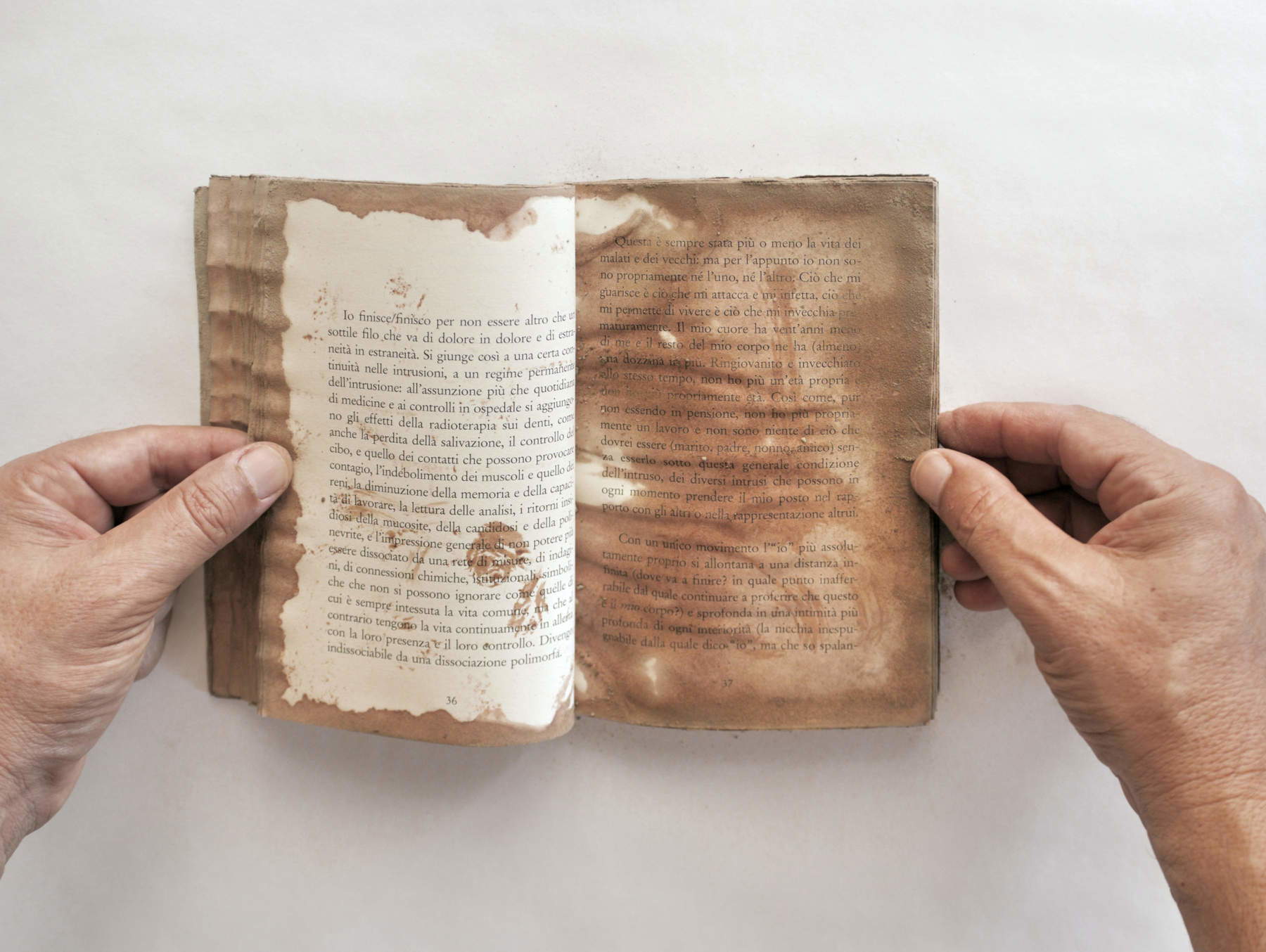
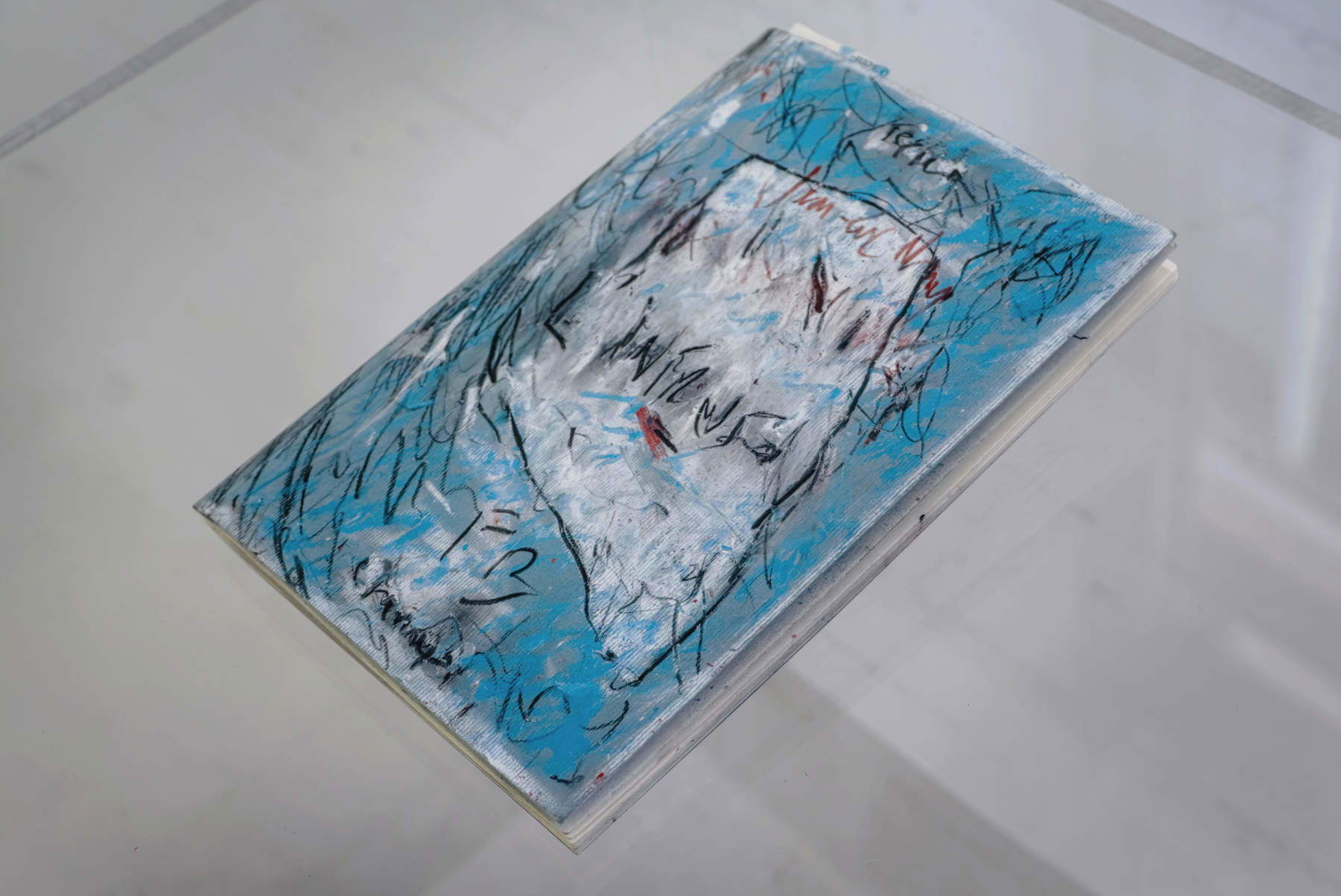
In the first volume, Bartoli intervenes directly on the printed pages with oil pastels, tissue paper, and strips of tape, superimposing her own marks onto Nancy’s words. She then cuts into the paper, creating openings in the thickness of the book that connect non-consecutive pages. In the second work, however, the relationship is reversed: it is no longer the artist’s mark that intervenes on the page, but a foreign material that penetrates the body of the volume. Another Cronopio edition of *L’intruso* is treated with ox blood and tuff dust. The blood, used as paint, seeps from the margins, leaving stains and ripples that, once dried, stiffen the paper and submerge the text. The intervention irreversibly alters the book’s structure and the possibility of leafing through it, reading it, and recognizing it. The two processes, opposite in their movements of opening and closing, echo the formula used by Nancy to describe his own condition: “I am open-closed.”
The weary, caged figures that inhabit the drawings ultimately bring the reflection back to the body and its social dimension. They represent a society committed to continually neutralizing its own contradictions and an art system capable of transforming even its own critique into exhibition content, before that critique can truly challenge its functioning. In this scenario, the artist continues to seek a space within it, without knowing whether he will be welcomed or whether it is preferable to maintain his position as an intruder.
“Military and cyber intrusions and new, desperate human migrations: intrusion, in its many forms, crosses every possible threshold and bursts into our ever-changing lives,” says Francesco Bartoli. “But where does the artist’s work fit into all this? Artist and intruder, the intruding artist, the artist’s intrusion, and finally artist/intruder, to paraphrase Nancy. This is the condition that has accompanied me throughout my life and that has shaped—and continues to shape—my vision of art and the world. (…) The artist and the intruder are one and the same: outcasts and marginal figures. From this adventure, we artists/human beings will emerge lost and shaken, not very alert, and certainly incapable of maintaining a constant dialogue with this world. We will emerge swollen and gasping for breath, perhaps dying, but we will emerge, heedless of death because we have died repeatedly while still alive.”
Notes on the Artist
Francesco Bartoli graduated from the Brera Academy of Fine Arts in Milan, where he studied under Luciano Fabro. His interdisciplinary practice combines drawing, frottage, video, animation, and performance. After fifteen years abroad, he exhibited at the National Sculpture Museum in Valladolid and the Museum of Roman Art in Mérida. He also participated in the 54th Venice Biennale with the exhibition *El Escondite* at the Italian Cultural Institute in Madrid. Throughout his career, he has received the Spanish Ministry of Culture’s Contemporary Art Grant (2010), support from the Italian Council X and PAC2021, and was selected for PhotoEspaña (2010) and Documenta Madrid (2011).
In 2016, he directed and produced *In Search For Nothing*, a documentary made with unaccompanied migrant minors and presented, among other venues, at the Farm Cultural Park and MACRO in Rome. In 2023, he created *Scolpire il vento*, which was selected for several international festivals and is now part of the permanent collection at mudaC in Carrara. Recent exhibition projects include *Scolpire la memoria* at the Dìnamo Gallery in Porto (2021), *Ecos: la fuerza de los fragmentos* at the EAC Museum in Montevideo (2024), in collaboration with the Uruguayan Ministry of Culture and the IIC, and *Il Battito Evocato*, a site-specific project at the Botanical Garden Museum in Rome (2025).
 |
| In Parma, an artist challenges the art world with an exhibition that rejects conventional exhibition practices |
Warning: the translation into English of the original Italian article was created using automatic tools. We undertake to review all articles, but we do not guarantee the total absence of inaccuracies in the translation due to the program. You can find the original by clicking on the ITA button. If you find any mistake,please contact us.