





Palazzo Magnani in Reggio Emilia will reopen to the public with the exhibition *The Gates of the Invisible: Kandinsky, Klee, and Malevich in the Light of Pavel Florensky’s Thought*, scheduled to run from November 14, 2026, to March 14, 2027. The exhibition, curated by Roberto Cresti, Emilio Ferrario, and Valentina Parisi, with the support of a scientific committee composed of John Bowlt, James Bradburne, Silvia Cavalchi, Luigi Grasselli, and Nicoletta Misler, presents a research project dedicated to the relationships between art, science, and philosophical thought in the early 20th century.
The exhibition explores the roots of the artistic and scientific revolution that shaped the last century, bringing together masterpieces of the historical abstract avant-garde, Russian icons, and the figure of Pavel Florensky (1882–1937), a scientist, mathematician, theologian, educator, and art theorist described by his contemporaries as “the Russian Leonardo.” The exhibition continues the exploration initiated by Palazzo Magnani on the theme of the representation of space and vision, previously addressed in the exhibitions dedicated to Piero della Francesca in 2015 and M.C. Escher in 2013.
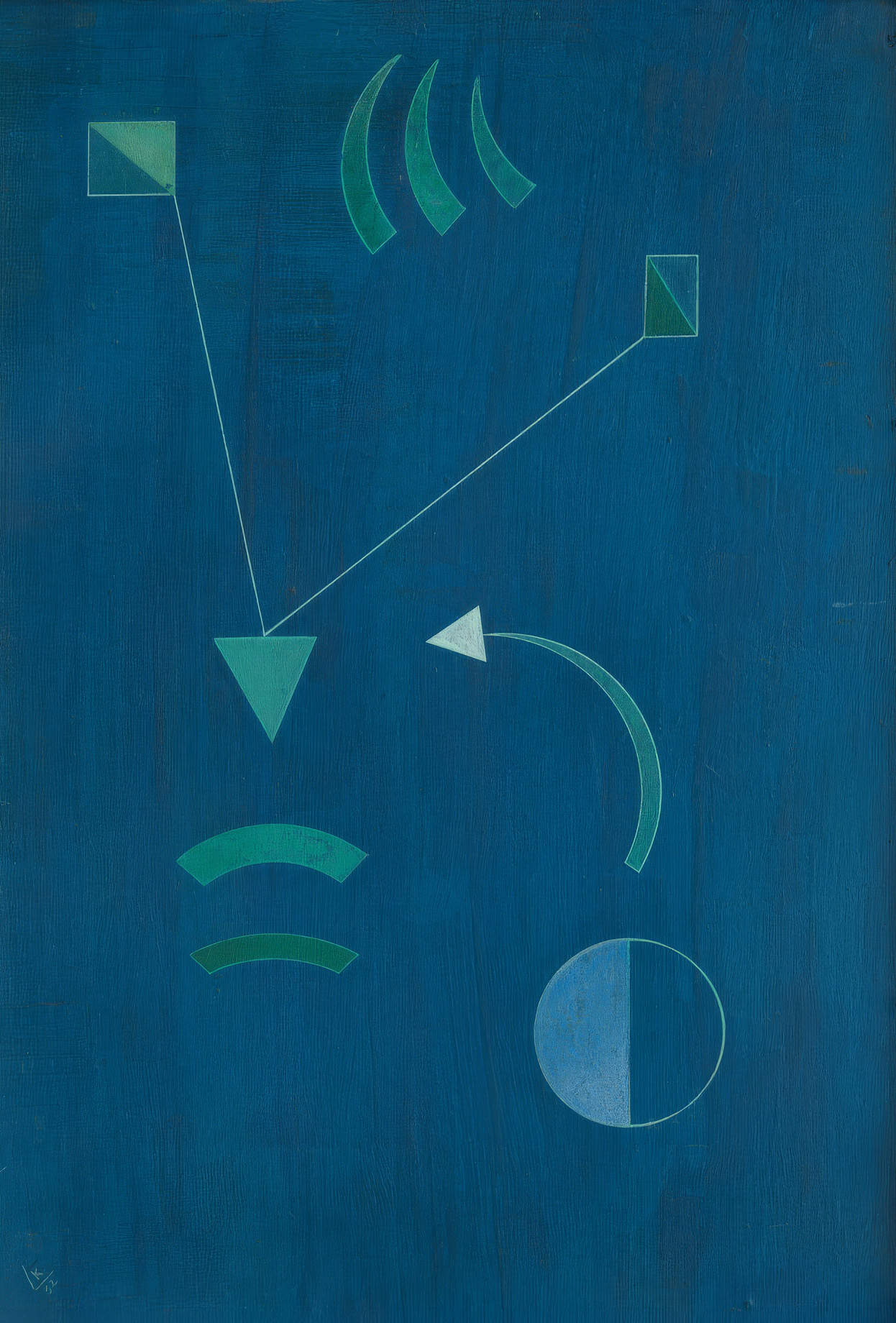
Florensky’s research, situated at the intersection of scientific analysis and the transcendent dimension, serves as the interpretive key to reexamining the cultural climate of the early 20th century, when art, science, and technology were part of a single system of knowledge. During those years, movements such as the Bauhaus in Germany and VChUTEMAS in Russia bore witness to a close relationship between different disciplines, while new scientific theories were transforming perceptions of space and reality: from Einstein’s theory of relativity to Riemann’s non-Euclidean geometries, and on to Cantor’s mathematical studies of the infinite.
In this context, artists sought artistic languages capable of transcending naturalism and Renaissance perspective, which was by then considered a limited model for representing the complexity of reality. The exhibition thus presents the reversal of perspective that unites Florensky’s research with that of the leading figures of abstraction: for the Russian thinker, three-dimensional reality constitutes only a partial view, since things possess a temporal depth and belong to a further dimension that art can help reveal.
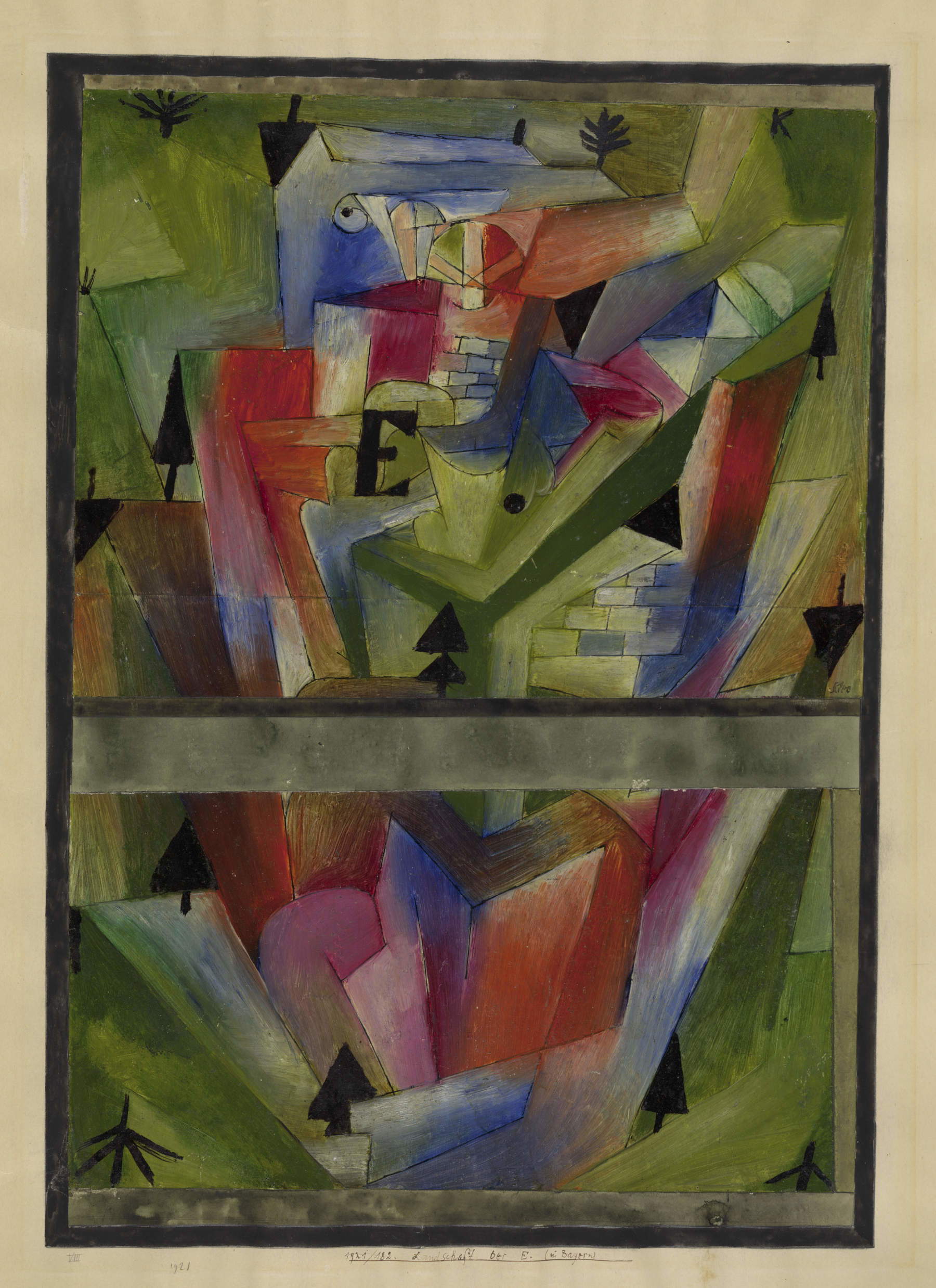
Through works from major European institutions—including the Zentrum Paul Klee in Bern, the Costakis Collection in Thessaloniki, and private collections—the project identifies three main approaches to interpreting this new spatial sensibility.
The first is dedicated to Wassily Kandinsky and his exploration of spiritual geometries. In his painting, color breaks free from its ties to the representation of the natural world to become a tool capable of evoking an additional dimension. Kandinsky’s abstraction is constructed through dynamic forms and planes that seem to overlap in an undefined space, in dialogue with the tradition of Russian icons and their complex symbolic system.
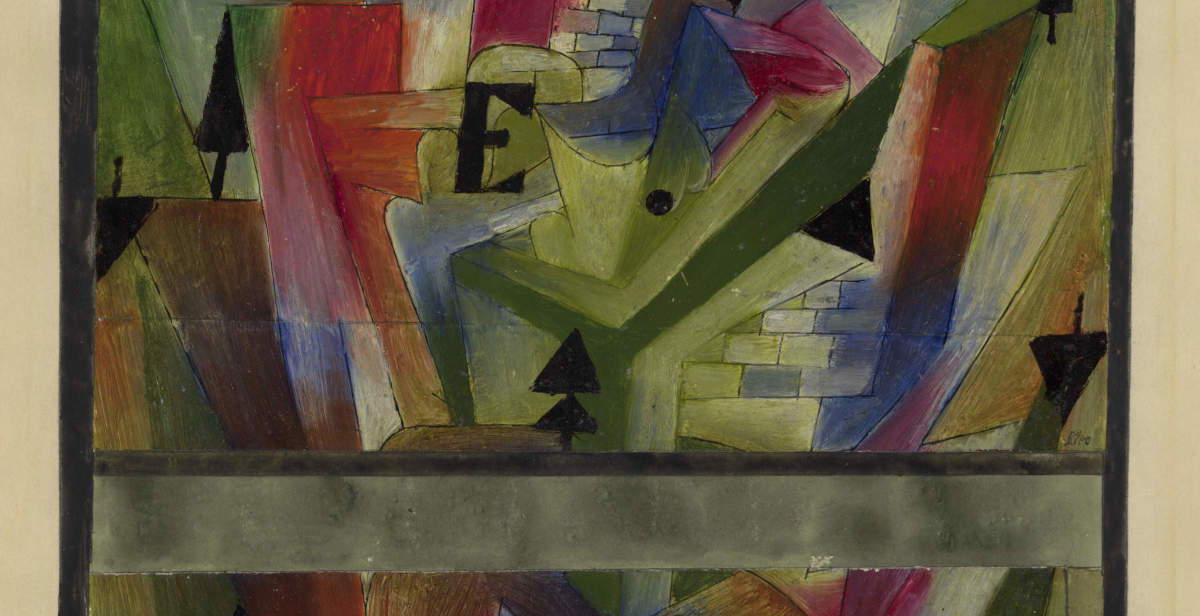
The second section focuses on Paul Klee, for whom abstraction takes on a narrative and imaginative dimension. His paintings construct autonomous visual universes in which space is continually transformed by the artist’s intervention. This exploration finds a parallel in icons characterized by a more lyrical and narrative component, united by their ability to go beyond the mere description of external reality.
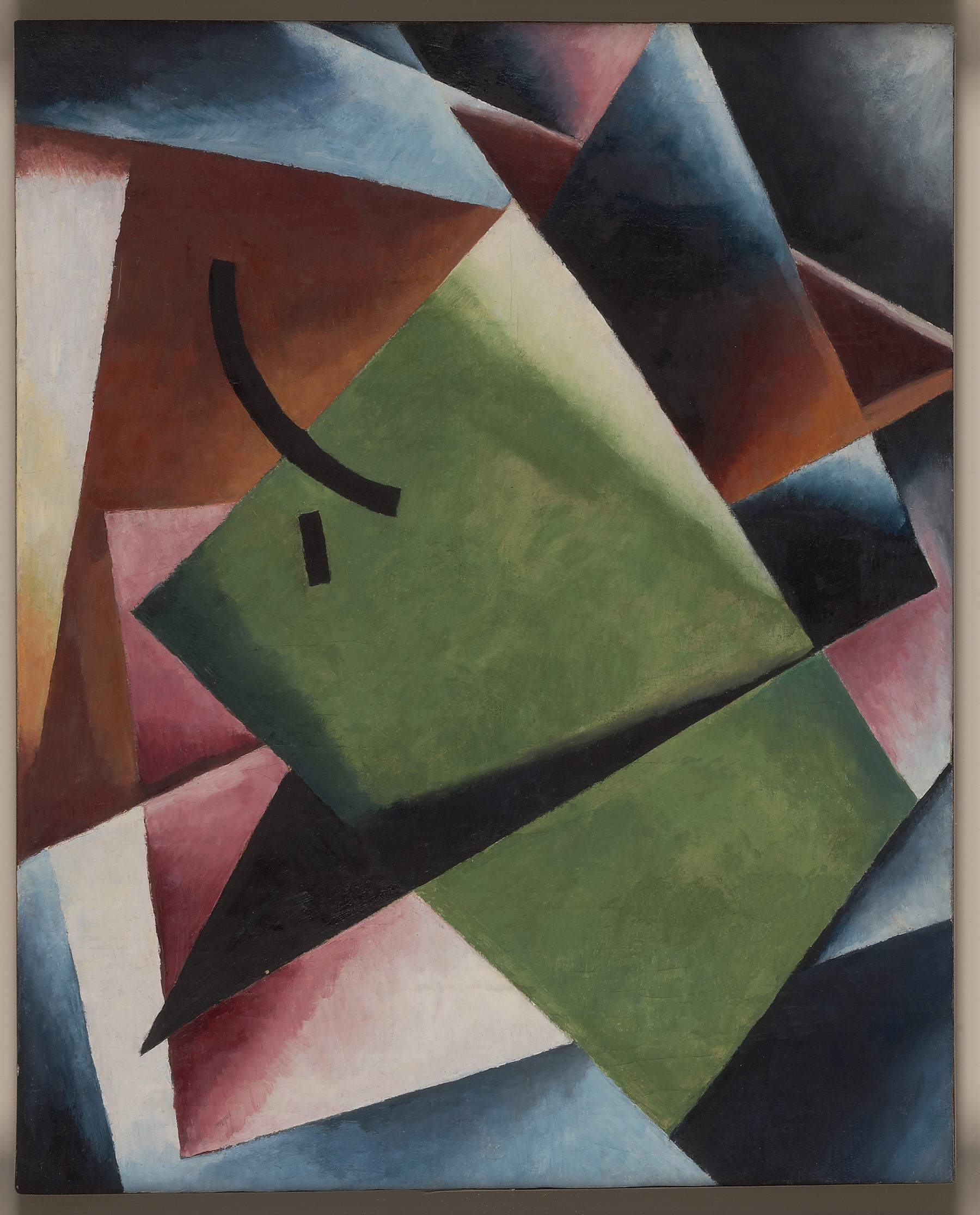
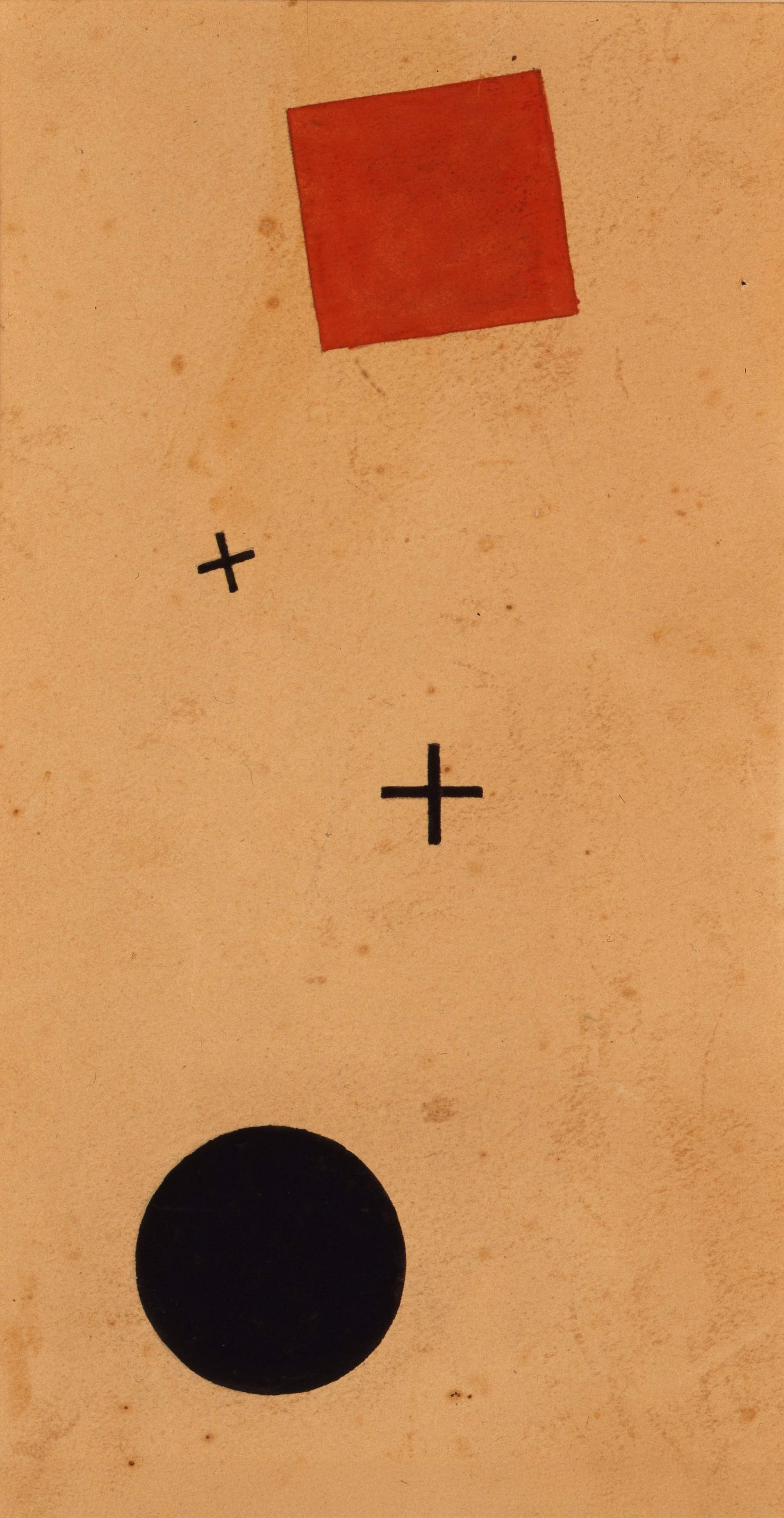
The third path, on the other hand, leads to Kazimir Malevich and Suprematism, a movement founded on the search for a pure mental dimension. In the artist’s works, geometry becomes a self-sufficient language, capable of transcending the object and opening up a new conception of space. Suprematist non-objectivity is linked to the formal simplicity of medieval icons, devoid of naturalistic elements and built upon an essential dimension.
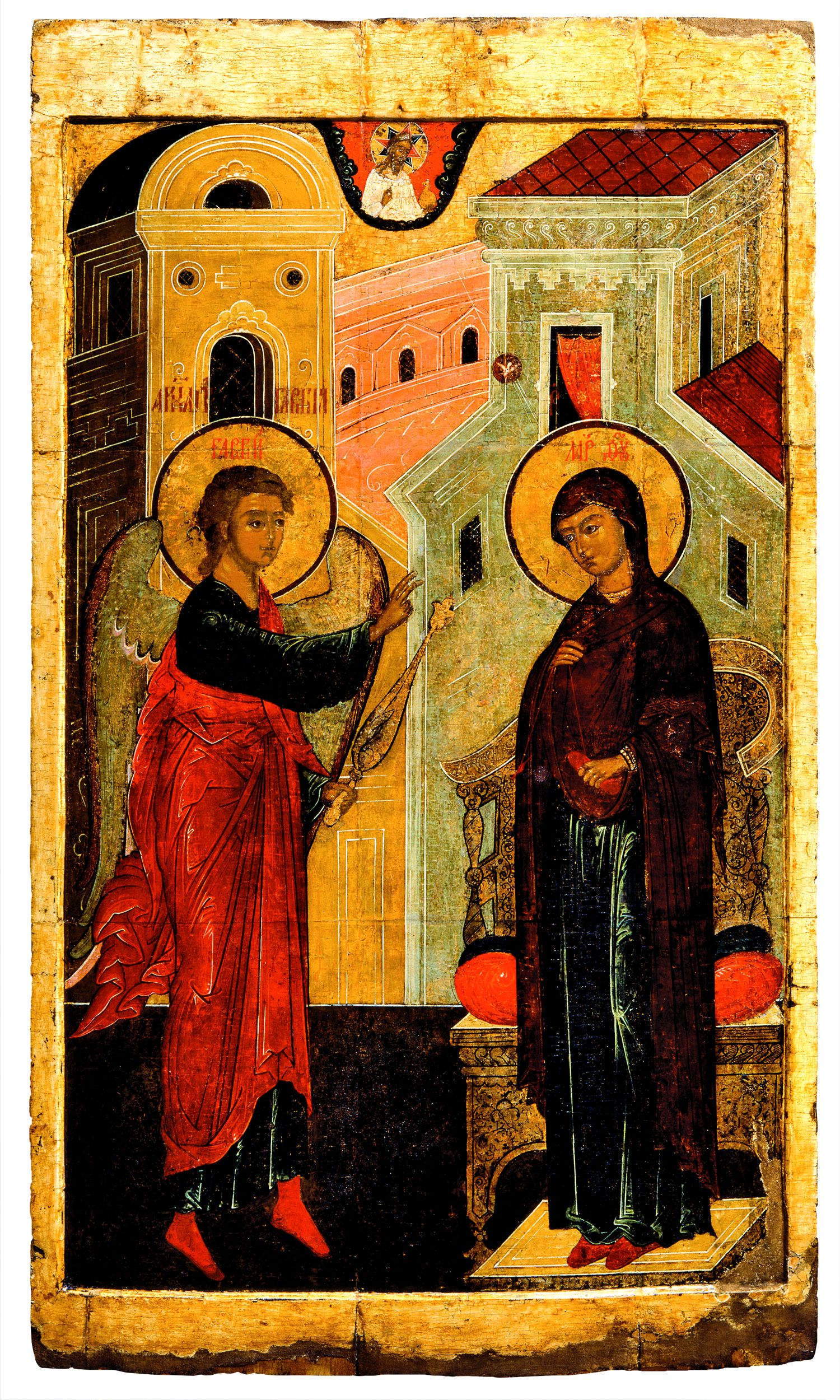
On the first floor of Palazzo Magnani, works by Kandinsky, Klee, Malevich, and other leading figures of the Suprematist school—including Ivan Kljun and Lyubov Popova—will be displayed alongside a selection of Russian icons dating from the 15th to the 18th centuries, drawn from the collection of Banca Intesa in Vicenza.
The relationship with icon art constitutes one of the central elements of Florensky’s reflection. In the early decades of the 20th century, in fact, ancient Russian painting was rediscovered from a secular perspective by avant-garde artists, who recognized in the inverted perspective of icons not a primitive form of representation, but a conscious system of spatial organization based on the symbolic value of images. While maintaining a critical distance from the most radical outcomes of the avant-garde, Florensky identified in these new artistic explorations a shared desire to transcend the primacy of naturalism.
The exhibition also incorporates a scientific component through collaboration with the National Institute of Nuclear Physics (INFN), which contributed to the creation of the immersive room “Curving Space.” The installation translates into a visual experience Florens’ concept of space as a dynamic reality—a field of forces modified by the masses that inhabit it.
A specific section will be dedicated to outreach and education. On the ground floor, before entering the main exhibition, visitors will find an interactive space designed in collaboration with Luigi Grasselli and James Bradburne. Through digital tools, virtual reconstructions, and physical installations, schools, families, and visitors will be able to explore the mathematical, geometric, and perceptual principles that have contributed to the transformation of modern culture.
This approach draws on the experience of “Mathematica,” the exhibition conceived by Charles and Ray Eames in 1961, which had already explored the relationship between mathematics, science, and creativity, confirming the discipline’s role as a foundational element of modernity. The project will be accompanied by a program of educational activities and a series of public events dedicated to the relationships between art, science, and music. The schedule will involve the INFN, the University of Modena and Reggio Emilia (Unimore), Orthodox communities, the Theological Library of Reggio Emilia, and local educational institutions. The program will conclude with musical events curated by Soli Deo Gloria—organs, sounds, and voices of the city—under the artistic direction of Renato Negri.
 |
| In Reggio Emilia, Kandinsky, Klee, and Malevich Reinterpreted Through Florensky’s Thought |

Warning: the translation into English of the original Italian article was created using automatic tools. We undertake to review all articles, but we do not guarantee the total absence of inaccuracies in the translation due to the program. You can find the original by clicking on the ITA button. If you find any mistake,please contact us.























 IT
IT FR
FR DE
DE ES
ES CN
CN


