



by Redazione 18/11/2026


Categories: Exhibitions / Disclaimer
The Madre Museum in Naples is presenting the first major retrospective dedicated to Isabella Ducrot, featuring over 125 works that trace more than forty years of artistic exploration. After its run in Naples, the exhibition will travel to Oslo and New York.


The first major retrospective dedicated to Isabella Ducrot (Naples, 1931) opens in Naples at the Madre Museum, before traveling to Oslo and New York. Organized by the Donnaregina Foundation for Contemporary Arts andthe Astrup Fearnley Museet, the exhibition brings together over 125 works, including paintings, textiles, drawings, and collages, offering an in-depth look at an artistic practice spanning more than four decades and characterized by experimentation with materials, forms, and artistic languages. Curated by Adam D. Weinberg, director emeritus of the Whitney Museum of American Art, together with Eva Fabbris, former director of the Madre Museum, with curatorial assistance from Ginevra de Blasio, the exhibition is the result of a collaboration between the Neapolitan museum—directed by Eugenio Viola and chaired by Angela Tecce—and the Astrup Fearnley Museet in Oslo, led by Solveig Øvstebø.

In Naples, the retrospective will be on view from December 3, 2026, to February 22, 2027. The project will then continue in Norway, at the Astrup Fearnley Museet, from April 8 to September 5, 2027, and subsequently at MoMA PS1 in New York. Another chapter of the initiative will be hosted by the Capodimonte Museum and Royal Park, where a section dedicated to the artist will be on view from December 4, 2026, to February 23, 2027.


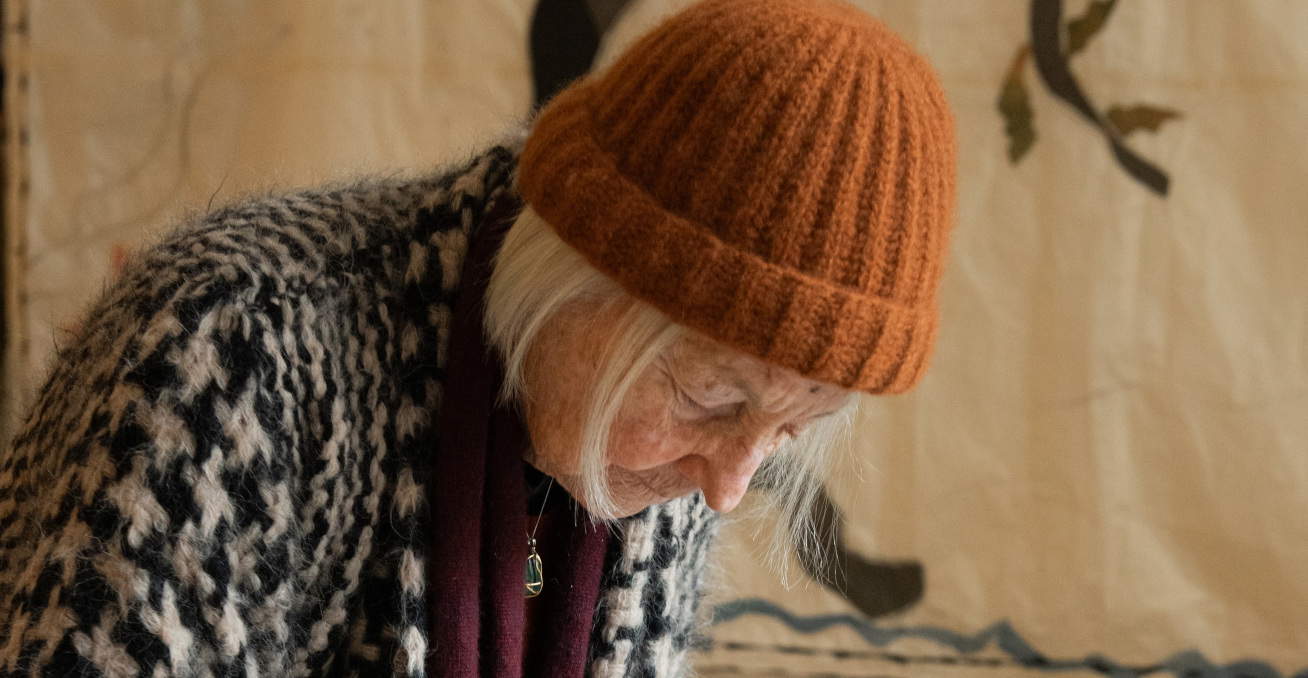
Born in Naples in 1931, Isabella Ducrot began her artistic practice shortly before turning fifty. Since then, over the course of more than forty-five years of activity, she has forged a personal and multifaceted artistic path, marked by profound philosophical reflections and a dialogue with cultural traditions—some of which are very distant from one another—ranging from the textile arts of the Islamic world to modern painting.

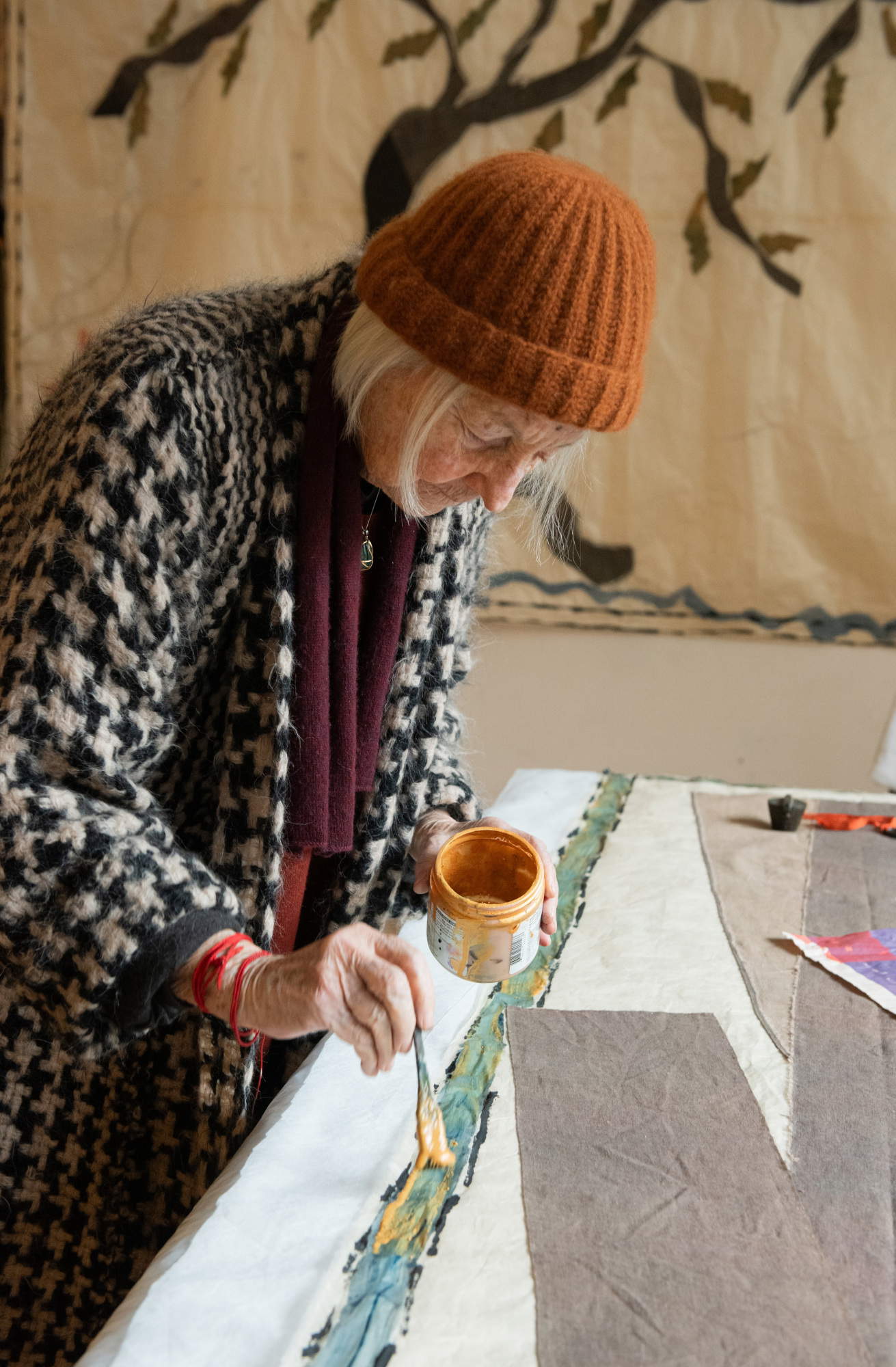
A central role in her work is played by the collection of historical textiles that the artist has gathered during her travels in India, Tibet, China, and Afghanistan. These are often rare and precious materials that are directly incorporated into the creative process and become the very structure of her paintings and assemblages, serving as a true canvas. In Ducrot’s vision, fabric represents the “substance of life”: an element that accompanies human beings through every stage of their existence, from birth—with swaddling cloths for newborns—to death, through shrouds.
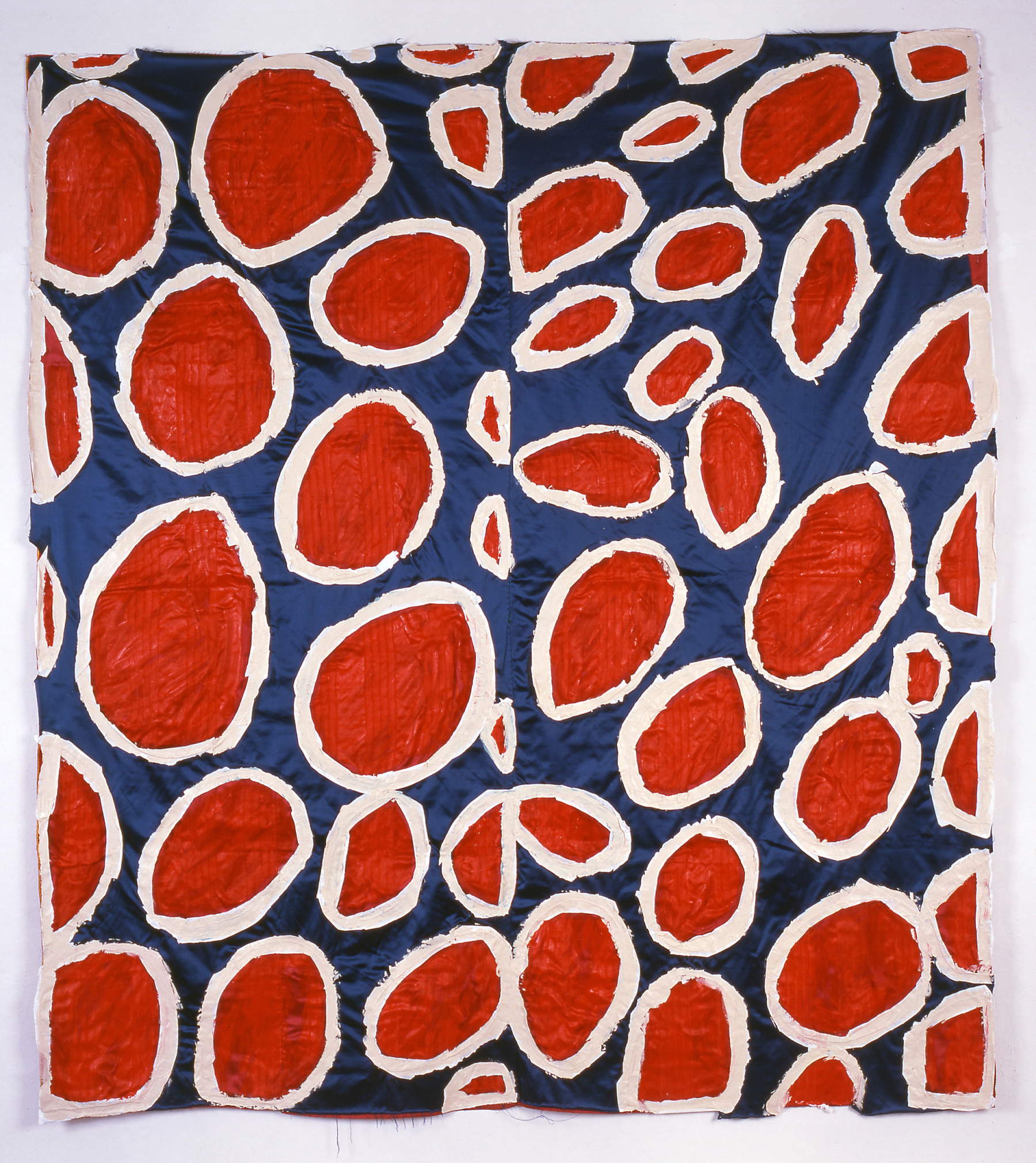
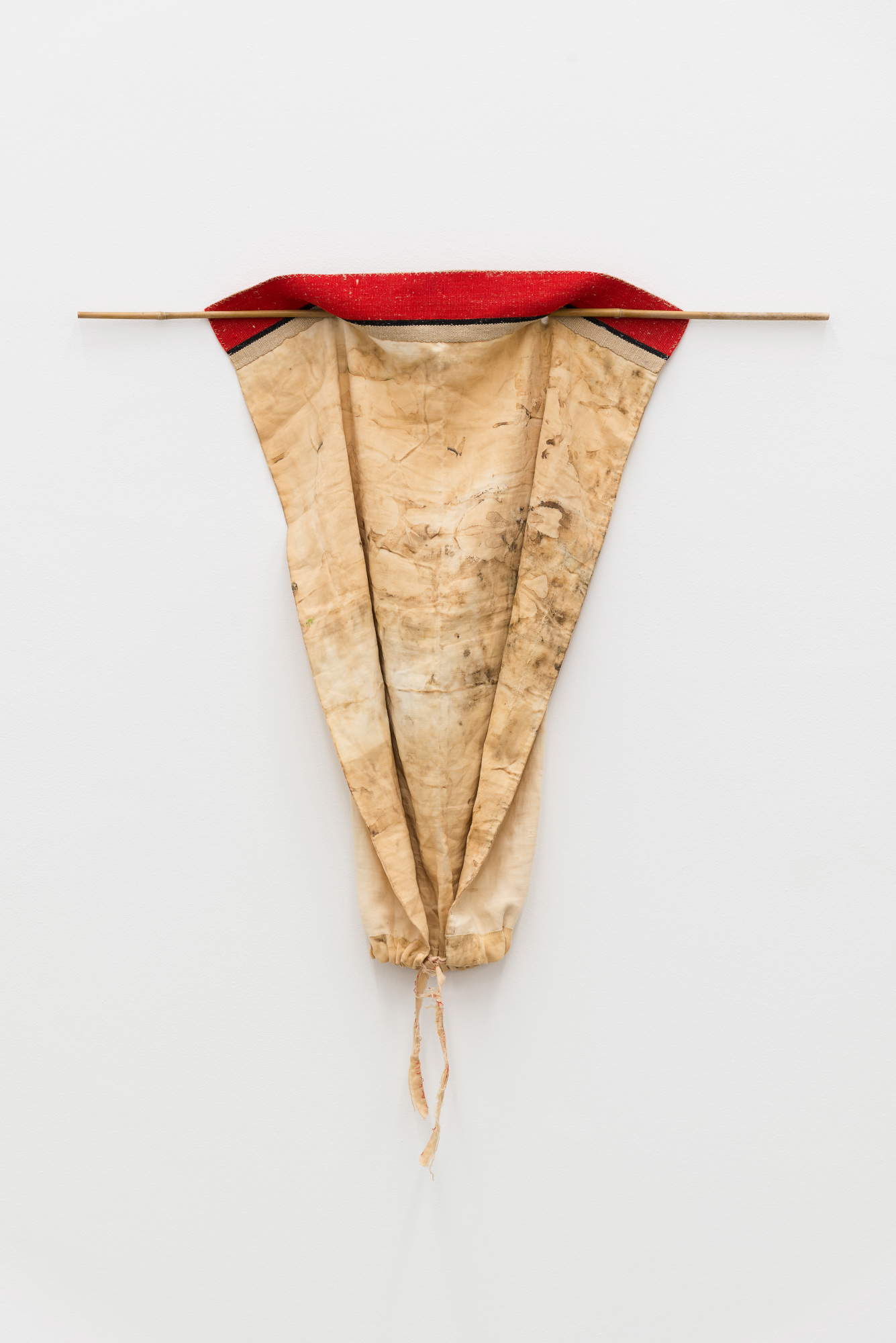
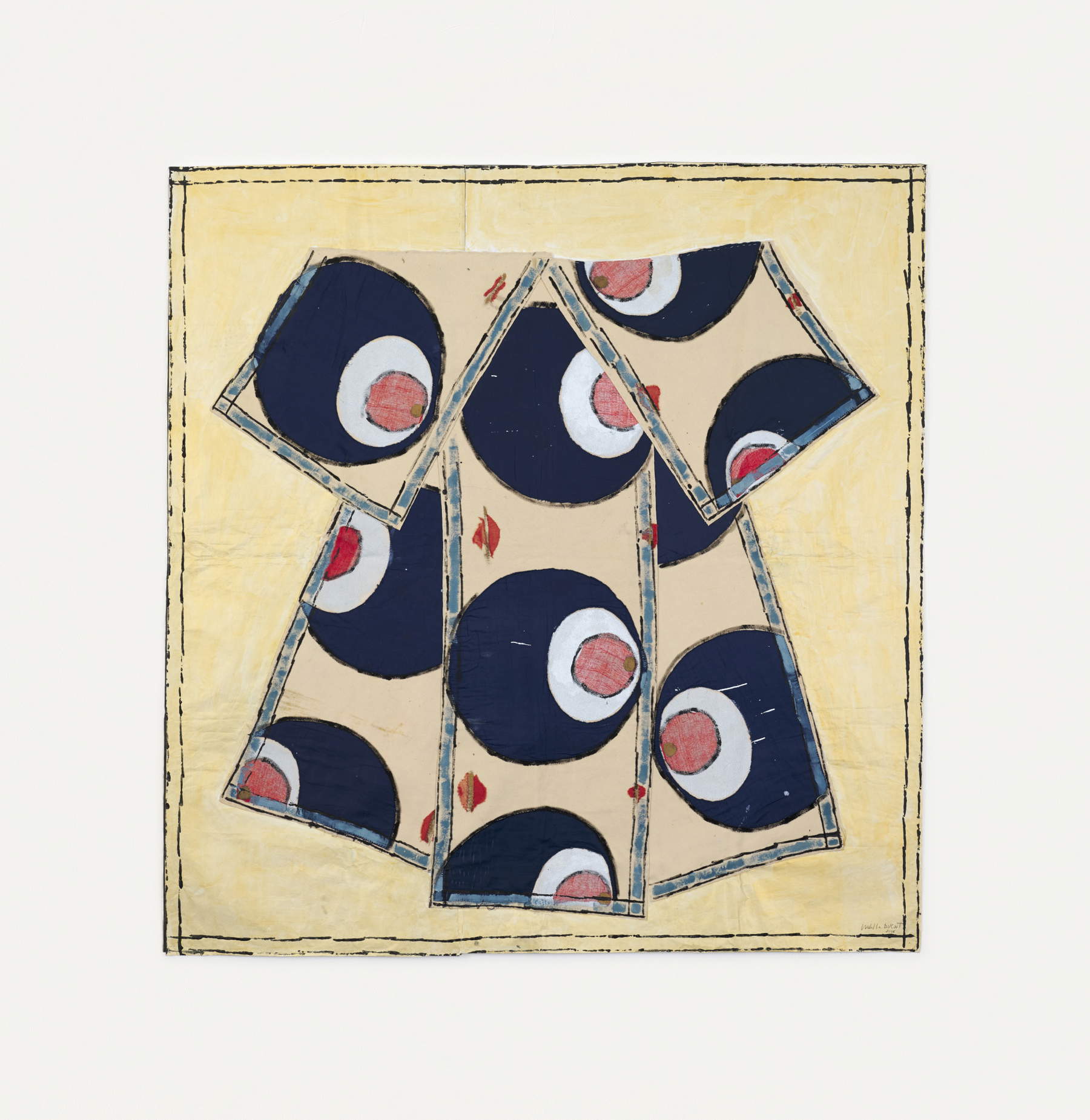
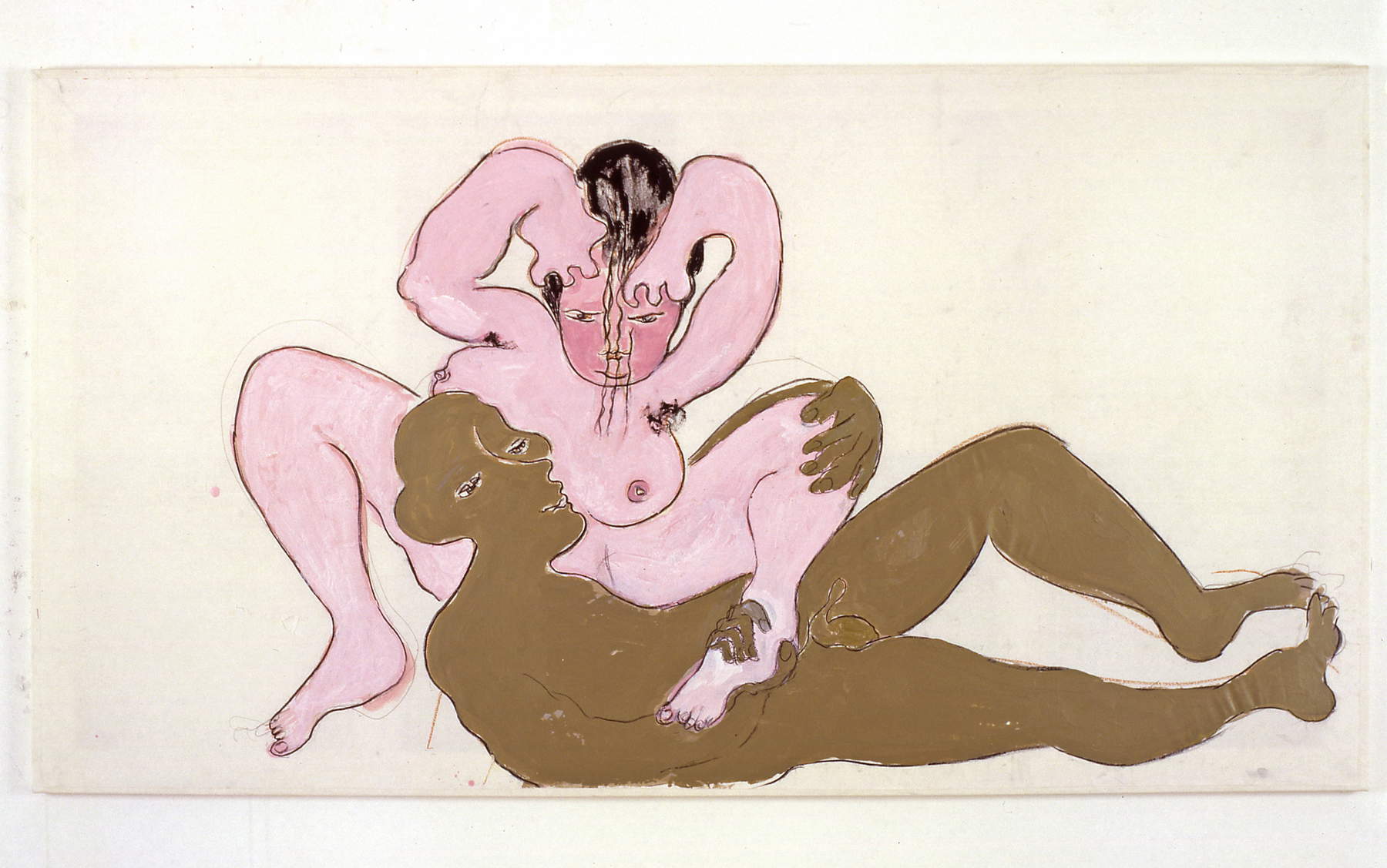
The exhibition showcases the richness of this body of work through pieces drawn from more than twenty of the artist’s most representative series. The exhibition spans different artistic languages and subjects: the landscapes of *Bella terra*, the abstract compositions of *Ripetizioni*, the still lifes of *Fiori*, and the portraits of *Variazioni: Ritratti d’Autore*. Alongside these works are the explorations of eroticism in *Erotici*, the abstract symbols of *Cintamani*, the textiles of *Bende sacre*, the garments conceived as forms of portraiture in the *Abiti* series, and the works dedicated to the emotional dimension of *Tenerezza*.
Among the most significant bodies of work is *Ripetizioni*, a series born from a reflection on the concepts of rhythm and motif. For Ducrot, the repetition of the gestures of weaving and mark-making is neither a purely mechanical activity nor an exercise in monotony. On the contrary, it becomes a meditative and spiritual practice, capable of evoking the rhythms of life, music, and natural phenomena. Through repetition, the artist thus explores the relationships between matter, time, and perception, transforming the repeated gesture into a tool for knowledge.
The exhibition project also extends to the Capodimonte Museum and Royal Park, which will host three large works on paper by Isabella Ducrot: The Annunciation, The Adoration, and The Descent of the Holy Spirit. Created in 2021 for the altars of the Neapolitan church of San Giuseppe delle Scalze in Pontecorvo, the paintings were conceived for the exhibition *Il Miracoloso*. The three works will be on display in Room 61, on the second floor of the museum, in dialogue with Luca Giordano’s *The Holy Family with the Symbols of the Passion*, a painting created around 1660 specifically for the church of San Giuseppe delle Scalze, where it was originally placed on the high altar. This juxtaposition connects two distinct historical periods and artistic languages, ideally reconstructing at Capodimonte the link between works that, though belonging to different eras, were intended for the same place of worship. The juxtaposition also offers an opportunity to explore Ducrot’s material sensibility and his approach to tradition, creating a dialogue between his contemporary practice and a 17th-century work.
The retrospective will be accompanied by a 360-page monograph, published by Hatje Cantz in collaboration with the Astrup Fearnley Museet in Oslo and the Madre Museum in Naples. The volume traces over forty-five years of Isabella Ducrot’s work, highlighting the complexity of a body of work in which artistic practice is continually intertwined with writing and philosophical thought. Ample space is devoted to the artist’s writings, considered an essential component of her creative universe and placed in dialogue with her visual works. Through a rich array of images, a selection of Ducrot’s poetic writings, and new critical essays, the publication explores the relationships between material culture, literature, narrative traditions, and dimensions of human experience that run through her work. The catalog features essays by curators Adam D. Weinberg and Eva Fabbris, Angela Tecce, art historians T’ai Smith and Marta Federici, writer and curator Ginevra de Blasio, and Pulitzer Prize-winning author Jhumpa Lahiri. The monograph thus serves as a reference tool for exploring Isabella Ducrot’s career and contribution to contemporary art.
The exhibition is primarily supported by the Campania Region, the Hans Rasmus Astrup Foundation, Thomas Fearnley, and the Heddy and Nils Astrup Foundation, with additional support from the KHR McNeely Family Foundation and Galerie Gisela Capitain. The publication is made possible thanks to the support of the KHR McNeely Family Foundation and Kevin, Rosemary, and Hannah Rose McNeely. The section installed at the Capodimonte Museum and Royal Park, on the other hand, was realized with the support of the Isabella Ducrot Foundation, Silvia Fiorucci, and the Società delle Api.
“It is meaningful to me to begin my term with this important retrospective dedicated to Isabella Ducrot, an artist who, over the course of more than four decades, has developed a profoundly original artistic language capable of crossing and challenging the boundaries between painting, textiles, and different cultural traditions,” stated Eugenio Viola. “Presenting an exhibition of this scope—long-awaited—in her hometown means paying tribute to the uniqueness of her artistic practice but also reaffirming its centrality in the contemporary art scene. The collaboration with the Astrup Fearnley Museet and the project’s subsequent international tour also demonstrate our commitment to strengthening the museum’s role as a place of research, cultural production, and dialogue between Naples and the world.”
“The Astrup Fearnley Museet’s focus on Isabella Ducrot’s work is part of a research initiative dedicated to pioneering uses of fabric in art, from the work of the Norwegian modernist Synnøve Anker Aurdal to Cauleen Smith’s most recent inclusive banners,” said Solveig Øvstebø. “Fascinated by the tactile power and intellectual depth of her work, we were among the first European museums to acquire her pieces. We are therefore particularly pleased to collaborate with the Madre Museum in organizing her first retrospective: a valuable opportunity to connect the works in our collection with the artist’s entire career and offer the public an in-depth perspective on the scope and continuity of her contribution.”
“This exhibition is a source of immense pride for me,” commented Angela Tecce. “Isabella Ducrot returns to her hometown, to which she has remained deeply attached, both personally and artistically. I am particularly happy that this retrospective helps to secure her the place she deserves among the great figures of contemporary art.”
“Beginning in the 1980s, Ducrot’s work gradually shifted toward the essential, the rarefied, and the absolute, while continuing to manifest itself through an extraordinary variety of forms, styles, and subjects,” observed Adam D. Weinberg. “Her practice reveals an unconventional expressive freedom and a rebellious spirit, long stifled by social conventions and the overt sexism that characterized the art world of the time. While some of her works engage with narrative and mythology, it is above all through her deep affinity with the meanings, functions, and very essence of fabric that Ducrot has achieved her artistic freedom.”
“Ducrot’s radical approach to fabric—its memory, structure, and circulation—challenges the traditional distinctions between craftsmanship, philosophy, and contemporary art,” stated Eva Fabbris. “The artist liberates historical textiles from their status as passive artifacts, transforming them into living surfaces capable of connecting different cultures. What emerges is a practice rooted not in the conventions and mechanisms of legitimization within the art system, but in the energy and complexity of everyday life. This exhibition concludes the curatorial program that Madre has developed in recent years to study and present in its entirety the work of female artists active in the second half of the 20th century, such as Tomaso Binga, Maria Lai, and Kazuko Miyamoto, whose artistic explorations—despite their extraordinary originality—have long remained on the margins of dominant art-historical narratives.”
“We are delighted to contribute to the Donnaregina Foundation’s original project, which pays tribute to an artist with a wonderful story,” said Eike Schmidt, General Director of the Capodimonte Museum and Real Bosco. “Capodimonte has always been the museum of contemporary art of its time, a point of reference as early as the 19th century for those generations—a mission that, beginning with Raffaello Causa, has led to world-class acquisitions; one need only recall Burri and Warhol. But Capodimonte is also a museum housing works by the greatest masters from the 14th century to the 20th century, one that tells the city’s history through its churches and the concept of the sacred. These two aspects intertwine in this exhibition with the Madre, embodying a refined creativity that will continue to amaze us.”
 |
| Isabella Ducrot, the art of transforming fabrics into poetry: over 125 works in her first major retrospective |
Warning: the translation into English of the original Italian article was created using automatic tools. We undertake to review all articles, but we do not guarantee the total absence of inaccuracies in the translation due to the program. You can find the original by clicking on the ITA button. If you find any mistake,please contact us.