





From September 25, 2026, to January 10, 2027, the Napoleonic Museum in Rome will host “Italian Baroque in Dresden.” Architectural Drawings from the Landesamt für Denkmalpflege Sachsen is an exhibition dedicated to a collection of drawings and sketches created by Italian and Saxon artists and now preserved in the scientific collectionof the Saxon State Office for the Preservation of Cultural Heritage. The opening is scheduled for Thursday, September 24, at 3:30 p.m., at the museum’s location at Piazza di Ponte Umberto I, 1.
For the first time in Rome in approximately three hundred years, a selection of works from the collection of the Landesamt für Denkmalpflege Sachsen is being presented, including original architectural drawings created in the Italian capital during the 18th century. The exhibition is curated by the Landesamt für Denkmalpflege Sachsen, sponsored by Roma Capitale, Department of Culture and Coordination of Initiatives Related to Holocaust Remembrance Day, and by the Capitoline Superintendence for Cultural Heritage, and organized by the Landesamt für Denkmalpflege Sachsen with the support of the Saxon Ministry of Infrastructure and Territorial Development. Museum services are provided by Zètema Progetto Cultura.
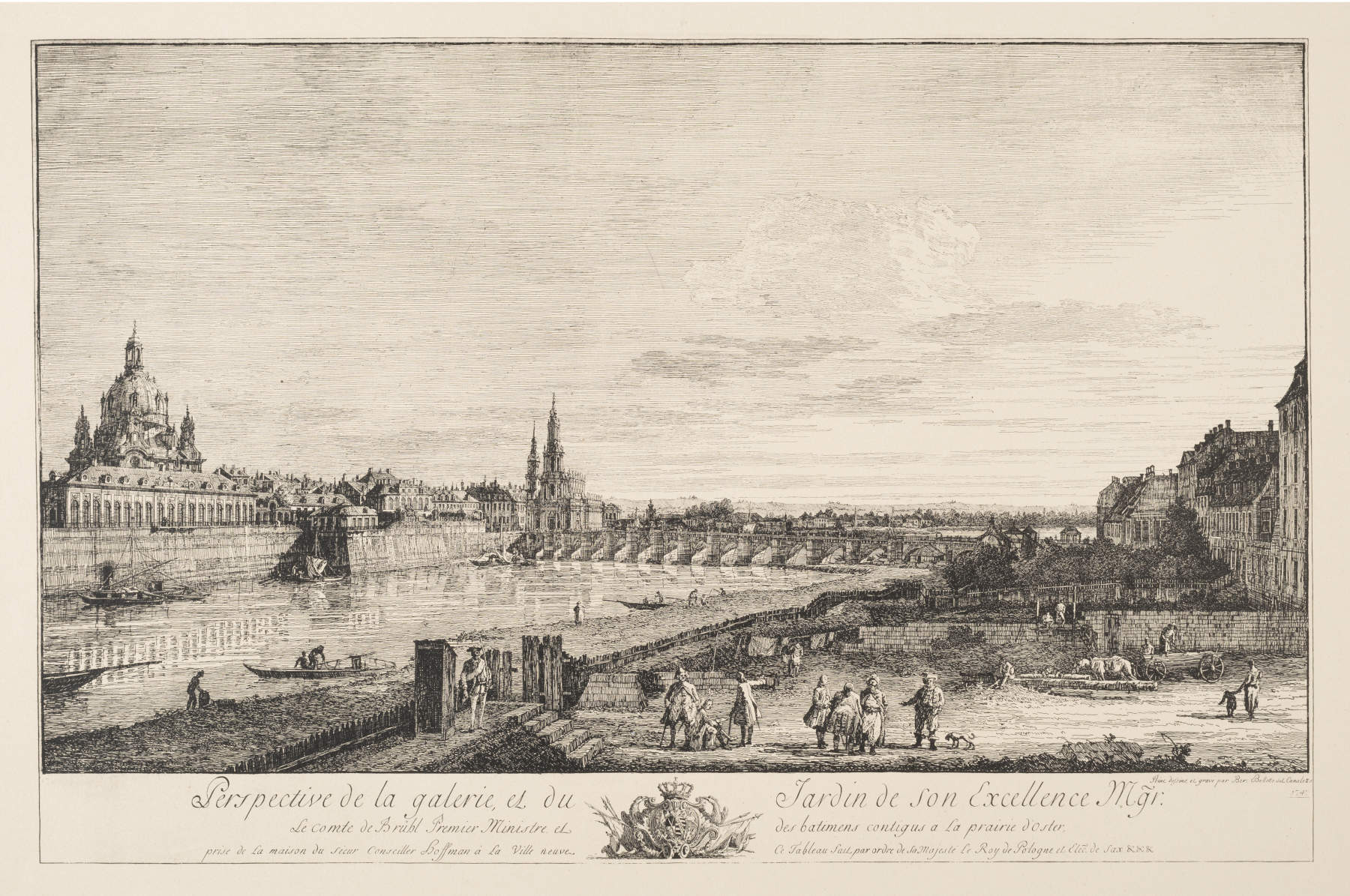
The exhibition explores a period in Dresden’s history when the city became one of the principal centers for the dissemination of Italian culture north of the Alps. In the mid-18th century, the capital of Saxony—already known as the “Florence on the Elbe” due to the richness of its art collections—was ruled by Prince-Elector Friedrich August II, King of Poland under the name August III, and his wife Maria Giuseppa. The monarchs, who were passionate about Italy and “opera seria,” did not limit themselves to collecting Italian paintings by masters such as Raphael, Correggio, Giorgione, and Titian; they also encouraged the arrival in Dresden of numerous professionals from the Italian peninsula: composers, singers, instrumentalists, poets, set designers, and theater architects.
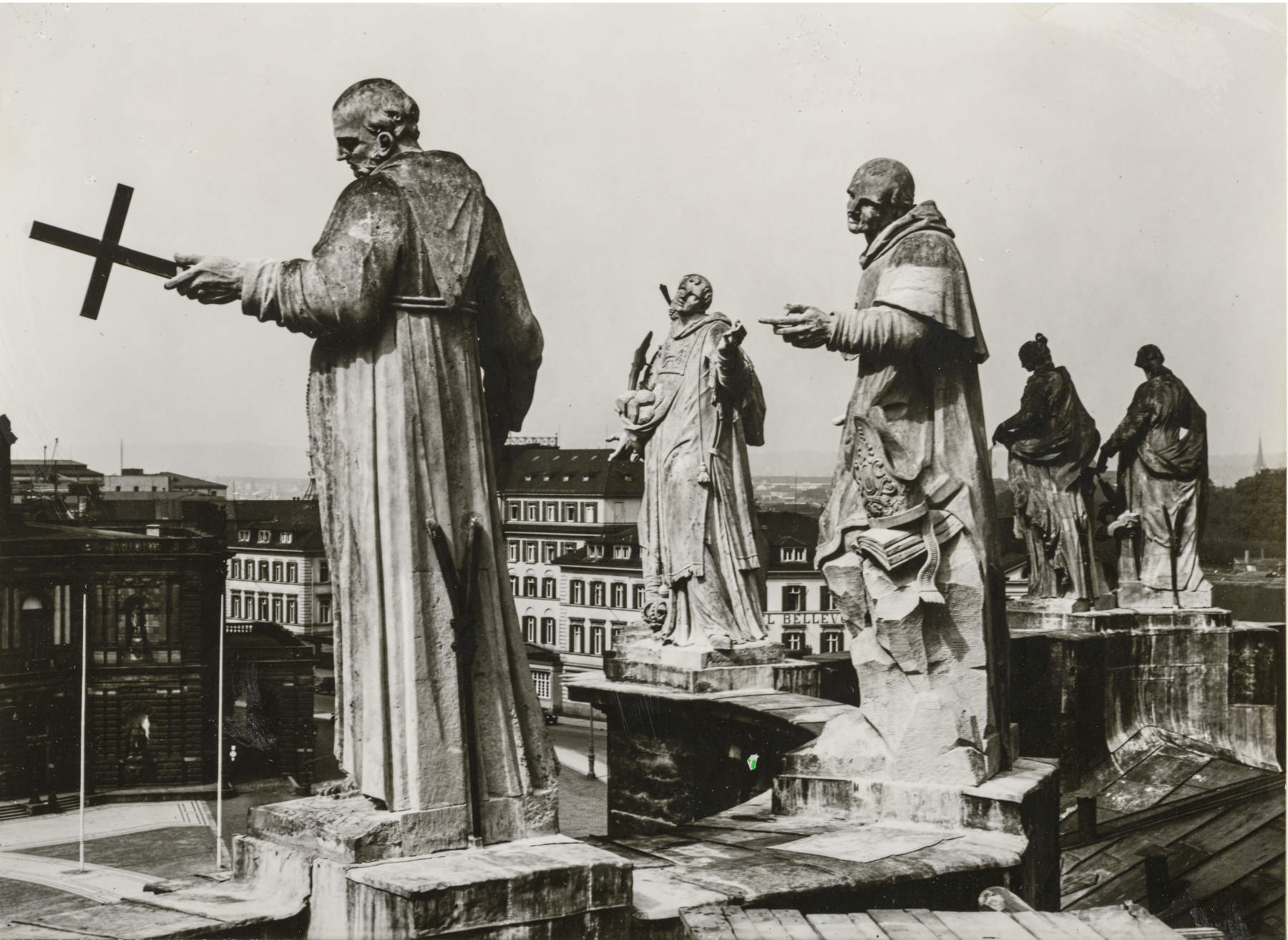
This Italian presence was part of the unique situation of the Catholic Saxon court, situated within a predominantly Protestant territory. Italian Jesuits also played a decisive role in promoting cultural life. Among the most significant examples of this period is the Cathedral of the Holy Trinity, inaugurated in 1751 based on a design by the Italian architect Gaetano Chiaveri and described as “the most Roman building north of the Alps.” Although the monument suffered severe damage in 1945, it continues to dominate Dresden’s cityscape. The Italian artists and artisans involved in its construction also left traces of their work in other parts of the city and throughout Saxony.
The court of Augustus III attracted painters, stucco artists, musicians, dancers, and theater impresarios from Italy, in a period known as the “Augustean Age.” Among those present in Dresden was the Venetian painter Bernardo Bellotto, known as Canaletto, a court painter whose cityscapes constitute one of the primary records of the city’s appearance during that period. At the same time, scholars, painters, and architects from Dresden traveled to Italy—particularly to the southern regions—for study stays, some of which were quite lengthy, and subsequently brought back to Saxony models, observations, and knowledge gained during their travels.
The scientific collection of the Landesamt für Denkmalpflege Sachsen preserves numerous examples of these exchanges. The selection on display at the Museo Napoleonico draws from this collection and consists of architectural drawings and sketches that document a period of intense exchange of artists, models, and designs. The connection with contemporary Italian cultural activity is further underscored by the fact that, while Dresden is hosting a major retrospective dedicated to Correggio’s paintings from Italy, Rome is exhibiting original 18th-century architectural drawings from the Saxon city. Some of these were actually created in Rome some three hundred years ago.
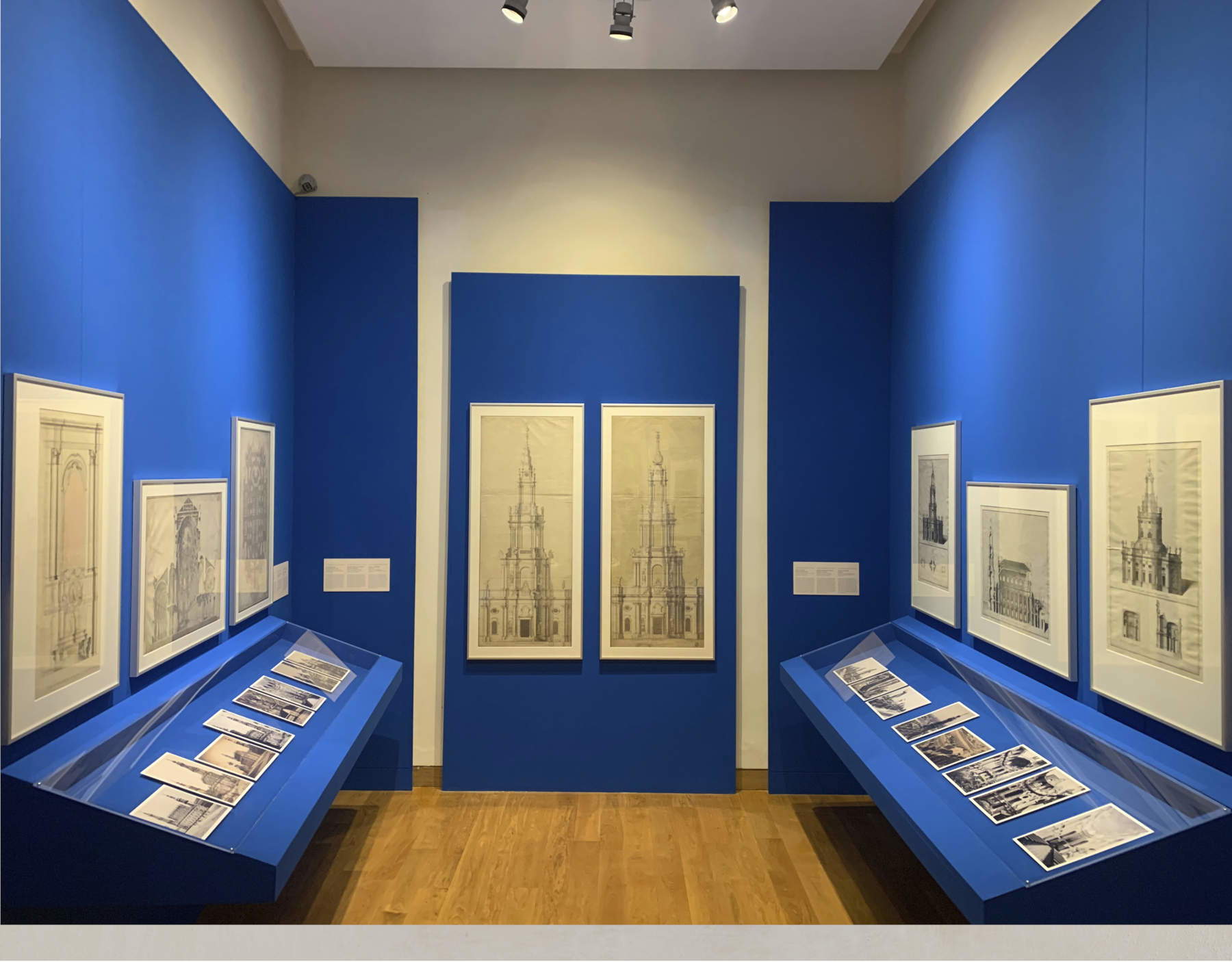
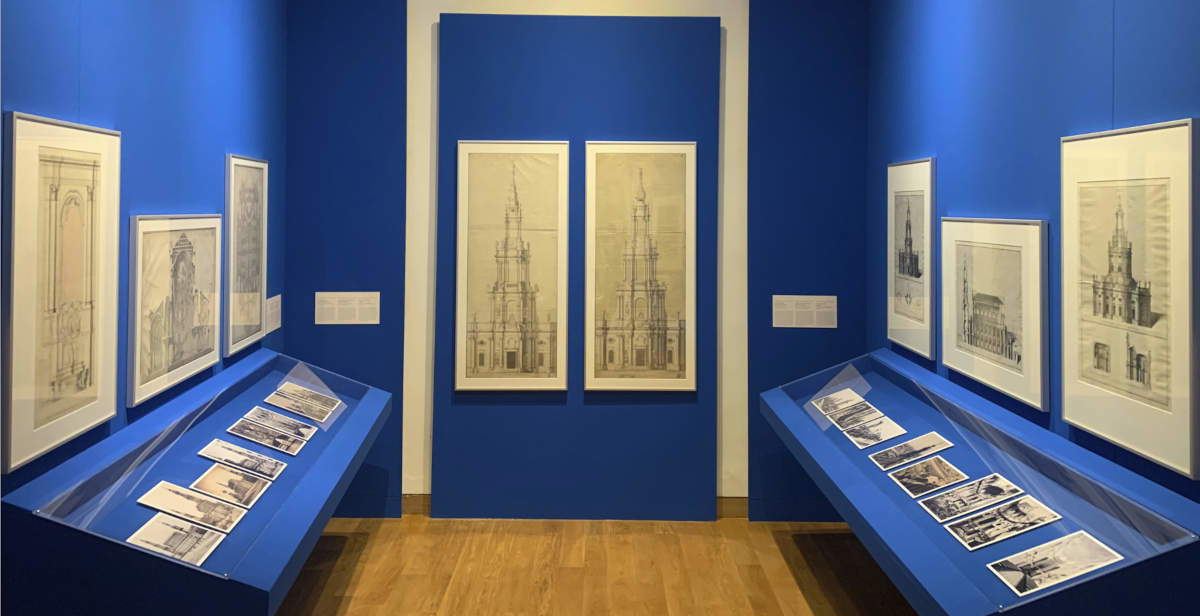
The exhibition is organized across four rooms. The first, titled “Rome as a Model,” provides context on the city of Dresden and presents six drawings depicting interior details of several Roman architectural sites: Sant’Ivo alla Sapienza, San Carlo alle Quattro Fontane, the Church of the Holy Trinity on the Hill, and Villa Albani. These are complemented by two large-scale drawings by the future chief architect of Saxony, Julius Heinrich Schwarze. During his stay in Rome, Schwarze copied Filippo Juvarra’s design for a domed church, later reworking it in Dresden as part of his own design for a religious building.
The second room is dedicated to the construction of the new Catholic court church in Dresden, designed and built by the Roman architect Gaetano Chiaveri. On display here are eight drawings by Chiaveri and other architects involved in the project. In the center of the room is also a colored drawing of the Altarof the Annunciation in the Church of St. Ignatius, created by the circle of Anton Raphael Mengs. The drawing was intended to serve as a model for an altar for Dresden.
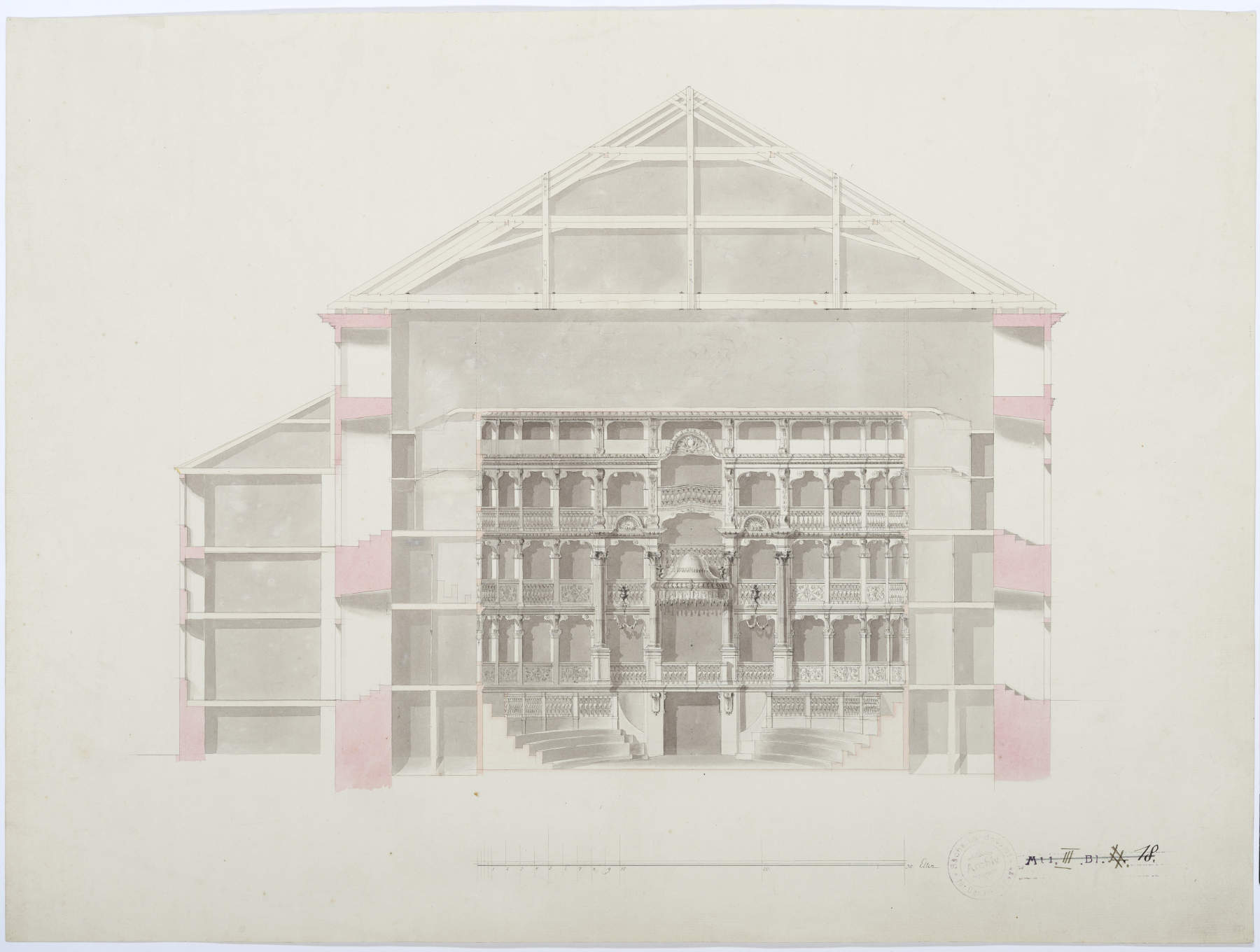
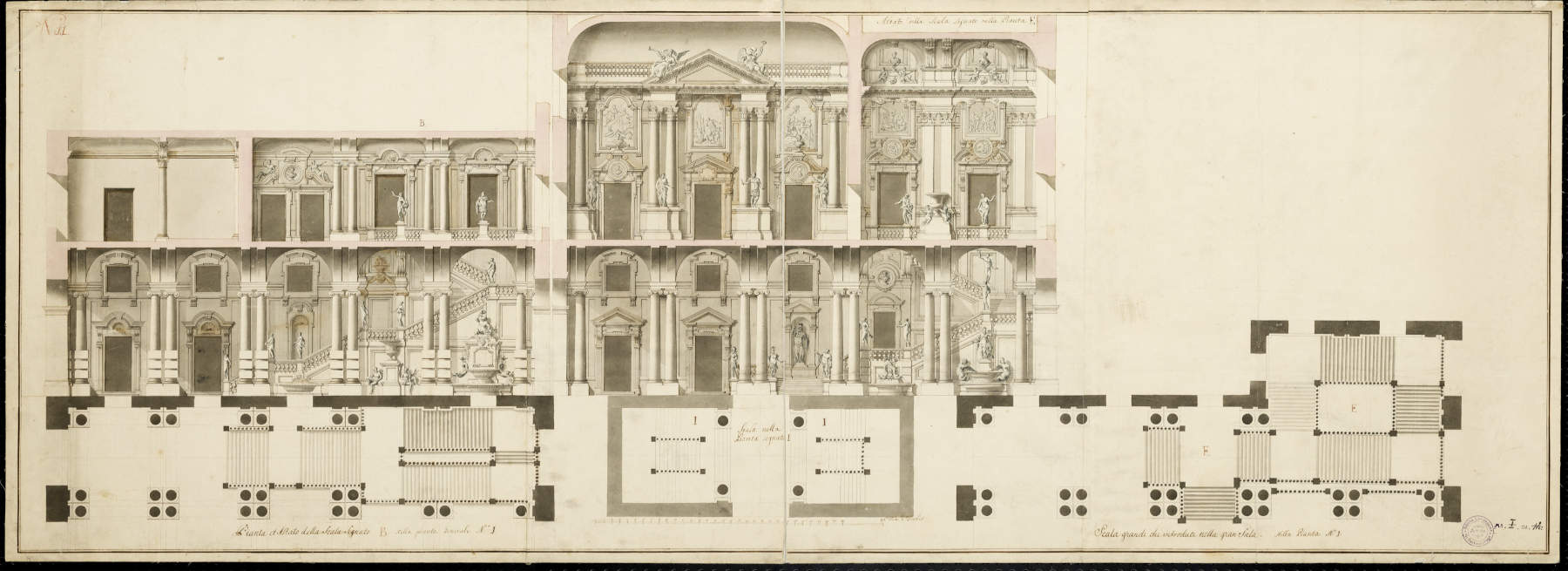
The third room is also dedicated to Gaetano Chiaveri. Ten drawings, some of which are particularly large in scale, document the designs developed for a new royal palace intended for the Elector of Saxony in Dresden.
The fourth and final room, “The Italians in Dresden,” broadens the focus from architects to the Italian artists and artisans summoned to the city to contribute to the construction of the buildings and their decorations. The twelve drawings on display document architectural and decorative designs, but also provide insights into the living conditions of the Italians in Dresden. Among the materials on display are Giuseppe Galli Bibiena’s designs for the decoration of the ceiling of the court’s Catholic church. Particular emphasis is also placed on a design by Giovanni Antonio Pellegrini for the painted decorations of the Zwinger in Dresden, considered the artist’s largest known drawing.
 |
| Italian Baroque in Dresden: 18th-Century Drawings Return to Rome After Three Centuries |

Warning: the translation into English of the original Italian article was created using automatic tools. We undertake to review all articles, but we do not guarantee the total absence of inaccuracies in the translation due to the program. You can find the original by clicking on the ITA button. If you find any mistake,please contact us.






















 IT
IT FR
FR DE
DE ES
ES CN
CN


