



by Redazione 24/10/2026


Categories: Exhibitions / Disclaimer
From November 12, 2026, to January 22, 2027, the Italian Cultural Institute in Paris will host an exhibition featuring approximately forty works by the Roman artist, curated by Antonio Calbi and Dominique Moulon, which explores human identity through photography, video, and installations.


What makes a face human in the age of artificial intelligence? This is the central question of *Magnifica Humanitas*, Matteo Basilé’s exhibition scheduled from November 12, 2026, to January 22, 2027, atthe Italian Cultural Institute in Paris, in theHôtel de Galliffet. Curated by Antonio Calbi and Dominique Moulon, the exhibition brings together approximately forty works, including photographic prints, video installations, a film, and an environmental installation. The opening, on Thursday, November 12, at 6:30 p.m., will be accompanied by a live musical performance by composer and producer Marco del Bene.

Born in Rome in 1974 and a descendant of the Cascella artistic family, Basilé has been photographing subjects and bodies that fall outside dominant aesthetic norms for thirty years. One of the first Italian artists to experiment, in the 1990s, with the fusion of film and pixels, he has developed a body of work presented at institutions such as the Venice Biennale, MACRO in Rome, MART in Rovereto, and the Milan Triennale, as well as at the Guardian Art Center in Beijing. Her series include *ThisHumanity*, *Mnemosyne*, *Floramagnifica*, and *Rerum Novarum*. She is represented by the Giampaolo Abbondio, Marcorossi Milano, and NM Contemporary Monaco galleries.


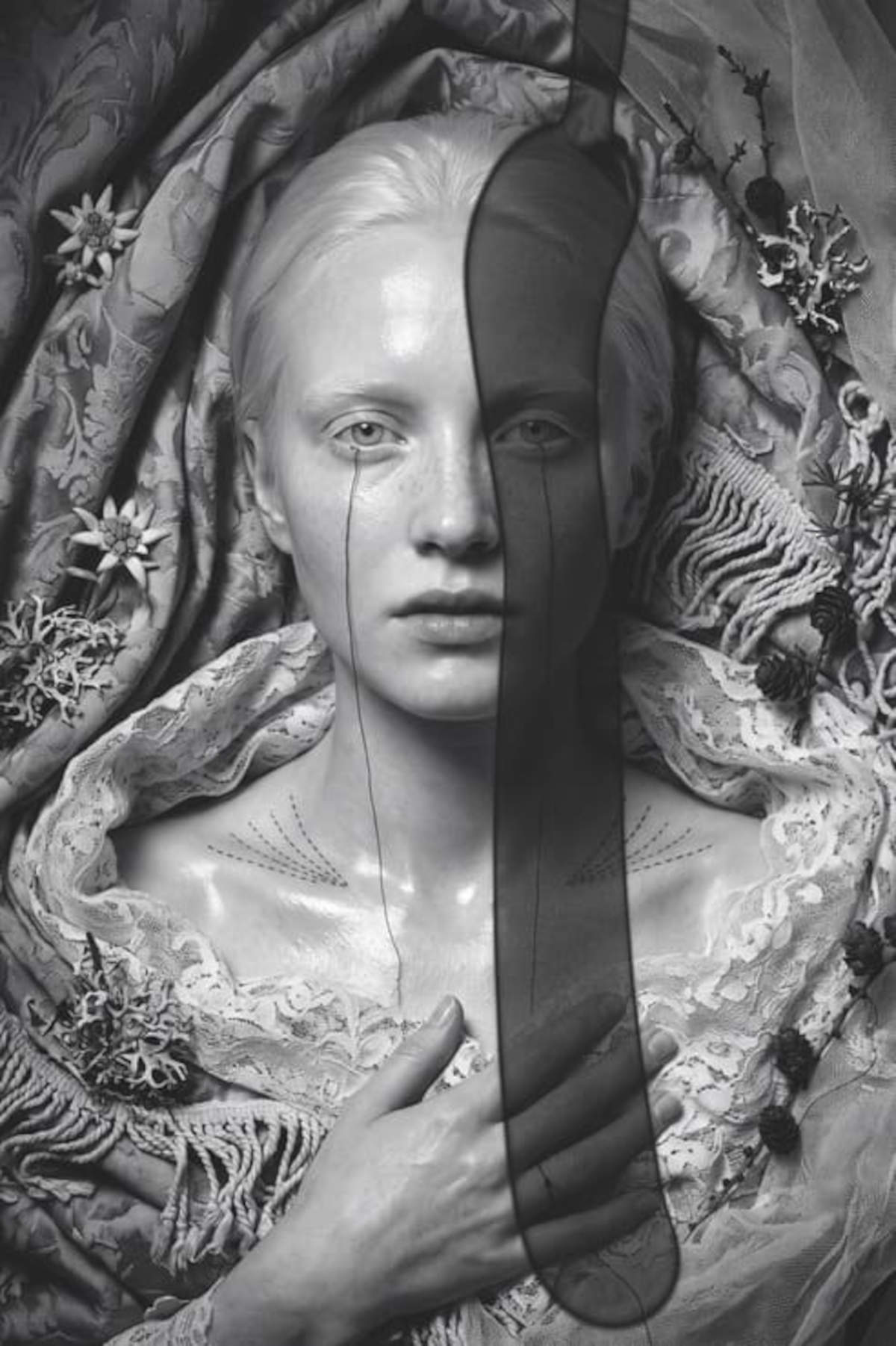
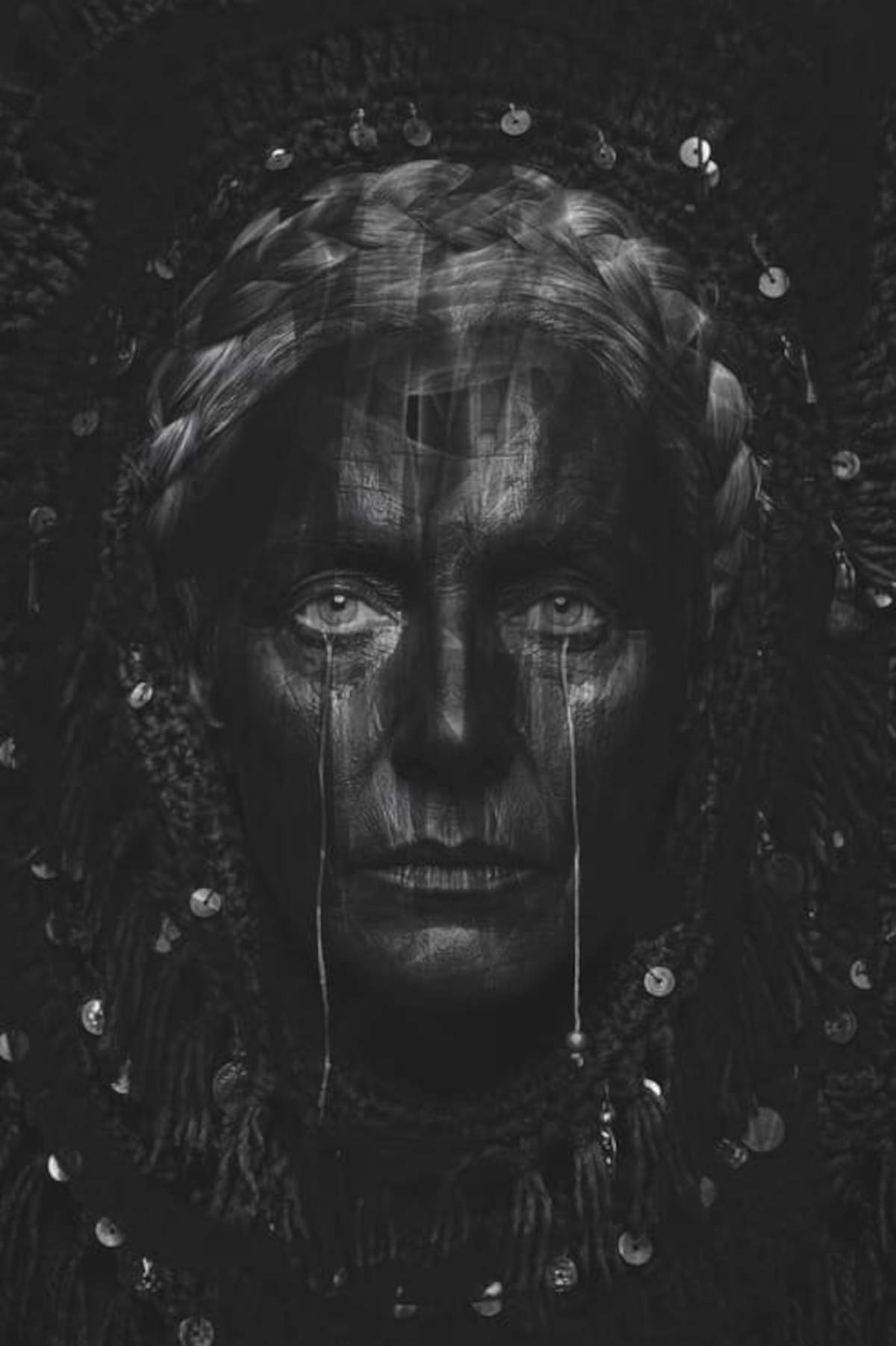
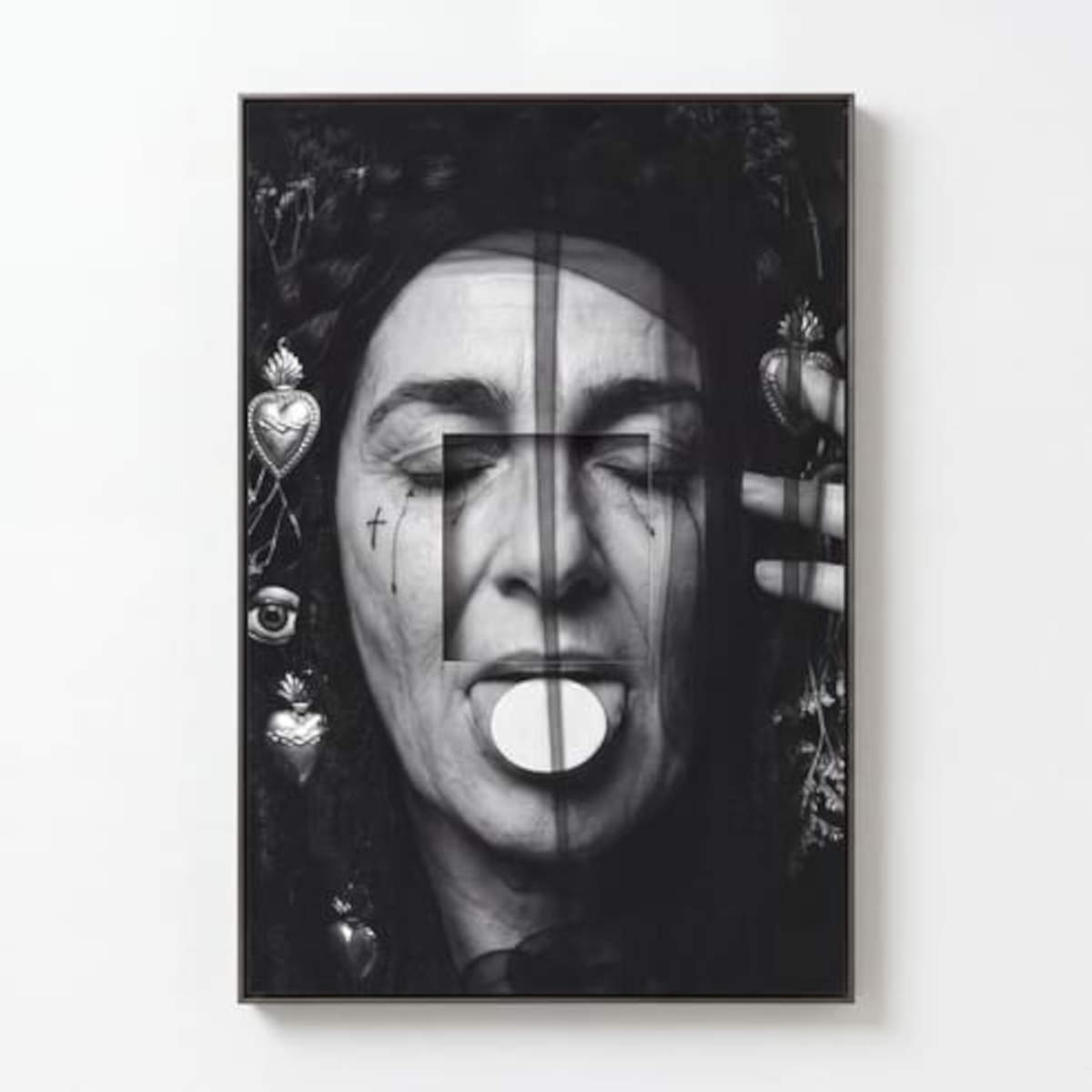
The Paris exhibition coincides with the bicentennial of photography and marks the artist’s return to black-and-white, which he uses here to explore memory and the human condition. The title echoes that of Leo XIV’s first encyclical, dedicated to the protection of the individual in the age of artificial intelligence, and connects to the Rerum Novarum tradition. Pores, wrinkles, and scars become central elements of a body of work that rejects the retouching of the signs of aging typical of commercial photography. Even the garments used in the portraits—sourced from Sartoria Farani and film archives associated with Pasolini and Fellini—bear traces of past lives.
The portraits are one-of-a-kind pieces, created using pigment and powder prints on cotton paper, hand-engraved and painted using smoke from the candles of Roman churches. Arranged on the shelves of the salons, they form a sort of continuous predella, populated by lay saints. The film *Magnifica Humanitas*, inspired by Dante’s *Trasumanar*, traverses in black and white a boundless land inhabited by the last of humanity, with references to Pasolini, neorealism, and *La Haine*. The music is composed by Marco del Bene, with whom Basilé has embarked on a collaboration dedicated to the intersection of image and sound.
In the final room, *Superstes* transforms a greenhouse into a glass chapel. A fern—which survived five mass extinctions and predates the appearance of flowers—transmits its electrical impulses to a screen positioned like an altar, where they materialize as a face. A robe remains on the ground, the last trace of human presence. All the works are phygital: by holding a device close, visitors can access a second level, invisible to the naked eye, following a principle reminiscent of altarpieces that open on feast days.
Marco del Bene’s opening performance will bring the dialogue between music and images to life, amplifying the immersive and multisensory dimension of the project. The catalog, published by Dario Cimorelli Editore, features texts by Antonio Calbi, Dominique Moulon, and Airona Altman.
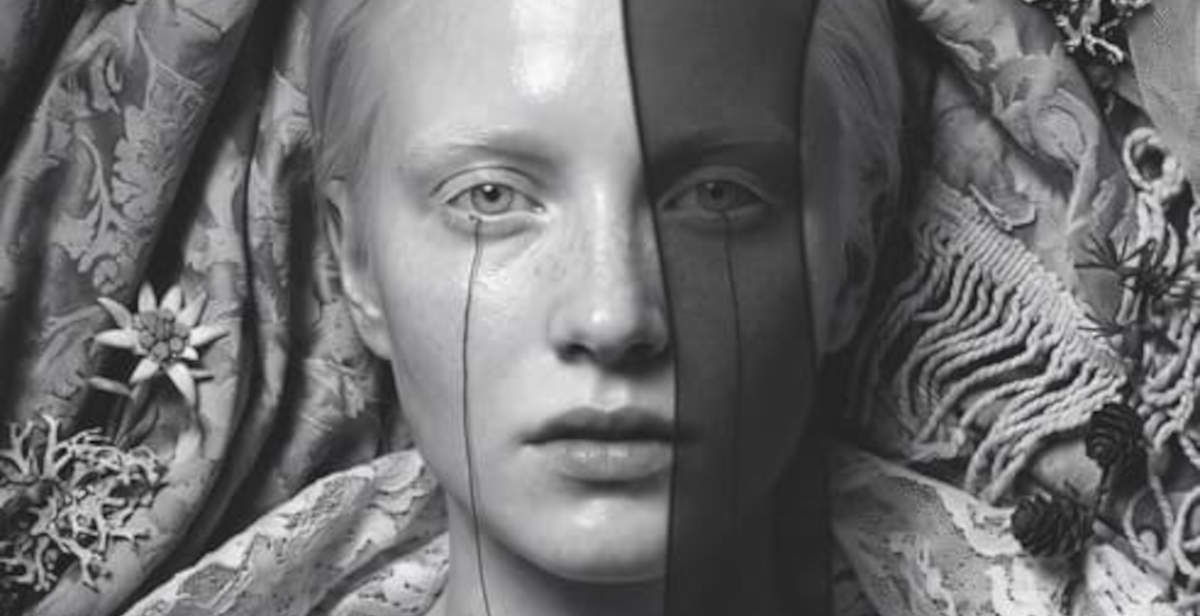 |
| Matteo Basilé in Paris with “Magnifica Humanitas”: Human Faces in the Age of Artificial Intelligence |
Warning: the translation into English of the original Italian article was created using automatic tools. We undertake to review all articles, but we do not guarantee the total absence of inaccuracies in the translation due to the program. You can find the original by clicking on the ITA button. If you find any mistake,please contact us.