





THE BANK ETS Foundation—Institute for Contemporary Painting Studies in Bassano del Grappa, in the province of Vicenza—presents *The Painter’s Craft*, an exhibition dedicated to Nebojša Despotović (Belgrade, Serbia, 1982) and curated by Cesare Biasini Selvaggi. The exhibition brings together over 40 works in various formats, created by the artist between 2013 and 2026, including numerous previously unseen pieces. The project is accompanied by a collateral section dedicated to six young artists fromAtelier F at the Academy of Fine Arts in Venice, where Despotović himself teaches Painting Techniques.
The exhibition focuses on the artistic journey Despotović has undertaken over the course of more than a decade, through a practice that views figurative painting as a tool for exploring identity, memory, and perception. The artist belongs to a generation that has helped bring figurative painting back to the forefront of contemporary Italian art, in a context where the relationship with the craft and with the essence of painting itself has once again become a subject of reflection and experimentation.
The large- and medium-format paintings featured in the exhibition are primarily executed in acrylic and oil on canvas, while the smaller works also incorporate wood engraving and carving, in addition to oil and encaustic. This variety of techniques accompanies a body of work that, over the years, has explored different subjects and thematic strands, while maintaining as a central element the relationship with the figure and the construction of the image.
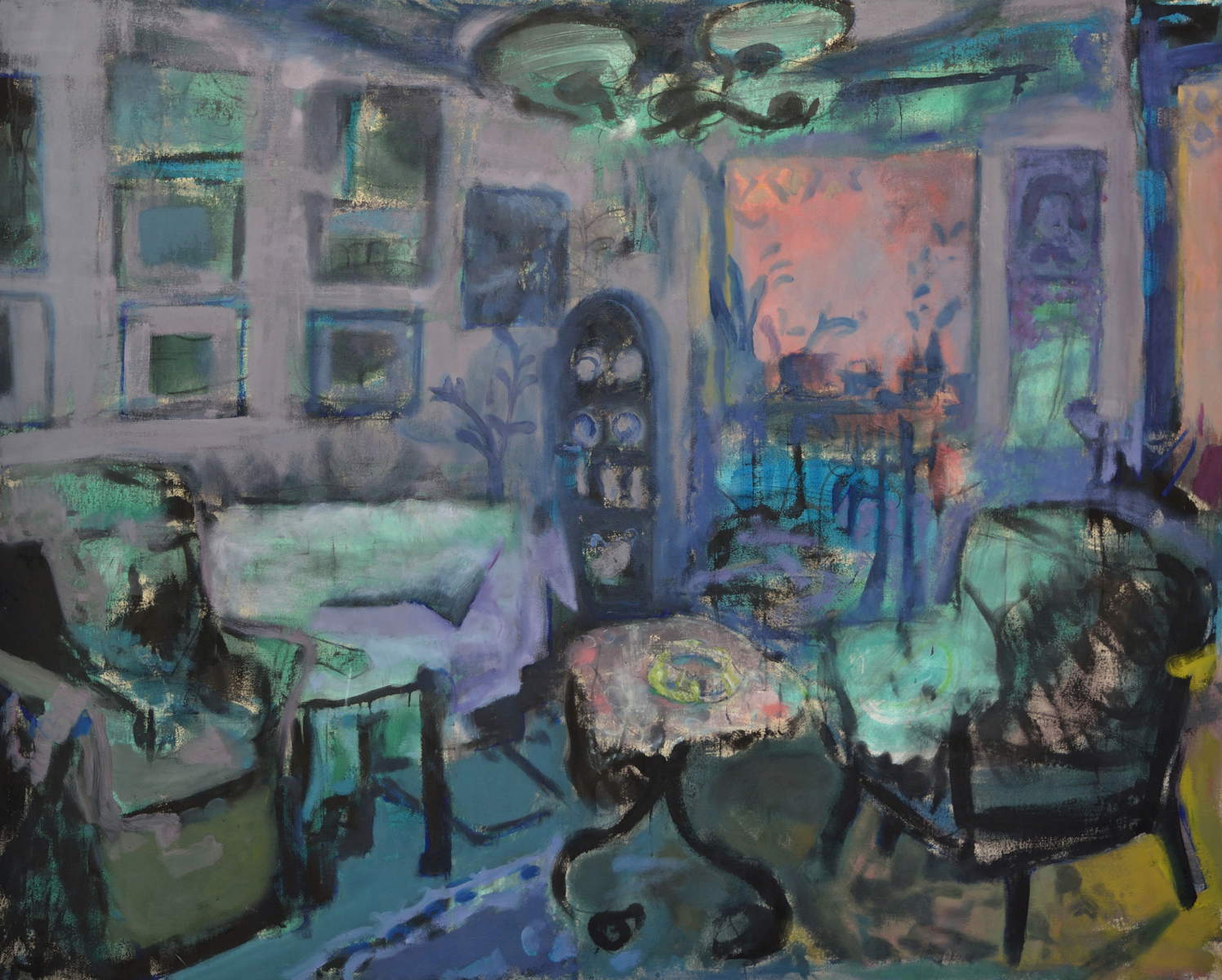
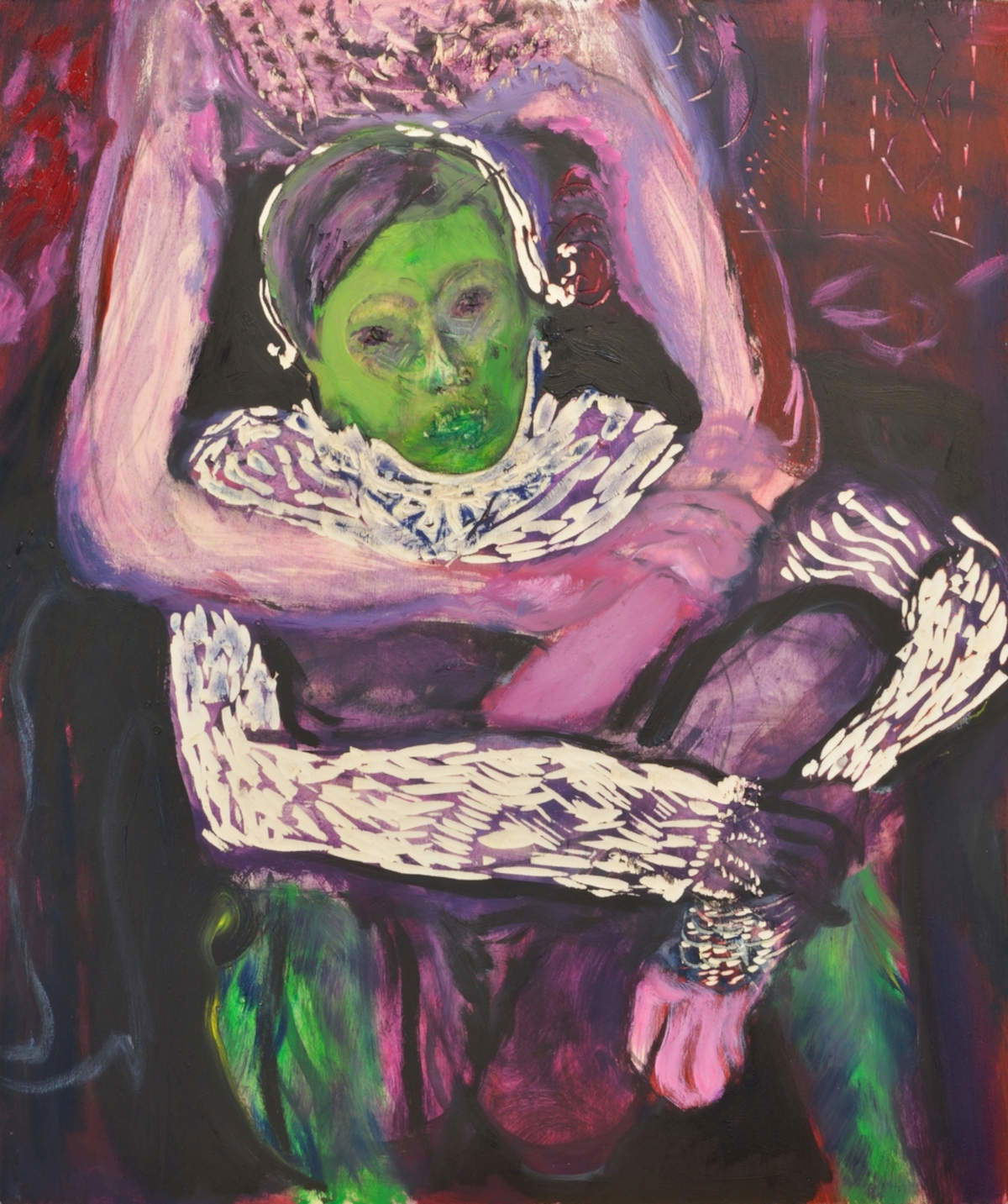
The exhibition is organized into three sections, each corresponding to a distinct phase of Despotović’s artistic exploration. The first is dedicated to a series of paintings centered on identity and constructed through an introspective narrative. In these works, the artist draws on cinema and the mass media to create theatrical settings featuring costumed figures. The characters seem to take on the role of performers in a broader representation, called upon to confront an existential dimension that is conveyed through the pictorial composition. Within this first group, light takes on a structural function. It is not merely an atmospheric element but plays a role in defining space, time, and the narrative.
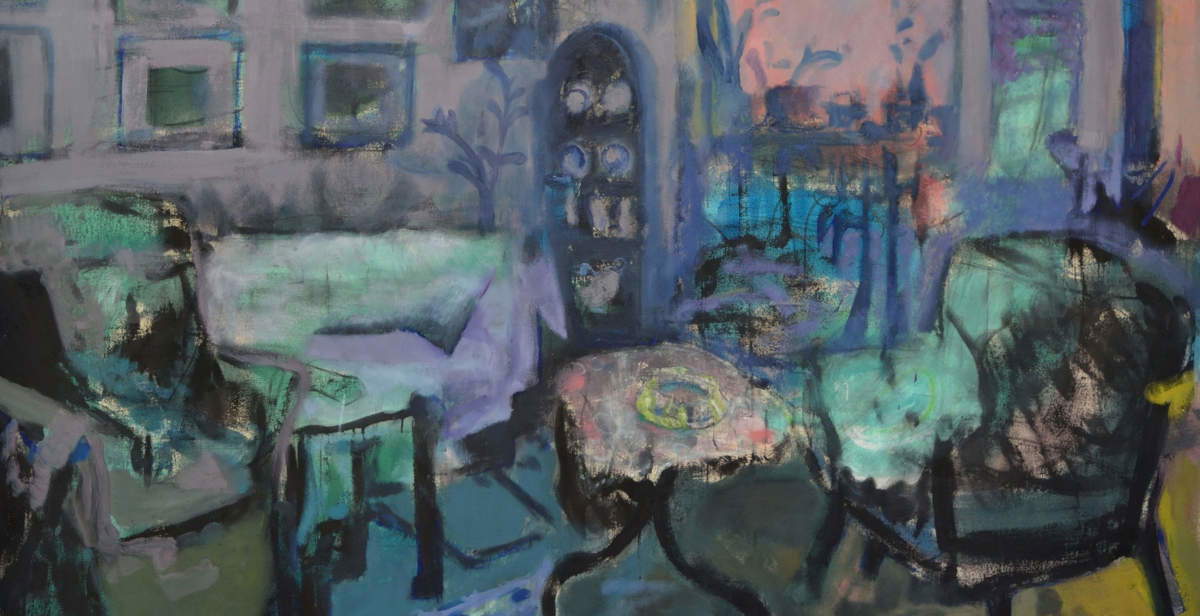
The second section, on the other hand, focuses on the artist’s family. The canvases depict his family members at different moments in their personal histories, placing them in everyday settings. The relationship with the private sphere thus becomes one of the elements through which the paintings address broader issues related to the human condition. Compared to the works in the first section, the chromatic composition also changes in this group. The light is cooler, and the palette is characterized primarily by shades of blue, with some touches of pink. These color choices help introduce a dimension of ambiguity and tension, through questions concerning life and death, fear, and desire. The paintings also reveal references to taboos and complex aspects of the human condition, addressed through the depiction of familiar, everyday situations.
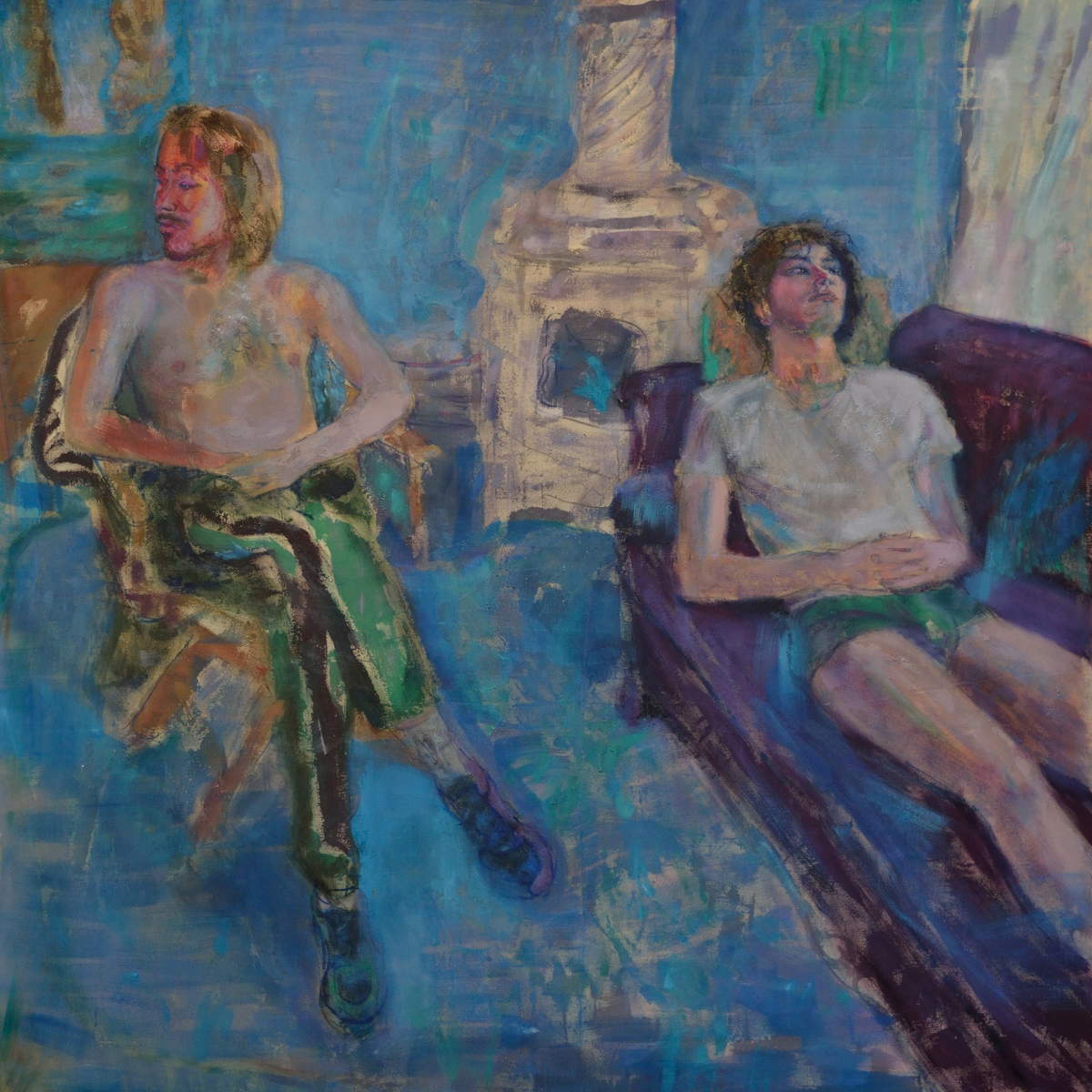
The third group consists of portraits of Despotović’s friends, particularly other artists. Here, the painting’s style shifts once again. The colors become more intense and saturated, while the gestural quality gradually gives way to a more sculpted, tactile, and textural rendering. The portrait is therefore not limited to rendering the subject’s physical features but becomes a means of establishing a relationship. In these works, the face and presence of the other serve as the starting point for an exploration of what the artist identifies in the person portrayed. The depiction of facial features thus yields some of its centrality to an exploration of the perception of the other, while maintaining painting as a tool through which to build a relationship between the artist, the subject, and the viewer.
Alongside the section dedicated to Despotović, the exhibition features a collateral section on the first floor of the building housing the Foundation, dedicated to six young artists from Atelier F of the Academy of Fine Arts in Venice. The museum is housed in the spaces of a former branch of the Banca Commerciale Italiana, and the section dedicated to the students is thus part of the same exhibition project, drawing parallels between the artist’s work and that of a new generation of painters. The six participating artists are Anna Furlan (Monfalcone, 1998), Giorgia Martinuzzi (Venice-Mestre, 2004), Elia Peruffo (Verona, 2002), Silvia Pezzi (Verona, 2004), Lorenzo Piazza (Desenzano del Grappa, 2003), and Isabella Ponte (Venice, 2003).
Atelier F was founded by Carlo Di Raco, who continues to serve as its director alongside Martino Scavezzon. For years, the studio has been a leading center for training and research in the field of contemporary painting. The connection to this exhibition holds special significance for Despotović’s own professional career, as he trained at the Atelier and now teaches Painting Techniques at the Academy of Fine Arts in Venice.
In fact, the artist maintains a constant relationship with Atelier F, combining his artistic practice with teaching and engaging in dialogue and exchange with students. The section dedicated to the six young artists thus forms part of the dialogue between his own artistic research and the educational context in which Despotović continues to work, highlighting the transmission of knowledge and practices related to contemporary painting.
The exhibition at THE BANK ETS Foundation thus comprises two distinct yet interconnected levels: on the one hand, a retrospective of Despotović’s career through works created between 2013 and 2026; on the other, the presentation of a selection of young artists from a training and research workshop where the painter himself studied and where he now teaches.
“The Painter’s Craft” will open on Saturday, November 21, 2026, at 6:00 p.m. A press preview is scheduled for 11:30 a.m. on the same day. The exhibition will remain open until February 28, 2027, and can be visited on Saturdays and Sundays from 4:00 p.m. to 7:00 p.m. It is also possible to visit the exhibition by appointment through the dedicated service on the Foundation’s website. Admission is free. The exhibition is presented with the support of Integra Business Consulting. The exhibition will be closed to the public from December 25, 2026, through January 8, 2027, inclusive.
“The exhibition project highlights painting as a critical tool for decoding the contemporary world, capable of stemming and slowing the uncontrolled flow of images that dominates the present,” write Cesare Biasini Selvaggi. “At the heart of the exhibition is a reaffirmation of painting that stands on its own primary elements—color, material, surface, gesture, and figurative structure—regardless of mere conceptual considerations or the depicted subject. Although they follow their own distinct expressive paths, these young artists share a fresh and unconventional approach to painting, distinguishing themselves through their highly personal reinterpretation of the figurative and constructive strategies of the image. Their work charts a possible trajectory for the painting of tomorrow, not only within the context of Atelier F but across the broader Italian art scene.”
“I strongly wanted this exhibition because Nebojša Despotović belongs to that rare category of painters who are viscerally obsessed with their own language,” states Antonio Menon, president of the THE BANK ETS Foundation. “The key to understanding it lies entirely in the exhibition’s title, *The Painter’s Craft*: his work is first and foremost an exploration of painting itself, and only through it, of the human being. Accepting Nebojša’s proposal to integrate the works of young artists from Atelier F of the Venice Academy of Fine Arts into the exhibition was a natural and enthusiastic decision: supporting the next generation is a fundamental part of our mission and is perfectly in line with what is happening in Venice. Despotović serves as a concrete role model for many young talents who see in him proof that a path of rigor is possible. Thanks to the work of Carlo Di Raco, Martino Scavezzon—and Nebojša’s own contribution—Venice has undoubtedly established itself as a true epicenter of emerging painting in Italy.”
 |
| Nebojša Despotović brings 40 works exploring the craft of painting to Bassano del Grappa |

Warning: the translation into English of the original Italian article was created using automatic tools. We undertake to review all articles, but we do not guarantee the total absence of inaccuracies in the translation due to the program. You can find the original by clicking on the ITA button. If you find any mistake,please contact us.
























 IT
IT FR
FR DE
DE ES
ES CN
CN


