



by Redazione 13/11/2026


Categories: Exhibitions / Disclaimer
Starting November 13, 2026, the MAXXI in Rome will present three new exhibition projects dedicated to Shirin Neshat, Gordon Matta-Clark, and Nanda Lanfranco. These three exhibitions explore photography, film, architectural experimentation, and the history of contemporary art.


On November 13, 2026, Rome’s MAXXI will open three new exhibitions that explore some of the most significant issues in contemporary art: from identity and social control to the transformation of urban spaces, and the visual memory of artistic experiences from the second half of the 20th century. The featured artists are Shirin Neshat, with *Do U Dare!*; Gordon Matta-Clark, the subject of a major retrospective; and photographer Nanda Lanfranco, to whom the special focus *Ordering the World: The Nanda Lanfranco Archive* is dedicated.


Shirin Neshat. Do U Dare!: Identity, Solitude, and Power in the Digital Age
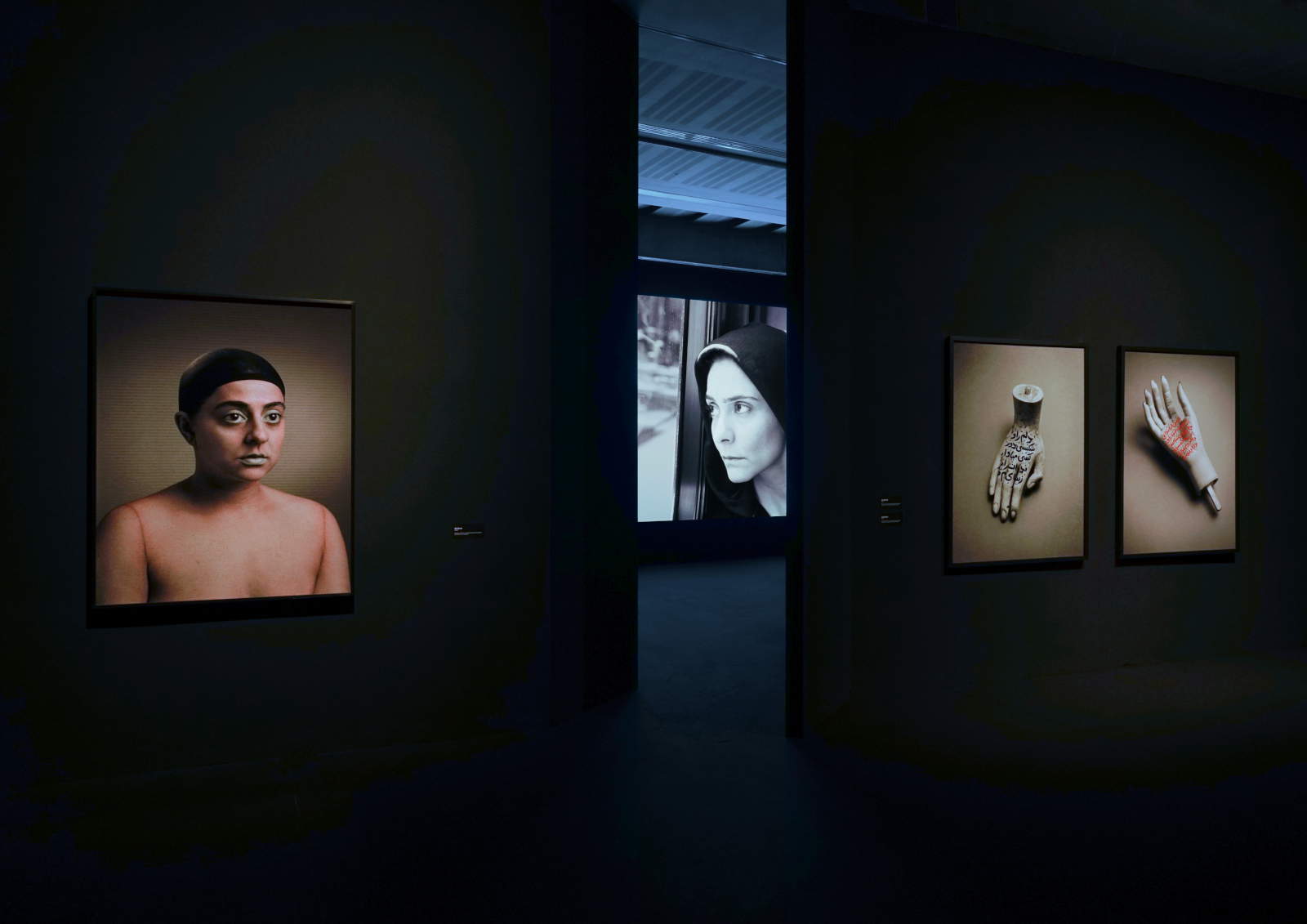
From November 13, 2026, to January 10, 2027, MAXXI will host “Shirin Neshat. Do U Dare!”, an exhibition that takes the public into the visual and psychological universe of the Iranian artist, one of the most recognized figures on the international scene. The project, curated by Bartolomeo Pietromarchi with Anne Palopoli as associate curator, brings together a film trilogy and a series of photographs created between 2025 and 2026.


At the heart of this exploration are several fundamental themes in Neshat’s work: exile, the condition of women, the relationship between the individual and power, the construction of identity, and the tensions between East and West. “Do U Dare!” is inspired by the story of Nasim Najafi Aghdam, an Iranian woman from the Bahá’í community who emigrated to the United States to escape religious persecution. In her new country, Nasim found a way to express herself, achieve economic independence, and gain recognition through creating YouTube videos. Through performance, music, dance, and content dedicated to animal rights, she developed a personal and distinctive digital presence. Her relationship with the platform, however, had gradually deteriorated, culminating in the tragic incident of 2018: she opened fire at YouTube’s California headquarters, wounding three people, before taking her own life.

Neshat does not merely recount the news story but uses it as a starting point to reflect on forms of loneliness and marginalization, the desire for belonging, and the systems of control in contemporary society, while also addressing the growing spread of authoritarianism in the United States. The individual story thus becomes the starting point for examining a collective condition, through a narrative that intertwines realism and dreamlike visions.
The trilogy is divided into three chapters set in the New York metropolitan area, each linked to a different dimension of the relationship between the individual and society. In *Wall Street*, the protagonist moves through the heart of American economic power, amid the skyscrapers and monumental architecture of Manhattan. Here she confronts a system that seems to ignore her, eventually finding herself caught up in a theatrical and surreal performance in which she simultaneously assumes the roles of spectator and protagonist. The image becomes a tool for claiming visibility and challenging the dynamics of power.
The second film, *Brooklyn*, takes place in a neighborhood marked by precariousness and marginalization, accentuated by the choice of black-and-white cinematography. The protagonist observes a reality to which she appears alien, initially maintaining a detached stance. Later, the narrative shifts to a setting where an American politician spouts slogans that stand in stark contrast to his surroundings. The turning point comes when the woman enters a wig shop: the shift to color and the disguise—which transforms her into a sort of Wonder Woman—suggest the emergence of a new awareness and the overcoming of a state of apparent passivity.
With *Suburb*, the story moves to the American residential suburbs, amid well-kept homes, gardens, and symbols of a prosperity that conceals contradictions. In a house filled with wigs, mannequins, clothes, and props, the protagonist undergoes constant transformations. The domestic environment becomes both a set and a laboratory of image, where the boundary between authentic identity and representation grows increasingly blurred.
The three episodes form a single narrative, in which the female body asserts itself as a space of transformation and resistance, but also of confrontation with structures of power. The transition from black-and-white to color accompanies this evolution, introducing an emotional and symbolic dimension.
Alongside the films, the exhibition features a series of photographs in which human figures take on the appearance of fragile porcelain dolls. Faces, hands, and torsos are transformed into almost ghostly presences, inviting reflection on the influence of social media in the construction of identities. Through references to surrealist photography, Neshat renders the familiar alien and raises a question: how much room remains for individual autonomy in a society that tends to standardize people and marginalize those who do not conform? The poetic excerpts by Forugh Farrokhzad that accompany the images add a further, intensely lyrical dimension to the exhibition.
On the occasion of the opening, Friday, November 13, 2026, at 6:00 p.m., Shirin Neshat will meet with the MAXXI audience as part of the “Conversazioni d’autore” series. In conversation with art historian Maria Alicata, the artist will explore the theme of human fragility in the age of hyperconnected solitude, focusing on the relationships between identity, digital appearance, and alienation. The event will be held in English with simultaneous translation, and admission is free while seats last.
Gordon Matta-Clark. Not the Work… The Worker: Architecture Becomes Art and Collective Space
From November 13, 2026, to February 28, 2027, MAXXI is dedicating a major exhibition to Gordon Matta-Clark (New York, 1943–1978), an American artist who, in the 1970s, revolutionized the way architecture was conceived, transforming it into a tool for artistic, political, and social experimentation. Gordon Matta-Clark. Not the Work… The Worker, curated by Jessamyn Fiore and Francesco Stocchi, brings together sculptures, photographs, films, drawings, and spatial interventions, with a particular focus on the Italian experiences that played a decisive role in the development of his work.
Trained as an architect, Matta-Clark chose to use art to challenge the conventions of building construction and, more broadly, the way people inhabit and share spaces. In his famous “building cuts,” the artist intervened on buildings slated for demolition, making cuts and openings that introduced new perspectives, let in light, and altered the perception of the spaces. His goal was not simply to destroy, but to rethink the relationship between architecture and communal life.
The exhibition also stems from collaboration with an international scientific committee composed of artists, architects, and scholars: Laurie Anderson, Martien De Vletter, Elizabeth Diller, Julien Fronsacq, Lorenzo Fusi, Francesco Garutti, Alfredo Jaar, Joan Jonas, Noah Khoshbin, Sylvia Lavin, Camila Mancilla Vera, Azikiwe Mohammed, and Sokio.
The exhibition itinerary traces the stages of the artist’s exploration, from his early experiments carried out between 1970 and 1974 to his larger-scale architectural interventions. Among the most important works is *Open House* (1972), presented for the first time in Italy. Starting with an industrial waste collection container, Matta-Clark transforms it into a navigable environment by incorporating doors, walls, and recycled materials. The interior is divided into small spaces and corridors, giving rise to an alternative architecture that challenges traditional models of living. At MAXXI, the work enters into a dialogue with the fluid forms of the building designed by Zaha Hadid and invites visitors to directly experience the transformation of space.
The area of Gallery 4 surrounding *Open House* will also be conceived as a space for gathering and participation, designed to host performances, music, events, workshops, and opportunities for discussion on the connections between art, architecture, the city, and the community.
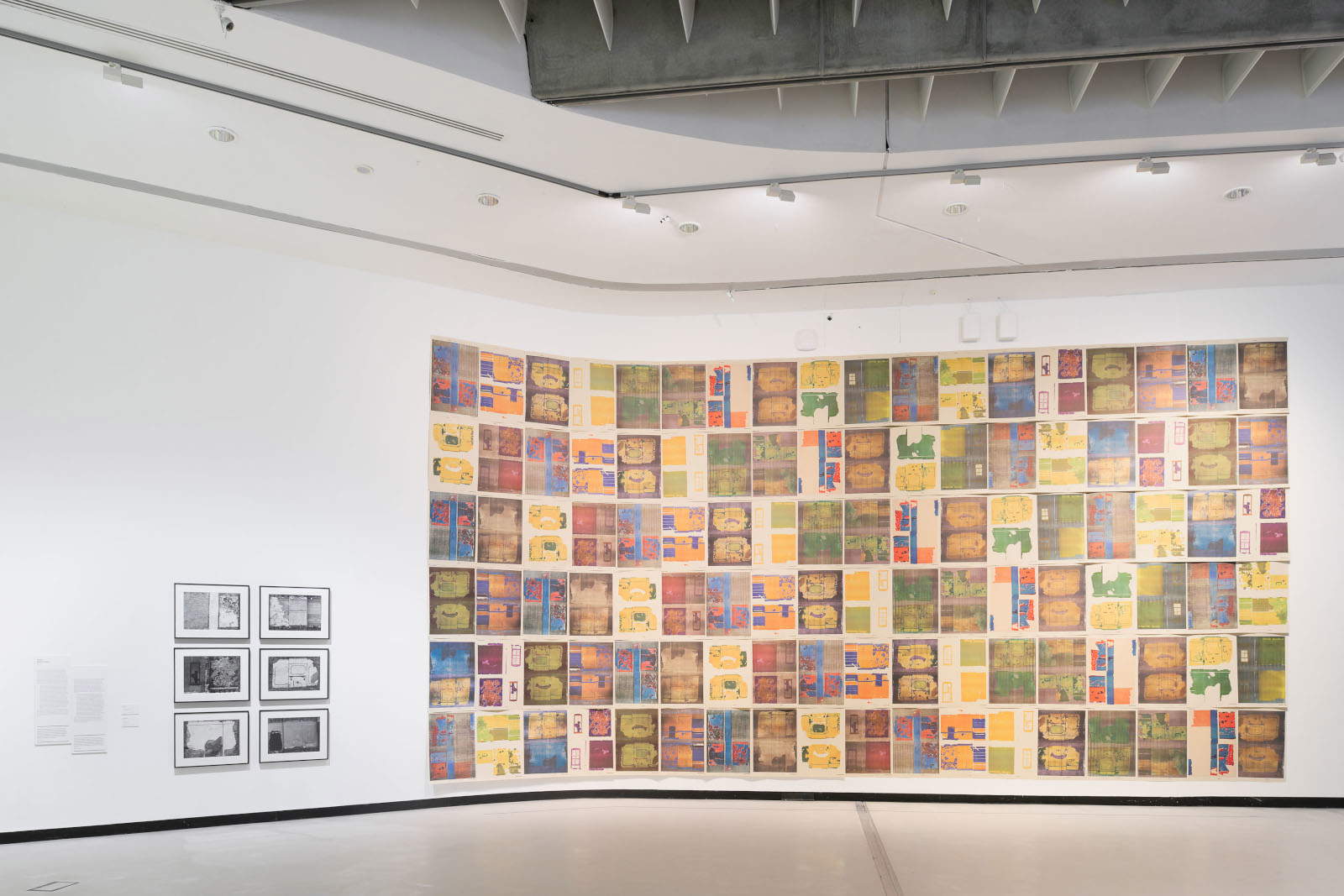
Another significant body of work is *Graffiti Photoglyphs* (1973), the result of an extensive photographic campaign conducted in the South Bronx and Harlem to document the spread of graffiti as a new form of artistic expression. Matta-Clark took over two thousand photographs of subway cars covered in writing and drawings, which he later reworked into large-format photographic compositions and enhanced with colored paint.
Also from this period are *Bronx Floors* and *Walls Papers* (both from 1972), created inside abandoned residential buildings in the South Bronx. By removing sections of floors and walls, the artist creates connections between previously separate spaces and draws attention to the consequences of urban abandonment, questioning the social function of architecture.
Particular attention is given to his stays in Italy, which were fundamental to the evolution of his artistic language. In Milan, in 1973, Matta-Clark created *Infraform*, intervening on a disused industrial building by making geometric incisions on the walls and corners. The cuts open up new perspectives and alter the perception of space. MAXXI presents a reconstruction of the work, offering the public the opportunity to experience the principle underlying the intervention.
Also in 1973, in Genoa, the artist created *A W-Hole House*, a work that marked his first intervention on an entire building slated for demolition. Also linked to his research on architectural cuts are the Cut Drawings, three-dimensional works created by cutting through several layers of paper and cardboard, in which the geometries of the interventions on the buildings are translated into sculptural forms.
His engagement with the Italian context continued in 1975 with *Arc de Triomphe for Workers*, a project conceived for an industrial complex in Sesto San Giovanni occupied by a group of young communists. This experience struck Matta-Clark because of the workers’ ability to engage the community and led him to further explore the collective and political value of architecture. This reflection also gave rise to *A Resource Center and Environmental Youth Program for Loisaida*, an unrealized project that was intended to involve artists and citizens in the rehabilitation of abandoned buildings in New York.
The artist’s exploration then reached a monumental scale with some of his most famous works. In *Splitting* (1974), a house in New Jersey is bisected by a deep vertical cut; in *Day’s End* (1975), an abandoned pier in New York is transformed into a space open to light and the community. This was followed by *Conical Intersect* (1975), characterized by a large conical opening created in two buildings slated for demolition, next to the future Centre Pompidou in Paris, and *Circus (Caribbean Orange) (1978), the artist’s last major project, in which a Chicago building is transformed through a series of circular and spherical cuts.
Experimental film, an integral part of Matta-Clark’s practice, features prominently in the exhibition. In addition to screenings distributed throughout the exhibition, a dedicated room allows visitors to explore the relationship between moving images, architecture, and performance.
The exhibition is accompanied by a Skira catalog, edited by Jessamyn Fiore and Francesco Stocchi, which features interviews with members of the curatorial committee, images of the works on display, and archival photographs of the artist’s interventions. The result is a nuanced interpretation of his body of work, enriched by contributions from scholars and friends who knew his work intimately.
Ordering the World. The Nanda Lanfranco Archive: Photography as a Narrative of Contemporary Art
From November 13, 2026, to February 28, 2027, MAXXI will also present “Organizing the World: The Nanda Lanfranco Archive, ” a project curated by Lara Conte that brings renewed attention to the work of the Ligurian photographer and her significant documentary legacy. In 2024, at the request of her heirs, the entire archive was loaned to the Museum, which now showcases its richness through a thematic and chronological exhibition. The initiative also involves the MLAC —the Museum and Laboratory of Contemporary Art at Sapienza University of Rome—where, from March 4 to April 8, 2027, an in-depth exhibition will be presented dedicated to the body and performance art, two central areas of Lanfranco’s work, both in her photographic documentation and in her artistic production.
While remaining out of the spotlight, the photographer has followed and documented some of the most important developments in Italian and international contemporary art, building an archive that today stands as a valuable record of the cultural and artistic transformations of the second half of the 20th century.
The exhibition begins in 1970s Genoa, a city particularly vibrant in terms of artistic experimentation. Her encounter with Germano Celant and her collaboration—which began in 1977—with Ida Gianelli’s Samangallery marked her entry into the world of contemporary art. Through photographs and documents, the experiences of artists such as André Cadere, Rebecca Horn, Daniel Buren, Maria Nordman, and Giuseppe Penone come to light, along with his subsequent collaborations with the Locus Solus gallery.
Among Lanfranco’s most significant interests are performance art, the body, and women’s artistic practice. In 1975, she photographed *Duets on Ice* in Genoa, Laurie Anderson’s first performance in Italy; the following year, she documented *Relation in Space* by Marina Abramović and Ulay at the Venice Biennale. Her images do not merely record the works but capture gestures, relationships, and creative processes, offering a close-up view of the artistic experience.
Beginning in the 1980s, and in part through her long-standing collaboration with *Il Giornale dell’Arte*, Lanfranco covered major international events, from the Venice Biennale to Documenta in Kassel. She also documented the Arte Povera movement, the activities at the Castello di Rivoli, and major curatorial projects by Germano Celant, including *Identité Italienne*, presented at the Centre Pompidou in Paris in 1981.
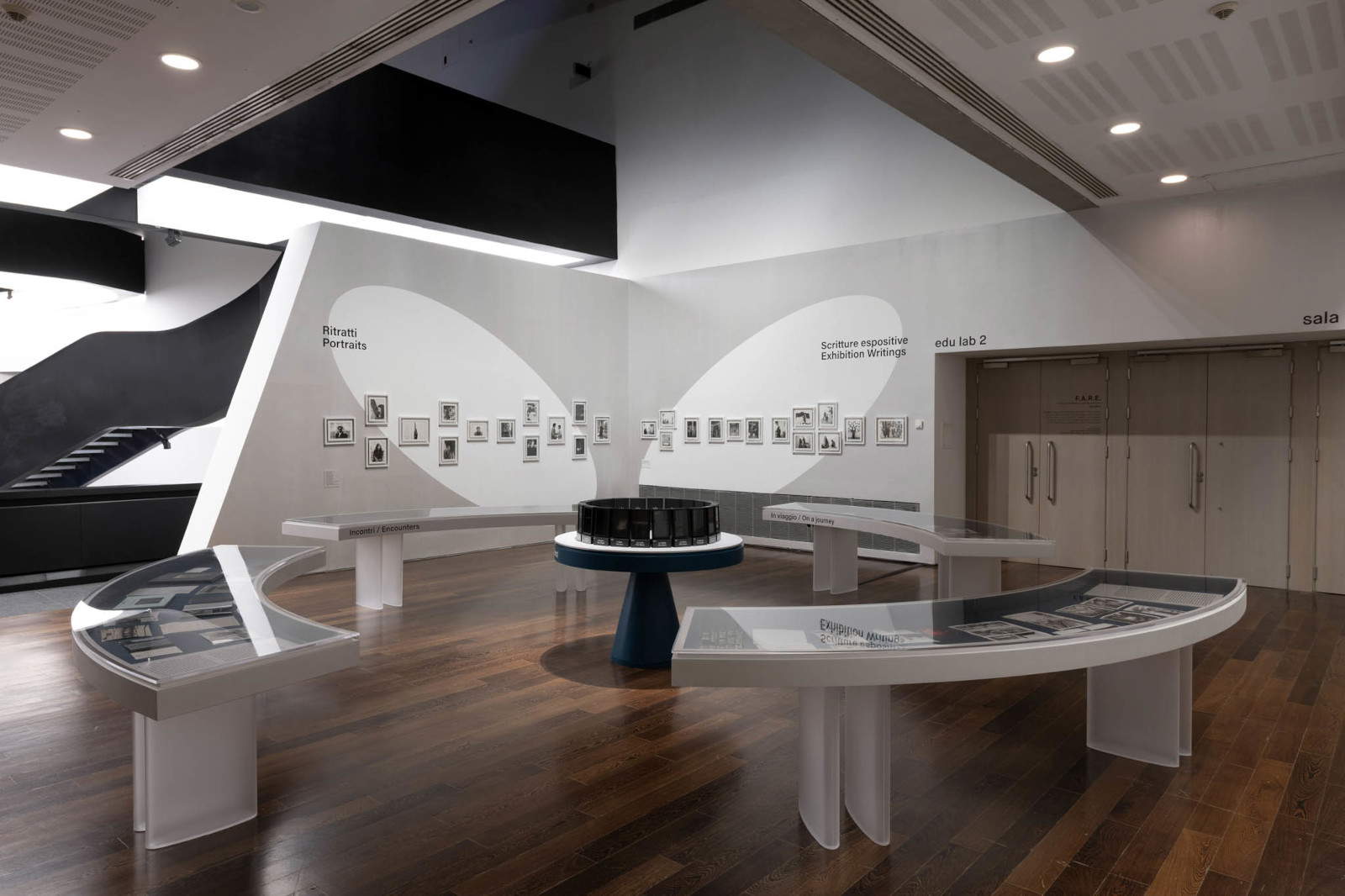
Alongside her documentary work, the photographer developed a personal body of work characterized by the use of black-and-white, the square format, and a preference for the Hasselblad camera. At the heart of her images are the body of the sculpture, still life, and portraiture.
Among the most interesting series presented at MAXXI is the cycle dedicated to the Tarot, in which Lanfranco reinterprets the Major and Minor Arcana through compositions rich in symbols, duplications, and visual correspondences. The photographs construct a universe suspended between reality and imagination, open to multiple interpretations. This same concept permeates the entire archive, whose organization does not take the form of a rigid, linear, or hierarchical structure. On the contrary, it becomes a dynamic and generative space in which images can interact, suggest new connections, and give rise to ever-changing interpretations.
“The projects we are inaugurating today perfectly embody MAXXI’s vision: a museum open to dialogue between artistic languages, capable of welcoming diverse artistic perspectives and experiences within its spaces,” stated Maria Emanuela Bruni, President of the MAXXI Foundation. “Today, MAXXI is not only opening three exhibitions, but also opening its doors to three ways of inhabiting the world: through a critical gaze on architecture and work; through the power of images and the responsibility of memory; and through the patient care with which an archive can restore order, meaning, and a future to the past.”
|
| Shirin Neshat, Gordon Matta-Clark, and Nanda Lanfranco: Three New Exhibitions at MAXXI in Rome |
Warning: the translation into English of the original Italian article was created using automatic tools. We undertake to review all articles, but we do not guarantee the total absence of inaccuracies in the translation due to the program. You can find the original by clicking on the ITA button. If you find any mistake,please contact us.