





What if we could explore the 19th century not by following artistic schools, styles, or nationalities, but simply by following the passing of the hours? This is the idea behind *Un Capolavoro di Giornata*. From dawn to dusk in the 19th century. A Journey Through Painted Time, the exhibition curated by Francesca Sinigaglia, director of the Museo Ottocento Bologna, and produced by Vertigo Syndrome, will be open to the public from October 3, 2026, to January 17, 2027.
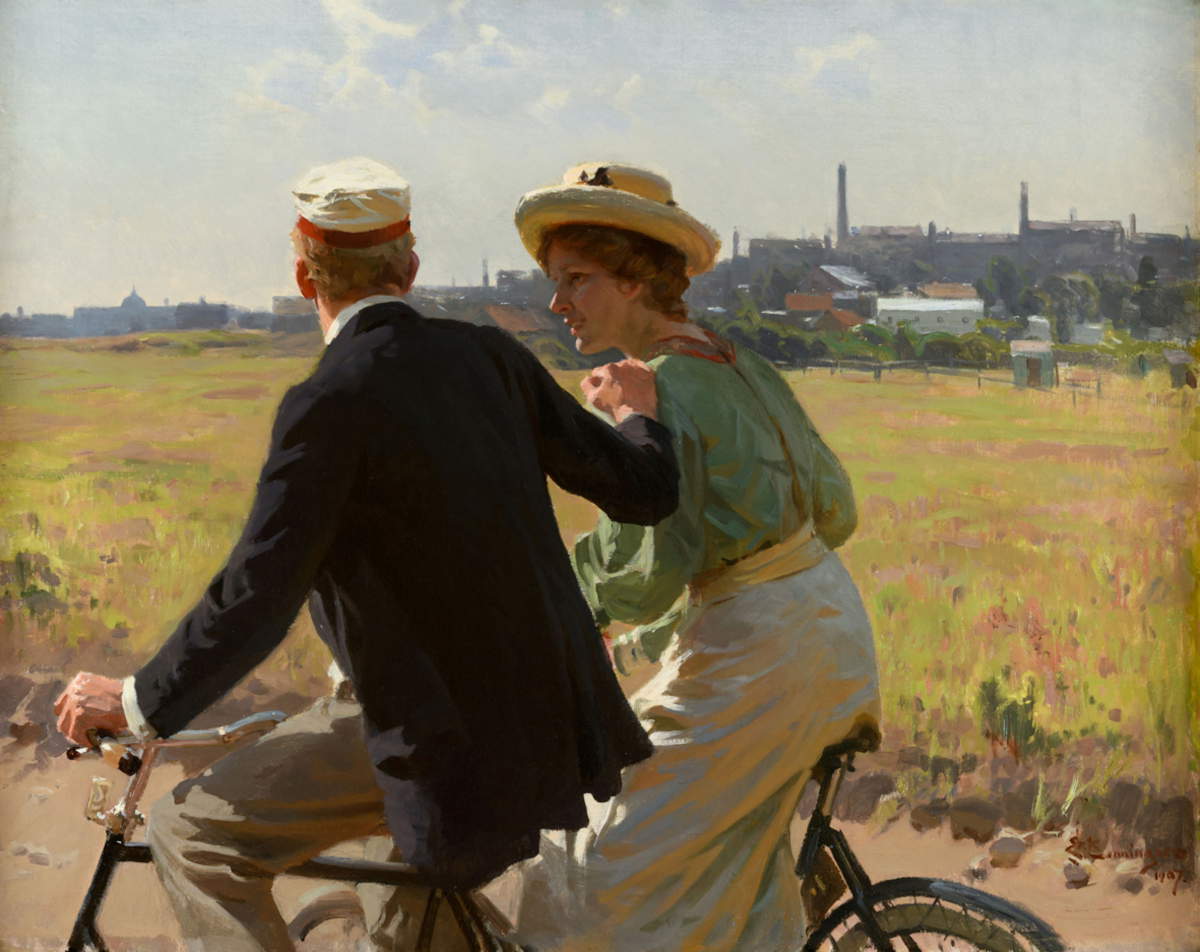
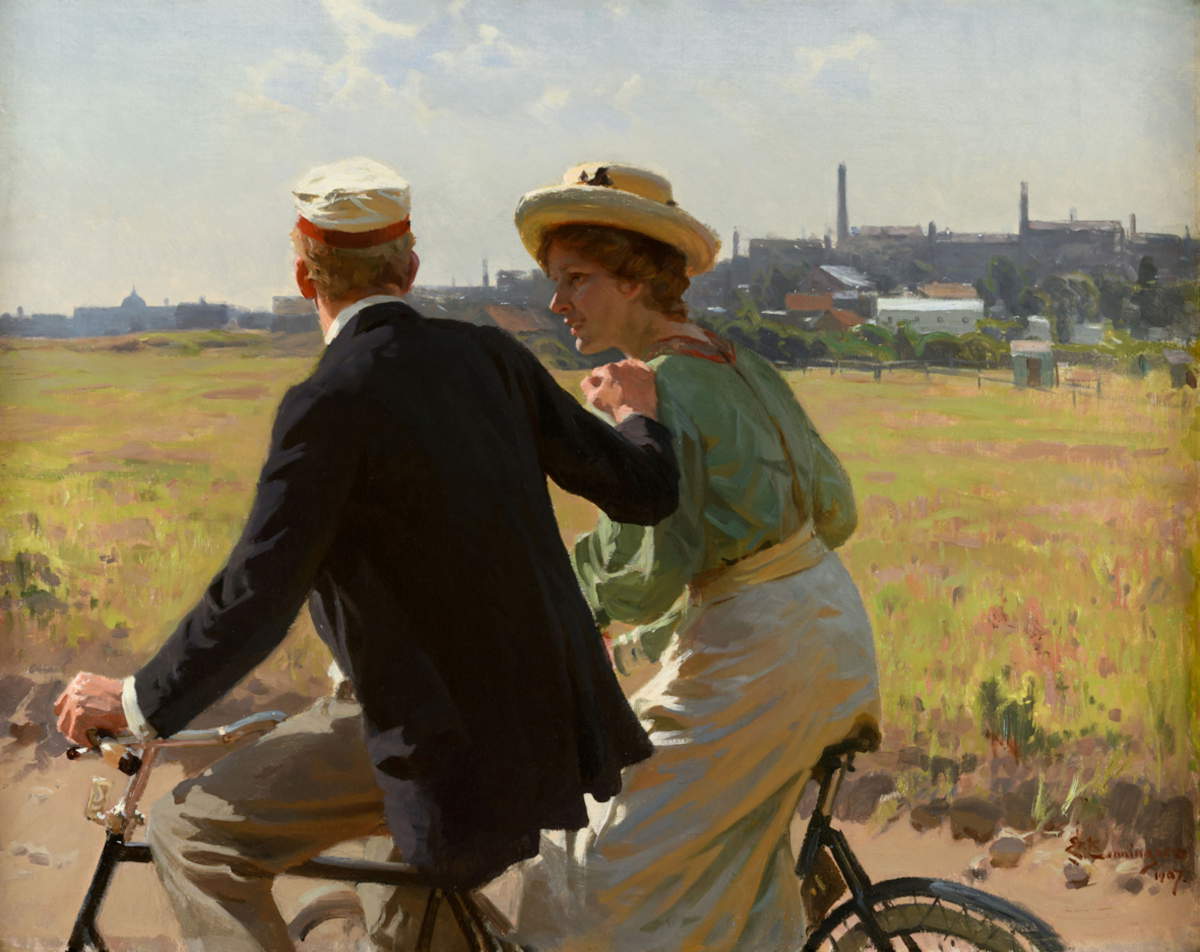
The exhibition brings together over one hundred 19th-century European paintings at Palazzo Pallavicini in Bologna and arranges them according to an unusual criterion: not chronology, not artistic movements, but the time of day. The galleries trace the twenty-four-hour cycle through twelve sections, each lasting two hours, guiding visitors from the first light of dawn through to nightfall. The result is a narrative of an entire day in the 19th century, depicted through landscapes, domestic scenes, moments of work, urban life, and nocturnal atmospheres. The idea stems from the transformation in the relationship with time that took place in the nineteenth century. The hours of the day are no longer merely the backdrop for depictions but become a true subject of painting. It is the century in which artists increasingly abandoned the grand themes of history and mythology to observe everyday reality. They left their studios, painted outdoors, and engaged with natural light, atmospheric changes, and the ordinary gestures of life: breakfast, work in the fields, the bustle of cities, and the return home.
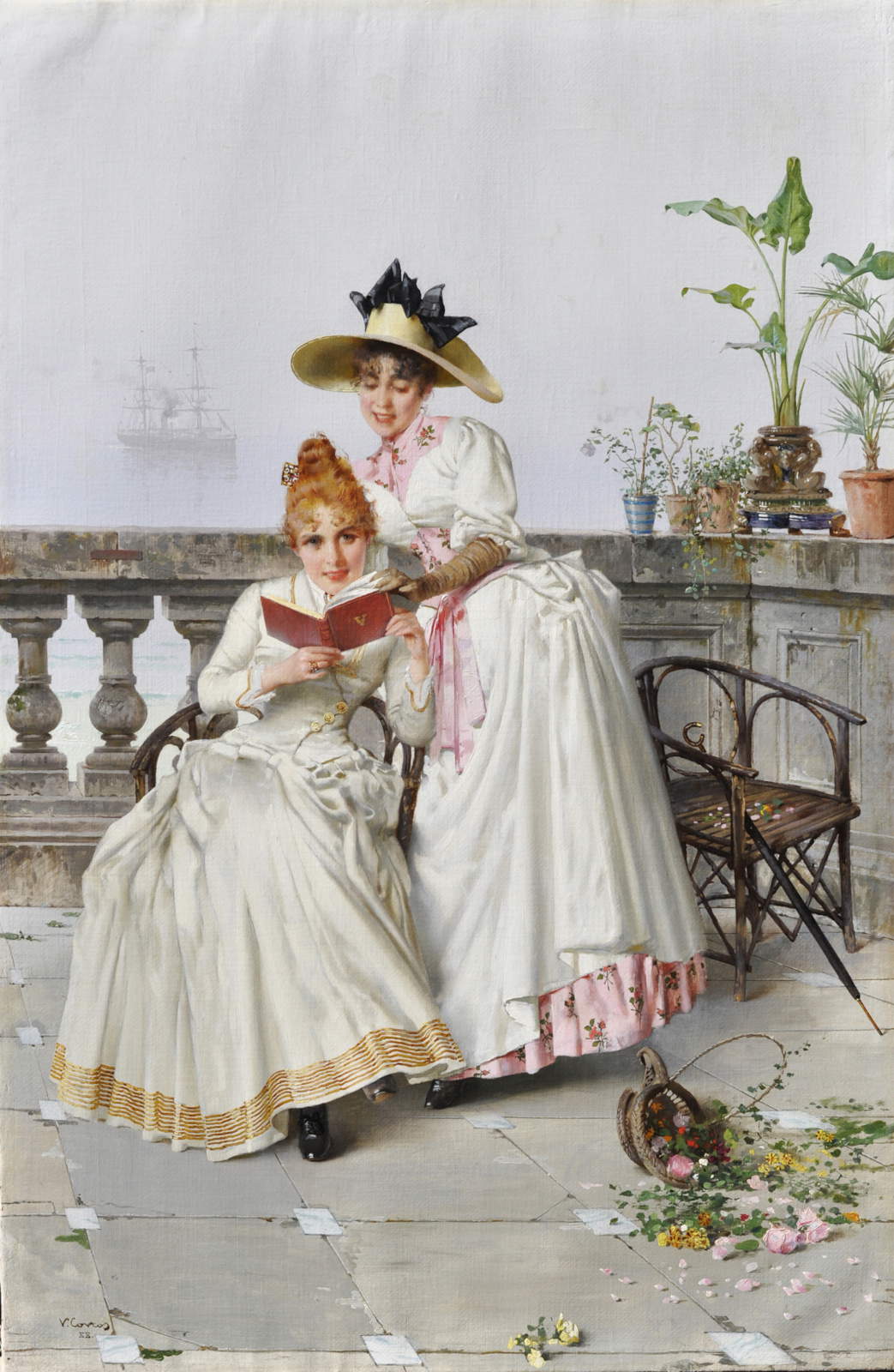
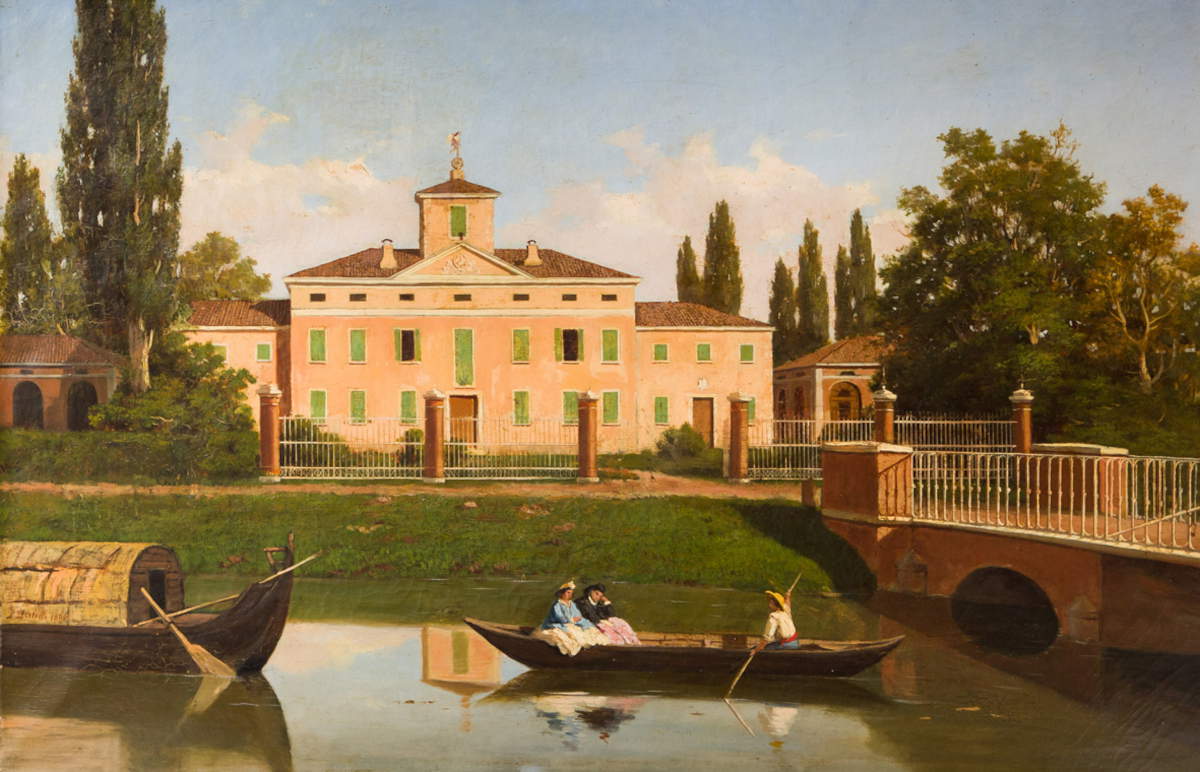
The works on loan come from Italian and European public museums and from private collections, some of which rarely open their holdings to the public. The exhibition also includes paintings by Claude Monet and Pierre-Auguste Renoir. The exhibition begins in the early hours of the morning, when nature is still at rest and the first light begins to filter into the homes. This moment is captured in the works of Antonio Fontanesi, Luigi Bertelli, and Augusto Majani.
With the awakening comes bourgeois daily life, depicted in the scenes by Antonio Mancini and Alessandro Scorzoni. Shortly thereafter, life shifts outdoors: in the works of Francesco Paolo Michetti and Giuseppe Pellizza da Volpedo, washerwomen and farmers appear, protagonists of a world still deeply tied to the land. At the same time, however, modernity is advancing. In the smoky atmospheres of London painted by Giovanni Boldini, an increasingly dynamic city emerges, far removed from the rhythms of rural life.
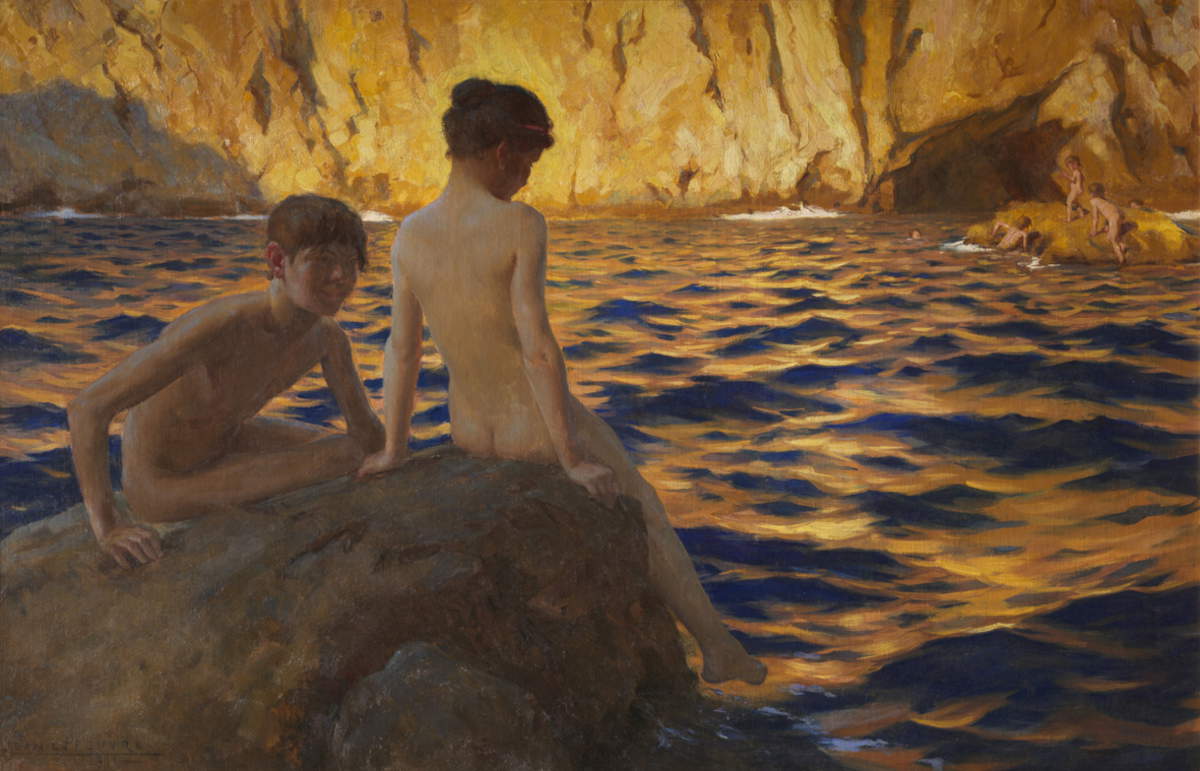
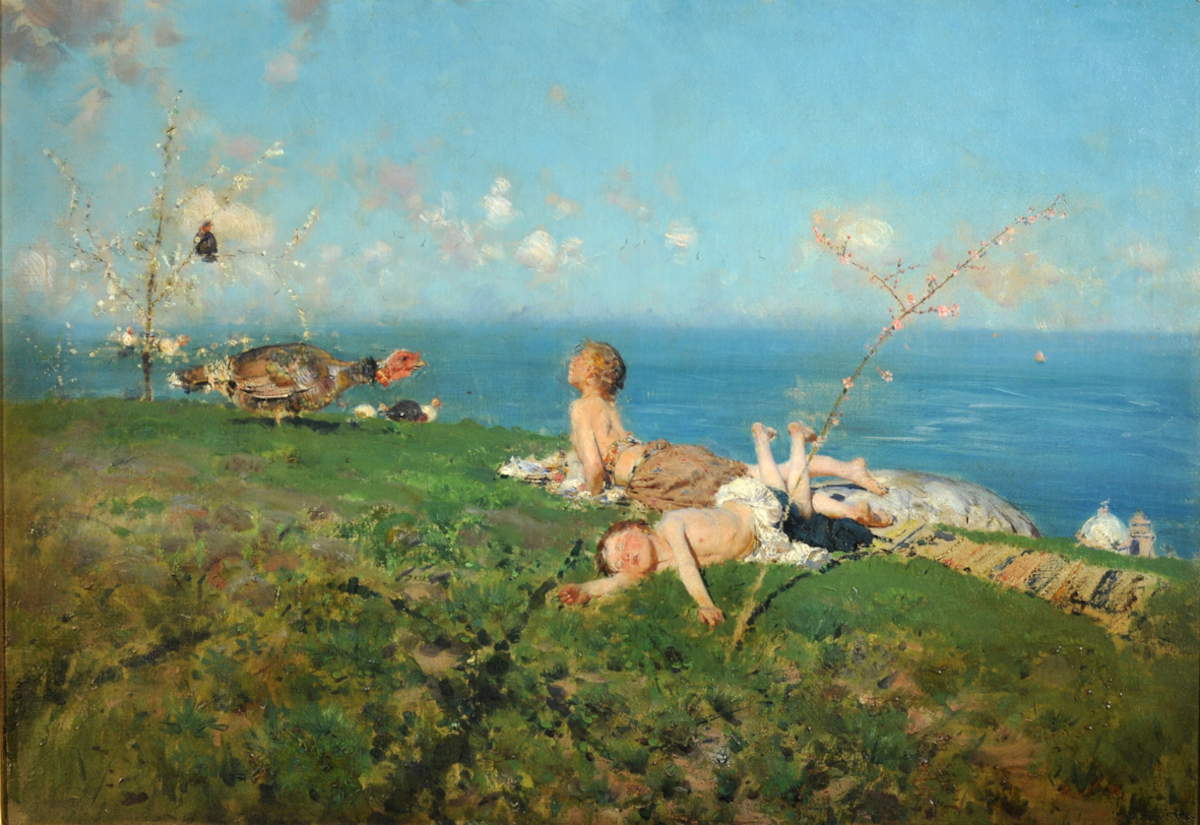
At noon, the light reaches its peak intensity in Renoir’s Bay of Douarnenez. The afternoon, meanwhile, brings with it the games of childhood in the works of Gaetano Chierici, while the day fades into the golden hues of Nino Costa and Mario de Maria.
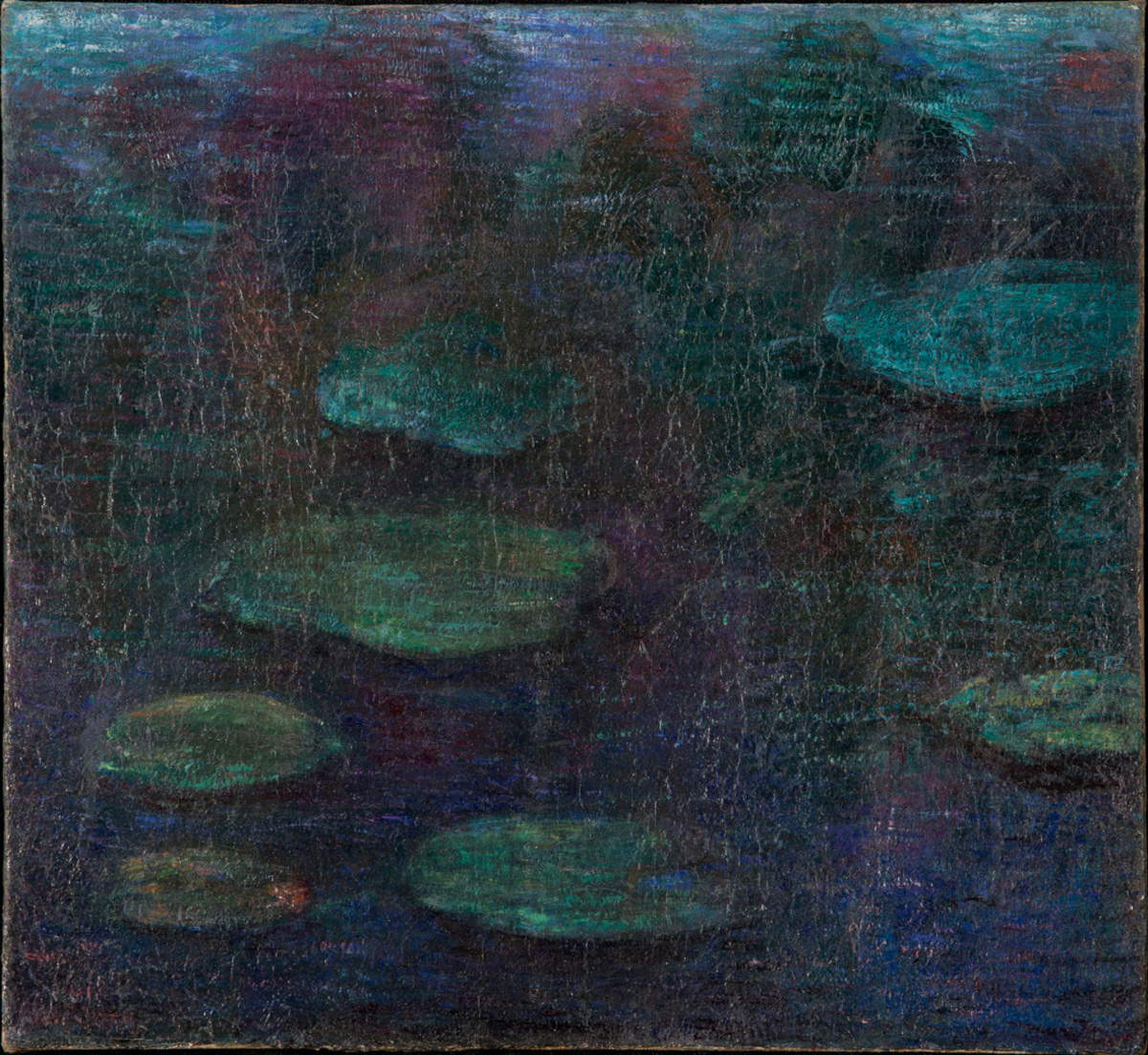
When evening arrives, the light gives way to more intimate and ethereal atmospheres. The exhibition ultimately leads into the night with Monet’s*Water Lilies at Night*, before opening up to the lunar visions of John Atkinson Grimshaw and the social critiques of Natale Attanasio. The final stage is where reality gradually gives way to dreams and memories.
The exhibition is not limited to the visual dimension. The passage from one hour to the next is accompanied by scents and ambient sounds, designed to change in the various rooms and ideally follow the shifting atmosphere, from the freshness of dawn to the humidity of night. A soundtrack composed of words and verses from Italian literature also punctuates the exhibition route. The morning features the words of Gabriele D’Annunzio, while the moods of dusk intertwine with the melancholy of Giacomo Leopardi.
The exhibition is accompanied by a monographic catalog published by Moebius Books, which explores the theme of the nineteenth-century day from various perspectives: art, literature, the city, fashion, and the role of women. The essays are written by Marco Bazzocchi, Maria Beatrice Bettazzi, Vincenza Maugeri, and Maria Giuseppina Muzzarelli, while the artwork descriptions are curated by Francesca Sinigaglia, Federico Troletti, and Cinzia Virno.
The project also includes a second exhibition dedicated to a contemporary artist invited to interpret the theme of the main exhibition. For *Un Capolavoro di Giornata*, the featured artist is Giada Negri, who has created an original project inspired by the chronological progression of the exhibition and the various moments that make up a day. The artist’s work focuses on the most intimate and visionary aspects of everyday life, reinterpreted through a surrealist sensibility. Waking up, stepping out into the world, work, encounters, sleep, and night thus become thresholds—moments of transition in which reality can transform and open up to a dimension suspended between experience and imagination. Born in 1982 on Lake Como, Giada Negri has been involved with art since childhood, growing up in a family connected to various art forms. Throughout her career, she has received several awards, including the assignment of a studio and an artist residency in Antibes, on the French Riviera.
Hours and tickets at www.iltempodipinto.it
 |
| The 19th Century as You've Never Seen It Before: Over 100 Paintings in Bologna Marked by the Hours of the Day |

Warning: the translation into English of the original Italian article was created using automatic tools. We undertake to review all articles, but we do not guarantee the total absence of inaccuracies in the translation due to the program. You can find the original by clicking on the ITA button. If you find any mistake,please contact us.
























 IT
IT FR
FR DE
DE ES
ES CN
CN


