




by Redazione 09/09/2026



Categories: Exhibitions / Disclaimer
From September 11, 2026, to January 24, 2027, the Musée Jacquemart-André in Paris is hosting a major exhibition dedicated to Tintoretto. The exhibition is the first in France to provide a comprehensive overview of his long career.

From September 11, 2026, to January 24, 2027, the Musée Jacquemart-André in Paris is hosting a major exhibition dedicated to Tintoretto, one of the leading artists of Italian Mannerism. The exhibition *Tintoretto: Timeless*, the first in France to comprehensively trace his long career, brings together some forty works and highlights the influence the artist had on 19th-century French painting. Curated by Giovanni Carlo Federico Villa, Neville Rowley, and Pierre Curie, the exhibition is held under the patronage of the Italian Embassy in Paris, with support from Artcurial and the Italian Cultural Institute in Paris.
Jacomo Robusti, better known as Tintoretto—a name derived from his father’s profession as a dyer—was born between 1518 and 1519 and spent his entire life in Venice. It was in Venice—then one of Europe’s leading cultural and artistic centers—that he built an extraordinary career, becoming one of the greatest painters of the 16th century. Information about his training remains fragmentary, but by the late 1540s, Tintoretto had already secured major commissions. Among the early works that contributed to his rise to prominence is the famous *Miracle of the Slave* from 1548.


His rise continued in the following decades. At the helm of a large workshop, the artist became one of the leading exponents of Venetian monumental painting, working on major decorative cycles intended for the city’s public buildings and institutions. Among his most prestigious commissions are those for the Doge’s Palace, where he painted the monumental *Paradise* in 1588, and for the Scuola Grande di San Rocco, on which he worked from 1564 to 1588.
One of the goals of the Paris exhibition is to highlight the extraordinary modernity of Tintoretto’s artistic language. His body of work defies simple classification and is distinguished by an extraordinary inventive power.
It is no coincidence that Giorgio Vasari, in 1568, described him as “the most formidable mind that painting has ever known.” In the Venetian master’s canvases, scenes often take on a theatrical dimension, constructed through unusual viewpoints, bold perspectives, and sudden expansions of space. This visual exploration is complemented by intense contrasts of light and a swift, energetic, almost impetuous brushstroke.
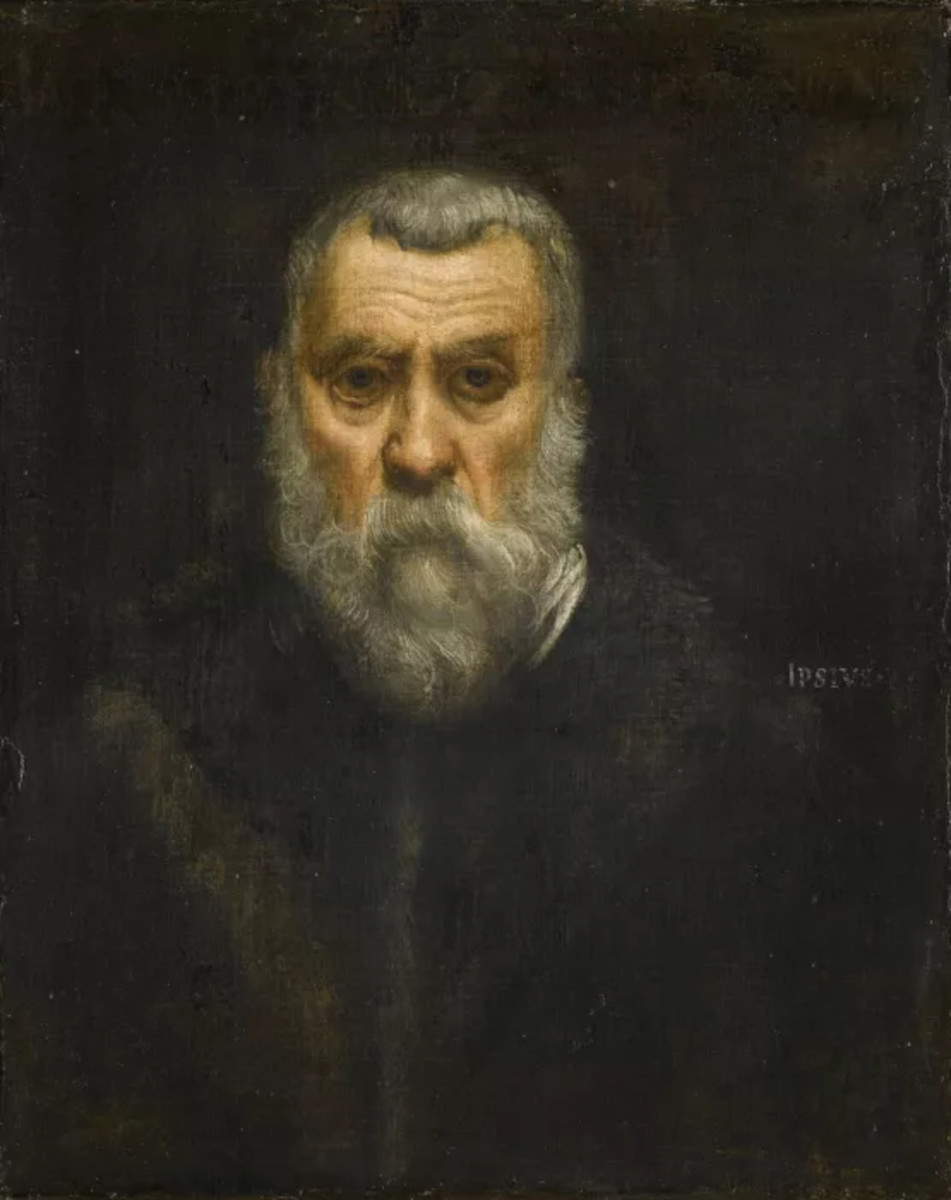
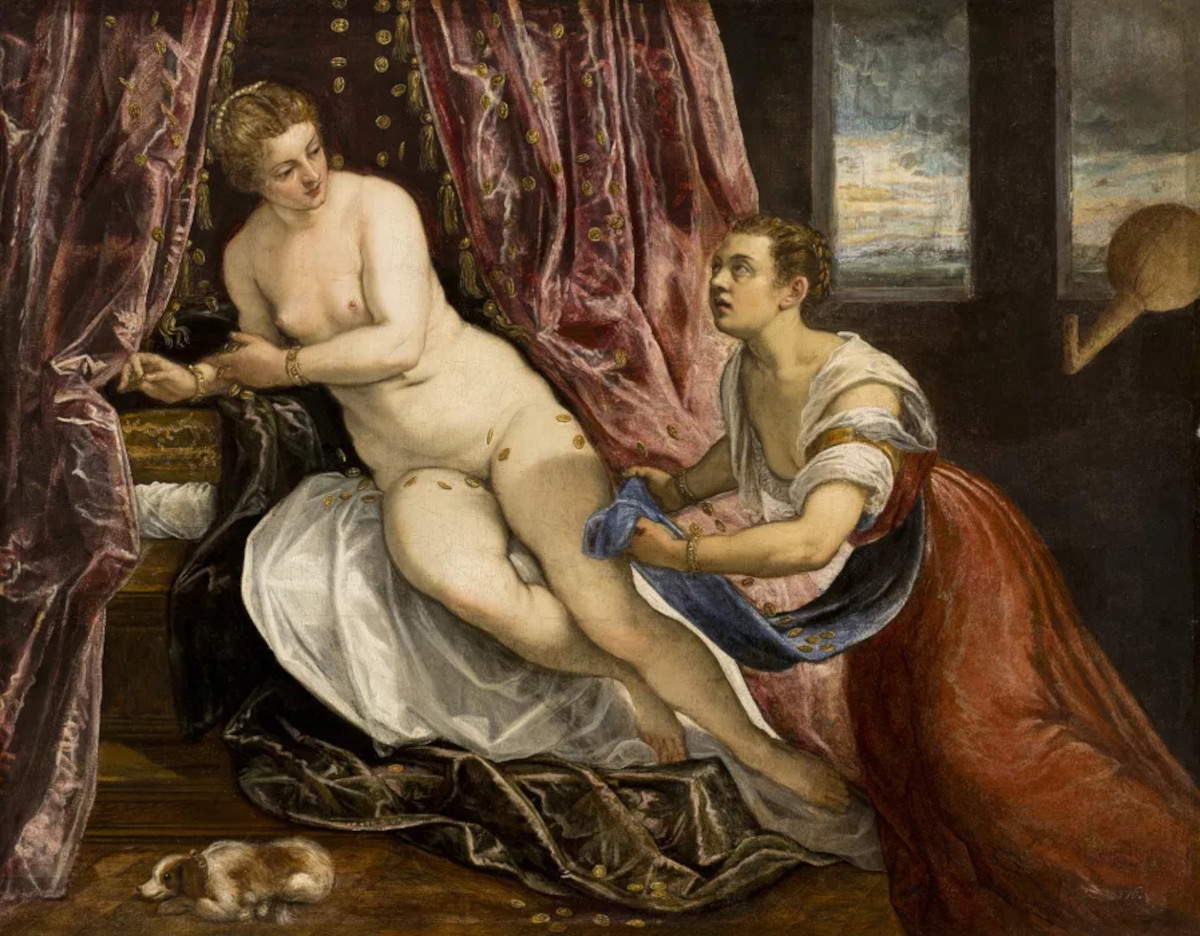
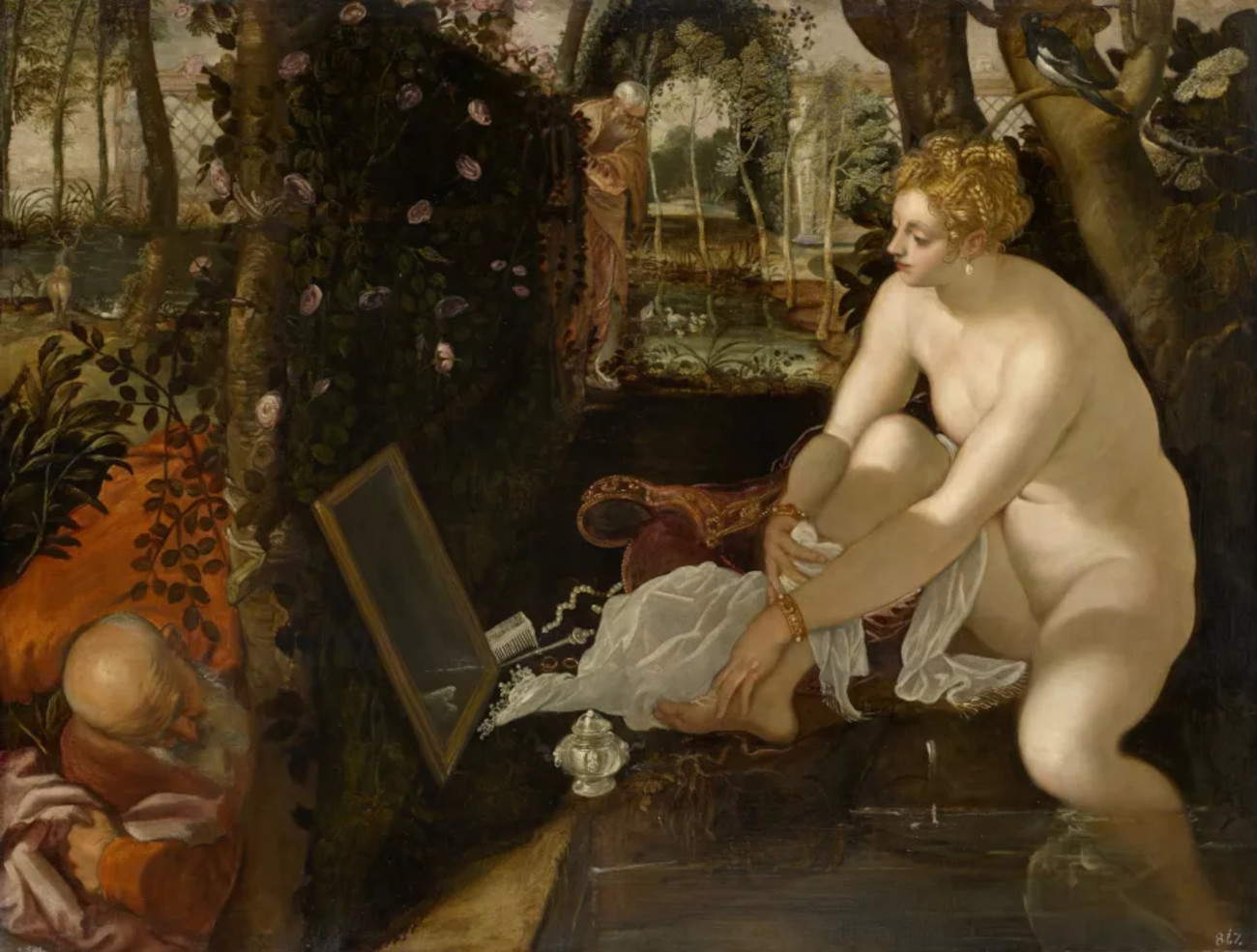
Tintoretto’s artistic language emerged from the convergence of two great traditions. On the one hand, there was the Tuscan tradition of drawing, particularly that of Michelangelo, an artist who exerted a powerful fascination on him; on the other, there was the colorism of the Venetian tradition, embodied above all by Titian, his contemporary and rival. The fusion of these elements led Tintoretto to develop a personal and innovative vision, helping to bring the Venetian Renaissance to its zenith.
The exhibition at the Musée Jacquemart-André features a selection of approximately forty paintings and drawings from public and private collections in France, Italy, and other countries. The exhibition thus allows visitors to trace the variety of interests and artistic approaches adopted by Tintoretto throughout his career, organizing the narrative around some of the fundamental themes of his work.
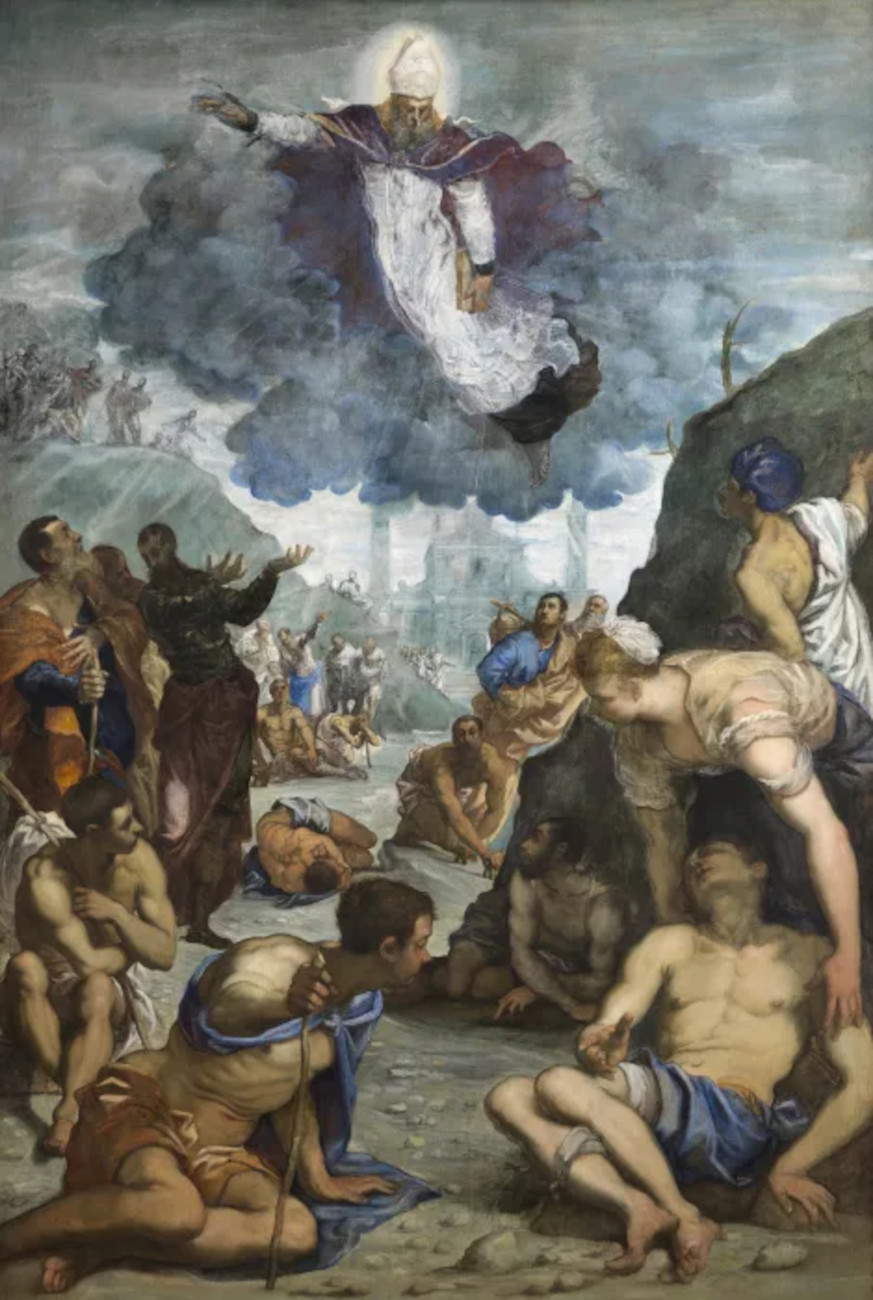
Particular emphasis is placed on religious painting, a field in which the artist was able to transform traditional subjects through a strong narrative and dramatic tension. Examples include *The Miracle of Saint Augustine*, painted between 1547 and 1549 and now housed at Palazzo Chiericati in Vicenza, and *The Trinity*, dated to around 1561–1562 and part of the collections of the Galleria Sabauda in Turin. Through these works and a comparison between paintings and works on paper, the exhibition highlights Tintoretto’s ability to reinvent tradition, transforming the Renaissance repertoire through a dynamic, theatrical, and deeply personal style of painting.
The exhibition, therefore, does not merely celebrate one of the leading figures of 16th-century Venetian painting but also aims to showcase the international scope of his legacy, highlighting how the artistic language developed by Tintoretto has continued to be studied, reinterpreted, and admired well beyond his own era. In this sense, the exhibition at the Musée Jacquemart-André offers an interpretation that links the great master of Italian Mannerism to 19th-century French figurative art, underscoring the enduring nature of his influence and the ability of his painting to transcend geographical and chronological boundaries.
|
| Tintoretto in Paris: A major exhibition at the Musée Jacquemart-André traces his long career |
Warning: the translation into English of the original Italian article was created using automatic tools. We undertake to review all articles, but we do not guarantee the total absence of inaccuracies in the translation due to the program. You can find the original by clicking on the ITA button. If you find any mistake,please contact us.