



by Redazione 09/11/2026


Categories: Exhibitions / Disclaimer
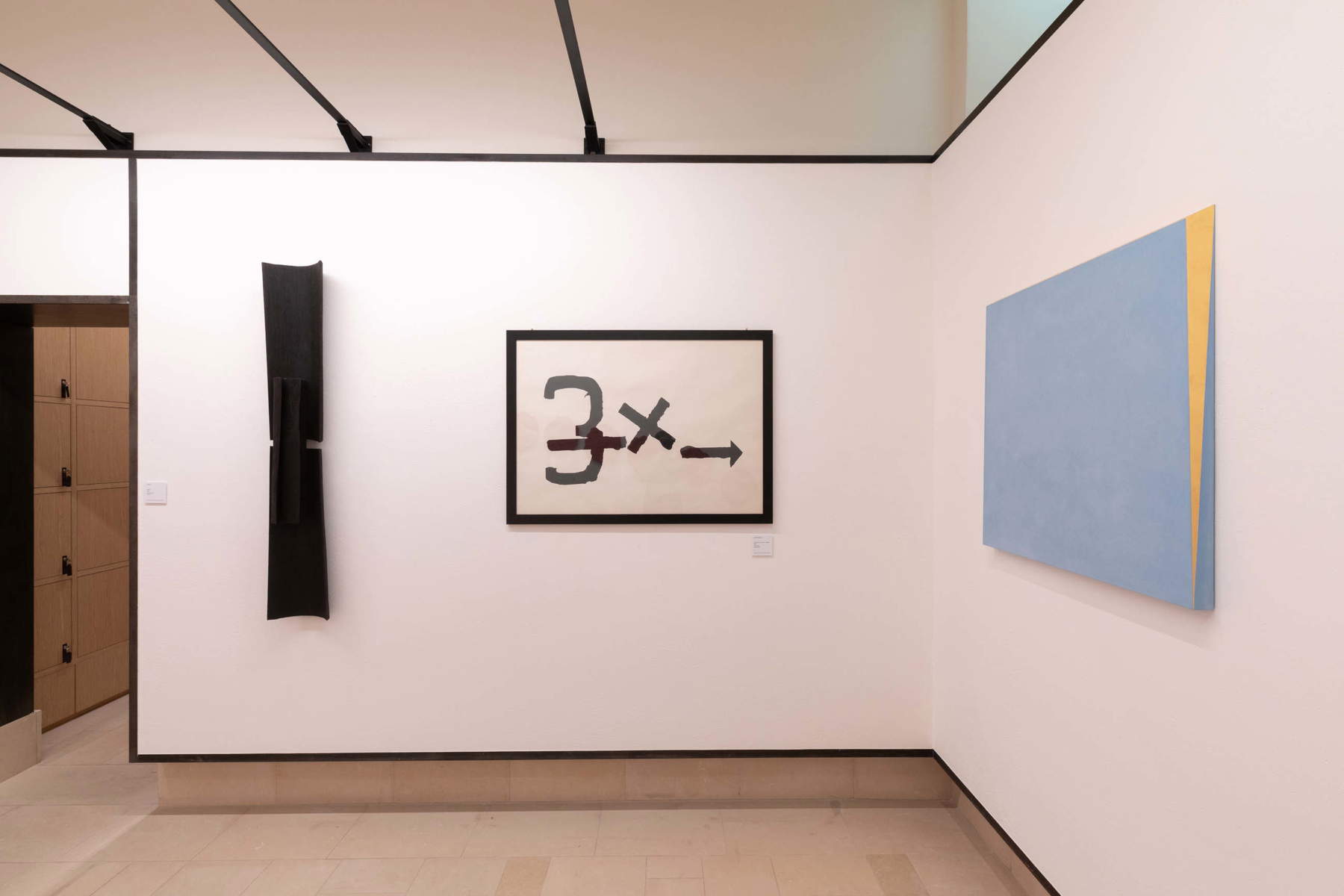
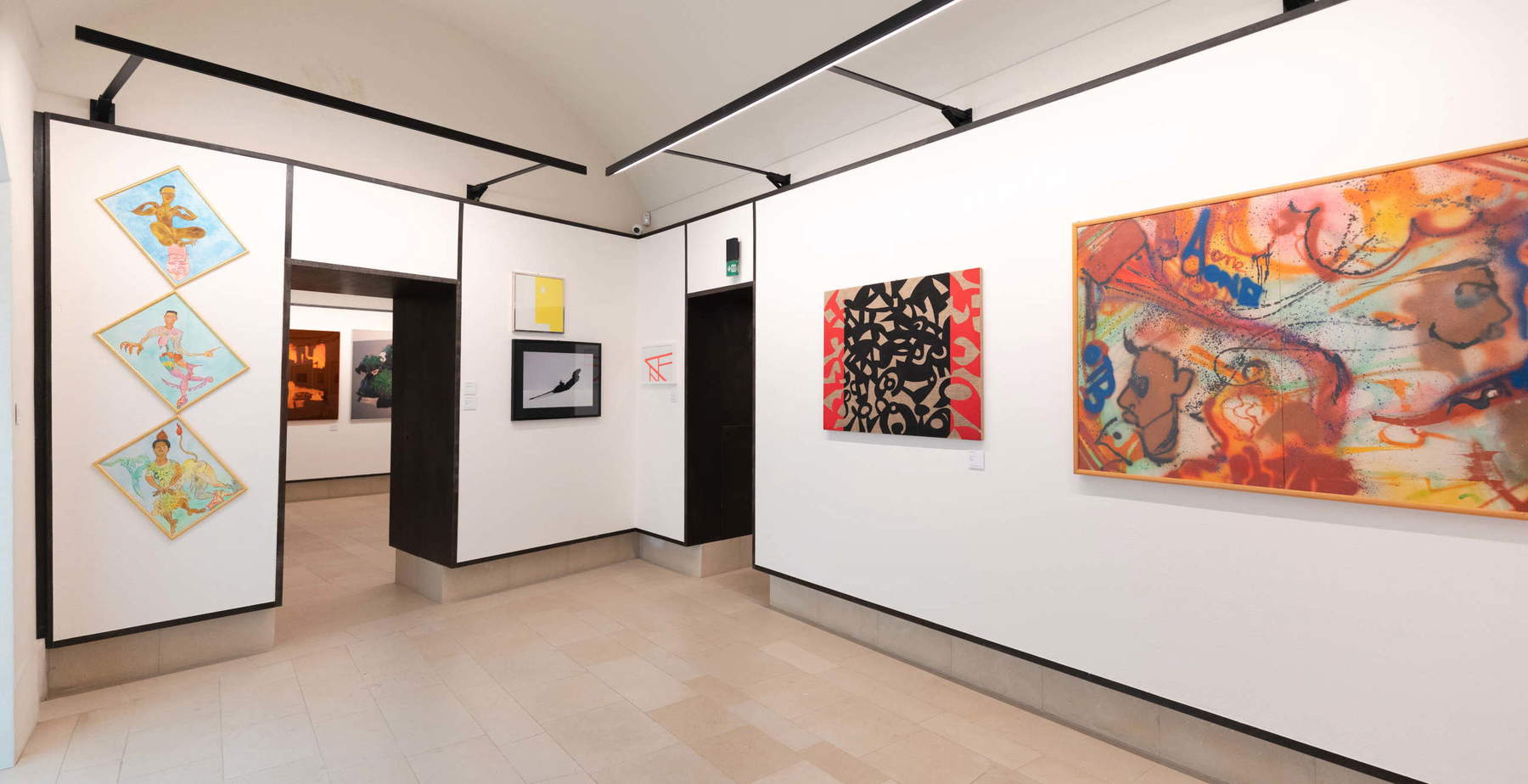
At the Biscozzi | Rimbaud Foundation in Lecce, the exhibition *Camera con vista* brings together 27 works by twenty artists—from Kounellis to Beuys, from Spalletti to A-One—drawn from homes and studios throughout the Salento region. It is the first survey of contemporary art collecting in the area.

In June 1985, at Art Basel, a dentist from Salento met four leading figures in the New York graffiti scene: A-One, Rammellzee, Phase Two, and Daze. Six months later, in December, he hosted them at his country home and studio in Salento. There, the artists transformed the facade and created new works. The following year, A-One’s canvases were exhibited in Lecce at the Piccolo Museo. His name was Corrado Lorenzo, and while he was a dentist by profession, he was also an artist, theorist, gallery owner, and publisher. As curator Lorenzo Madaro writes, thanks to him, “a language born in New York graffiti thus entered Salento through the artists’ presence and the time they spent there, not merely as a reference to a distant scene.”


This is one of the episodes that help shed light on *A Room with a View*. Italian and International Art in Private Collections of Salento (1963–2015), the exhibition on view through January 10, 2027, at the Fondazione Biscozzi | Rimbaud in Lecce and curated by Paolo Bolpagni and Madaro himself. It is the first comprehensive survey dedicated to contemporary art collecting in Lecce, its province, and the Salento region. The underlying idea is that this collecting is not a marginal or occasional phenomenon, but an autonomous cultural fabric with its own history. What emerges, says Bolpagni, is “a landscape that may come as a surprise to many.”


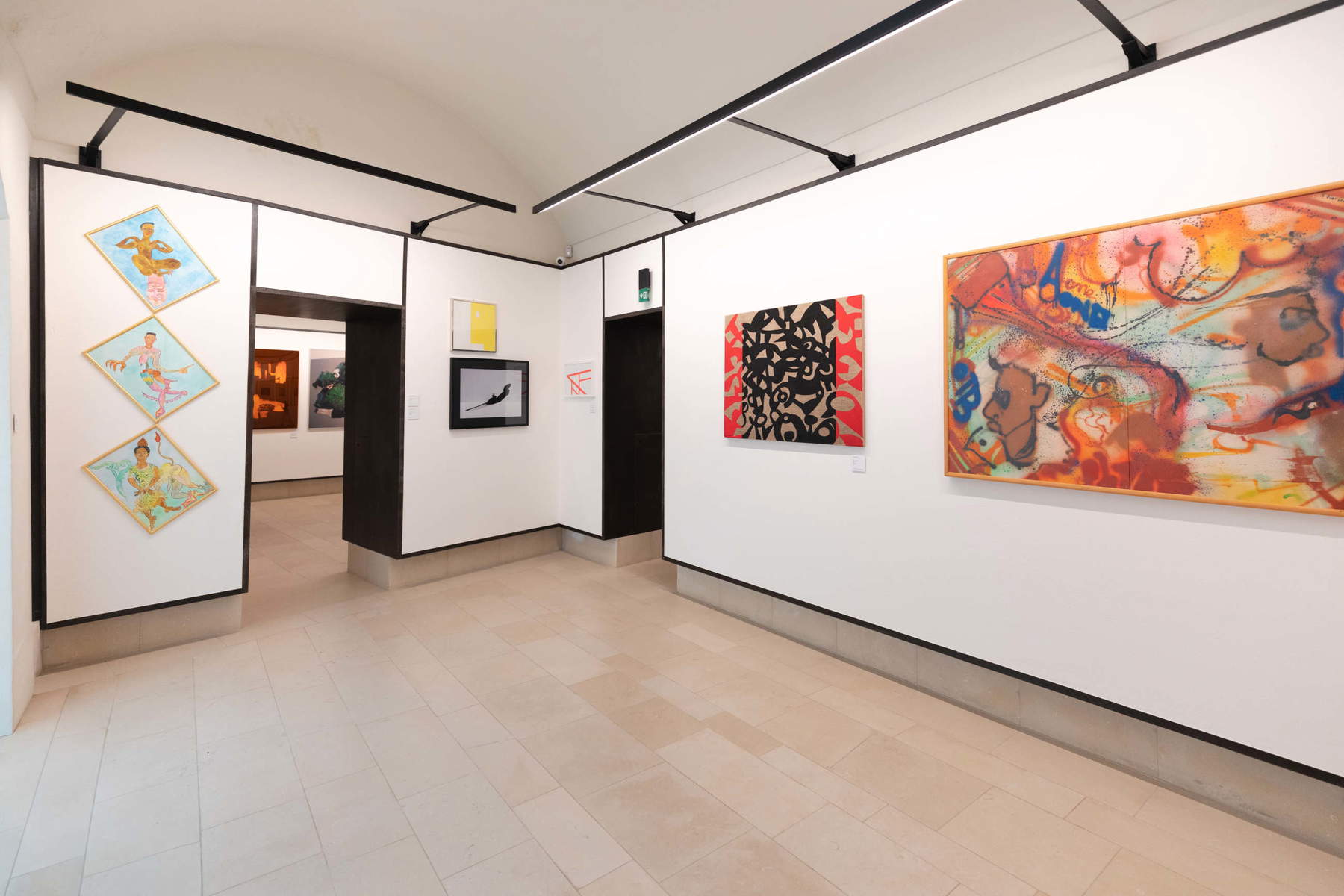
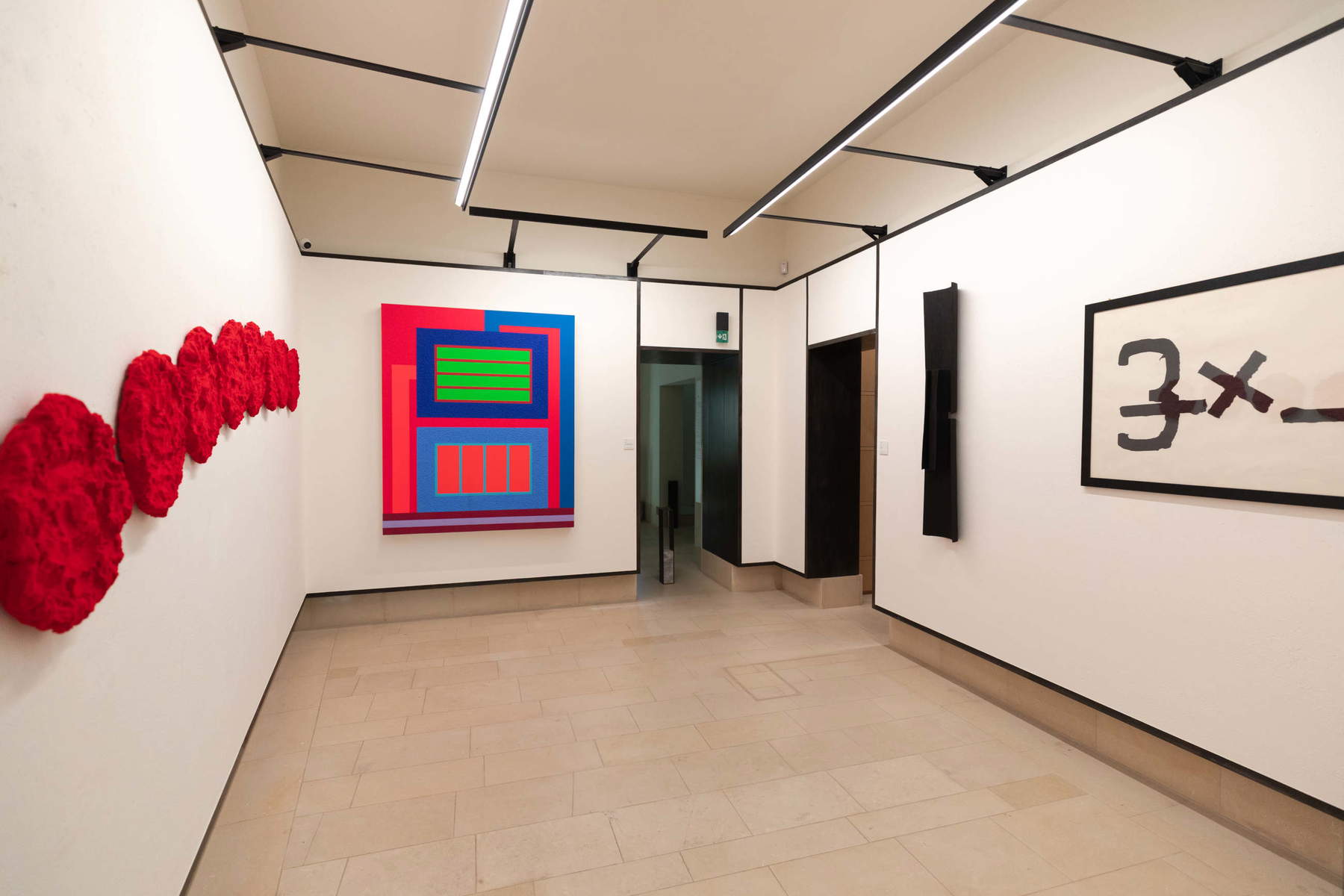
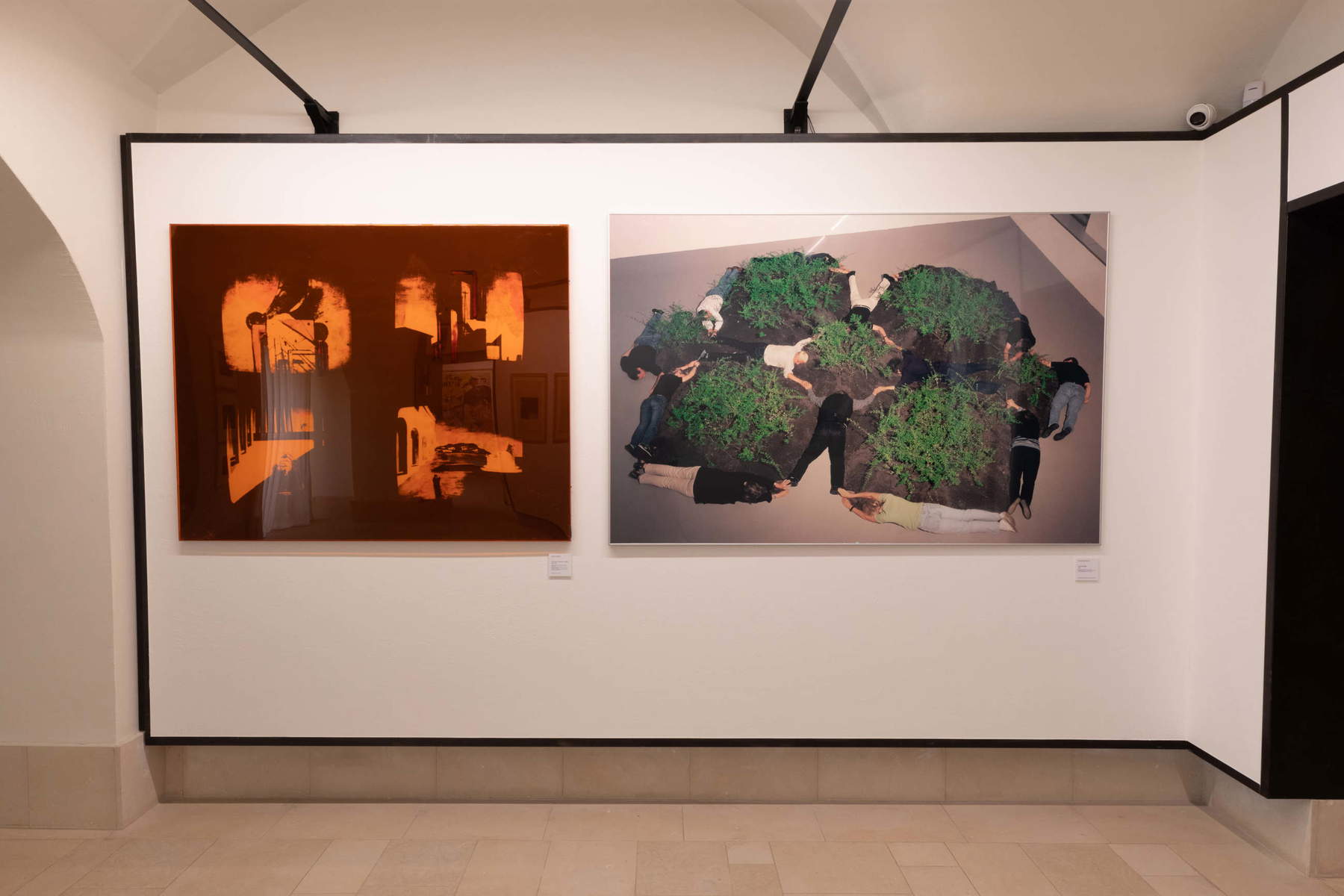
Twenty artists, twenty-seven works
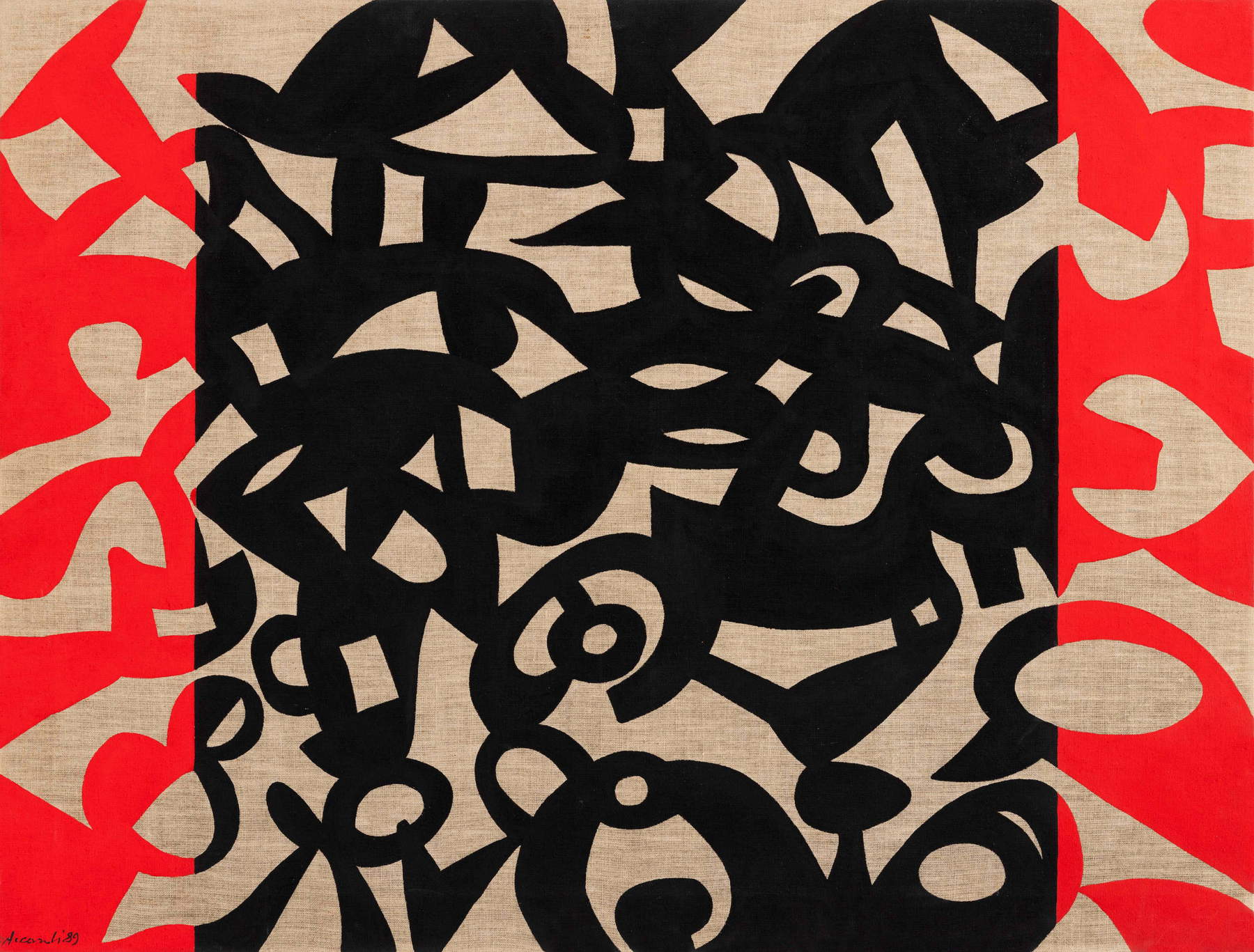
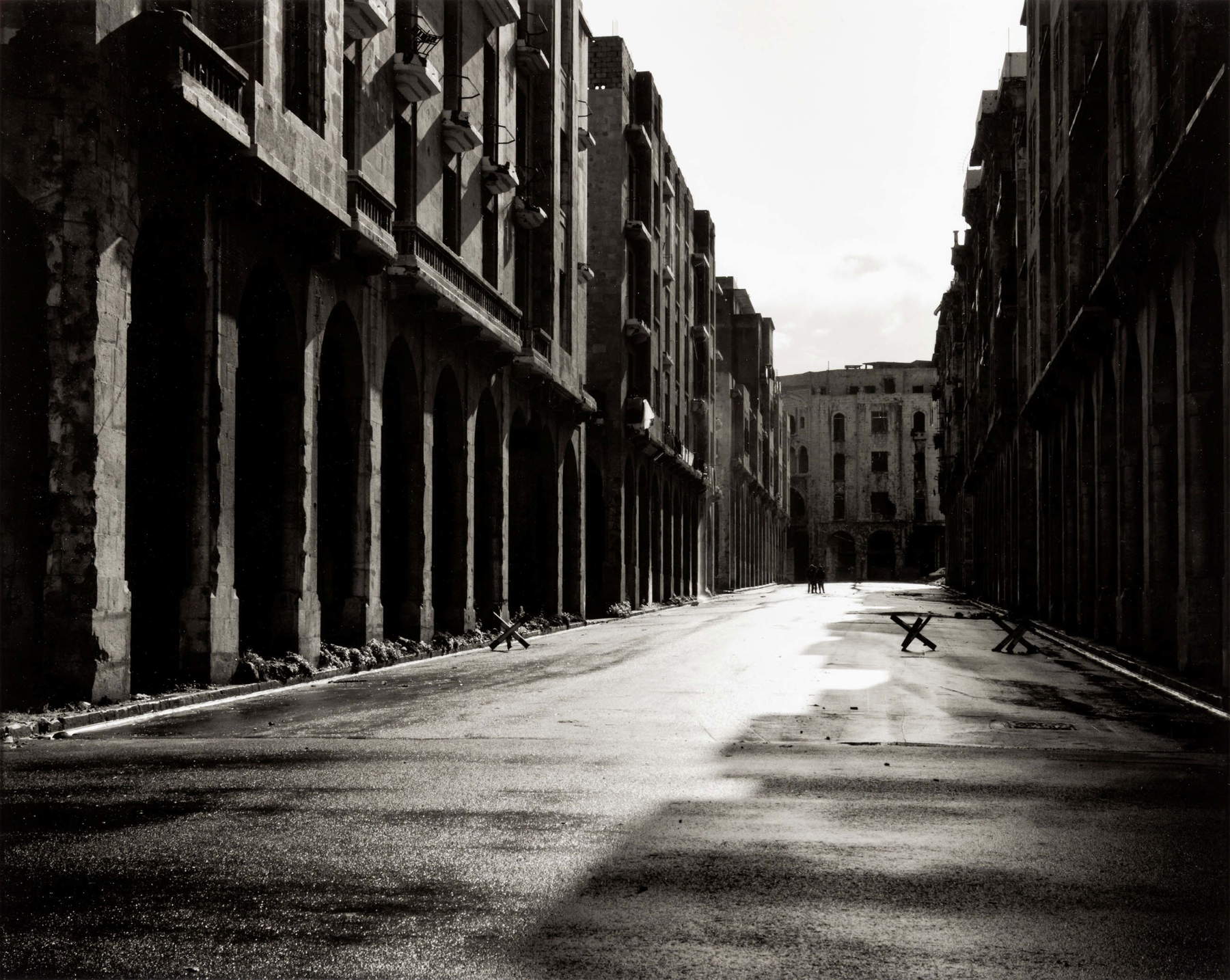
There are 27 works on display by twenty artists: Carla Accardi, A-One (Anthony Clark), Stefano Arienti, Massimo Bartolini, Gabriele Basilico, Mirella Bentivoglio, Joseph Beuys, Luigi Ghirri, Peter Halley, Jannis Kounellis, Giuseppe Maraniello, Nunzio, Luigi Ontani, Mimmo Paladino, Pino Pinelli, Mimmo Rotella, Andrea Sala, Mario Schifano, Ettore Spalletti, and Franco Vimercati. Almost all of them are Italian; the exceptions are the German artist Beuys and the New Yorkers Halley and A-One. Bolpagni also considers Mirella Bentivoglio—born in Klagenfurt—and Kounellis—Greek by birth and education but Roman by adoption—to be Italian.

The dates in the title correspond to two specific works: 1963 is the year of a Untitled on paper by Kounellis, the oldest piece in the exhibition, while 2015 is the year of Peter Halley’s canvas. The core of the selection, however, spans the late 1970s to the early 2000s, a period Bolpagni calls “a fin de siècle.” The artists span nearly sixty years of birth dates: from the oldest—Mimmo Rotella (1918–2006), Beuys (1921–1986), Bentivoglio (1922–2017), and Accardi (1924–2014), to the youngest, Andrea Sala from Como, born in 1976.
Of the twenty artists, only Schifano was already represented in the Foundation’s permanent collection, with a large enamel-on-canvas work from 1974–1977. The work on view is nearly contemporary and similar in technique, but different in subject matter. These were the years of the “TV Landscapes,” during which the artist—born in Homs in what was then Italian-ruled Libya—worked with images transferred onto emulsion-coated canvas. In the case analyzed by Bolpagni, the images derive from details of Giorgio de Chirico’s metaphysical paintings, likely filtered through television. For the scholar, this represents an early reflection on mass media culture within the Italian context.
From Home to Museum
The starting point of the exhibition is the place from which the works come: homes, studios, palaces, and farmhouses in Salento, which part with them for a few months. Madaro describes the life of a work after its acquisition as follows: “It passes through mornings, absences, moves, and shifts in taste; it witnesses conversations, is moved around, and sometimes remains in the same spot for decades.” Bringing it to an institution means changing its context and placing it alongside works from other collections, which offer new ways of interpreting it.
A private collection, Madaro observes, rarely follows a plan established from the outset. It grows through personal inclinations, recurring themes, and sudden detours, and ultimately becomes a sort of indirect autobiography of its creator. Its value also lies in its partiality: a collection may overlook an artist who has since been canonized and stubbornly champion an obscure figure, acquire a work before it gains critical acclaim, or return to the same artist years later. For Madaro, gaps, recurrences, loyalties, and omissions make up “an implicit historiography, distinct from that of textbooks and museums.”
There is also one detail that sets this exhibition apart: most of the lenders have maintained absolute confidentiality, and this, according to Madaro, prevents the project from becoming a biographical celebration—the identities of the owners recede into the background, while the choices remain in the foreground. One of the few names mentioned is that of Salvatore Baldi, from whose collection comes a 2007 Untitled work by Andrea Sala, in acrylic and marker on tracing paper. Even the title stems from this dual dimension. “The room alludes to intimacy, to the everyday proximity between the body and the work, to the slow education that arises from coexistence,” writes Madaro. The view, on the other hand, opens the room outward: to the landscape, the city, art history, and the community. The exhibition is situated precisely on this threshold, at the moment when private possession becomes, for a time, an act of restitution.
For the Foundation’s president, Dominique Rimbaud, the setting is particularly fitting: “With this exhibition, the Biscozzi | Rimbaud Foundation—a place where a private collection has already become a shared heritage—provides the ideal setting for this project, albeit a temporary one, reaffirming its mission to share and transmit beauty. I am delighted to welcome the extraordinary treasures entrusted to us by our collector friends from Salento and by the ‘new Salentines’—people who have chosen to make this region their home, recognizing it as a place to live and a space of cultural responsibility.”
A Journey Through the Works
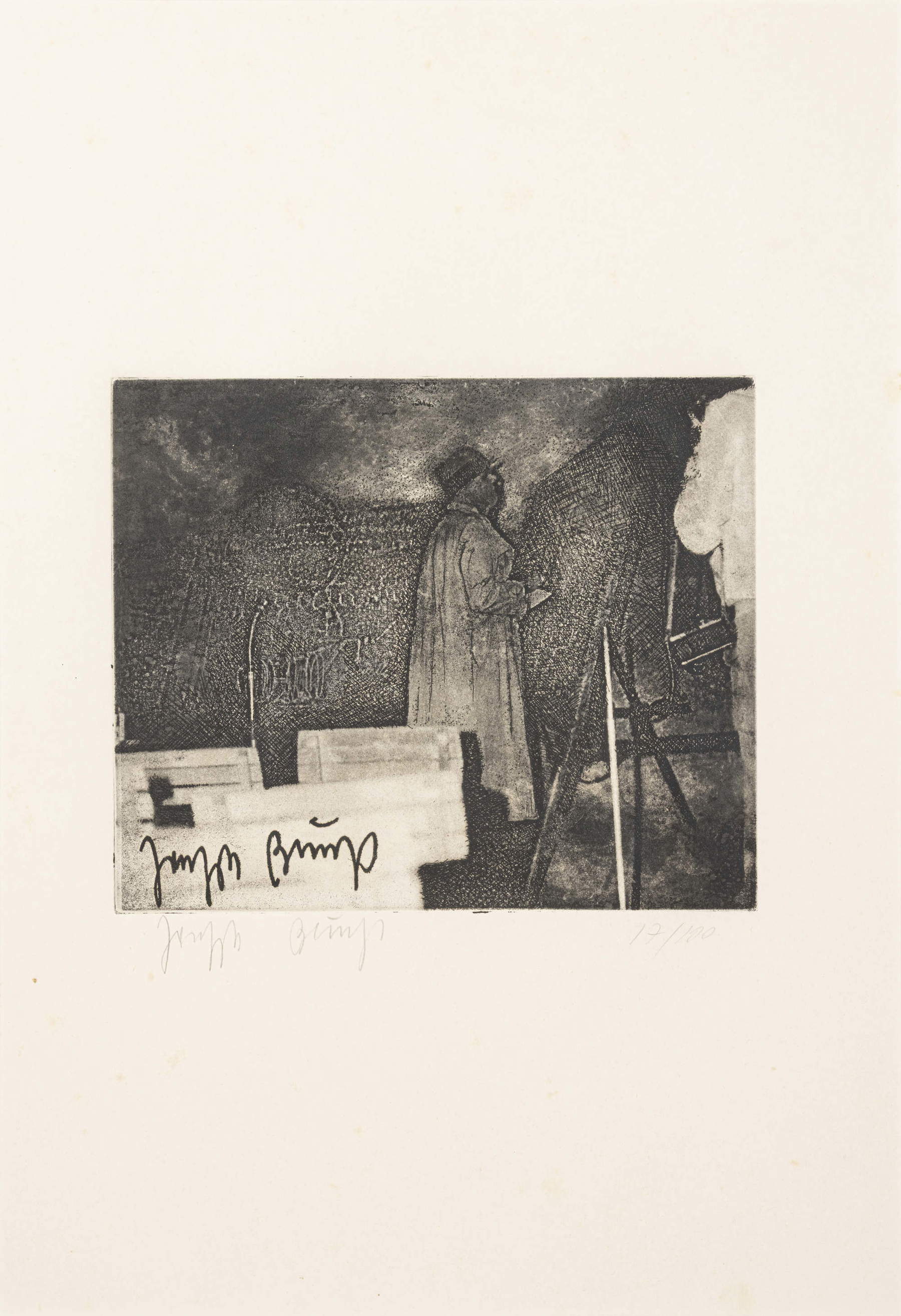
Bolpagni does not present the exhibition as a representative sample of the art of the period, but as a personal journey—“a mental map, perhaps a promenade”—constructed through analogies and contrasts. It begins with Kounellis’s 1963 work. In the early 1960s, the artist—who had arrived in Rome from Piraeus in 1956—painted letters and numbers floating on a white background, stripped of any connections or meanings. According to Bolpagni, he had acquired this tendency to deconstruct graphic signs and reduce them to their utmost simplicity primarily from Cy Twombly.
Five prints by Beuys from 1982 are on display, three of which depict him. 1982 was the year of Documenta 7 in Kassel, when the artist had 7,000 basalt slabs piled up in front of the Fridericianum. A small oak tree was tied to each slab: whoever “adopted” a stone funded the planting of a tree in the city or its surroundings. The project continued after Beuys’s death in 1986 and continues to this day. For Bolpagni, it symbolizes a concept of art in which actions also count as works.
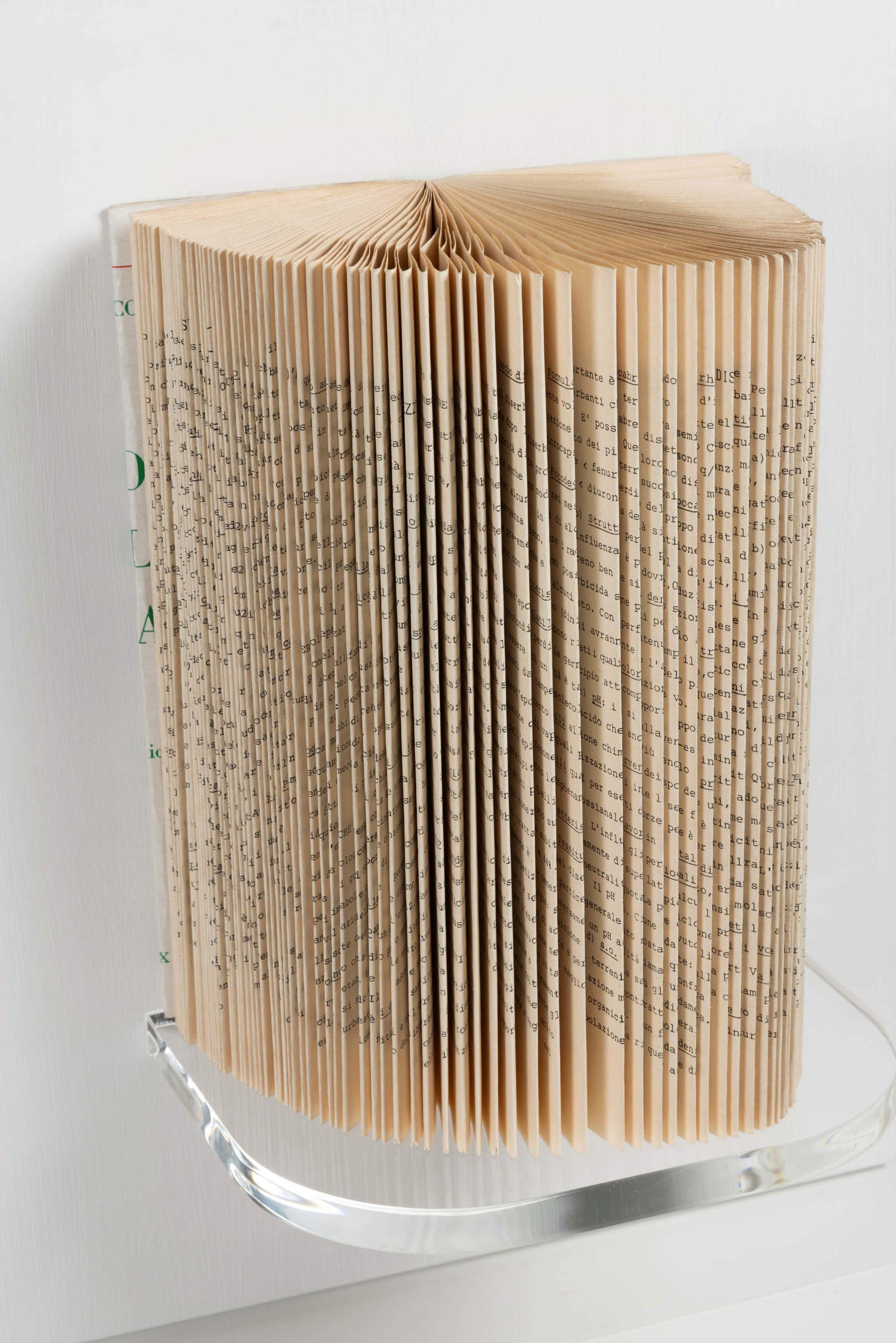
In this vein, the curator’s itinerary touches on other artists. Stefano Arienti works on pre-printed books using simple, repetitive interventions, such as perforation, folding, or erasure. The book no longer serves its original purpose but takes on a new form and meaning. Massimo Bartolini’s *Le Aiuole* depict people lying among the clumps of soil in a specially constructed garden, holding hands and feet. Bartolini builds the ground himself, works the soil, and cultivates the grass, to “travel the entire path of the imagination on foot, to take the body where thought leads,” as he himself puts it.
Nunzio, on the other hand, uses charred wood—a natural yet unconventional material—for the austere structures of the 1990s. The title of the work on display, *Deneb*, perhaps refers to the star of the same name, one of the brightest in the night sky. Bolpagni notes the paradox in relation to the sculpture’s very dark surface and points out that the star’s name comes from Arabic and means “tail.” Giuseppe Maraniello is represented with one of his bronze Rebis sculptures. The term comes from alchemy, where it refers to the philosopher’s stone as the union of opposites, and is linked to the theme of the double that runs through the artist’s hybrid creatures, such as centaurs.
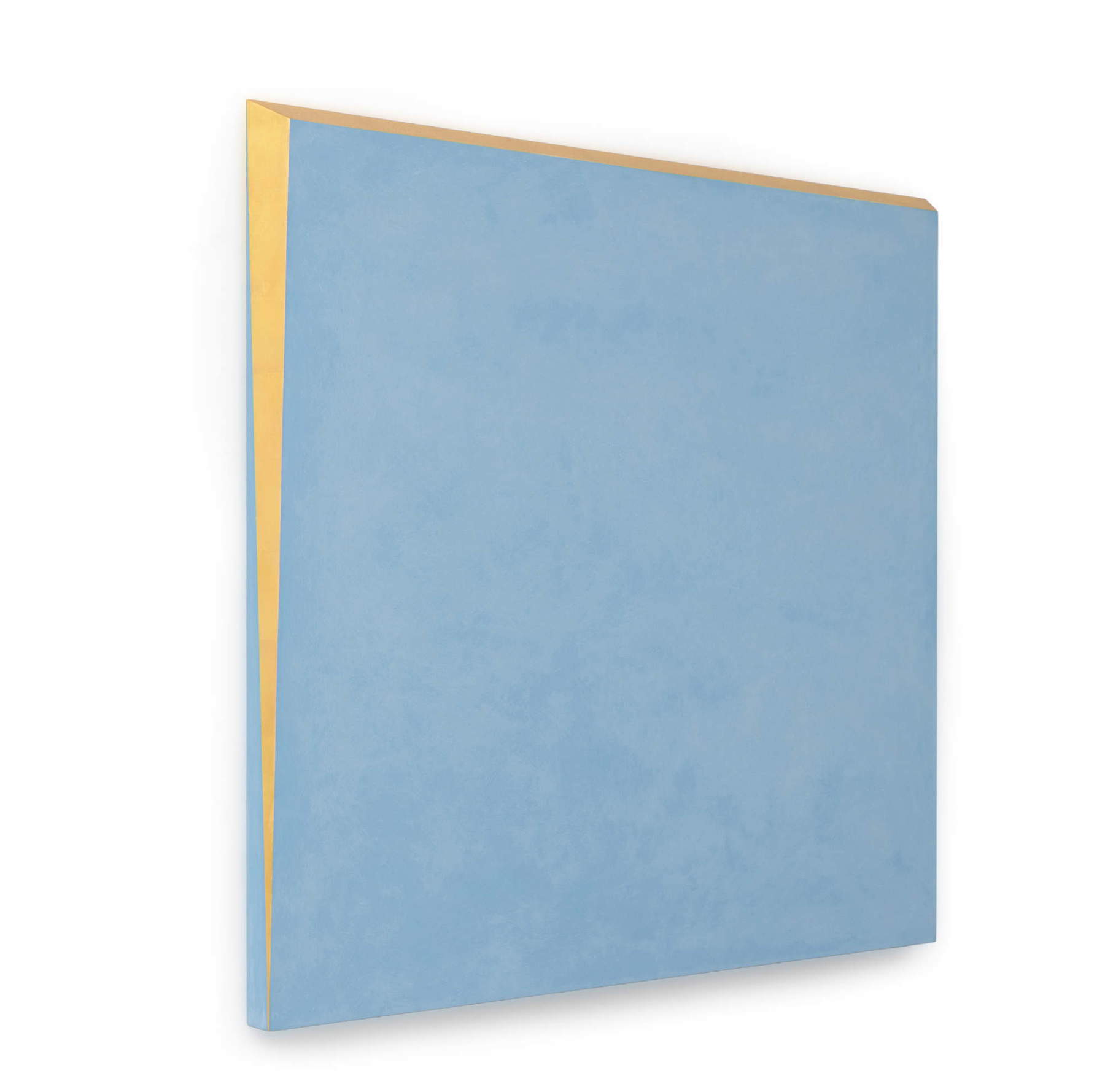
With Pino Pinelli, a leading figure in Analytical Painting, we enter the realm of monochrome, which the artist fragments and “scatters” across the wall in pieces of varying shapes—from the rigorous modules of the late 1970s to pointed scales. Ettore Spalletti also works with monochrome, but in a very different way. His surfaces—almost always blue but sometimes also pink, green, or gray—appear two-dimensional, but in reality they protrude from the wall due to the angle of the support or thanks to brackets hidden behind the panels. Andrea Sala, on the other hand, draws inspiration from Italian architecture and design culture. His 2007 work *Untitled* examines the details of an outdoor railing.
From Torn Posters to Halley’s Grids
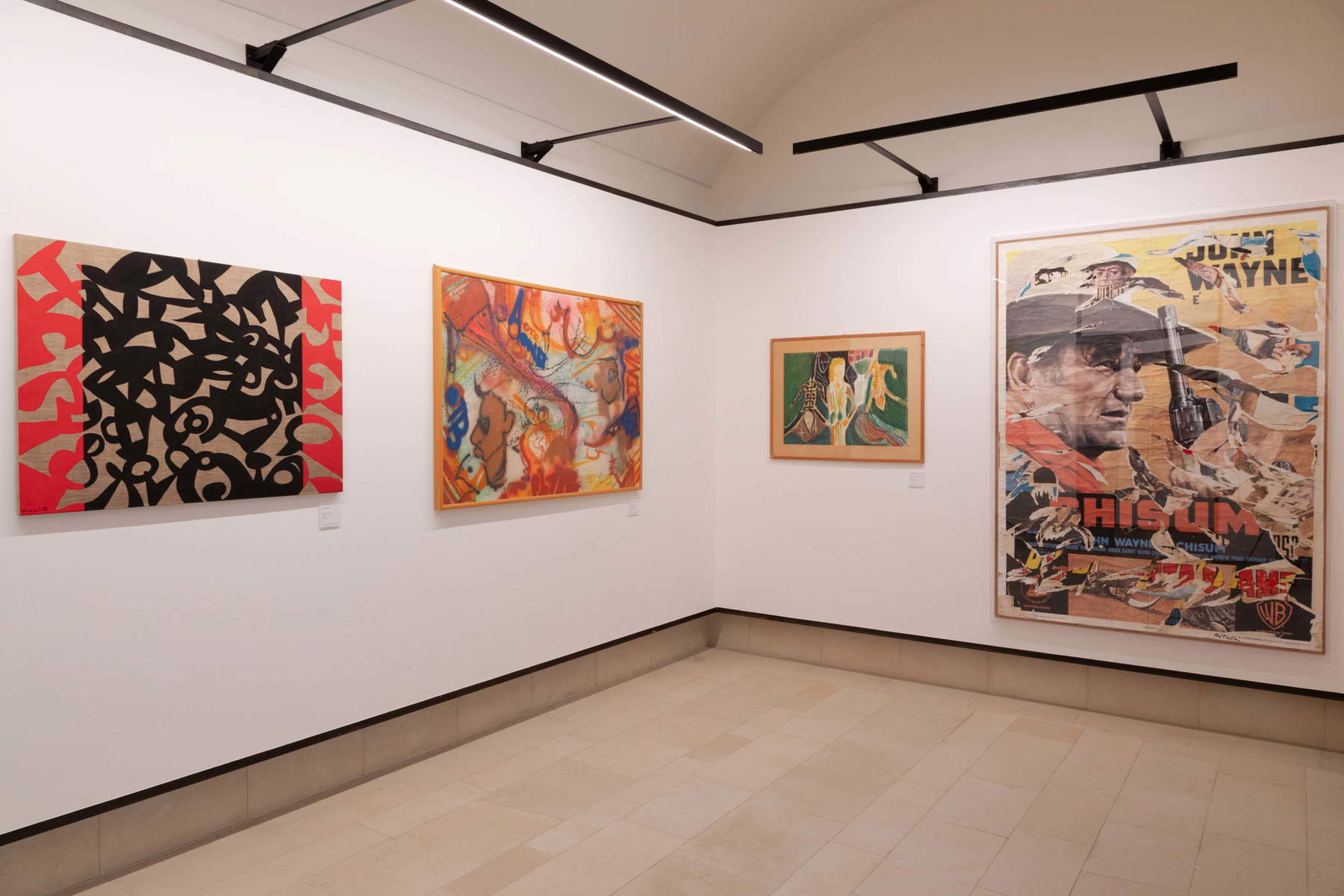
Another strand of the exhibition explores the relationship with images of everyday life. Mimmo Rotella, whose work emerged within the context of Nouveau Réalisme, would tear up advertising posters and reassemble the fragments on canvas. Compared to other key figures of that period, such as Raymond Hains, Jacques Villeglé, or Wolf Vostell, he focused on movie posters, developing his own critique of the society of the spectacle.
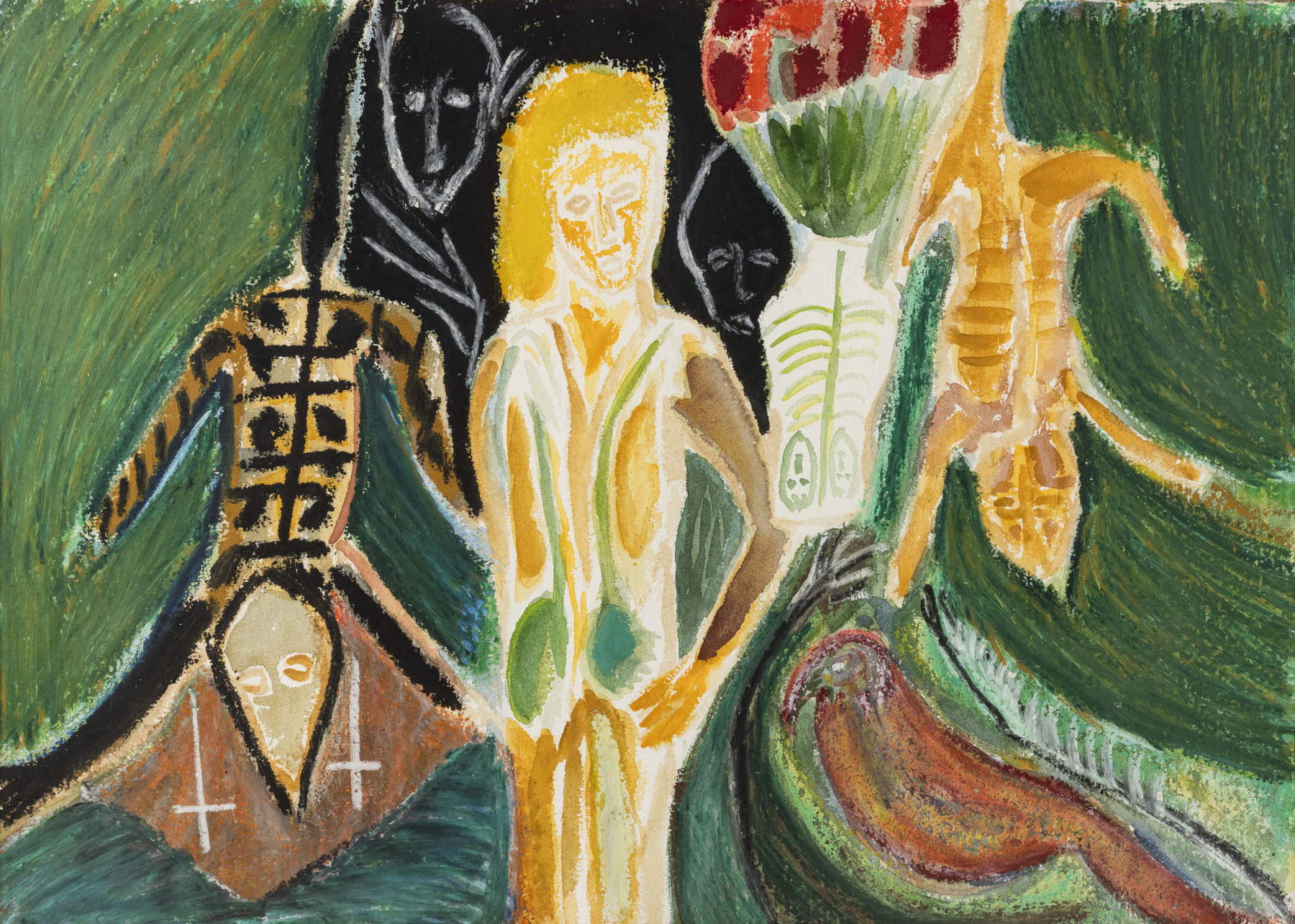
A-One—that is, Anthony Clark—was shaped, on the other hand, by the urban subcultures of the United States in the second half of the 1970s. As a very young man, he began painting graffiti on subway cars and found a mentor in Jean-Michel Basquiat. His canvases blend street imagery, adolescent-style lettering, symbols, and slogans against so-called “social control,” along with references to sports, the media, and African American mythology. He is credited with inventing what has been called “aerosol expressionism.”
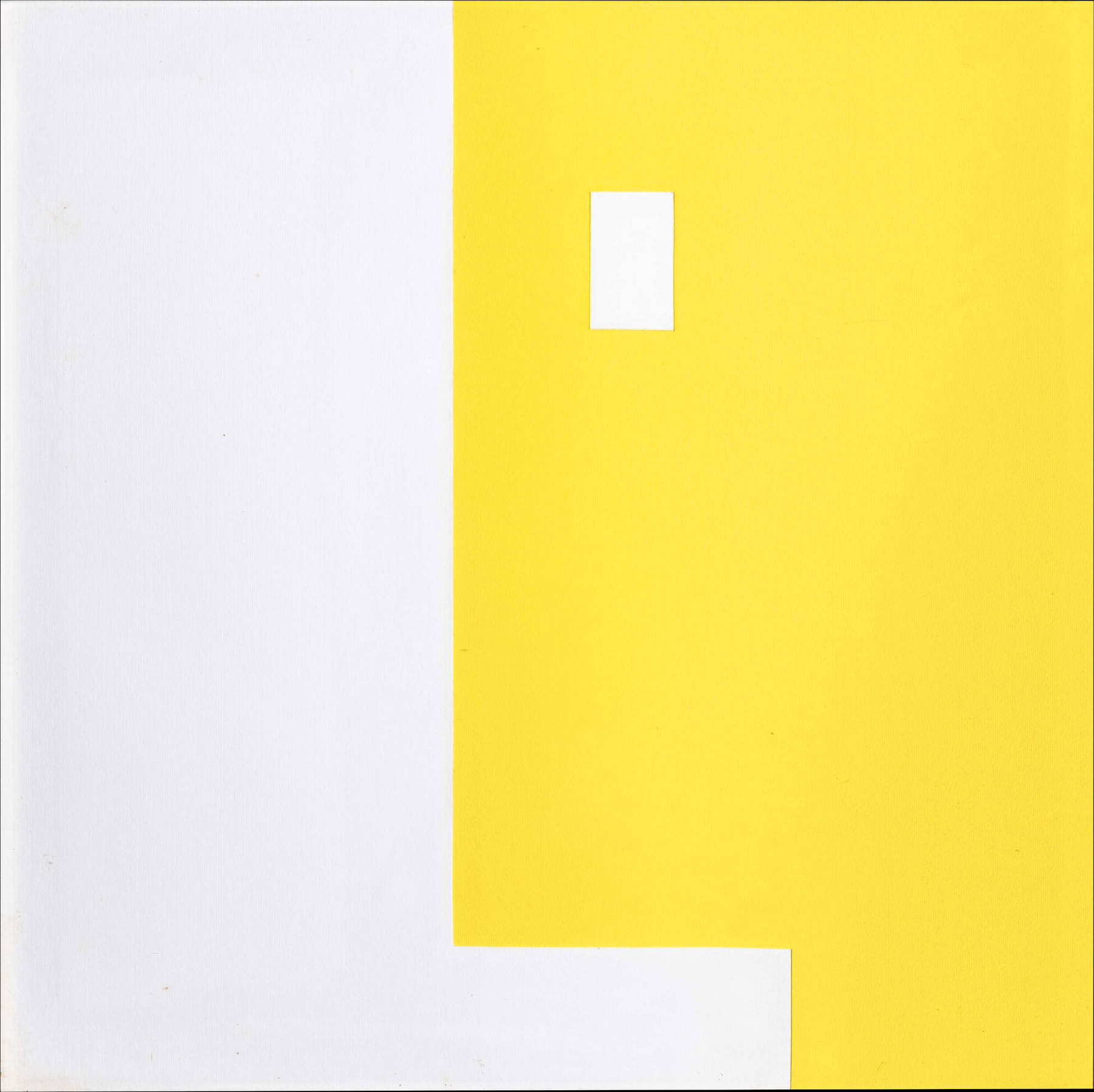
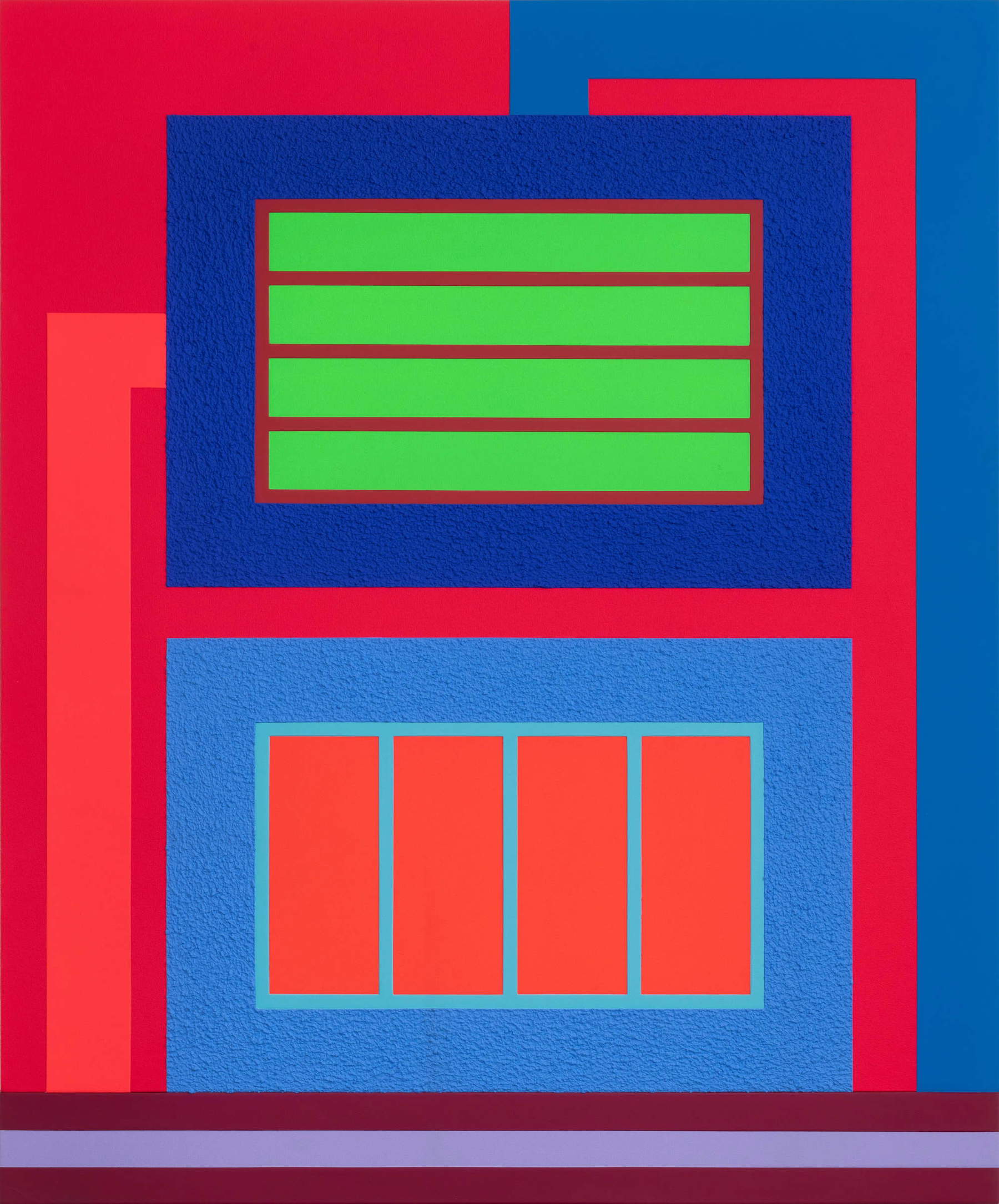
Bolpagni contrasts A-One with his fellow New Yorker Peter Halley, whom he describes as “the opposite—or the other side” of his New York. Halley belongs to the tradition of geometric abstraction, from Malevich to Mondrian, from Albers to Frank Stella’s minimalism. The saturated, electric colors may at times resemble those of A-One, but here everything is arranged in square and rectangular grids—which the artist calls “cells” or “prisons”—connected by shapes resembling air ducts. Some have interpreted this as a satire on the dominance of technology and the “geometrization” of social space. Bolpagni believes this may be an overinterpretation, but notes that the absence of curved lines and circles makes these works unsettling and haunting.
A Geography of Galleries and Research Centers
To explain how these works found their way into homes in Salento, Madaro reconstructs a little-known history, documented so far only in fragments. In the absence of ongoing public programming, contemporary art in Salento was brought to the region primarily by gallery owners, artists, and cultural operators. The galleries played a commercial role, but also an educational one, as they made it possible to view works that otherwise would have been known only through catalogs or travel.
The origins date back to the late 1960s. In 1968, Corrado Lorenzo and Sandro Greco founded the C.R.E. (Centro Ricerche Estetiche) in Novoli, with Toti Carpentieri also participating. Between 1971 and 1980, the Center organized three exhibitions dedicated to Land Art and Conceptual Art. In Lecce, in 1970, the Gramma group extended its experimentation to publishing, and in 1975 Francesco Saverio Dòdaro launched the Gruppo d’arte genetica. The Poetry Laboratory, founded by Enzo Miglietta in Novoli in 1971, blended visual poetry, mail art, artist’s books, happenings, and performances.
Galleries also emerged during this same period. In Lecce, Studio Arte 3A—active as early as 1969—along with L’Elicona, L’Esagono, and the Telamone Art Center were all active. In Nardò, Riccardo and Benedetto Leuzzi opened L’Osanna in 1971, bringing artists such as Giuseppe Uncini, Eugenio Carmi, Giulio Turcato, and Concetto Pozzati to the Salento region. In 1979, Corrado Lorenzo inaugurated the Galleria del Piccolo Museo in Lecce, a space dedicated to exhibitions, publishing, and documentation. The name, Madaro writes, already set the agenda: to strip the idea of a museum of its monumentality and link it to the quality of the works, documents, and relationships. Lorenzo’s relationships with Christo and Jeanne-Claude, Ben Vautier, Dadamaino, Kounellis, Paladino, Boetti, Schifano, and Beuys left behind dedications, letters, and photographs. His dialogue with Beuys also took the form of *Caro Beuys...* (1981) and various graphic editions. In the 2000s, different models emerged, such as Atrium, opened in Lecce by Giuseppe Terragno in 2001, and Primo Piano LivinGallery, founded in 2004 by Dores and Rose Sacquegna at Palazzo Rubichi.
Madaro’s account also includes Lidia Carrieri, who opened Studio Carrieri in Martina Franca in December 1976. In June 1983, she saw Keith Haring’s works for the first time at Art Basel, and four months later she was in New York. From that moment on, Rammellzee, Phase Two, Daze, Ero, Futura 2000, Ronnie Cutrone, A-One, and Haring himself became part of the programming at the Martina Franca gallery and later at the Rome location. In 2007, the gallery’s legacy merged with the Noesi Foundation at Palazzo Barnaba, and the collection became a public space for study. It is a transition similar to the one on which *A Room with a View* is based: an individual choice that becomes a shared heritage.
Madaro points out that the works on display were not acquired solely in the Salento region, but also in Milan, Rome, at international art fairs, and more recently at auctions. Local galleries, however, offered collectors “an initial framework of familiarity.” In a region lacking a structured art system—that is, a stable network of galleries, museums, and critical spaces—private collections take on special significance for the curator, as they reveal “autonomous choices, desires, knowledge, and silent forms of cultural responsibility.”
Practical Information
ARoom with a View. Italian and International Art in Private Collections from Salento (1963–2015), curated by Paolo Bolpagni and Lorenzo Madaro, is on view at the Fondazione Biscozzi | Rimbaud ETS in Lecce, at Piazzetta Giorgio Baglivi 4, through January 10, 2027. The catalog, in Italian, French, and English, is published by Dario Cimorelli Editore. It includes an introductory text by Dominique Rimbaud, essays by the two curators, and biographical notes by Giuseppe Graziano.
 |
| When New York Graffiti Artists Painted in Salento: Lecce Unveils Its Private Collections |
Warning: the translation into English of the original Italian article was created using automatic tools. We undertake to review all articles, but we do not guarantee the total absence of inaccuracies in the translation due to the program. You can find the original by clicking on the ITA button. If you find any mistake,please contact us.