



by Raja El Fani 27/10/2026


Categories: Interviews / Disclaimer
In Rome, at Villa Medici, the exhibition *Sole nero* explores the impact of oil on society, the economy, and even art, but breaking free from oil seems more difficult than expected. In this interview with Raja El Fani, curator Morad Montazami discusses the contradictions of an art world that seeks to combat extractivism without being innocent of it itself.
At the Villa Medici in Rome, through December 19, 2026, the exhibition *Black Sun. Oil and Contemporary Art traces the omnipresence of oil—which, since the Second Industrial Revolution in the mid-19th century, has been intertwined with both the economy and everyday life—and which is now as much a part of the art world as it is of our DNA. Commissioned by the Franco-Iranian artist Morad Montazami (France, 1981) and curated by him alongside Madeleine de Colnet and Caroline Courrioux, this group exhibition brings together some forty artists, most of whom declare themselves anti-oil yet are unable to do without it, and where activists mingle with more decorative artists. To raise awareness and for the sake of consistency, one would have expected at least a flash mob or a happening at the opening, given that performative activism has become an established means of political pressure, even for the decolonization of museums. Montazami is also the artistic director of this year’s Dakar Biennale, where we will see some of the artists exhibited at the Villa. Will Montazami, through his exhibitions, succeed in promoting the decolonization of the art system from Rome to Dakar, or will he end up reinforcing it? He has his say in this interview.


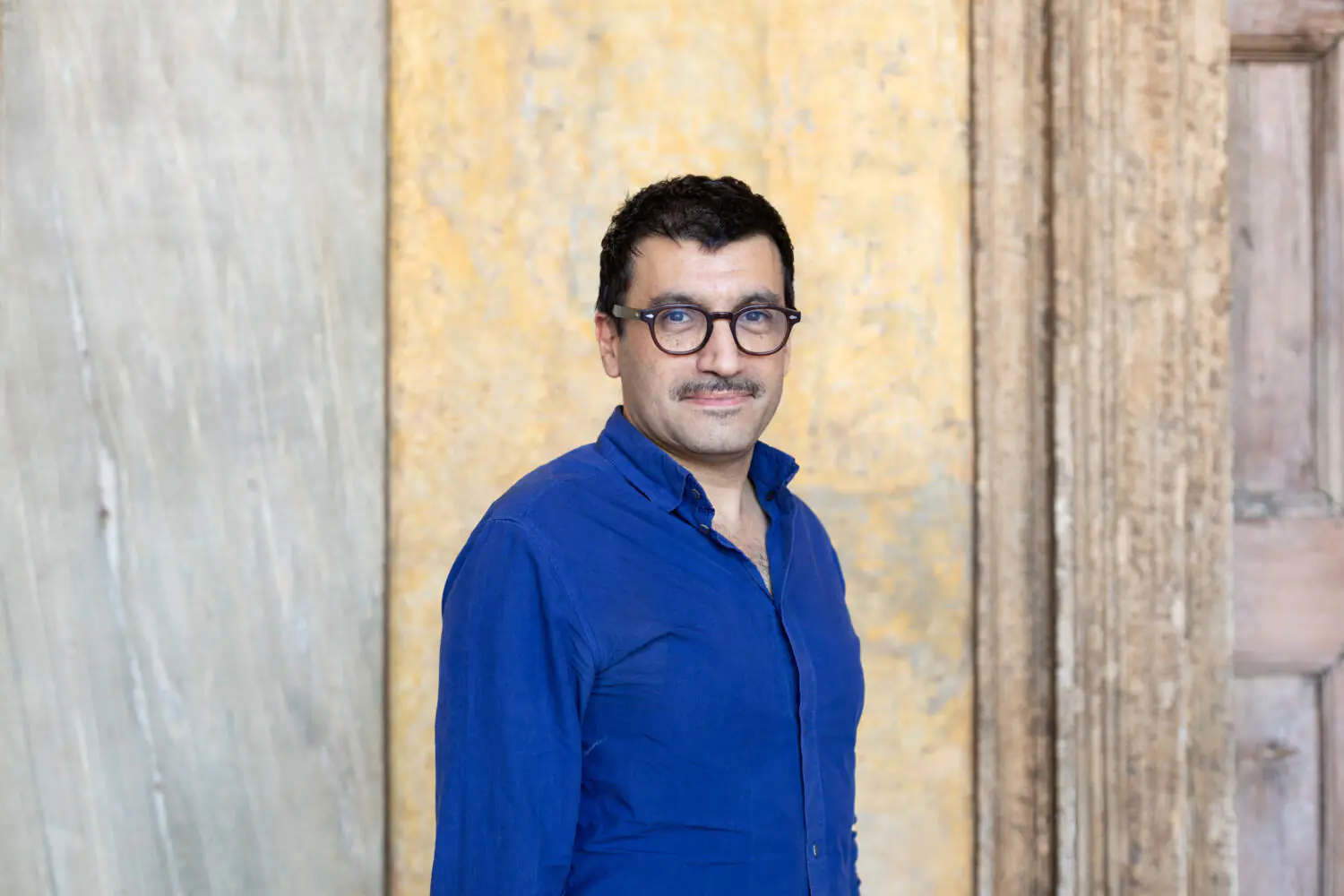
REF. You presented your exhibition on the theme of oil as one of the first to be so critical. Yet it isn’t entirely anti-oil.


MM. There were at least a dozen international exhibitions before ours on the links between oil and the contemporary arts: at the Jameel Art Center in Dubai, at the Museum of Contemporary Art in Stavanger—a major oil port in Norway—and at the museum in Wolfsburg, Germany, where it seems the museum director was even fired as a result. The automotive lobby is extremely powerful in Germany. Having learned a great deal from these exhibitions conceived by talented curators, I hope that ours has succeeded in developing an even more critical and “anti-oil” perspective. This anti-oil critique is one we champion, and it manifests in various ways throughout the exhibition and its catalog, where the invited researchers are often activists.
Do you think Sam Stourdzé, the director of Villa Medici, also risks losing his job because of your exhibition?
I don’t think so; the German automotive lobby isn’t quite as strong here, so that will save him! But he owes it above all to his courage, his principles, and the fact that he decided to tackle certain urgent issues within Villa Medici’s exhibition program—issues that civil society has already begun to take up as its own. That kind of courage is quite rare.
Had you already proposed this project when you were a fellow here?
I was a fellow at Villa Medici two years ago; from the very beginning, my research was geared toward creating an exhibition and a book. Sam Stourdzé and Caroline Courrioux generously supported this entire process (during which I gave many lectures on the subject in various countries) and ultimately made this exhibition and its catalog possible, even though several museums to which I had proposed the project were hesitant. There are economic, cultural, and institutional contexts in which there is a certain degree of flexibility to pursue innovative and independent projects. The fact that Villa Medici’s exhibitions are not funded by oil money is also significant. These issues are part of a broader movement; for example, the Tate Modern ultimately cut off funding from British Petroleum for good after a decade of actions carried out by anti-oil activist groups within the museum. The collective Libérons le Louvre and the NGO 350.org succeeded, after several militant and citizen-led actions, in preventing the partnership between Total and the Louvre. This clearly demonstrates that these actions bear fruit.
These are the results that should be considered works of art.
Anti-oil activists have adopted increasingly performative and artistic forms of action (such as the Just Stop Oil collective): occupying a museum lobby without warning, collectively dressing in black, lying on the floor to simulate corpses, pouring black liquid into a museum lobby or onto artworks—as an act of civil disobedience—to expose the presence of oil power within the museum. The ties between the oil industry and museums are always relatively hidden or implicit. More and more museums are trying to free themselves from this economic lifeline. There are still many, however, that continue to be funded by oil. Let’s say that with Villa Medici, I happened to be in the right place at the right time to develop a critical discourse that stems primarily from the artists on display. Most of them are also activists in their own way or identify as such—so-called “artivists” who adopt increasingly militant forms to create a visual shock and raise ecological awareness.
Let me rephrase the question: shouldn’t the concrete results and victories of these actions—such as the withdrawal of museum partnerships with oil companies—be considered works of art in their own right (beyond the flash mobs themselves and the aesthetics of the actions)?
When ordinary artists or members of civil society achieve such results or victories against the monopolies of political, economic, or industrial power, can we truly celebrate them as works of art—or, even more fundamentally, as the safeguarding of a common good that is none other than our Earth, which risks burning up and dying out forever?
Are some of the artists in the exhibition part of this family of artivists? In this exhibition, which artists began as activists and then, so to speak, adopted artistic techniques later on?
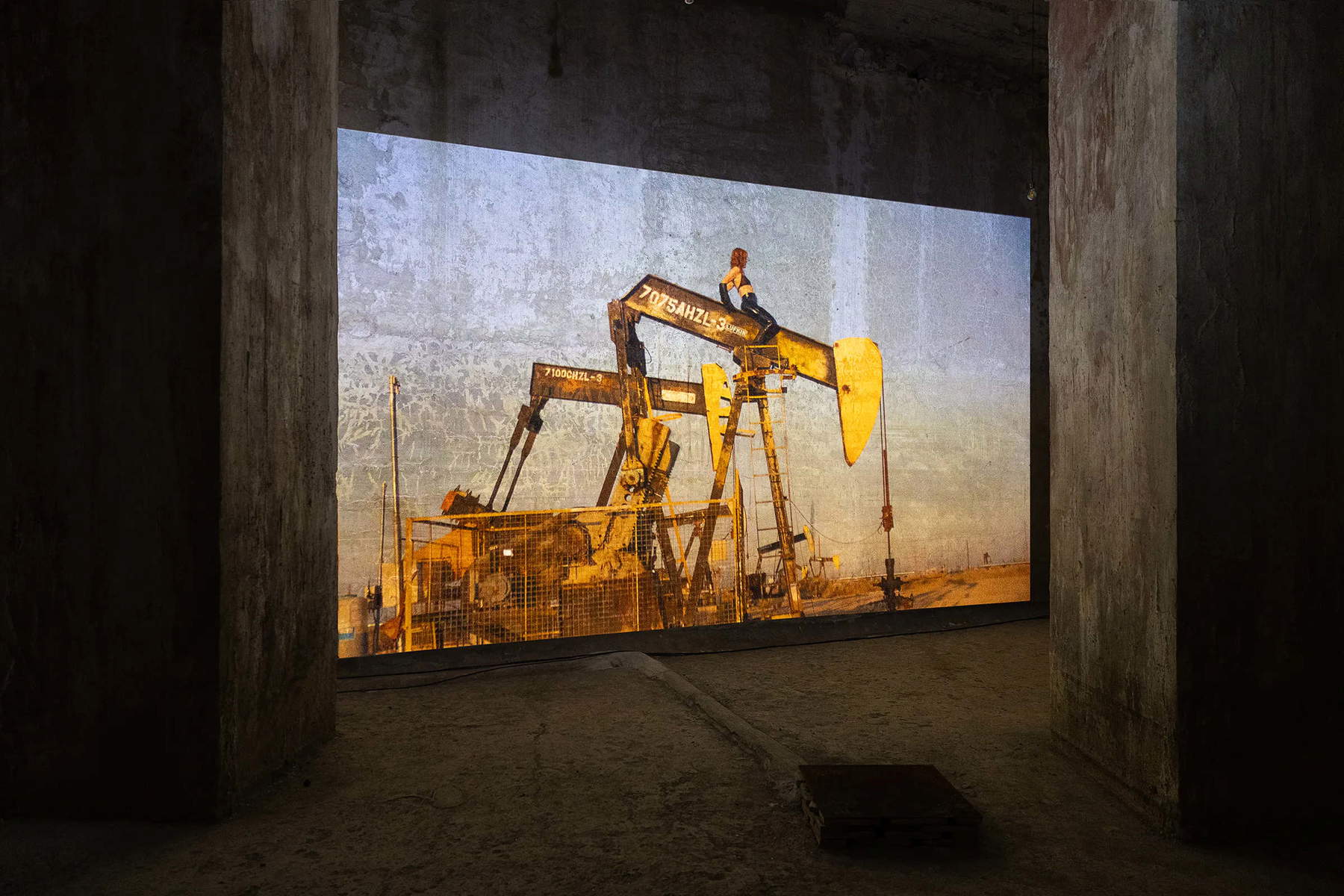
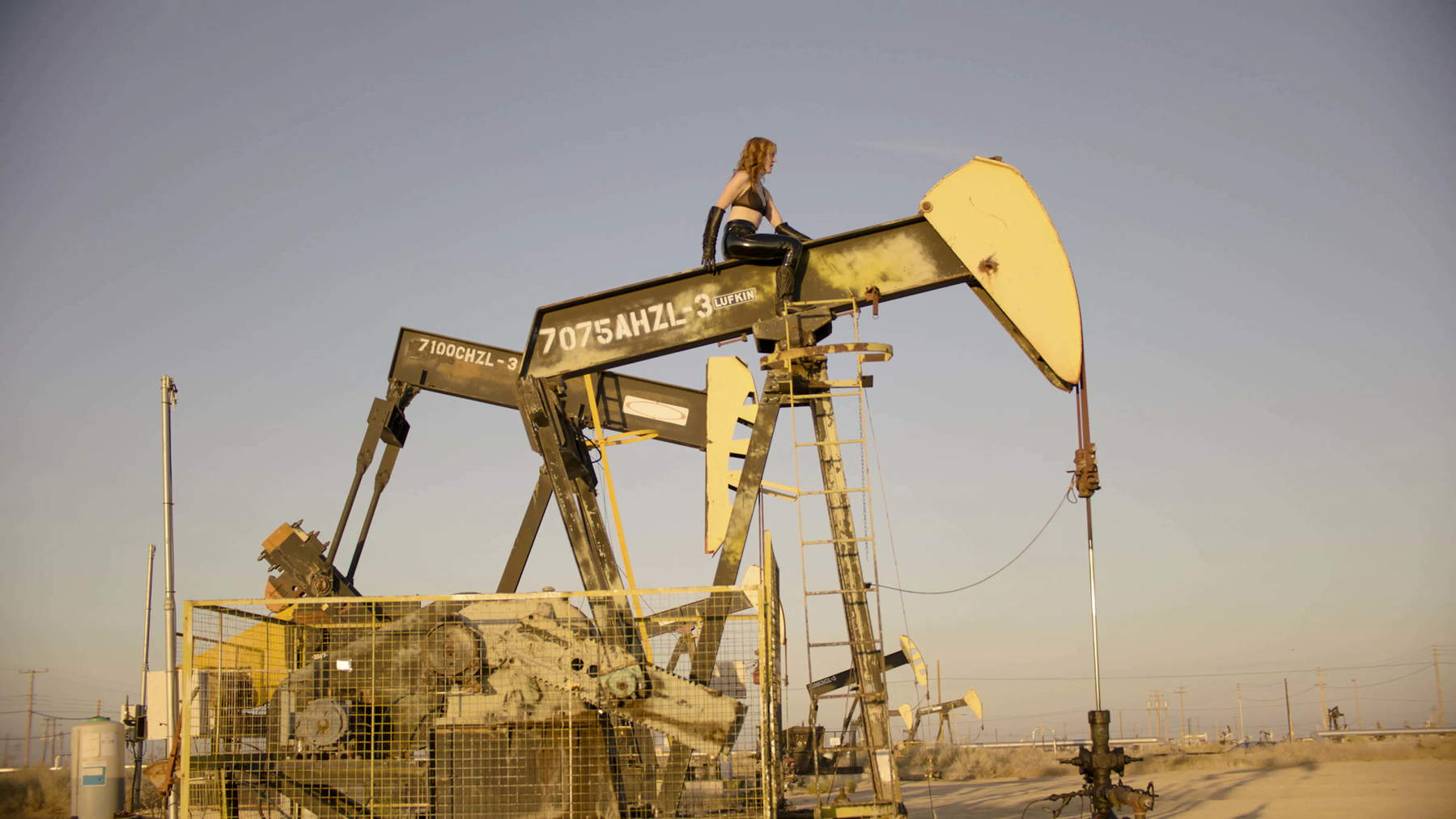
There are several—I’d say almost all of them. In the space we call the Cisterna at Villa Medici, there’s an American artist named Jessica Segall. She presents a large video installation featuring a woman riding an oil extraction pump in a feminist and provocative gesture; other images show bodies covered in oil, playing on the idea of our dependence on “black gold.” “What if oil were part of us?” the video seems to ask. Or what if it were part of our sexual imagination, our libido, our desire—like a toxic relationship from which we’d try to free ourselves or detoxify, since it’s so deeply embedded in us and our civilization? Jessica Segall draws on queer ecology, an ecological perspective that takes the queer issue into account. Today, postcolonial and decolonial studies are increasingly intersecting with environmental movements, giving rise to new synergies among researchers, artists, and civil society.
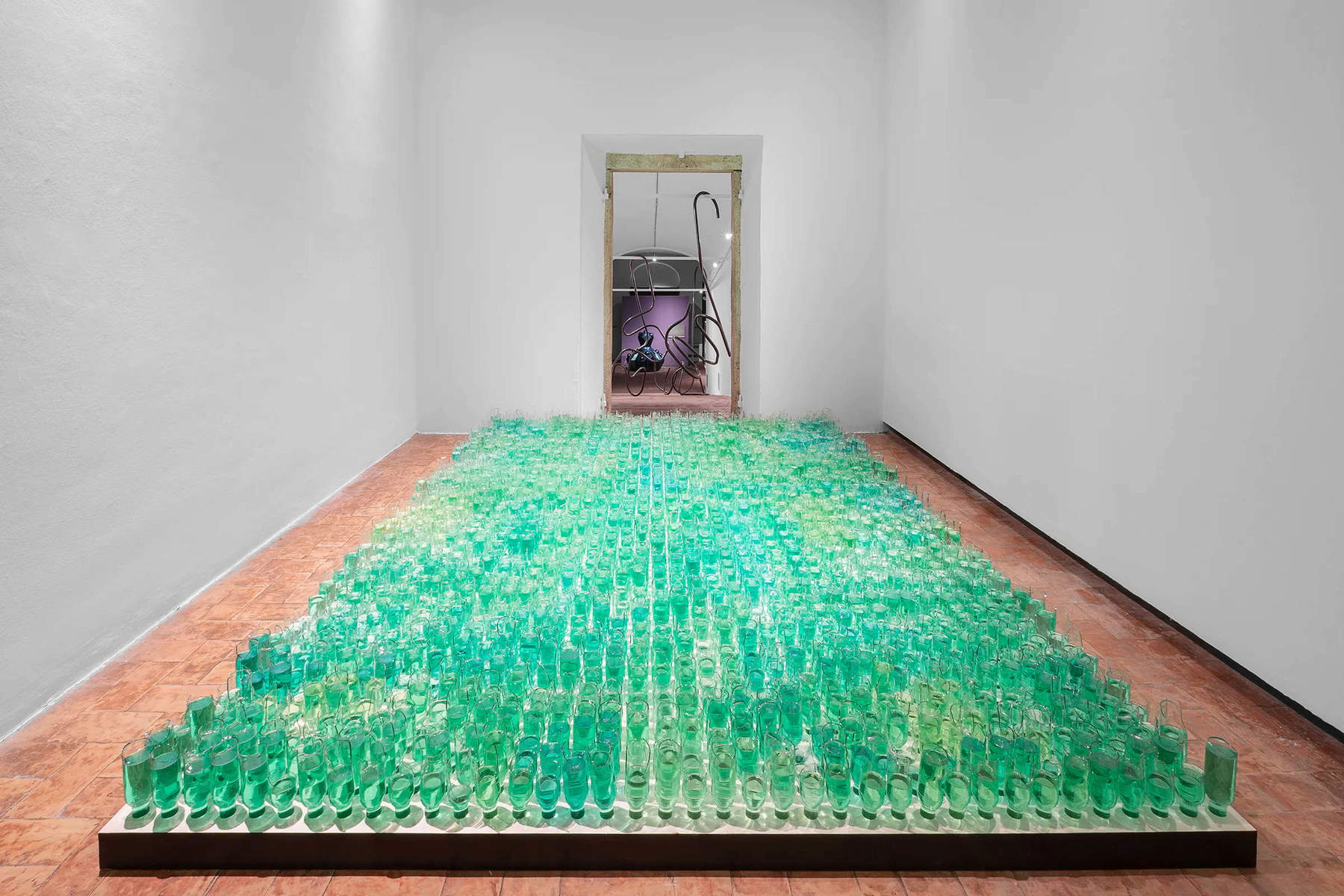
In this very room—the Villa’s Cistern, which serves somewhat as an antechamber to the exhibition—the first work on display is a timeline linking labor movements, ecological catastrophes, and political murders such as that of Pasolini, the disappearance of Enrico Mattei, and other events mapped by the Italian artist Alessandro Marchi.
Yes, archiving acts of activism is indeed part of activism itself and its evolution. Alessandro Marchi explores obscure issues—the dangerous relationships between intellectual, industrial, and political circles in Italy during the 1960s and 1970s. ENI had a rather paradoxical reputation: on the one hand, it more or less exploited Iranian or Iraqi oil just as the British and others had done; on the other hand, it offered some support to intellectuals and liberation movements in the Global South and colonized territories.
ENI is still present in Libya and other African countries such as Senegal, where you are the artistic director of the 16th edition of the Dakar Art Biennale, which begins on November 19, 2026.
Certainly, but I think that today Eni is a largely mainstream company that operates like Total, British Petroleum, Exxon, or others. In Mattei’s time, Eni had a special status.
Was Eni involved in liberation movements?
In principle, yes—in the form of covert support for figures or groups involved in liberation and decolonization.
That’s rather positive for an oil company, isn’t it?
Coming from an oil company that exploits the natural resources of those very same countries, it remains paradoxical nonetheless. However, Mattei and Eni were viewed very negatively by other Western oil companies.
Did competing companies view it as a sort of maverick?
Yes, at the very least as someone who didn’t play by the rules established by the major oil companies of the time—known as the Seven Sisters, the seven largest Western oil companies. Alessandro Marchi’s work draws our attention to Italy’s interesting role in this history of petro-modernity. In addition to working with counter-cartography, Alessandro puts it into practice by organizing critical walks in Rome or Stavanger. During these walks, he recounts this hidden history in the form of guided tours through places marked by political and industrial power. He navigates this anti-capitalist logic through a pedagogy of walking. He is also the only artist in the exhibition to have worked as an oil engineer before becoming an artist.
Would you like to highlight any museums in Italy that should make an effort to distance themselves from these oil investors, like the Tate? Did you research which museums here need to be decolonized while you were in Rome?
No, that’s not my main focus. I’ve focused my interest more on artistic practices that converge with activist ones, but not directly on museum funding. However, in the exhibition we emphasized the issue of petro-philanthropy—that is, the funding of cultural infrastructure through oil revenues.
Let’s talk about the aesthetic aspect of the exhibition. Many of the artists featured here, such as Monira Al Qadiri, offer a rather seductive critique of the oil industry.
The oil industry has produced aesthetic, documentary, or heritage-based forms through films and photojournalism, funding artists with grants on the one hand and museums and major collections on the other. The aestheticization of oil thus plays out on multiple levels. But where it is most noticeable—in the sense of an omnipresent visual culture—is undoubtedly in the Gulf petro-monarchies, but also in Azerbaijan. After all, even Western countries, starting with the United States, have built their national identities around oil. In Stavanger, Norway—where I recently traveled—there is an oil museum that serves as a propaganda tool glorifying oil, even though one of its exhibits discusses global warming as part of a greenwashing effort. In Riyadh, Saudi Arabia, the Black Gold Museum was recently inaugurated—yet another soft-power museum that panders to the oil industry. Beyond contemporary art, design, museums, and cultural infrastructure, the aestheticization of oil begins with marketing—with a simple mug bearing the Exxon or British Petroleum logo…
…or a plastic bottle. What, then, distinguishes your exhibition from the pro-oil format of soft power museums like the Black Gold Museum?
We have sought to illustrate the transition from the era of “black gold” (in the 20th century)—when the mythology or utopia of oil concealed the dangers we faced—to our current era, known as the “black sun” (in the 21st century), characterized by a global ecological hyper-awareness that is emerging in opposition to the overwhelming power of the oil industry and what we now call mass extractivism. Because, even beyond oil, marble, sand, water—all natural resources and raw materials—are also running out. Social media, which we often rightly criticize, also plays an important role in the development of this global ecological consciousness.
A difficult question: let’s talk about the carbon footprint of your exhibition. Can *Sole Nero* be considered an ecological exhibition?
Putting together an ambitious exhibition featuring 40 artists from every continent requires infrastructure that does, in fact, generate a certain amount of carbon emissions, which can put us in a bit of a bind. But all the works in the exhibition come from Europe and were transported by truck rather than by plane. While this commitment has its limitations, it remains a concrete step toward adopting best practices.
Some of the works in your exhibition are made with real oil, and some still have a very strong odor.
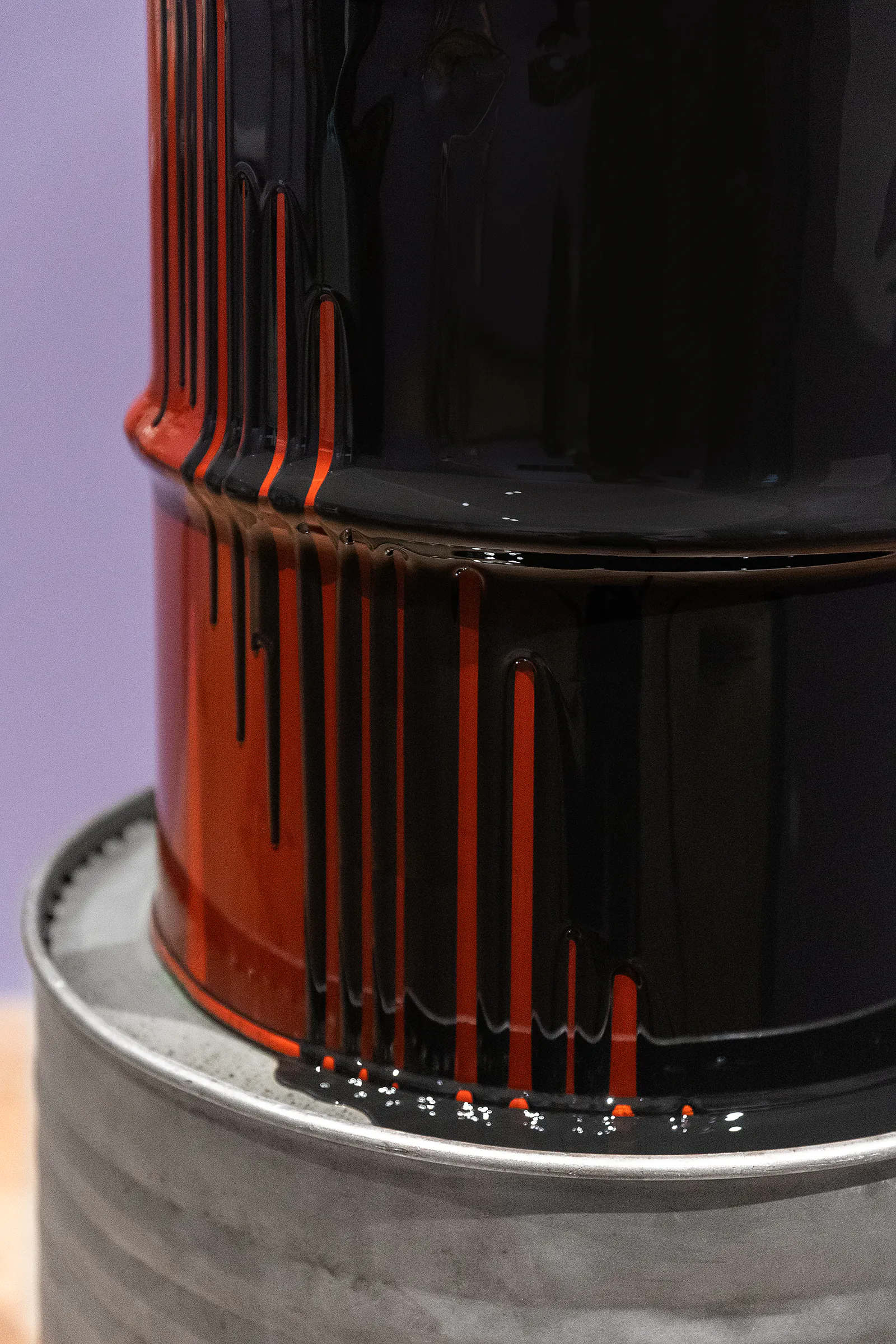
Yes, it’s used oil—waste oil. There are at least two works that give off a bit of an odor, but it’s intentional; it constitutes a sensory dimension of the exhibition—something that becomes almost physical and can have an interesting impact on the viewer’s experience and awareness. The exhibition is neither flawless, nor innocent, nor entirely clean, but it aims to deconstruct certain aspects of the visual culture of oil in order to better understand it—or even to combat it. The peculiarity of “petromodernity” is that we will probably never be able to rid ourselves of it entirely: it has infiltrated every port and every region of the world, as well as the pores of our bodies and our daily lives. A telling example today is the infamous microplastics derived from oil that are found in our body washes… the very products we use to clean ourselves!
Microplastics are even in our genes. We are contaminated—so are we necessarily complicit?
No one—not even an exhibition—can be innocent or pure in the face of these challenges. We must acknowledge our own propensity to participate in a certain toxicity if we hope to begin a process of detoxification. Once again, the goal of total purity or innocence on these issues is unattainable. What is certain is that the exhibition is not funded with oil money. But let’s not hide our contradictions, just as we embrace our critical perspective and the exhibition’s primary function, which is to push toward ecological, political, and social awareness.
Since you’re of Iranian origin, have you felt particularly invested in a mission regarding this issue?
My parents were both from Tehran and the Caspian Sea region. I was born in Paris, but as a Franco-Iranian, I’ve mostly heard about the famous 1953 coup orchestrated by the Americans against the nationalization of oil in Iran; the Americans’ support for the Shah against the nationalist Prime Minister Mohammad Mossadegh, who had begun nationalizing oil to such an extent that the Americans decided to overthrow him. It’s a very well-known, almost mythical geopolitical episode when you’re Iranian—even for those of my generation born in the early 1980s.
Did your parents live through the 1953 American coup in Iran?
In 1953, my parents were children; they were 7 or 8 years old at the time. In recent world history, we mostly hear about the 1979 revolution, but for an Iranian, the 1953 coup represents the turning point in the geopolitics of oil.
Oil is part of the Iranian identity.
Yes, absolutely—it’s part of the collective imagination.
Do you have anything to say about Iran today?
Whether considered as a country, an economy, or a geological entity, from Tehran to the Strait of Hormuz, Iran is a powder keg. American and Israeli bombs are raining down on the country, but it also harbors its own bomb in the form of this toxic accumulation of oil and uranium: suicidal riches. We witnessed an unprecedented phenomenon of “black rain” during the American bombings in Iran—oil literally raining from the sky, clouds of oil.
The American and Israeli bombings that targeted the oil fields have caused the same environmental consequences as those in Hiroshima, Japan.
Exactly: as soon as an oil reserve is attacked, it causes even more widespread and long-term damage that contaminates people for decades, for generations. There’s a lot of talk about nuclear power, but bombing oil facilities pollutes just as much as a nuclear explosion. Iran today is, unfortunately, a regime built on both oil power and neo-Zoroastrian religious power.
Do the Iranian artists in this exhibition address this issue?
Yes, particularly Shirin Sabahi, who created a striking film about the connections between art and oil, shot inside the Tehran Museum of Contemporary Art. In a way that is both more general and implicit, the exhibition also reveals its geopolitical divisions by creating a dialogue—or a juxtaposition—between American works and Iranian or Arab works.
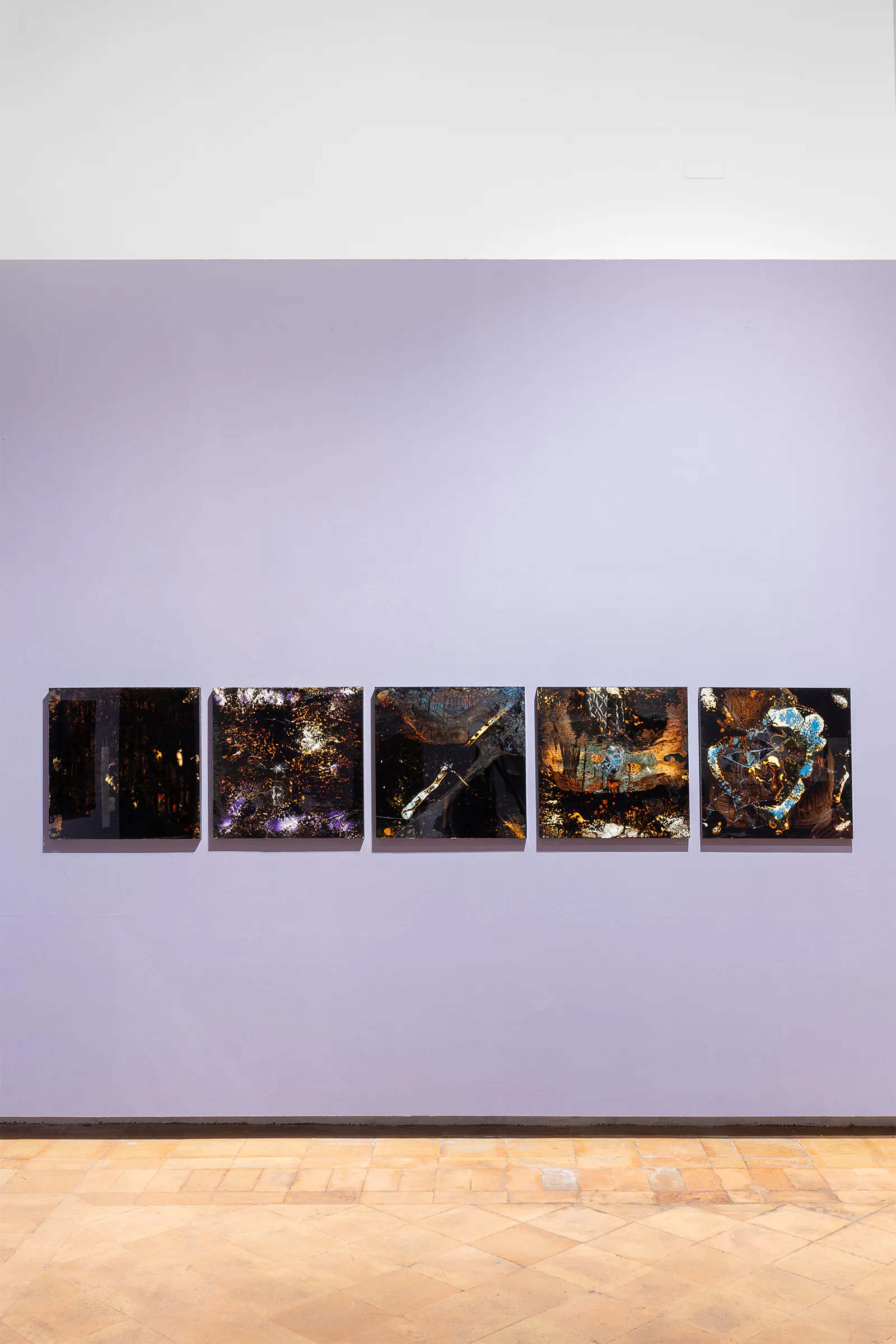
This East-West contrast is typical of postmodern rhetoric, particularly in the second room, where a Rauschenberg is placed opposite the “Zeft Time” series (painted with tar) by the Palestinian artist Hani Zurob. Or the photograph of Calder’s mobile in front of the official portraits of Ayatollahs Khomeini and Khamenei, in a work by Alessandro Balteo-Yazbeck and Media Farzin.
There is indeed all this East-West (or North-South) geopolitics, but there is also Africa. We have Zina Saro-Wiwa, who is perhaps one of the most activist artists in the exhibition, having fought for years to save what can still be preserved of the Niger Delta, with her video of masked dancers (from the Ogoni community) who come to reclaim the sacredness of the landscape desecrated by oil company pipelines such as Shell’s. Zina Saro-Wiwa is the daughter of a leading figure in Nigeria’s anti-oil activism, Ken Saro-Wiwa, who was assassinated in the 1990s—a murder that was undoubtedly the result of collusion between the Nigerian authorities and the oil companies.
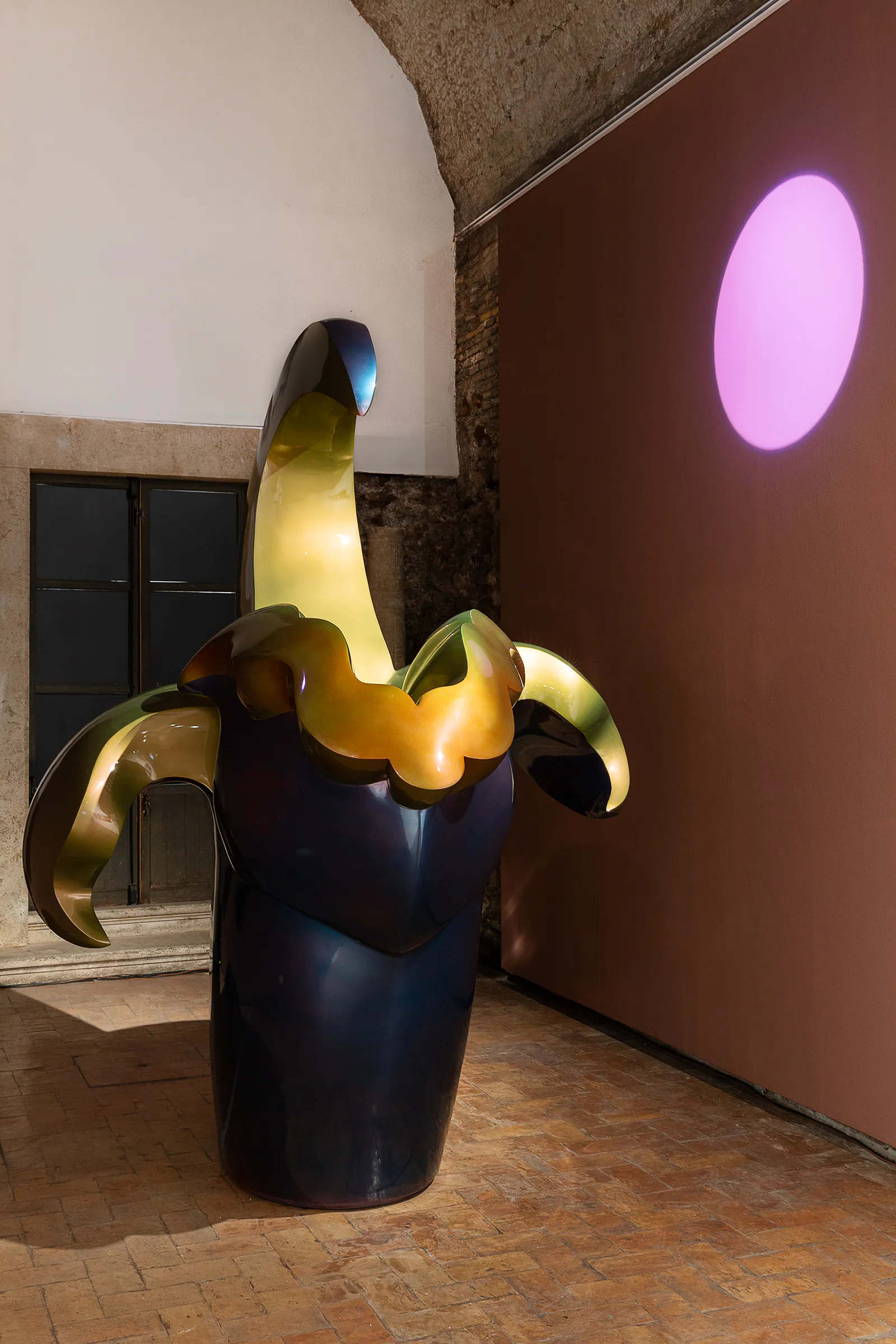
Let’s return to the large, iridescent, rotating totem by the Kuwaiti artist Monira Al Qadiri, which is part of her series inspired by the shape of core bits used in oil drilling. Don’t you think that Monira’s works, on the contrary, end up sanctifying the oil industry?
Monira is one of the best-known artists in the exhibition, in part for embodying this concept of “Gulf Futurism” typical of the Gulf countries. Are we dealing with pure and simple aestheticization that would almost make us love this “petroculture” and perpetuate it, or are we in an almost kitsch dimension that renders it grotesque? I’m especially curious to hear the opinions of the exhibition’s visitors. All the works can contribute to a form of aestheticization, as can the entire exhibition. But this aestheticization isn’t an end in itself; it’s meant to be a starting point for politicizing our view of oil power and its harmful role in our daily lives.
I’d say Monira’s aesthetic is more pop than futurist. Futurism in Italy is a very specific and concluded historical avant-garde movement.
Yes, “futurist” here in the sense of dystopian science fiction—a future tied to a state of permanent catastrophe and war into which we believe we haven’t yet plunged, even though we’re already in it up to our necks… a future that is already our present.
Your perspective on oil is rather fatalistic. Is there no escaping oil? Can’t you put on an exhibition against oil without also being in favor of it, without showcasing its beauty?
No, I’m not fatalistic, but I accept the paradoxes and contradictions that shape our world and that we must work through collectively. Even if some works may create ambiguity or an aesthetic fascination, I still hope that our stance is clear enough.
In this exhibition, you’re trying to bring together artists committed to the anti-oil cause and to theorize an aesthetic. What name would you give to this movement?
I’d call it post-oil art, which is part of the same movement as Anish Kapoor and his collaboration with Greenpeace on the spectacular militant action *Butchered in 2025* [Editor’s note: a giant canvas sprayed with blood-red biodegradable paint—a mixture of seawater and beetroot—on a Shell oil rig off the coast of Norfolk]. An art that is both anti- and post-, yet one that eludes propaganda or soft power; art rooted in its independence and integrity; art that strives to create the conditions for a world beyond oil and “fossil imperialism,” a term coined by the thinker and activist Andreas Malm.
Will we see some of the artists exhibited here in Rome at the Dakar Biennale? Can you give us a preview of the program?
The only artist from the *Sole Nero* exhibition who will also be featured at the 16th Dakar Biennale in Senegal—where I am fortunate enough to serve as the next artistic director—is the South African artist Lungiswa Gqunta, who creates powerful sensory installations. But we’ll also be exhibiting other artists and activists in Dakar who are equally committed to combating the consequences of extractivism, such as Alexandra Karakashian (South Africa) and Jean David Nkot (Cameroon). This edition of the Dakar Biennale, centered on the theme (Anti)fragility: Arts of Repair and Strategies of Backlash, will highlight both emerging artists and leading figures in African contemporary art and its diasporas around the world.
Warning: the translation into English of the original Italian article was created using automatic tools. We undertake to review all articles, but we do not guarantee the total absence of inaccuracies in the translation due to the program. You can find the original by clicking on the ITA button. If you find any mistake,please contact us.