





What does it mean to organize an exhibition today? And above all, what happens when the exhibition itself becomes the subject of the exhibition? These are the questions that serve as the starting point for *Expositio Mundi*. The Exhibition as Medium, a contemporary art exhibition curated by Lorenzo Benedetti and Giuliana Pascucci, is scheduled to run from July 11, 2026, to January 10, 2027, in Macerata, featuring works and installations by artists such as Giulio Paolini, Felix Gonzalez-Torres, Maurizio Nannucci, Adelaide Cioni, Oliver Laric, Catherine Biocca, and Jonathan Monk. Hosted at the Civic Museums of Palazzo Buonaccorsi, the Sferisterio, and the Mozzi Borgetti Library, the exhibition explores the history of the exhibition not through a chronological reconstruction, but by establishing connections between documents, historical works, and contemporary practices. At the heart of the project is Giuseppe Ghezzi (Comunanza, 1634 – Rome, 1721), a painter, art connoisseur, and man of letters from the Marche region who, in 1676, helped organize one of the first public exhibitions in Rome of paintings from private collections. 350 years later, his experience serves as the starting point for examining the mechanisms that govern the act of exhibiting: from the selection of works to their arrangement, from the architecture to the role of the public. Expositio Mundi thus views the exhibition as a true medium, capable of constructing meanings, guiding the gaze, and generating relationships. The contemporary interventions engage with the specific characteristics of the venues, transforming Palazzo Buonaccorsi, the Sferisterio, the Library, and even the urban space into parts of a single exhibition device. Rounding out the project is 3500 cm², conceived by Lorenzo Benedetti, which takes the concept of the exhibition beyond institutional walls through posters distributed free of charge and intended to circulate throughout the city. We spoke with Giuliana Pascucci, co-curator of the exhibition alongside Lorenzo Benedetti, about this story and its transformations, focusing on the figure of Ghezzi, the relationship between works and space, and the potential of the contemporary exhibition as a public space for knowledge, dialogue, and participation. Here’s what she told us.
NC. “Expositio Mundi” begins with a seemingly simple question: Who invented exhibitions? What does the figure of Giuseppe Ghezzi reveal about the origins of public exhibitions and the need—as early as the 17th century—to rethink the relationship between art and the public?
GP. Rather than identifying a single inventor of the exhibition, Expositio Mundi takes the figure of Giuseppe Ghezzi as its starting point to highlight a decisive turning point in the history of exhibiting. A painter, art connoisseur, academic, and man of letters from the Marche region who was active in Rome, Ghezzi began participating in 1676 in the organization of exhibitions of paintings from private collections at the San Salvatore in Lauro complex, contributing to the development of one of the first modern models of public exhibition. In a city like Rome, where an extraordinary portion of the artistic heritage was housed in aristocratic palaces, making those works temporarily visible to a wider public meant removing them—albeit for a limited time—from the exclusive realm of private ownership. The gap that Ghezzi helped bridge was not only physical but also social and cultural. His experience demonstrates with great clarity that exhibiting does not simply mean placing works in a space, but rather organizing visibility, establishing relationships, and creating opportunities for engagement. It is in this shift that we recognize one of the fundamental premises of the modern exhibition.
Why did you choose to tell the story of exhibitions through an exhibition? What possibilities does this approach offer for questioning the very nature of the exhibition as a form of knowledge and as a language?
The exhibition, conceived and curated by Lorenzo Benedetti, highlights the mechanisms of an exhibition at the very moment they affect the visitor, using the same tools. An exhibition is never merely a collection of works; it produces meaning through juxtapositions, distances, sequences, architectural arrangements, lighting, and texts. For this reason, in *Expositio Mundi* we have chosen to bring together 17th-century documents, modern works, and contemporary interventions, avoiding a chronological narrative. The visitor is not invited to follow a predetermined narrative but to observe how the exhibition design directs the gaze, builds relationships, and produces new possibilities.
350 years after the first exhibition organized by Ghezzi in the cloister of San Salvatore in Lauro in Rome (1676), what do you think are the main changes that have transformed the exhibition from a means of presenting works into a genuine cultural language?
The gradual realization that exhibiting also means interpreting. Even in Ghezzi’s notes, we find many elements that we now associate with curatorial practice: the selection of works, loans, their arrangement, visual hierarchies, expenses, and attention to the public. The exhibition design, therefore, does not appear as secondary but as essential. In the centuries that followed, this awareness became increasingly explicit, and the exhibition transformed into a tool through which to construct interpretations of art history, consolidate or challenge canons, and propose new narratives. In the 20th century, in particular, artists and curators made the exhibition space itself a subject of research. At the same time, the role of the public also changed: no longer merely the final recipient, but an active participant in the process through which the exhibition acquires meaning.
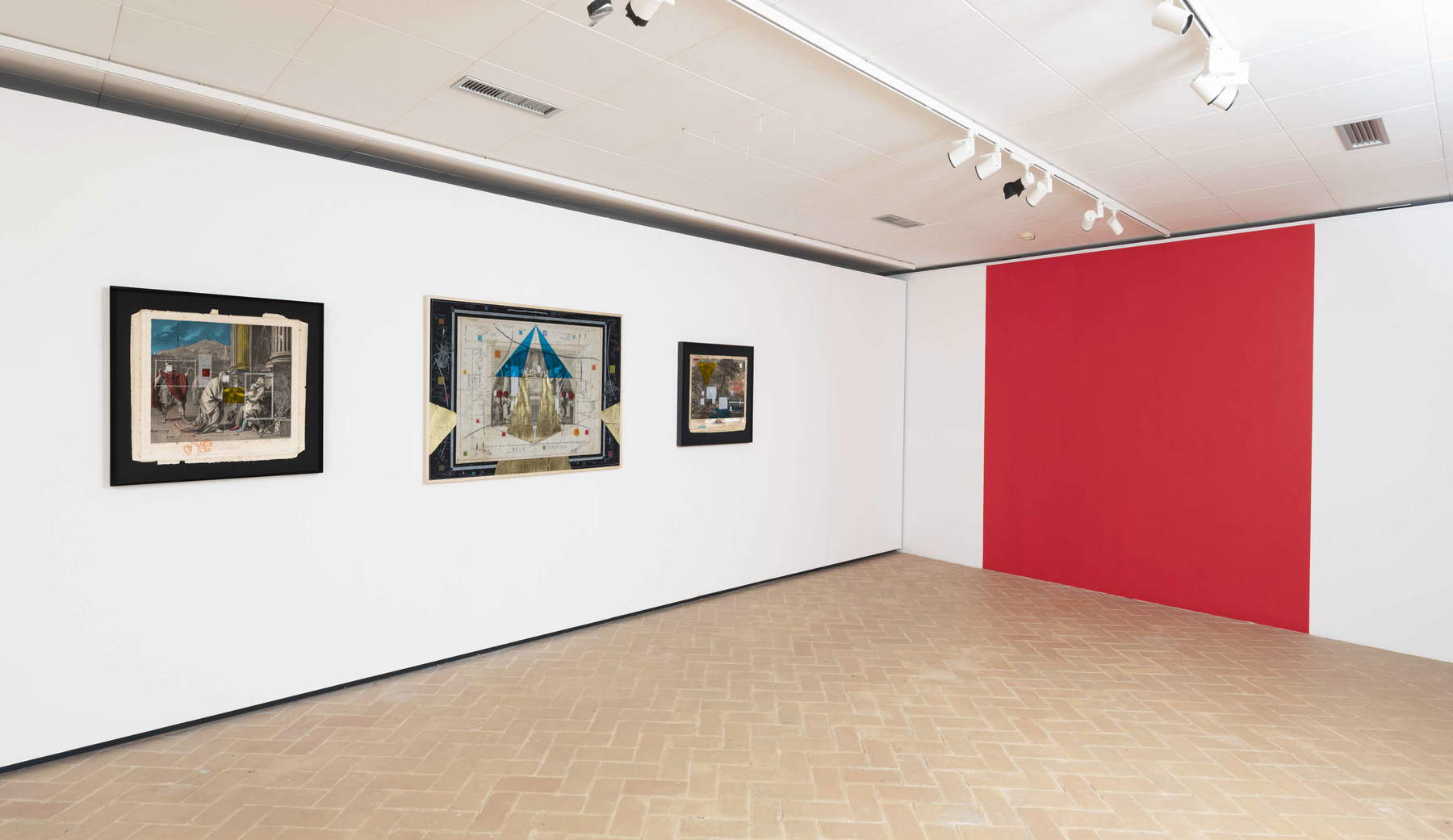
The project brings Ghezzi into dialogue with contemporary artists such as Giulio Paolini, Felix Gonzalez-Torres, Maurizio Nannucci, Oliver Laric, and Adelaide Cioni. What is the thread that allows us to bring together artistic experiences so distant in time and so different in language?
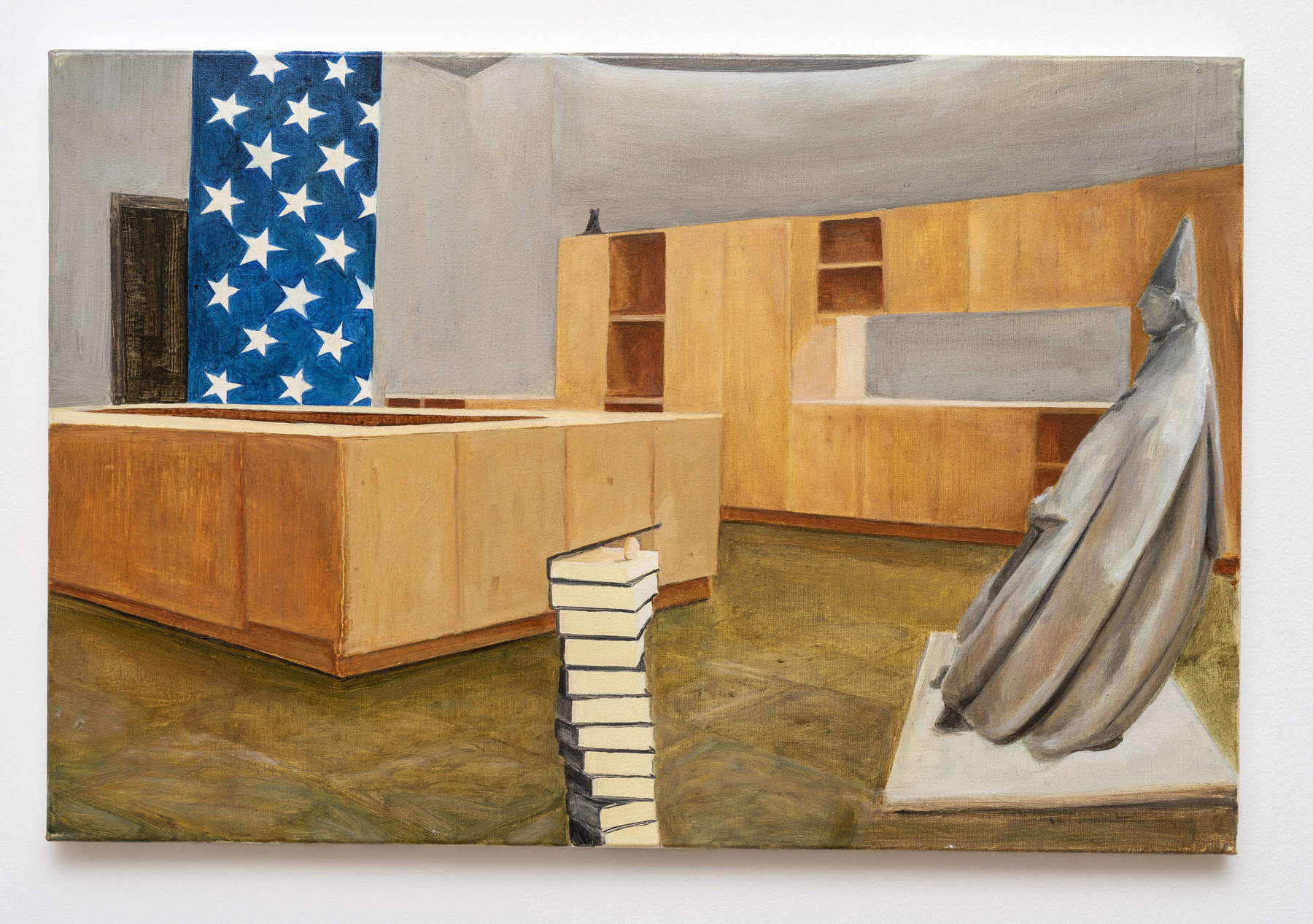
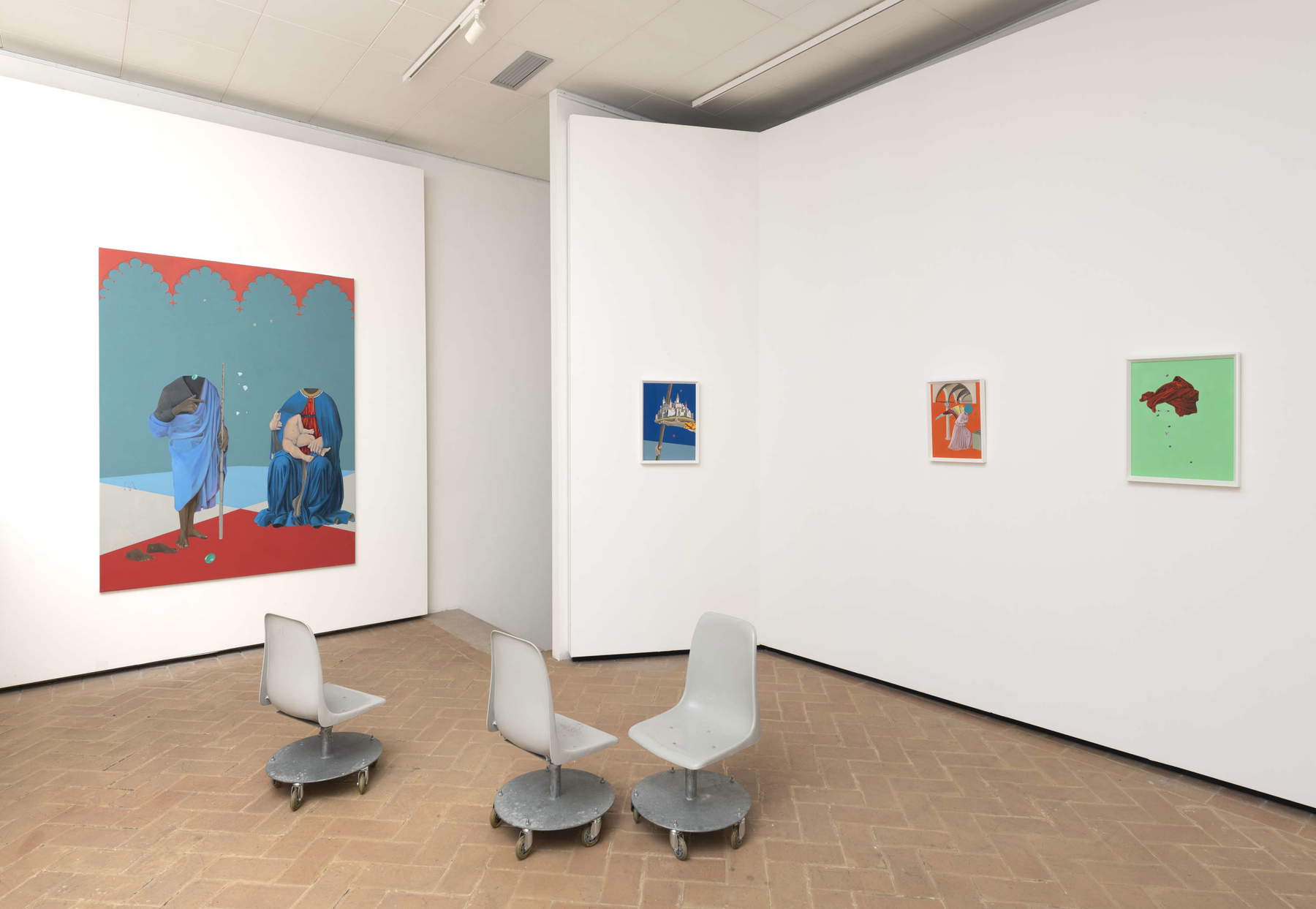
What happens to a work of art when it is exhibited, and what relationship does it establish with the space and with the viewer? This is the common ground, the shared question. Paolini, with *Hypothesis for an Exhibition*, focuses on the potential space of the exhibition and the visitor’s gaze; Gonzalez-Torres involves the public in the life and circulation of the work; Nannucci uses language to transform architecture and perception; Laric works on the reproduction and dissemination of images; Cioni turns the exhibition itself into an interpretive act. These are diverse experiences, yet all of them explore the relationship between artwork, space, visibility, and the public. And it is this element that allows them to engage in dialogue with Ghezzi’s historical legacy.
Some works, such as that by Felix Gonzalez-Torres, transcend the physical boundaries of the venues and directly engage the public space; others, such as Laura Paoletti’s in the Library or Catherine Biocca’s in the Galleria dell’Eneide, establish a very close relationship with the architecture. How decisive was the specificity of the sites in the selection and arrangement of the works?
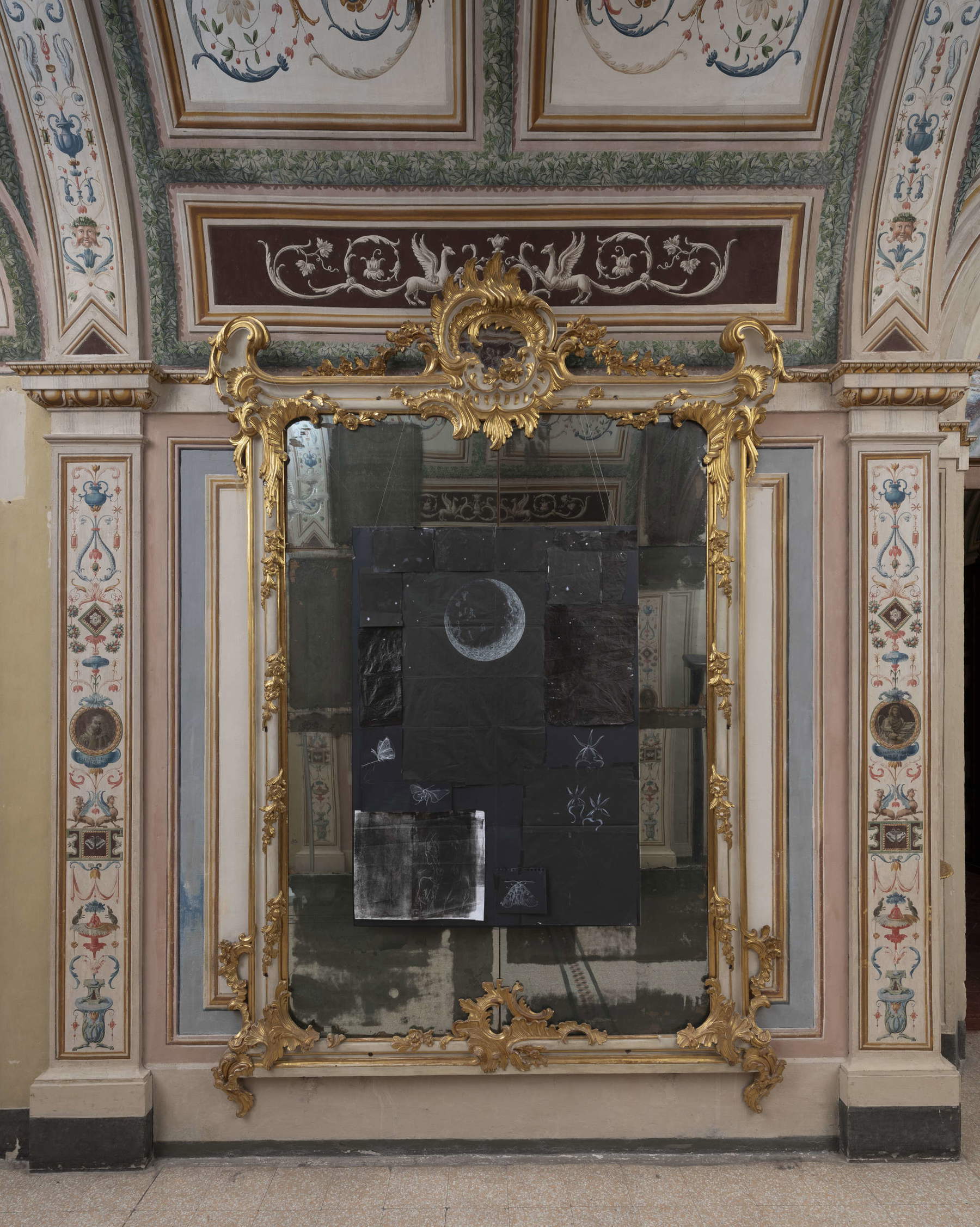
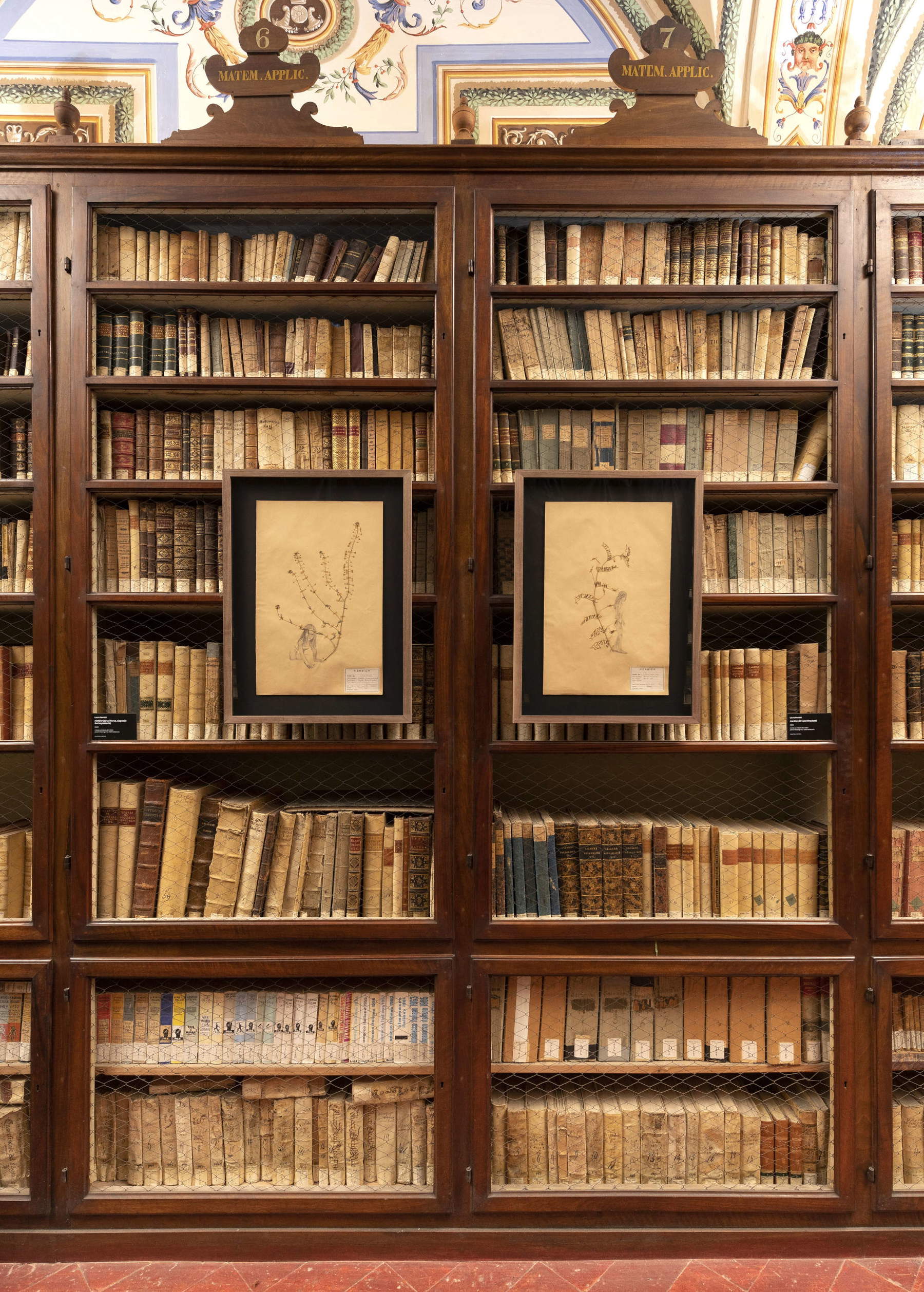
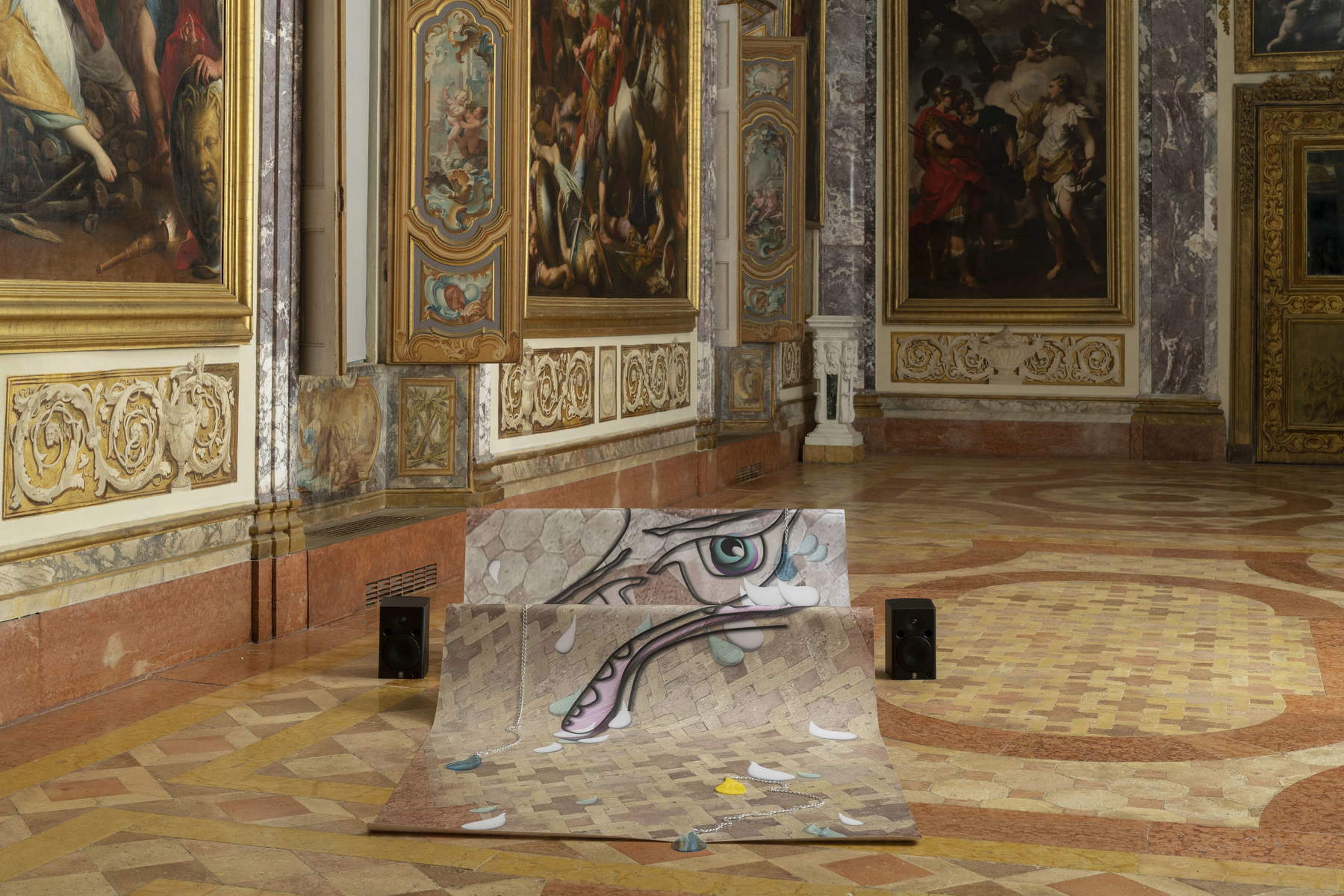
The specific nature of the sites is decisive, far removed from the idea of the exhibition space as a neutral container. Each venue has its own memory, function, and distinct relationship with the public. At the Mozzi Borgetti Library, for example, Laura Paoletti’s *Les Survivances* engages with the temporality of the book, the history of knowledge, and an environment that is already deeply layered. Felix Gonzalez-Torres’s billboard, on the other hand, shifts this reflection to the urban space, where the work can be encountered even by those who have not chosen to visit an exhibition, making the boundary between the museum audience and the general public more permeable. In the Galleria dell’Eneide, Catherine Biocca’s work engages with the architecture not merely as a backdrop, but as a tangible presence—almost like a body with which the artwork enters into a relationship.
The exhibition focuses on the works and the elements that determine their visibility: displays, documents, architecture, installations, and site-specific interventions. How did you construct the dialogue between the works and their locations, and to what extent did the specific nature of each space influence your curatorial choices?
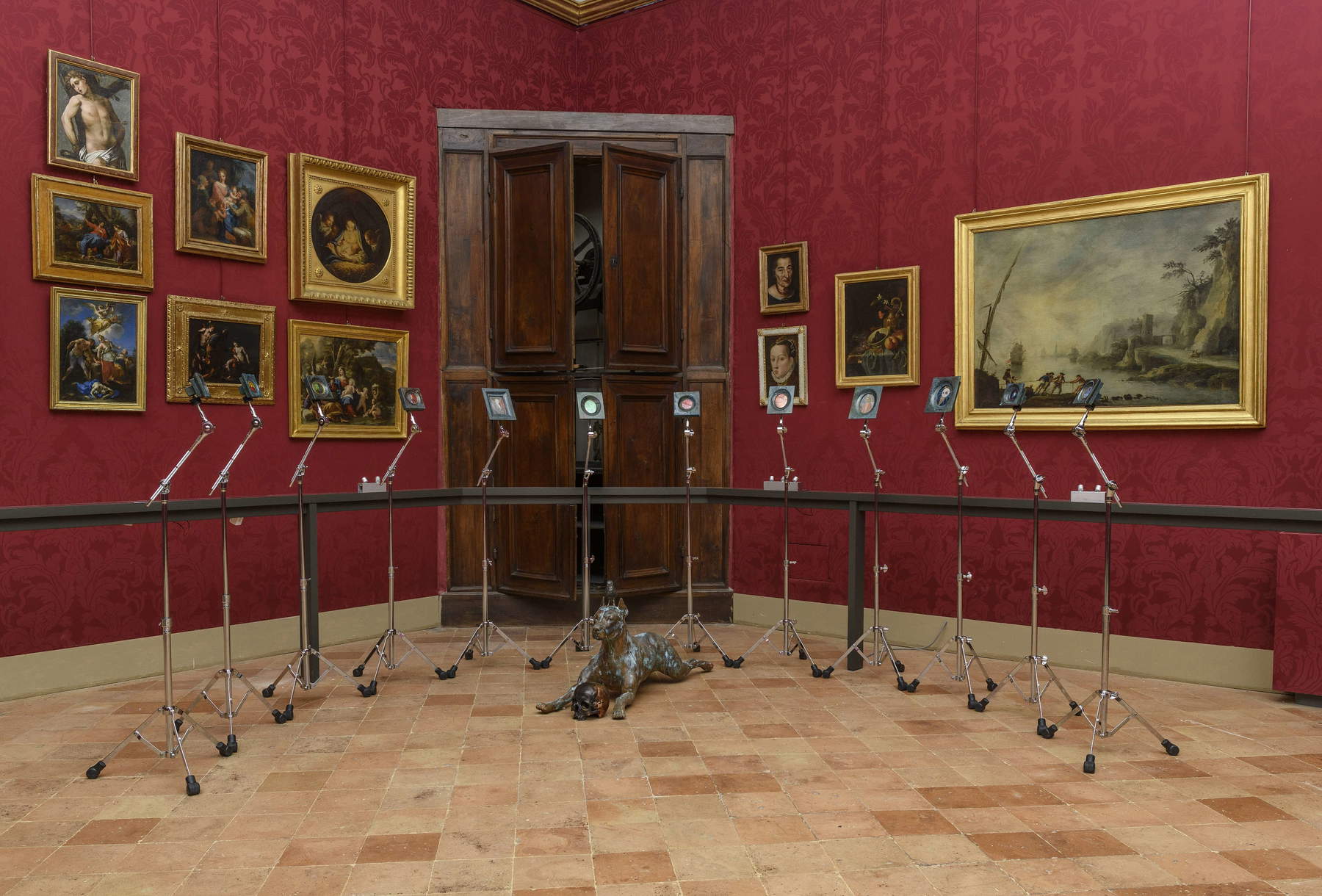
By identifying elements capable of making the very structure of exhibition-making perceptible. Placement is already a critical act; a work changes in relation to what precedes it, what stands beside it, the architecture that contains it, and the memory of the place that hosts it. It is significant that this issue already emerges from Ghezzi’s notes; the discussions on the placement of the paintings show how much the location assigned to a work was perceived as a generator of value, hierarchies, and recognition. At Palazzo Buonaccorsi, this reflection takes on particular significance, because the contemporary element was not conceived as something foreign superimposed on the museum, but as a tool capable of sparking new interpretations of the historical collections.
“Expositio Mundi” unfolds across three very different venues—Palazzo Buonaccorsi, the Sferisterio, and the Mozzi Borgetti Library—and also engages the urban space. How does the exhibition experience change when the city itself becomes part of the exhibition itinerary?
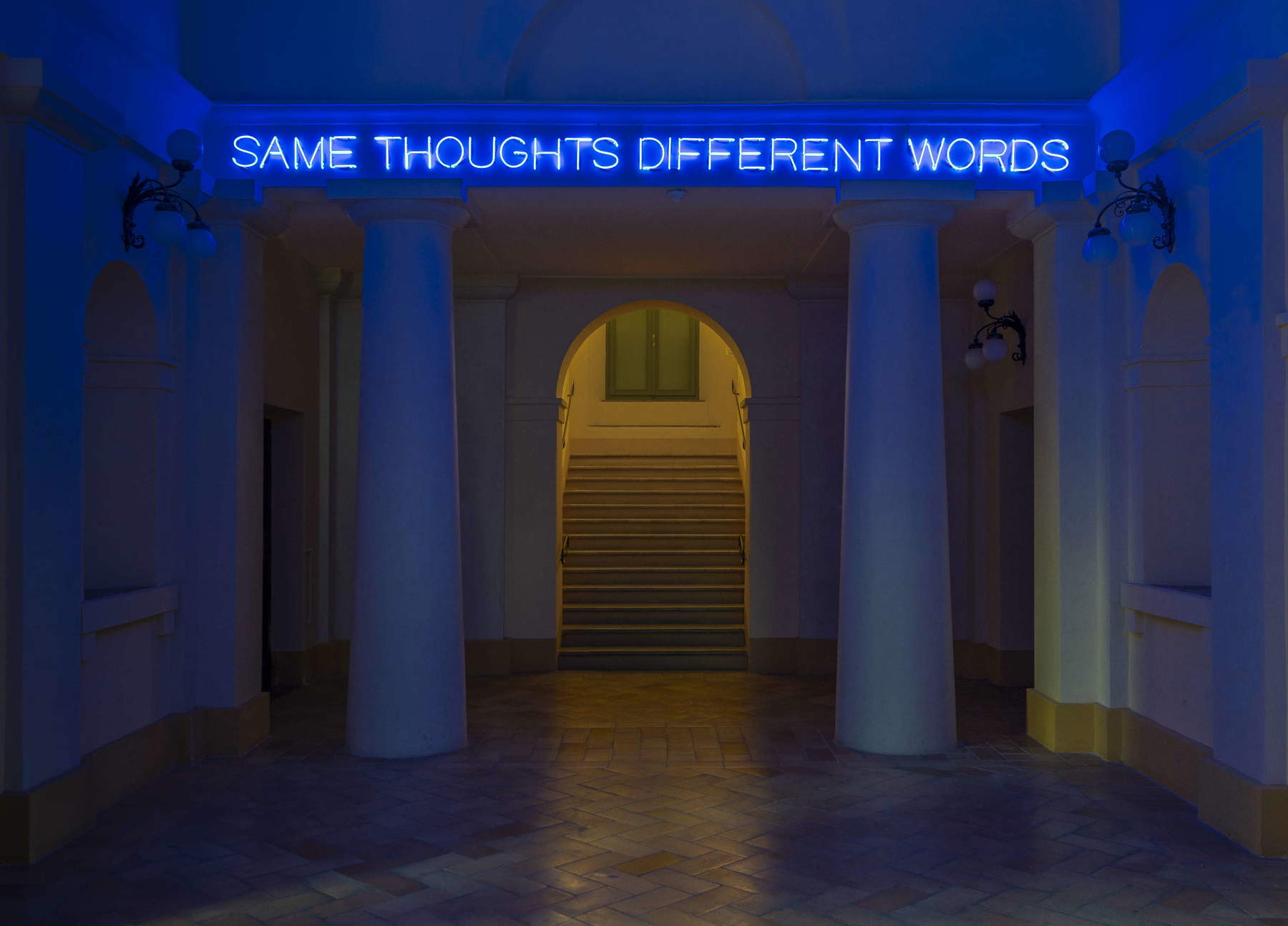
It is a system of different locations, a single journey in which the city itself connects with the works. Moving from one venue to another, the visitor experiences different modes of attention, memory, and participation. Gonzalez-Torres’s billboard makes this transition particularly evident, literally transforming the urban space into an extension of the exhibition. Nannucci, too, at the Sferisterio, works with a place of passage, where the illuminated words are perceived by people as they enter, exit, and encounter one another. In this way, the journey itself becomes part of the exhibition experience.
How did Macerata influence the concept of the exhibition, and what can the city convey—through this project—about its relationship with cultural heritage and the public?
Macerata’s cultural landscape has played a substantial role in shaping the exhibition’s form. Palazzo Buonaccorsi, the Mozzi Borgetti Library, and the Sferisterio are profoundly different institutions, yet all are closely tied to the public dimension of culture and the city’s collective memory. At Palazzo Buonaccorsi, in particular, “Expositio Mundi” continues a line of thought we have been exploring for some time regarding the possibilities of connecting historical collections with the contemporary world. A museum must be conceived as a dynamic entity where the past meets the present. Cultural heritage naturally preserves its own history and identity, while continuing to generate questions and new ways of interpreting it for different languages, sensibilities, and audiences.
The 3500 cm²project takes the exhibition beyond its institutional venues through posters distributed free of charge and designed to be displayed and shared. What, then, happens to the artwork and to the very concept of an exhibition when the exhibition format becomes mobile, accessible, and potentially present in everyday spaces?
With 3500 cm², a project conceived and curated by Lorenzo Benedetti, the identification between the exhibition and a physical location breaks down. The posters become exhibition devices freely available to the public to take away and display in a home, a school, or a workplace, thereby spreading the exhibition to other places. The status of the artwork also changes; reproducibility amplifies its capacity for connection, across time and space. Each poster thus becomes, potentially, the origin of a new exhibition space.
One of the central questions of the project concerns the possibility that an exhibition might become a democratic space. In your view, what should the role of an exhibitionbe today ? To present works, produce knowledge, build a relationship with the public, or challenge the very ways in which we view and interpret art?
These functions cannot be separated. An exhibition must properly present and preserve the works, but it must also produce knowledge, build relationships, and offer the public critical tools. Defining it as democratic does not merely mean making it physically accessible, but creating the conditions so that people with diverse experiences and expertise can establish a meaningful relationship with what they see. The purpose of an exhibition should not simply be to indicate what to look at, imposing a single interpretation, but also to question the ways in which we view and interpret the works. It is through this opportunity for informed, conscious, and pluralistic engagement that an exhibition can truly become a public space of knowledge. From this perspective, Ghezzi’s experience, three and a half centuries later, remains surprisingly relevant today.


The author of this article: Noemi Capoccia
Originaria di Lecce, classe 1995, ha conseguito la laurea presso l'Accademia di Belle Arti di Carrara nel 2021. Le sue passioni sono l'arte antica e l'archeologia. Dal 2024 lavora in Finestre sull'Arte.Warning: the translation into English of the original Italian article was created using automatic tools. We undertake to review all articles, but we do not guarantee the total absence of inaccuracies in the translation due to the program. You can find the original by clicking on the ITA button. If you find any mistake,please contact us.
























 IT
IT FR
FR DE
DE ES
ES CN
CN


