



by Redazione 10/11/2026


Categories: Market / Disclaimer
Rediscovered in 2024 in a drawer that belonged to one of Martin Luther King’s associates, the seven handwritten pages document the creation of the speech delivered in Washington in 1963. Christie’s will auction them on January 22, 2027, with the proceeds going to charitable organizations.


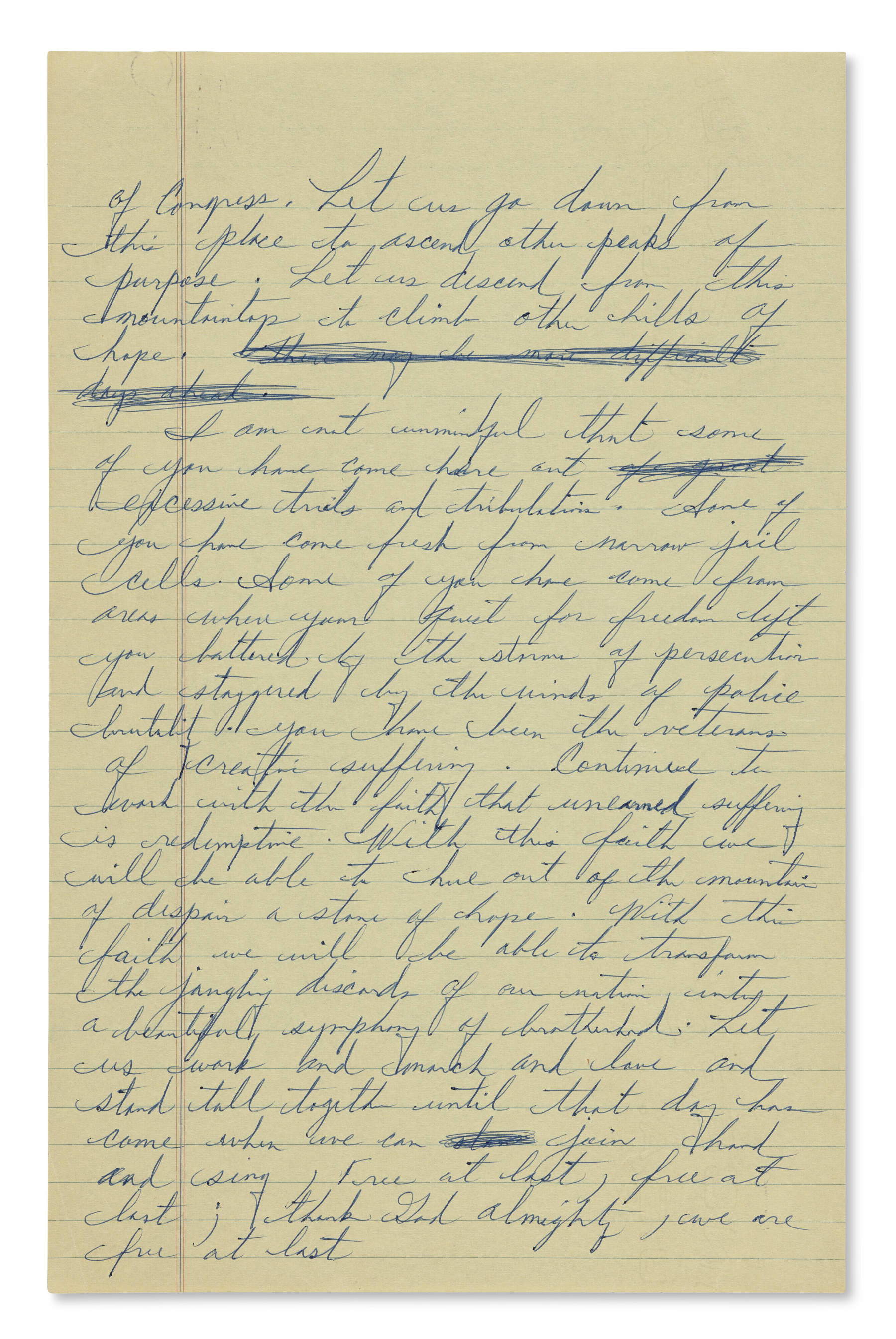
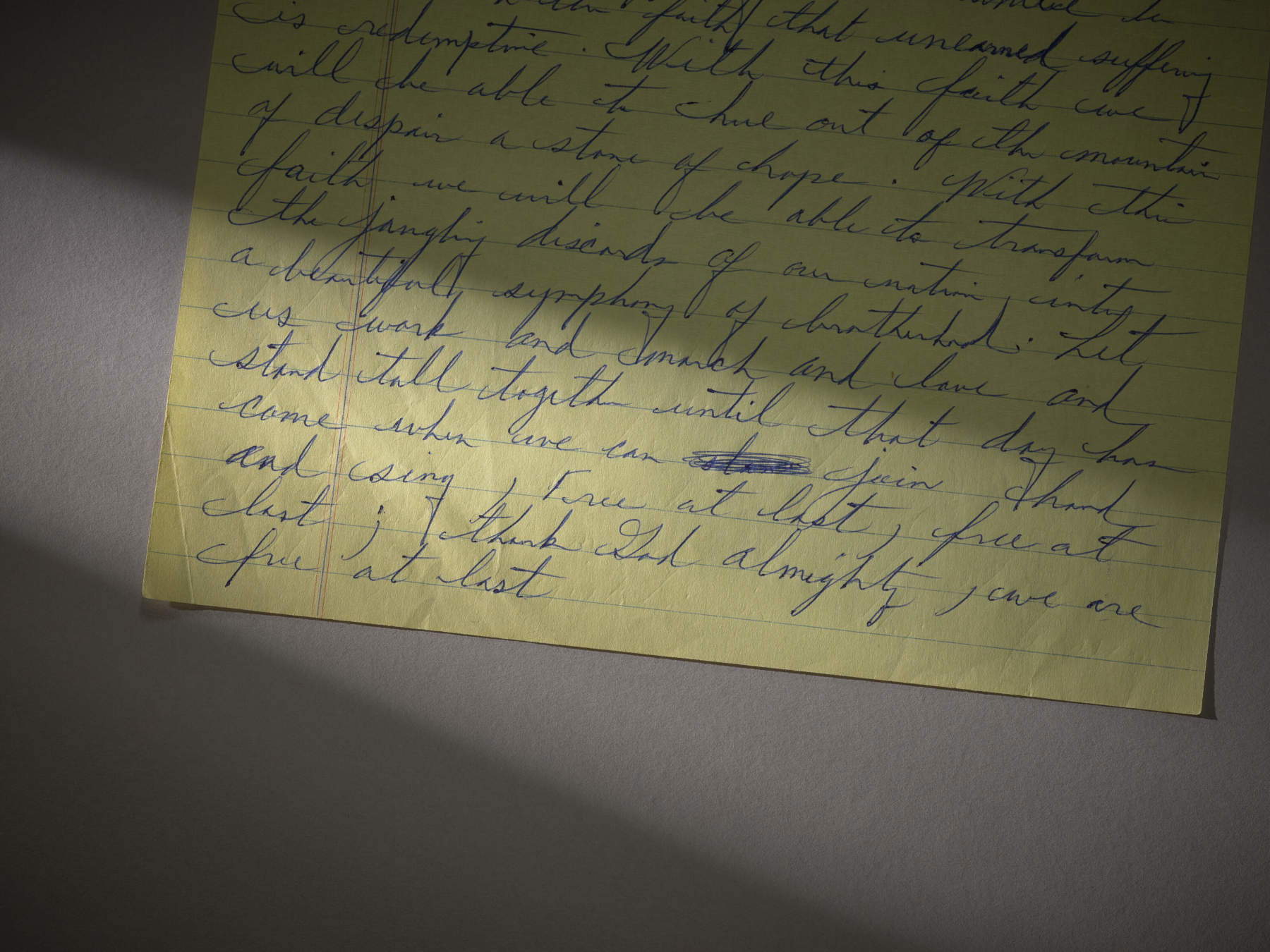
Seven yellow sheets of paper, handwritten in blue ink, contain the only known final handwritten draft to date of “I Have a Dream,” the famous speech delivered by Martin Luther King Jr. on August 28, 1963, during the March on Washington. The document, which spent decades in a drawer belonging to Edward T. Clayton, a collaborator and advisor to the civil rights leader, will be auctioned by Christie’s in New York on January 22, 2027. The auction, titled “I Have a Dream: Dr. Martin Luther King Jr.’s Final Draft,” aims to support various charitable organizations, including the Xernona Clayton Foundation and the King Center in Atlanta.


The story of the manuscript begins in the early morning hours of August 28, 1963. Around 4:00 a.m., after hours of work and revisions in his room at the Willard Hotel in Washington, Martin Luther King completed the final version of the speech he would deliver a few hours later before an audience of approximately 250,000 people. The goal was to keep the speech to five minutes, paying particular attention to word choice and the flow of the text. This work had been preceded by days of discussions with various collaborators, including Edward T. Clayton, director of public relations for the Southern Christian Leadership Conference (SCLC)—the civil rights organization led by King—as well as his advisor and speechwriter.


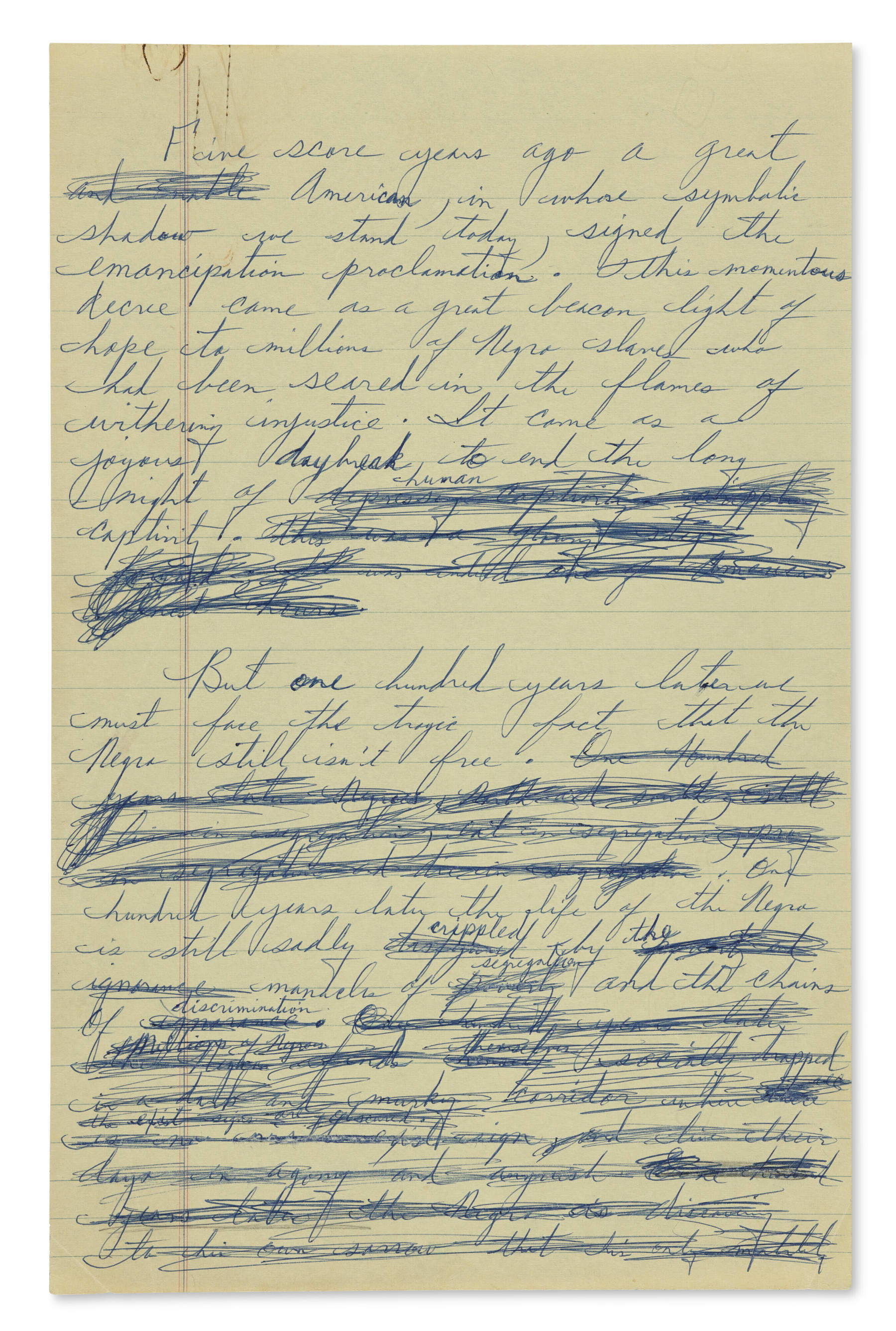
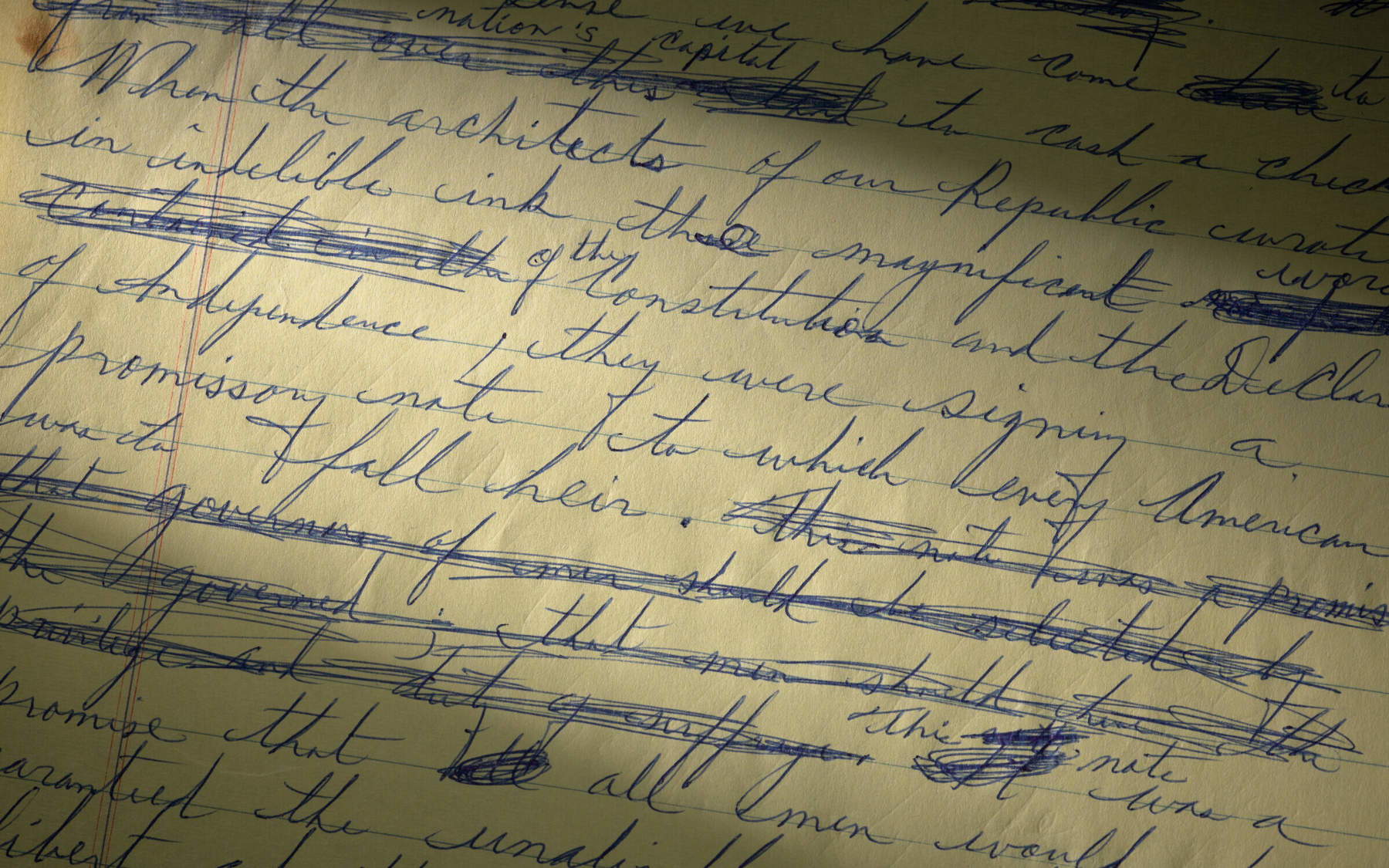
The seven handwritten pages were given to assistants to be typed up and sent to the media. The text contains corrections, cross-outs, and revisions that document the leader’s writing and editing process. The manuscript, however, does not include the words “I Have a Dream,” which King added spontaneously while delivering the speech before the crowd gathered in Washington. It does, however, include the conclusion that was destined to become one of the speech’s most recognizable passages: “Free at last, free at last; thank God Almighty, we are free at last.”


The rediscovery of the pages is linked to the Clayton family. It was Xernona Clayton, wife of Edward—a leading figure in the civil rights movement, philanthropist, and television executive—who first found the document in the late 1990s. It was in an envelope marked “speech,” inside a drawer of the desk that had belonged to her husband. Xernona Clayton recalled that King used to give documents and objects as gifts to those close to him, while Edward had a habit of keeping everything. Although she recognized the importance of the pages and their connection to King’s most famous speech, she did not know at the time that they were the only known final handwritten draft. She therefore decided to put them back in the desk, where they remained until 2024, when she rediscovered them during another search.
With the support of Christie’s and his advisor Eddie Bridgeman, Clayton subsequently identified the document as the only known final manuscript of the speech. He then established the Still Marching Irrevocable Charitable Unitrust, a fund designed to support organizations dedicated to preserving his legacy and promoting the causes to which he devoted his life. Through the trust, and with the assistance of Bridgeman, Mami Hampton Kisner—a member of the board of directors of the Xernona Clayton Foundation—and attorney James L. Walker Jr., the decision was made to put the manuscript up for sale to fund organizations linked to the legacies of Xernona Clayton and Martin Luther King. Beneficiaries include the Xernona Clayton Foundation itself and the King Center in Atlanta, founded by Coretta Scott King, wife of the civil rights leader.
The estimate for the work will be provided upon request, but Christie’s anticipates that the document could fetch over $10 million. Prior to the auction, the seven pages will be on public display for the first time at the National Center for Civil and Human Rights in Atlanta, from November 16 to 22, 2026. A subsequent exhibition in Chicago is also planned, on a date yet to be determined.
In New York, the manuscript will be on view at Christie’s, located at 20 Rockefeller Plaza, from January 15 to 21, 2027, coinciding with Martin Luther King Jr.’s birthday, celebrated on January 15. The day after the exhibition concludes, on January 22, a single-session auction dedicated to the document will take place.
Statements
“When I first saw these pages and realized what they were, I was stunned,” said Peter Klarnet, a manuscript specialist at Christie’s. “It is a treasure of American history. Looking at it evokes a profound emotion. As you follow the text, you feel as though you are right there, alongside Dr. King, as he composes it and makes revisions in real time. The document captures a moment that literally changed the course of our nation and makes it tangible and deeply human. It is an honor and a privilege for Christie’s to have the opportunity to present it to the world.”
“I’m just glad I looked in that drawer,” said Xernona Clayton, recalling the pride she felt watching her husband work with Martin Luther King Jr. on drafting his speeches. “The two of them worked very well together in writing and crafting words. They constantly exchanged ideas, and there was great respect between them. Dr. King, who was a great thinker, said that Ed was very good at putting his words on paper and placing them in the right spot at the right time. I loved watching them work. I had the privilege of witnessing those moments, and now the world will have the opportunity to see those words of wisdom that continue to inspire hope, freedom, and the pursuit of equality. I am deeply grateful for the opportunity to breathe new life into this extraordinary speech and, through it, offer new possibilities to those who need them. We look forward to making the first contribution.”
“It’s poetic to think that the past can protect the future,” said Martin Luther King III, son of Martin Luther King. “We are grateful to the Clayton family for preserving this precious document over the decades. It is an extraordinary historical artifact that offers insight into our father’s creative process as he prepared a speech destined to profoundly shape the course of the civil rights movement and the history of our nation. Now, for the first time, the public will have the opportunity to be inspired by this document.”
“We are also grateful,” added Bernice A. King, daughter of Martin Luther King, “to be collaborating with Mrs. Clayton so that the sale of this draft will help support the important work of the King Center and the legacy of our mother, Mrs. Coretta Scott King, who would have turned 100 next year. As president and CEO of the King Center, I am honored to carry on our parents’ legacy and to lead the work of this important institution, founded by our mother in 1968 to promote our father’s work and teachings. Through his philosophy and method of nonviolence, we provide individuals and institutions with the tools necessary to manage conflicts, bridge differences, and address injustices constructively, continuing the transformative work—still needed today—that our parents began.”
“As a trustee of the Still Marching Irrevocable Charitable Unitrust, I am deeply honored and thrilled by the rediscovery of this historic speech,” said Eddie Bridgeman. “Ms. Clayton’s lifelong dedication to charitable work has left an indelible mark on the United States and around the world. This extraordinary discovery stands as a powerful testament to her vision, helping to further solidify her legacy and inspire future generations to continue the journey toward positive change.”
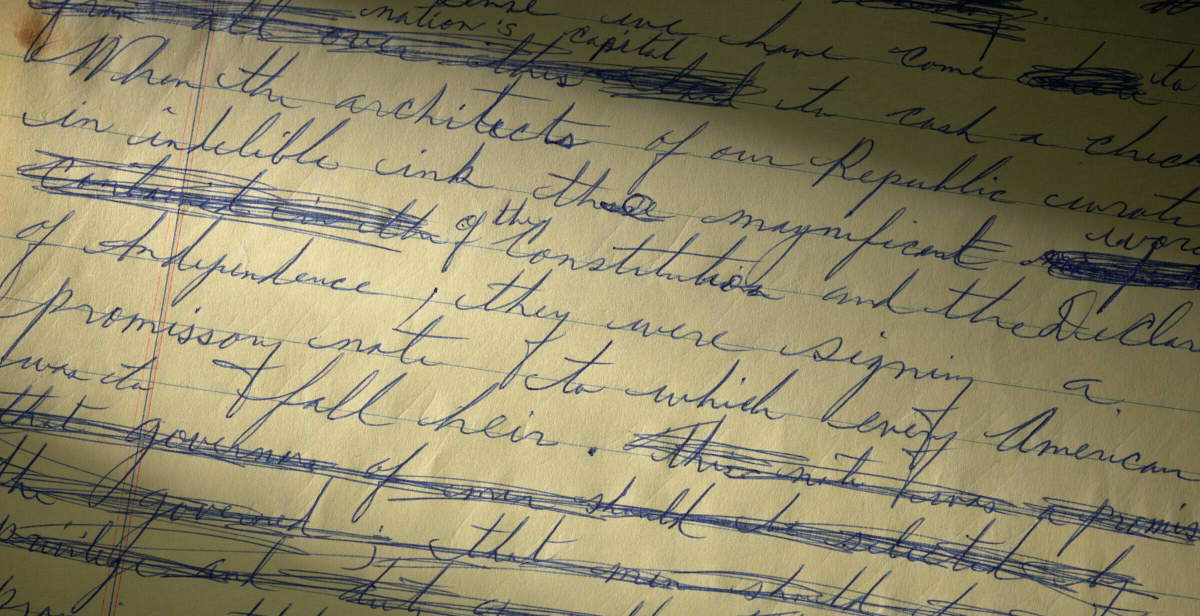 |
| The original draft of Martin Luther King's "I Have a Dream" speech was found in a drawer: it will be sold by Christie's |
Warning: the translation into English of the original Italian article was created using automatic tools. We undertake to review all articles, but we do not guarantee the total absence of inaccuracies in the translation due to the program. You can find the original by clicking on the ITA button. If you find any mistake,please contact us.