




by Redazione 27/08/2026



Categories: Modern Art / Disclaimer
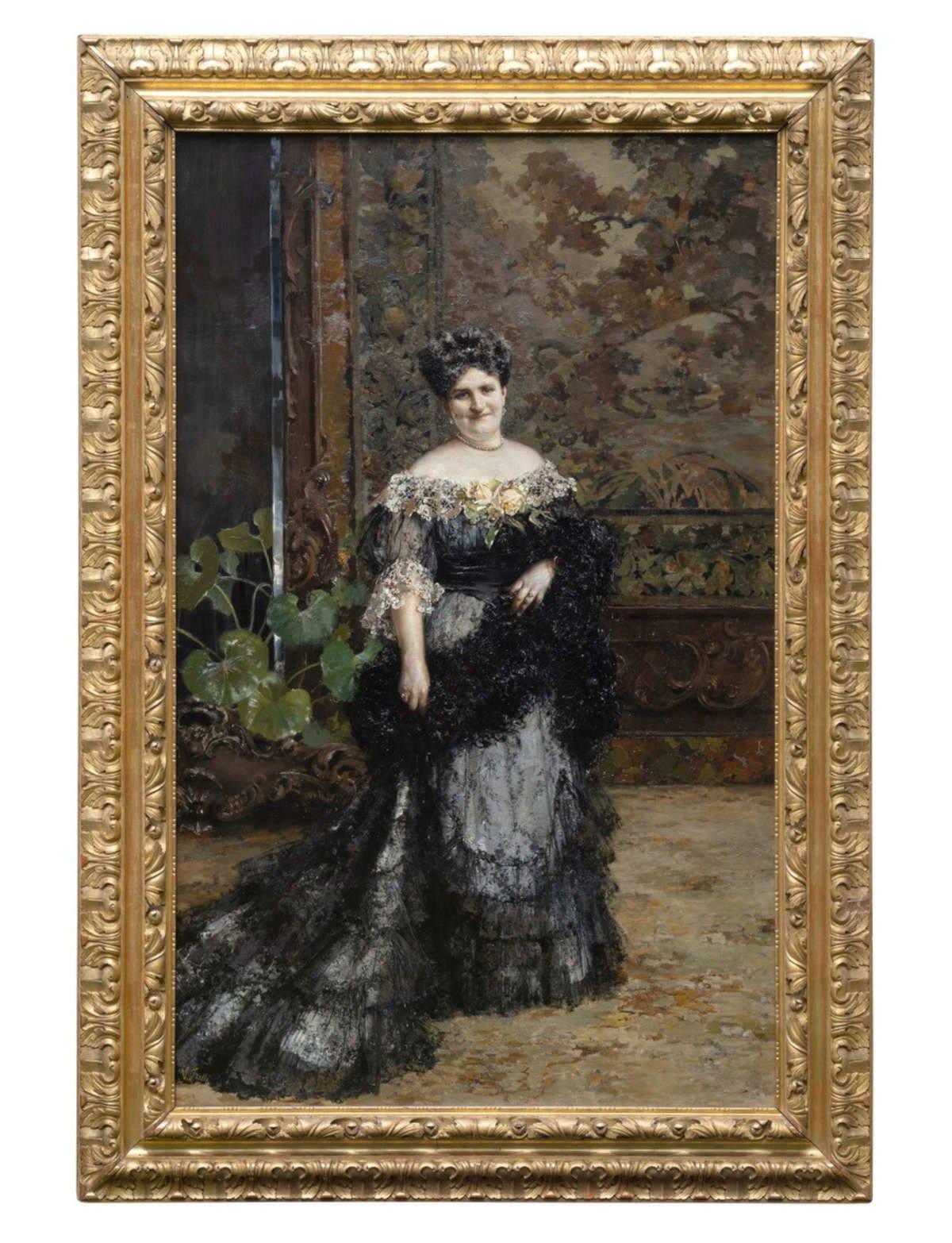
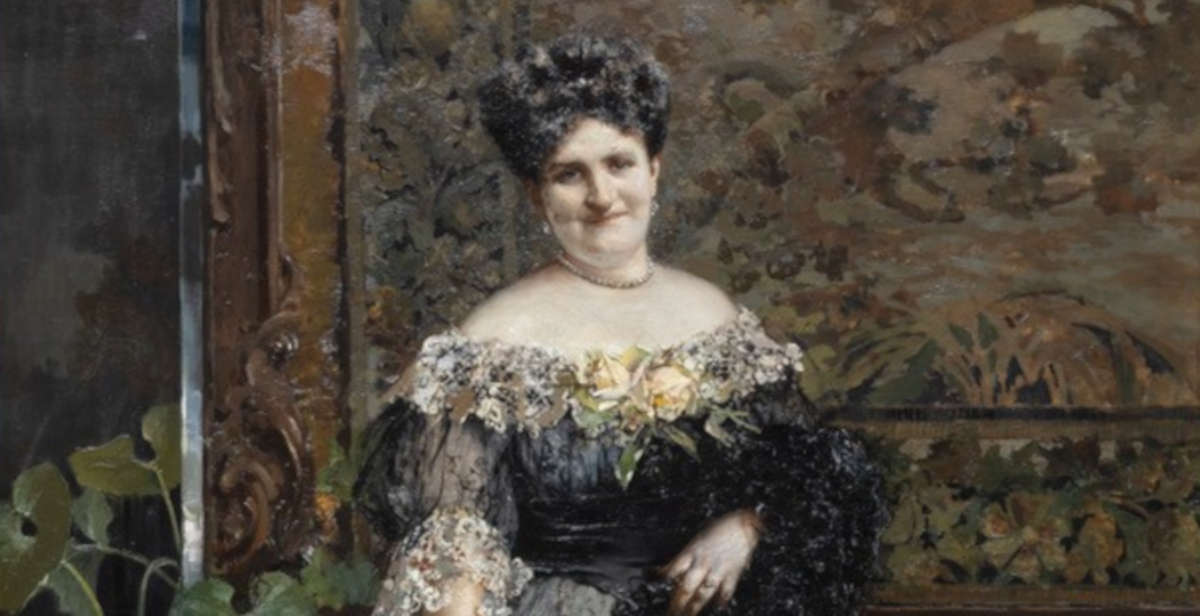
Starting September 6, the GAM in Genoa will present, for the first time, the *Portrait of Julia Lavarello Anselmo*, painted by Vincenzo Irolli in 1907 and recently rediscovered in the Giorgio Baratti Collection.
A previously unpublished work by one of the greatest Italian painters of the early 20th century, Vincenzo Irolli (Naples, 1860–1949),has resurfaced: it is the monumental *Portrait of Julia Lavarello Anselmo* from 1907, which will be presented to the public for the first time at the GAM – Galleria d’Arte Moderna in Genoa. Specifically, the painting will be the centerpiece of the exhibition *Argentina–Genoa: Round Trip*, scheduled from September 6 to November 30, which arose from the rediscovery of the work—part of the Giorgio Baratti Collection —and from historical and art-historical research conducted in both Italy and Argentina. This discovery returns to Genoa a work of early 20th-century Italian painting and, at the same time, sheds light on a chapter of the city’s private and international history that had until now remained in the shadows. The face portrayed by Irolli is, in fact, that of Julia Lavarello Anselmo, a member of one of the families that played a significant role in the economic, cultural, and maritime ties that developed between Genoa and Buenos Aires during the Belle Époque.
The rediscovery of the painting thus provides an opportunity to reexamine a part of the transatlantic relations that helped shape Genoa’s identity. The portrait will not be presented as an isolated work but will enter into dialogue with the GAM’s permanent collections, becoming part of the museum’s exhibition as a new testament to the European portraiture tradition between the 19th and 20th centuries.


The historical and artistic significance of the discovery is also linked to the artistic maturity Irolli had achieved by 1907. According to art historian Gianluca Carchia, with this painting the artist moves away from the “macchia” and light-based painting style to engage with a different conception of truth. “The fashionable, typically feminine portrait,” he explains, “is an opportunity to pay homage to the wealthy aristocracy of the ‘short century,’ a tradition that has been distinctly Genoese since antiquity. Displaying this portrait to the city therefore carries multiple historical, critical, political, and social meanings, as it once again underscores the connection between Genoa, Argentina, and art history.”
Crucial to the realization of the project was the role of collector Giorgio Baratti, the owner of the work and promoter of the initiative. The decision to share this discovery with the public stems, in his words, from the concept of collecting as a form of stewardship: “Collecting,” he states, “means preserving a legacy of emotions, gestures, and reflections. Presenting this previously unseen work by Vincenzo Irolli today means giving the city back a new story that enriches Genoa’s unique and extraordinary narrative.”
The rediscovery of the work is accompanied by international archival research that has made it possible, for the first time, to reconstruct the biography of the woman depicted by Irolli. Julia Lavarello Anselmo, who until now had remained unknown to scholars, thus acquires an identity and a precise historical context. Martina Leone, who is coordinating the exhibition, interprets the painting’s subject not merely as the subject of a portrait, but as “the symbol,” she says, “of an international network of men and women who, between the 19th and 20th centuries, forged economic, cultural, and social ties between Genoa and Buenos Aires.” Archival research has made it possible to restore her identity and transform a previously unpublished painting into a new chapter in the city’s history, helping to redefine Genoa’s role as a crossroads of artistic, commercial, and cultural relations on the international stage.”
The story of the Lavarello-Anselmo family, closely linked to the major shipping companies that connected Genoa and Buenos Aires, serves as the central thread of a narrative that transcends the boundaries of art history. The project is, in fact, part of the broader field of studies on the mobility of elites between Europe and South America and addresses issues including the history of emigration, art collecting, material culture, and the representation of female identity in Belle Époque portraiture. Through the history of the Lavarello-Anselmo family, the profile of a cosmopolitan society emerges—one that participated in the processes of international modernity between the 19th and 20th centuries.
According to Fabio Obertelli, curator of the Giorgio Baratti Collection, the discovery of the portrait of Julia Anselmo Lavarello adds a new piece to the history of Genoa and also represents “a reminder to persistently continue rediscovering the history of our past civilizations in order to gain a more enlightened view of the present.”
For Genoa’s Councilor for Culture, Giacomo Montanari, the rediscovery of the work represents a moment of particular importance for Genoa and its cultural heritage. “The GAM,” the councilor states, “once again proves itself not only a place of excellence and preservation, but also a vibrant laboratory for research and international dialogue capable of synergistically uniting the public and private sectors.” Through this initiative—for which we thank Giorgio Baratti and the curators—we are returning to the public a fascinating work of art from early 20th-century Italian painting, as well as a fundamental fragment of our transatlantic history, which inextricably links Genoa to Argentina through the face and memory of a great family that played a leading role during the Belle Époque.”
With this exhibition, the GAM thus reinforces its role not only as an institution dedicated to the preservation of collections, but also as a center for research, scholarly production, and international dialogue. The story behind the Portrait of Julia Lavarello Anselmo demonstrates how the rediscovery of a single work can open up a broader perspective on collective memory, bringing to light relationships, people, and events that have long remained in the shadows, and reaffirming Genoa’s historical role as a hub for exchange, ideas, and cultures between Europe and the rest of the world.
The exhibition *Argentina–Genoa: Round Trip* will be accompanied by a catalog published by Sagep Editori, featuring essays by Martina Leone, Gianluca Carchia, and Fabio Obertelli.
 |
| A lost masterpiece by Vincenzo Irolli—the portrait of Julia Lavarello Anselmo—has resurfaced in Genoa |
Warning: the translation into English of the original Italian article was created using automatic tools. We undertake to review all articles, but we do not guarantee the total absence of inaccuracies in the translation due to the program. You can find the original by clicking on the ITA button. If you find any mistake,please contact us.