


by Redazione 22/10/2026


Categories: Modern Art / Disclaimer
Sotheby’s is withdrawing three early works by Paul Cézanne from tonight’s auction in Paris following an agreement between the Schlumberger family, the City of Aix-en-Provence, and the French Ministry of Culture to return them to the artist’s hometown. Here are the works: the artist painted them for the family home.


Three early paintings by Paul Cézanne ( Aix-en-Provence, 1839–1906), painted between 1862 and 1864 to decorate the family home, the Jas de Bouffan, in Aix-en-Provence, have been withdrawn from tonight’s auction at Sotheby’s in Paris. The works— *La Ferme*, *Arbres au Bord de la Rivière*, and *Ciel Entre les Arbres*—will be returned to Aix-en-Provence, the artist’s birthplace, to be exhibited at the Musée Granet alongside his other works. The city plans to acquire them with the support of the French Ministry of Culture, which designated them as “national treasures” (a term used in France to denote cultural assets) following negotiations between the auction house and the Schlumberger family, the owners of the paintings. This means that France now has 30 months to make a purchase offer to the owner; if no offer is made, the works may return to the market.

The three works were included in the sale “Le Temps Retrouvé: The Schlumberger Collection,” scheduled at Sotheby’s on Thursday, with a combined estimate of between 1.4 and 2 million euros. The decision to withdraw them from the auction paves the way for their return to the place where they were conceived, restoring a significant part of their original context to a pivotal phase in Cézanne’s artistic development.


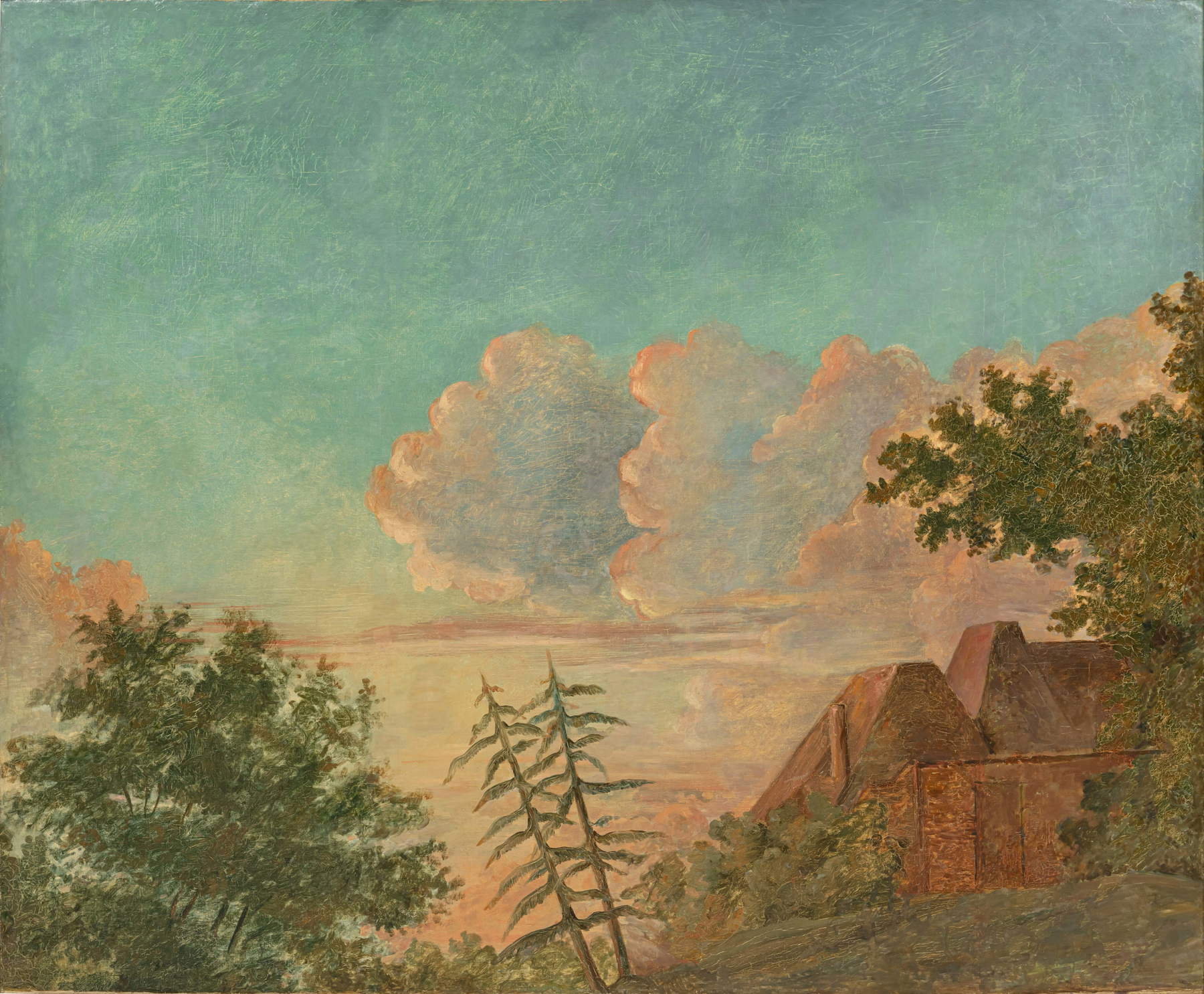
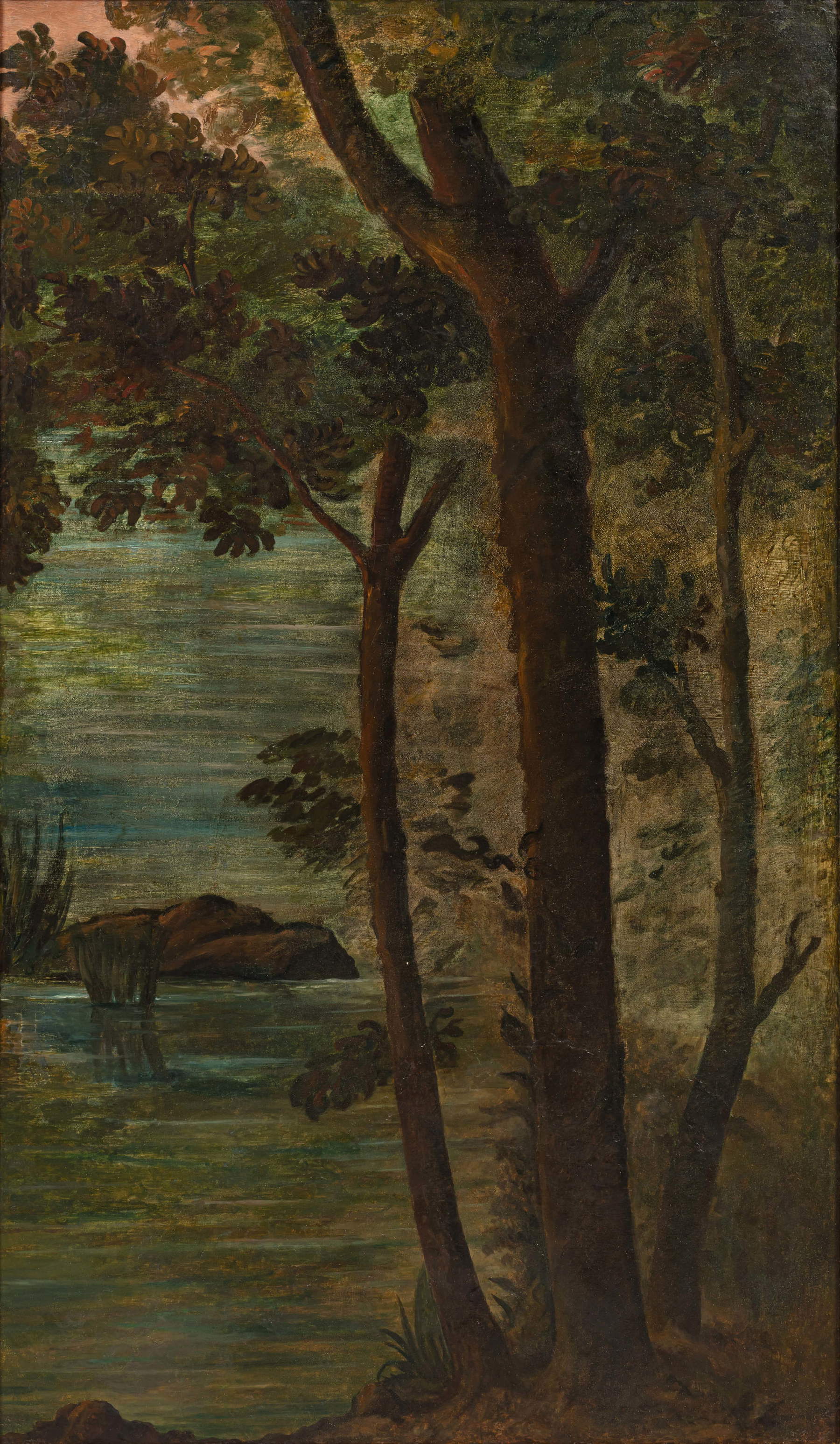
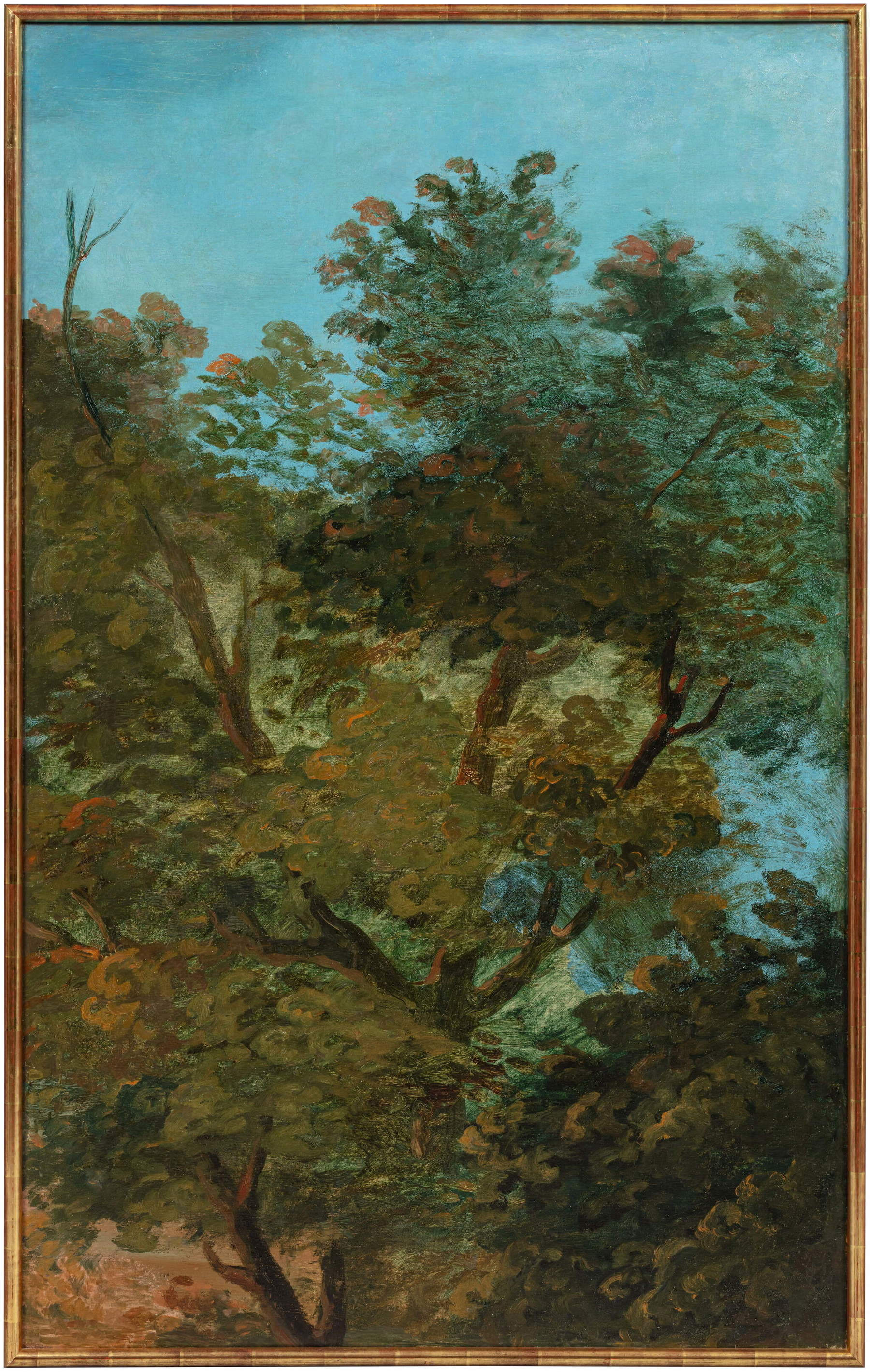
The three paintings were part of a vast decorative project carried out by Cézanne on the walls of the main hall of the Jas de Bouffan, the estate purchased in 1859 by the artist’s father, Louis-Auguste Cézanne. The residence, located on the outskirts of Aix-en-Provence, was much more than a family home to the painter: it served as a refuge, a studio, and a laboratory in which to experiment with the possibilities of painting, engaging with the Provençal landscape and the European artistic tradition. Cézanne began decorating the grand salon around 1860, with his family’s approval. The project stemmed both from his ambition to measure himself against the great masters of the past and from the practical need to adorn the walls of the house with an illusionistic decoration that would evoke wood paneling. The cycle included an allegory of the Four Seasons, inspired by classical Renaissance iconography and the work of Jean-Auguste-Dominique Ingres, whose name Cézanne inscribed on three of the frescoes. Crowning the ensemble was a portrait of his father, the central figure of the family and owner of the estate.
The decorative program attests to Cézanne’s early interest in historical painting and the models of the past, an interest that also developed through his visits to the Louvre, the Palais du Luxembourg, and the Palace of Versailles. His admiration for the European tradition would remain an essential component of his artistic exploration, distinguishing him in part from his Impressionist contemporaries. At Jas de Bouffan, the young artist was able to engage with monumental compositions and experiment with a personal style—still in the making—through his dialogue with classical and Baroque painting.
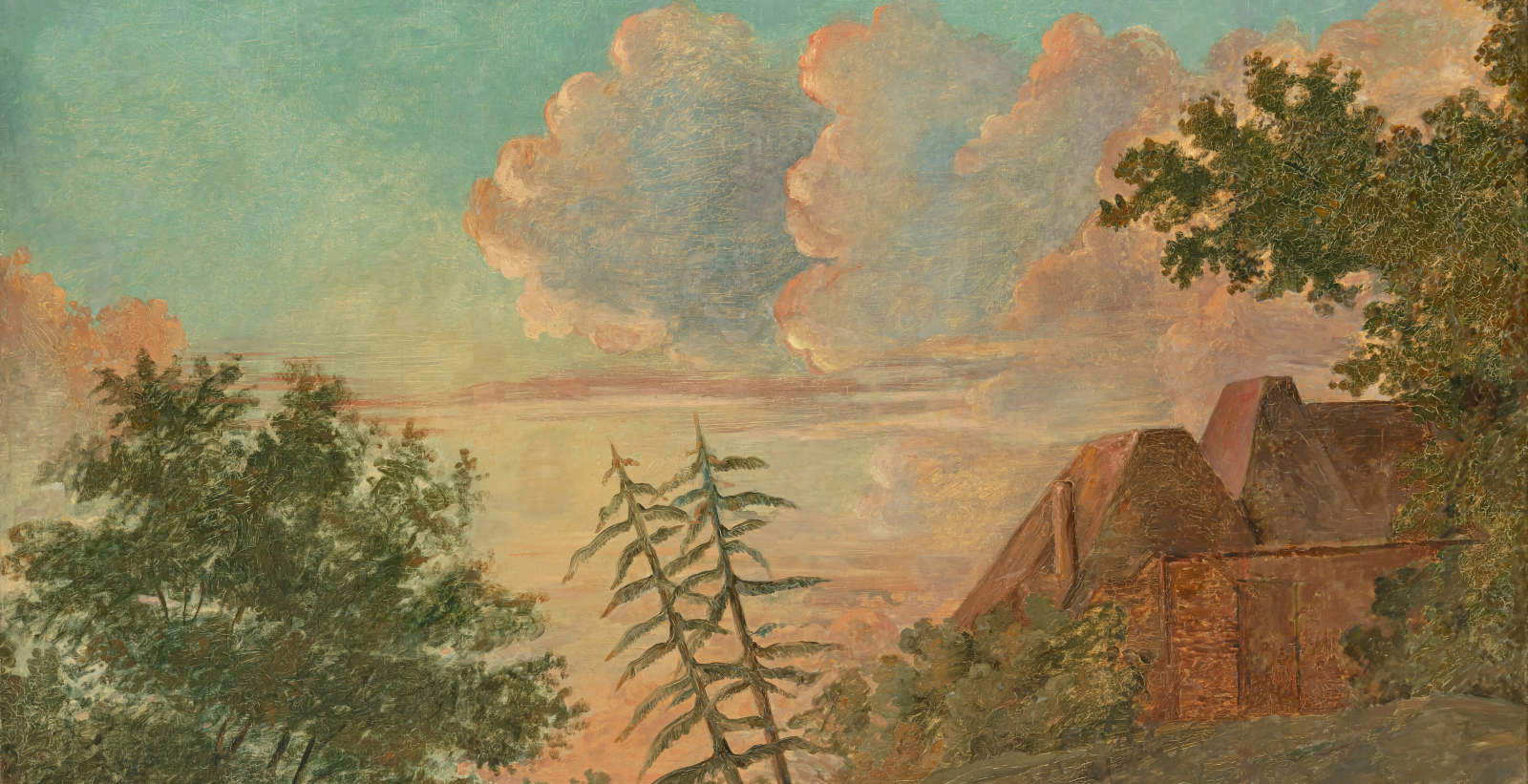
The murals were removed from the walls and transferred to canvas in 1899, following the sale and dispersal of the estate. The work was divided into eight fragments. Among the surviving compositions, *Paysage romantique aux pêcheurs* (1862–1864)—which includes *Arbres au bord de la rivière* and *Ciel entre les arbres* (both estimated at 400,000–600,000 euros)—is considered the most ambitious: composed of eight panels, it depicts a sunset reflected in a swollen river, with fishermen in boats and figures gathered along the banks.
The landscape reveals a variety of references. The twilight palette evokes the French tradition of classical landscape painting and, in particular, the compositions of Claude Lorrain. *La Ferme* (which had an estimate of 600,000–800,000 euros), hung on the opposite wall, serves as a counterpoint with its Baroque sensibility. The composition pays homage to Gustave Courbet, whose painting had a decisive influence on the young Cézanne, while the treatment of the trees reveals an interest in the landscapes of the Dutch painter Jacob van Ruisdael.
The value of these paintings therefore also lies in their ability to trace the origins of an artistic exploration destined to profoundly shape the history of modern art. The works from Jas de Bouffan reveal an artist committed to reconciling direct observation of nature with an understanding of the painting of the past, weaving together the lessons of Courbet and van Ruisdael with the French, Italian, and Flemish traditions. It was through this dialogue that Cézanne began to develop that synthetic approach to form and color that would transform the landscape into one of the central fields of his experimentation.
As early as 1894, the critic Gustave Geffroy had recognized the decisive role of the estate in the artist’s development, describing the skies, trees, and Provençal landscapes of Jas de Bouffan as characteristic elements of his vision. The residence was not merely the geographical backdrop to his work; it was one of the places where his way of observing and organizing reality through painting took shape.
The return of the three paintings to Aix-en-Provence will make it possible to re-contextualize these works within the historical and cultural setting from which they originate. Their future exhibition at the Musée Granet, subject to the completion of the acquisition announced by the City, will offer the public an opportunity to explore a lesser-known yet fundamental phase of Cézanne’s career, when his engagement with the masters of the past and his observation of the landscape of his homeland helped lay the foundations for his revolutionary approach to painting.
 |
| Three early paintings by Cézanne were withdrawn from an auction at the last minute: they will return to Provence |
Warning: the translation into English of the original Italian article was created using automatic tools. We undertake to review all articles, but we do not guarantee the total absence of inaccuracies in the translation due to the program. You can find the original by clicking on the ITA button. If you find any mistake,please contact us.