





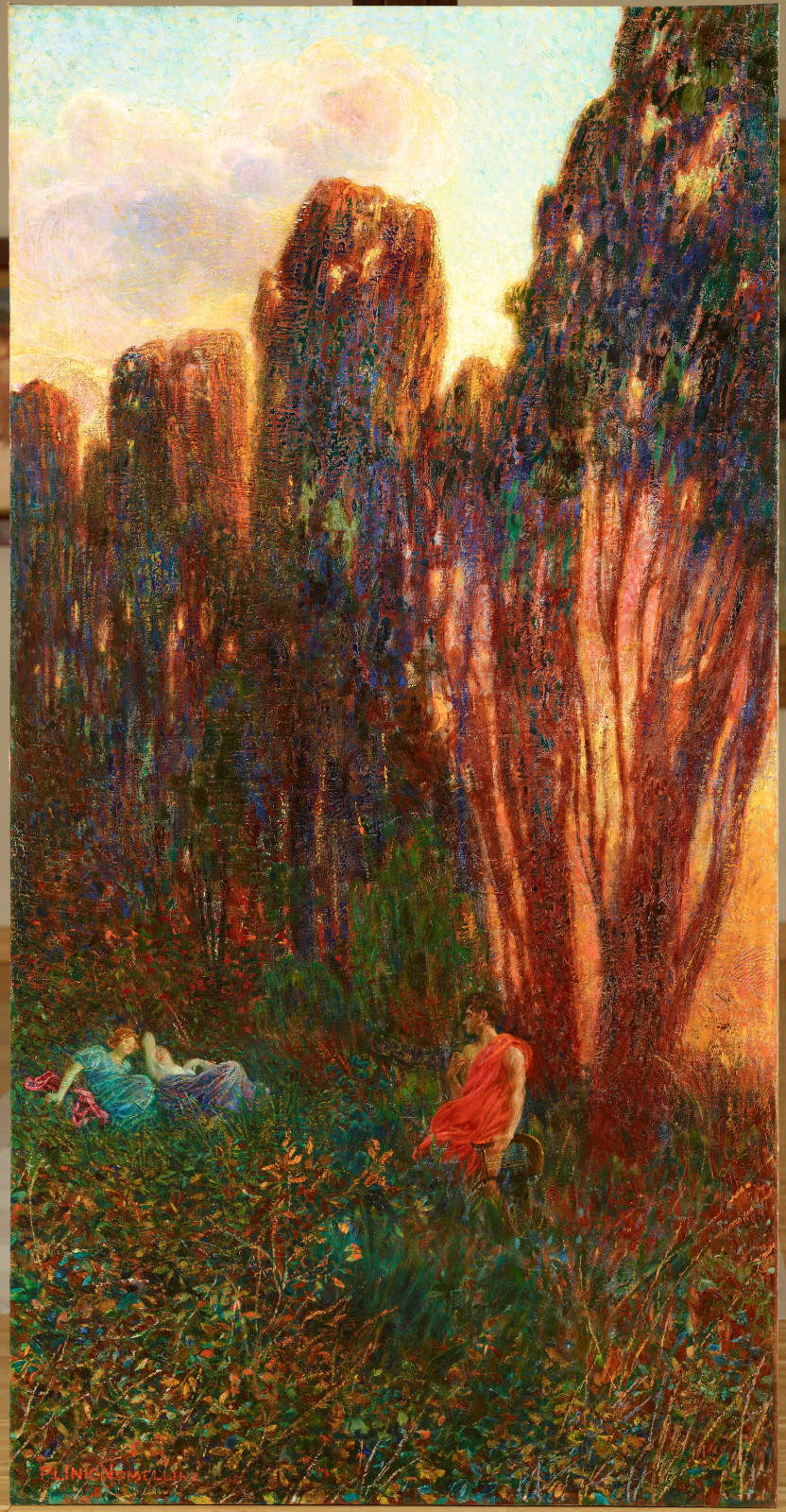
Two works by Plinio Nomellini and Emilio Longoni have been added to the collection of the Pinacoteca Divisionismo Tortona, expanding the exhibition dedicated to the leading figures of Italian Divisionist painting. The works are Nomellini’s *Autunno latino* (1899–1900) and Longoni’s *Idillio* (1914–1917) by Longoni—two paintings that offer insight into significant phases of the two artists’ creative exploration, encompassing Symbolist influences, experiments with light, and new interpretations of the landscape.
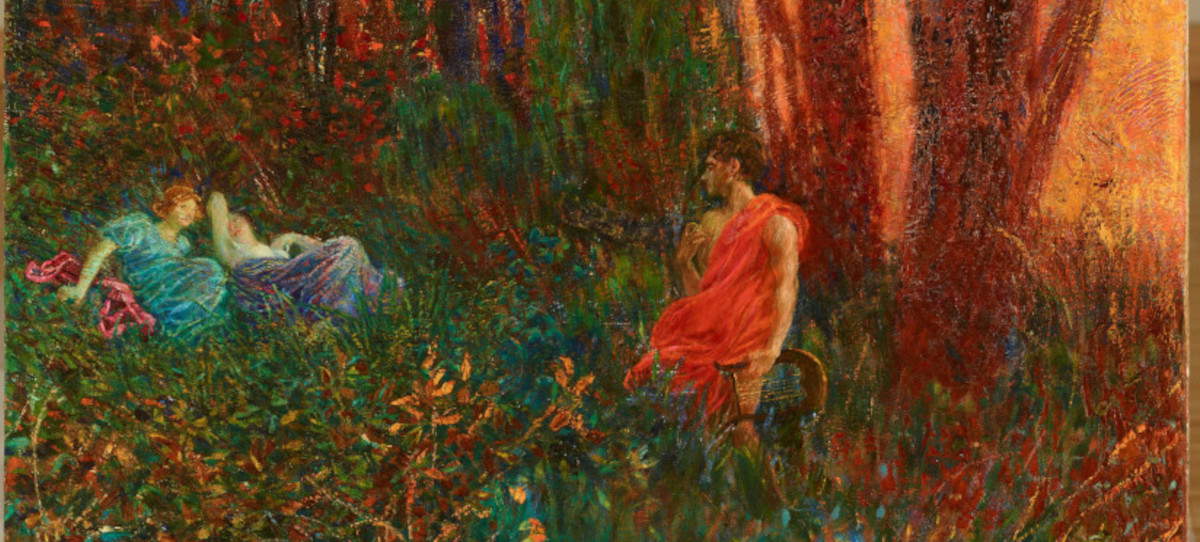
Painted between 1899 and 1900, *Latin Autumn* represents one of the most significant moments in Plinio Nomellini’s Symbolist period. Originally, the painting was part of an elegant diptych, in which it engaged in a dialogue with the bas-relief *Autumn* by sculptor Edoardo De Albertis. The two works were united within a single wooden frame, in a project that illustrates the relationship between painting and sculpture in the artistic climate of the fin de siècle. Exhibited at the 1901 Biennale, the painting depicts a bucolic scene set among rows of cypress trees. A young man with Apollonian features attempts to attract the attention of two women reclining on the lawn, in a composition suspended between the mythological realm and the observation of nature. The idealized atmosphere and symbolic tension of the scene reflect one of the most personal characteristics of Nomellini’s artistic exploration, in which the luminous decomposition typical of Divisionism gradually intertwines with Symbolist and decorative elements. With this acquisition, the Pinacoteca brings the number of the artist’s works in its collections to seven: *Autunno latino* joins paintings such as *Piazza Caricamento in Genoa* (1891), *Strike* (1889), *On the Ligurian Coast* (1891), *April Morning* (1892–1895), *Morning in the Workshop* (1893), and *Village Festival* (1912–1913).
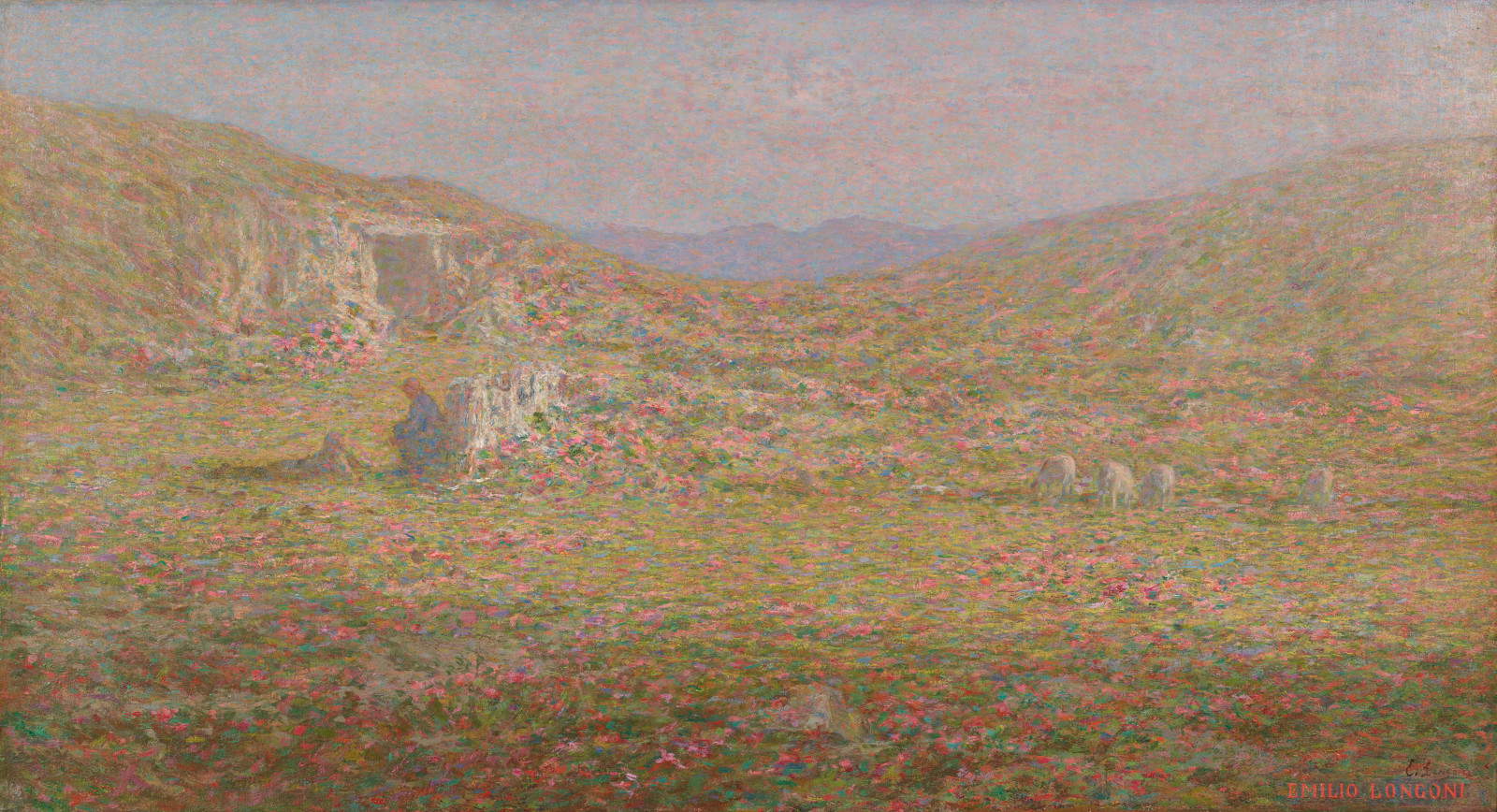
The second acquisition is *Idyll* by Emilio Longoni, a painting that brings the number of the artist’s works in the Tortona Art Gallery to fourteen. The painting joins an already particularly rich collection, which includes works such as *The Stars* (1914), *Solitude* (1910–1911), *Melancholy* (1894–1895), *Milanese Countryside* (1894), *Reflections of a Hungry Man * (1894), *Ona Staderada* (1890–1891), *The Chick* (1891), and *Locked Out of School* (1878). This collection allows viewers to closely follow the artistic evolution of the Lombard master. The history of *Idillio* is particularly interesting because the painting underwent a profound transformation at the artist’s own behest. First exhibited in Rome in 1914 under the title *Disillusa*, the painting initially depicted a young shepherdess accompanied by two sheep in the foreground. In 1917, Longoni made direct alterations to the canvas, removing the figure of the shepherdess and thereby changing the overall meaning of the composition. The work took on the new title *Idillio*, in keeping with a more serene and contemplative atmosphere. This story was documented by a photograph of the painting found among the papers of Fiorenza, the artist’s wife. A handwritten note links Longoni’s decision to a moment of renewed personal serenity, offering insight into the transformation of the scene. In the final version, the small figures in the background become almost imperceptible presences, absorbed into a landscape dominated by light and chromatic vibrations. Nature thus takes on a central role, while the narrative dimension gives way to a more intimate and contemplative vision. Through the Divisionist technique, Longoni dissolves contours and materiality into atmospheric luminosity, creating a lyrical and ethereal image. *Idillio* thus bears witness to the most mature phase of his artistic exploration, in which the landscape becomes an expression of a state of mind.
The two acquisitions are part of the Pinacoteca’s program to expand and enhance its collections, as it strives to build a heritage that is increasingly diverse and representative of the various manifestations of Divisionism. In fact, comparing works from different phases of the artists’ careers allows us to trace the evolution of their artistic languages and highlight the diversity of a pivotal period in Italian art spanning the late 19th and early 20th centuries.
The addition of these two works strengthens the role of the Pinacoteca Divisionismo Tortona as a center for the study and promotion of the movement, allowing for a deeper exploration of the various directions taken by its leading figures. On the one hand, *Autunno latino* documents the dialogue between the exploration of light, symbolism, and decoration in Nomellini’s painting; on the other, *Idillio* shows how Longoni progressively transformed the landscape into a composition of light, color, and contemplation.
These two acquisitions enrich the museum’s collection and broaden the possibilities for interpreting an artistic period characterized by an extraordinary variety of artistic languages and experiments.
 |
| The Divisionism Art Gallery in Tortona Expands: Two Masterpieces by Nomellini and Longoni Join the Collection |

Warning: the translation into English of the original Italian article was created using automatic tools. We undertake to review all articles, but we do not guarantee the total absence of inaccuracies in the translation due to the program. You can find the original by clicking on the ITA button. If you find any mistake,please contact us.


























 IT
IT FR
FR DE
DE ES
ES CN
CN


