




by Redazione 22/07/2026



Categories: Museums / Disclaimer
Closed following the theft on October 19, 2025, the historic Galerie d’Apollon at the Louvre is once again open to the public. With the precious objects removed, the space has regained its original function as a ceremonial gallery and a decorative masterpiece of the 17th century.

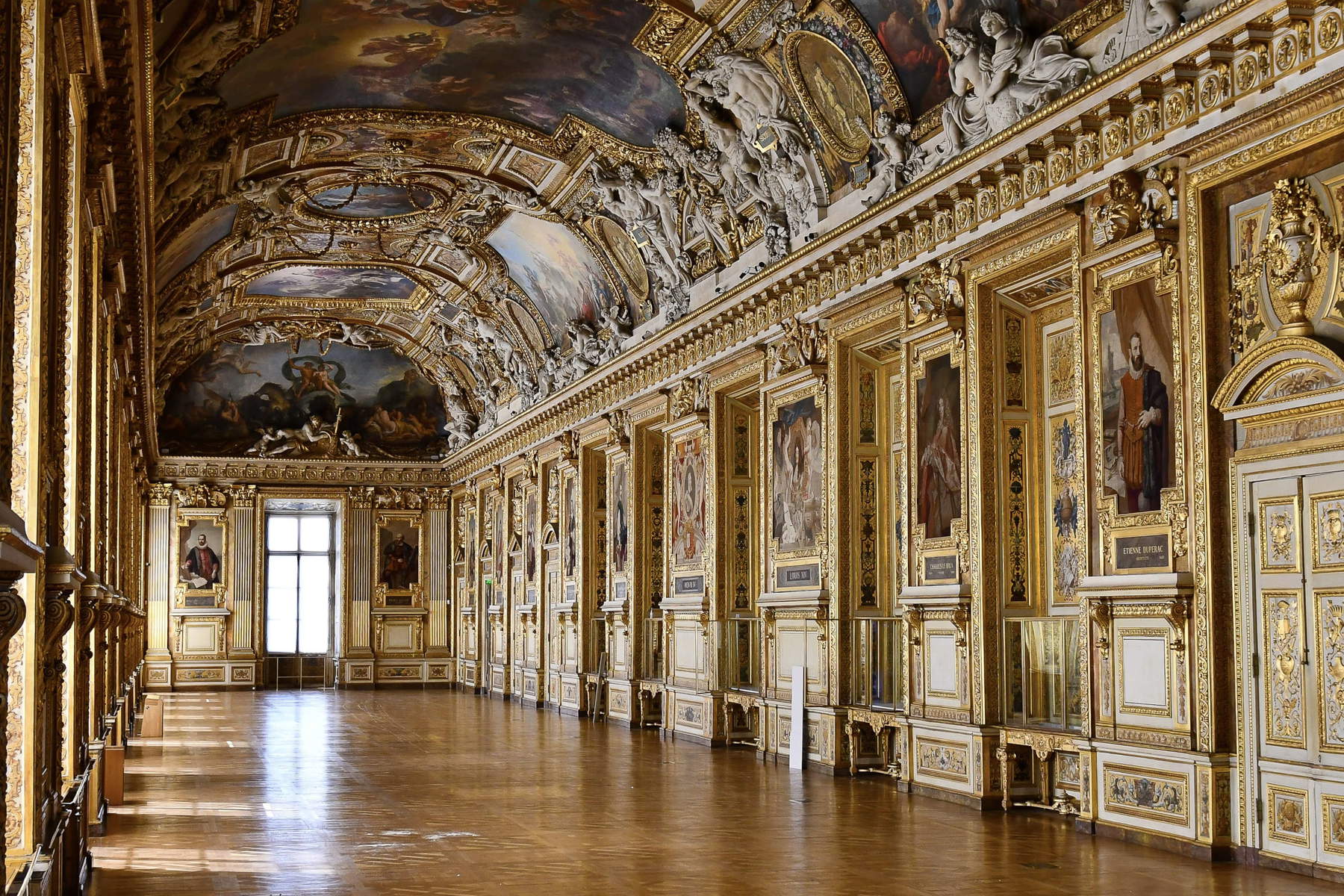
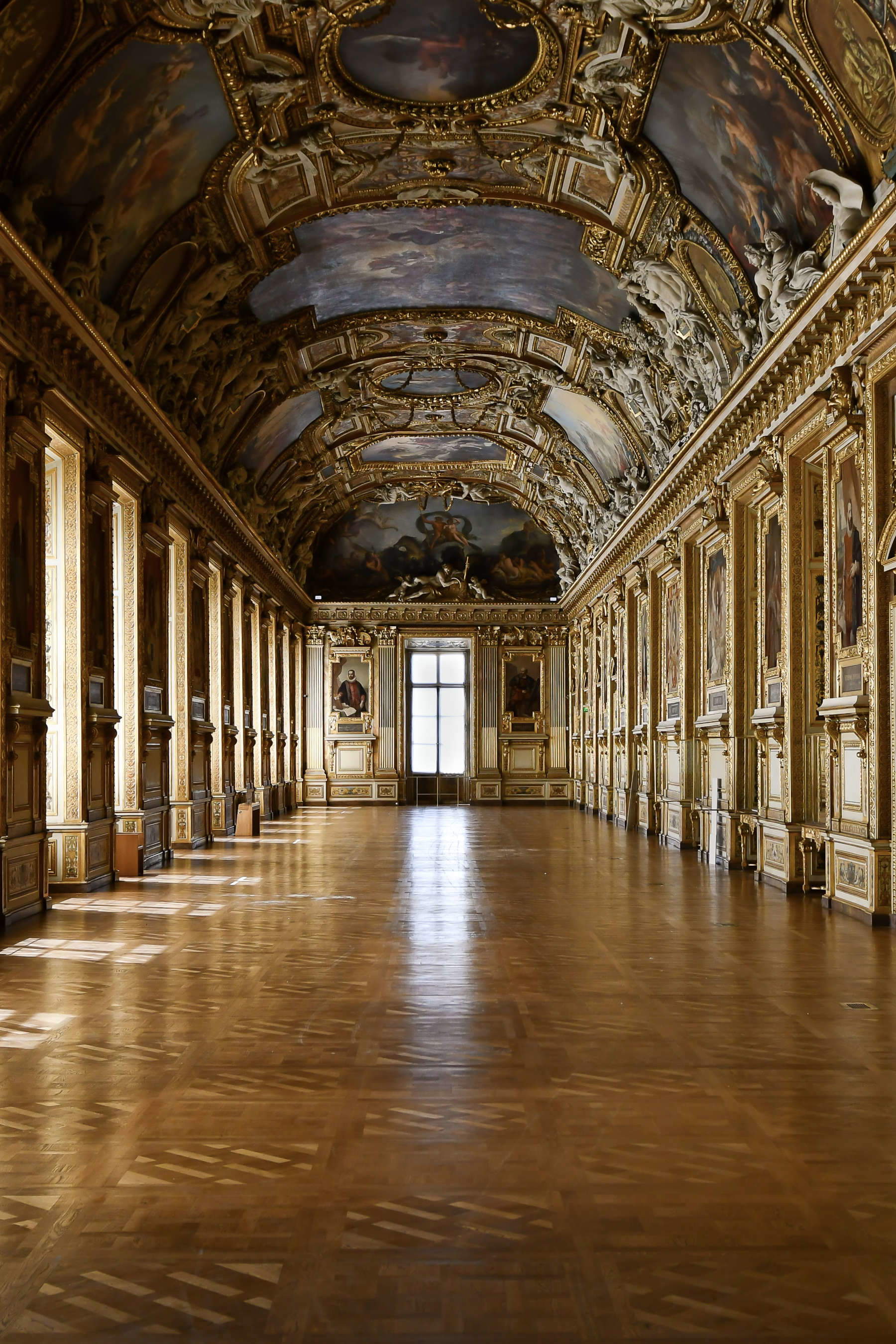
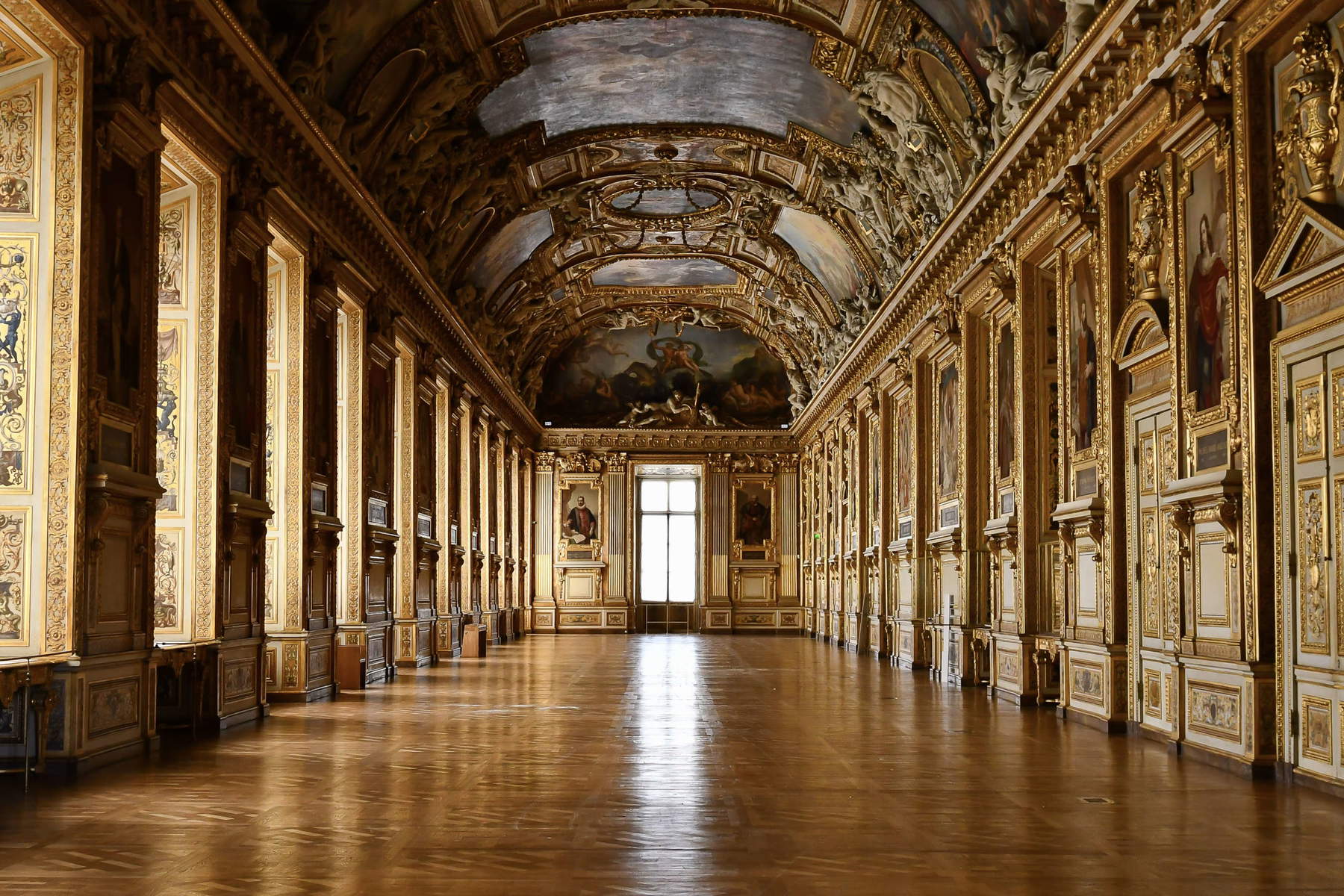
After nearly nine months of closure, the Louvre in Paris is reopening the Galerie d’Apollon ( Apollo Gallery) to the public—one of the most famous and monumental spaces in the Parisian museum. The space, located on the first floorof the Denon Wing, reopens to visitors today, Wednesday, July 22, 2026, with a new exhibition design that restores its extraordinary decorative elements to center stage—elements that were profoundly altered following the theft on October 19, 2025.
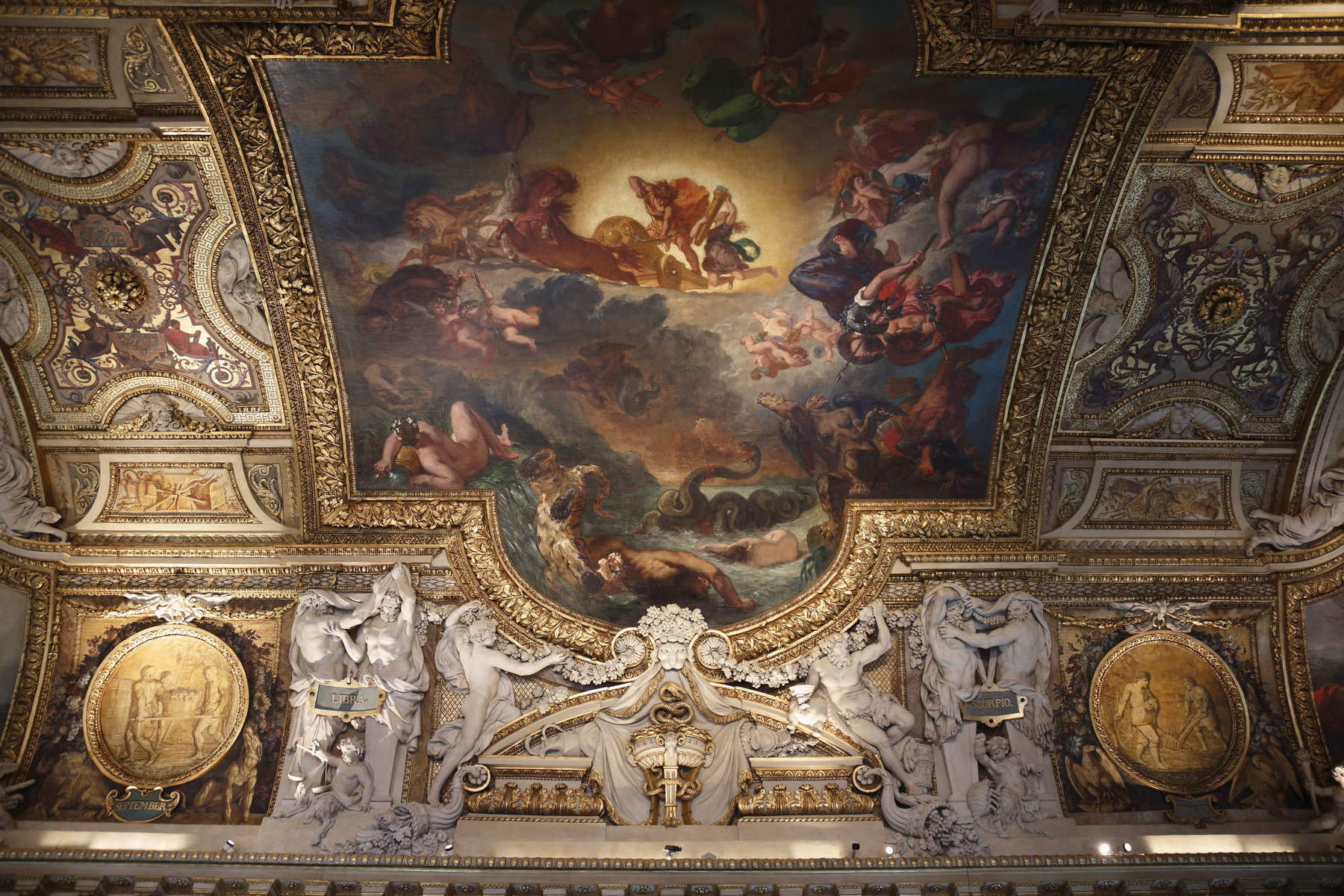
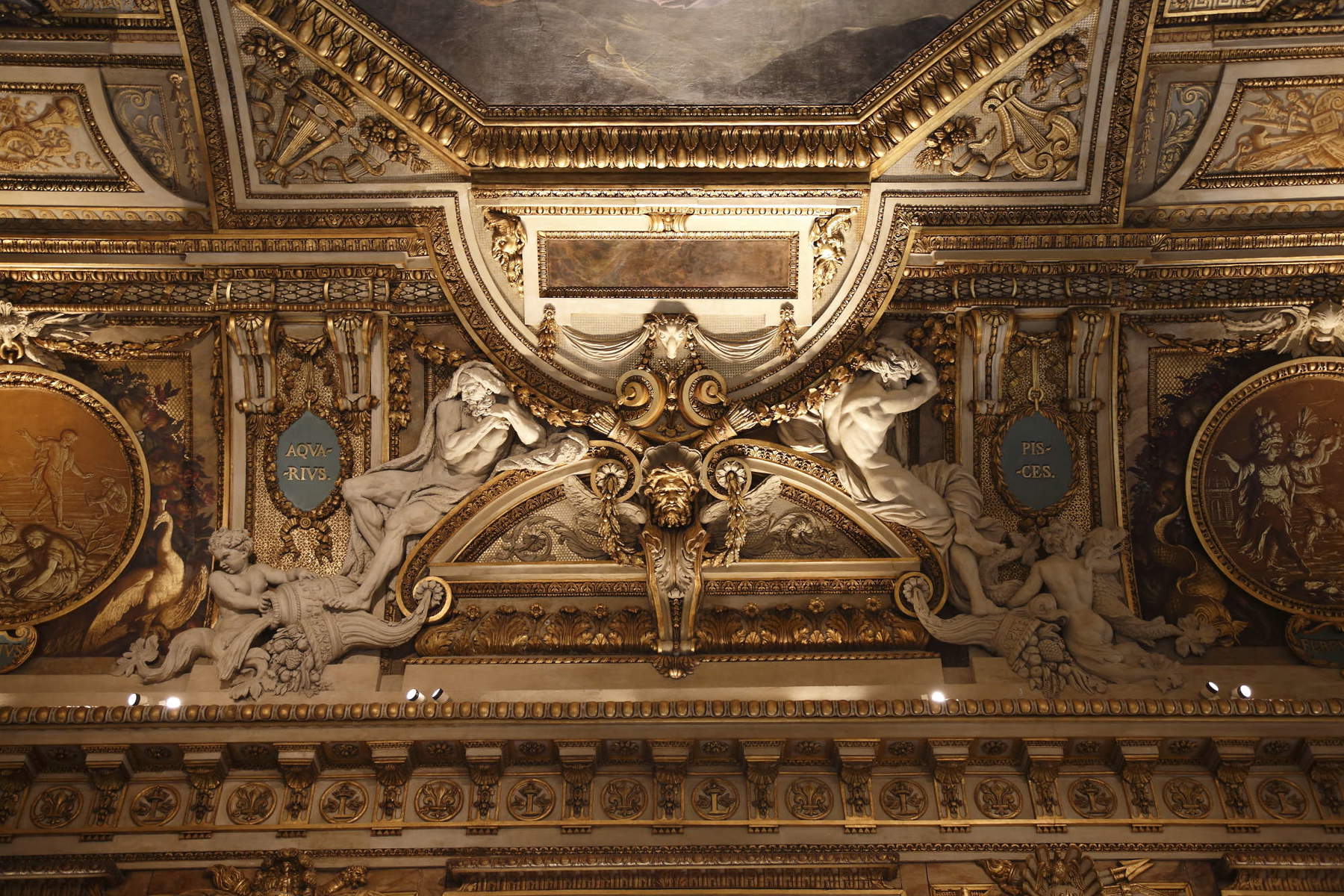
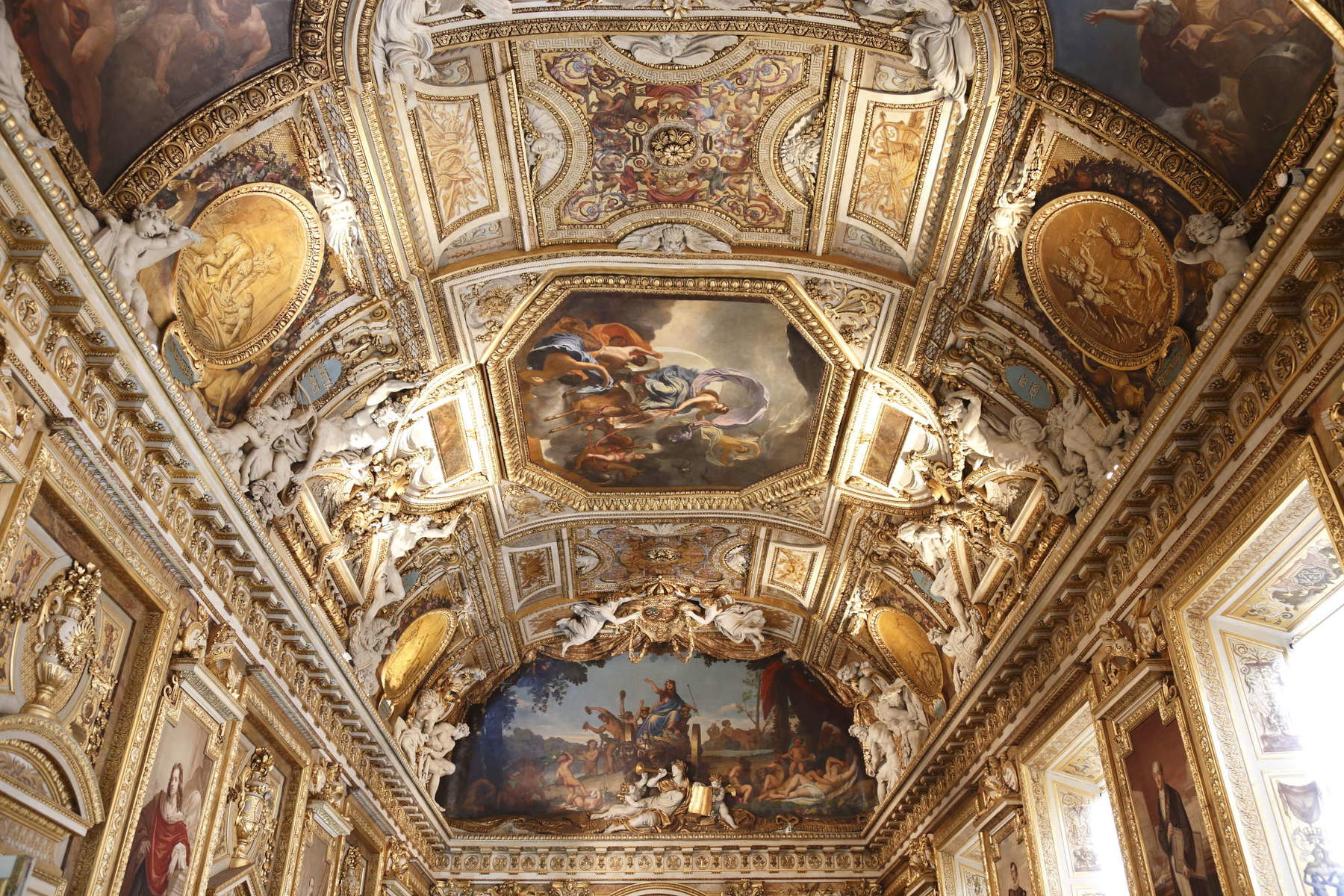
The reopening marks a new phase in the gallery’s history. The collections of precious objects and the works that were traditionally displayed in the showcases have in fact been removed: the gallery is now empty, and visitors will focus on the architecture and the painted and sculpted decorations that make the Apollo Gallery one of the most important examples of monumental decoration in 17th-century France. With this decision, the Louvre sought to restore the room to the function for which it was conceived over three and a half centuries ago: a ceremonial gallery designed as a total work of art, in which architecture, painting, sculpture, and the decorative arts come together to create a single, grand celebratory program. The new layout also highlights the gallery’s role as a passageway within the museum’s itinerary. The room connects the Rotonde d’Apollon with the Salon Carré and opens onto the Grande Galerie, forming one of the museum’s main thoroughfares.


The Galerie d’Apollon is one of the iconic sites of the Louvre and of French art history. Decorated over the centuries by some of the country’s greatest artists, including Charles Le Brun, François Girardon, Jean-Jacques Lagrenée, and Eugène Delacroix, it served as the model that inspired the future Hall of Mirrors at the Palace of Versailles. Measuring 61.34 meters in length, 15 meters in height, and covering a total area of approximately 600 square meters, the gallery houses one of the richest decorative cycles in the entire museum. Paintings, stucco work, and the extraordinary tapestries created by the Gobelins Manufactory—commissioned by architect Félix Duban and installed in 1852—contribute to defining a space that, over time, has become one of the symbols of the Louvre.
The history of the Galerie d’Apollon, however, dates back to the 16th century. During the reign of Charles IX, between 1560 and 1574, the space now occupied by the gallery was a terrace topped by a portico that served as a promenade connecting the Cour Carrée with the Louvre’s walls overlooking the Seine. It was not until the reign of Henry IV that this open space was transformed into an enclosed building designed to connect the Cour Carrée with the Grande Galerie. Thus, the so-called Petite Galerie was built on the first floor, located in the immediate vicinity of the royal apartments and destined to become one of the principal venues for the French monarchy’s official receptions.
Built between 1594 and 1596, the Petite Galerie was decorated with paintings and sculptures celebrating the kings and queens of France and the great figures of national history. The decorative program—now completely lost—was entrusted to the painters Toussaint Dubreuil and Jacob Bunel and to the sculptor Pierre Biard. The space served a dual purpose. On the one hand, it served as a connecting space within the royal palace; on the other, it functioned as a tool for the monarchy’s self-representation, through a figurative scheme designed to construct a new dynastic and political narrative of royal power. The fate of the Petite Galerie changed radically on February 6, 1661, when a fire ravaged the building, completely destroying its decorative elements.
The reconstruction was entrusted to the architect Louis Le Vau, who did not merely restore the gallery but expanded its layout with new buildings. The decoration, however, was entrusted to the team led by the painter Charles Le Brun, the principal artist at the court of Louis XIV. Work began in 1662 but slowed sharply in 1671, when the king decided to move his residence to Versailles, assigning many of the artists and artisans who had until then been working at the Louvre to the construction of the new palace.
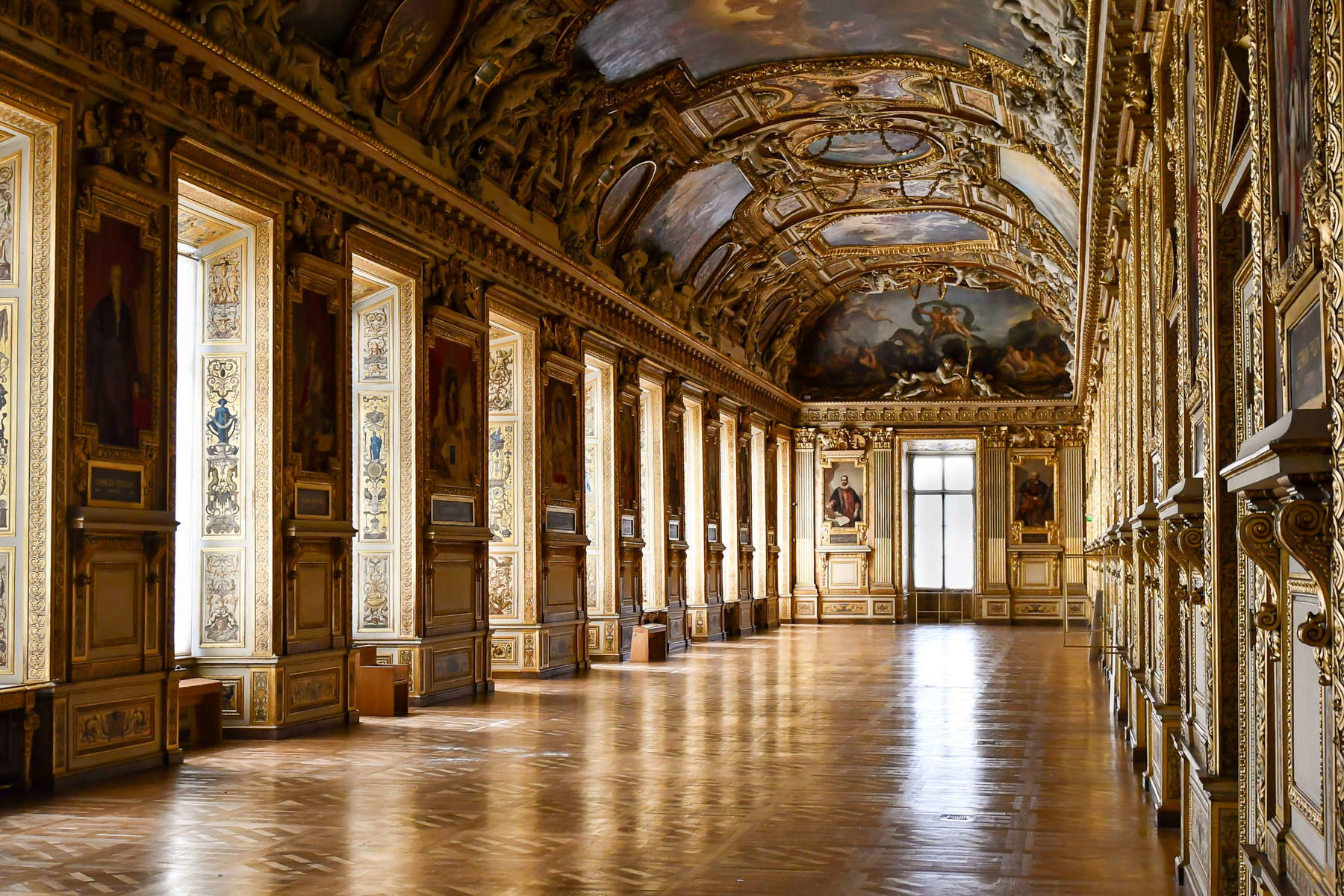
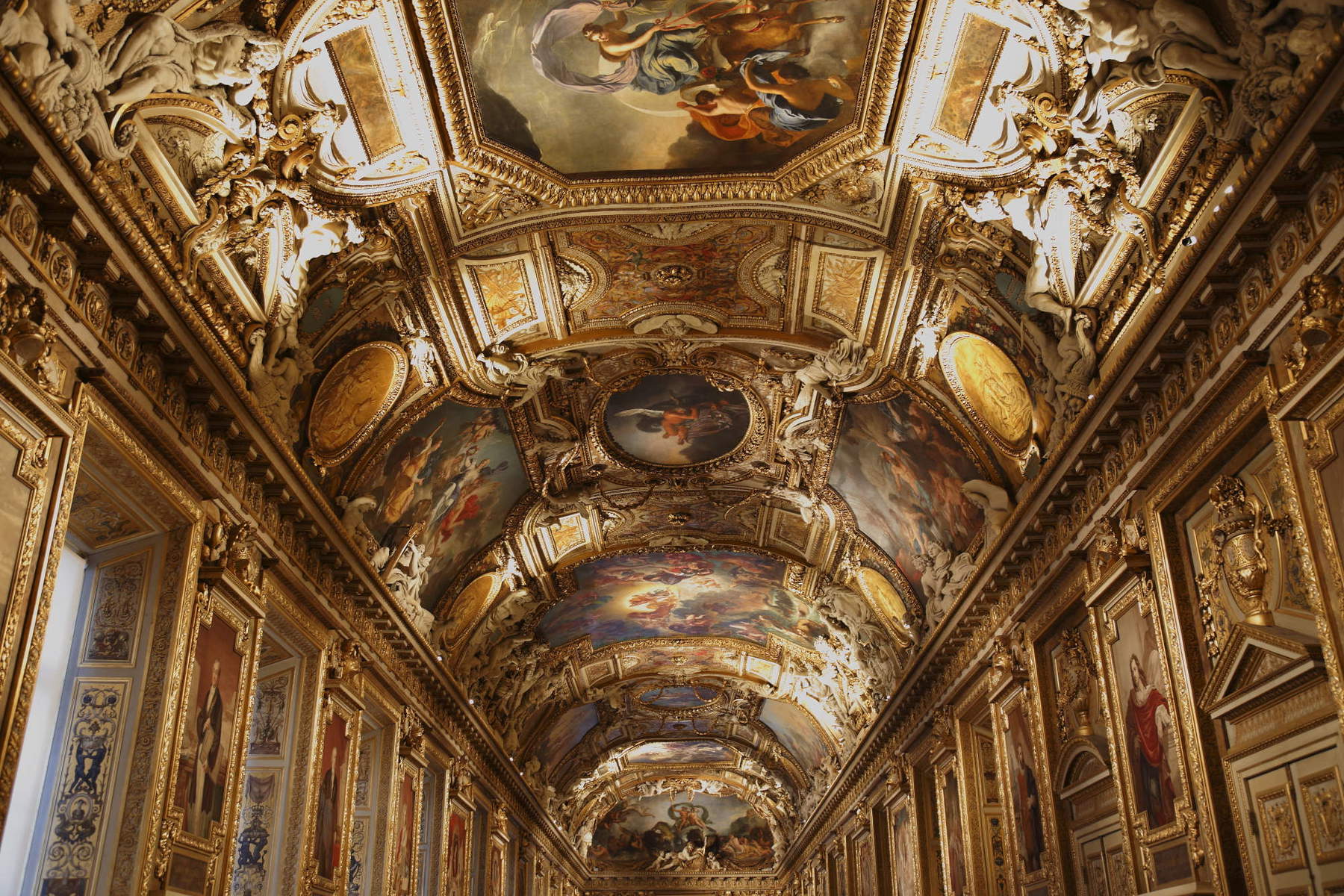
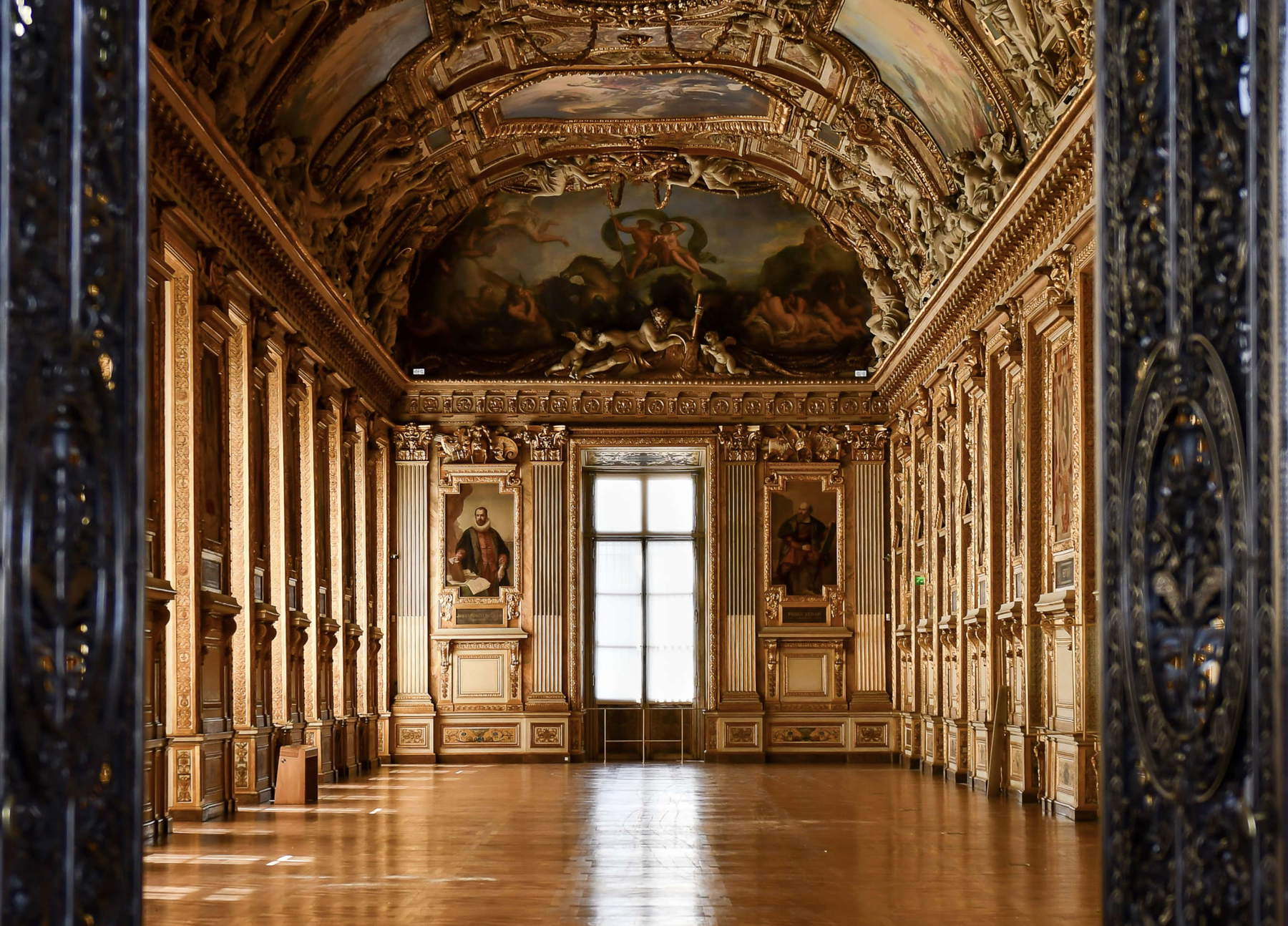
It was Charles Le Brun himself who defined the gallery’s new iconographic program, choosing Apollo—the sun god whom Louis XIV had adopted as a symbolic figure of his reign—as its central figure. In the artist’s conception, the god governs the order of the universe by distributing the four elements, marking the passing of the hours of the day, the movement of the planets, and the alternation of the seasons and months. The sun’s beneficent influence thus becomes a metaphor for the sovereign’s good governance, capable of ensuring prosperity and harmony throughout the kingdom.
The decoration alternates between large painted scenes, medallions, and stucco figures in a design intended to profoundly influence the subsequent design of the Hall of Mirrors at the Palace of Versailles, built between 1678 and 1684. Artists who would go on to become leading figures in French sculpture participated in the sculptural decoration, including François Girardon, Thomas Regnaudin, and the brothers Gaspard and Balthazar Marsy, who launched their brilliant careers—which would later continue at Versailles—precisely through their work on the Louvre project.
After work was suspended, the task of completing the decoration was entrusted in the 18th century to the Royal Academy of Painting and Sculpture, which had been established at the Louvre in 1692. The institution undertook the task of completing the vast decorative program of the ceiling, which had remained unfinished. Starting in 1763, the Academy also gained access to the gallery, which housed one of the studios of the Royal School for Protected Pupils until 1775. During the same period, the hall also housed paintings from the Academy’s collections and the famous cycle depicting the *History of Alexander* by Charles Le Brun.
To be admitted to the Academy, artists were required to submit a work as an admission essay. Some of them were asked to contribute directly to the completion of the vault of the Apollo Gallery by creating mythological compositions consistent with the design conceived by Le Brun. Between 1769 and 1781, works such as *Spring* by Antoine François Callet, *Autumn* by Jean Hugues Taraval, *Summer* by Louis Jacques Durameau, *Winter* by Jean-Jacques Lagrenée, and *Castor, or the Morning Star* by Antoine Renou.
The gallery’s current appearance, however, is largely the result of work undertaken during the Second French Republic. Architect Félix Duban, tasked with restoring and completing the decoration, organized the project with the goal of preserving the stylistic unity of the ensemble conceived under Louis XIV. To complete the missing sections of the vault, he enlisted some of the leading painters of his time, inviting them to draw inspiration from the subjects and compositions created by Charles Le Brun nearly two centuries earlier. Among them, Eugène Delacroix stands out; he was entrusted with the large central scene depicting Apollo defeating the serpent Python. The artist created a composition characterized by intense, swirling movement, designed to be viewed from below and perfectly integrated into the 17th-century decorative context.
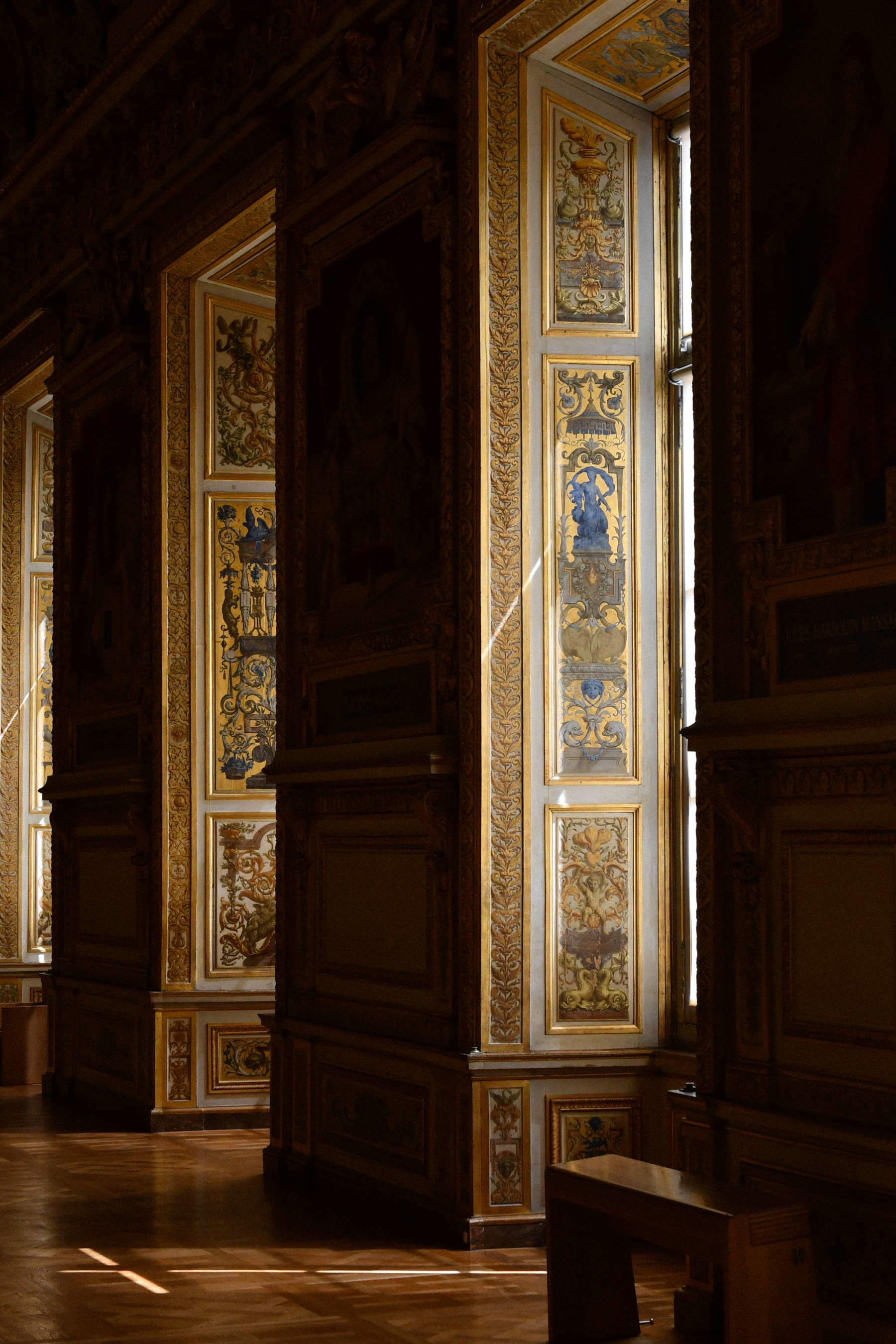
Duban also worked on the gallery’s walls, reconstructing Louis XIV-style paneling into which he incorporated a series of twenty-eight portraits woven by the Gobelins Manufactory between 1854 and 1863. The tapestries depict the key figures who contributed to the construction and embellishment of the Louvre and the Tuileries Palace.
With the establishment of the public museum in 1793, the Galerie d’Apollon began housing works as early as 1797, but it was especially from 1861 onward that the space took on the role of housing the Louvre’s collections of precious objects. The display cases, designed specifically for the room, housed the gems that had belonged to Louis XIV, Marie Antoinette’s lacquerware, and masterpieces from the treasury of the Abbey of Saint-Denis and the Order of the Holy Spirit. During the Third Republic, the sale of the French Crown Jewels, mandated by the law of 1887, once again altered the gallery’s collections. Although the collection had been considered inalienable since 1530, under Francis I, Parliament authorized the sale of most of the jewels. Eight pieces, however, were excluded from the sale and transferred to the Louvre, where they were displayed in the Apollo Gallery. These treasures were also spared during the theft of October 19, 2025. The incident affected several sets of jewelry from the Second Empire, while the historic Crown Jewels were not stolen. The theft, however, necessitated the closure of the gallery for several months and prompted the museum to radically rethink its exhibition strategy. For the time being, Louvre Director Christophe Leribault has announced that the jewels that could be admired in the gallery until just a few months ago will not be on display and will be stored in a vault.
With its reopening on July 22, 2026, the Louvre has therefore decided to restore the Apollo Gallery to its original purpose. Stripped of its display cases and collections of precious objects, the hall once again becomes, above all, a monument to be contemplated in its entirety—a masterpiece of French decorative art conceived in the 17th century as a celebration of monarchical power and now presented to visitors as one of the museum’s most extraordinary works of art.
|
| The Louvre is reopening the Galerie d'Apollon following the 2025 theft. It will remain empty. |
Warning: the translation into English of the original Italian article was created using automatic tools. We undertake to review all articles, but we do not guarantee the total absence of inaccuracies in the translation due to the program. You can find the original by clicking on the ITA button. If you find any mistake,please contact us.