





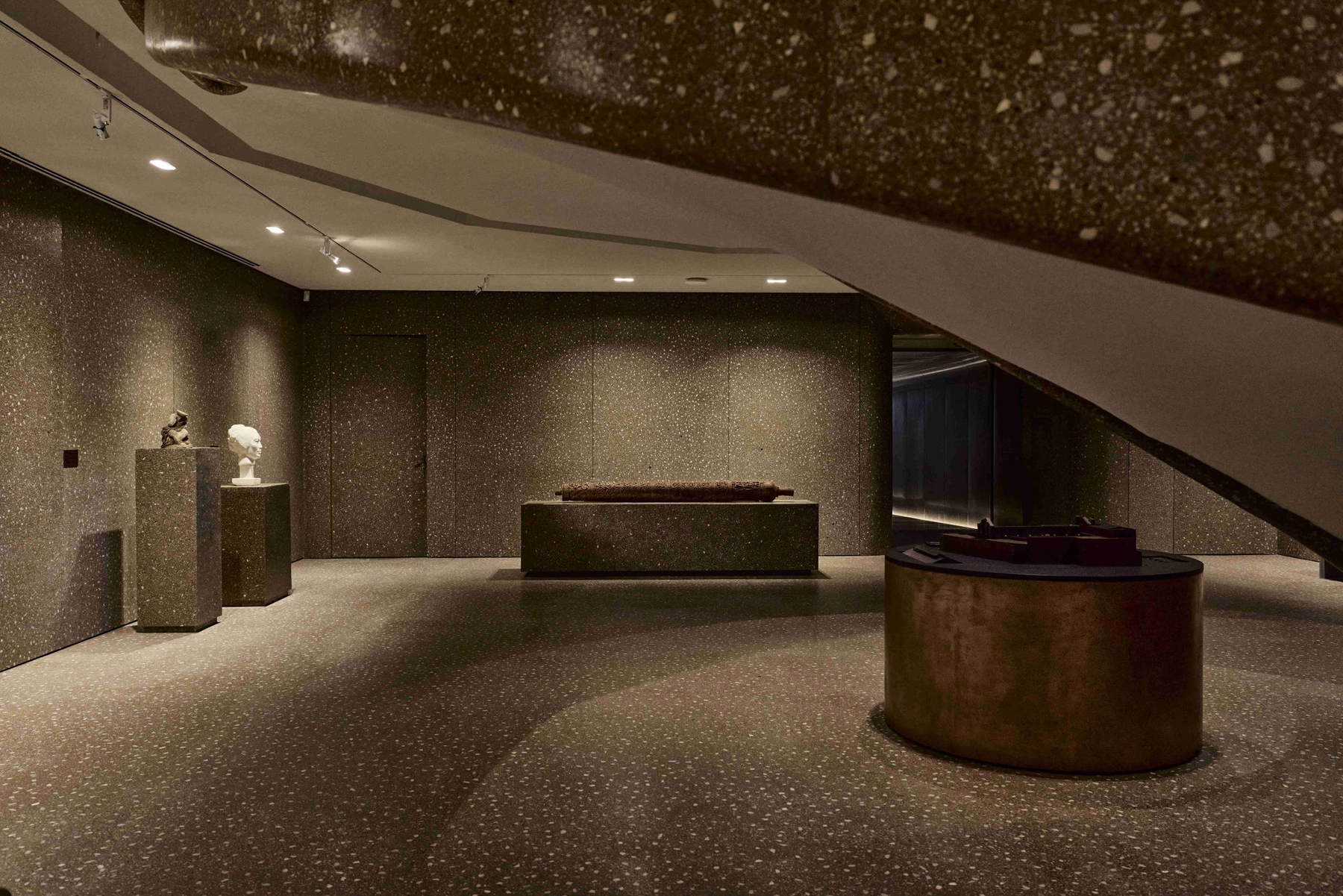
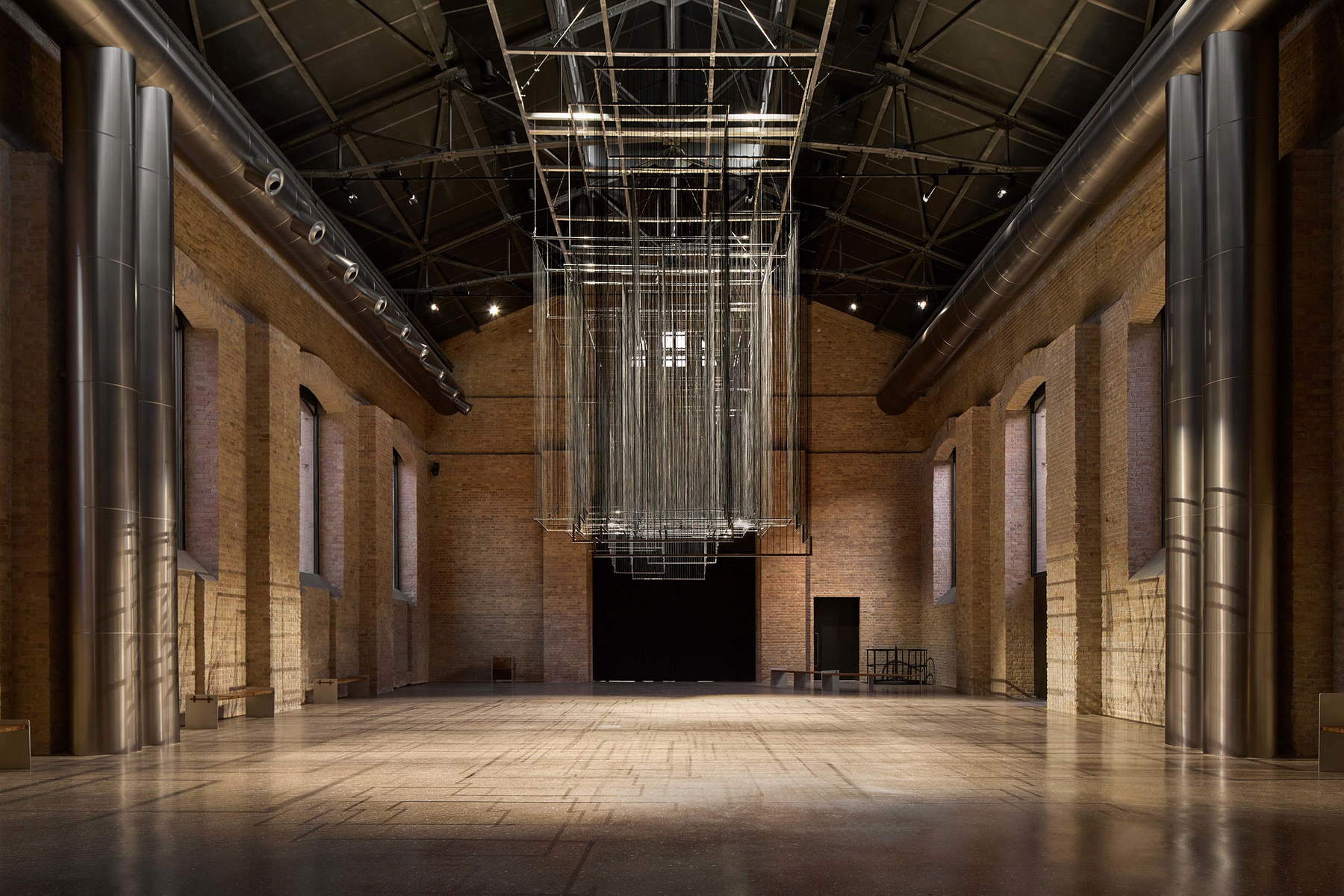
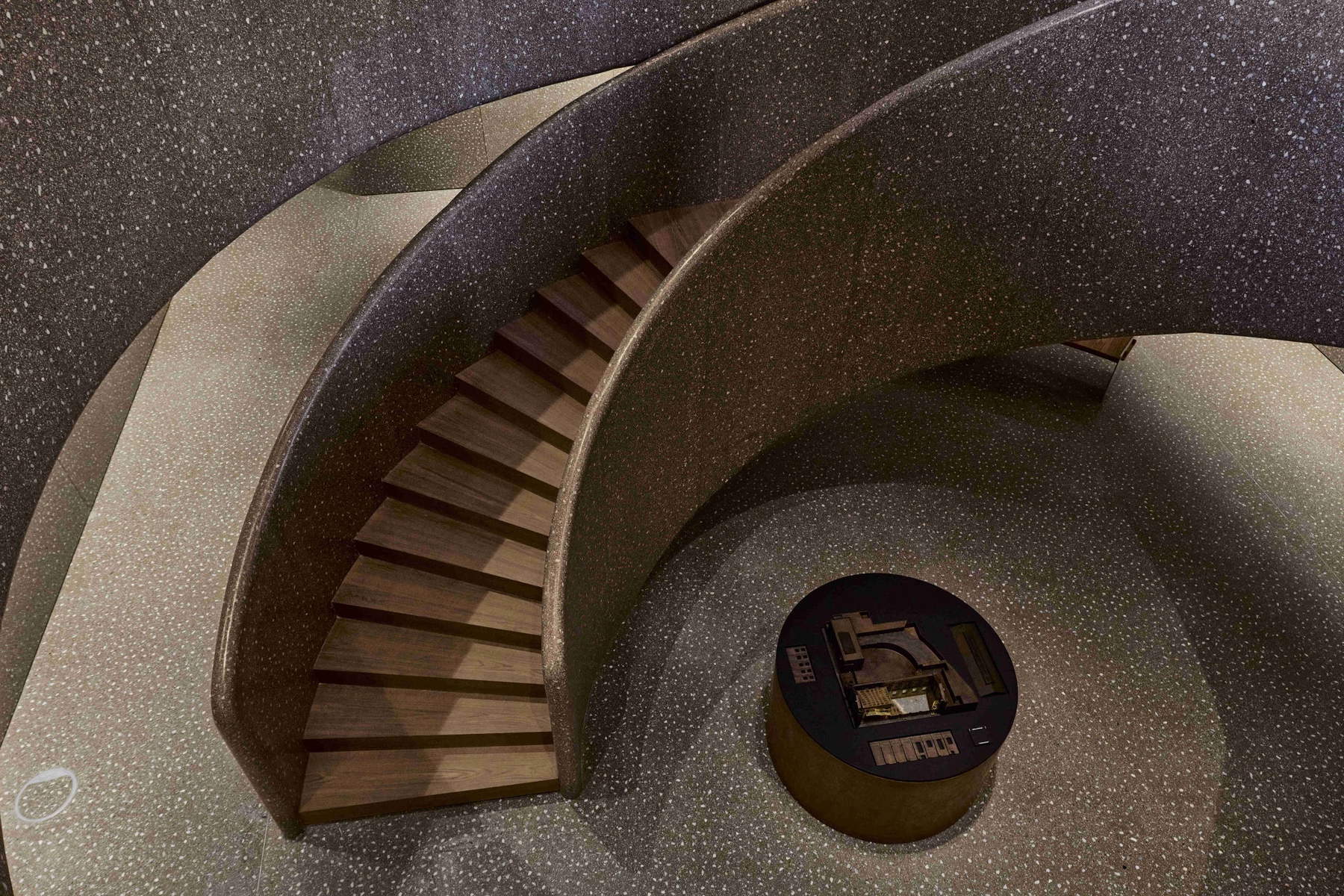
Uzbekistan ’s first permanent center for contemporary art has opened. This is taking place in the capital, Tashkent, where an industrial building constructed in 1912 to house a diesel station and a tram depot has begun a new life, and what was once infrastructure serving the city has been transformed into a space dedicated to contemporary art: it is here that the Center for Contemporary Arts Tashkent (CCA Tashkent) has opened. The building’s transformation was entrusted to the French firm Studio KO, founded by architects Karl Fournier and Olivier Marty: the project largely preserves the original yellow-brick facade—a feature of Tashkent’s architectural history from the Russian imperial era—while reimagining the interior spaces with contemporary materials and references to Uzbek building traditions and craftsmanship. The result is a structure designed not only to host exhibitions but also to serve as a space for production, gathering, and education, with a program encompassing the visual arts, architecture, design, performance, music, and film.
The opening comes 35 years after Uzbekistan’s independence and marks a significant milestone for the country’s cultural landscape: Tashkent, the capital with a population of about three million, has long been one of Central Asia’s leading cultural hubs. Throughout the 20th century, the city was also an important film hub and retains an architectural heritage that blends Central Asian traditions, Soviet modernism, and traces of Tsarist rule. The new contemporary art center fits into this layered context not by constructing a new building from scratch, but by repurposing a structure that is part of the city’s material history. The project is sponsored by the Uzbekistan Art and Culture Development Foundation (ACDF), an organization that has been working since 2017 to develop Uzbekistan’s cultural sector and which, in 2019, was entrusted with the building destined to become the CCA. The stated goal is to build a permanent program around the center capable of connecting Uzbekistan’s art scene with the international one. The first event is *Hikmah*, a group exhibition curated by the CCA’s chief curator, Sara Raza, open from September 6, 2026, to January 31, 2027. The title of the inaugural exhibition refers to the concept of wisdom (the translation of the Arabic term) and its relationship to the intelligence of matter and to higher forms of consciousness. The exhibition brings together artists from diverse geographical backgrounds and combines new commissions with existing works, while also drawing on the building’s history as one of the elements through which to interpret the project.
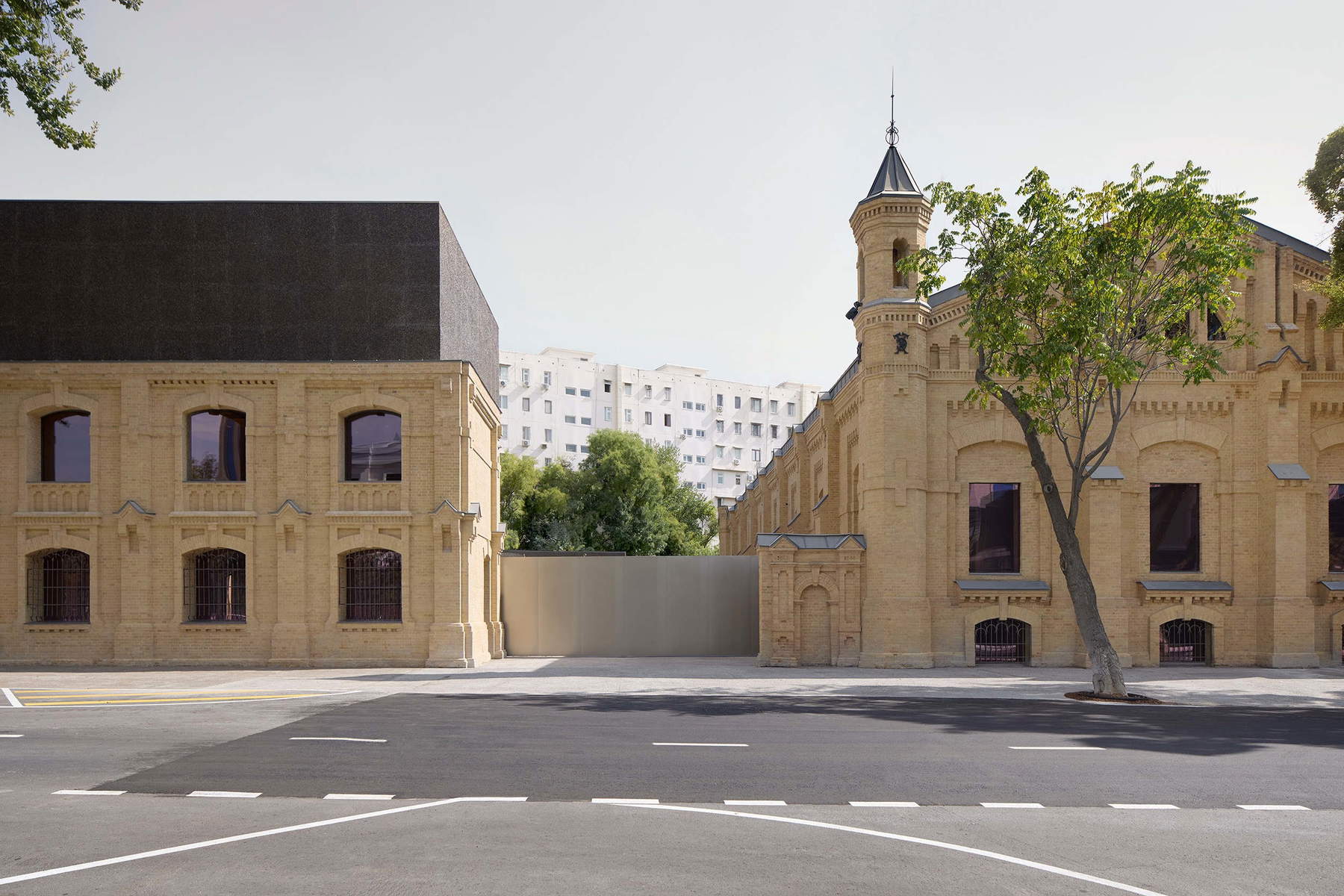
It is the architecture itself that provides the exhibition with one of its primary contextual layers. Before its transformation into an art center, the structure had at least two previous uses: originally as a diesel power station and later as a depot and infrastructure for trams. Its past also dates back to a particular phase in Tashkent’s history, when the city was part of the Russian Empire and new buildings were constructed by blending Russian models with local traditions. The building that houses the CCA was designed by Wilhelm Heinzelmann, head of the construction department for the Turkestan region; he was also responsible for other buildings considered representative of Tashkent at the time, including the Royal School, the Palace of Grand Duke Romanov, and the Treasury. The CCA’s headquarters thus belongs to a period when the city was taking on a new architectural character, one that would be further transformed during the Soviet era and in the decades that followed.
Studio KO’s project takes its starting point precisely from this layered history. Karl Fournier and Olivier Marty chose to keep the existing structure as recognizable as possible, intervening without erasing its memory. “In designing the CCA Tashkent, we sought to honor the memory of a powerful industrial building while giving it a new poetic life… a vessel for the spirit of contemporary art in Central Asia,” the architects explained. The yellow brick façade remains one of the building’s most recognizable features, while the interiors have been reimagined as more open and luminous spaces through the use of contemporary materials alongside traditional techniques, materials, and artisanal references from various regions of Uzbekistan. The project thus sought to harmonize the building’s industrial character with local tradition, making its history an integral part of the new exhibition space.
However, the CCA was not created solely as a new exhibition space: the program is designed to unfold throughout the year through exhibitions, artist residencies, workshops, and public activities. The artist residencies began as early as October 2024, prior to the center’s opening, offering artists and creatives the opportunity to work in Tashkent on the development and realization of new projects. The program also includes interdisciplinary activities involving film, music, performance, architecture, and design: the aim is to create opportunities for Uzbek and international artists to come together and, at the same time, broaden access to cultural production through activities aimed at audiences of different ages and backgrounds. For Sara Raza, the relationship between art, culture, and community is at the heart of the inaugural program. The curator has described the CCA as a space for dialogue among artists and local, international, and digital audiences, where exhibitions are complemented by educational activities and professional training opportunities for the next generation of cultural practitioners.
The center’s opening comes at a time when Uzbekistan is investing in the development of its own contemporary cultural infrastructure. The ACDF, led by President Gayane Umerova, has in recent years developed projects dedicated to promoting the country’s cultural heritage and arts, as well as collaborations with over forty international museums and cultural institutions. The foundation has also promoted projects presented in Europe, Asia, and the Gulf countries, with the goal of bringing Uzbek artists and stories into the international art scene. Umerova described the CCA as the result of a long-term vision and emphasized the desire to make the center an accessible space dedicated to inspiration, dialogue, and opportunities for the local community. From the foundation’s perspective, the development of cultural infrastructure and programs should also go hand in hand with the growth of a creative economy in the country.
The establishment of the CCA should therefore also be viewed in the context of Tashkent’s broader cultural transformation: the capital has long been a meeting point of different traditions, and its architecture bears witness to its journey through the Tsarist era, the Soviet period, and independence, with buildings that blend architectural models and visual languages from diverse worlds. The new center adds a contemporary function to this layered history, not by replacing the building’s past with new architecture, but by incorporating its history as part of the project’s identity. The decision to transform a 1912 industrial structure into a contemporary kunsthalle thus connects two very distant moments in the city’s history: the infrastructural modernization of the early 20th century and Uzbekistan’s opening to a new international dimension of cultural production.
|
| Uzbekistan's First Permanent Center for Contemporary Art Opens |

Warning: the translation into English of the original Italian article was created using automatic tools. We undertake to review all articles, but we do not guarantee the total absence of inaccuracies in the translation due to the program. You can find the original by clicking on the ITA button. If you find any mistake,please contact us.


























 IT
IT FR
FR DE
DE ES
ES CN
CN


