




by Caterina Mainardis 15/10/2026



Categories: News Focus / Disclaimer
The agreement between the Ministry of Culture and the Ministry of Health revitalizes the relationship between cultural heritage and well-being. But accessibility is not just about making works understandable: an inclusive museum must also acknowledge sensory, emotional, and nonverbal experiences, investing in the relationships that make them possible.


The agreement between the Ministry of Culture and the Ministry of Health paves the way for research into the effects that cultural heritage and artistic activities have on health: if culture becomes part of treatment plans, accessibility ceases to be an additional service. This is the starting point for Laura Borghetto, director of L’Abilità ETS: for a person with an intellectual disability, the barrier is not the museum door, but language, orientation, and the ability to make sense of what they are seeing. L’Abilità has been working on this for over ten years through “Museo per tutti” and is now part of the European INCLUDE-ID project.


I agree with this framework: accessibility is not simplification; the museum must adapt to people, not the other way around, and the audience must be heard during the design process. I’d like to add a point regarding the criteria. From your text on Borghetto, it would seem that understanding is the prerequisite for having the experience: once inside, people must be able to understand, find their way around, and participate. For people with intellectual disabilities, this is a necessary response. But if understanding becomes the sole criterion by which we recognize that an experience has taken place, we leave out part of what happens when encountering a work of art. A work of art can be encountered through the body, a sensation, a memory, a material, or a gesture, and can create a connection even before an explanation. I’m not pitting experience against understanding; I’m asking us to broaden what we mean by “understanding.”


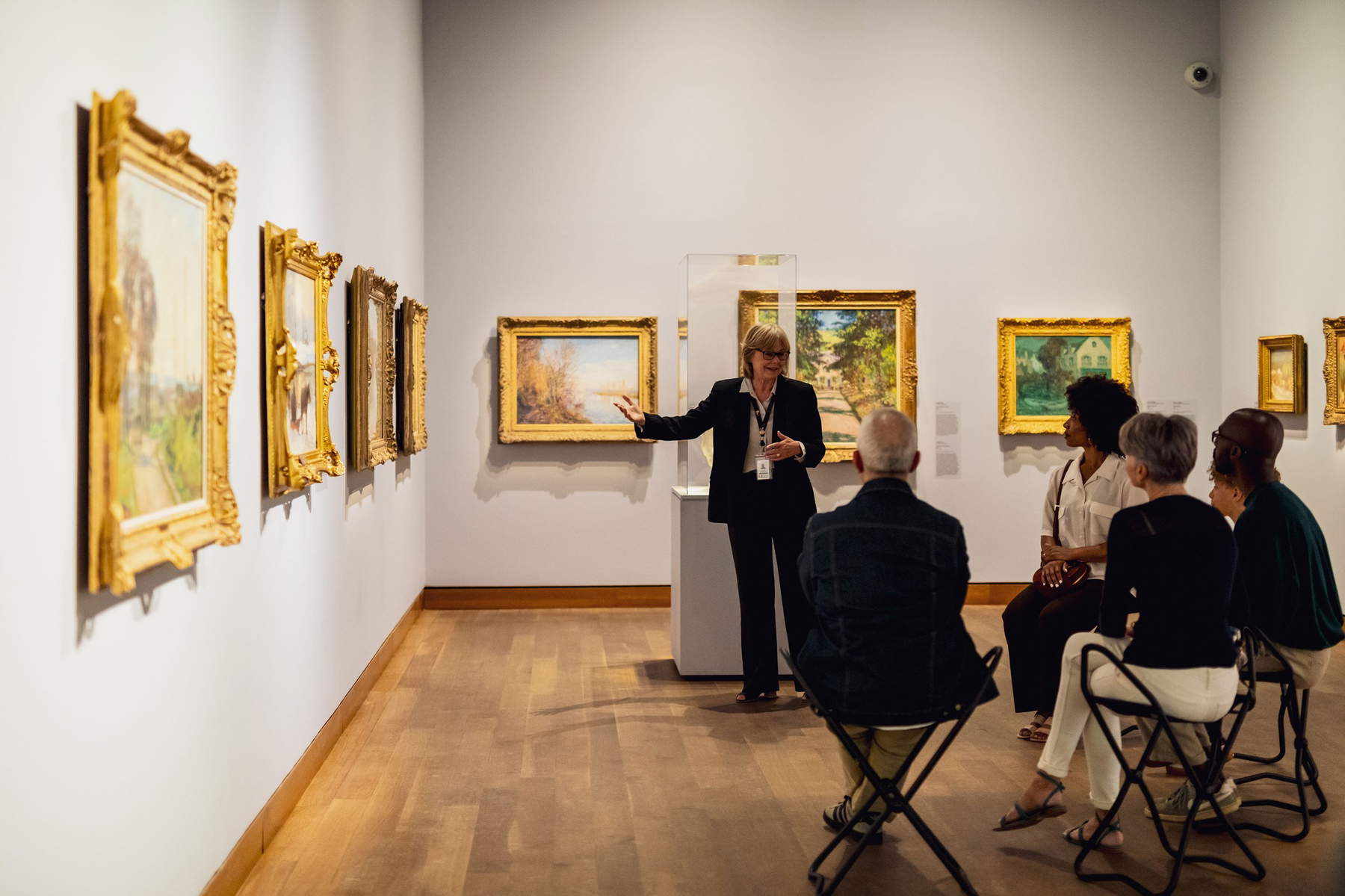
I’m thinking of people with cognitive impairment, for whom understanding the content is often not the end goal. This is not the same context Borghetto is referring to: intellectual disability and dementia pose different challenges, and I do not conflate their needs. But it is precisely there that we see most clearly how a photograph, a color, a texture, or a song can establish a connection with a work of art without necessarily requiring the decoding of its content. The question posed by the mediator changes accordingly. It is not just “How can I help this person understand this artwork?”, but also “What possibilities for engagement with this artwork can I open up?”. The two questions are not mutually exclusive: in the first, the artwork is content to be conveyed; in the second, it is a space of possibilities to which the person contributes.


The institution is also involved. The presence of diverse audiences challenges assumptions we often take for granted: that a visit must last a certain amount of time, that a work of art is viewed in silence, and that participation is synonymous with understanding. The co-design approach discussed by INCLUDE-ID can serve as a tool to change those assumptions within the museum itself—and not just in the visitor services department.
The problem remains of how to recognize what is happening. A protocol that examines the effects of culture on health will need criteria. Sometimes participating simply means being there: touching, looking, repeating a gesture, recognizing something. It is not necessarily quantifiable, but that does not mean it lacks evidence: one can observe what the person does, how long they stay, how their posture changes, and whether they seek eye contact with their companion.
The observer, however, interprets what they see. And anyone accompanying a person who does not verbalize risks projecting their own meaning onto that person. The criterion, then, cannot be merely an indicator but must be a method: observations that are described, compared with others, and accompanied by the observer’s perspective and the limits of their own interpretation.
There is also a structural aspect: recognizing experiences that do not involve words requires time, trained staff, longer and less crowded visits—in other words, resources. If recognizing nonverbal experience were to become a pretext for offering less, it would be the opposite of what I advocate. The quality of a nonverbal experience depends on the relationship that sustains it, and that relationship has a cost.
Borghetto concludes that an inclusive culture is one in which people, once they enter, can understand, find their way, participate, and feel like they belong. I would add one condition: that the institution also recognize what happens before, alongside, and beyond understanding.
Warning: the translation into English of the original Italian article was created using automatic tools. We undertake to review all articles, but we do not guarantee the total absence of inaccuracies in the translation due to the program. You can find the original by clicking on the ITA button. If you find any mistake,please contact us.