





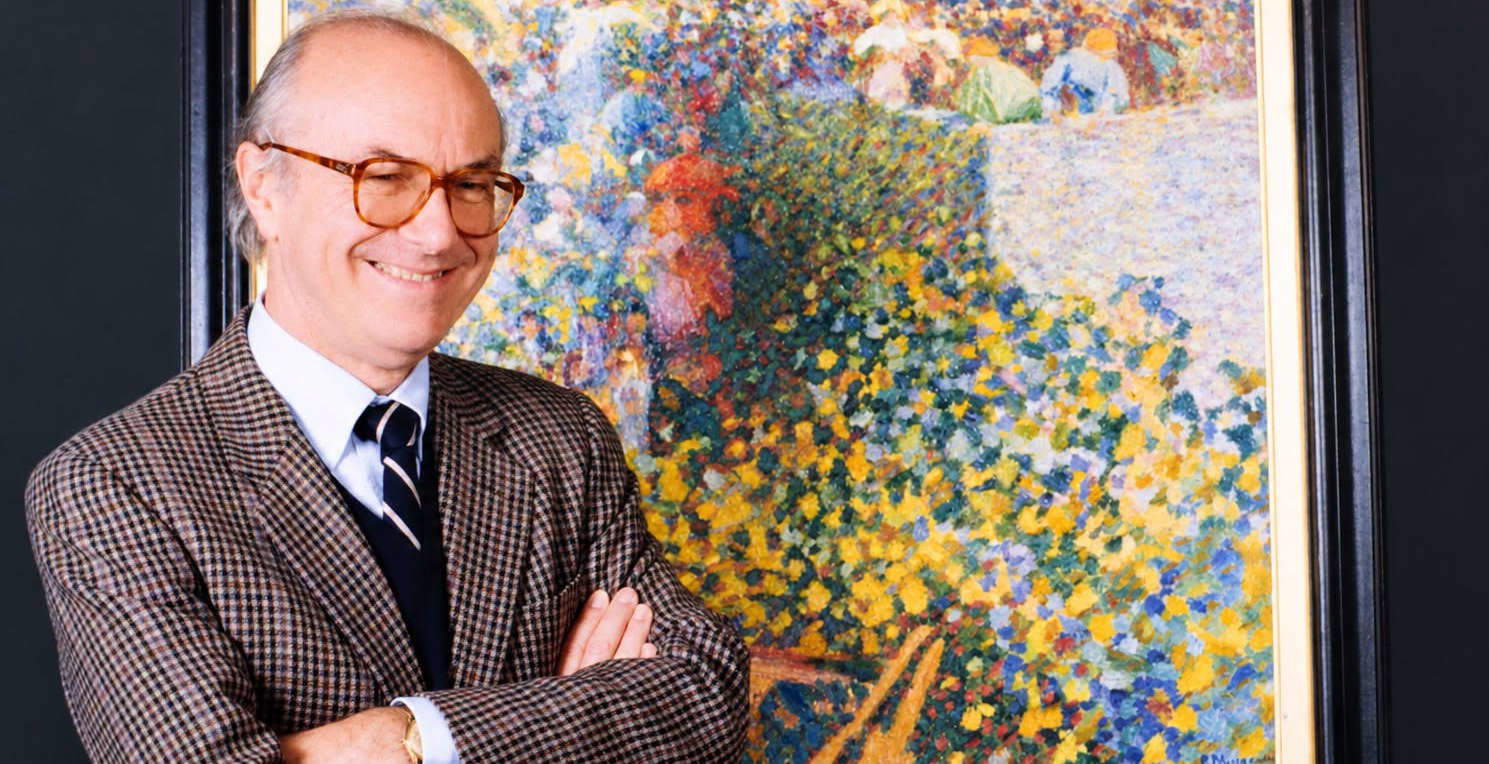
Art historian Andrea Baboni, a prominent figure in the world of Italian art and culture to which he had dedicated his entire life of study, research, and passion, has passed away in Correggio at the age of 83. The funeral was held on September 18 at the Basilica of San Quirino in Correggio. Born in Correggio in 1943, Baboni devoted his entire life to the study of 19th- and 20th-century Italian painting, establishing himself over time as one of the foremost experts on the Macchiaioli and, in particular, on the work of Giovanni Fattori. After completing his classical studies, he earned a degree in architecture in Florence in 1971, and later became the urban planning director of the Comunità Montana dell’Appennino Reggiano. Despite his professional commitments, he always maintained a close connection with Florence, where he began meeting weekly with Lanciotto Bietoletti, an expert collector and profound connoisseur of Macchiaioli painting and its followers. During those same years, Baboni also frequented the Parronchi Gallery, which hosted major exhibitions not only of Tuscan painting but also of works from other Italian schools of the 19th and 20th centuries. It was in this context that he developed his expertise in 19th-century painting.
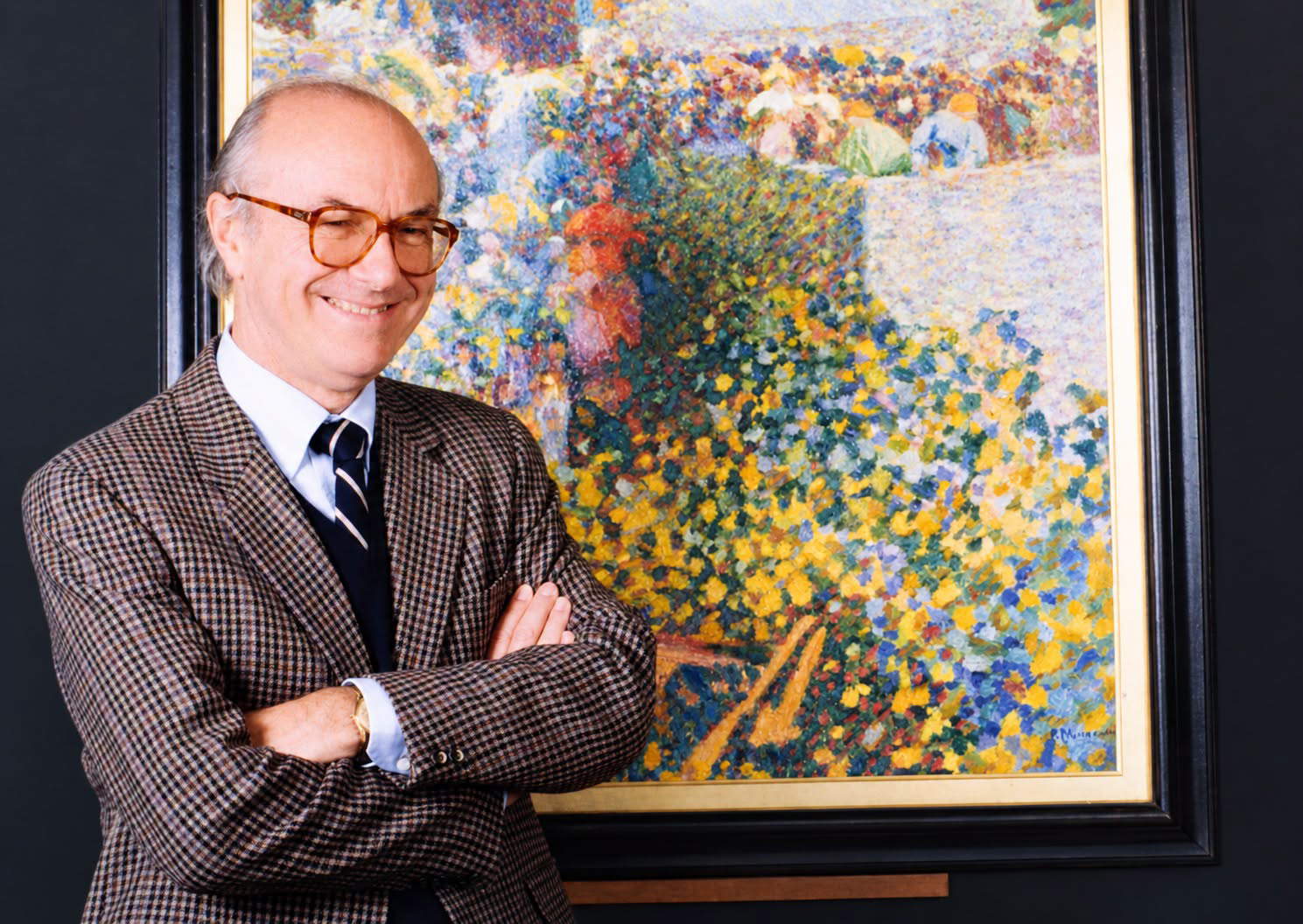
In 1989, he embarked on a new career path, one more in line with his artistic interests, joining the auction house Christie’s, where he remained until 2005, eventually rising to the position of head of 19th-century Italian paintings, a position that led him to be frequently consulted by the main offices in London and New York. Baboni was also a profound expert on the entire body of paintings from that period and the editor of numerous exhibition catalogs, many of which he curated himself. Since the early 1960s, he had also pursued his own painting practice, holding solo exhibitions in Reggio Emilia, Florence, and Milan, before gradually shifting his focus, starting in the second half of the decade, toward the systematic study of 19th-century Italian painting, working closely with scholars and collectors active primarily in Tuscany, Emilia, and Veneto. His work as a connoisseur and historian of Italian art focused in particular on the period spanning from the earliest examples of painting from life—those of the Macchiaioli—to the emergence of the historical avant-garde movements at the turn of the 20th century. His experience as head of the 19th-century art department for Italy at Christie’s—where he also served as a consultant for the New York and London offices beginning in the late 1980s—further enabled him to deepen his knowledge of all Italian regional schools, with a particular focus on the Neapolitan school.
Over the course of forty years of study and research on 19th-century Italian painting, Baboni built a personal archive featuring an extensive library, comprising thousands of volumes dedicated to artists from the various regional schools active between the second half of the 19th century and the early decades of the 20th century. The archive also preserves an extensive photographic collection that catalogs the paintings by artist, accompanied by relevant technical data, exhibition records, and bibliographic references. As for the work of Giovanni Fattori, the core of the collection is the Malesci Collection, a collection of over a thousand photographs of paintings by the Livorno-born master, which was used in 1961 by Giovanni Malesci, his sole heir, to compile the general catalog of the artist’s oil paintings. The archive also includes part of the Fragiacomo Collection, featuring photographs of paintings, plates created by the artist, and other documents, as well as portions of the collections dedicated to Gaetano Chierici, Stefano Bruzzi, and Eugenio Zampighi; it also preserves extensive documentation on the works of Mario Puccini and Alberto Pasini. There is also an extensive collection of iconographic and critical material relating to other painters associated with the Macchiaioli movement: regarding Telemaco Signorini, in particular, the archive holds hundreds of images documenting the entire span of his career, beginning in 1856, the year the artist stayed in Venice alongside Odoardo Borrani and Vincenzo Cabianca.
The deep bond between Baboni and his hometown was celebrated in the fall of 2024, when the Museo Civico Il Correggio staged the exhibition *Viaggio tra Otto e Novecento* at the Palazzo dei Principi . The Andrea Baboni Collection: A Creative Journey Through Painting and Collecting (readthe review here). The exhibition presented to the public fifty masterpieces from the scholar’s private collection, including works by Antonio Fontanesi, Giuseppe De Nittis, Gaetano Previati, and other leading figures in Italian painting from the 19th and 20th centuries, restoring to the city not only the value of the collection itself but, above all, the cultural and personal journey of the man who had built it through decades of study and research.
With his passing, Correggio loses a scholar deeply connected to his hometown and a figure who, through his work as an art historian, critic, collector, and consultant, contributed significantly to the understanding and preservation of a substantial part of Italy’s artistic heritage, never ceasing, throughout a life entirely devoted to art, his connection to the community where he was born.
 |
| Farewell to Andrea Baboni, a leading expert on 19th-century Italian art and the Macchiaioli |

Warning: the translation into English of the original Italian article was created using automatic tools. We undertake to review all articles, but we do not guarantee the total absence of inaccuracies in the translation due to the program. You can find the original by clicking on the ITA button. If you find any mistake,please contact us.




















 IT
IT FR
FR DE
DE ES
ES CN
CN


