



by Redazione 04/11/2026


Categories: News / Disclaimer
Director Tinto Brass has passed away in Rome at the age of 93: celebrated as a master of erotic cinema, his career was far more complex and spanned more than half a century of Italian cinema.

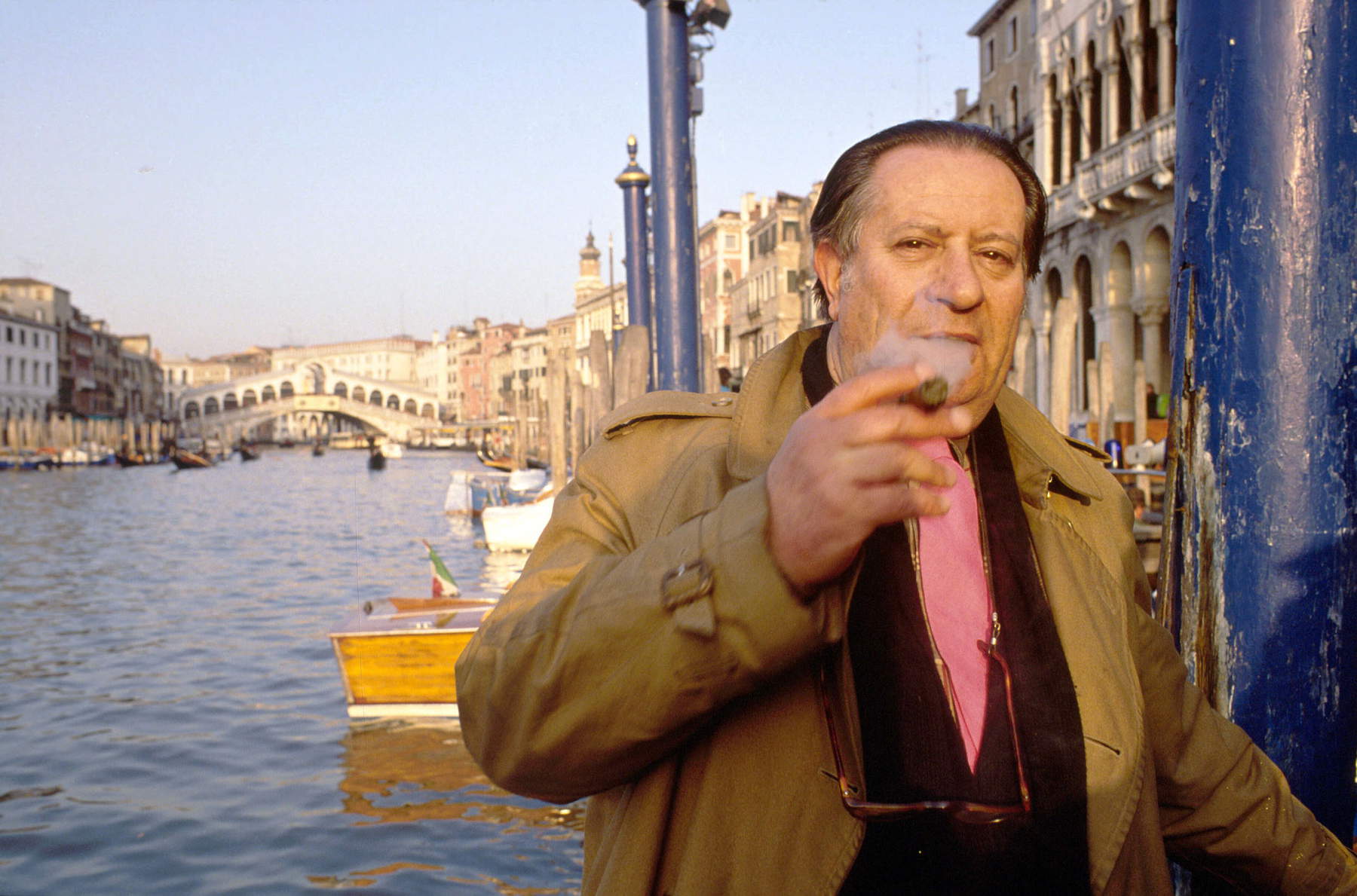
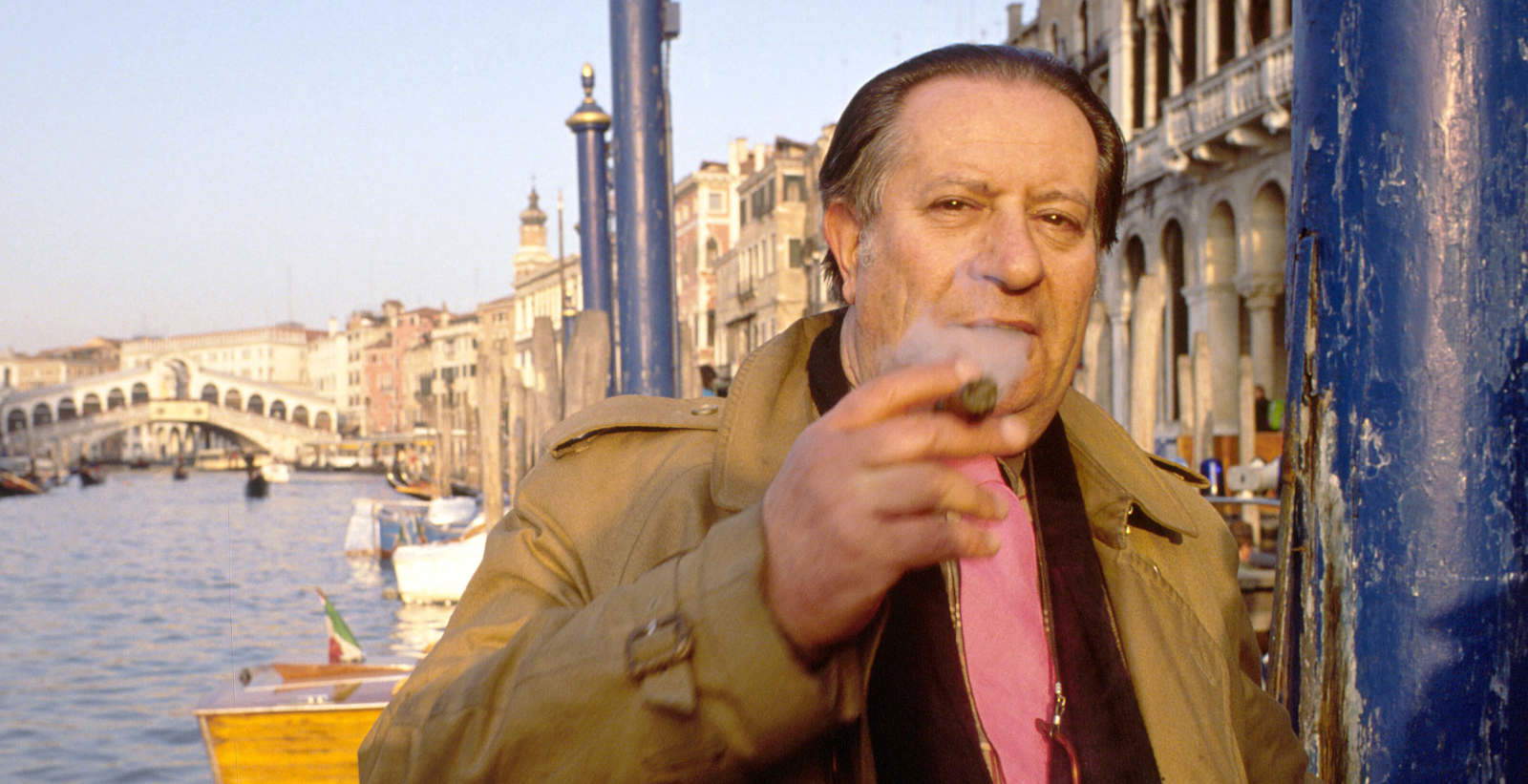
Director Tinto Brass has passed away in Rome at the age of 93. He was born Giovanni Brass in Milan on March 26, 1933, and owes his unusual stage name to a nickname he had been given by his family. As a boy, he spent his time drawing, and his grandfather, the painter Italico Brass, had begun calling him Tintoretto, after the 16th-century Venetian master. The nickname, shortened to Tinto, became the name under which Giovanni Brass made his mark on Italian cinema for over half a century. He passed away today from a heart attack; the news was announced by his wife, Caterina Varzi, and his children, Bonifacio and Beatrice. For now, the family has planned a strictly private funeral service.


His grandfather, Italico Brass, who married a wealthy Russian woman named Lina Rebecca in 1895, had moved from Gorizia to Venice and purchased the Abbazia della Misericordia, where he exhibited his own works and those of other artists, collected over time through purchases and exchanges. His father, Alessandro Brass, a student of Francesco Carnelutti, was one of Venice’s most accomplished criminal defense attorneys; his mother’s name was Carla Curletti. Tinto was born in Milan but grew up in Venice, and his path toward a career in law seemed set: in 1951, he enrolled in the law program at the University of Padua; four years later, he transferred to Ferrara, where he graduated in 1957, with Carlo Lega as his advisor and a thesis that already revealed other interests: “Labor Relations with Film Production Companies.”


In fact, cinema fascinated him far more than law. In the late 1950s, he moved to Paris and worked for about two years at Henri Langlois’s Cinémathèque française, one of the institutions that shaped an entire generation of filmmakers. He worked as an archivist and practiced film editing, receiving nothing more than room and board: his passion for auteur cinema—a passion he shared with Langlois—drove him to preserve and restore as many films as possible to educate the public. In Paris, he became involved with the emerging Nouvelle Vague movement, learned to view cinema as a language to be reinvented, and developed a taste for editing and visual experimentation.

Upon returning to Italy, he served as an assistant director to Alberto Cavalcanti and Roberto Rossellini. For Rossellini, he edited the documentary *India as Seen by Rossellini* and worked on the set of *Il generale Della Rovere*; with Joris Ivens, he collaborated on the television documentary *Italy Is Not a Poor Country*. These experiences allowed him to engage with a form of cinema far removed from commercial conventions and to develop his own vision of filmmaking. His directorial debut came in 1963 with *In capo al mondo*(At the End of the World), for which he also wrote the screenplay and edited the film: the story of a young man struggling to fit into society, told with a sort of “humorous anarchism.” His impatience with authority and institutions did not sit well with the censors, who forced him to reshoot the film from scratch. Brass responded by changing only the title, which became *Chi lavora è perduto*(*Whoever Works Is Lost*), making the message even more explicit.
Years of diverse productions with mixed results followed: in 1964, the science-fiction fairy tale *Il disco volante* and the anthology film *La mia signora*, for which he directed two episodes alongside Luigi Comencini and Mauro Bolognini, an admirer of his; in 1966, the Western *Yankee*. That same year, 1964, he directed his only political documentary, *Ça ira, il fiume della rivolta*. Then came a return to a more personal style with *Col cuore in gola * (1967), *L’urlo* ( 1968), and *Nerosubianco* ( 1969), whose poster featured the letters from the second to the fifth—written in block letters—forming the pun “nEROSubianco.” After *Dropout* ( 1970) came *La vacanza* (1971), his last film not centered on eroticism.
Sex, intertwined with power and money, became the focus of *Salon Kitty* (1976)—with an atmosphere reminiscent of Luchino Visconti and Liliana Cavani—and of *Caligula* (1979), a historical reconstruction marked by a troubled production: disagreements with the production team led to Brass being excluded from the editing process. With *Action* (1980), the director turned toward the grotesque, offering a satirical and autobiographical reflection on the relationship between art and pornography.
The definitive turning point came in 1983. Determined to abandon “serious” cinema—or “pretentious” cinema, as he put it—Brass directed *The Key* starring Stefania Sandrelli, based on the novel of the same name by Jun’ichirō Tanizaki. The film was a success with both audiences and critics and established him in the erotic genre, though it also made him a controversial figure, both among some feminists—who criticized him for portraying women as objects—and in more traditionalist circles. From then on, his name was often associated with the label “master of erotic cinema,” a definition that only partially captures a more complex career path. Scandals, bans, and controversies accompanied *Miranda* (1985), starring Serena Grandi—a reinterpretation of Goldoni’s *La locandiera* —and *Capriccio* (1987), starring Francesca Dellera, but the films also drew packed theaters and generated substantial box office revenue.
In 1988, he took a break with *Snack Bar Budapest*, a visionary noir based on the novel by Marco Lodoli and Silvia Bre, which was well-received by critics but failed to find a commercial audience. Then came a return to more explicit eroticism with *Paprika* (1991), which launched Debora Caprioglio’s career, and *Così fan tutte* (1992), starring newcomer Claudia Koll: the controversies surrounding his films helped make the leading ladies famous. In 1994, *L’uomo che guarda* was released, loosely based on a work by Alberto Moravia. Also in 1994, Brass co-wrote the screenplay for *Lola & il macellaio* with Alda Teodorani; Alba Parietti was approached for the lead role, but disagreements with the actress led to the film being entrusted to Aurelio Grimaldi, with a different screenplay. Many of these scenes were later incorporated into *Monella* (1998). Earlier, in 1995, *Fermo posta Tinto Brass* had been released, an autobiographical erotic comedy in which the director appeared, as he did in many of his films. In 1999, he helmed the series *Corti circuiti erotici*, twelve short films by various directors—including Silvia Rossi’s *Fine settimana a Lecco*—presented by Brass himself.
In the 2000s came *Tra(sgre)dire* (2000), *Senso ‘45* (2002) starring Anna Galiena—an erotic reinterpretation of Camillo Boito’s short story, previously adapted for the screen by Visconti in 1954 and set in Venice in 1945—and, at the age of seventy, *Fallo!* (2003), an anthology film inspired by Boccaccio. *Monamour*, from 2005, was released directly to DVD the following year.
His connection to painting resurfaced explicitly in 2009. On the occasion of a retrospective at the 66th Venice Film Festival, Brass presented *Hotel Courbet*, an 18-minute short film paying homage to Gustave Courbet, conceived as part of a series for Sky, *The Fabulous World of Tinto Brass*. The lead role was played by Caterina Varzi, who had previously been cast in the long-announced *Ziva, l’isola che non c’è*. That same year, he brought his theatrical adaptation of *Don Giovanni* to Rome, set in Venice in 1930.
On April 18, 2010, he was admitted to the neurosurgery ward of the hospital in Vicenza due to a cerebral hemorrhage, from which he recovered in the following months. In 2013, the 70th Venice Film Festival screened *Istintobrass*, a documentary by his longtime collaborator Massimiliano Zanin, and Brass once again announced *Ziva*. The most recent tribute took place just a few weeks ago: in September 2026, the pre-opening of the 83rd Venice Film Festival was dedicated to *Col cuore in gola*, and the director received the Pietro Bianchi Award from the Italian Film Journalists Association.
In addition to directing, Brass has acted in films by other directors, from Mauro Bolognini’s *La donna è una cosa meravigliosa* (1964) to Massimo Ceccherini’s *Lucignolo* (1999), Louis Nero’s *La rabbia* , Claudio Serughetti’s *Il nostro messia* (2008), Giuseppe Cirillo’s *Impotenti esistenziali* (2009), and David Narducci’s *Canepazzo* (2012); in 2006, he appeared in Leonardo Celi’s documentary *Adolfo Celi, un uomo per due culture *. He contributed to *Penthouse* and wrote forewords, such as those for *Così come sono* by Malisa Longo (2000) and *Sette piccoli racconti erotici* by Federica Tommasi (2012).
He described himself as a “quiet atheist” and never hid his political views. In 1971, he signed the open letter to *L’Espresso* against Police Commissioner Luigi Calabresi and the “Self-Accusation of Solidarity” with *Lotta Continua*, as well as the appeal against the ban on the full screening of *Three Hypotheses on the Death of Pinelli*. A longtime supporter of Marco Pannella’s Radical Party, in 2010 he ran for regional office on the Bonino-Pannella List in Veneto and Lazio.
He was married to screenwriter and collaborator Carla Cipriani, who died in 2006, the mother of his children Beatrice and Bonifacio. On August 3, 2017, at the age of 84, he married psychoanalyst, former lawyer, and actress Caterina Varzi in a civil ceremony at his villa in Rome.
The Venice Biennale remembers him today as follows: “The President, the General Director, the Head of the Historical Archive, the Artistic Director of the Film Sector, and the Venice Biennale remember with affection and great admiration the Venetian director Tinto Brass, a nonconformist genius, a master of visionary and radically free works, and a leading figure of the New Italian Cinema of the 1960s. The Venice Biennale is proud to have dedicated the Pre-Opening Night of the 83rd International Film Festival, on September 1, 2026, in the Sala Darsena, with a screening of the film *Col cuore in gola* (1967), in a digitally restored 4K version produced by the CSC-Centro Sperimentale di Cinematografia in Rome with the support of Netflix. On this occasion, he was awarded the Pietro Bianchi Prize, an honor that the Italian Film Journalists Association (SNGCI) bestows upon an outstanding figure in Italian cinema; the award was accepted by his wife, Caterina Varzi.”
 |
| Farewell to Tinto Brass, the director of transgression |
Warning: the translation into English of the original Italian article was created using automatic tools. We undertake to review all articles, but we do not guarantee the total absence of inaccuracies in the translation due to the program. You can find the original by clicking on the ITA button. If you find any mistake,please contact us.