





The successive heat waves that have swept through France this summer are also threatening one of the places most closely associated withImpressionist art: Claude Monet’s gardens in Giverny, Normandy. The exceptionally high temperatures—which also contributed to widespread wildfires and higher-than-usual mortality rates—have had particularly noticeable effects on the vegetation in the historic garden that Monet loved and tended for most of the final decades of his life. Among the plants most affected are the nasturtiums, one of the garden’s signature features. Their multicolored blooms have completely withered under the heat, despite targeted watering and other measures implemented by the gardeners to limit the effects of drought and heat stress.
“It’s incredibly sad,” Rémi Lecoutre, deputy head gardener at the Maison et Jardins de Claude Monet, told France 24. “This is the first time it has happened on this scale. It’s terrible.” Lecoutre showed reporters the areas where, at this time of year, nasturtiums would normally be in full bloom but now appear devoid of flowers. The garden maintenance team is trying to protect the plants that can still be saved. Among the strategies adopted are grouping the plants together and watering the most vulnerable flowers at night, when temperatures are lower and water evaporation is reduced.
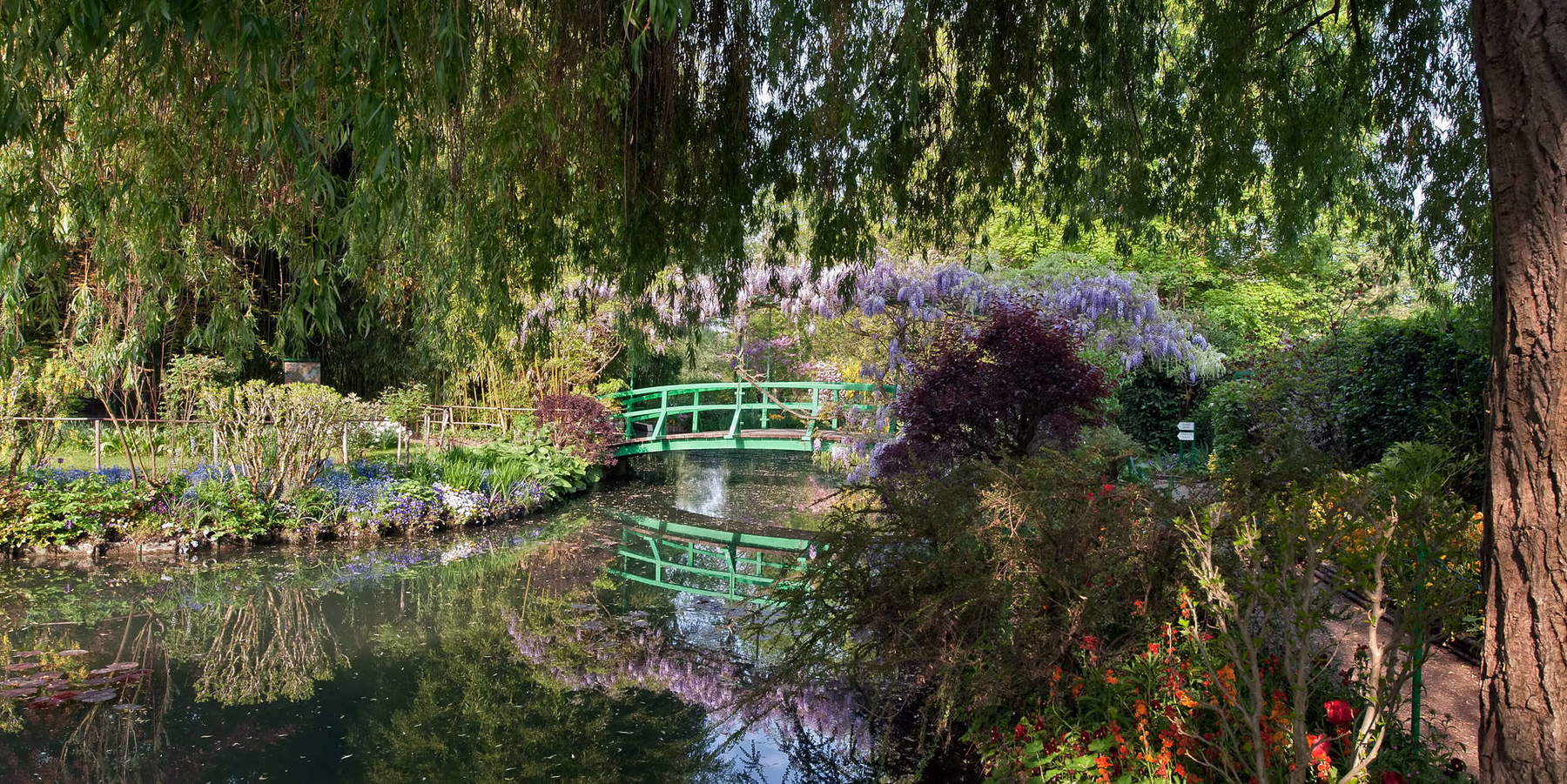
These measures have helped to limit the damage, at least in part. The use of mini-sprinklers and an underground irrigation system has helped counteract water stress, but it has not prevented some parts of the vegetation from suffering consequences nonetheless. Physiologically, in fact, plants react to extreme temperatures by closing their stomata and halting flowering, resulting in a large number of wilted flowers.
The situation is therefore forcing gardeners to strike a difficult balance between preserving the site’s historic appearance and the need to adapt it to climatic conditions that are no longer what they once were. One of the options under consideration is to introduce species that are more resistant to heat and drought in the future. At the same time, it will be necessary to take into account changes in the plants’ seasonal cycles, which could lead to blooms occurring earlier than the garden’s traditional schedule.
The issue is not straightforward, however, because the garden at Giverny is not just any green space: it is an integral part of the image by which Monet is known, as well as of the painter’s legacy. His house, still preserved today, with its characteristic pink façade and green trim, together with the garden, forms a historic complex designed to convey to visitors the atmosphere of the floral landscapes that the artist transformed into one of the fundamental themes of his painting. It should be noted, however, that the current garden does not claim to be a perfectly philological reconstruction of the one known to Monet. And it is precisely this aspect that could allow those in charge to gradually introduce new species, provided they are compatible with the site’s historical and aesthetic identity.

“Since this is a historic garden, it’s best that these plants meet aesthetic criteria and be as close as possible to the plants Monet knew,” Lecoutre explained to France 24. But conservation does not necessarily mean stagnation. “After all, we’re not a garden-museum, but truly a space that evolves with the times.”
This ability to adapt, moreover, is justified by Monet’s own vision for the garden at Giverny. The painter wanted a wide variety of plants and arranged the blooms in succession, with species capable of reaching their peak splendor for relatively short periods. The result was a constantly changing landscape, almost a work of botanical art that shifted with the seasons.
“This is the added value of this garden in Giverny: many plants with short life cycles, but in very large quantities,” Lecoutre explained. However, it is precisely this variety that makes it particularly challenging to maintain the balance intended by the design, especially when weather conditions simultaneously affect water availability, blooming times, and the plants’ ability to withstand the heat.
Fortunately, not all species are suffering equally. Monet’s famous water lilies—perhaps the most recognizable symbol of the Giverny garden and his paintings—seem to be thriving in the high temperatures. The problem, however, remains particularly evident for the more sensitive plants. For gardeners, the challenge in the coming years will therefore be to preserve the historical and visual character of Giverny without ignoring a climate change that appears increasingly difficult to manage. The goal is not only to keep as many plants alive as possible, but also to strike a balance between staying true to Monet’s legacy and the ability to adapt.
This issue takes on special significance in 2026, the centennial of Monet’s death. The anniversary is being celebrated with numerous exhibitions and events, particularly in France. In Paris, the Musée de l’Orangerie will open its own exhibition on September 30, while the Musée Marmottan Monet will present, starting September 24, an exhibition that will bring the Impressionist’s works into dialogue with those of modern and contemporary artists.
While museums and institutions are thus celebrating the centennial through paintings, in Giverny it is Monet’s actual landscape that must face one of the most tangible consequences of climate change. And it is precisely the garden that the artist conceived as a work in constant transformation that may now be called upon to transform once again in order to survive.
|
| France: Extreme Heat Takes a Toll on Monet's Garden in Giverny—Damage Reported |

Warning: the translation into English of the original Italian article was created using automatic tools. We undertake to review all articles, but we do not guarantee the total absence of inaccuracies in the translation due to the program. You can find the original by clicking on the ITA button. If you find any mistake,please contact us.





























 IT
IT FR
FR DE
DE ES
ES CN
CN


